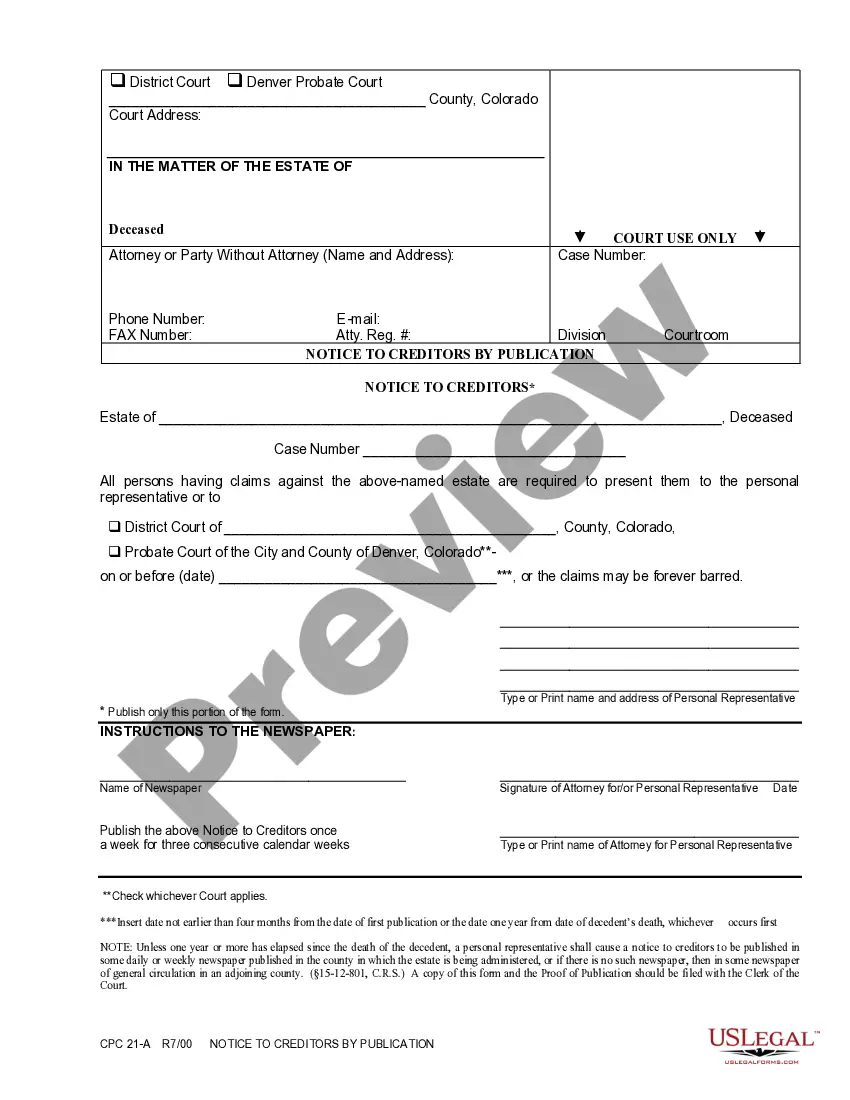
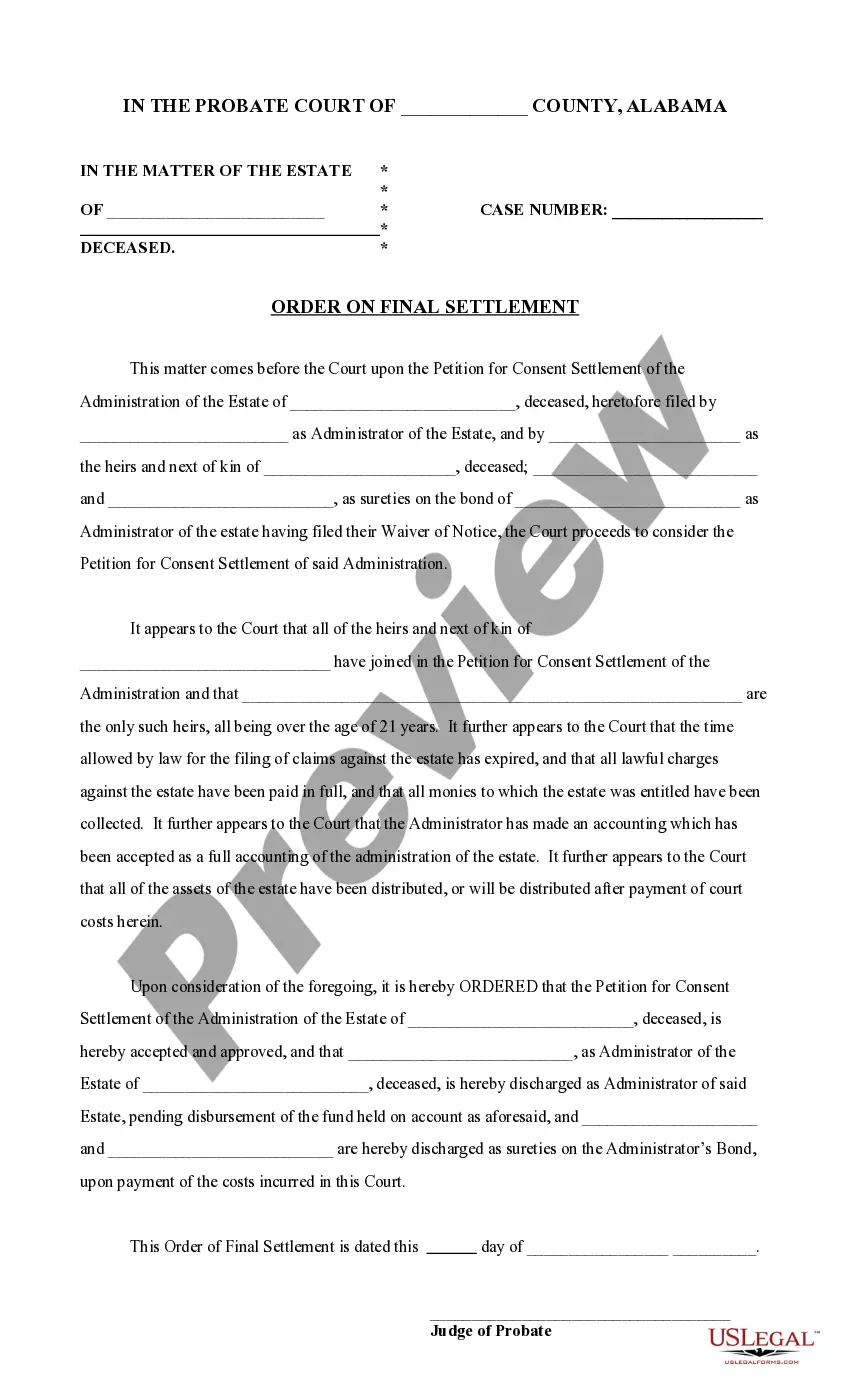
Alabama Order on Final Settlement
What this document covers
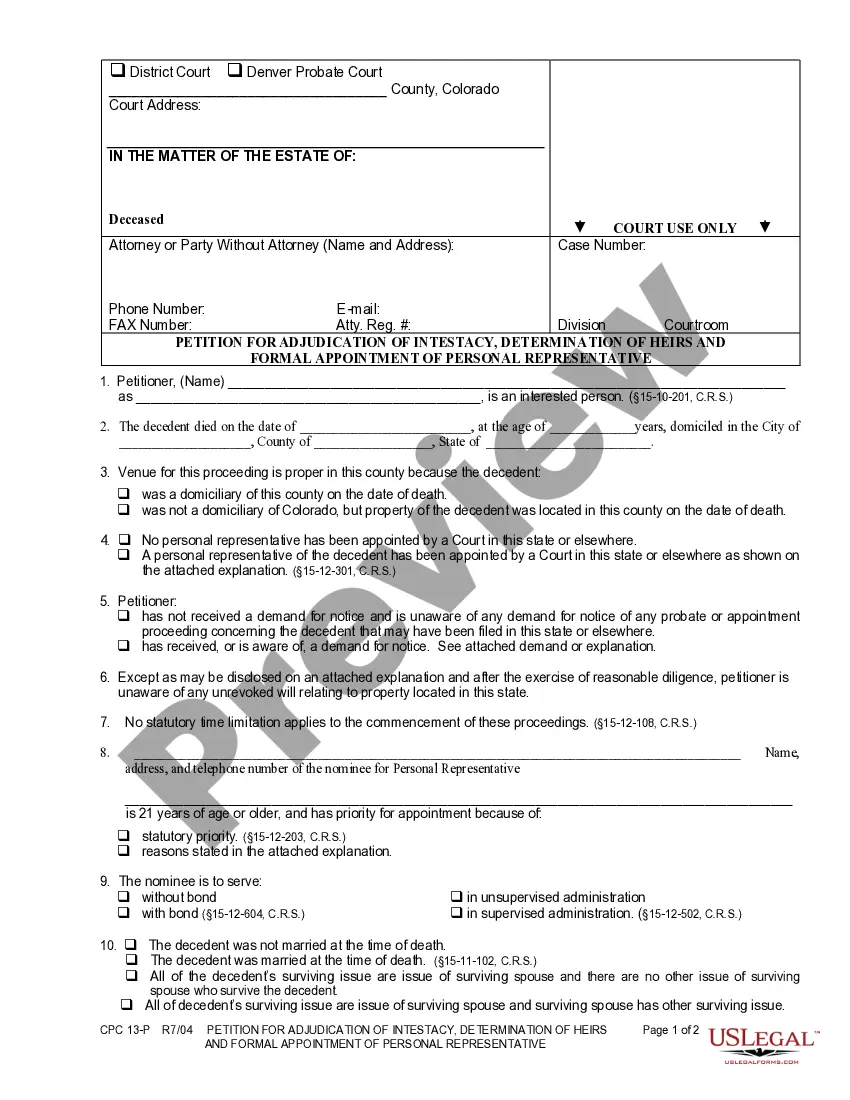
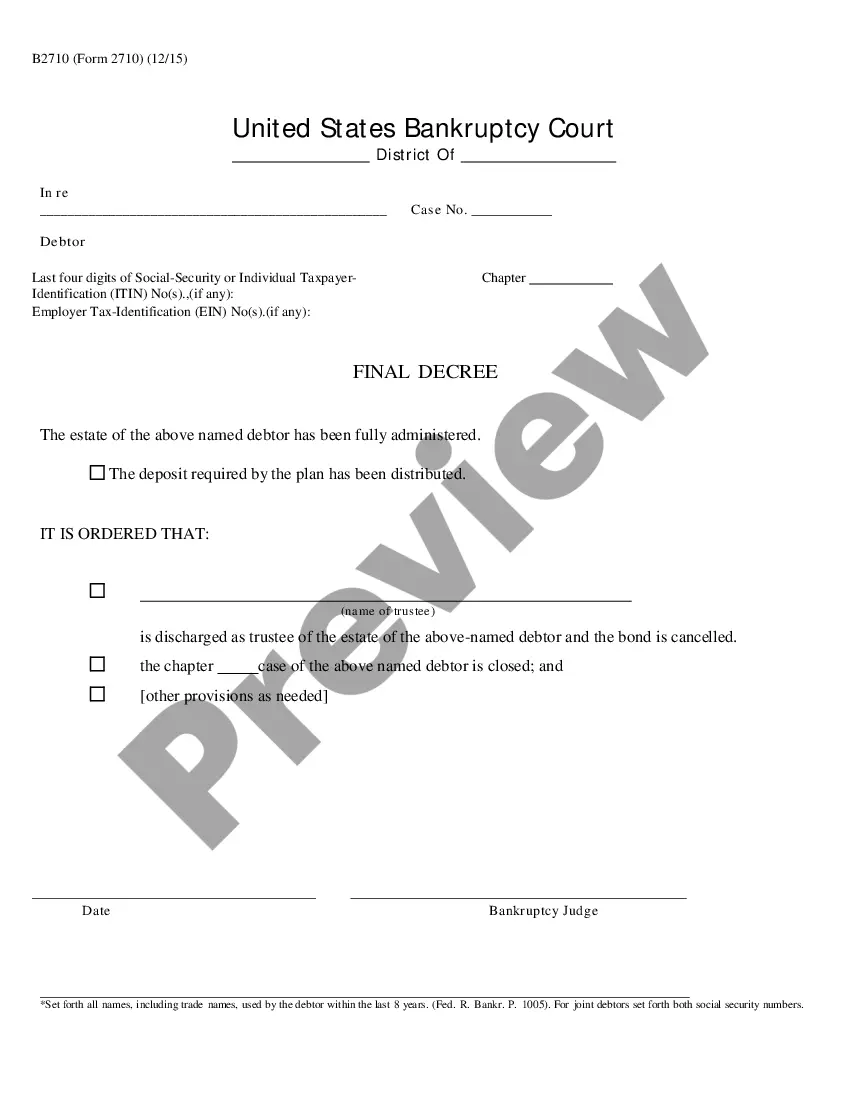
The Order on Final Settlement is a court order that approves the final settlement of an estate and the administration process. It signifies that all debts and claims against the estate have been settled, and all assets have been distributed according to the law. Unlike other estate documents, this form specifically confirms the conclusion of the estate administration process and the discharge of the administrator.
Form components explained
- Case number and details of the deceased estate
- Petition for consent settlement by the estate administrator
- Identification of heirs and next of kin
- Verification that claims against the estate have been settled
- Confirmation of complete distribution of estate assets
- Order and date of final settlement, along with signatures of the judge
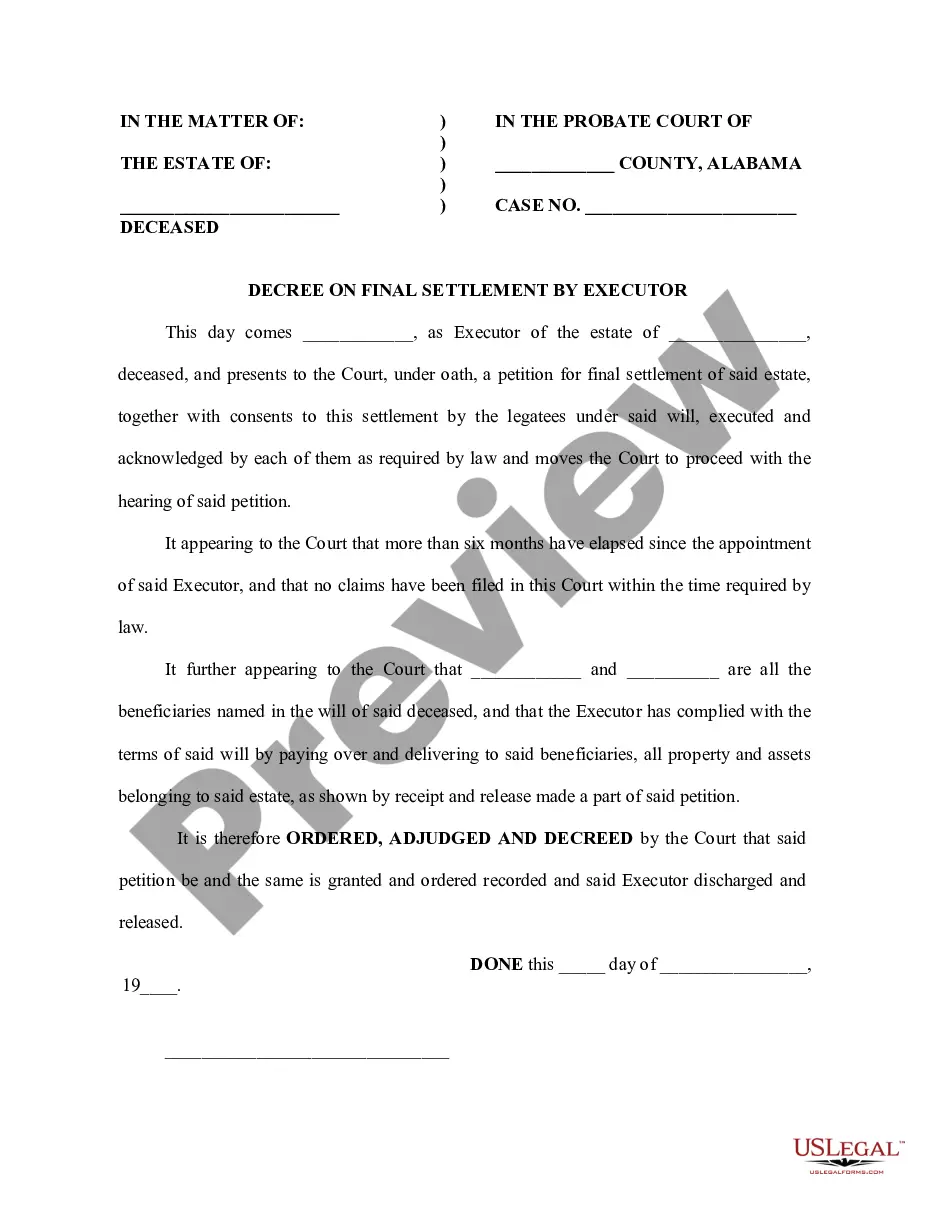
Common use cases
This form is used when an estate has completed its administration process, including the settlement of all debts and distribution of assets. It is essential once all heirs have agreed on the distribution details and the administrator has accounted for all estate activities. The order signifies legal approval of the final settlement, ensuring all parties are discharged from further responsibilities.
Who can use this document
This form is intended for:
- The administrator of an estate who has completed the administration process
- Heirs and next of kin of the deceased who need to finalize the settlement
- Legal representatives or attorneys managing the estate's closure
Instructions for completing this form
- Identify the estate and the decedent by entering their names and relevant case numbers.
- Complete the details of the administrator and all heirs involved in the estate.
- Confirm that all debts and claims against the estate have been settled.
- Ensure all estate assets have been accounted for and either distributed or ready for distribution.
- Enter the judge's name and date the order before finalizing the document.
Does this document require notarization?
In most cases, this form does not require notarization. However, some jurisdictions or signing circumstances might. US Legal Forms offers online notarization powered by Notarize, accessible 24/7 for a quick, remote process.
Get your form ready online
Our built-in tools help you complete, sign, share, and store your documents in one place.
Make edits, fill in missing information, and update formatting in US Legal Forms—just like you would in MS Word.
Download a copy, print it, send it by email, or mail it via USPS—whatever works best for your next step.
Sign and collect signatures with our SignNow integration. Send to multiple recipients, set reminders, and more. Go Premium to unlock E-Sign.
If this form requires notarization, complete it online through a secure video call—no need to meet a notary in person or wait for an appointment.
We protect your documents and personal data by following strict security and privacy standards.

Make edits, fill in missing information, and update formatting in US Legal Forms—just like you would in MS Word.

Download a copy, print it, send it by email, or mail it via USPS—whatever works best for your next step.

Sign and collect signatures with our SignNow integration. Send to multiple recipients, set reminders, and more. Go Premium to unlock E-Sign.

If this form requires notarization, complete it online through a secure video call—no need to meet a notary in person or wait for an appointment.

We protect your documents and personal data by following strict security and privacy standards.
Common mistakes to avoid
- Failing to list all heirs or next of kin accurately.
- Not confirming that all claims against the estate have been resolved.
- Leaving out the case number, which is essential for court tracking.
- Omitting the date or judge's signature before submitting the form.
Why complete this form online
- Immediate access to official legal templates tailored for your needs.
- Convenient editing options to customize the form as necessary.
- Reliable compliance with current legal standards and practices.
Looking for another form?


Form popularity
FAQ
Alabama has a simplified probate process for small estates.The court may authorize the inheritor to distribute the assets without having to jump through the hoops of regular probate. You can use the simplified small estate process in Alabama if the estate has no real estate and a value of no more than $25,000.
In Alabama, the estate executor is known as a "personal representative". Executors for Alabama estates are entitled to reasonable compensation of up to 2.5% of assets received, and 2.5% of disbursements.
The will is filed with the probate court in the county where the deceased resided. The court appoints an executor and provides letters testamentary to enable the executor to conduct business on behalf of the estate.
The time it takes to administer an estate in Alabama will vary depending on the complexity of the estate and the diligence of the personal representative. But since the estate must remain open for six months to allow creditors to submit claims, it is not possible to close the estate in less than six months.
Generally, an executor has 12 months from the date of death to distribute the estate. This is known as 'the executor's year'. However, for various reasons the executor may have been delayed and has not distributed the estate within this time frame.
By law, the probate of an estate in Alabama will take at least six months. This period gives creditors and others with a claim on the estate time to receive notice that the estate is being probated and to submit a claim.
In Alabama, you can make a living trust to avoid probate for virtually any asset you ownreal estate, bank accounts, vehicles, and so on. You need to create a trust document (it's similar to a will), naming someone to take over as trustee after your death (called a successor trustee).
File the Will and Probate Petition. Secure Personal Property. Appraise and Insure Valuable Assets. Cancel Personal Accounts. Determine Cash Needs. Remove Estate Tax Lien. Determine Location of Assets and Secure "Date of Death Values" Submit Probate Inventory.