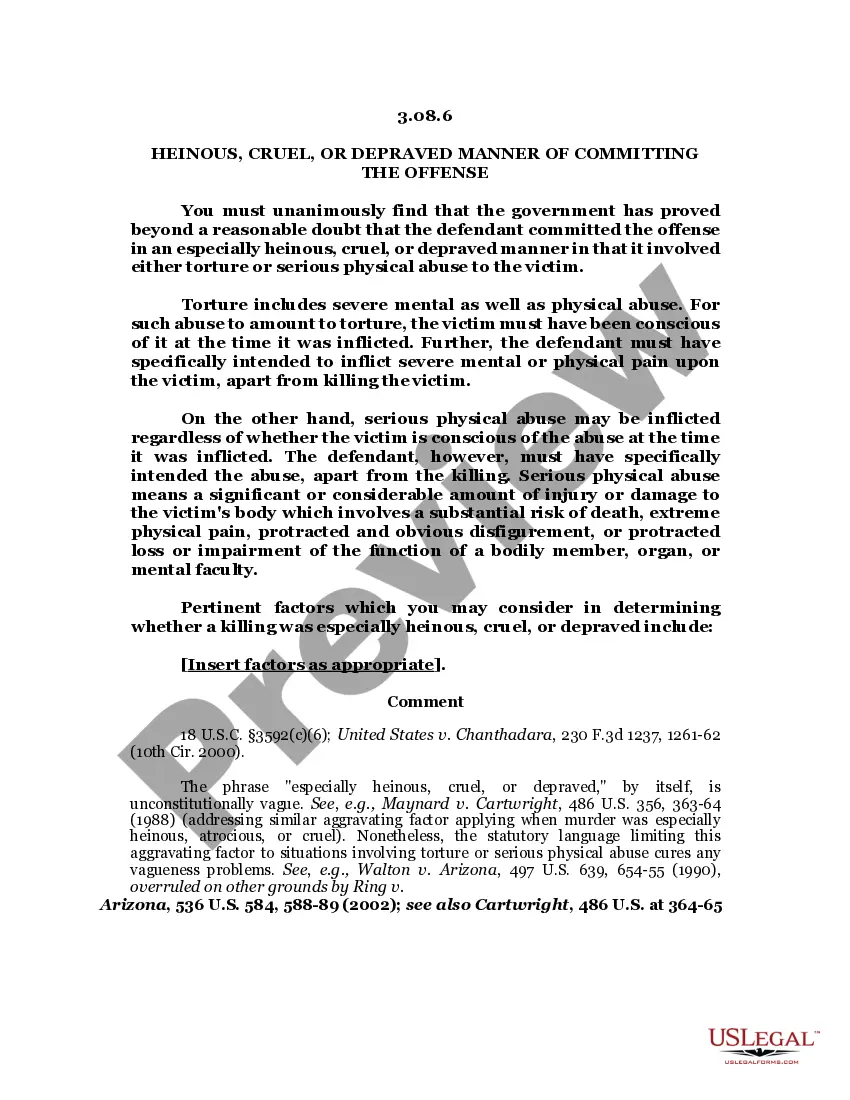
Complaint For Discriminatory Discharge Based Upon Race and Physical Handicap Jury Trial Demand
About this form
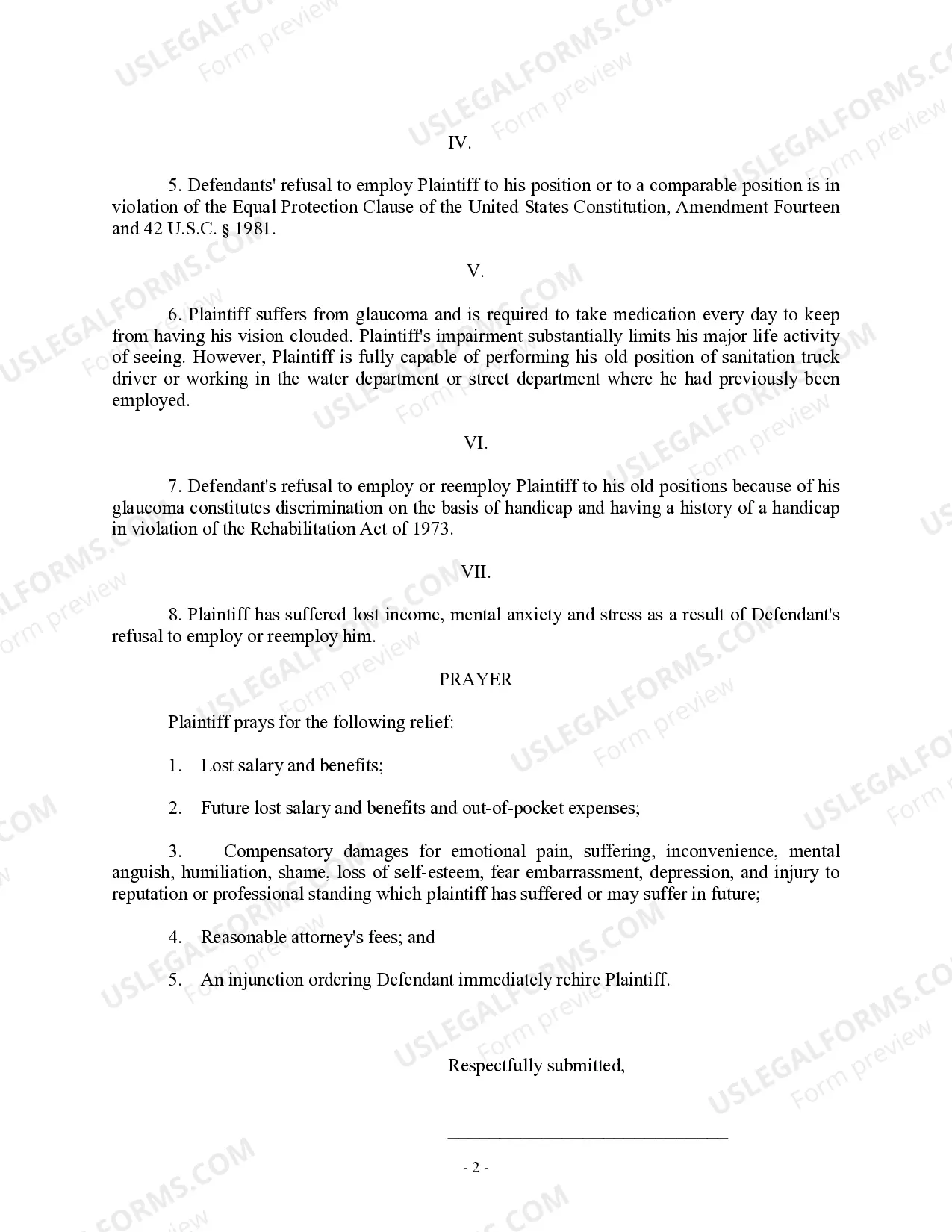
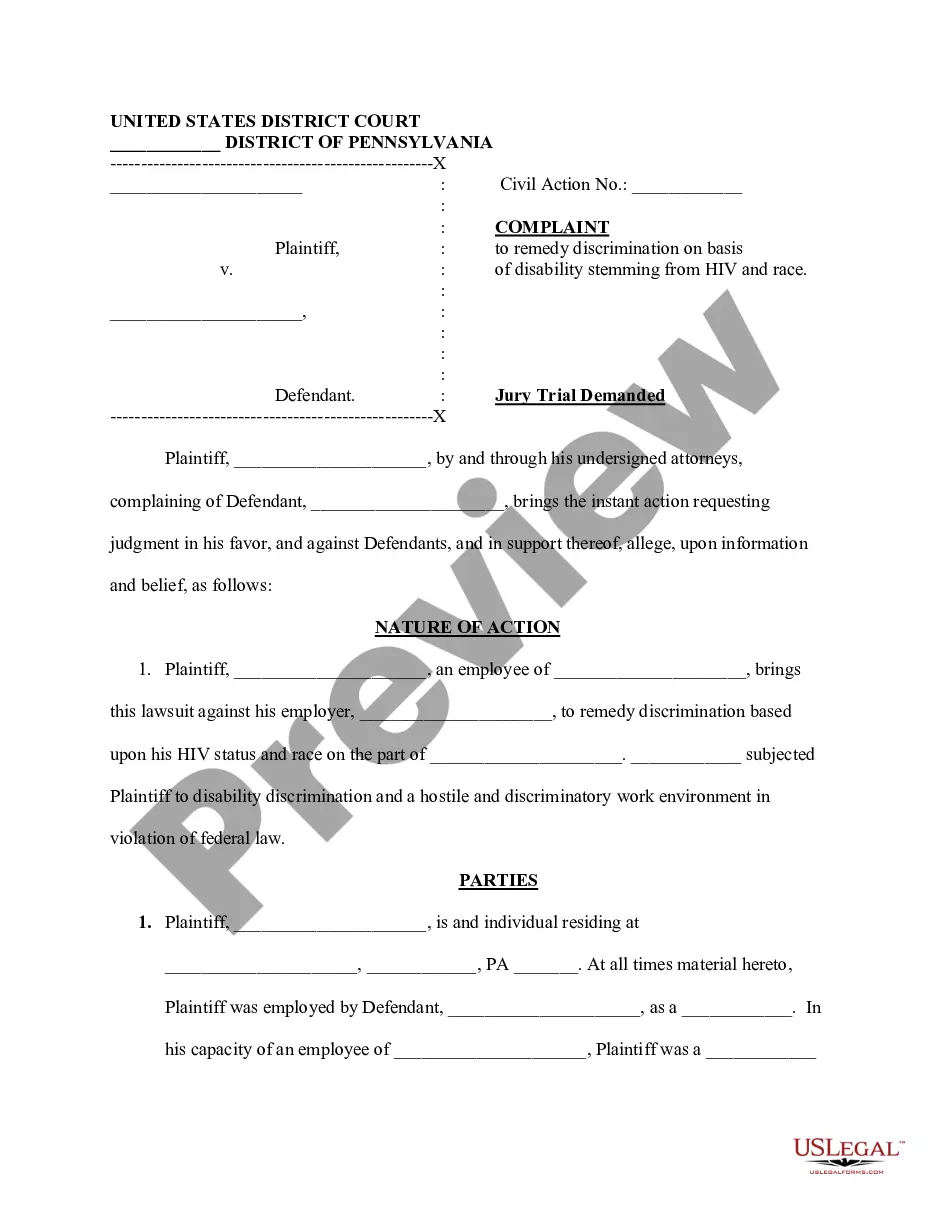
The Complaint For Discriminatory Discharge Based Upon Race and Physical Handicap Jury Trial Demand is a legal document used by plaintiffs who believe they have been wrongfully terminated from their employment due to race discrimination or physical handicap, as defined under federal law. This form is essential for initiating a lawsuit in pursuit of damages for lost wages, emotional suffering, and other compensatory claims resulting from the discriminatory practices of an employer. Unlike general employment termination forms, this document specifically addresses issues of discrimination and seeks not only reinstatement but also financial restitution for the harm suffered.
Main sections of this form
- Identification of the plaintiff and defendant, including their legal status and roles.
- Detailed allegations of discrimination based on race and physical handicap.
- Basis for federal jurisdiction, outlining relevant legal statutes.
- Specification of the damages sought, including lost income and emotional distress compensation.
- A request for a jury trial, emphasizing the plaintiff's right to have the case heard by a jury.





Common use cases
This form should be used if you have been terminated from your job and believe that your dismissal was a direct result of race discrimination or a physical handicap. If you have experienced employment discrimination, this complaint will help you to formally present your case to the court, enabling you to claim reparations and seek justice for your wrongful termination.
Who can use this document
- Individuals who have been wrongfully terminated from their job on the basis of race.
- Employees who feel their disability has led to discriminatory practices by their employer.
- People seeking legal recourse for emotional pain and lost wages due to employment discrimination.
How to prepare this document
- Identify the parties involved by filling out the full names and addresses of the plaintiff and defendants.
- State the facts of your case, detailing the circumstances of your termination and how it relates to discrimination.
- Cite the specific laws that support your claim, including relevant statutes that pertain to your case.
- List the damages you are requesting, specifying lost income, emotional distress, and any other relevant expenses.
- Sign and date the form to affirm that all information provided is accurate and complete.
Notarization guidance
This form does not typically require notarization unless specified by local law. Ensure you check local regulations or consult with a legal professional for any specific requirements related to your jurisdiction.
Get your form ready online
Our built-in tools help you complete, sign, share, and store your documents in one place.
Make edits, fill in missing information, and update formatting in US Legal Forms—just like you would in MS Word.
Download a copy, print it, send it by email, or mail it via USPS—whatever works best for your next step.
Sign and collect signatures with our SignNow integration. Send to multiple recipients, set reminders, and more. Go Premium to unlock E-Sign.
If this form requires notarization, complete it online through a secure video call—no need to meet a notary in person or wait for an appointment.
We protect your documents and personal data by following strict security and privacy standards.

Make edits, fill in missing information, and update formatting in US Legal Forms—just like you would in MS Word.

Download a copy, print it, send it by email, or mail it via USPS—whatever works best for your next step.

Sign and collect signatures with our SignNow integration. Send to multiple recipients, set reminders, and more. Go Premium to unlock E-Sign.

If this form requires notarization, complete it online through a secure video call—no need to meet a notary in person or wait for an appointment.

We protect your documents and personal data by following strict security and privacy standards.
Avoid these common issues
- Failing to accurately identify all defendants involved in the discriminatory act.
- Not providing sufficient detail regarding the circumstances surrounding the termination.
- Missing the signature or date on the complaint.
- Neglecting to clearly specify the damages sought.
- Overlooking local rules regarding filing deadlines and procedures.
Advantages of online completion
- Easy access to a legally vetted template, ensuring compliance with current laws.
- Editable format allows you to personalize the form to your situation efficiently.
- Quick download for immediate use, saving time in your legal process.
- Clear instructions streamline the completion process, aiding those unfamiliar with legal terminology.
Legal use & context
- The form enables individuals to seek legal remedies for employment discrimination based on race and disability.
- Filing such a complaint initiates legal proceedings and provides a basis for a lawsuit in civil court.
- It is crucial for plaintiffs to adhere to their stateâs laws regarding the timeline and process for filing such claims.
Quick recap
- This form is essential for individuals alleging discriminatory discharge related to race or physical handicaps.
- Accurate completion and timely filing are critical for pursuing your legal rights.
- Consulting with a legal professional is recommended for guidance specific to your case.
Looking for another form?


Form popularity
FAQ
Last year was an incredibly important and productive year for the agency and my thanks go out to all of the staff who rose to the occasion," added Lipnic. The FY 2018 data show that retaliation continued to be the most frequently filed charge filed with the agency, followed by sex, disability and race.
There are limits on the amount of compensatory and punitive damages a person can recover. These limits vary depending on the size of the employer: For employers with 15-100 employees, the limit is $50,000. For employers with 101-200 employees, the limit is $100,000.
However, federal law limits how much you can be awarded for emotional distress, out-of-pocket losses (such as the costs of looking for a new job), and punitive damages. The maximum combined award for these damages ranges from $50,000 to $300,000, depending on the size of your employer.
You can file a formal job discrimination complaint with the EEOC whenever you believe you are: Being treated unfairly on the job because of your race, color, religion, sex (including pregnancy, gender identity, and sexual orientation), national origin, disability, age (age 40 or older) or genetic information; or.
Hire a Qualified Attorney. EEOC complaints do not necessarily have to result in court cases. Maintain Composure. Mediators handle sensitive issues. Prepare Relevant Documentation. Consider Reaching Out to Coworkers. Be as Professional as Possible.
Typically, a discrimination lawsuit in a California court could take a year or longer to litigate. When we're looking at cases with a higher value, those could take longer because the plaintiff is inclined to fight harder and the employer wants to fight back to bring down the case's worth.
In order to officially file the workplace discrimination claim, you need to contact The Equal Employment Opportunity Commission (EEOC). You may file the claim in person at the nearest EEOC office, and you can also file the claim by mail or online.
Typical Settlements in Disability Discrimination Lawsuits But, anecdotally, it is fair to say that the majority of disability discrimination cases settle for under $50,000. If you have a case you should not expect a certain amount from your lawsuit.
$50,000 to an employee if the employer has between 15 and 100 employees; $100,000 if the employer has 101 to 200 employees; $200,000 if the employer has 201 to 500 employees; and.