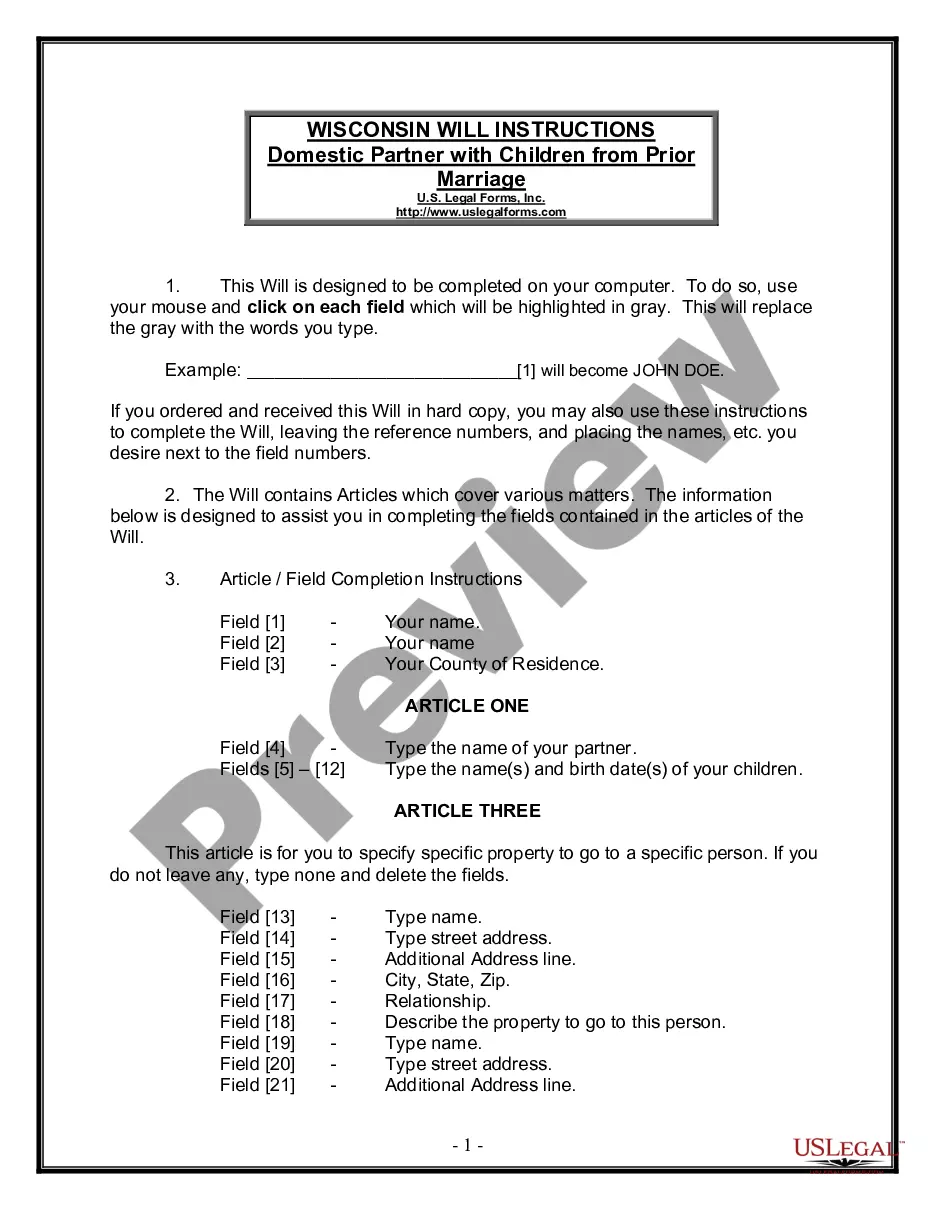
Complaint to remedy discrimination on basis of disability and race
What this document covers
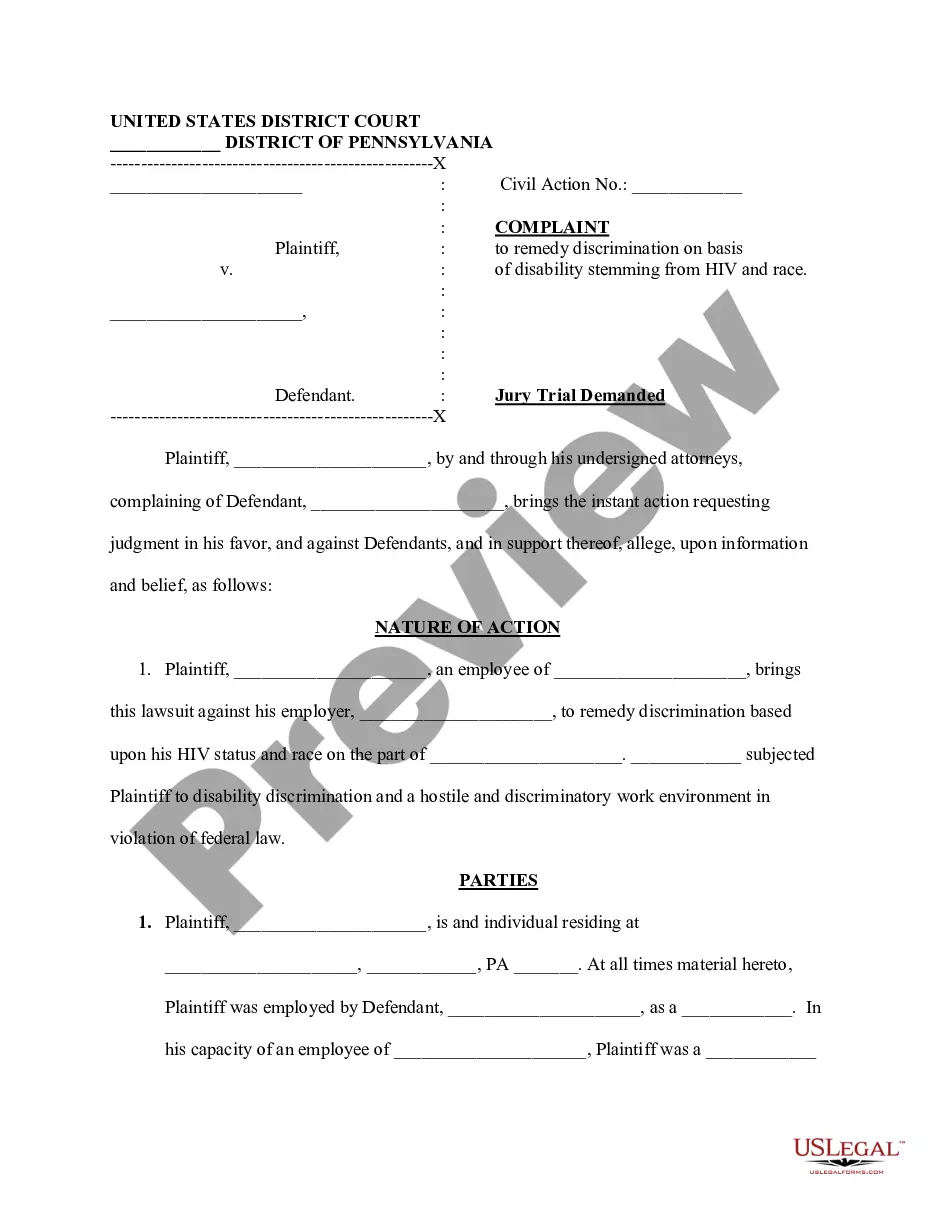
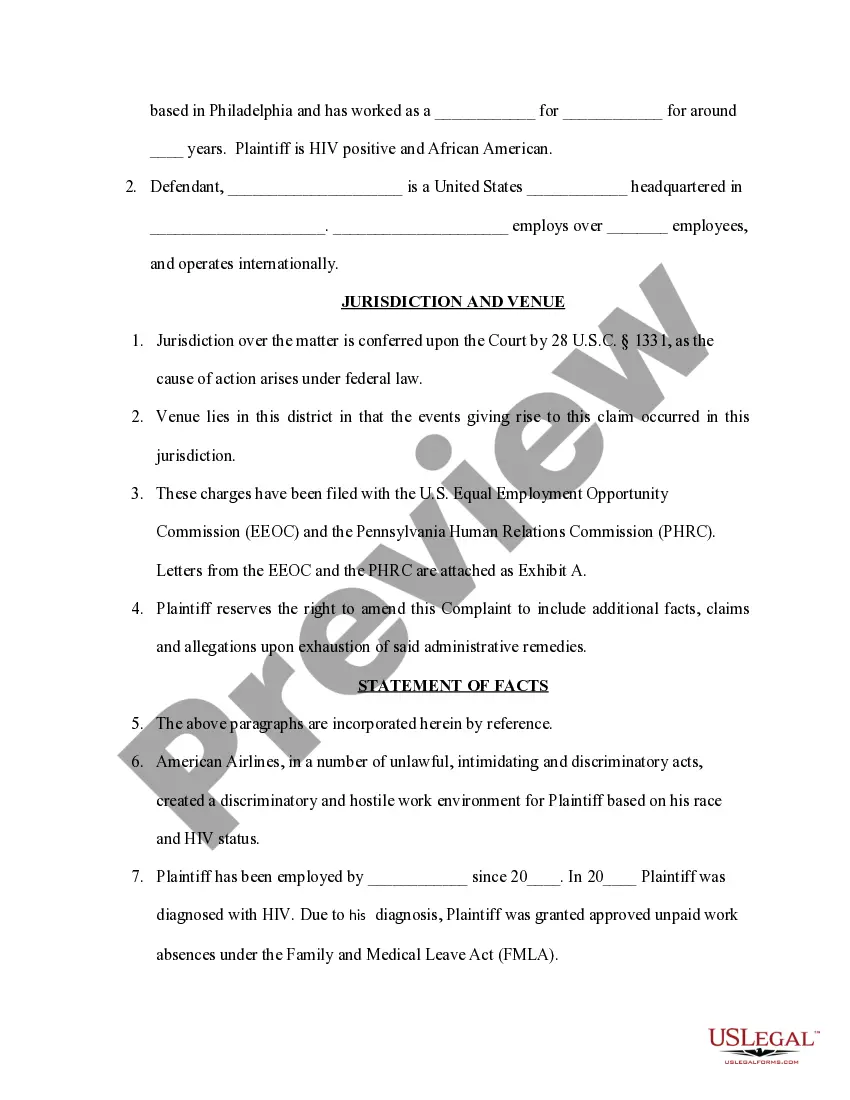
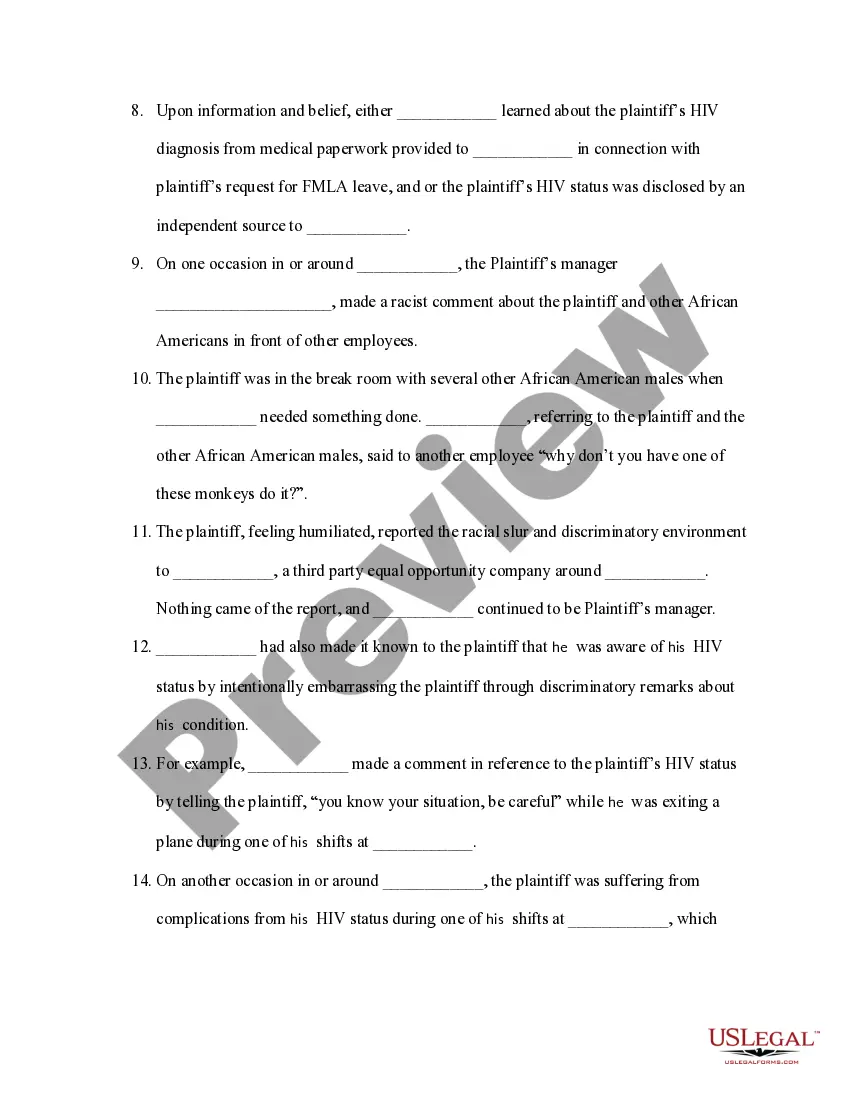
The Complaint to remedy discrimination on the basis of disability and race is a legal document used in the US District Court for Pennsylvania. This form allows individuals to formally allege employment discrimination based on race and HIV status, citing violations of federal laws such as Title VII and 42 USC Section 1981. It differs from similar forms as it combines claims of racial and disability discrimination alongside retaliation and emotional distress allegations, offering a comprehensive framework for legal resolution.
Form components explained
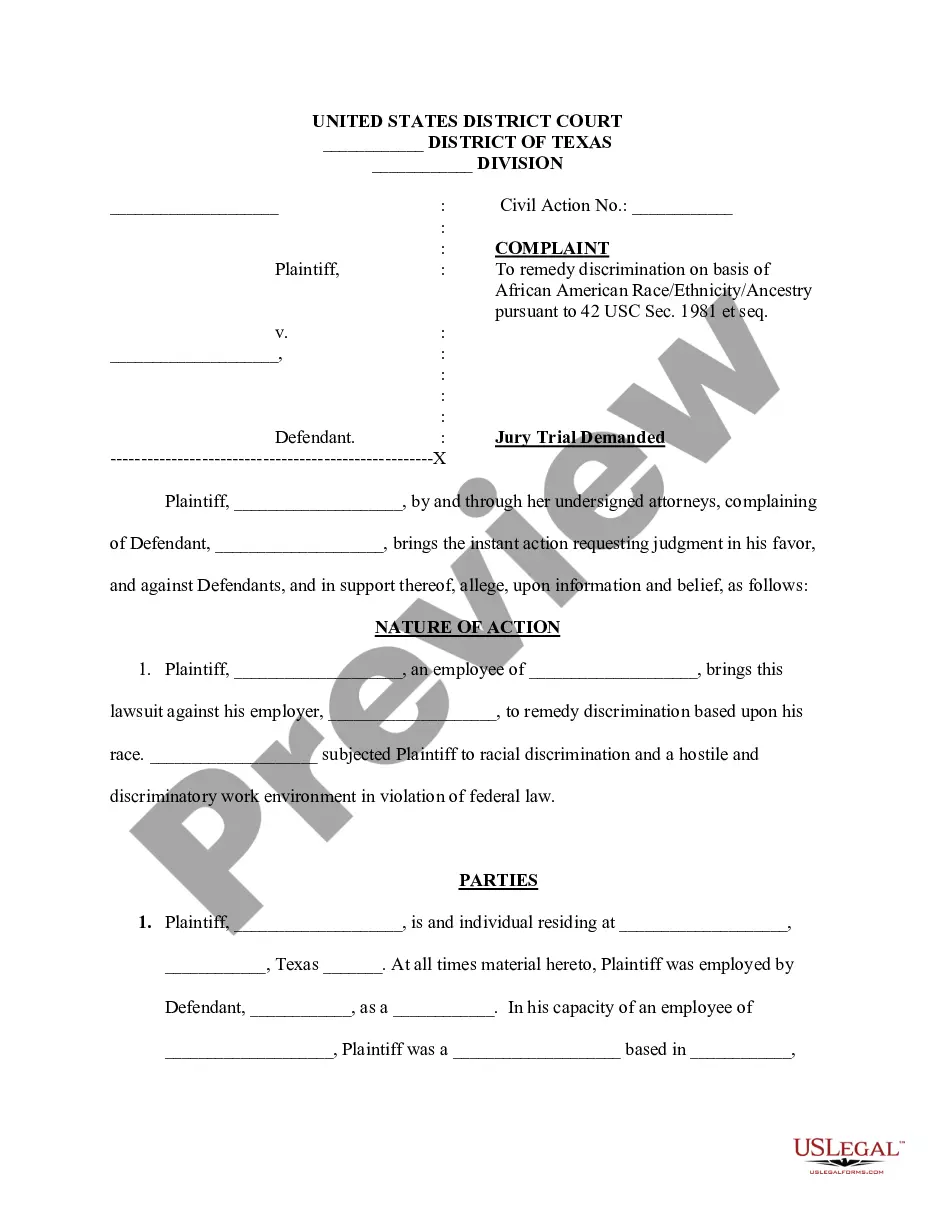
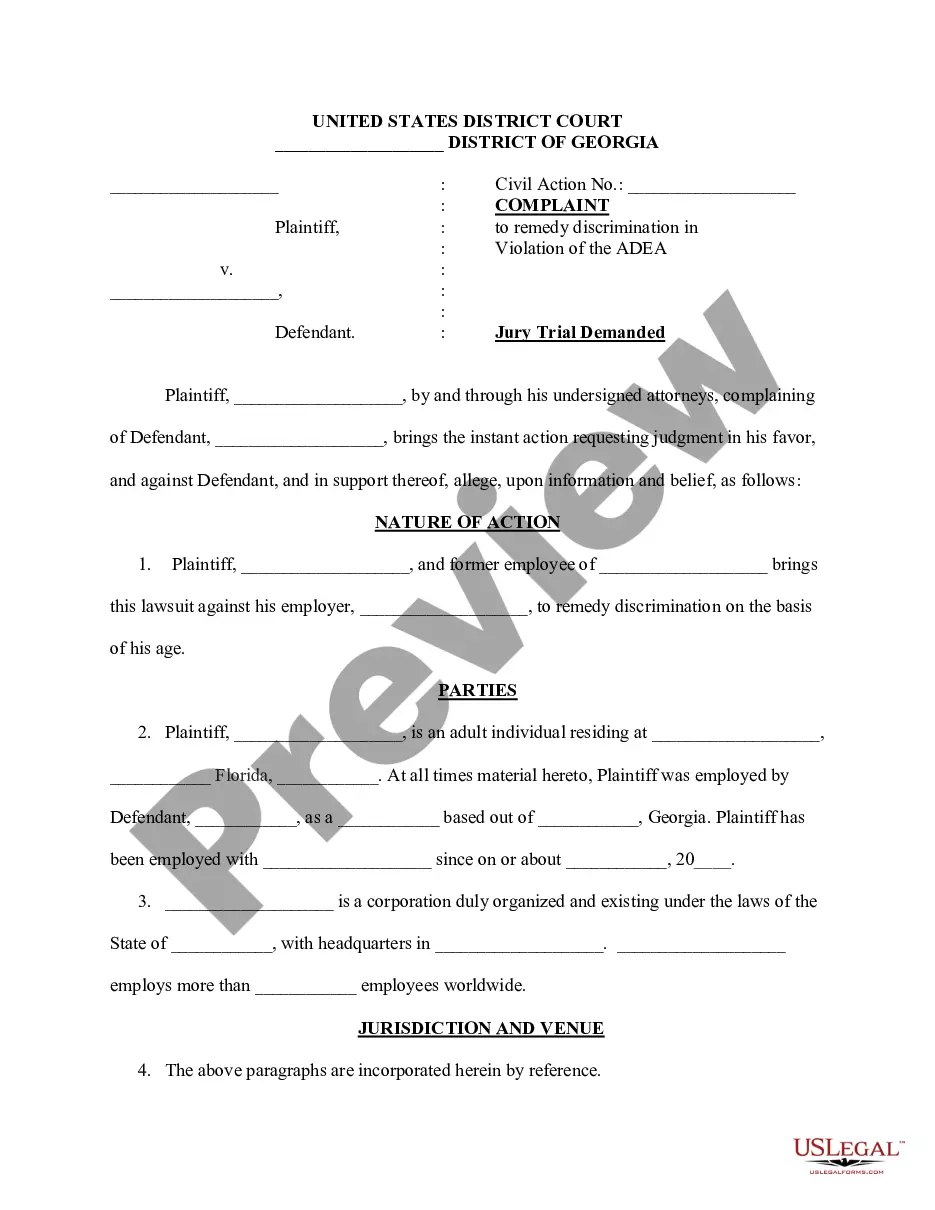
- Caption including parties involved and the case number.
- NATURE OF ACTION outlining claims of discrimination and specified laws violated.
- PARTIES section detailing the plaintiff's and defendant's information.
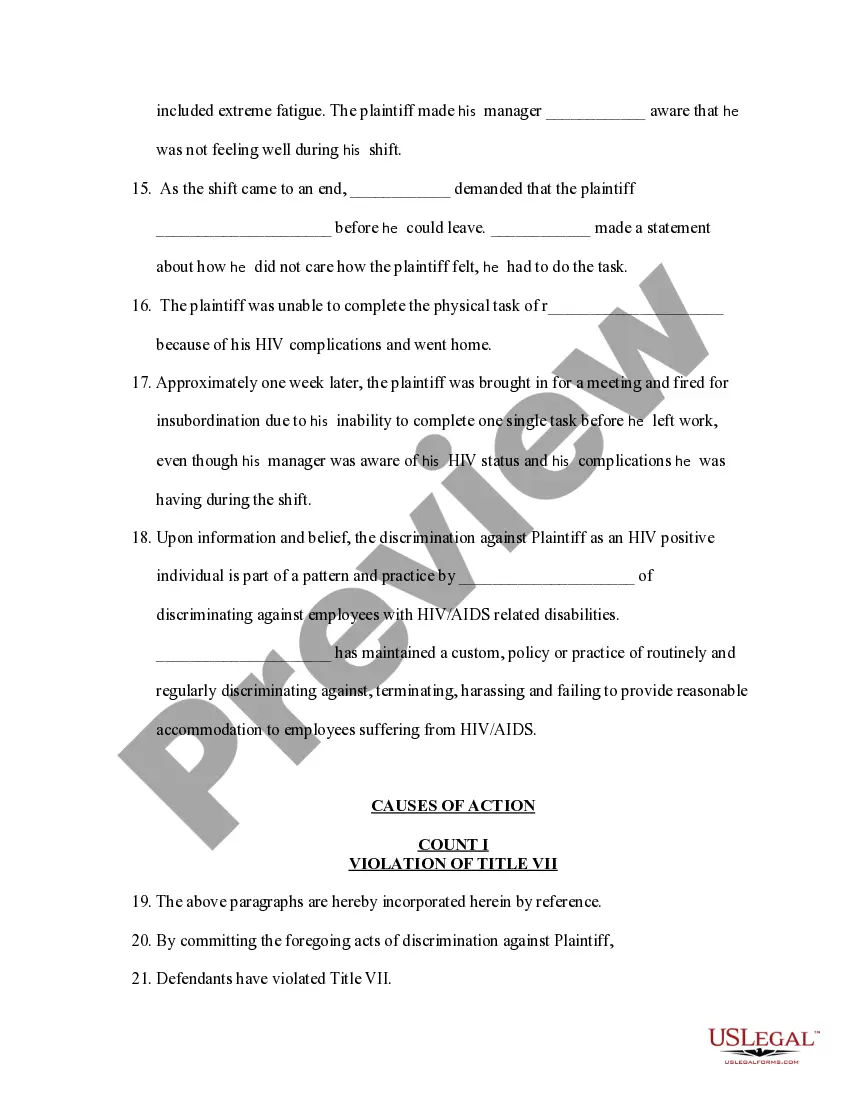
- STATEMENT OF FACTS that presents the incidents supporting the discrimination claims.
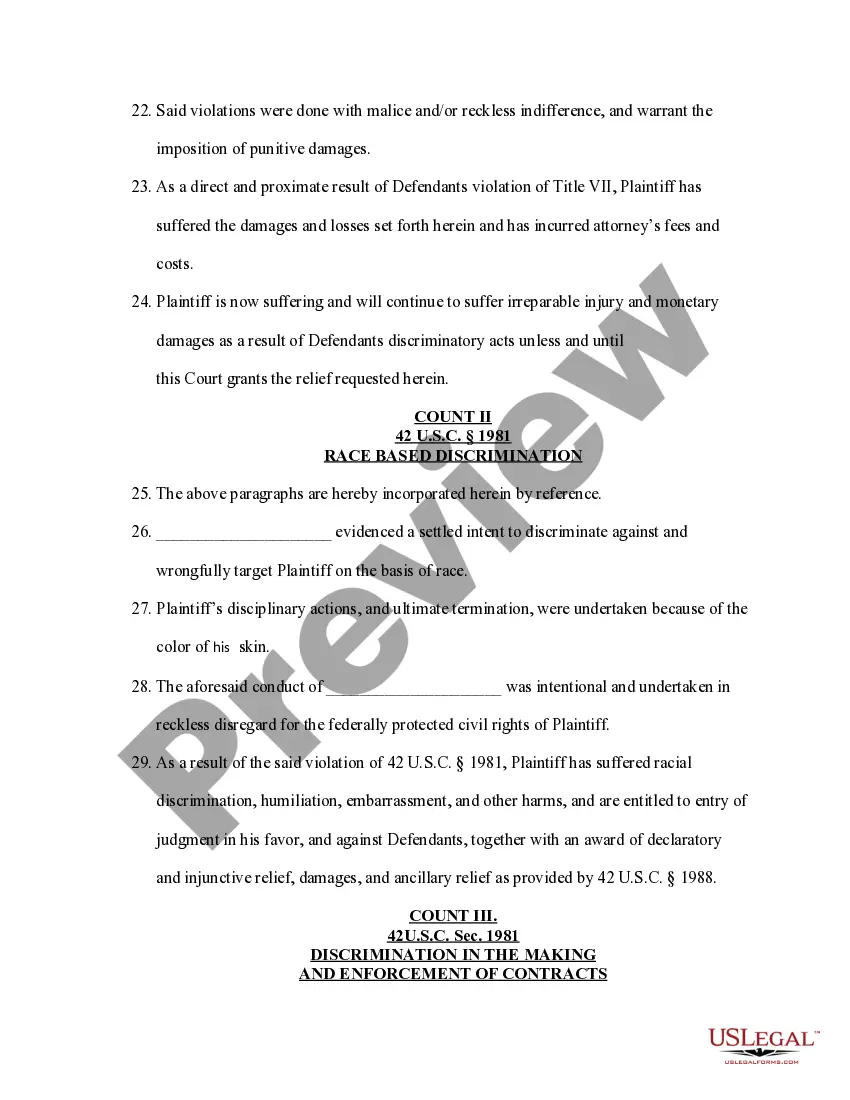
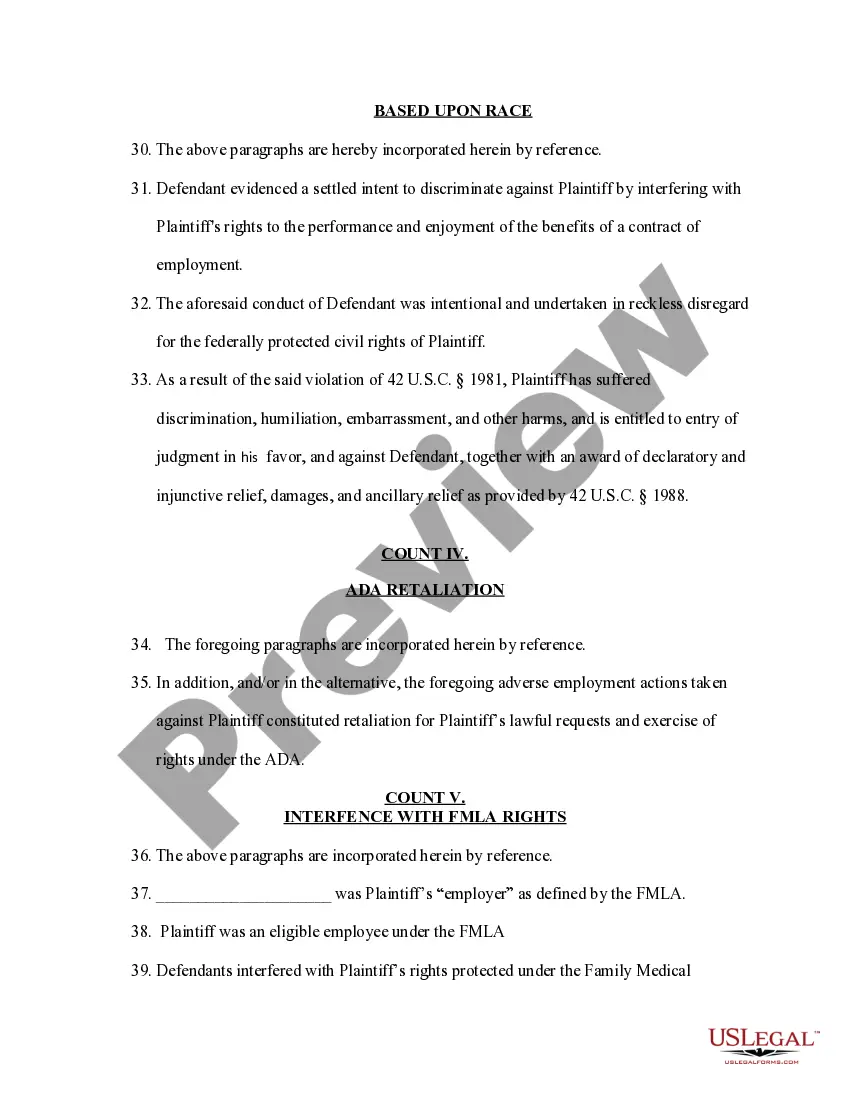
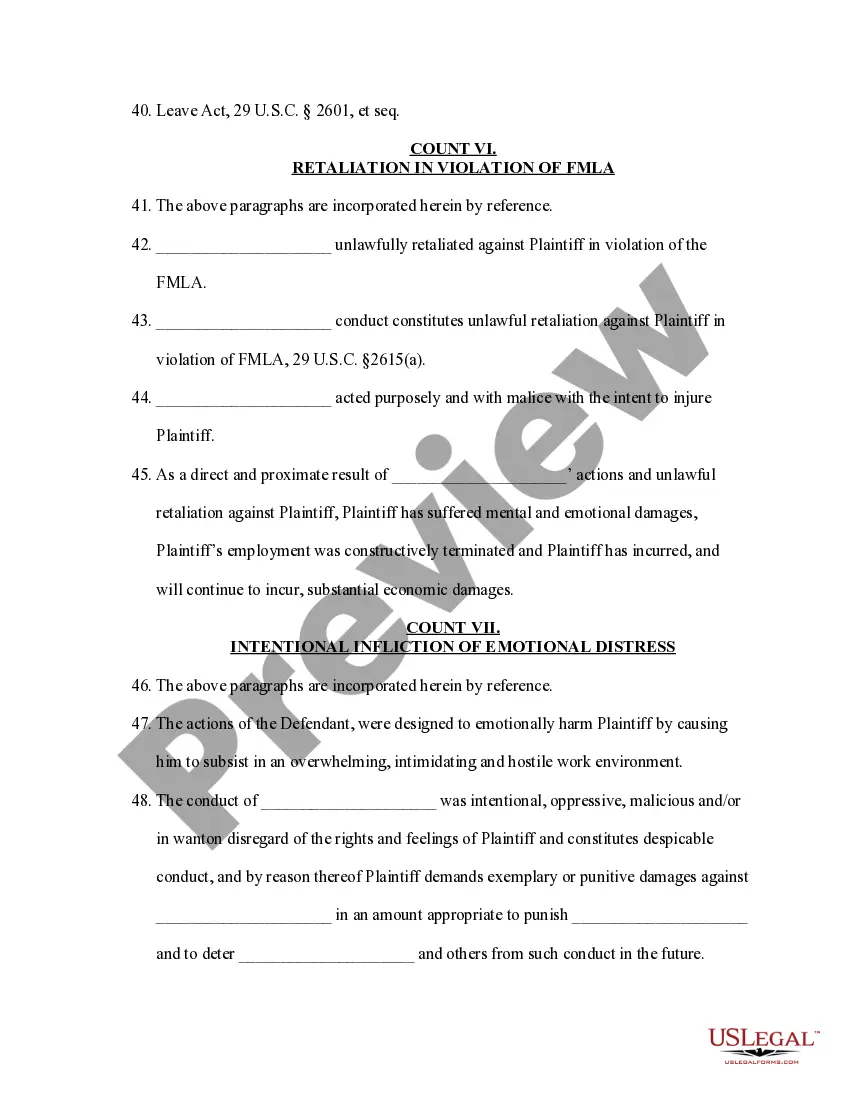
- CAUSES OF ACTION listing specific legal grounds for the lawsuit including Title VII, race-based discrimination, and FMLA rights.
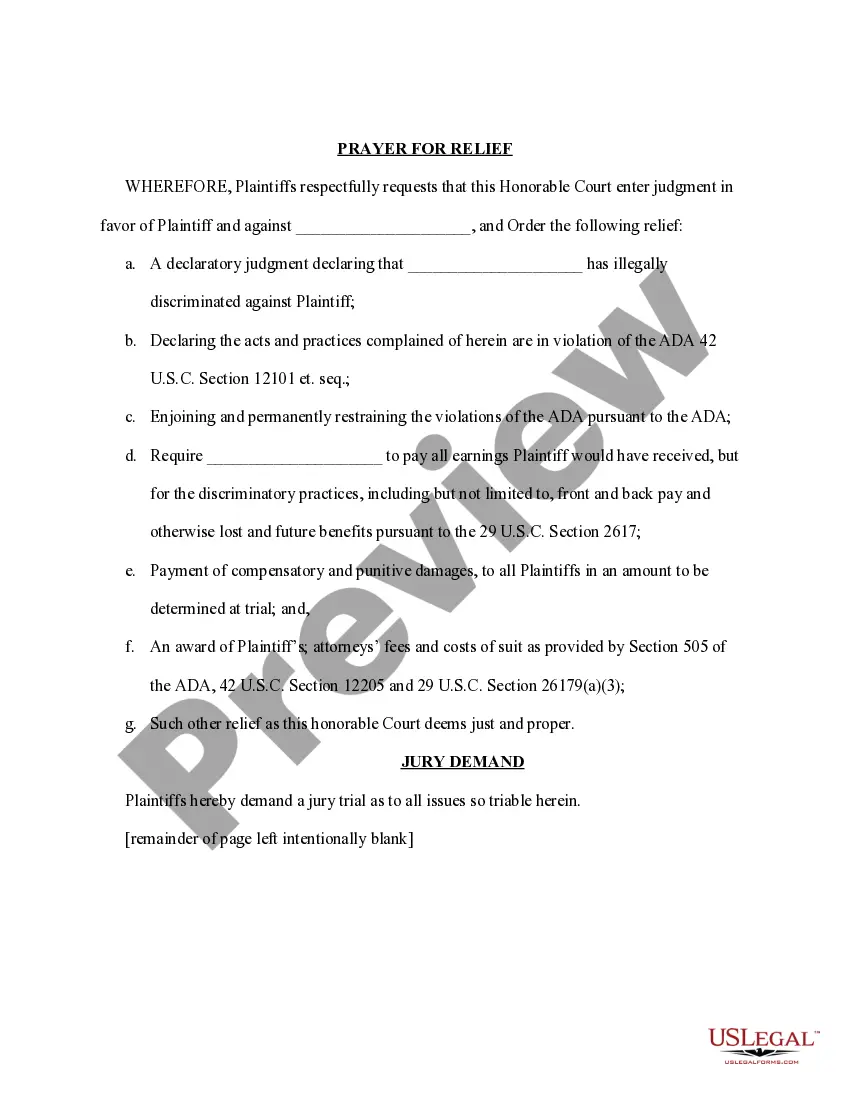
- PRAYER FOR RELIEF specifying the compensatory and punitive damages sought.
- JURY DEMAND indicating the request for a jury trial.



When to use this form
This form should be used when an employee believes they have faced discrimination at work based on their race and disability related to HIV. It is applicable in instances of discriminatory remarks or actions from employers, wrongful termination, violation of Family and Medical Leave Act (FMLA) rights, or when retaliation occurs against an employee for asserting their rights. It serves as a formal means of seeking justice and remedying workplace discrimination.
Who needs this form
- Individuals (plaintiffs) employed in Pennsylvania who have experienced discrimination due to race and HIV status.
- Employees seeking to address violations of their civil rights within the employment context.
- Those who have a valid complaint regarding retaliation or interference with their medical leave rights.
- Anyone requiring legal documentation to support claims in court regarding employment discrimination.
Instructions for completing this form
- Identify the parties: Fill in the names and contact details for both the plaintiff and defendant.
- State the nature of the action: Clearly outline the events leading to the complaint and the basis for the discrimination claims.
- Document the facts: Accurately detail the incidents of discrimination and any relevant communications.
- Specify the legal grounds: Indicate all laws that support your claims, such as Title VII and the FMLA.
- Complete the prayer for relief: List the specific remedies you are seeking from the court.
- Sign and date the document: Ensure all signatures are properly placed before submission.
Notarization guidance
Notarization is not commonly needed for this form. However, certain documents or local rules may make it necessary. Our notarization service, powered by Notarize, allows you to finalize it securely online anytime, day or night.
Get your form ready online
Our built-in tools help you complete, sign, share, and store your documents in one place.
Make edits, fill in missing information, and update formatting in US Legal Forms—just like you would in MS Word.
Download a copy, print it, send it by email, or mail it via USPS—whatever works best for your next step.
Sign and collect signatures with our SignNow integration. Send to multiple recipients, set reminders, and more. Go Premium to unlock E-Sign.
If this form requires notarization, complete it online through a secure video call—no need to meet a notary in person or wait for an appointment.
We protect your documents and personal data by following strict security and privacy standards.

Make edits, fill in missing information, and update formatting in US Legal Forms—just like you would in MS Word.

Download a copy, print it, send it by email, or mail it via USPS—whatever works best for your next step.

Sign and collect signatures with our SignNow integration. Send to multiple recipients, set reminders, and more. Go Premium to unlock E-Sign.

If this form requires notarization, complete it online through a secure video call—no need to meet a notary in person or wait for an appointment.

We protect your documents and personal data by following strict security and privacy standards.
Mistakes to watch out for
- Failing to include sufficient details about discriminatory incidents can weaken the case.
- Omitting information about previous complaints filed with the EEOC or the PHRC.
- Not clearly stating the relief sought can lead to complications in court.
- Neglecting to sign or date the form, which can invalidate the submission.
Benefits of completing this form online
- Convenience of completing and submitting the form from anywhere.
- Editable format allowing users to tailor the complaint to their specific situation.
- Access to expert guidance and templates drafted by licensed attorneys.
- Secure and reliable process, protecting sensitive information.
Legal use & context
- This form is a crucial first step in legally addressing discrimination in the workplace.
- It enables individuals to assert their rights under federal laws protecting against discrimination.
- Effective use of this form may lead to a resolution of the dispute through legal channels.
Looking for another form?
Form popularity
FAQ
What is direct discrimination? age. disability. gender reassignment. marriage or civil partnership. pregnancy and maternity. race. religion or belief. sex.
Title VII of the Civil Rights Act of 1964 prohibits discrimination in hiring, promotion, discharge, pay, fringe benefits, job training, classification, referral, and other aspects of employment, on the basis of race, color, religion, sex or national origin.
Persons with disabilities have the same rights as all people to non-discrimination, access, equality of opportunity, inclusion and full participation in society. These are the basic principles underlying the Americans with Disabilities Act and the Convention on the Rights of Persons with Disabilities.
How to Win a Disability Discrimination Case proof that your employer knew about your disability; evidence that your disability still qualified you for the job; proof that your employer refuses to offer reasonable accommodation for your disability such as allowing you to sit more often because you suffer from back pain;
What are the Most Common Forms of Disability Discrimination? Refusing to Hire a Job Applicant Based on Their Disability.Firing or Demoting an Employee Because of Their Disability.Failing to Give Disabled Employees the Same Opportunities.Harassing an Employee Based on Their Disability.
The Americans with Disabilities Act (ADA) prohibits discrimination against people with disabilities and guarantees equal opportunities for individuals with disabilities in employment, transportation, public accommodations, state and local government services, and telecommunications.
In writing a discrimination complaint, you must identify issues and bases clearly. Issues are the 'acts of harm' you suffered as result of the decision makers discriminatory or retaliatory intent or animus. Bases are the basis up which the act of harm occurred.
Disability discrimination occurs when an employer or other entity covered by Title I of the Americans with Disabilities Act (ADA) (which protects private and state and local employees) or the Rehabilitation Act (which protects federal employees) treats a qualified employee or applicant unfavorably because of disability