Complaint to remedy discrimination on basis of race, ethnicity and ancestry
What is this form?
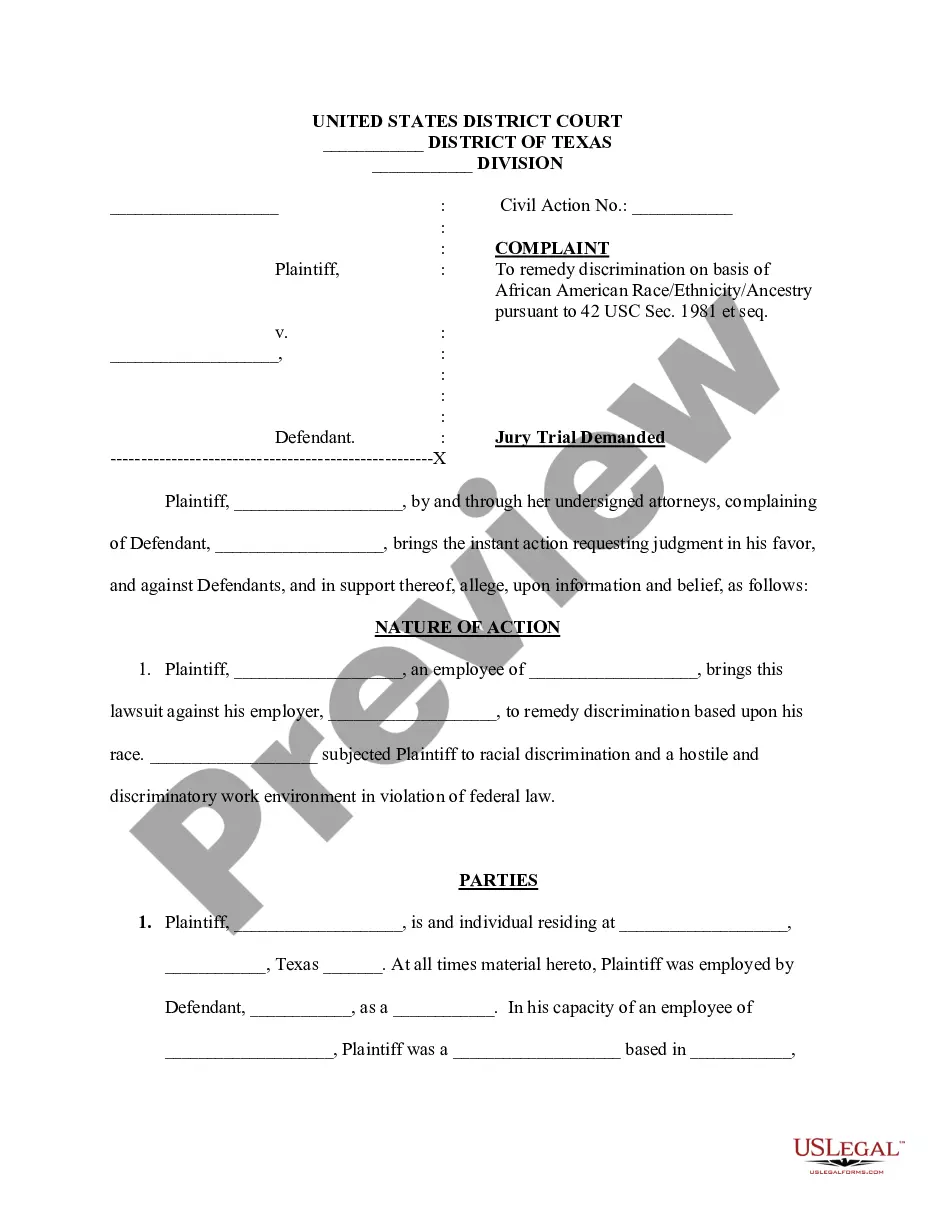
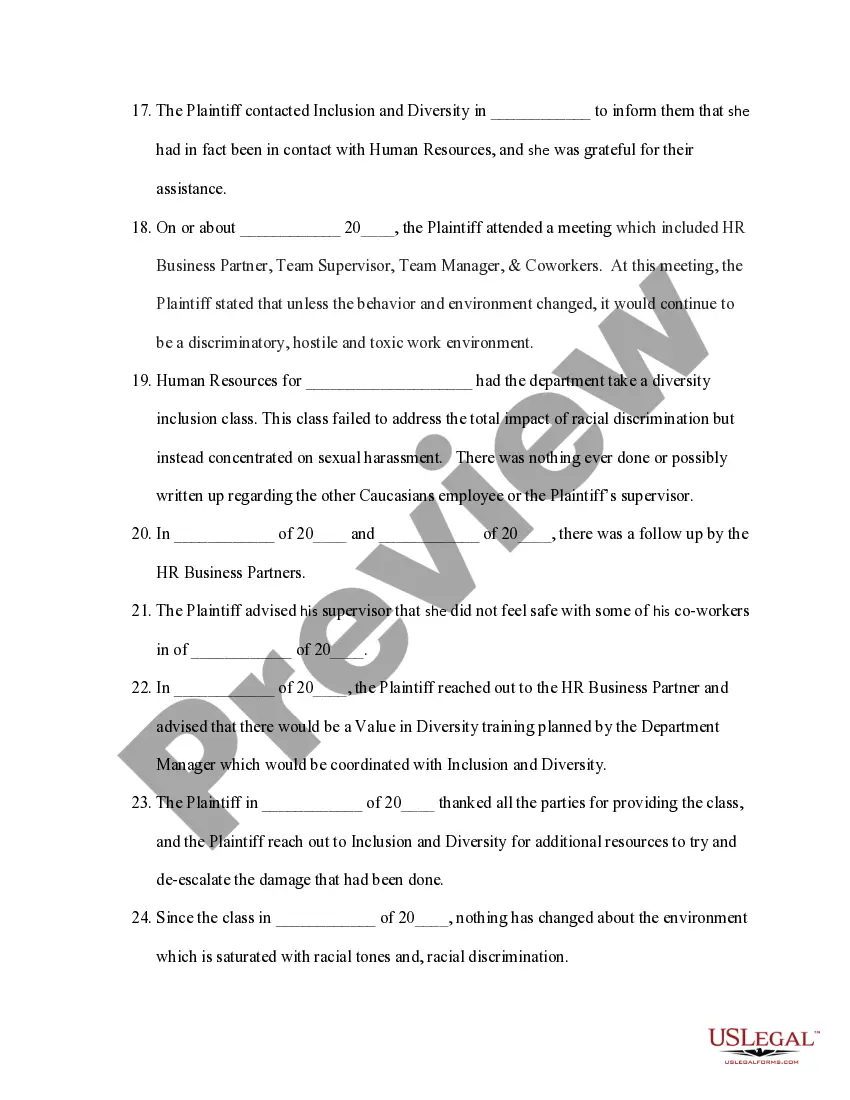
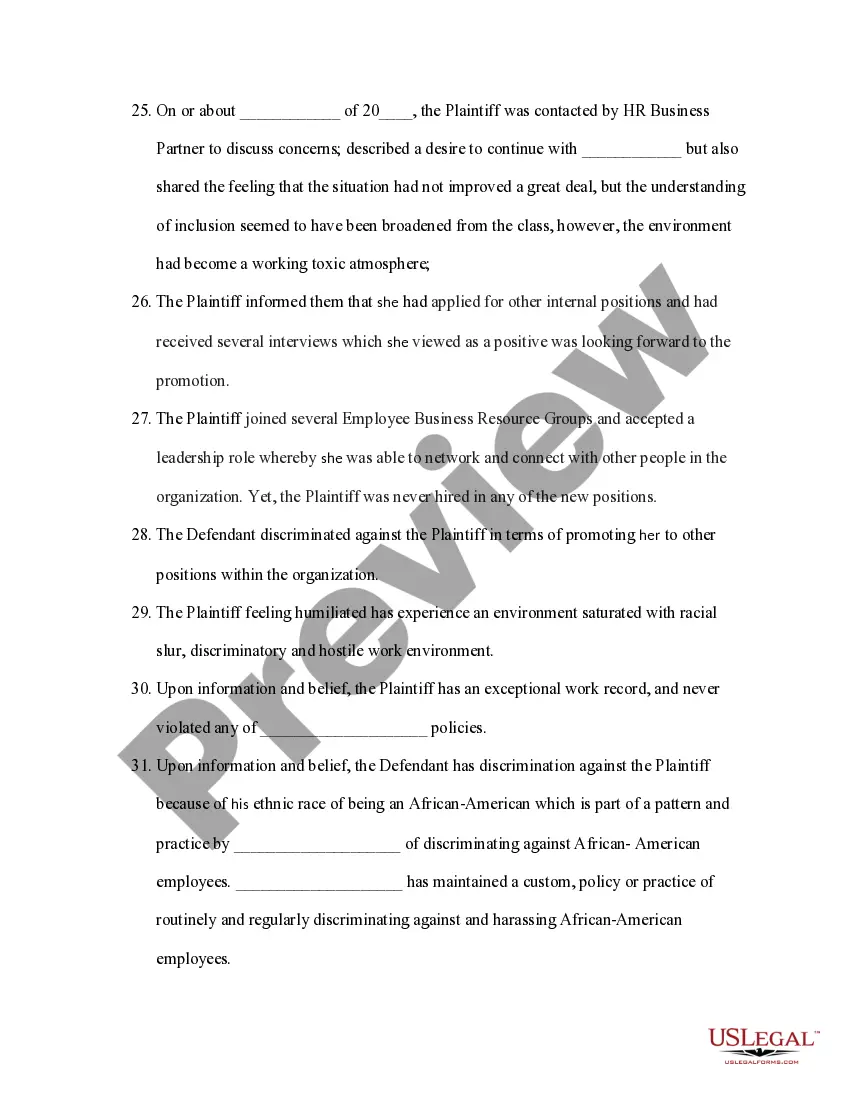
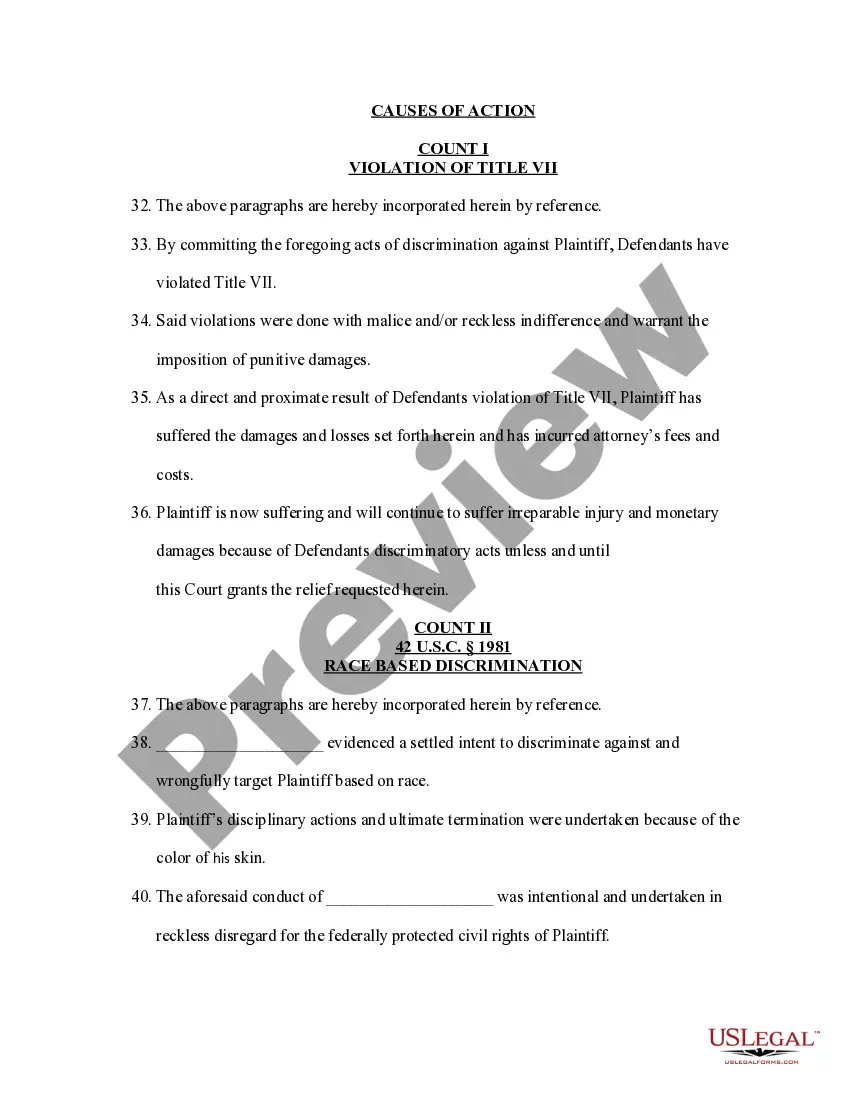
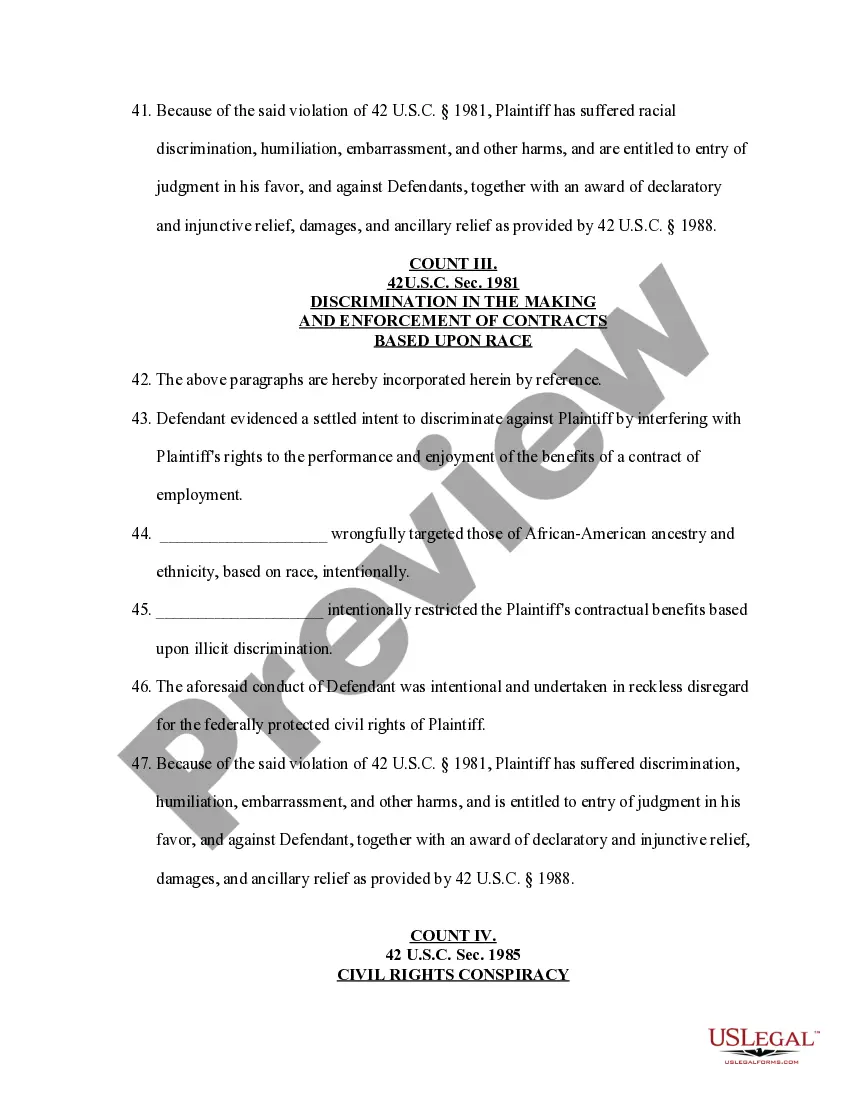
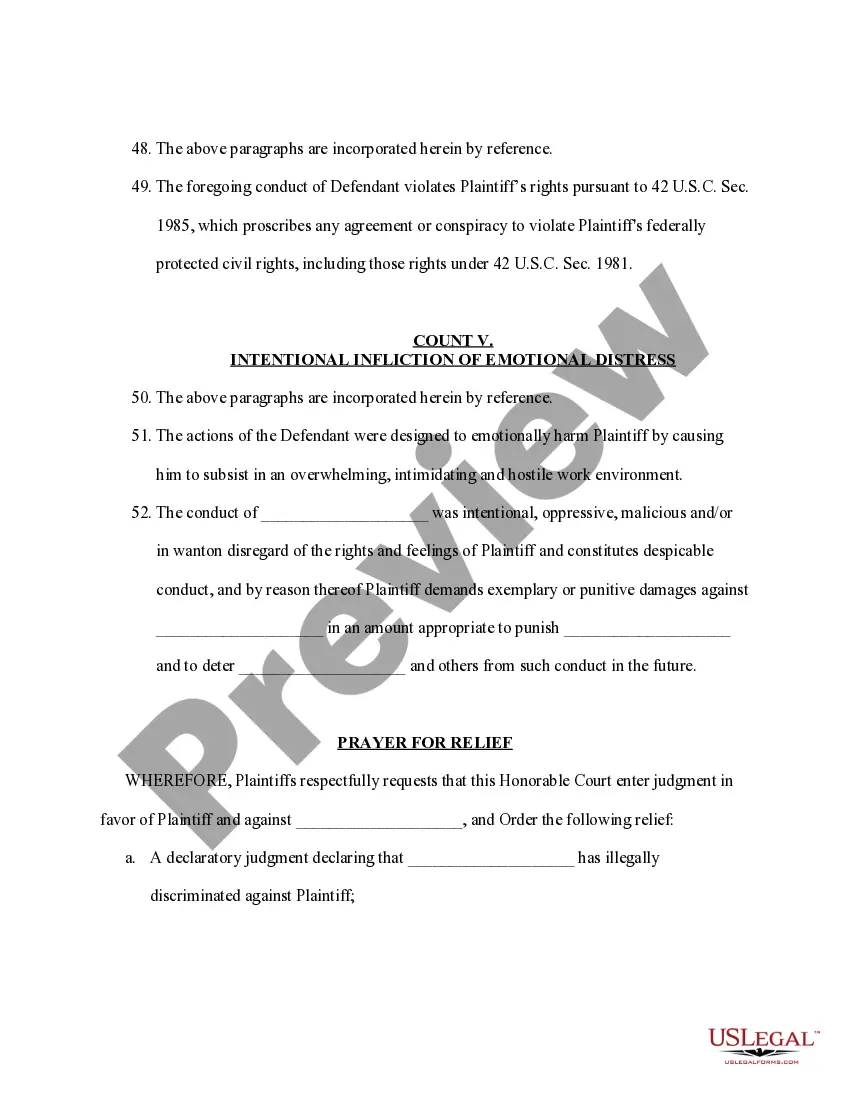
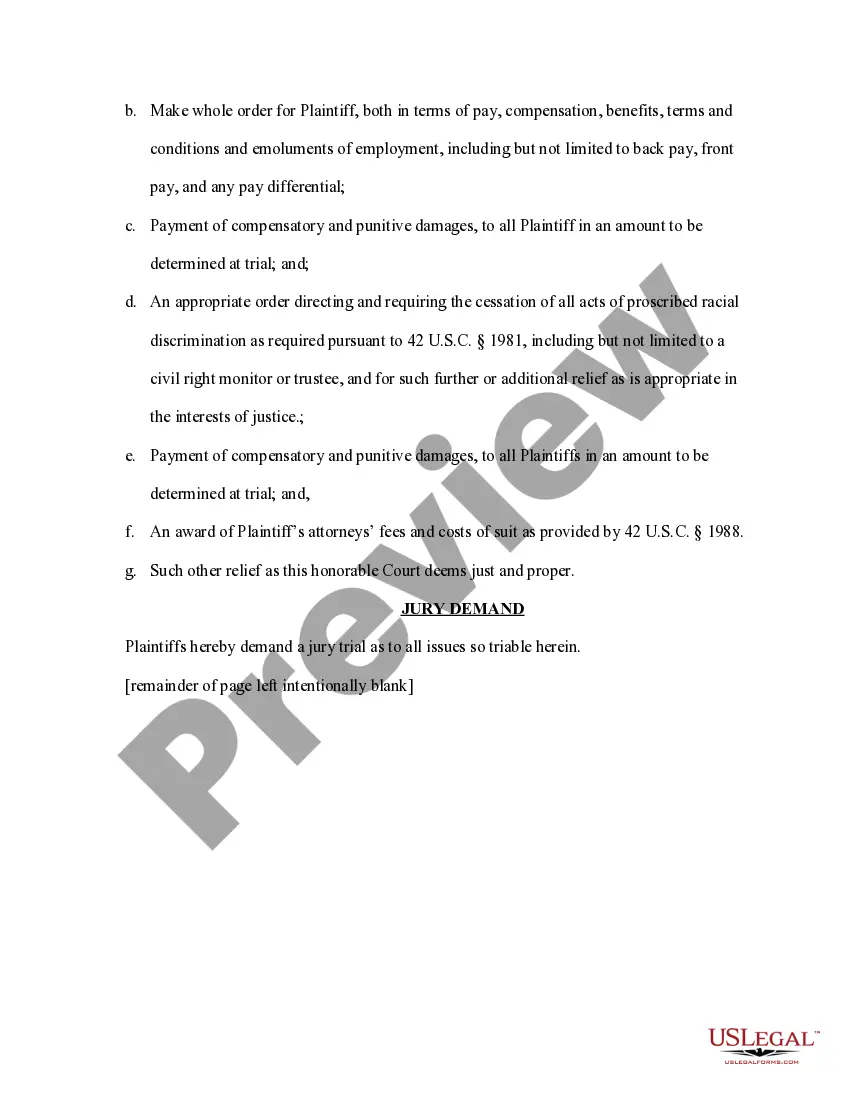
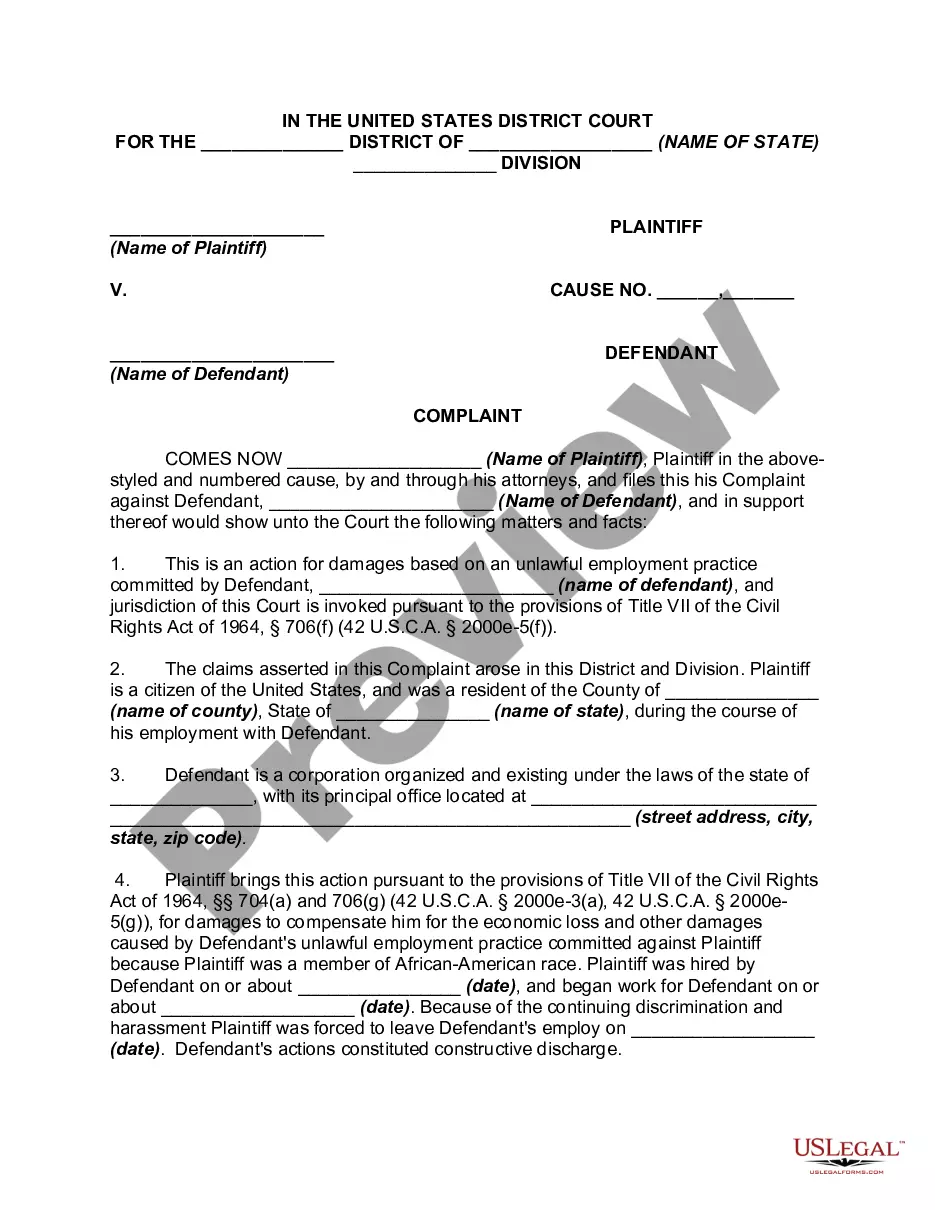
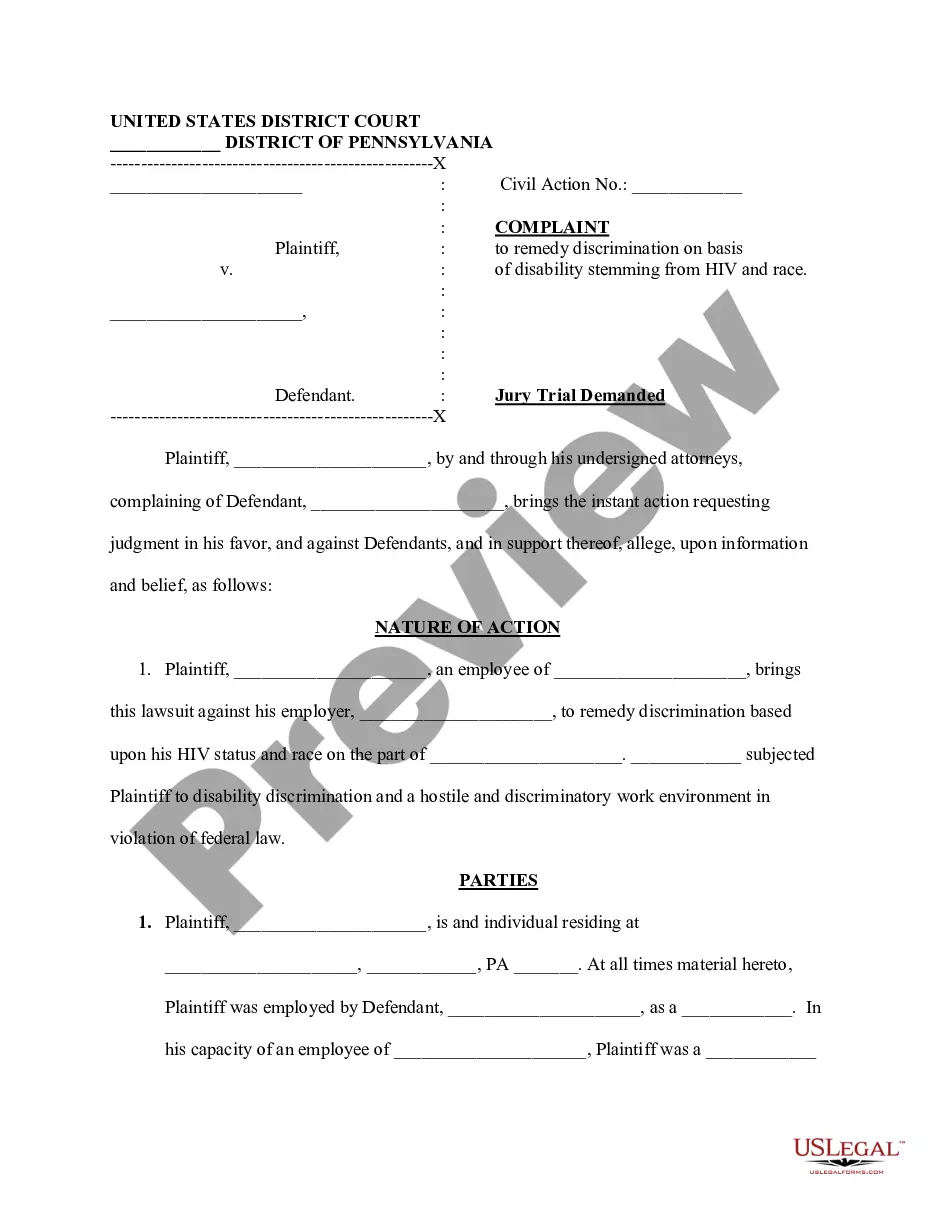
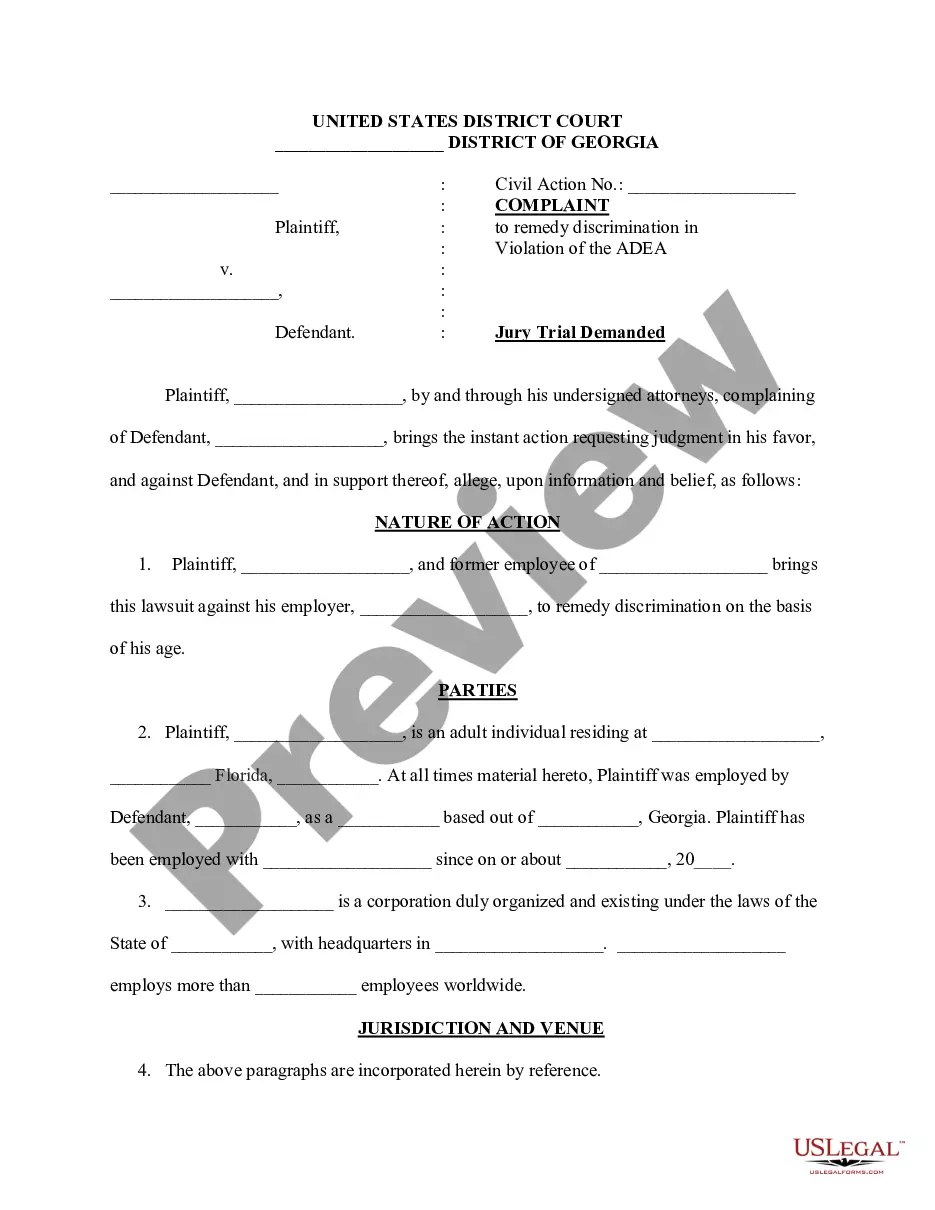
The Complaint to remedy discrimination on the basis of race, ethnicity, and ancestry is a legal document used in the U.S. District Court in Texas for individuals alleging employment discrimination. This form specifically addresses violations of Title VII of the Civil Rights Act and 42 U.S.C. § 1981, focusing on claims related to discrimination based on race. Unlike other complaints, this form comprehensively outlines the nature of the discrimination, the parties involved, jurisdiction, venue, and specific allegations of wrongful conduct in the workplace.
Key parts of this document
- Title and Identification: Identifies the court and parties involved.
- Nature of Action: Describes the basis of the lawsuit, specifying racial discrimination in employment.
- Parties: Provides details about the plaintiff and defendant, including employment information.
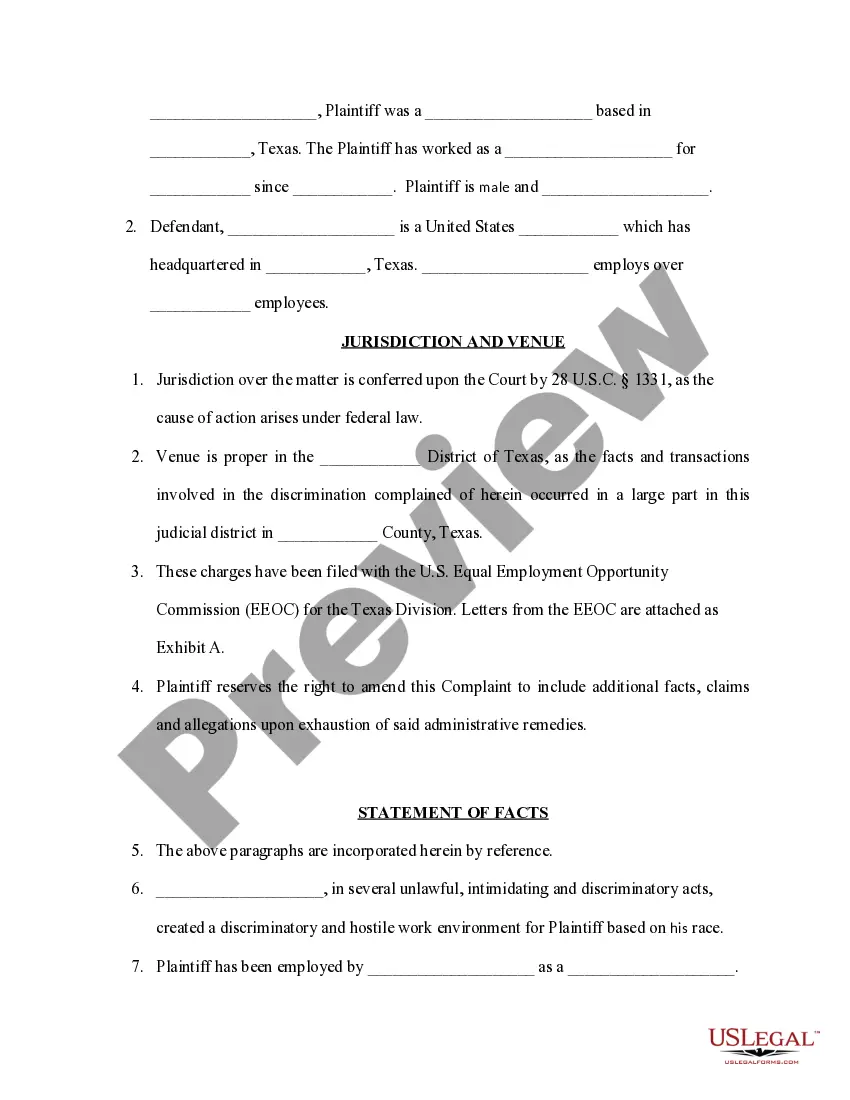
- Jurisdiction and Venue: Establishes the court's authority to hear the case and the appropriate location.
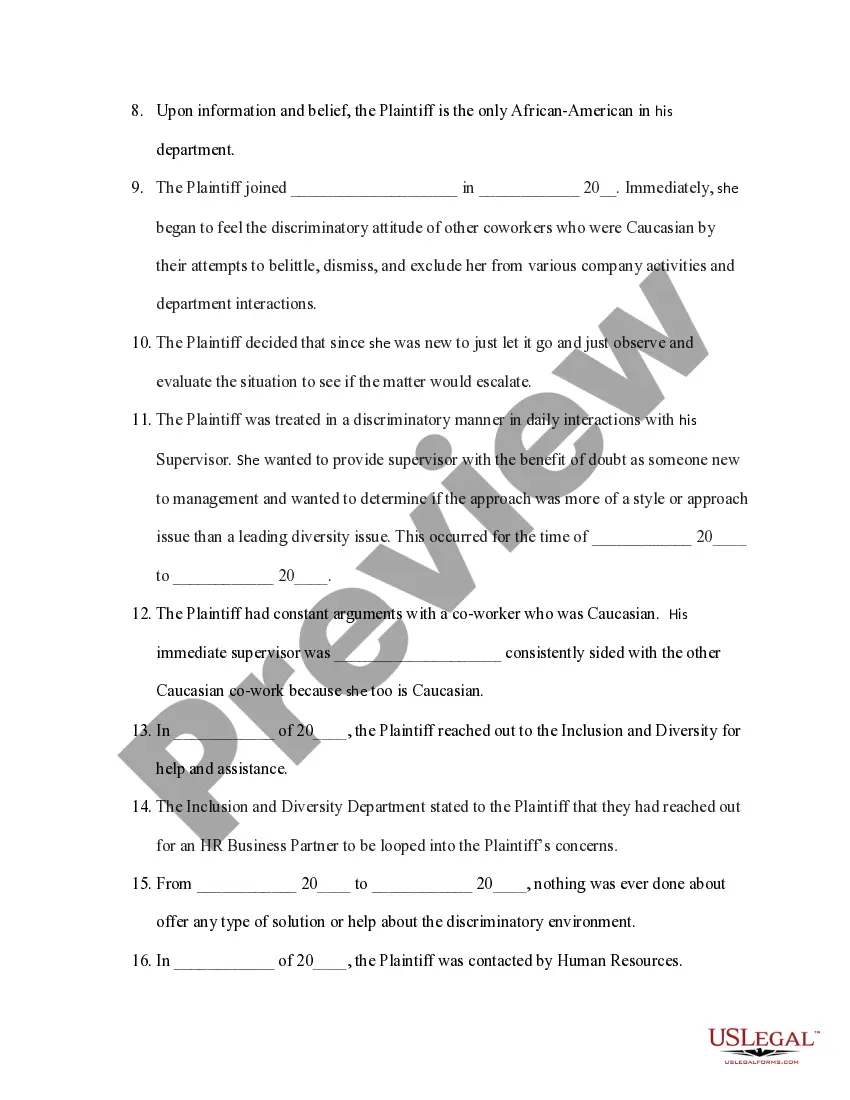
- Statement of Facts: Outlines the specific incidents of discrimination and describes the work environment.
- Causes of Action: Lists specific legal claims, including violations of Title VII and 42 U.S.C. § 1981.
- Prayer for Relief: Details the compensation and remedies sought by the plaintiff.
- Jury Demand: Indicates if a jury trial is requested.


When to use this form
This form is necessary when an employee believes they have been subjected to racial discrimination or a hostile work environment by their employer or coworkers. It is appropriate to use this complaint if you have exhausted any internal grievance processes, such as reporting the matter to HR or a diversity office, and have received no effective relief. Specific use cases include instances of being unfairly treated in promotions, subjected to racial bias, or creating an intimidating work environment because of one's race.
Who this form is for
- Individuals employed in Texas who believe they have experienced racial discrimination in their workplace.
- Employees who have already filed a complaint with the U.S. Equal Employment Opportunity Commission (EEOC) and seek to proceed to court.
- People who have not received a satisfactory resolution through internal company procedures regarding discrimination complaints.
- Those seeking legal recourse for violations of Title VII of the Civil Rights Act or 42 U.S.C. § 1981 related to employment discrimination.
How to complete this form
- Identify the parties involved by filling in the plaintiff's and defendant's names and contact information.
- Clearly state the nature of the action, detailing the specific discriminatory acts experienced.
- Provide facts supporting the claim, including dates, actions taken, and individuals involved.
- Fill in the jurisdiction and venue sections accurately to establish the court's authority.
- Complete the causes of action by specifying violations of related federal statutes.
- Sign and date the form to verify all information is correct.
Does this document require notarization?
This form does not typically require notarization unless specified by local law.
Get your form ready online
Our built-in tools help you complete, sign, share, and store your documents in one place.
Make edits, fill in missing information, and update formatting in US Legal Forms—just like you would in MS Word.
Download a copy, print it, send it by email, or mail it via USPS—whatever works best for your next step.
Sign and collect signatures with our SignNow integration. Send to multiple recipients, set reminders, and more. Go Premium to unlock E-Sign.
If this form requires notarization, complete it online through a secure video call—no need to meet a notary in person or wait for an appointment.
We protect your documents and personal data by following strict security and privacy standards.

Make edits, fill in missing information, and update formatting in US Legal Forms—just like you would in MS Word.

Download a copy, print it, send it by email, or mail it via USPS—whatever works best for your next step.

Sign and collect signatures with our SignNow integration. Send to multiple recipients, set reminders, and more. Go Premium to unlock E-Sign.

If this form requires notarization, complete it online through a secure video call—no need to meet a notary in person or wait for an appointment.

We protect your documents and personal data by following strict security and privacy standards.
Avoid these common issues
- Failing to include all relevant dates and specific incidents of discrimination.
- Not clearly stating the legal basis for the discrimination claim.
- Leaving sections incomplete, such as the parties' identification or jurisdiction.
- Failing to attach necessary exhibits, such as EEOC correspondence, if applicable.
- Missing the deadline for filing the complaint after receiving the right to sue notice from the EEOC.
Benefits of completing this form online
- Immediate access to a professionally crafted legal template specific to your needs.
- Editing capabilities allow for customization to include precise details about your situation.
- Convenience of downloading the form for immediate use without the need for physical visits to a law office.
- Reduced legal fees by using a standard template rather than hiring an attorney for initial filings.
Looking for another form?
Form popularity
FAQ
Title VII of the Civil Rights Act, as amended, protects employees and job applicants from employment discrimination based on race, color, religion, sex and national origin.
The Fourteenth Amendment was designed to assure to the colored race the enjoyment of all the civil rights that under the law are enjoyed by white persons, and to give to that race the protection of the general government in that enjoyment, whenever it should be denied by the States.
' This was one of three Constitutional amendments aimed at establishing political equality for Americans of all races. Together, the Thirteenth, Fourteenth and Fifteenth Amendments to the U.S. Constitution are referred to as the Reconstruction Amendments. They address slavery, citizenship and voting rights.
The 14th Amendment provides, in part, that no state can "deny to any person within its jurisdiction the equal protection of the laws." Title IX specifically prohibits sex discrimination.
Reporting Discrimination & Resources Contact CRC at 202-693-6500, Federal Relay Service TTY/TDD: (800) 877-8339, or Video Relay (877) 708-5797, within 45 calendar days of the alleged discriminatory act in order to preserve your right to file an EEO complaint.
Section 1. The right of citizens of the United States to vote shall not be denied or abridged by the United States or by any State on account of race, color, or previous condition of servitude.
Title VII of the Civil Rights Act of 1964 and/or the California Fair Employment and Housing Act prohibit workplace discrimination based on an employee's national origin, race, color, ancestry, and/or ethnicity.
Examples of discrimination covered by Title VI include racial harassment, school segregation, and denial of language services to English learners.