Complaint for Racial Discrimination in Employment, Constructive Discharge and for Damages for Discrimination in Promotion by Employer - Equal Employment
What is this form?
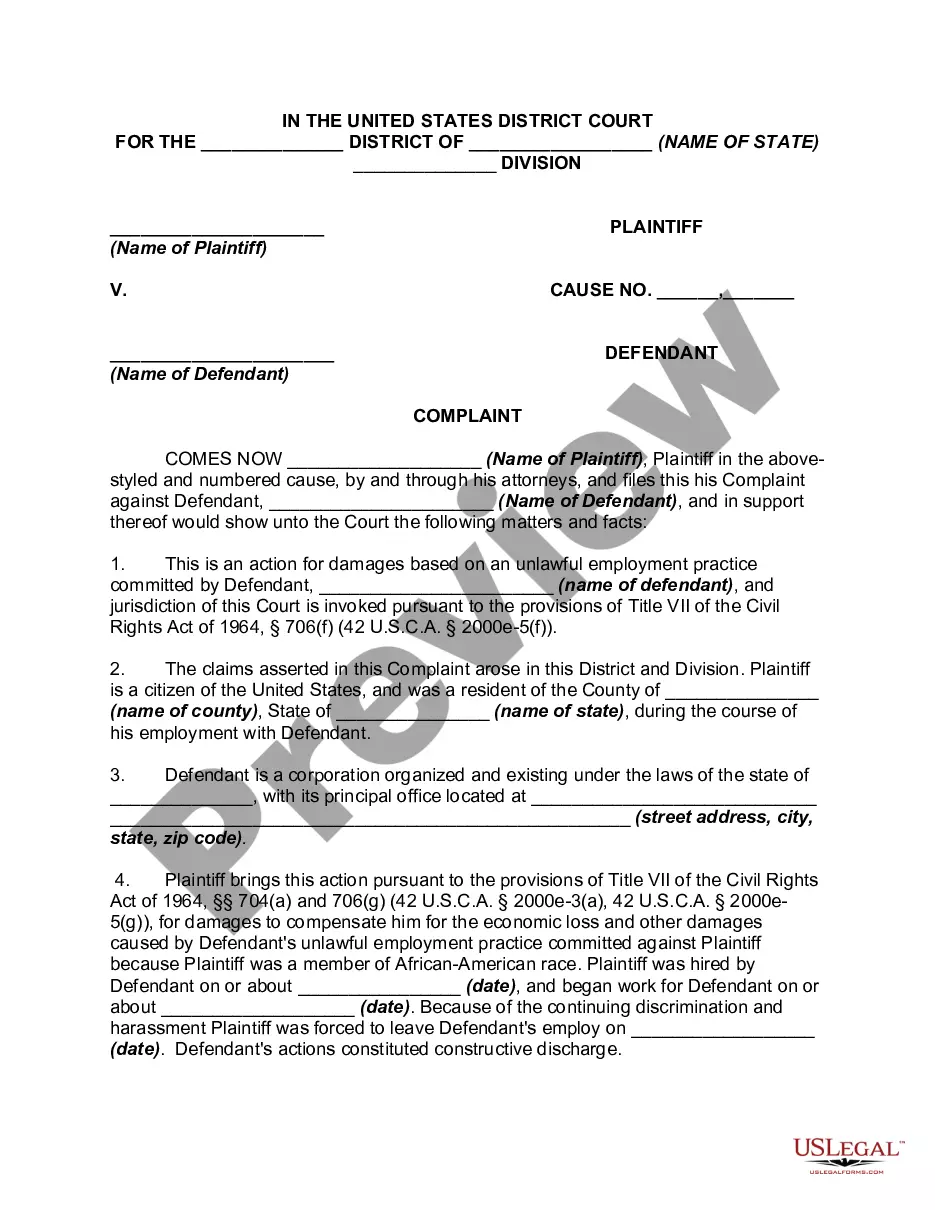
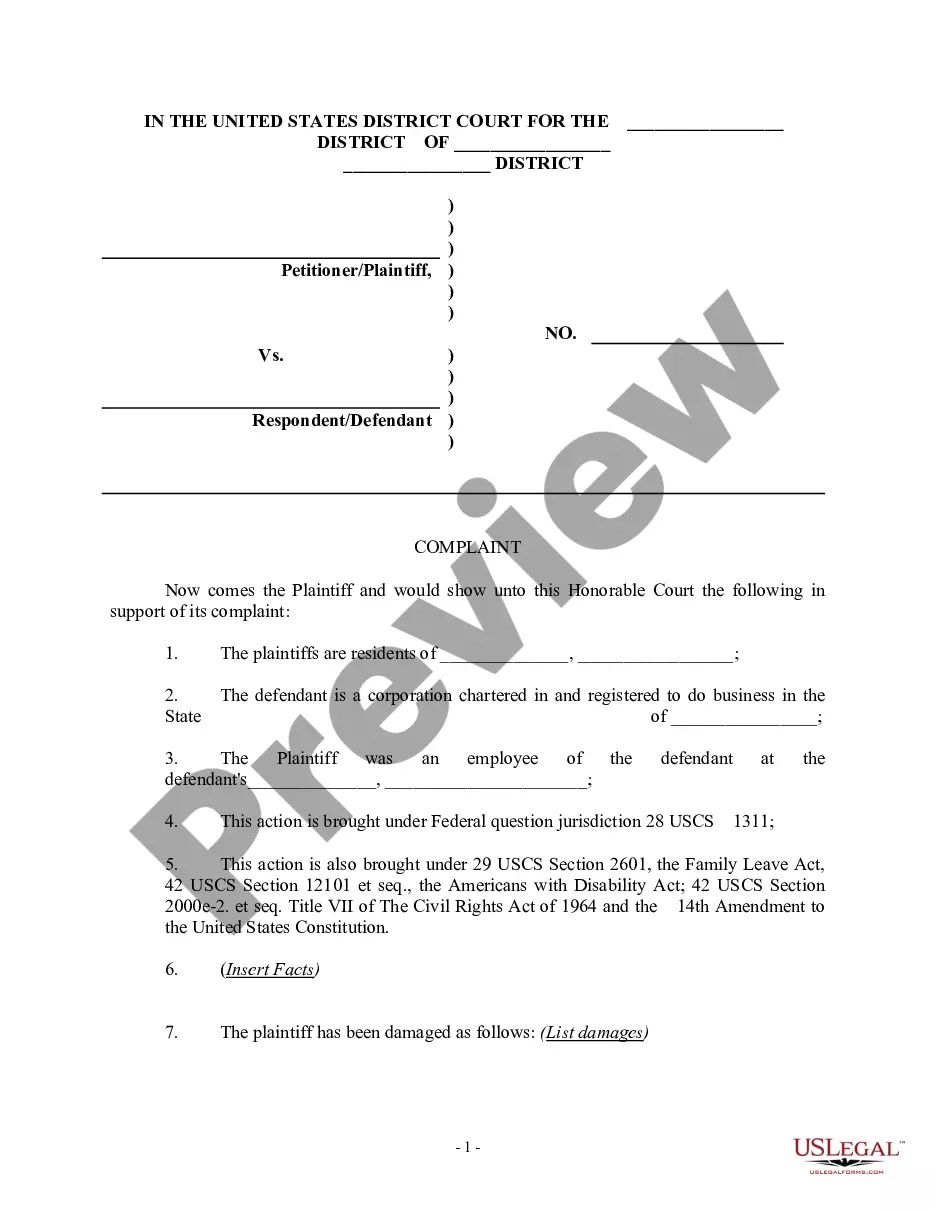
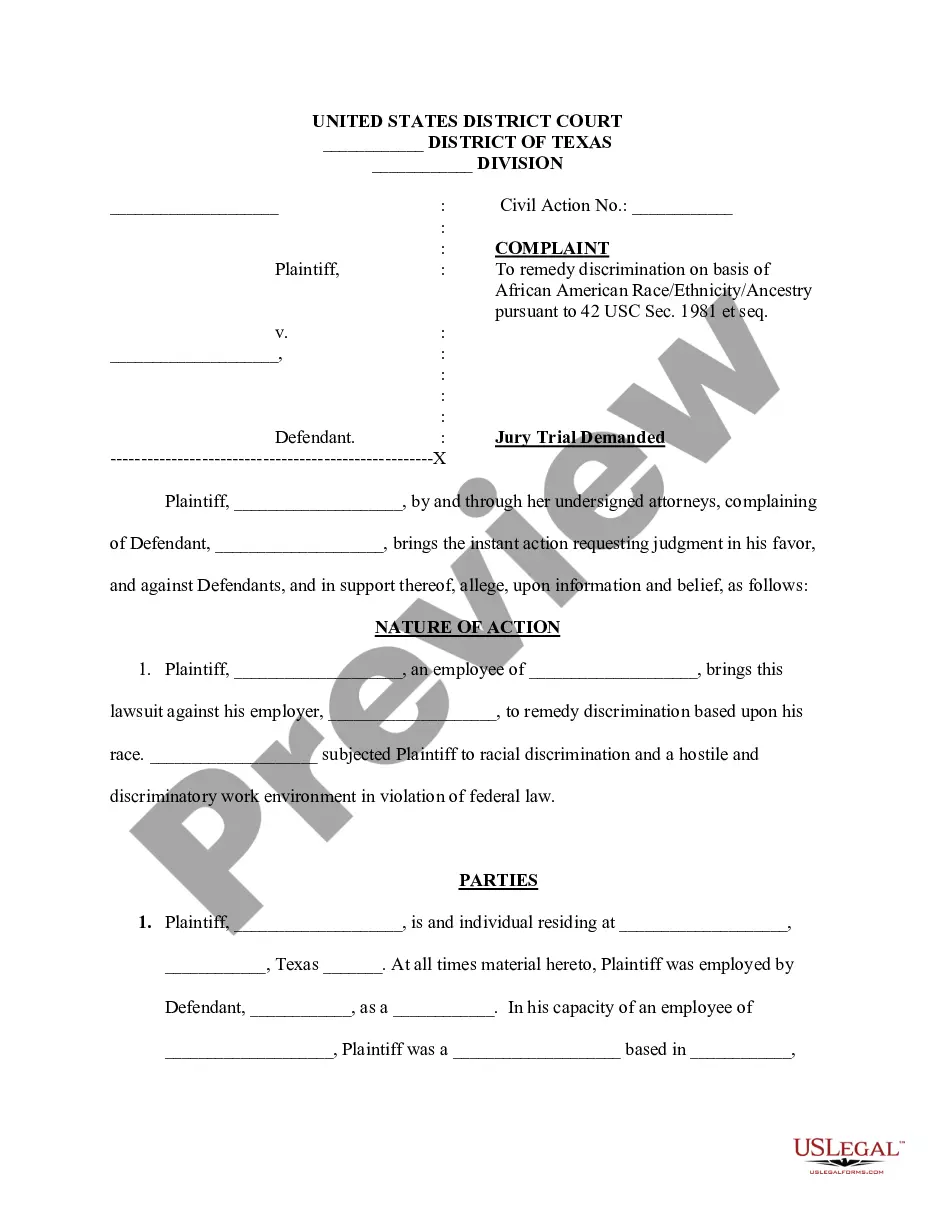
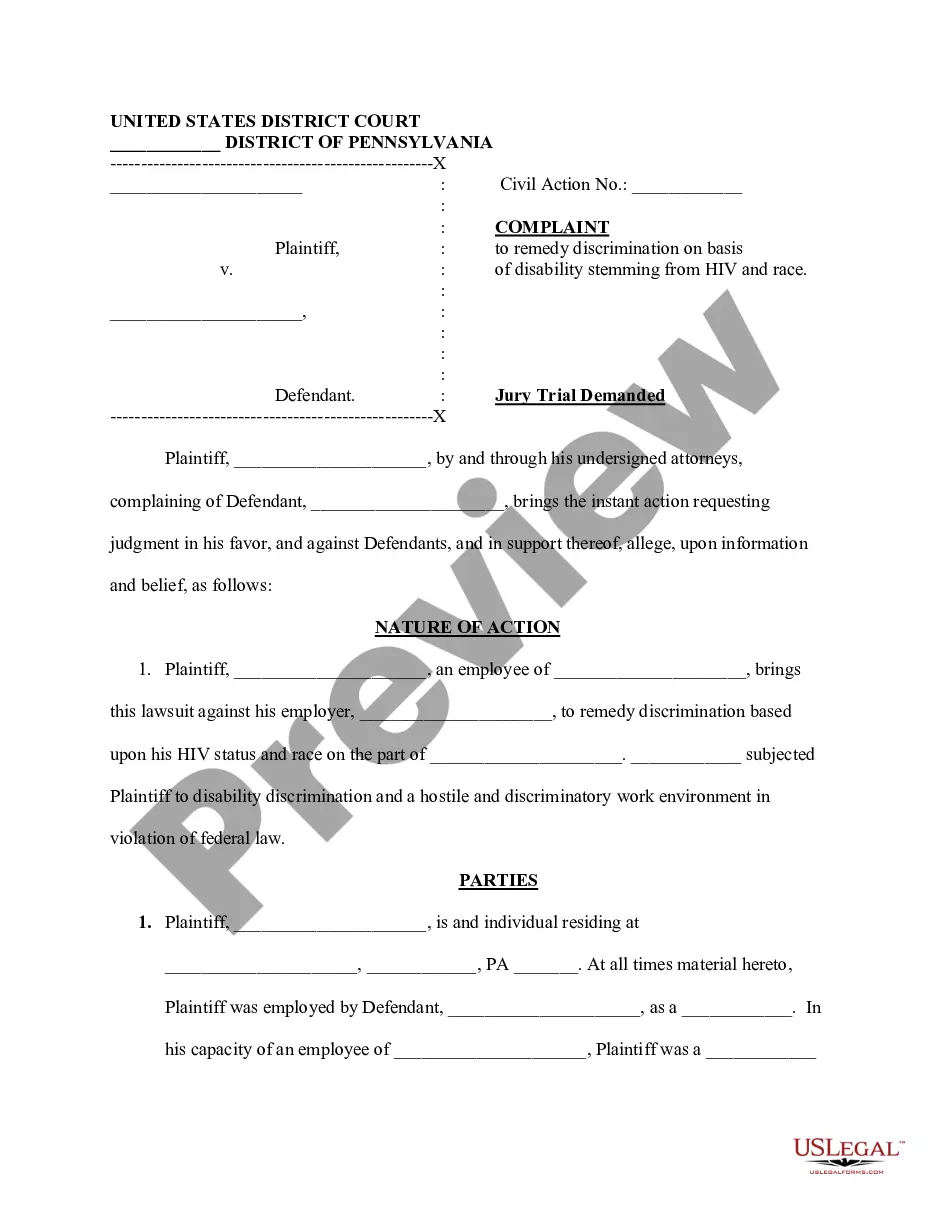
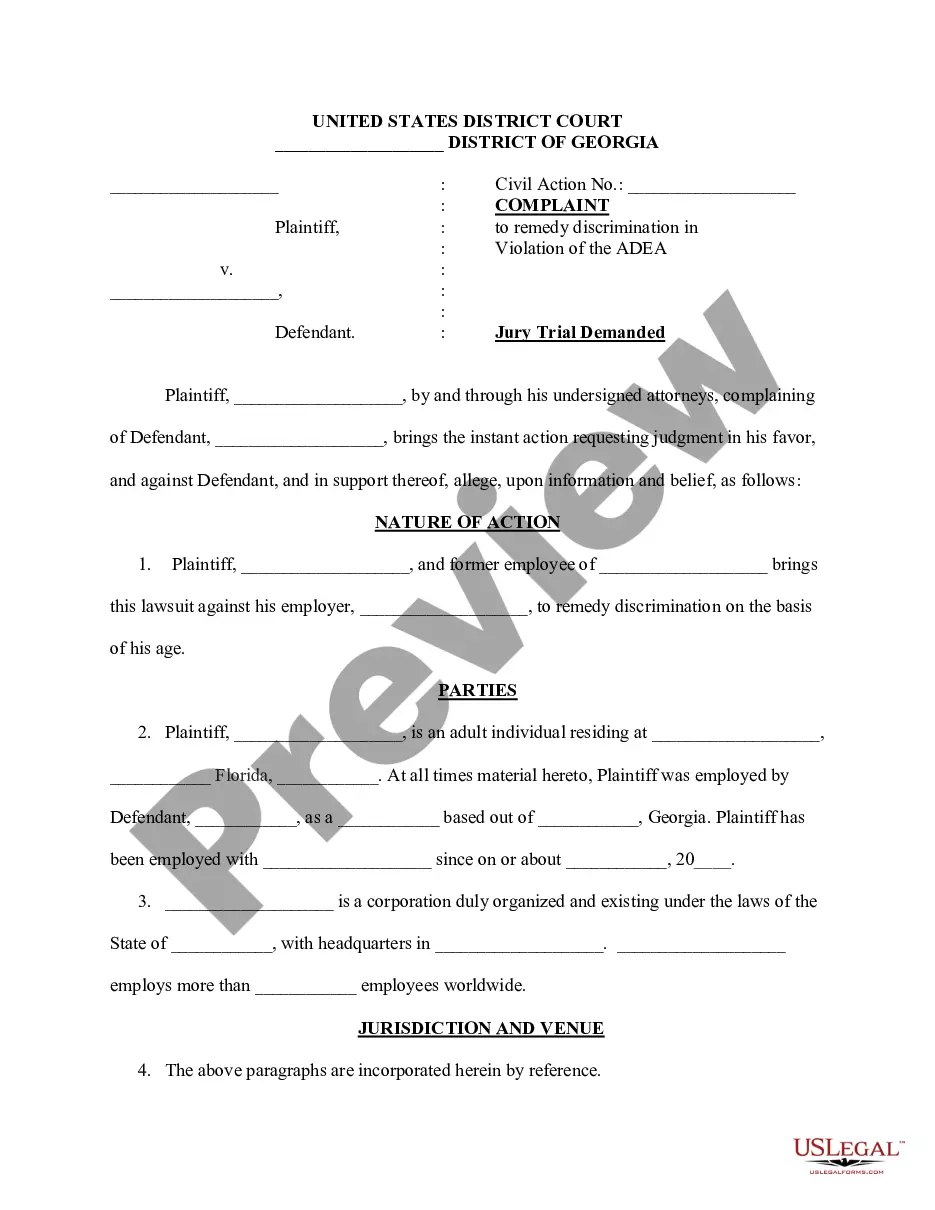
The Complaint for Racial Discrimination in Employment is a legal document used to initiate a lawsuit against an employer for unlawful employment practices related to racial discrimination. This form specifically addresses issues of constructive discharge and seeks damages for discrimination in promotions, as outlined in Title VII of the Civil Rights Act of 1964. It provides a structured way for individuals to present their grievances formally in court, making it distinct from other employment-related legal forms that may not cover racial discrimination specifically.
What’s included in this form
- Heading and caption for the court and parties involved
- Outline of jurisdiction and applicable laws under Title VII
- Details of the plaintiff's employment history and alleged discrimination
- Specific incidents and practices leading to the claim
- Requests for damages and relief sought from the court


When this form is needed
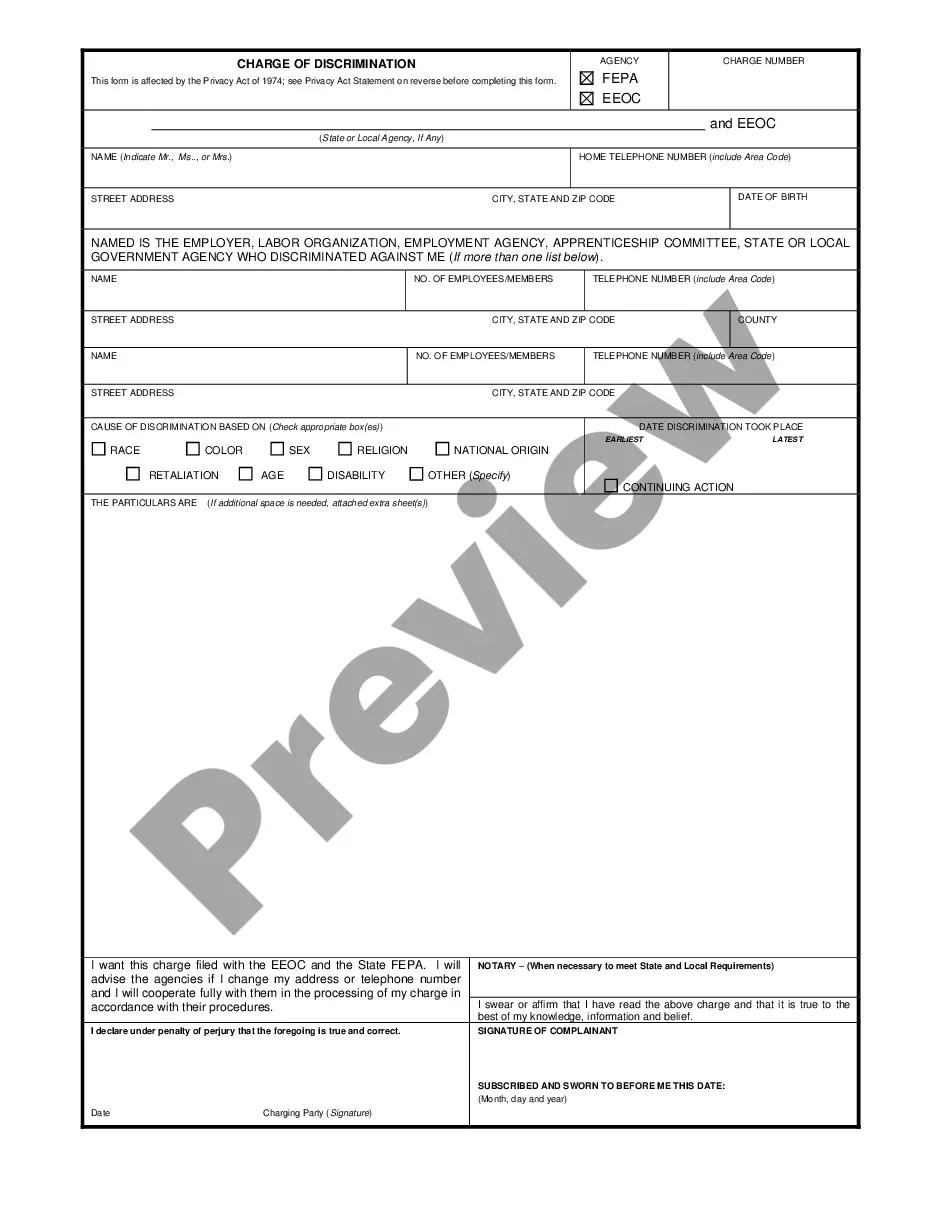
This form should be used if you believe you have been a victim of racial discrimination in your workplace, particularly if you have experienced constructive discharge. It is appropriate when you have filed with the Equal Employment Opportunity Commission (EEOC) and seek to pursue a lawsuit following the EEOC's failure to resolve the matter. Use this form to formally document and present your claims in a court of law.
Intended users of this form
- Individuals who believe they have experienced racial discrimination at work.
- Employees who have been constructively discharged due to discriminatory practices.
- Anyone who has filed a complaint with the EEOC regarding employment discrimination and has received a right-to-sue letter.
- Individuals seeking legal recourse against their employers for discrimination in promotion opportunities based on race.
How to complete this form
- Identify the court where you are filing and complete the heading section with your information and your employer's details.
- Provide a clear account of your employment history, including dates and positions held.
- Detail the specific acts of discrimination you experienced and how they led to your constructive discharge.
- Include any relevant dates, including when you filed a charge with the EEOC and received your right-to-sue letter.
- Clearly state the damages you are seeking and any additional relief you are requesting from the court.
Notarization guidance
In most cases, this form does not require notarization. However, some jurisdictions or signing circumstances might. US Legal Forms offers online notarization powered by Notarize, accessible 24/7 for a quick, remote process.
Get your form ready online
Our built-in tools help you complete, sign, share, and store your documents in one place.
Make edits, fill in missing information, and update formatting in US Legal Forms—just like you would in MS Word.
Download a copy, print it, send it by email, or mail it via USPS—whatever works best for your next step.
Sign and collect signatures with our SignNow integration. Send to multiple recipients, set reminders, and more. Go Premium to unlock E-Sign.
If this form requires notarization, complete it online through a secure video call—no need to meet a notary in person or wait for an appointment.
We protect your documents and personal data by following strict security and privacy standards.

Make edits, fill in missing information, and update formatting in US Legal Forms—just like you would in MS Word.

Download a copy, print it, send it by email, or mail it via USPS—whatever works best for your next step.

Sign and collect signatures with our SignNow integration. Send to multiple recipients, set reminders, and more. Go Premium to unlock E-Sign.

If this form requires notarization, complete it online through a secure video call—no need to meet a notary in person or wait for an appointment.

We protect your documents and personal data by following strict security and privacy standards.
Mistakes to watch out for
- Failing to include all necessary parties in the complaint.
- Omitting important dates or details about the discriminatory incidents.
- Not citing the relevant sections of Title VII accurately.
- Neglecting to properly sign the document before submission.
- Not clarifying requested damages and relief adequately.
Why complete this form online
- Immediate access to a legally sound template developed by licensed attorneys.
- Convenient download and easy editing to fit your specific circumstances.
- Time-saving compared to drafting a complaint from scratch.
- Reliable format that complies with federal requirements.
- Ability to store electronic copies for future reference.
Looking for another form?
Form popularity
FAQ
Employers who have at least 100 employees and federal contractors who have at least 50 employees are required to complete and submit an EEO-1 Report (a government form that requests information about employees' job categories, ethnicity, race, and gender) to EEOC and the U.S. Department of Labor every year.
At the federal level, the court can award up to: $50,000 to an employee if the employer has between 15 and 100 employees; $100,000 if the employer has 101 to 200 employees; $200,000 if the employer has 201 to 500 employees; and.
In order to officially file the workplace discrimination claim, you need to contact The Equal Employment Opportunity Commission (EEOC). You may file the claim in person at the nearest EEOC office, and you can also file the claim by mail or online.
An average out of court settlement is about $40,000. In addition, 10 percent of wrongful termination and discrimination cases result in a $1 million dollar settlement. The majority of cases, about 67 percent, are ruled in the plaintiff's favor when taken to litigation. Plus, litigation costs are on the rise.
You can file a formal job discrimination complaint with the EEOC whenever you believe you are: Being treated unfairly on the job because of your race, color, religion, sex (including pregnancy, gender identity, and sexual orientation), national origin, disability, age (age 40 or older) or genetic information; or.
Compensatory damages pay victims for out-of-pocket expenses caused by the discrimination (such as costs associated with a job search or medical expenses) and compensate them for any emotional harm suffered (such as mental anguish, inconvenience, or loss of enjoyment of life).
Under the laws enforced by EEOC, it is illegal to discriminate against someone (applicant or employee) because of that person's race, color, religion, sex (including gender identity, sexual orientation, and pregnancy), national origin, age (40 or older), disability or genetic information.
What Is an EEO Complaint? It is an allegation of discrimination because of race, color, religion, national origin, sex (including sexual harassment and sexual orientation), age, physical or mental handicap.
Legal Requirements for a Hostile Environment The actions or behavior must discriminate against a protected classification such as age, religion, disability, or race. The behavior or communication must be pervasive, lasting over time, and not limited to an off-color remark or two that a coworker found annoying.