Trust Agreement - Revocable - Multiple Trustees and Beneficiaries
What is this form?
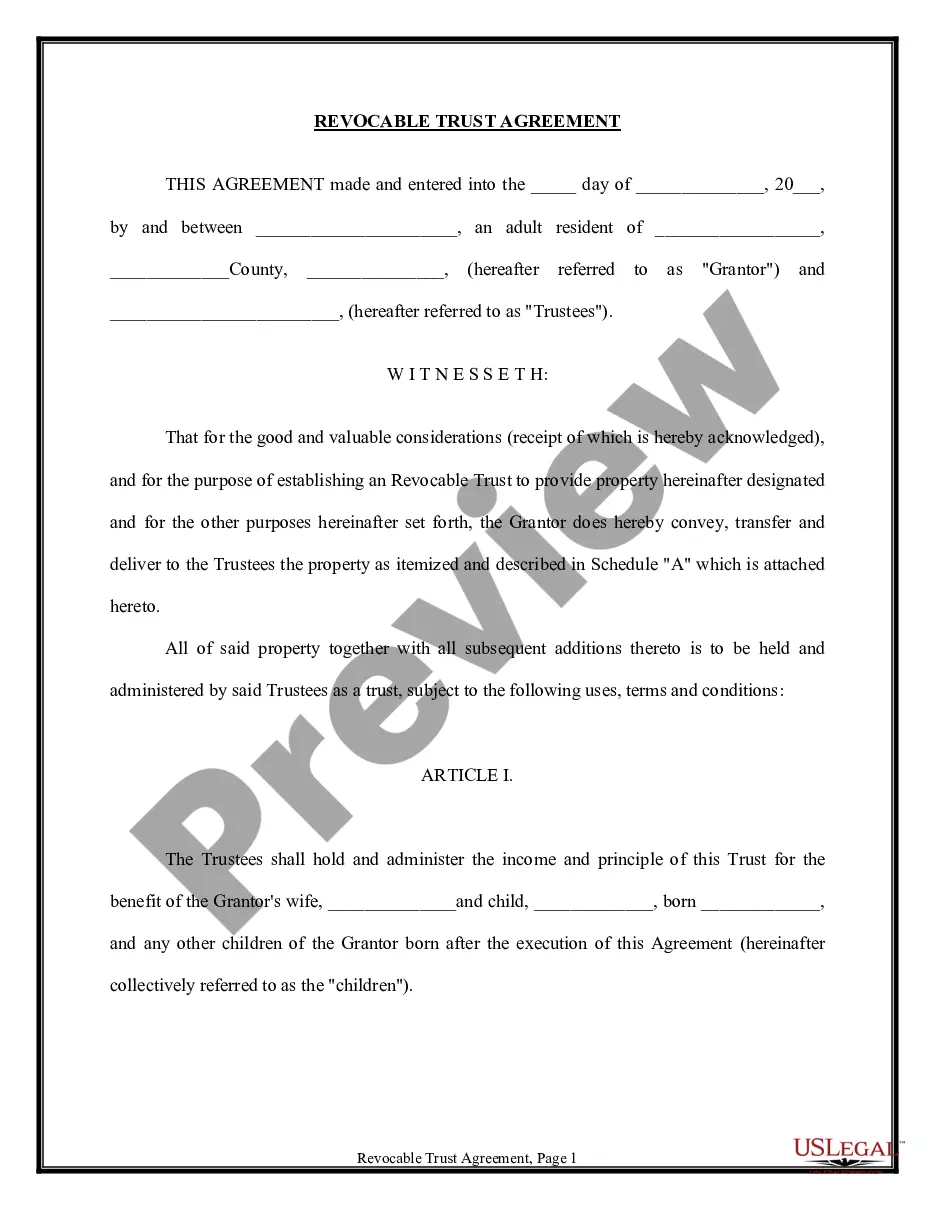
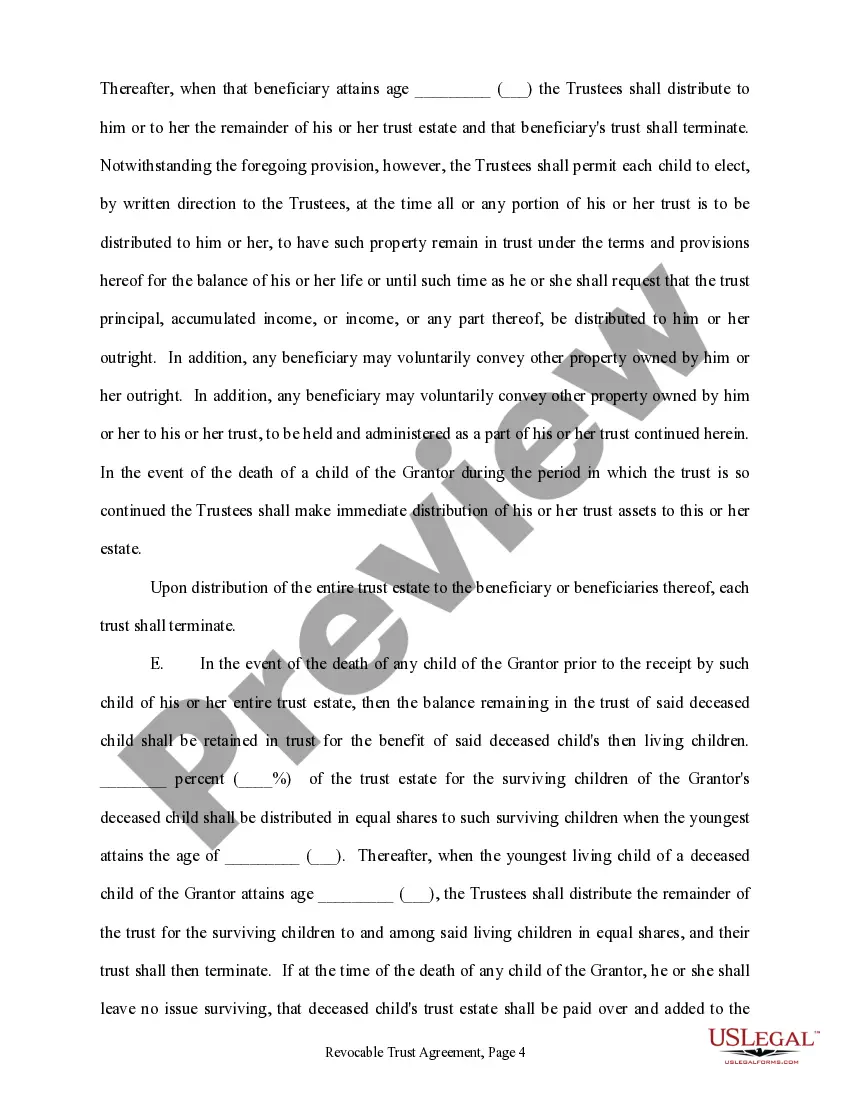
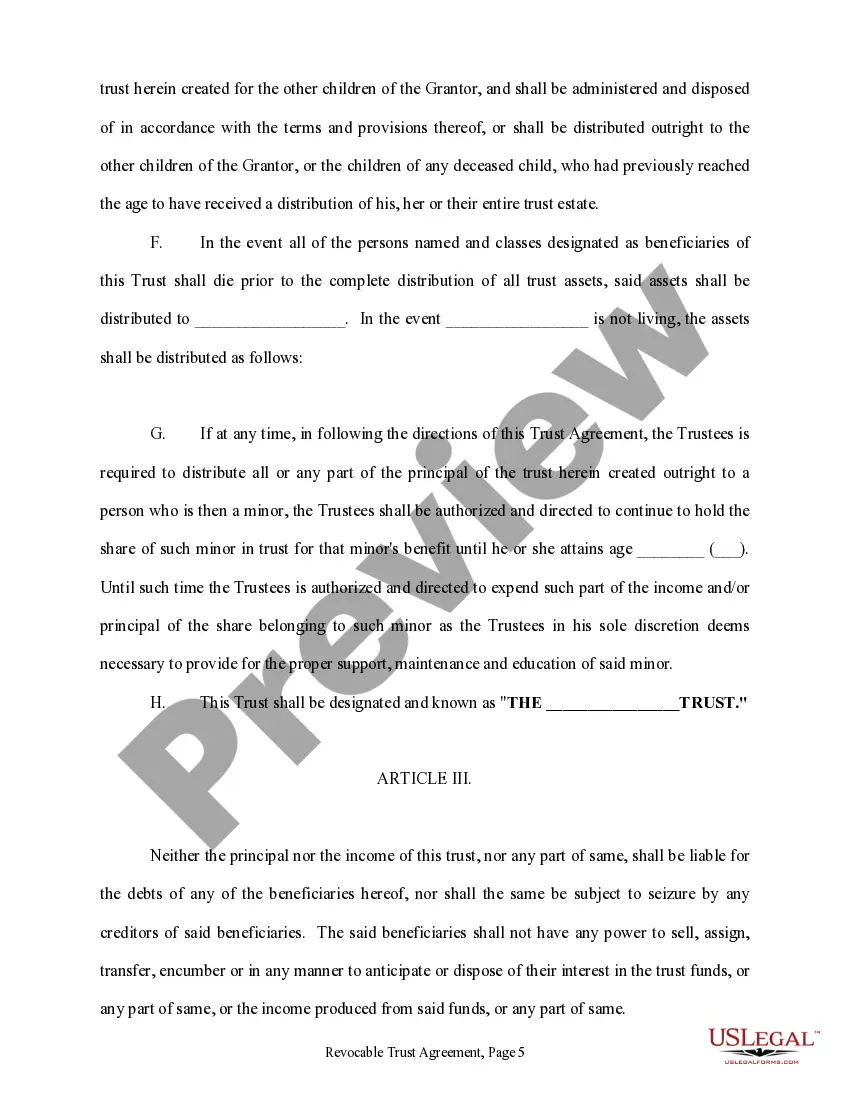
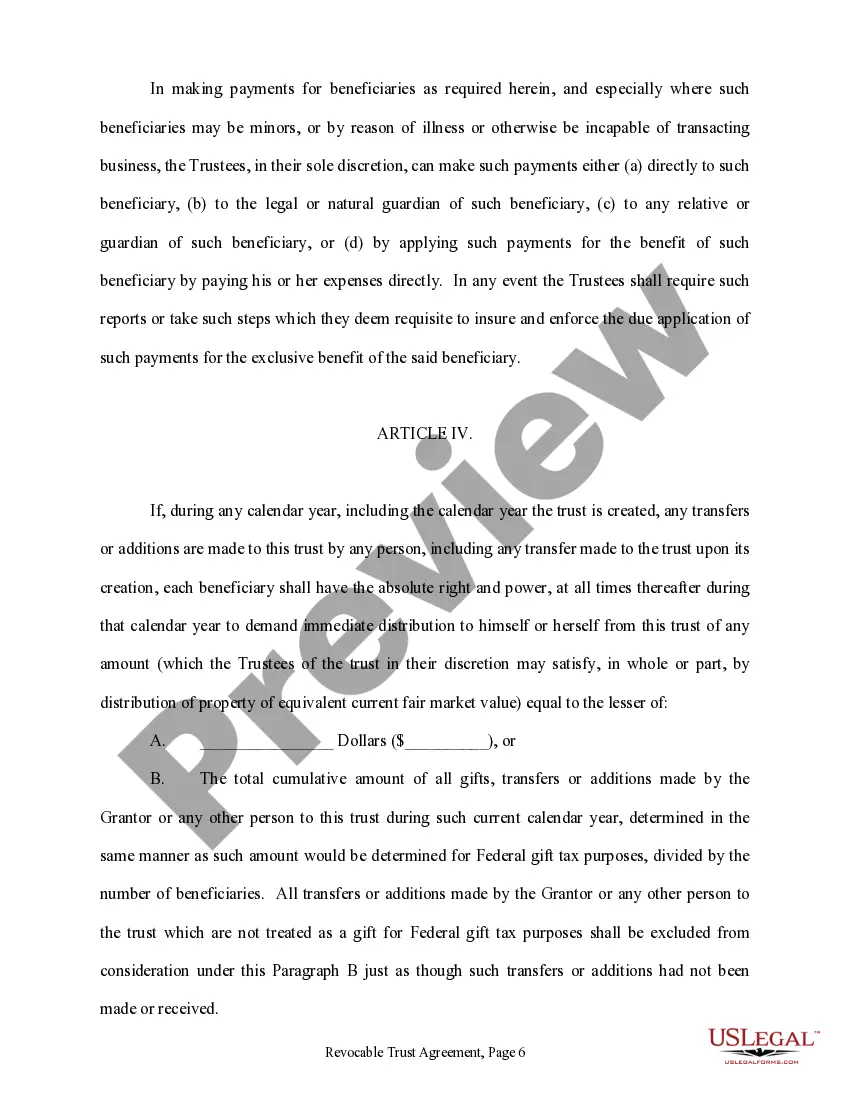
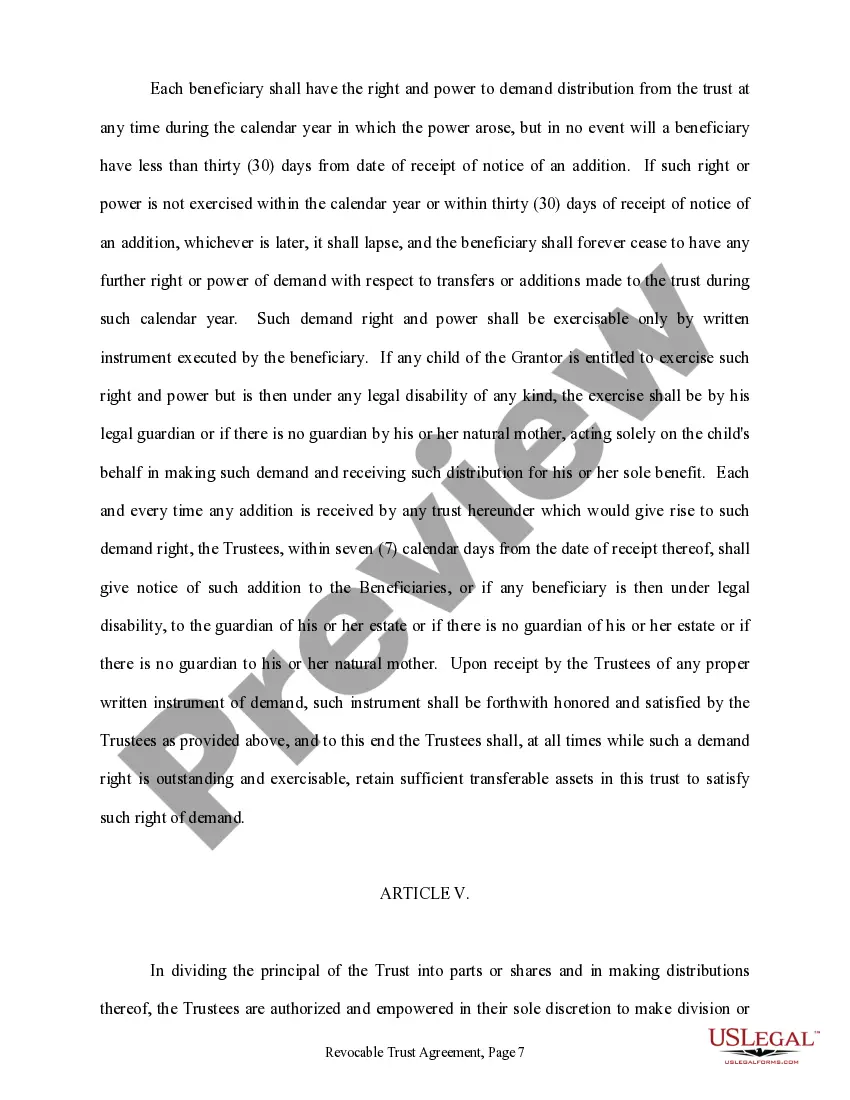
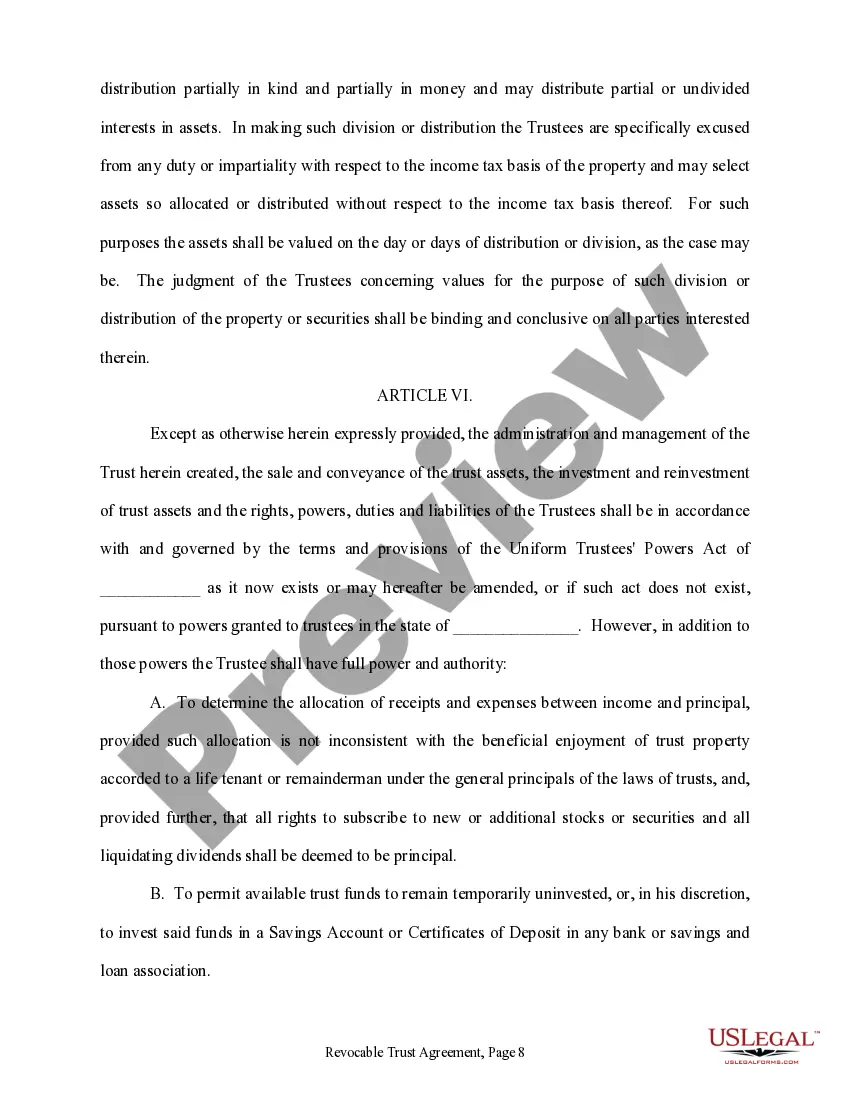
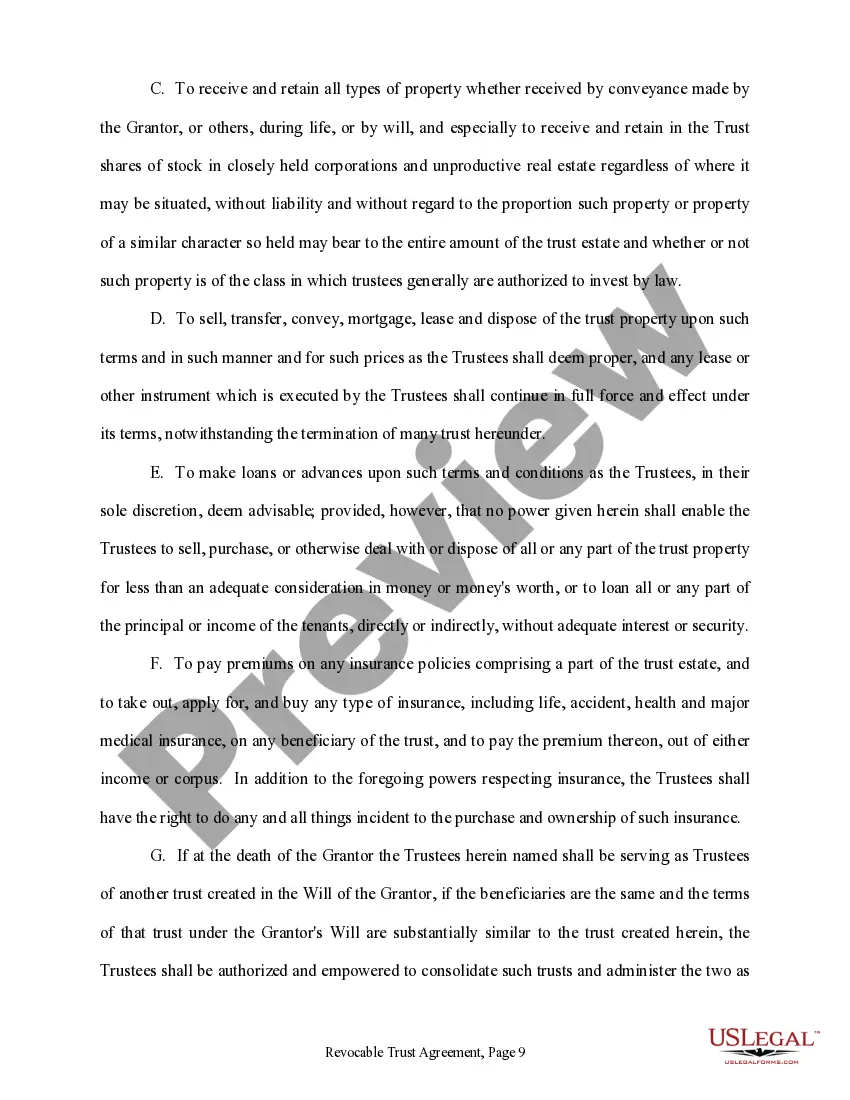
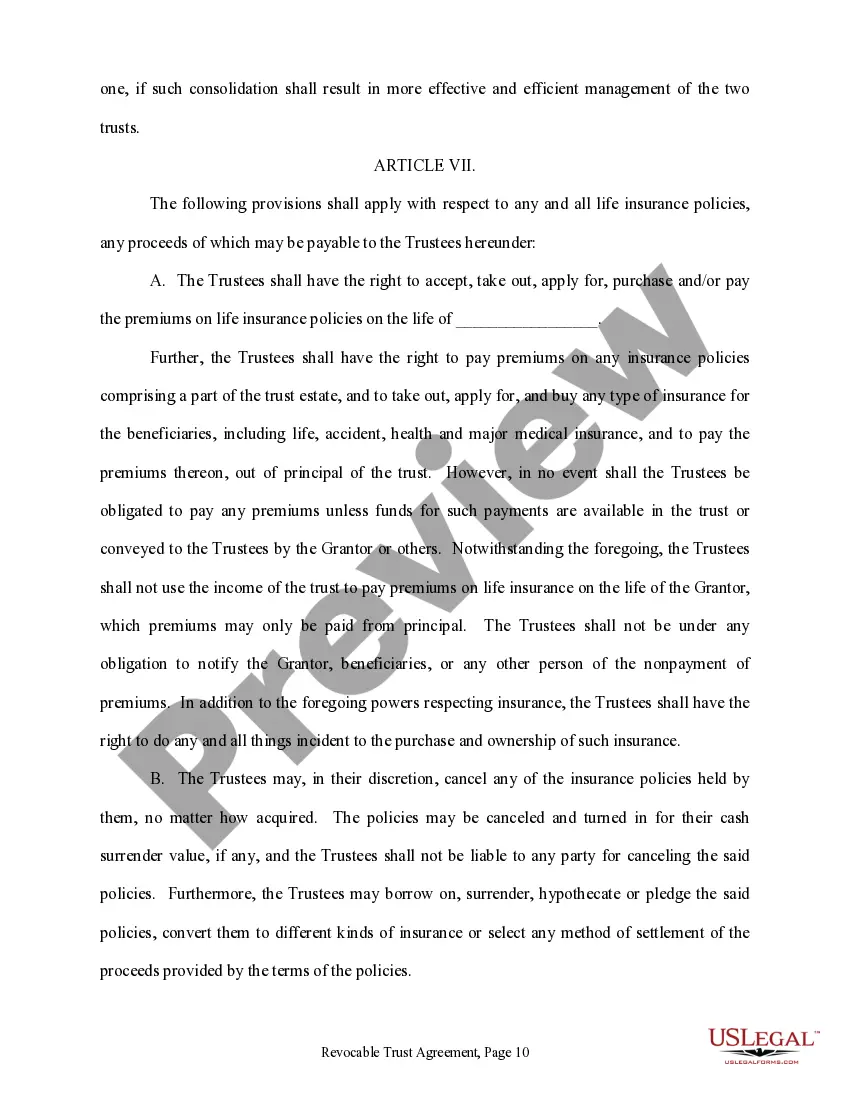
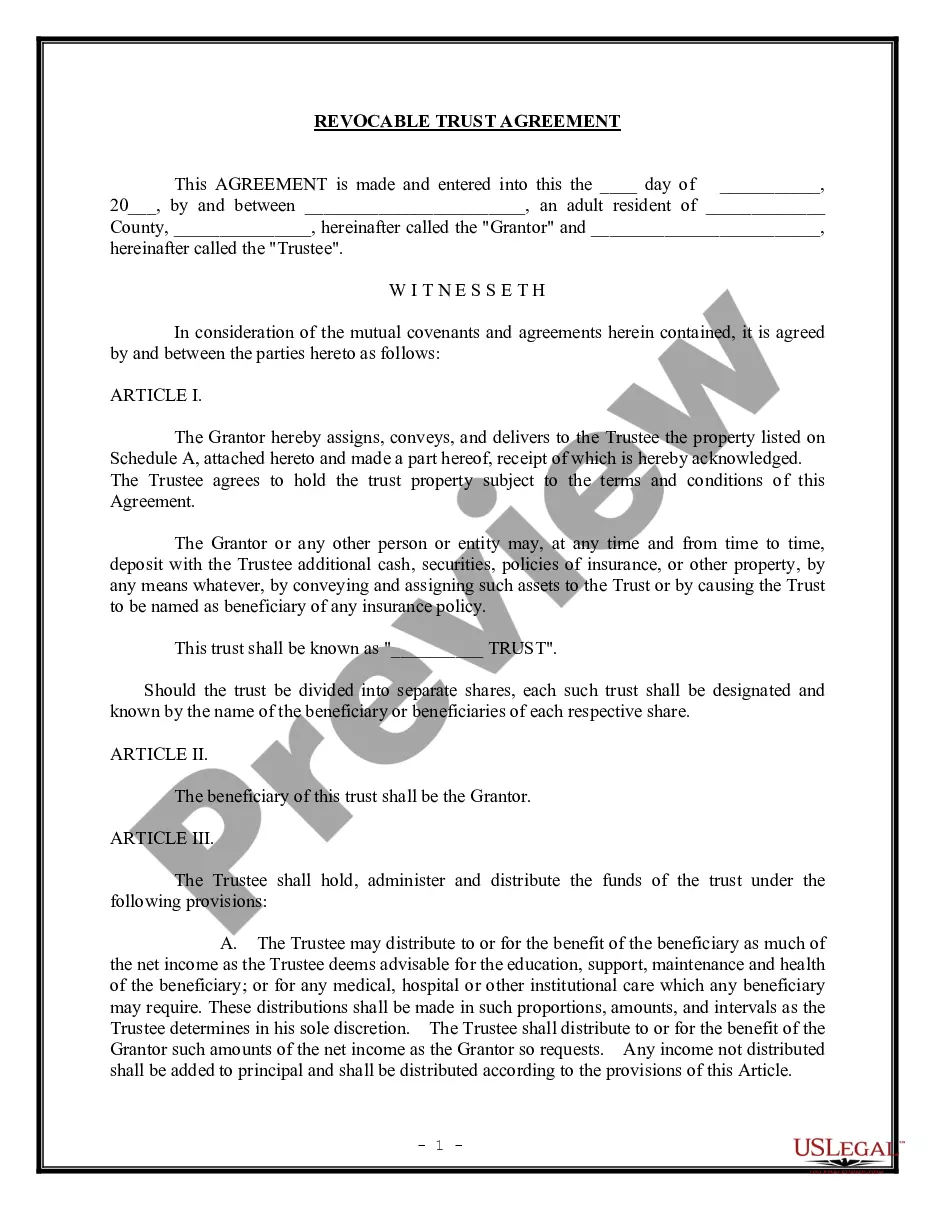
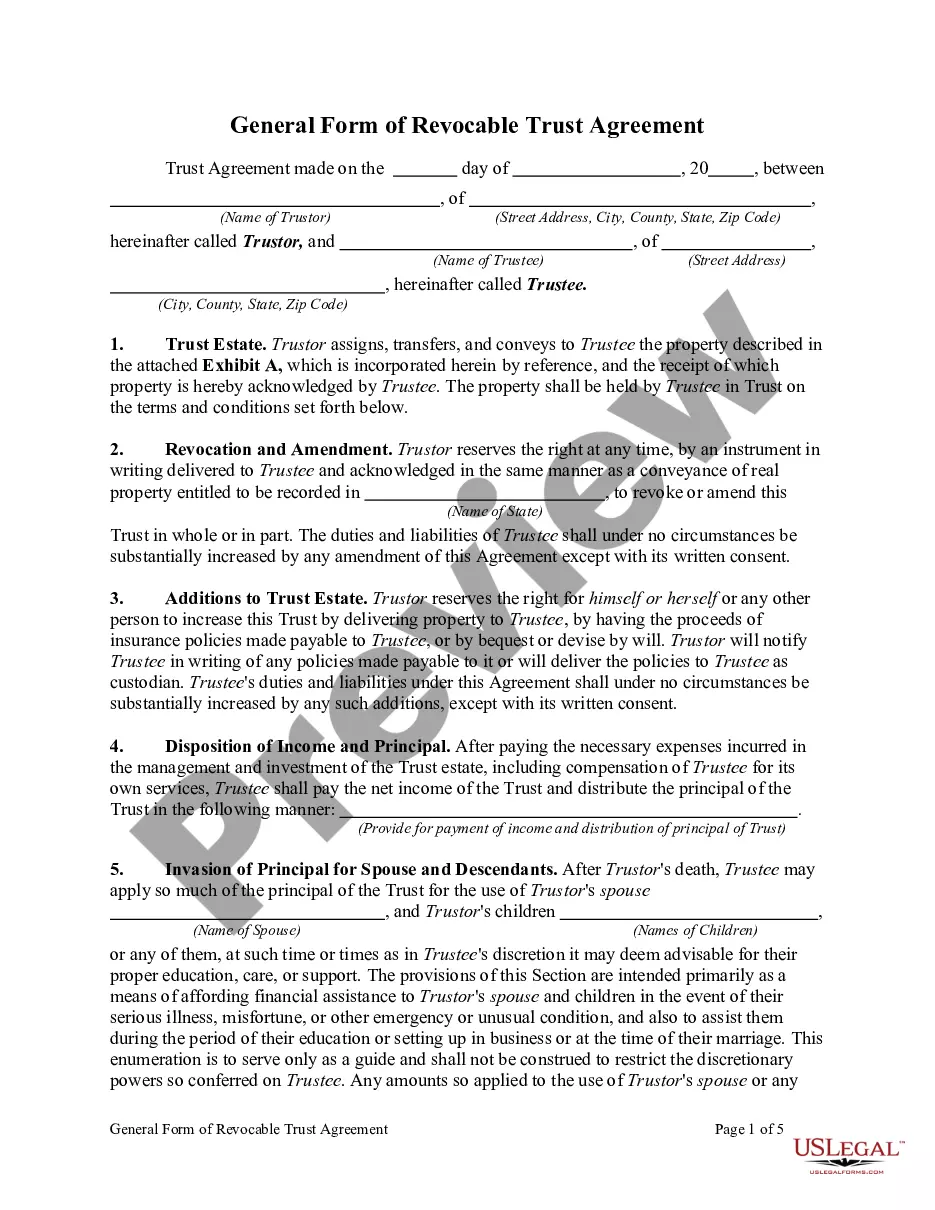
This Trust Agreement - Revocable - Multiple Trustees and Beneficiaries is a legal document designed to establish a revocable trust, which allows the grantor to manage their assets during their lifetime and dictate how those assets will benefit their family or chosen beneficiaries after their passing. Unlike irrevocable trusts, revocable trusts provide flexibility, allowing the grantor to amend or revoke the agreement at any time. This specific form accommodates multiple trustees and beneficiaries, making it suitable for complex family or financial arrangements.
Key components of this form
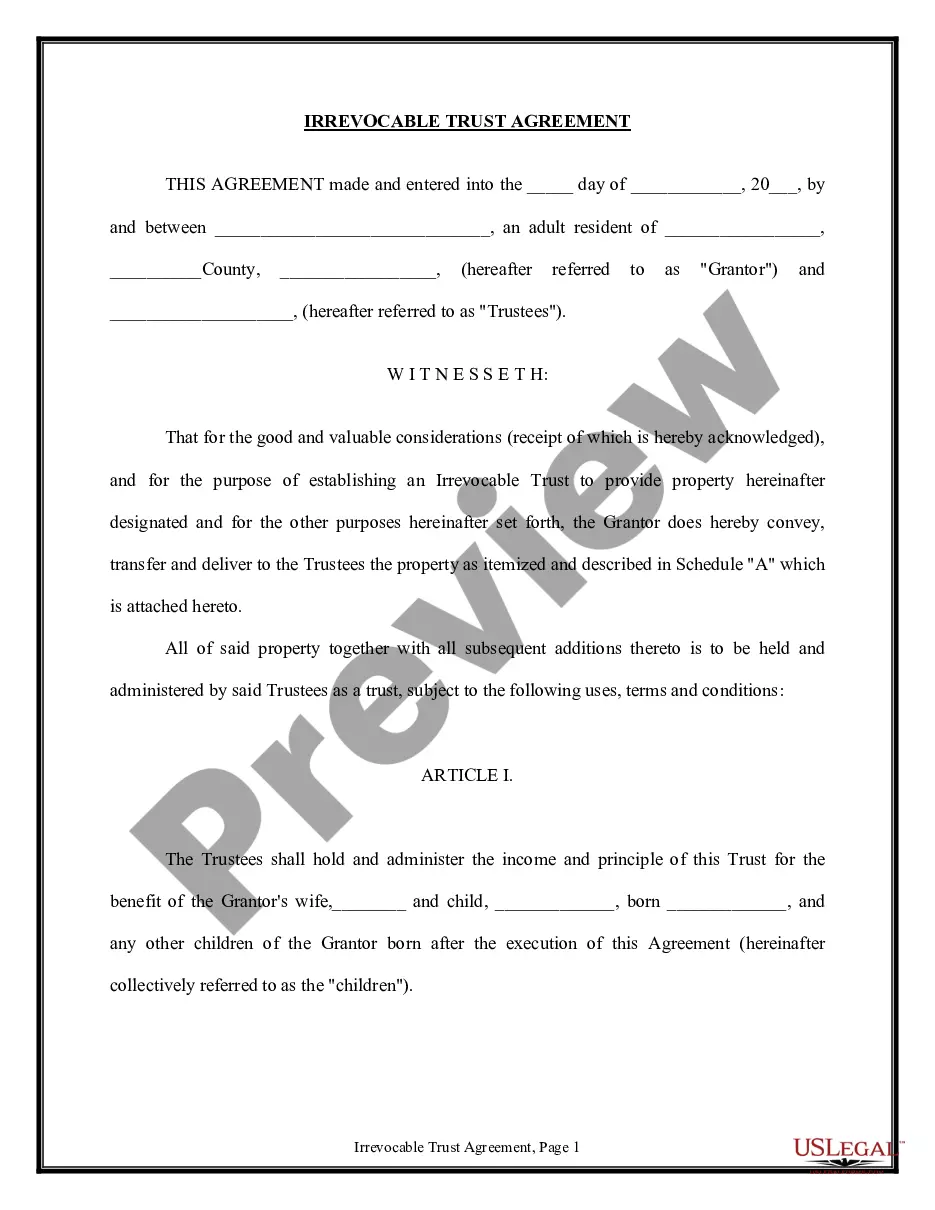
- The introduction section identifies the parties involved: the grantor and the trustees.
- Article I details the beneficiaries of the trust, including the grantor's spouse and children.
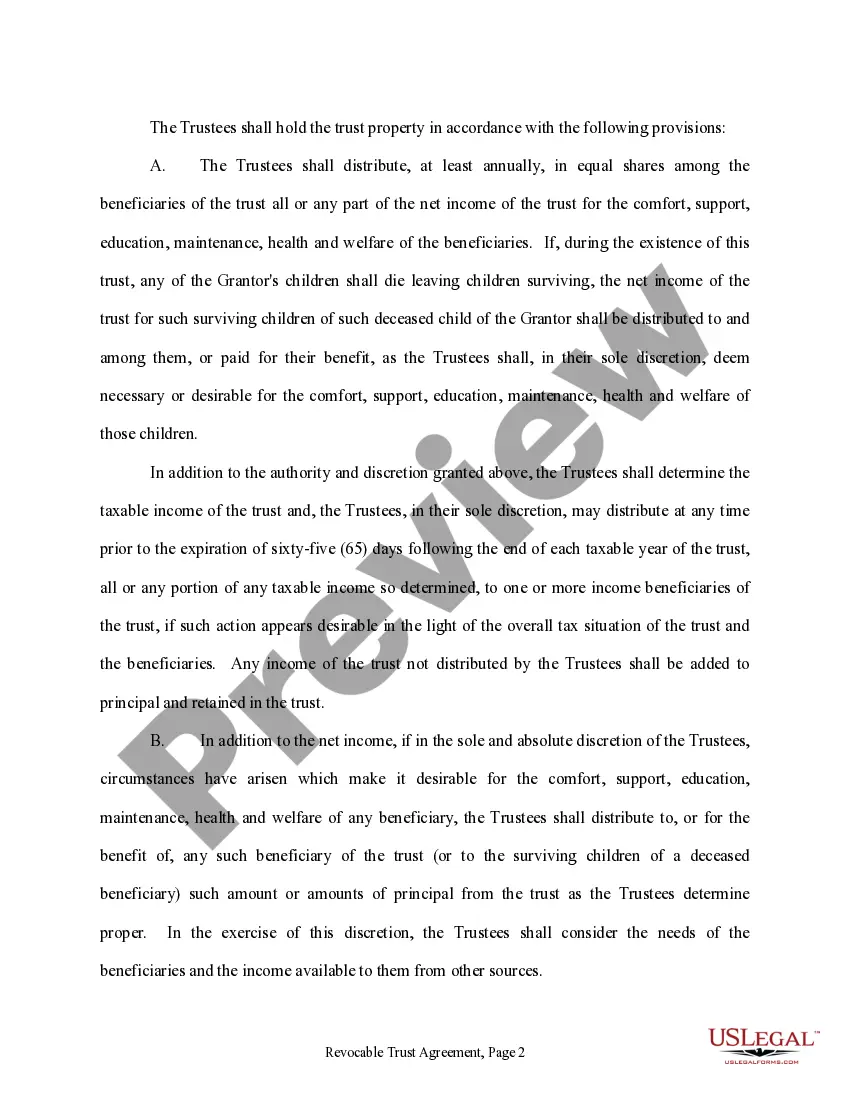
- Article II outlines the distribution policies for trust income and principal.
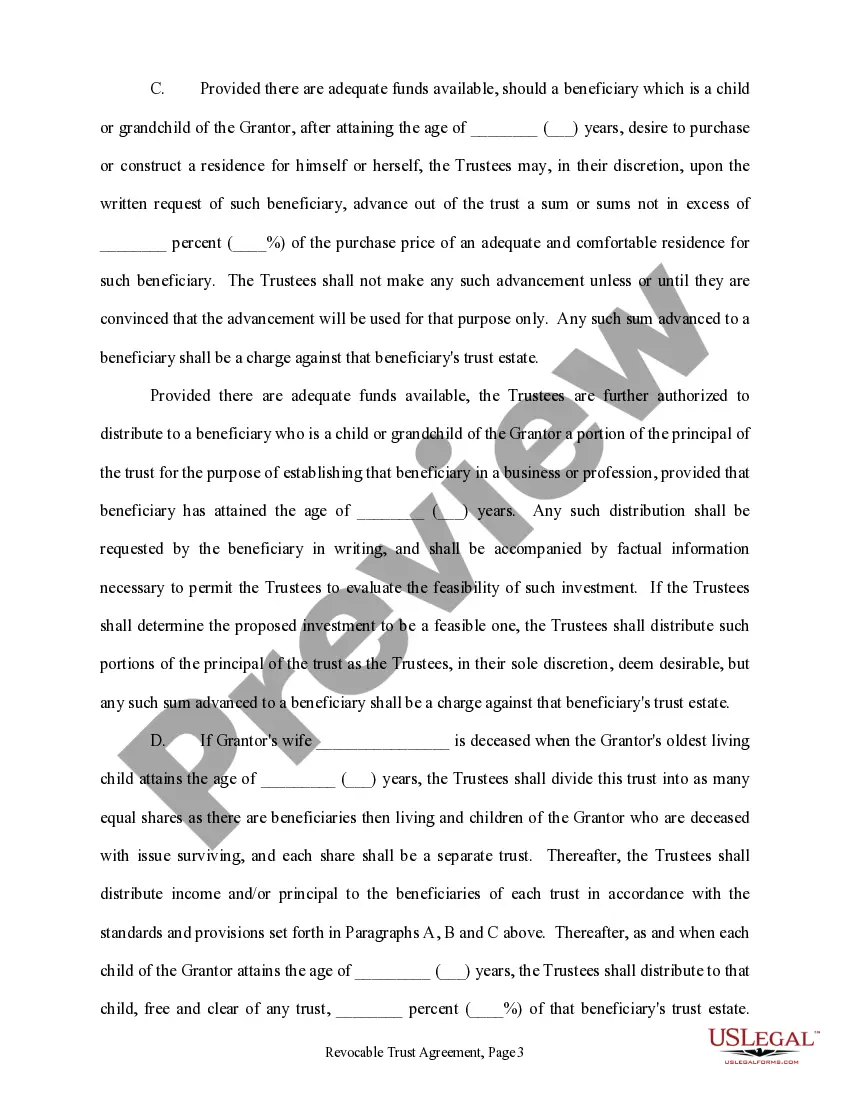
- Provisions allow trustees discretion in distributing funds for the welfare of the beneficiaries.
- Provisions are included for the potential division of the trust upon the death of beneficiaries.

When to use this document
This Trust Agreement should be used when an individual (the grantor) wants to establish a revocable trust with multiple trustees and beneficiaries. It is particularly useful in scenarios where the grantor wishes to manage their estate flexibly while ensuring their spouse and children, including any future children, are provided for. It is also appropriate for individuals who anticipate changes in their family situation, such as marriage or the birth of children.
Intended users of this form
- Individuals with significant assets who want to provide for their family members after their death.
- Grantors who may have multiple trustees, such as family members or trusted advisors, overseeing the trust.
- Parents expecting to have more children and wanting to include them in the trust provisions.
- Anyone looking for flexibility in managing their estate plan, with the option to amend or revoke the trust as needed.
Completing this form step by step
- Identify the parties involved: the grantor (yourself) and the trustees (individuals or entities you choose).
- Specify the property to be placed into the trust in Schedule A of the agreement.
- Clearly define the trustees' duties and powers regarding the management and distribution of trust assets.
- Enter the dates, names, and specific terms related to the beneficiaries.
- Sign the agreement, ensuring appropriate witnesses are present as required by law.
Notarization guidance
This form needs to be notarized to ensure legal validity. US Legal Forms provides secure online notarization powered by Notarize, allowing you to complete the process through a verified video call, available anytime.
Get your form ready online
Our built-in tools help you complete, sign, share, and store your documents in one place.
Make edits, fill in missing information, and update formatting in US Legal Forms—just like you would in MS Word.
Download a copy, print it, send it by email, or mail it via USPS—whatever works best for your next step.
Sign and collect signatures with our SignNow integration. Send to multiple recipients, set reminders, and more. Go Premium to unlock E-Sign.
If this form requires notarization, complete it online through a secure video call—no need to meet a notary in person or wait for an appointment.
We protect your documents and personal data by following strict security and privacy standards.

Make edits, fill in missing information, and update formatting in US Legal Forms—just like you would in MS Word.

Download a copy, print it, send it by email, or mail it via USPS—whatever works best for your next step.

Sign and collect signatures with our SignNow integration. Send to multiple recipients, set reminders, and more. Go Premium to unlock E-Sign.

If this form requires notarization, complete it online through a secure video call—no need to meet a notary in person or wait for an appointment.

We protect your documents and personal data by following strict security and privacy standards.
Typical mistakes to avoid
- Failing to clearly define the trustees' powers which may lead to disputes later.
- Not including all potential beneficiaries, such as future children.
- Inaccurately describing the trust property in Schedule A.
- Overlooking the signature and notarization requirements which could invalidate the trust.
Why use this form online
- Convenience: Access and complete the form from anywhere at any time.
- Editability: Quickly make changes if your family circumstances alter.
- Reliability: Forms are regularly updated to comply with current legal standards.
Legal use & context
- The Trust Agreement creates a legal arrangement that outlines how the trustee should manage the assets for beneficiaries.
- Trusts are generally revocable, allowing the grantor to alter the terms as circumstances change.
- Using a revocable trust can help avoid the probate process, making asset distribution quicker and less publicly visible.
Looking for another form?

Form popularity
FAQ
Maximum. Whilst there is no general restriction on the maximum number of trustees that can be appointed of a trust of personality, the number of trustees of a settlement holding land is limited to four.
The person or people benefiting from the trust are the beneficiaries. Because a revocable trust lists one or more beneficiaries, the trust avoids probate, which is the legal process of distributing assets of a will.
When a grantor establishes a trust, a single trustee manages the trust's assets on behalf of the named beneficiaries. However, there is no requirement for a trust to have only one trustee. When a grantor names multiple trustees, or co-trustees, they are responsible for co-managing the trust's assets.
The simple answer is yes, a Trustee can also be a Trust beneficiary. In fact, a majority of Trusts have a Trustee who is also a Trust beneficiary. Being a Trustee and beneficiary can be problematic, however, because the Trustee must still comply with the duties and responsibilities of a Trustee.
While there's no limit to how many trustees one trust can have, it might be beneficial to keep the number low. Here are a few reasons why: Potential disagreements among trustees. The more trustees you name, the greater the chance they'll have different ideas about how your trust should be managed.
And there is no limit to the number of trustees to hold the position in one trust. Generally there are more than one trustee , the trustees, with respect to each other, are referred to as co-trustees, and when acting jointly as a collective body are referred to as the Board of Trustees .
A trust is a legal document that governs how the grantor's assets pass to the named beneficiaries upon the grantor's death.However, there is no requirement for a trust to have only one trustee. When a grantor names multiple trustees, or co-trustees, they are responsible for co-managing the trust's assets.
A single Trustee can be appointed but it is usually recommended that you appoint at least two. Not only does this avoid problems when a single Trustee is unable to conduct their duties, if the trust property includes any land, at least two Trustees will be needed for legal reasons.