Self-Employed Wedding Entertainment Services Contract
Understanding this form
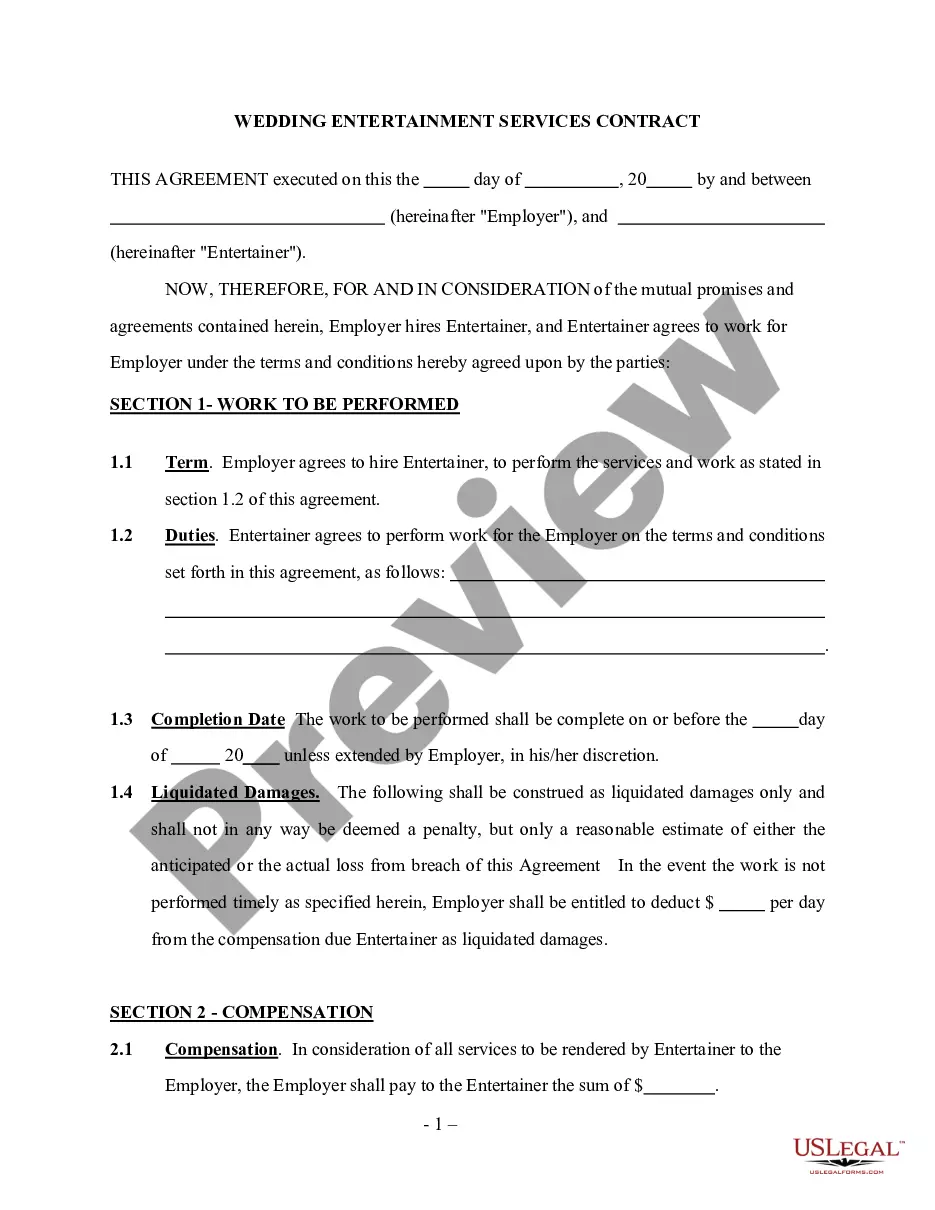
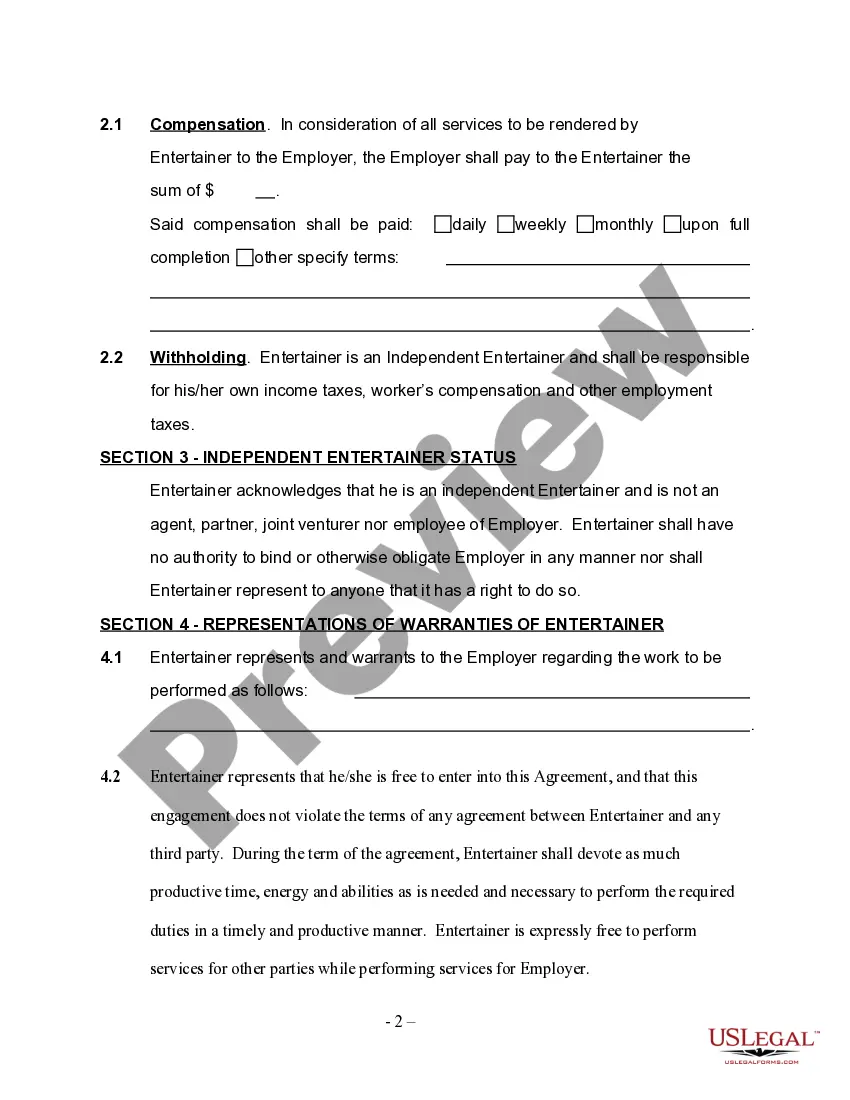
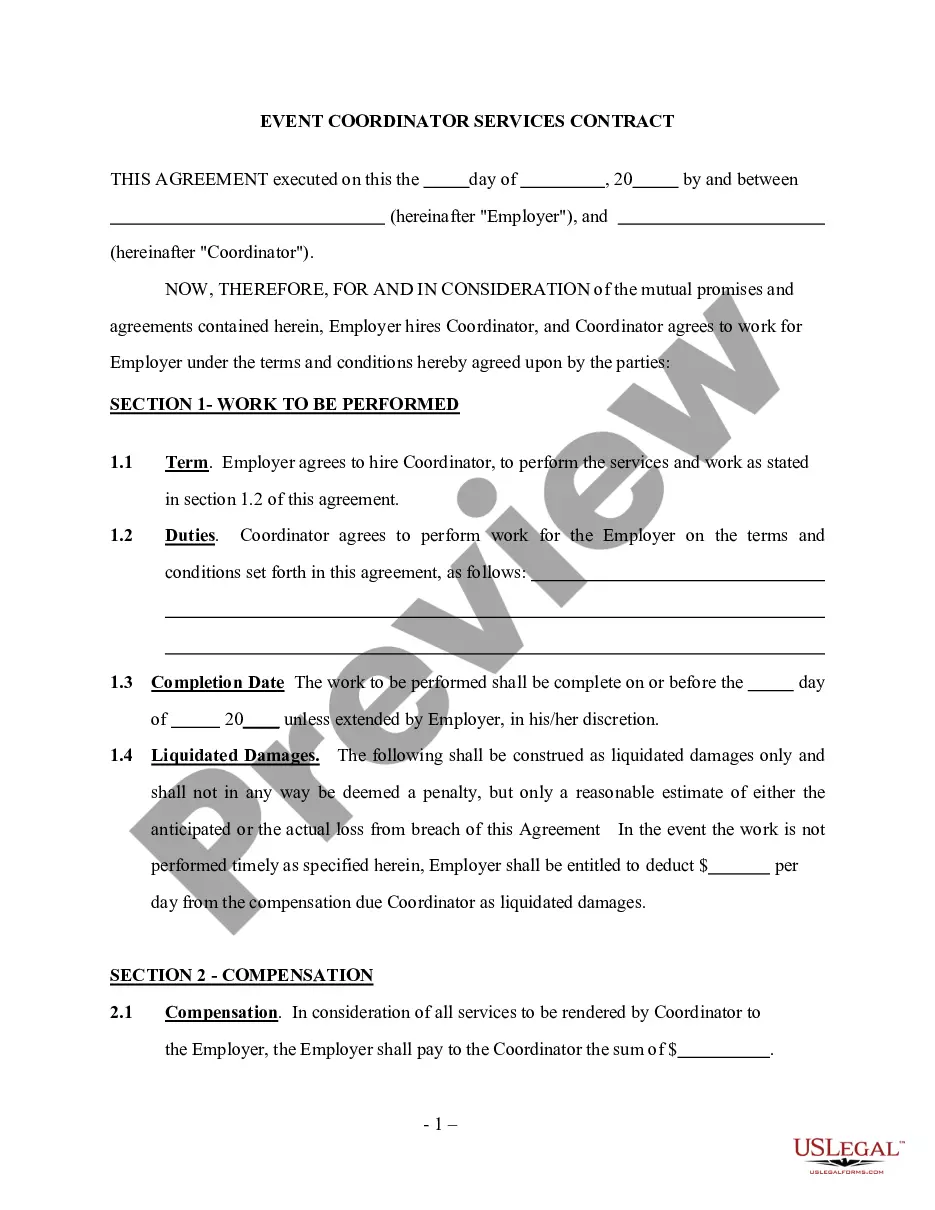
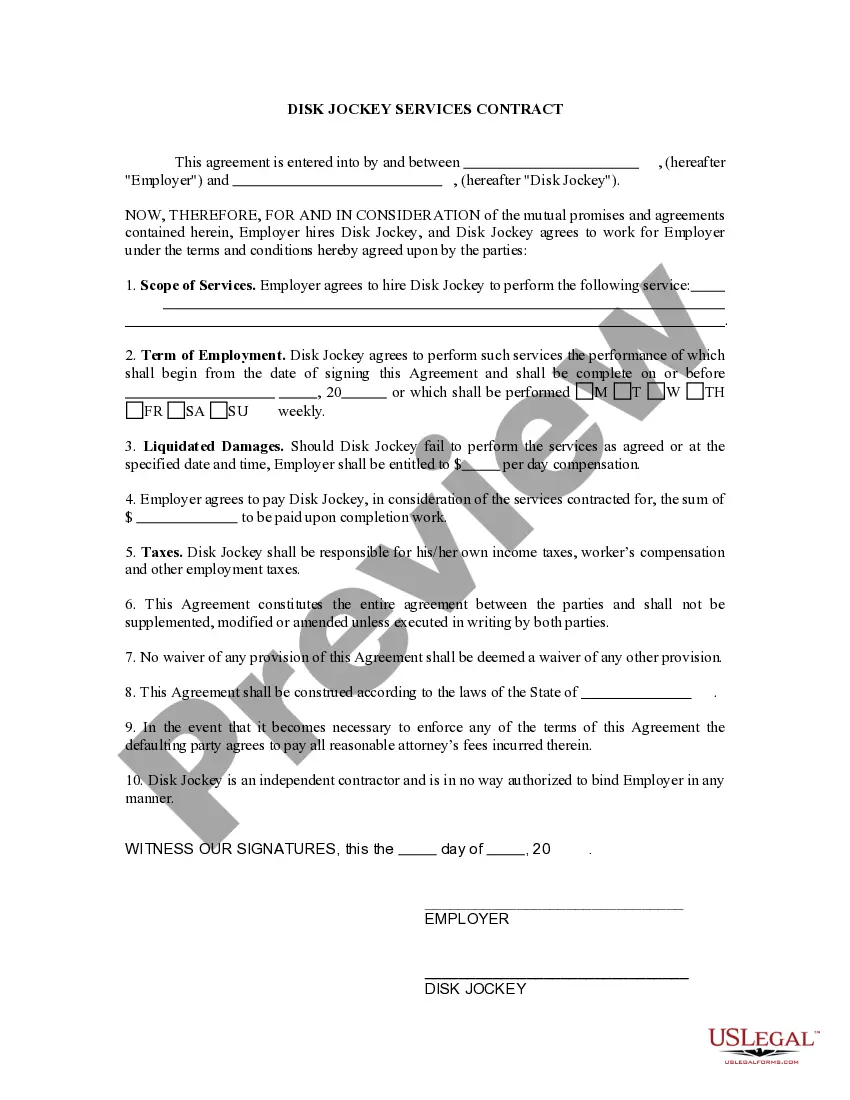
The Self-Employed Wedding Entertainment Services Contract is a legal document that formalizes the agreement between an employer and an independent contractor providing entertainment services for a wedding. This contract specifies the terms and conditions under which the entertainer will perform, distinguishing it from other employment agreements by emphasizing the independent contractor status of the entertainer.
Main sections of this form
- Work to be performed: Details the specific services the entertainer will provide during the event.
- Independent entertainer status: Clearly states that the entertainer is an independent contractor, not an employee of the employer.
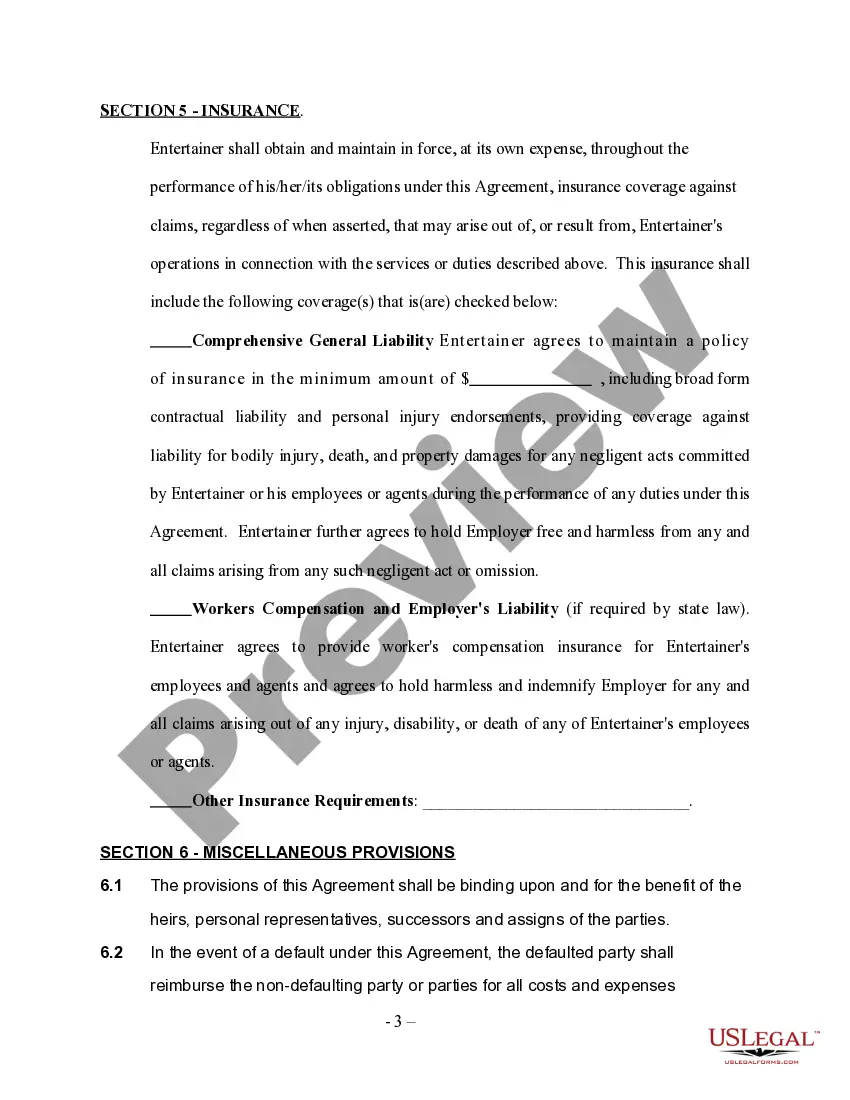
- Insurance requirements: Specifies the requirement for the entertainer to obtain and maintain insurance coverage.
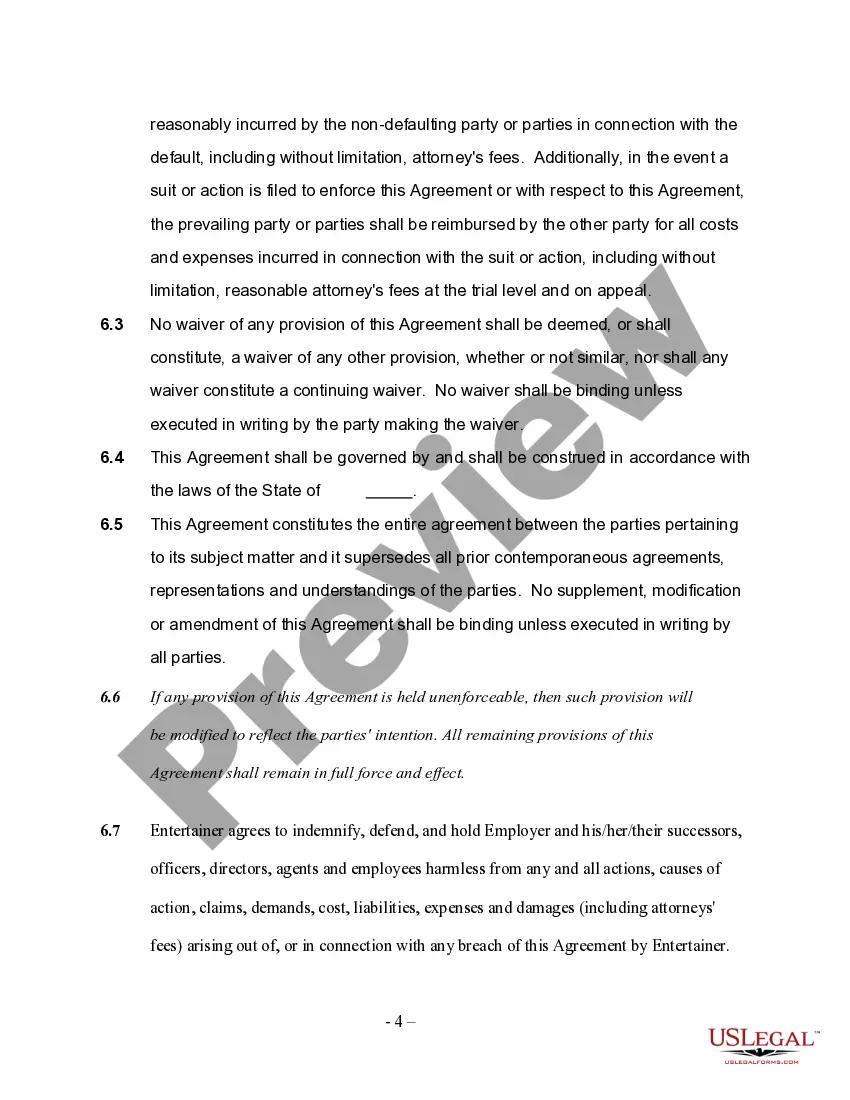
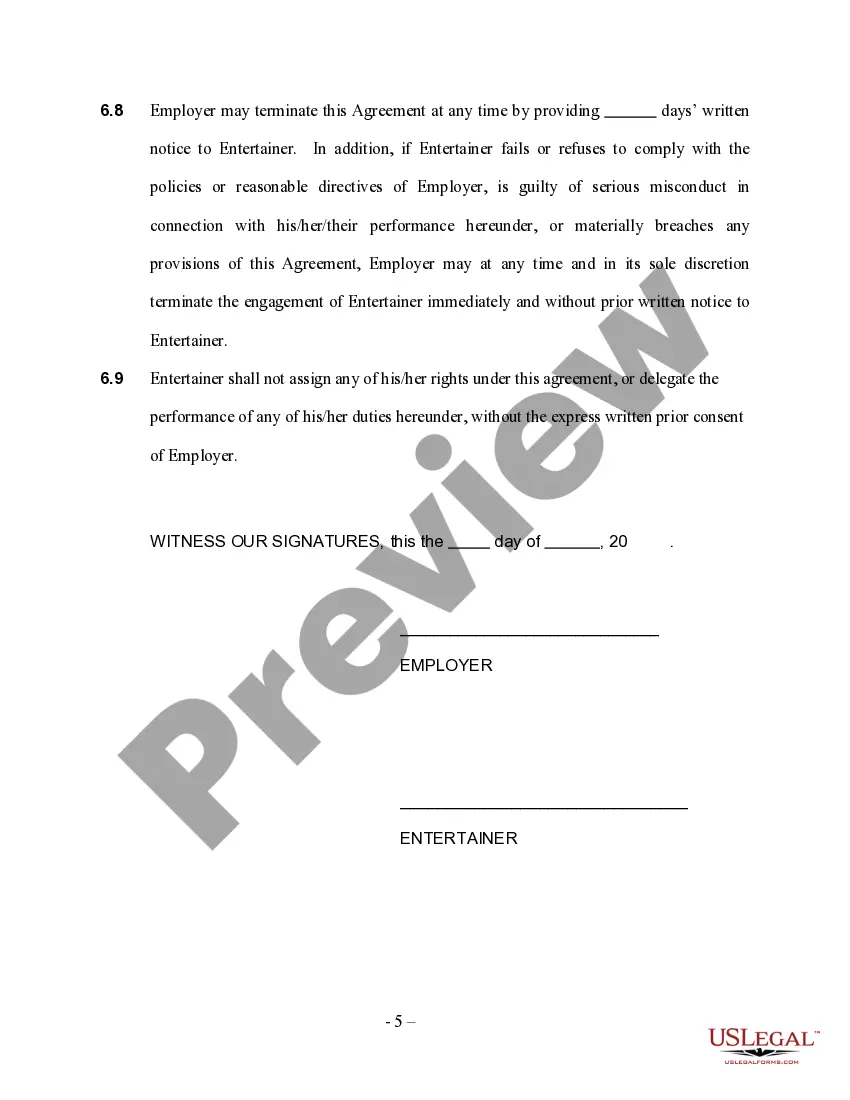
- Indemnification clause: Outlines the entertainer's obligation to protect the employer from potential claims related to the agreement.
- Assignment of rights: States that the entertainer cannot transfer their rights or obligations without consent from the employer.
When to use this form
This contract should be used whenever an employer hires an independent contractor to provide entertainment services for a wedding. This includes musicians, DJs, or performers requiring a formal agreement to outline expectations and protect both parties involved.
Who should use this form
- Wedding planners hiring independent entertainers for events.
- Individuals or companies providing wedding entertainment services on a contract basis.
- Employers looking to clarify the terms of engagement with independent contractors.
Instructions for completing this form
- Identify the parties involved, including the employer and entertainer.
- Specify the services to be performed as outlined in the contract.
- Include the date of the event and the duration of the services.
- Ensure the entertainer accepts insurance requirements and indemnification clauses.
- Both parties should review, sign, and date the agreement to make it legally binding.
Does this document require notarization?
This form usually doesn’t need to be notarized. However, local laws or specific transactions may require it. Our online notarization service, powered by Notarize, lets you complete it remotely through a secure video session, available 24/7.
Get your form ready online
Our built-in tools help you complete, sign, share, and store your documents in one place.
Make edits, fill in missing information, and update formatting in US Legal Forms—just like you would in MS Word.
Download a copy, print it, send it by email, or mail it via USPS—whatever works best for your next step.
Sign and collect signatures with our SignNow integration. Send to multiple recipients, set reminders, and more. Go Premium to unlock E-Sign.
If this form requires notarization, complete it online through a secure video call—no need to meet a notary in person or wait for an appointment.
We protect your documents and personal data by following strict security and privacy standards.

Make edits, fill in missing information, and update formatting in US Legal Forms—just like you would in MS Word.

Download a copy, print it, send it by email, or mail it via USPS—whatever works best for your next step.

Sign and collect signatures with our SignNow integration. Send to multiple recipients, set reminders, and more. Go Premium to unlock E-Sign.

If this form requires notarization, complete it online through a secure video call—no need to meet a notary in person or wait for an appointment.

We protect your documents and personal data by following strict security and privacy standards.
Avoid these common issues
- Failing to clearly define the services to be performed.
- Not specifying the payment terms or timeline.
- Omitting necessary insurance coverage details.
- Not having both parties sign the agreement.
Why complete this form online
- Convenient access to downloadable and ready-to-use templates.
- Easy customization to fit specific entertainment needs and requirements.
- Reliability, with forms drafted by licensed attorneys to ensure legal compliance.
Legal use & context
- This contract is legally binding, provided it is signed by both parties.
- It helps to protect both the employer and entertainer from legal disputes.
- Consulting with a lawyer before finalizing the contract may be beneficial for ensuring compliance with local laws.
Main things to remember
- The Self-Employed Wedding Entertainment Services Contract clarifies the relationship between an employer and entertainer.
- It is crucial for outlining services, payment terms, and insurance requirements.
- This form helps mitigate future disputes in the employer-independent contractor relationship.
Looking for another form?
Form popularity
FAQ
Typically, they charge between 10 percent and 20 percent of your total budget, depending on their experience and the size and scope of your event.
A list of services being provided. The agreement should contain clear expectations as to what services are provided and what those services are. Payment schedule. Cancellation terms. Termination clause. Indemnification clause. Cancelation-by-you clause.
Name and Contact Info for You and the Vendor. Date, Times and Locations of Your Ceremony and Reception. Itemized List of All the Services You Need. A List of Anything the Planner Will Supply or Take Care Of. Arrival Times and Time Needed for Setup at the Ceremony and Reception Sites.
Step 1 Get formal training. In order to learn the intricacies of wedding planning, professionals can complete a diploma program. Step 2 Obtain hands-on experience. Step 3 Choose a niche. Step 4 Find a mentor. Step 5 Earn a professional certification.
The costs for wedding venues, planners, catering, flowers, and so much more really begin to add up quickly. The good news is most wedding planners typically charge a flat fee (the most common option), an hourly rate, or take a percentage of your budget - similar cost structures you've probably run into before.
In the contract you should include information such as: per person meal prices, corkage fees, overtime fees, payment balance amount and due date, and services included in your rates (including tableware, barware and staffing).
A good planner can save you five to 10 percent on your wedding, so sometimes it can come out where it's an even wash, Chantel says. Winikka says planners often provide brides with budget spreadsheets that track wedding-related expenses and can reign in potential overspending.
While you do not need an official certification or license to become an event planner, you may want to register your event management company and business's name. Then, be sure to open separate accounting for your business, and track all your expenses and income for tax purposes.
Today's Date. Wedding Date (and time if you know it) Name of Bride & Groom. Bride & Groom's Contact Info address, telephone, email, etc. Conditions your role as wedding planner and restrictions. Your Compensation your total fees, initial deposit and payment schedule.