Sample Letter for Divorce Settlement
About this form
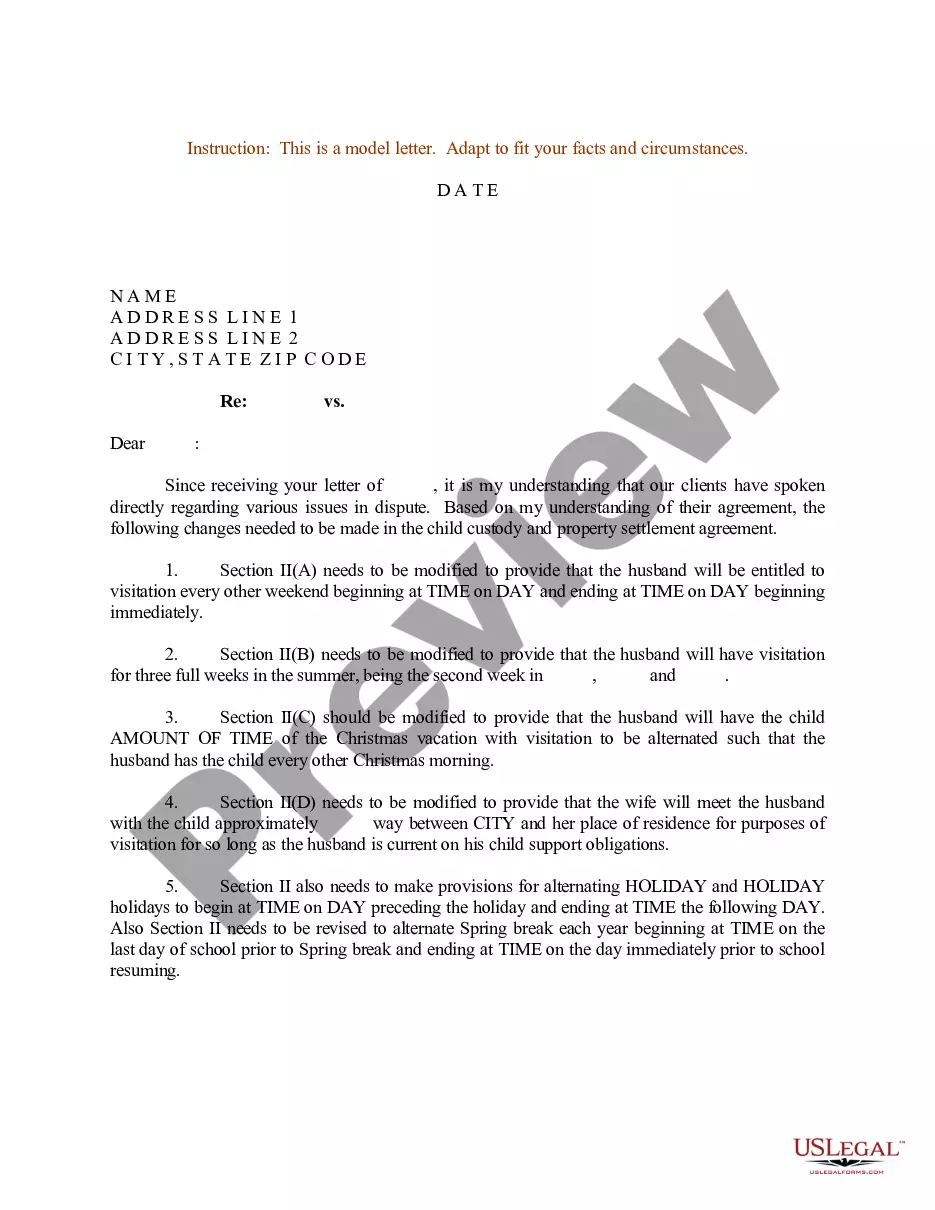
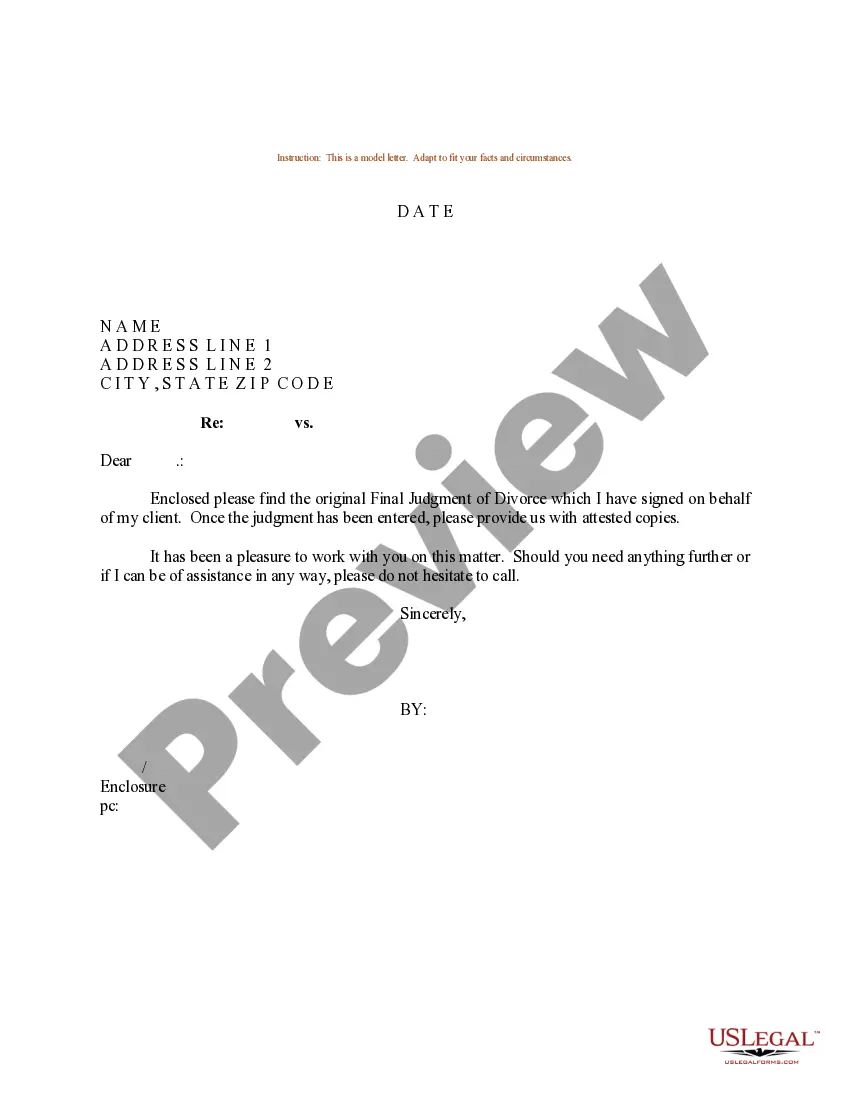
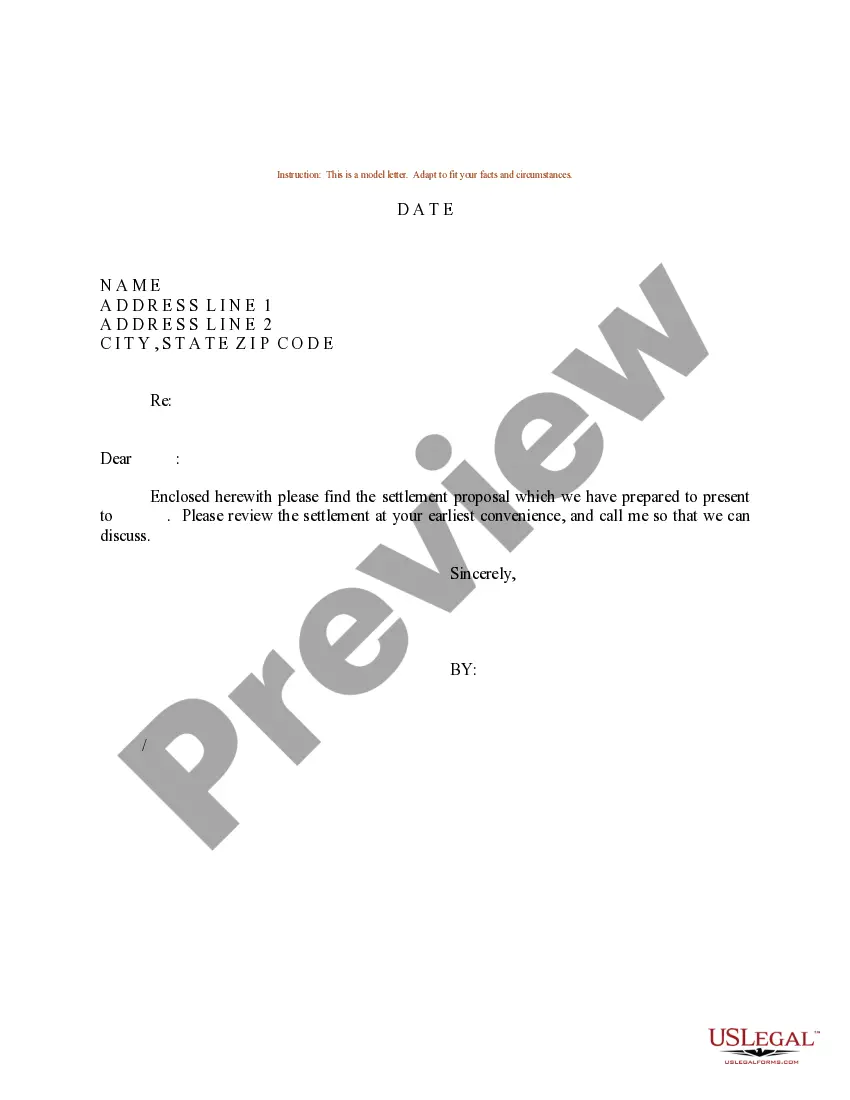
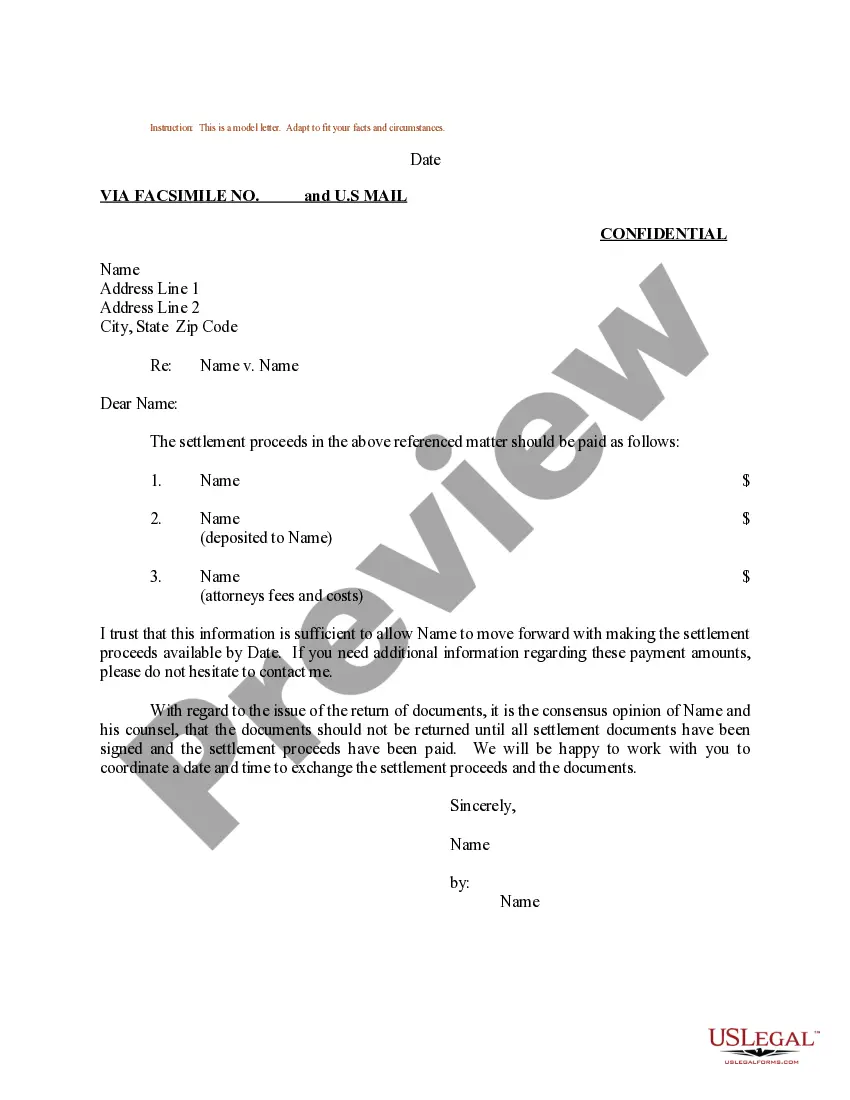
The Sample Letter for Divorce Settlement is a legal template designed to facilitate communication regarding the terms of a divorce settlement. This form serves as a guideline for outlining modifications to custody, visitation rights, and financial responsibilities between divorcing parties. Unlike basic letters, this template includes specific clauses that address crucial details, ensuring clarity and legal adherence.
What’s included in this form
- Modification of visitation rights, specifying schedules and terms.
- Provisions for alternating holidays and spring break visits.
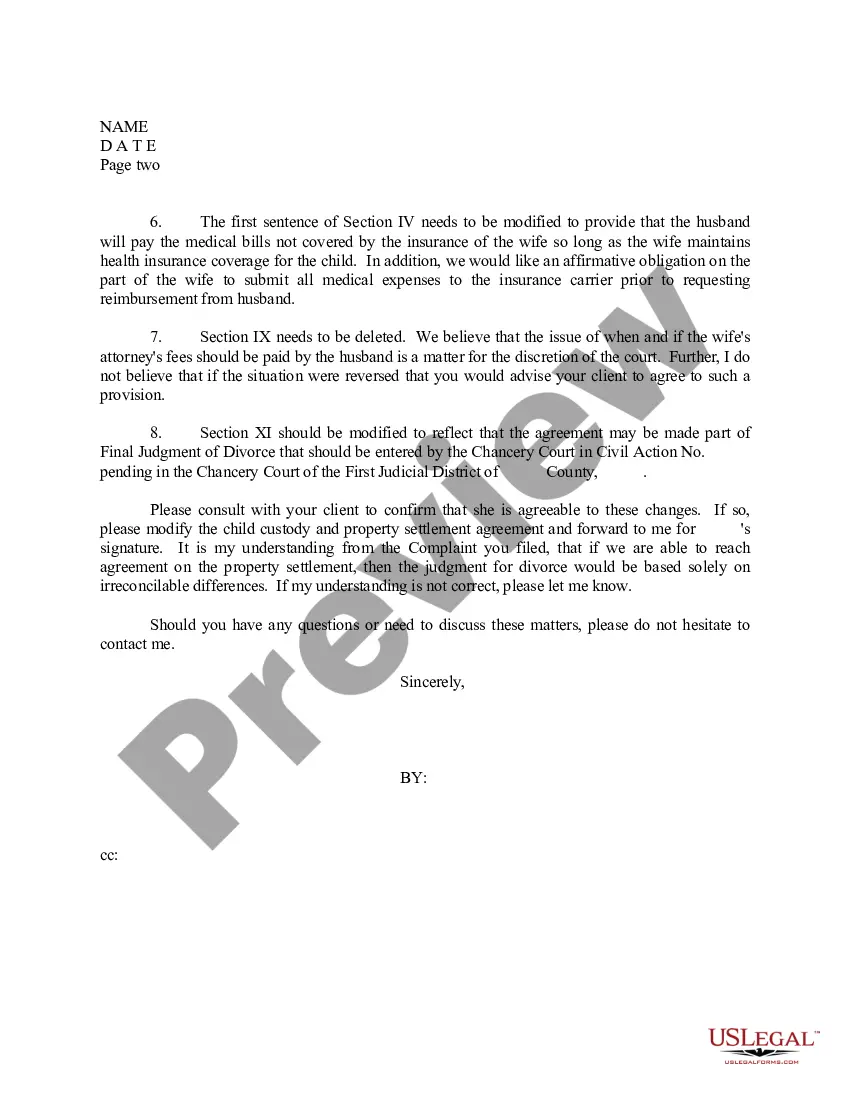
- Clarification of financial responsibilities related to medical expenses.
- Deletion of discretionary attorney fees provisions.
Common use cases
This form is particularly useful when parties have reached a preliminary agreement on divorce terms but need to formally document their arrangements. It can help clarify details regarding child visitation schedules, holiday arrangements, and financial obligations, ensuring both parties are in agreement and reducing potential disputes in the future.
Who needs this form
- Individuals currently going through a divorce.
- Parents seeking to formalize arrangements regarding child custody and visitation.
- Parties who need written documentation of their divorce settlement terms.
- Anyone requiring a structured approach to outline financial responsibilities post-divorce.
Steps to complete this form
- Enter the date at the top of the letter.
- Fill in your name and address information accurately.
- Specify and modify the visitation rights and schedules in Section II.
- Clarify financial responsibilities regarding medical bills and submission in Section IV.
- Review and ensure any deleted sections, such as Section IX, reflect your agreement.
Is notarization required?
This form usually doesn’t need to be notarized. However, local laws or specific transactions may require it. Our online notarization service, powered by Notarize, lets you complete it remotely through a secure video session, available 24/7.
Get your form ready online
Our built-in tools help you complete, sign, share, and store your documents in one place.
Make edits, fill in missing information, and update formatting in US Legal Forms—just like you would in MS Word.
Download a copy, print it, send it by email, or mail it via USPS—whatever works best for your next step.
Sign and collect signatures with our SignNow integration. Send to multiple recipients, set reminders, and more. Go Premium to unlock E-Sign.
If this form requires notarization, complete it online through a secure video call—no need to meet a notary in person or wait for an appointment.
We protect your documents and personal data by following strict security and privacy standards.

Make edits, fill in missing information, and update formatting in US Legal Forms—just like you would in MS Word.

Download a copy, print it, send it by email, or mail it via USPS—whatever works best for your next step.

Sign and collect signatures with our SignNow integration. Send to multiple recipients, set reminders, and more. Go Premium to unlock E-Sign.

If this form requires notarization, complete it online through a secure video call—no need to meet a notary in person or wait for an appointment.

We protect your documents and personal data by following strict security and privacy standards.
Avoid these common issues
- Failing to clearly outline visitation times and conditions.
- Not specifying financial responsibilities related to medical expenses.
- Inadvertently including provisions that are not mutually agreed upon.
- Omitting dates or specific details that may lead to confusion later on.
Why use this form online
- Convenience of downloading and editing to fit your personal situation.
- Access to a template drafted by licensed attorneys, ensuring legal compliance.
- Availability of instant digital access, allowing for quick modifications.
- Easy to store and retrieve, especially for future reference or adjustments.
Legal use & context
- Acts as a formal communication tool in divorce negotiations.
- Helps document agreed-upon terms for easier enforcement by courts.
- Provides a clear record of modifications to existing agreements.
Looking for another form?

Form popularity
FAQ
Make sure you have all of the basic information and divorce forms you need according to the divorce laws in your state. Make sure you have all of the personal information you need. Include a statement that you and the other party are in agreement with the contents of the document.
A detailed parenting-time scheduleincluding holidays! Specifics about support. Life insurance. Retirement accounts and how they will be divided. A plan for the sale of the house.
There are many factors to consider, including assets, incomes, living expenses, inflation, alimony, child support, taxes, retirement plans, investments, medical expenses and health insurance costs, and child-related expenses such as education.
A fair settlement should include ample parenting time for each parent. An equitable visitation agreement may not give parents equal custodial time, but it should provide for frequent and continuing contact with each parent.
An attorney can identify possible issues that you can address before filing it, which can save resources and avoid delays in your divorce process. While you can write a settlement on your own, it is not recommended that you do so.
#1. Start with the Basics. #2. Include the Details. #3. Confirm Your Agreement. #4. Identify and Divide Assets and Debts. #5. Create a Parenting Plan for Custody and Visitation. #6. Agree on Child Support and Spousal Support (Alimony) #7. Polishing Your Agreement. Conclusion.
A detailed parenting-time scheduleincluding holidays! Specifics about support. Life insurance. Retirement accounts and how they will be divided. A plan for the sale of the house.