Determining Self-Employed Independent Contractor Status
What is this form?
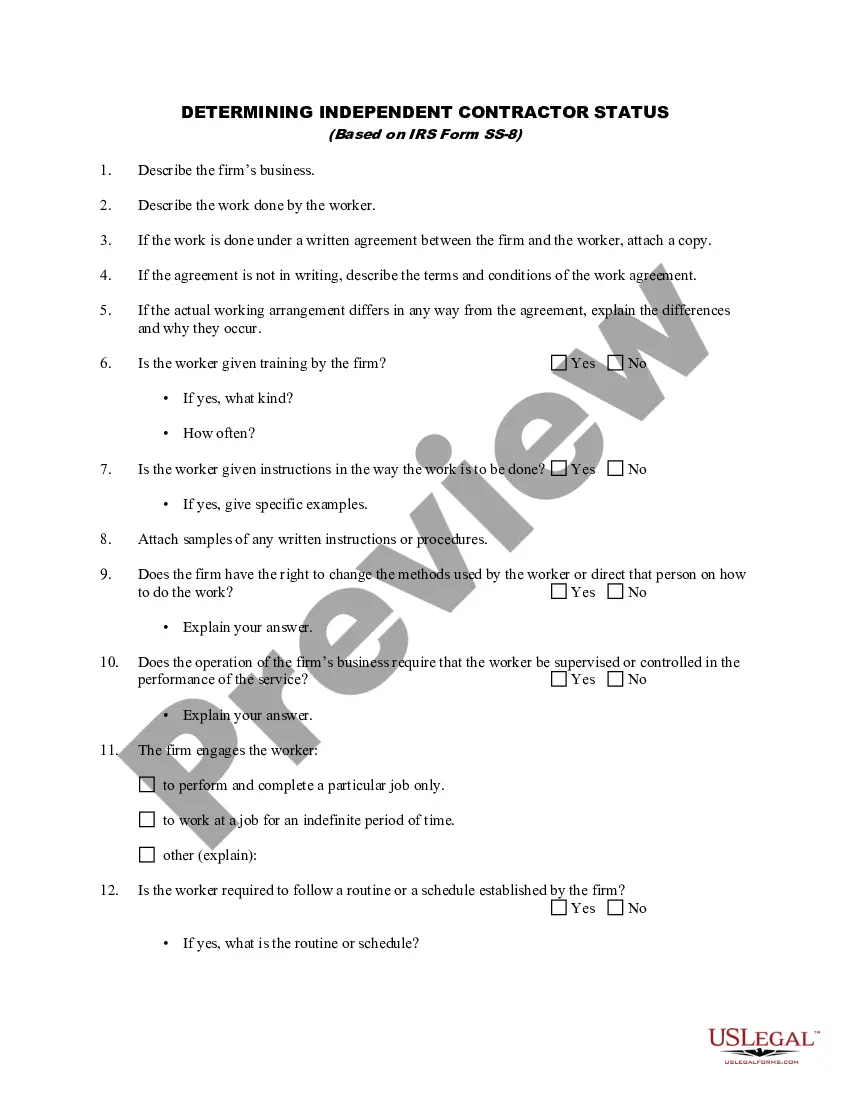
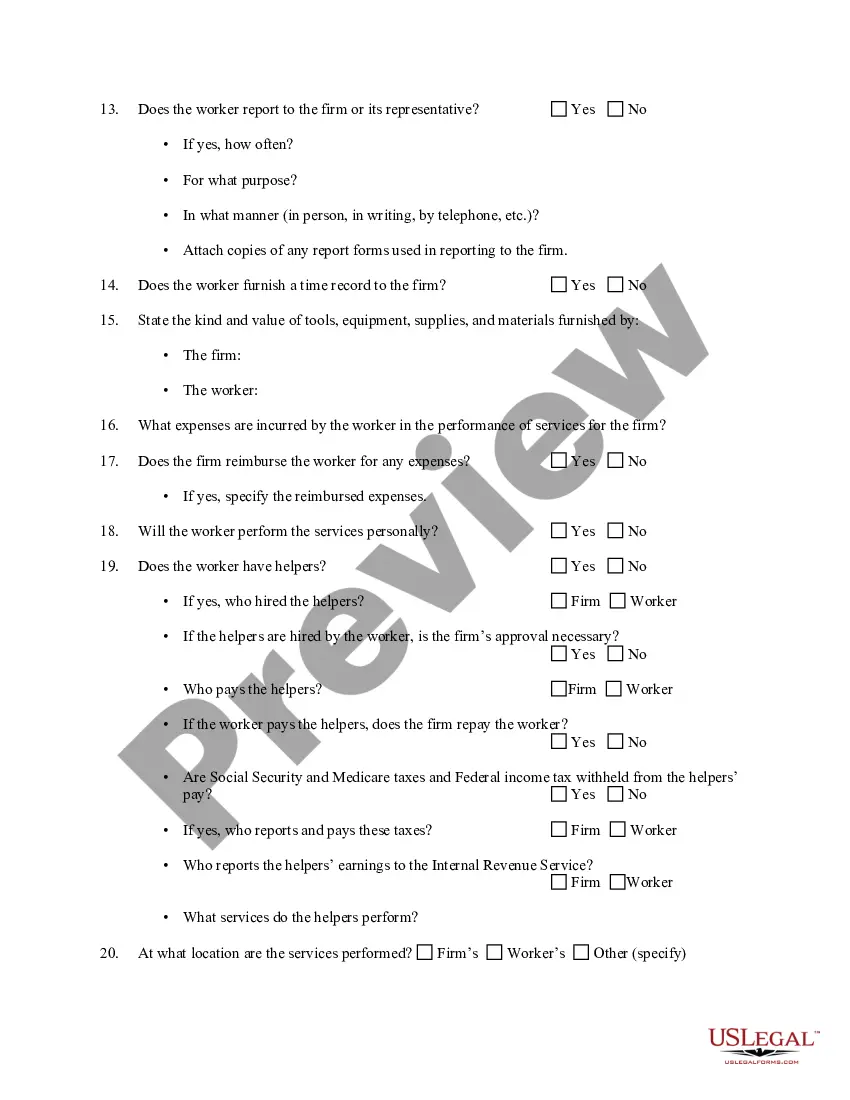
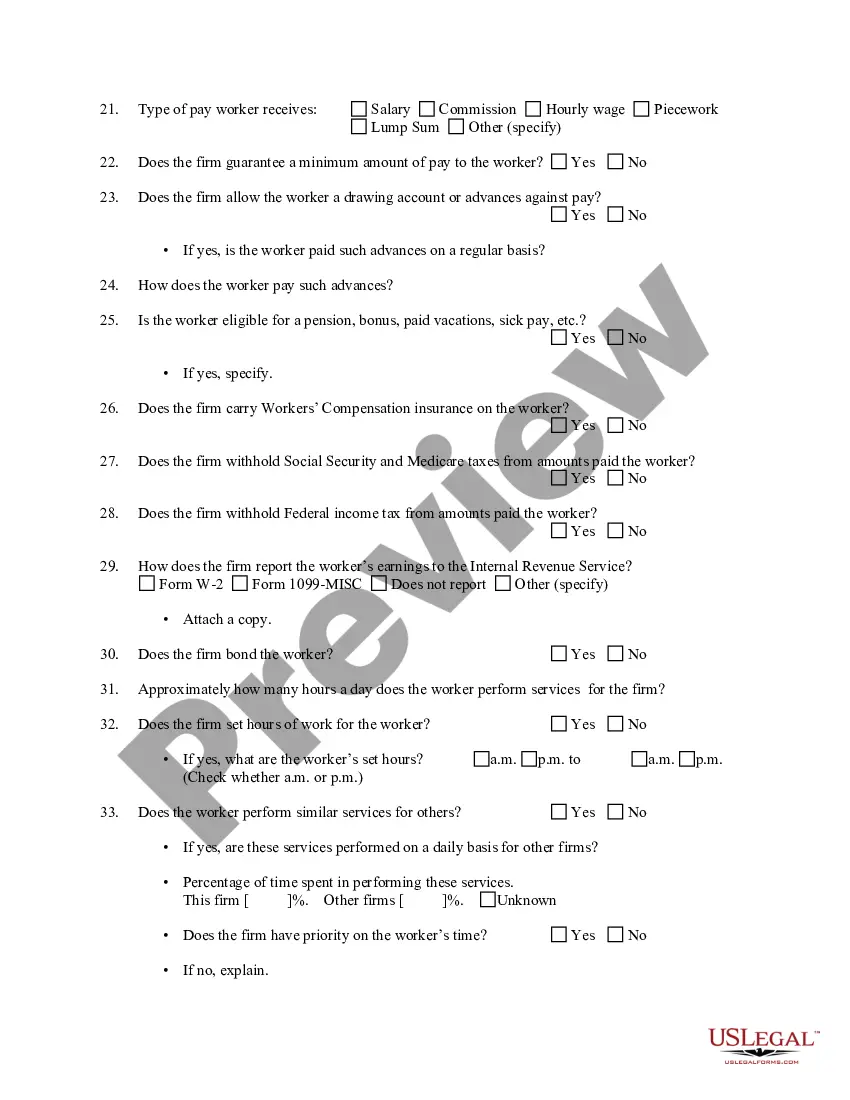
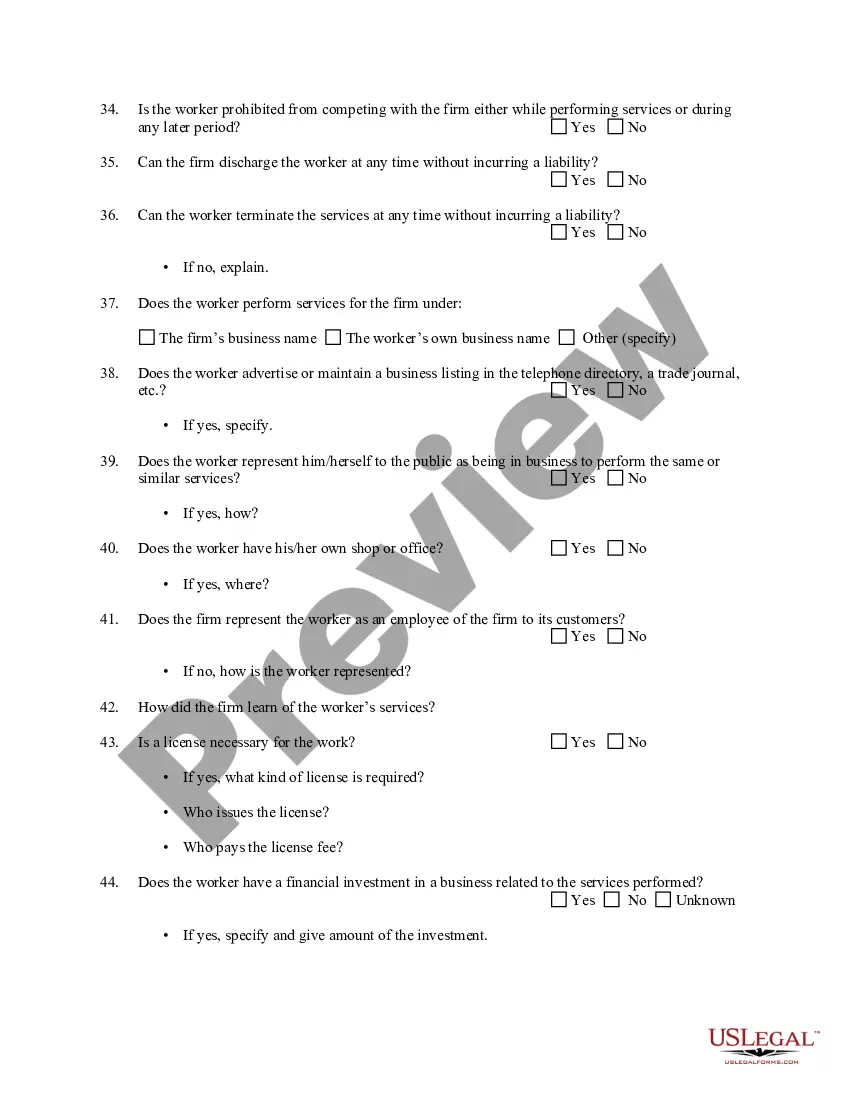
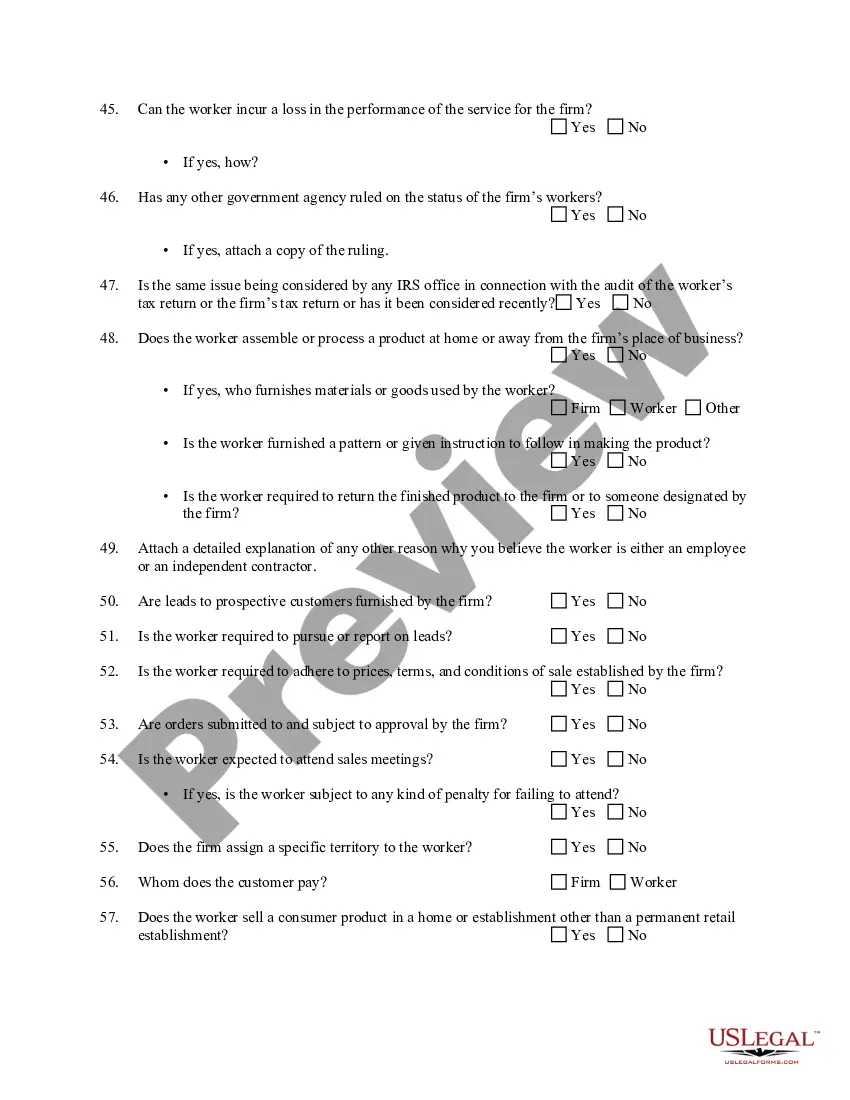
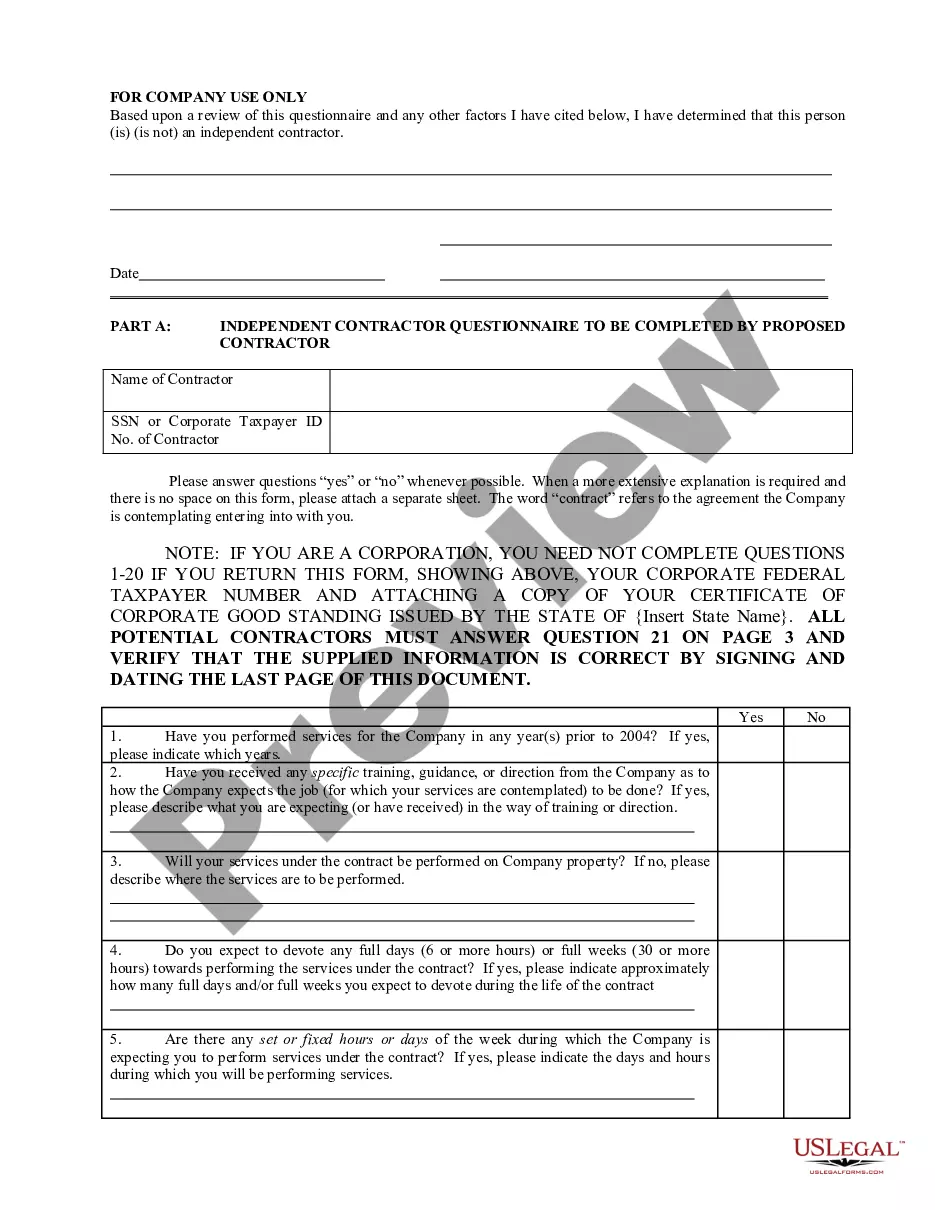
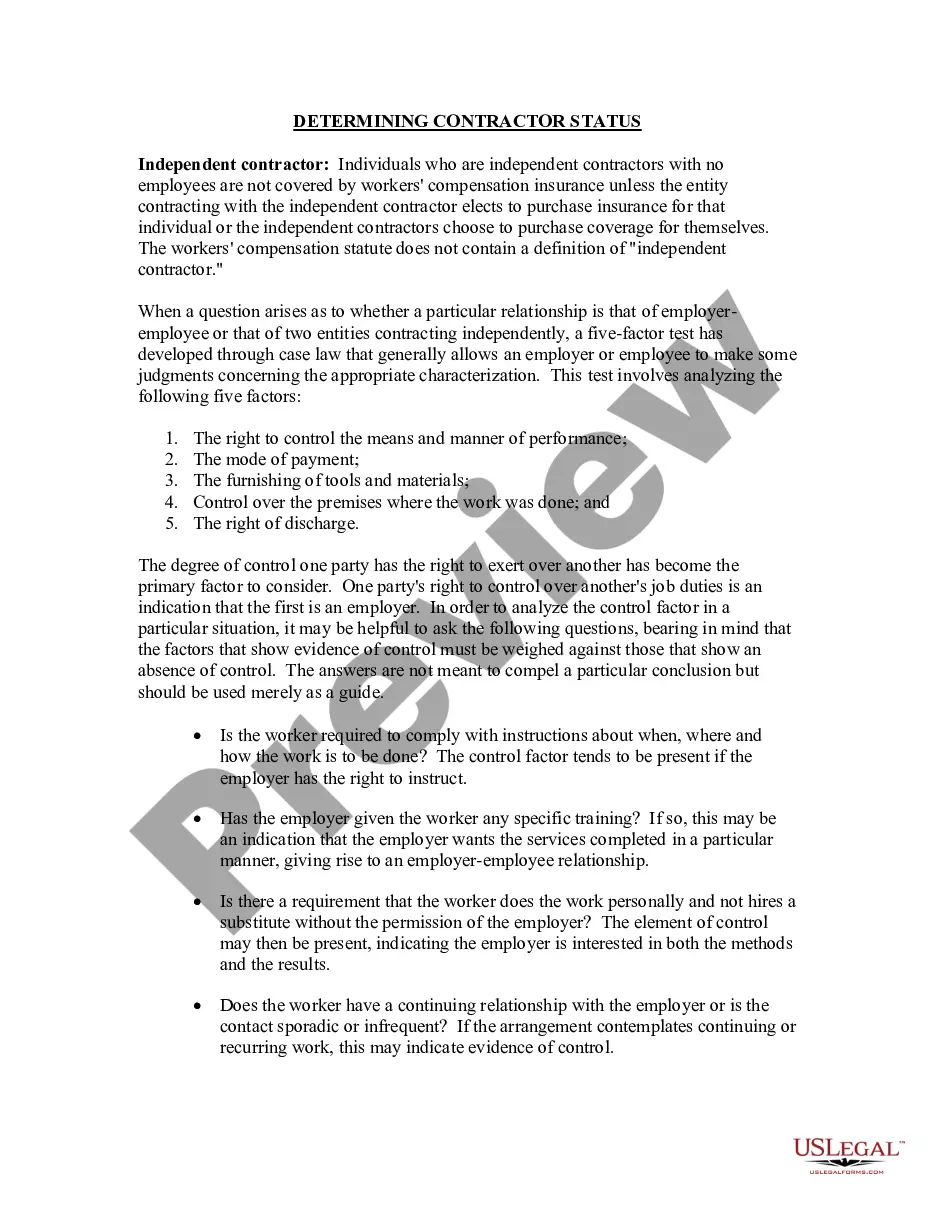
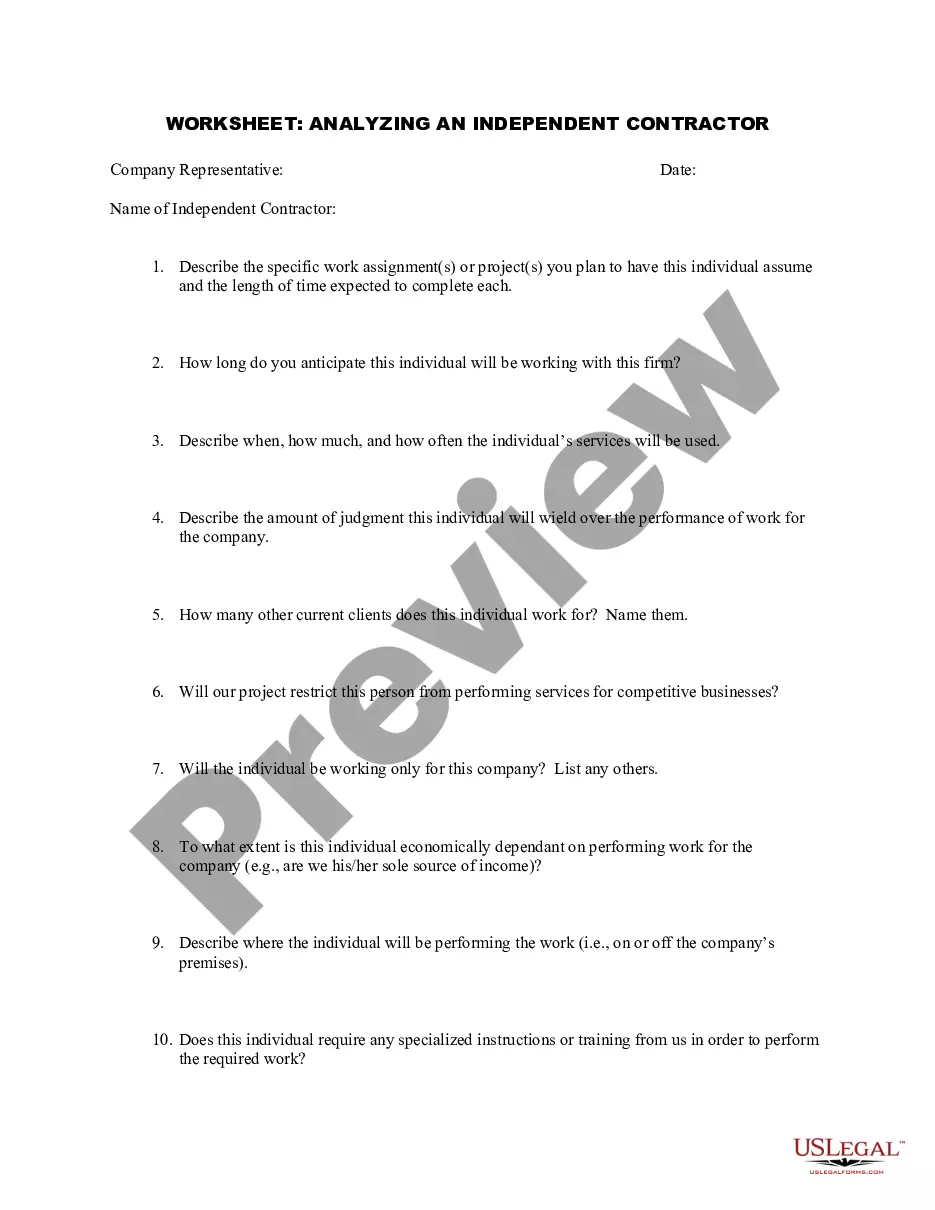
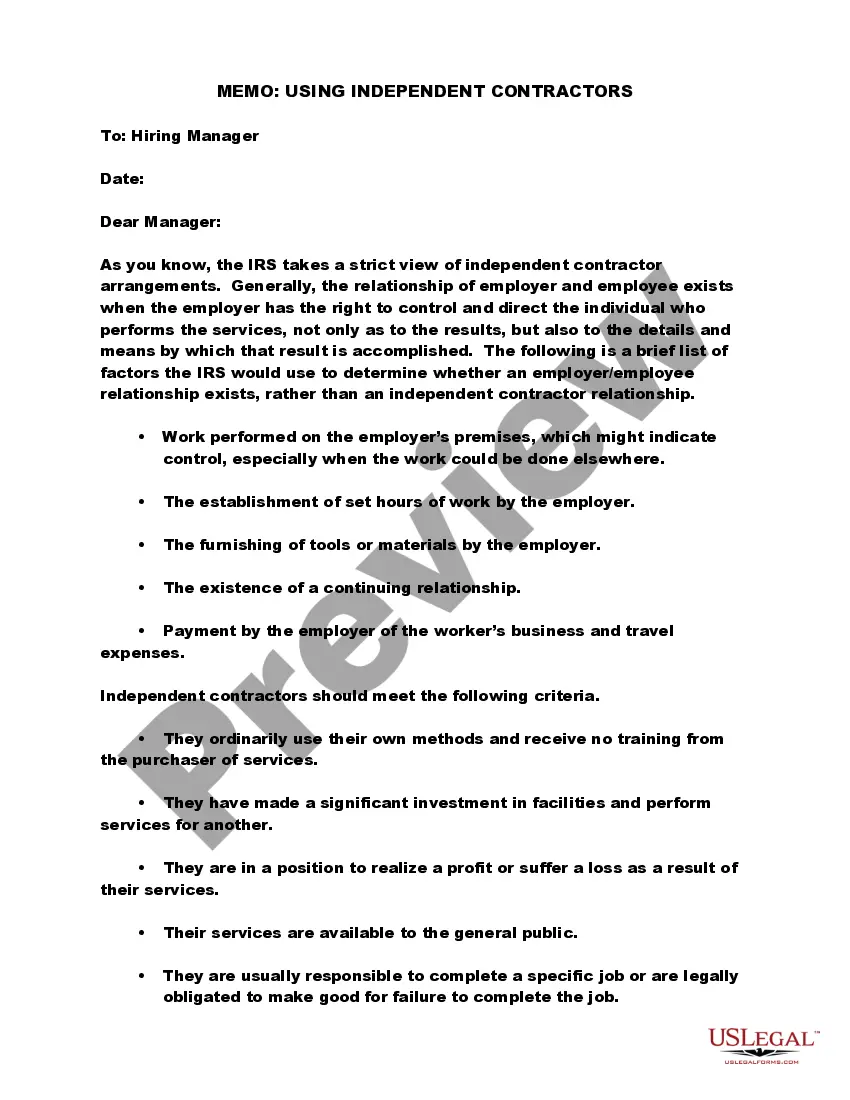
The Determining Self-Employed Independent Contractor Status form is a checklist designed to help businesses identify whether a worker qualifies as an independent contractor or an employee. This form is based on the IRS Form SS-8, which provides guidance on classifying workers for tax purposes. Understanding this distinction is crucial to ensuring compliance with labor laws and avoiding potential penalties related to misclassification.
Key parts of this document
- Identification of the business and worker involved in the assessment.
- Description of the work performed by the worker.
- Details about the working agreement, including terms and conditions.
- Clarifications on the level of control and supervision exercised by the business.
- Documentation of compensation methods and expense reimbursements.

When to use this document
This form is essential for businesses that hire contractors and want to ensure compliance with IRS guidelines. You should use this form when:
- You are uncertain about a worker's classification as an independent contractor versus an employee.
- You need to prepare for an IRS audit concerning worker classifications.
- You want to avoid potential legal and financial ramifications of misclassification.
Who this form is for
This form is primarily intended for:
- Employers and businesses that engage independent contractors.
- Human resources professionals involved in worker classification.
- Small business owners seeking clarity on independent contractor relationships.
- Compliance officers responsible for maintaining legal and regulatory standards.
Steps to complete this form
To accurately complete the Determining Self-Employed Independent Contractor Status form, follow these steps:
- Identify the business and worker by entering their names and addresses.
- Describe the nature of the business and the specific work carried out by the worker.
- Document any existing written agreements and articulate verbal agreements if applicable.
- Outline the extent of control the business has over the work performed by the contractor.
- Include information on the worker's compensation structure and any reimbursements provided.
Notarization guidance
Notarization is not commonly needed for this form. However, certain documents or local rules may make it necessary. Our notarization service, powered by Notarize, allows you to finalize it securely online anytime, day or night.
Get your form ready online
Our built-in tools help you complete, sign, share, and store your documents in one place.
Make edits, fill in missing information, and update formatting in US Legal Forms—just like you would in MS Word.
Download a copy, print it, send it by email, or mail it via USPS—whatever works best for your next step.
Sign and collect signatures with our SignNow integration. Send to multiple recipients, set reminders, and more. Go Premium to unlock E-Sign.
If this form requires notarization, complete it online through a secure video call—no need to meet a notary in person or wait for an appointment.
We protect your documents and personal data by following strict security and privacy standards.

Make edits, fill in missing information, and update formatting in US Legal Forms—just like you would in MS Word.

Download a copy, print it, send it by email, or mail it via USPS—whatever works best for your next step.

Sign and collect signatures with our SignNow integration. Send to multiple recipients, set reminders, and more. Go Premium to unlock E-Sign.

If this form requires notarization, complete it online through a secure video call—no need to meet a notary in person or wait for an appointment.

We protect your documents and personal data by following strict security and privacy standards.
Common mistakes
- Failing to maintain updated documentation regarding working agreements.
- Overlooking specific details regarding the level of control exerted over the worker.
- Misclassifying a worker due to assumptions rather than clear criteria.
- Neglecting to consult legal counsel when uncertain about worker classification.
Why complete this form online
- Convenience of completing the form anytime and anywhere.
- Editability allows users to include specific details relevant to their situation.
- Access to reliable, attorney-drafted content ensuring legal compliance.
Looking for another form?
Form popularity
FAQ
Income-verification letter. The most reliable method for proving earnings for independent contractors is a letter from a current or former employer describing your working arrangement. Contracts and agreements. Invoices. Bank statements and Pay stubs.
A worker does not have to meet all 20 criteria to qualify as an employee or independent contractor, and no single factor is decisive in determining a worker's status. The individual circumstances of each case determine the weight IRS assigns different factors.
The earnings of a person who is working as an independent contractor are subject to Self-Employment Tax. If you are an independent contractor, you are self-employed. To find out what your tax obligations are, visit the Self-Employed Tax Center.
Think of a Name for Your Self-Employed Business. Consider what services you will offer, and then pick a name that describes what you do. Choose a Self-Employed Business Structure and Get a Proper License. Open a Business Bank Account. Advertise Your Independent Contractor Services.
Wage and Tax Statement for Self Employed (1099). These forms prove your wages and taxes as a self employed individual. Profit and Loss Statement or Ledger Documentation. Bank Statements.
Many doctors, lawyers, dentists, and individuals who offer their services to the public are often independent contractors. As mentioned above, freelance writers work as independent contractors, writing articles and selling it to publications.
Workers who complete tasks or work on individual projects will fall under a 1099. An independent contractor is able to earn a living on his or her own rather than depending on an employer.
An independent contractor is a self-employed person or entity contracted to perform work foror provide services toanother entity as a nonemployee.The payer must correctly classify each payee as either an independent contractor or employee. Another term for an independent contractor is freelancer.
What's the Difference Between an Independent Contractor and an Employee?For the employee, the company withholds income tax, Social Security, and Medicare from wages paid. For the independent contractor, the company does not withhold taxes. Employment and labor laws also do not apply to independent contractors.