Memo - Using Self-Employed Independent Contractors
What is this form?
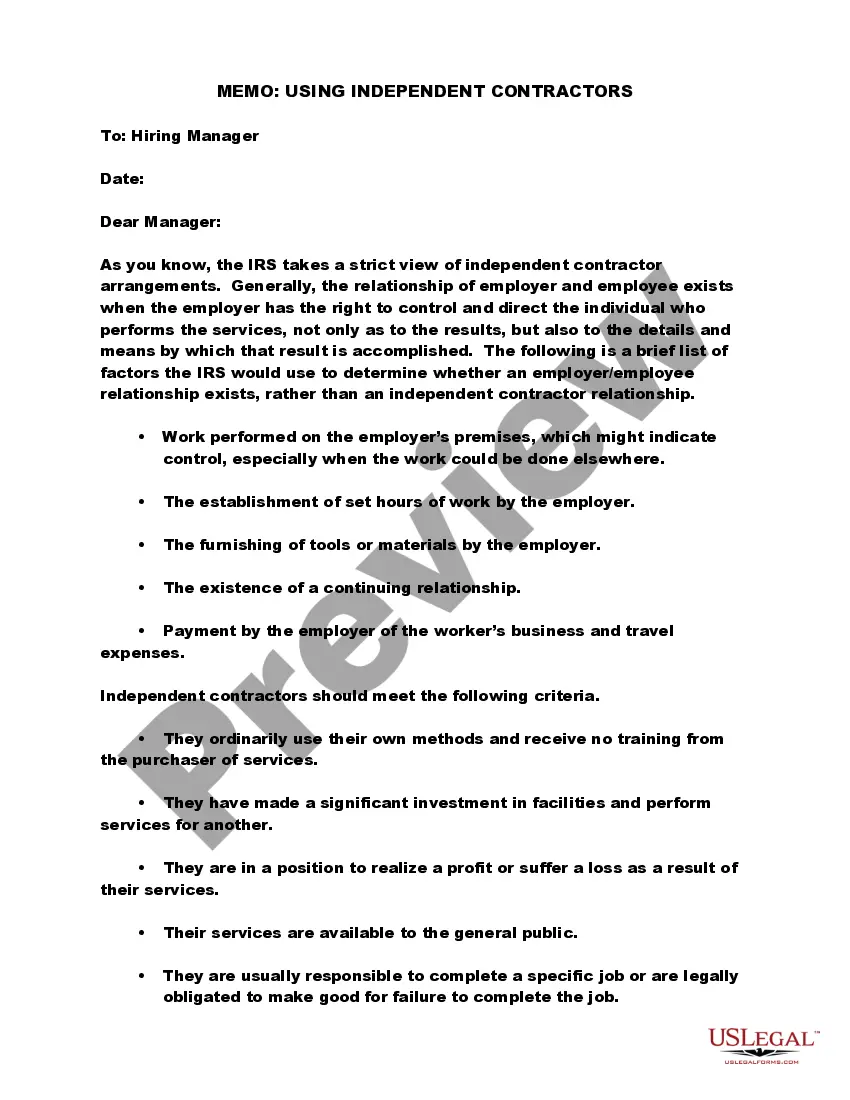
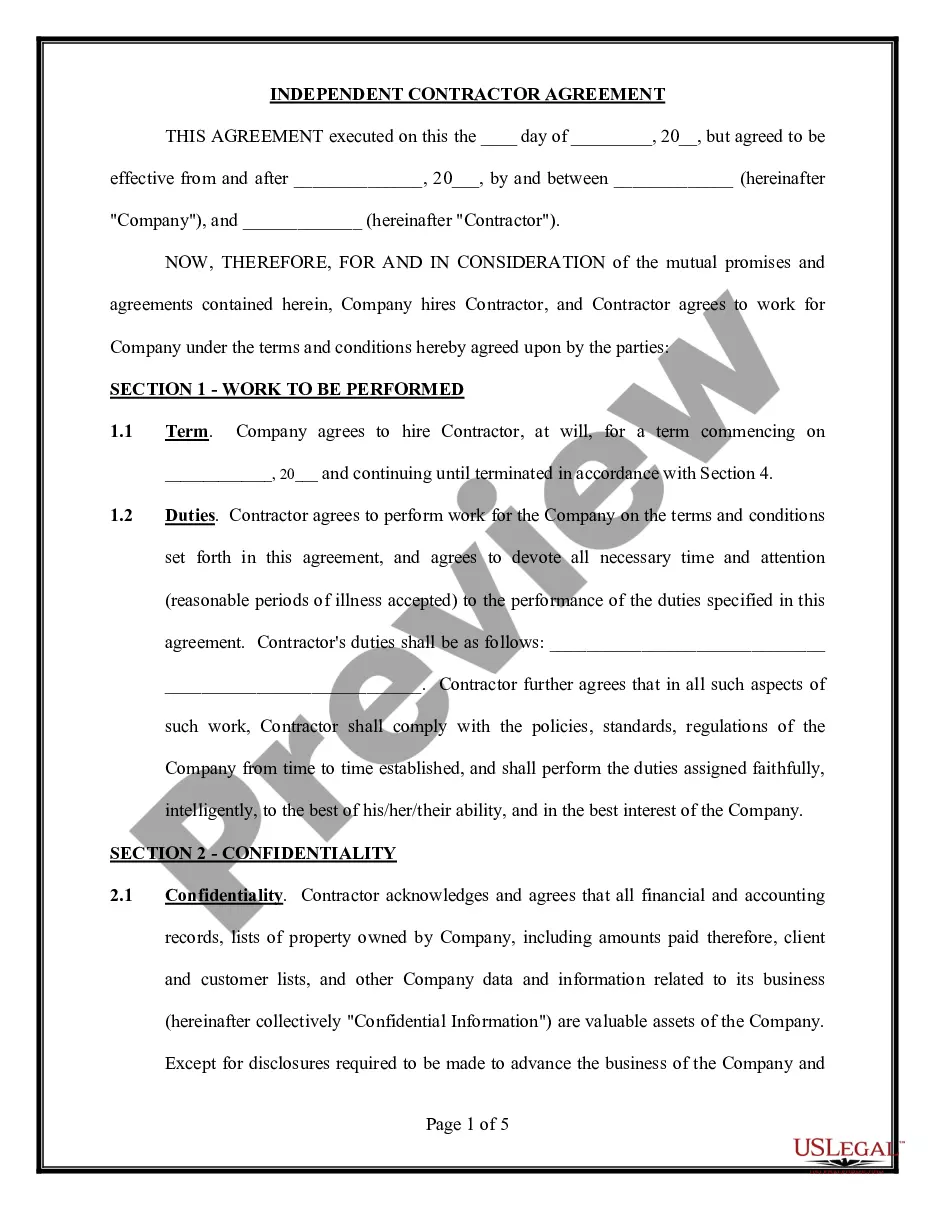
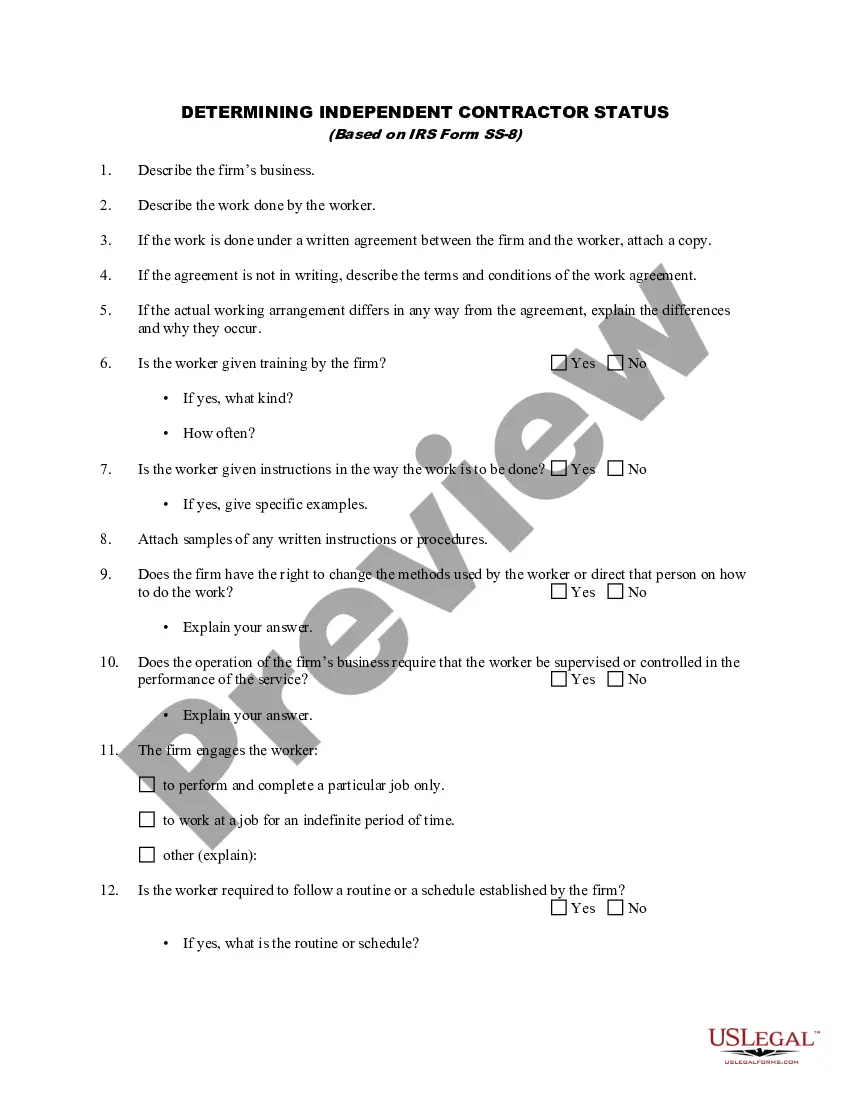
This memo outlines the criteria for using self-employed independent contractors. It is vital for organizations to understand the distinctions between independent contractors and employees, as the IRS applies strict guidelines to these relationships. This document helps clarify the indicators that define independent contractor status.
What’s included in this form
- Identification of essential criteria for independent contractors.
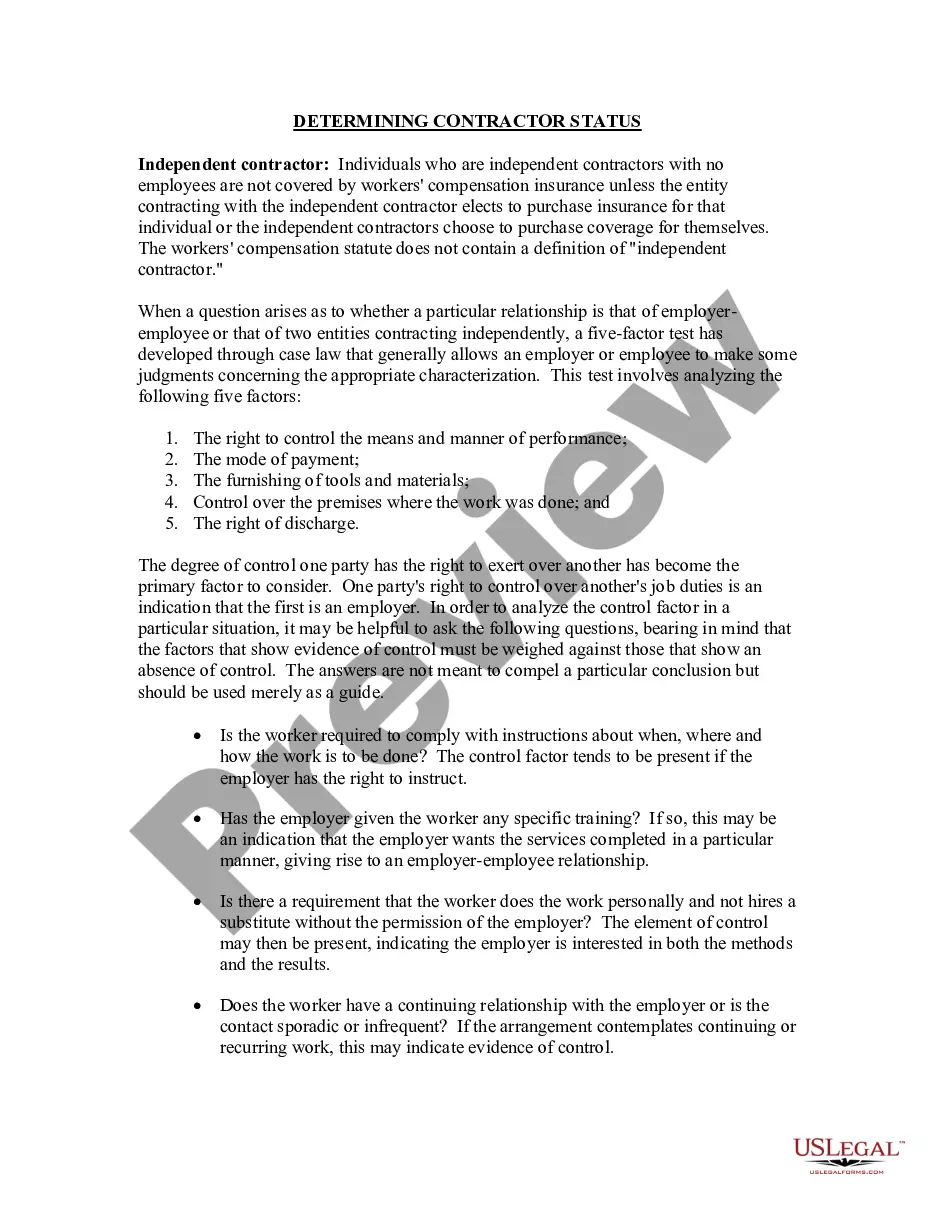
- Description of factors that indicate an employer-employee relationship.
- Specific guidelines for hiring managers to assess contractor qualifications.
- Guidance on possible questions regarding employment status and HR consultation.
Situations where this form applies
This memo should be used in scenarios where an organization is considering hiring independent contractors. It provides clarity on the necessary criteria that must be met to classify a worker as an independent contractor rather than an employee. Utilizing this memo can prevent potential misclassification and associated legal issues.
Who this form is for
- Human resource professionals responsible for hiring decisions.
- Managers involved in staffing and contractor engagement.
- Business owners needing guidelines on contractor use.
- Companies looking to ensure compliance with IRS regulations.
Instructions for completing this form
- Identify the hiring manager designated in the memo.
- Enter the date in the provided field for proper documentation.
- Review the criteria outlined for independent contractors and ensure compliance.
- Customize the memo for your specific organizational needs prior to distribution.
Does this document require notarization?
In most cases, this form does not require notarization. However, some jurisdictions or signing circumstances might. US Legal Forms offers online notarization powered by Notarize, accessible 24/7 for a quick, remote process.
Get your form ready online
Our built-in tools help you complete, sign, share, and store your documents in one place.
Make edits, fill in missing information, and update formatting in US Legal Forms—just like you would in MS Word.
Download a copy, print it, send it by email, or mail it via USPS—whatever works best for your next step.
Sign and collect signatures with our SignNow integration. Send to multiple recipients, set reminders, and more. Go Premium to unlock E-Sign.
If this form requires notarization, complete it online through a secure video call—no need to meet a notary in person or wait for an appointment.
We protect your documents and personal data by following strict security and privacy standards.

Make edits, fill in missing information, and update formatting in US Legal Forms—just like you would in MS Word.

Download a copy, print it, send it by email, or mail it via USPS—whatever works best for your next step.

Sign and collect signatures with our SignNow integration. Send to multiple recipients, set reminders, and more. Go Premium to unlock E-Sign.

If this form requires notarization, complete it online through a secure video call—no need to meet a notary in person or wait for an appointment.

We protect your documents and personal data by following strict security and privacy standards.
Common mistakes to avoid
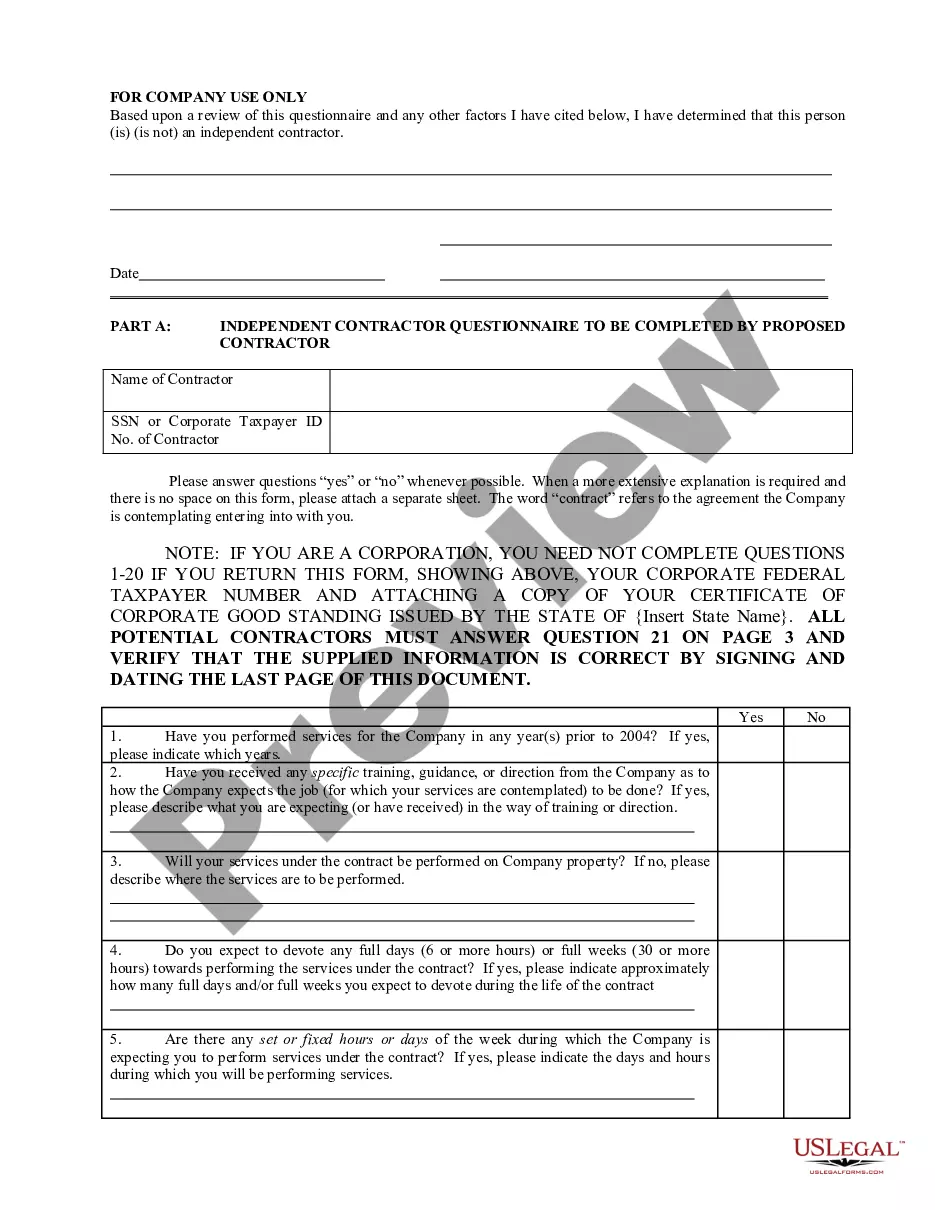
- Failing to differentiate between employees and independent contractors accurately.
- Overlooking specific IRS criteria that could lead to misclassification.
- Not consulting with human resources when uncertainties arise about contractor status.
Why use this form online
- Convenient access to information while avoiding long wait times for legal advice.
- Editable forms allow for quick updates as business needs change.
- Reliable sourcing ensures that the memo is drafted by licensed attorneys, providing peace of mind.
Looking for another form?

Form popularity
FAQ
Wage and Tax Statement for Self Employed (1099). These forms prove your wages and taxes as a self employed individual. Profit and Loss Statement or Ledger Documentation. Bank Statements.
Those eligible for PUA also will receive an additional $300/week through the end of the extension period unlike CARES Act I, which added $600/week in federal stimulus payments. Finally, the new stimulus bill provides independent contractors with paid sick and paid family leave benefits through March 14, 2021.
The earnings of a person who is working as an independent contractor are subject to Self-Employment Tax. If you are an independent contractor, you are self-employed. To find out what your tax obligations are, visit the Self-Employed Tax Center.
If you have a written contract to complete a specific task or project for a predetermined sum of money, you are probably a 1099 worker. However, if your employment is open-ended, without a contract and subject to a job description, you will typically be considered an employee.
As an independent contractor, report your income on Schedule C of Form 1040, Profit or Loss from Business. You must pay self-employment taxes on net earnings exceeding $400. For those taxes, you must submit Schedule SE, Form 1040, the self-employment tax.
Wage and Tax Statement for Self Employed (1099). These forms prove your wages and taxes as a self employed individual. It's one of the most reliable proofs of income you can produce since it is a legal document. Profit and Loss Statement or Ledger Documentation.
If a company hires you as an independent contractor and pays you more than $600, it must send you a Form 1099-MISC. If the company fails to give you a 1099-MISC by the Internal Revenue Service deadline, which is usually between the middle and end of February, you still must report the income on your tax return.
Locate all of your annual tax returns. Tax returns are your first go-to when it comes to income proof. Bank statements indicate personal cash flow. Make use of online accounting services that track payments and expenditures. Maintain profit and loss statements.
Income-verification letter. The most reliable method for proving earnings for independent contractors is a letter from a current or former employer describing your working arrangement. Contracts and agreements. Invoices. Bank statements and Pay stubs.