Software Support Services Agreement by Licensor
What this document covers
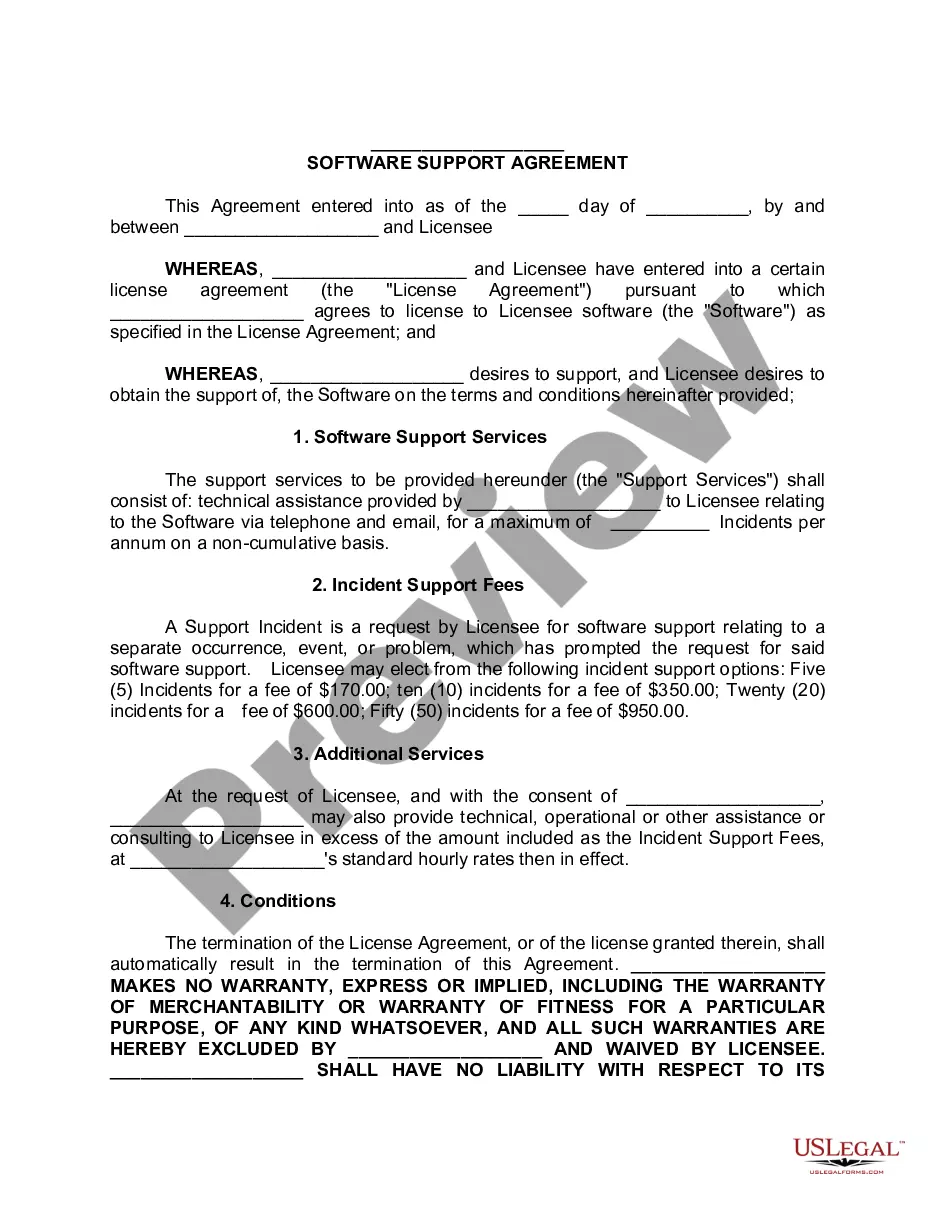
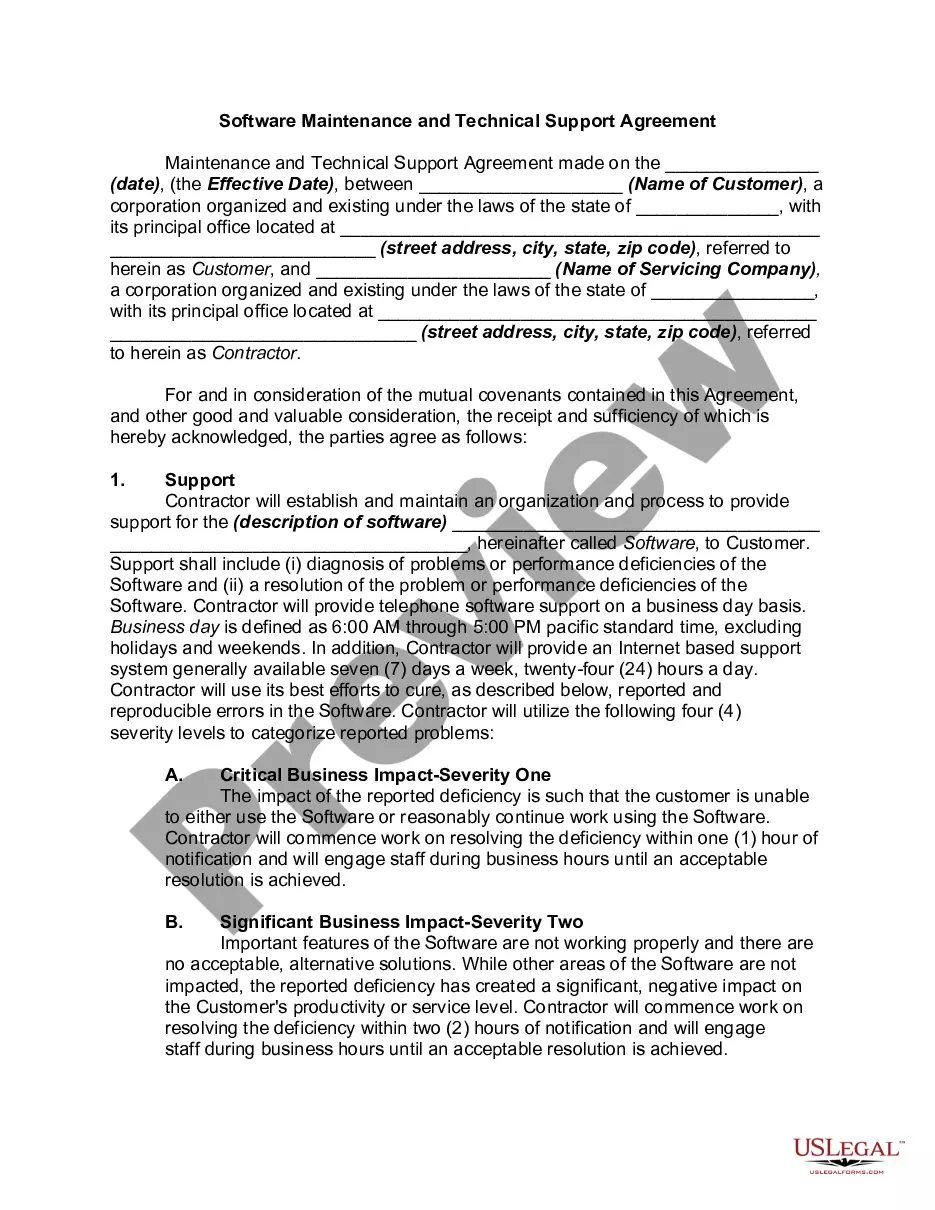
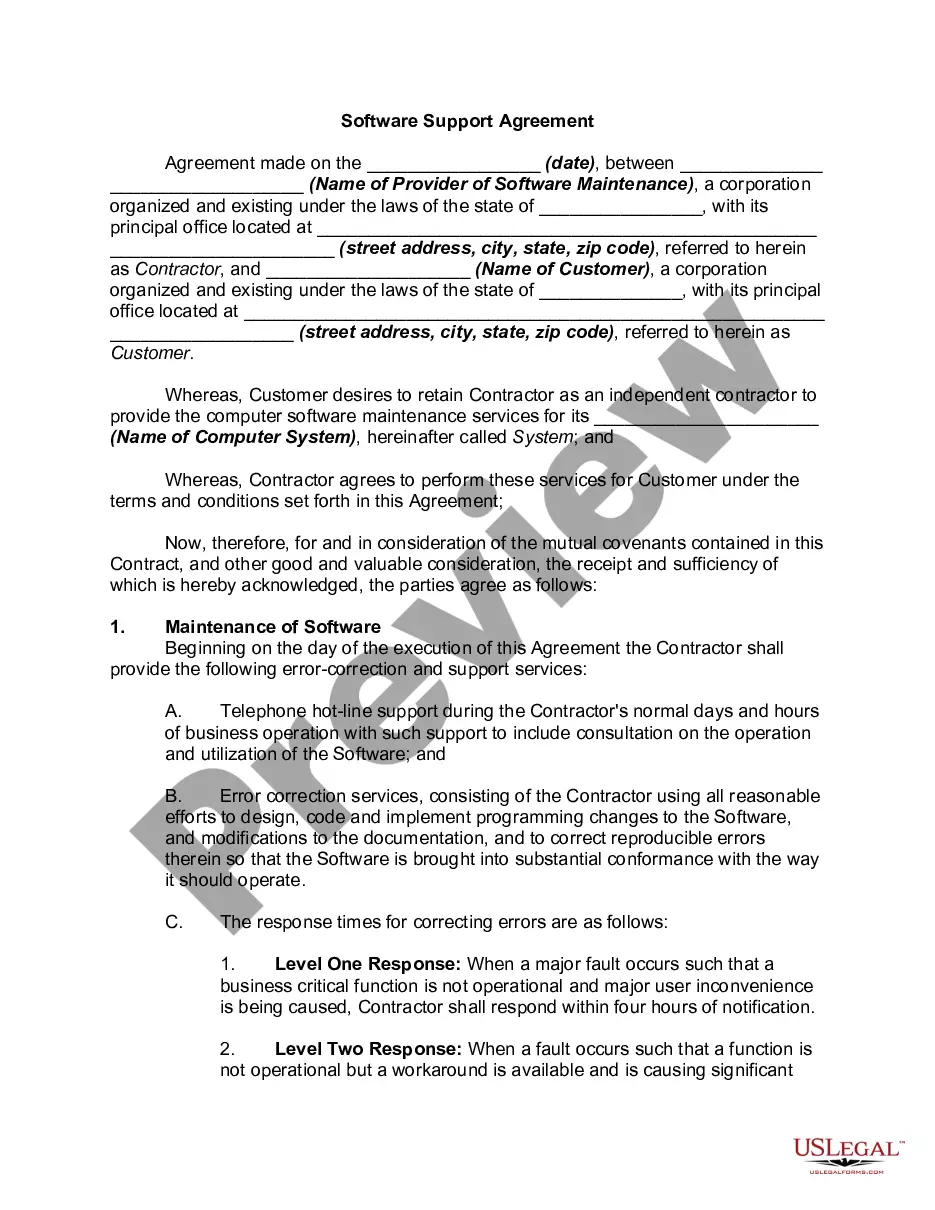
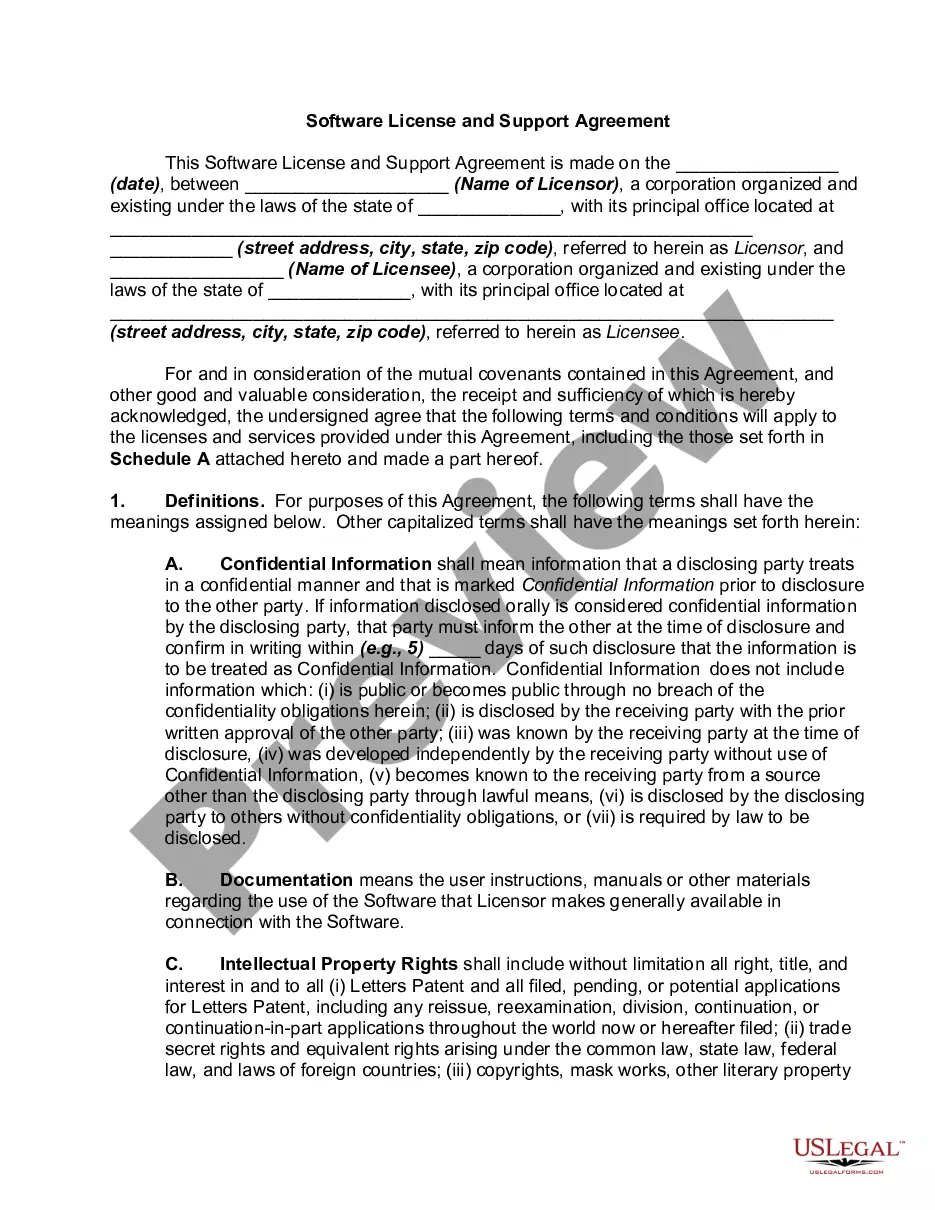
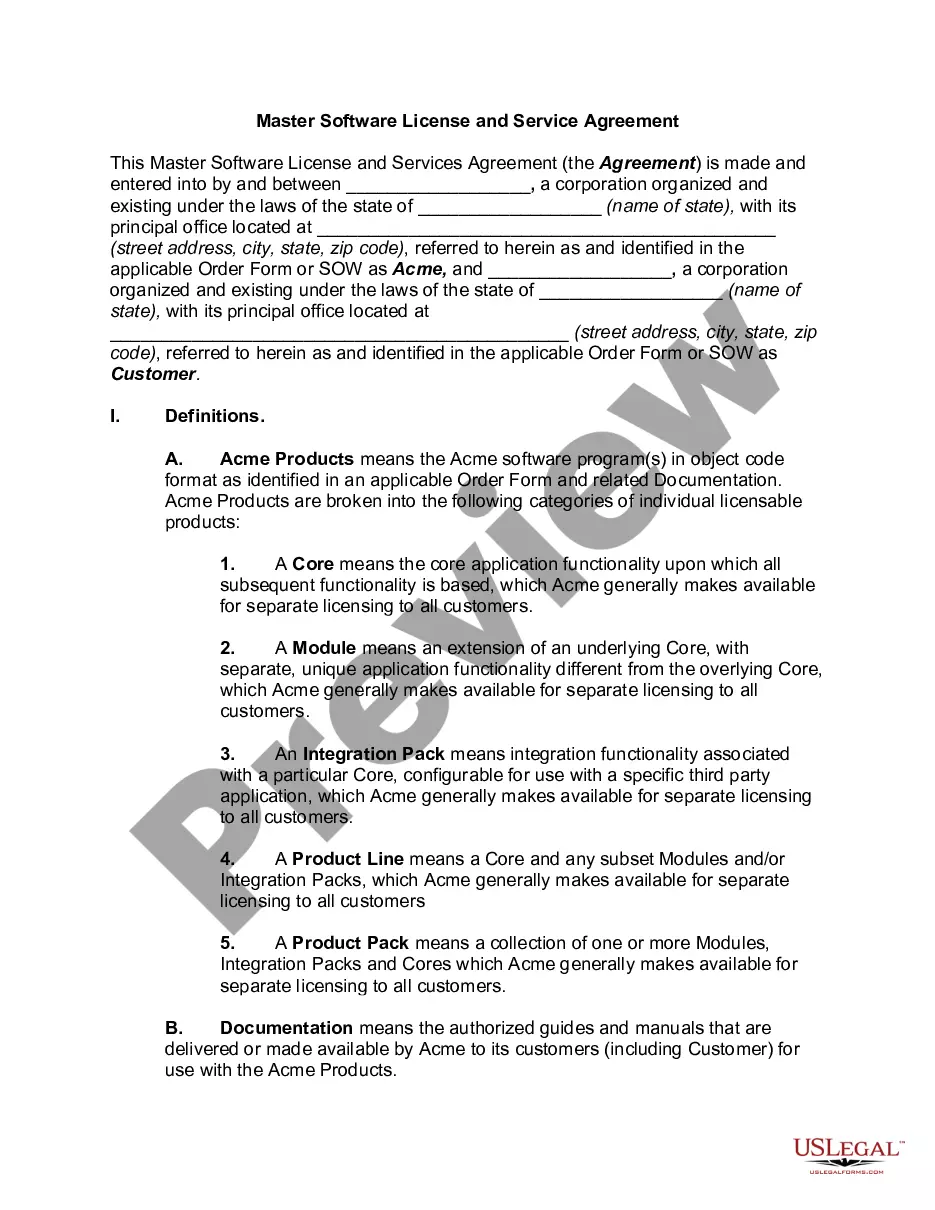
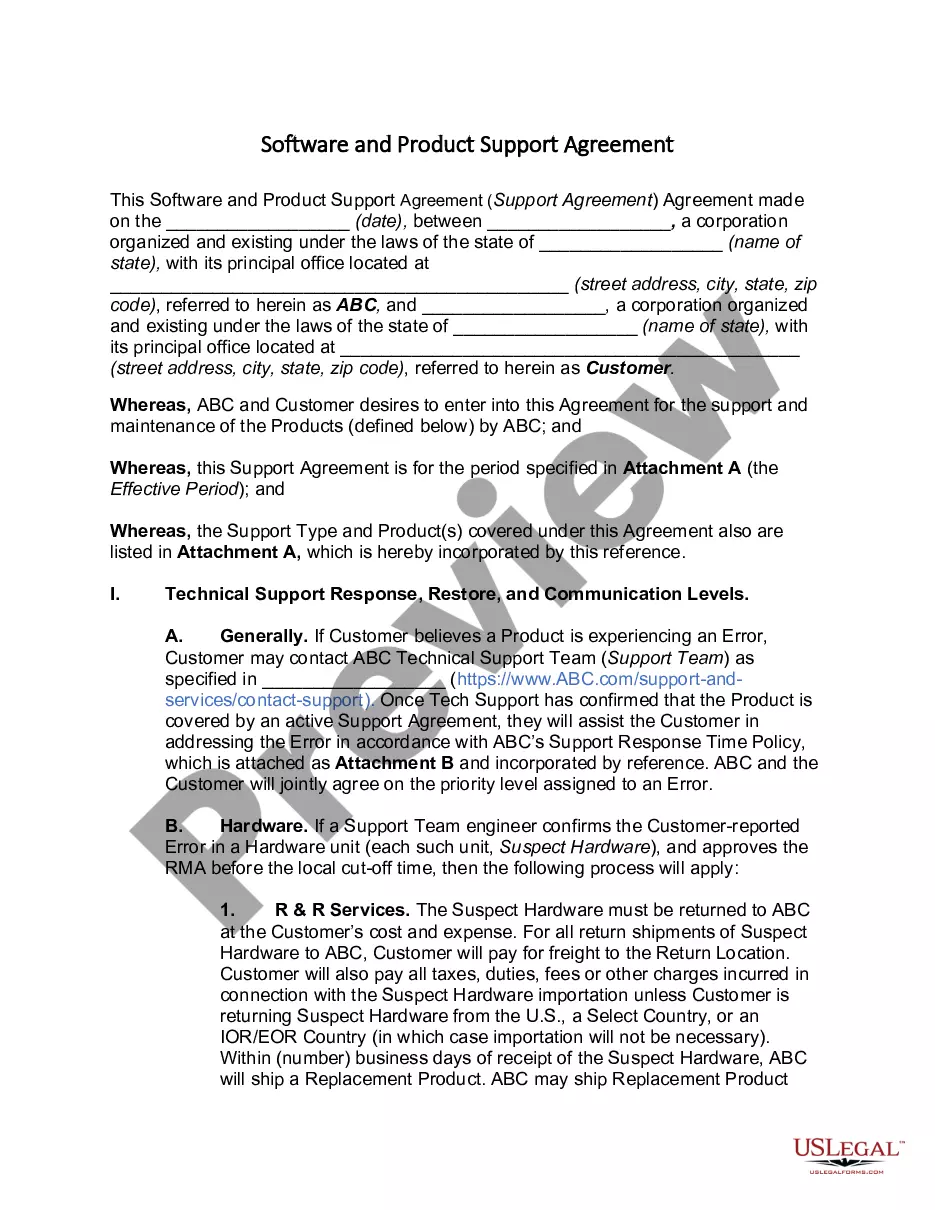
The Software Support Services Agreement by Licensor outlines the terms under which the licensor agrees to provide technical support related to the software being licensed. This agreement specifies the type of support services offered, such as assistance via telephone and email, and details the conditions under which the support is provided. It differs from other agreements by focusing specifically on the support services rather than the licensing of the software itself. This form helps ensure clarity and understanding of both parties' expectations regarding software support.
Key components of this form
- Introduction: Identifies the parties involved and states the purpose of the agreement.
- Software Support Services: Describes the scope of technical assistance provided to the licensee.
- Incident Support Fees: Outlines the costs associated with different tiers of support incidents based on the number of incidents purchased.
- Additional Services: Specifies any additional consulting or technical support that may be provided beyond the contract terms.
- Conditions: Details the termination conditions and the limitations of liability.
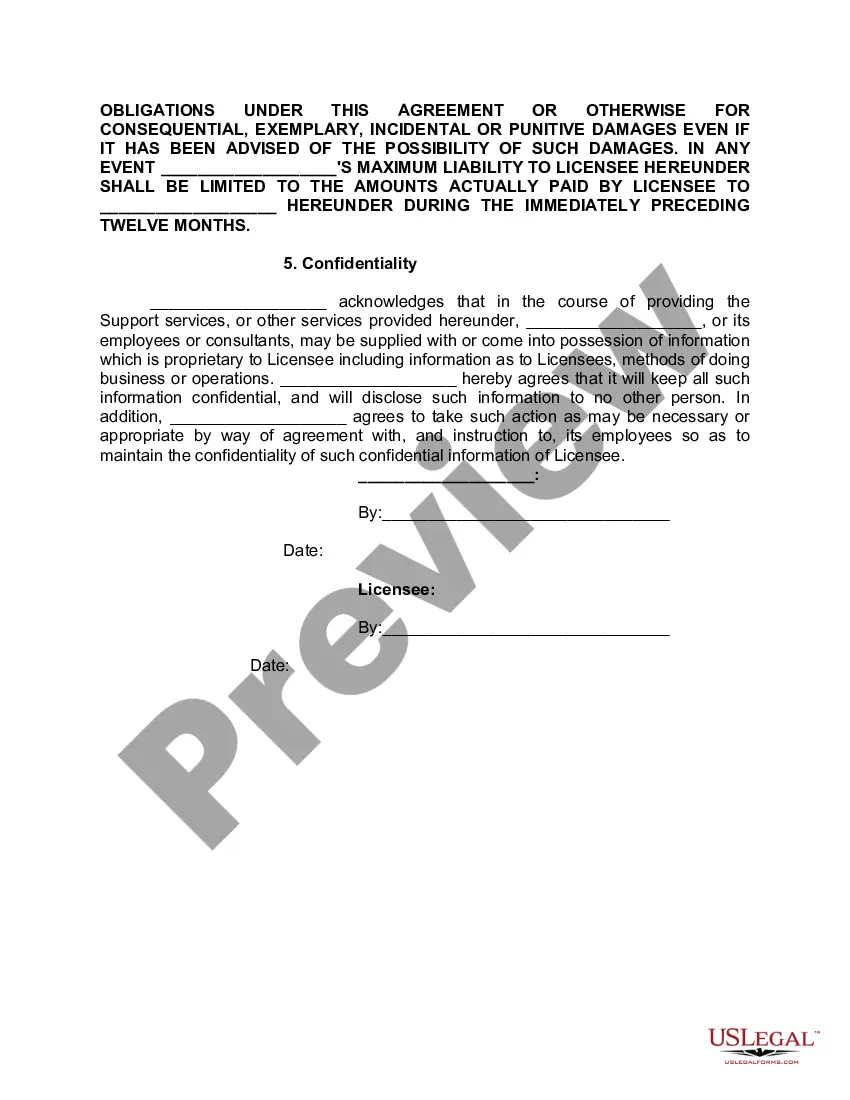
- Confidentiality: Establishes obligations for maintaining the confidentiality of proprietary information.
When to use this form
This form should be used when a licensor and licensee have entered into a software licensing agreement and the licensee requires ongoing technical support for that software. It is particularly important when the software is complex and the licensee anticipates needing assistance to troubleshoot issues that may arise during its use. Additionally, this agreement can be beneficial for businesses that want to formalize the terms of technical support to avoid misunderstandings in the future.
Intended users of this form
This form is intended for:
- Software licensors providing technical support for their products.
- Businesses or individuals who have licensed software and need assurance of support services.
- Parties looking to clarify the terms and costs associated with software support agreements.
Steps to complete this form
- Identify the parties: Fill in the names of the licensor and the licensee.
- Specify the support services: Clearly state the type of technical assistance to be provided.
- Input incident support fees: Choose the support incident option and enter the agreed fee.
- Detail additional services: If applicable, outline any extra support that may be offered beyond the basic agreement.
- Sign and date: Ensure both parties sign the agreement and provide the date to make it legally binding.
Does this document require notarization?
In most cases, this form does not require notarization. However, some jurisdictions or signing circumstances might. US Legal Forms offers online notarization powered by Notarize, accessible 24/7 for a quick, remote process.
Get your form ready online
Our built-in tools help you complete, sign, share, and store your documents in one place.
Make edits, fill in missing information, and update formatting in US Legal Forms—just like you would in MS Word.
Download a copy, print it, send it by email, or mail it via USPS—whatever works best for your next step.
Sign and collect signatures with our SignNow integration. Send to multiple recipients, set reminders, and more. Go Premium to unlock E-Sign.
If this form requires notarization, complete it online through a secure video call—no need to meet a notary in person or wait for an appointment.
We protect your documents and personal data by following strict security and privacy standards.

Make edits, fill in missing information, and update formatting in US Legal Forms—just like you would in MS Word.

Download a copy, print it, send it by email, or mail it via USPS—whatever works best for your next step.

Sign and collect signatures with our SignNow integration. Send to multiple recipients, set reminders, and more. Go Premium to unlock E-Sign.

If this form requires notarization, complete it online through a secure video call—no need to meet a notary in person or wait for an appointment.

We protect your documents and personal data by following strict security and privacy standards.
Mistakes to watch out for
- Failing to clearly define the number of support incidents included in the agreement.
- Not specifying the response time or availability for support requests.
- Neglecting to address the conditions for termination of the agreement.
- Overlooking confidentiality clauses regarding proprietary information.
Why use this form online
- Convenience of instant download and completion from anywhere.
- Editability allows users to customize the form for their specific needs.
- Accessibility of professional templates drafted by licensed attorneys.
- Time-saving compared to traditional methods of obtaining legal forms.
Legal use & context
- The Software Support Services Agreement is designed to ensure both parties understand their rights and responsibilities related to software support.
- Proper completion of the form helps defend against disputes regarding the scope of support services covered.
- Licensors limit their liability through well-defined terms, providing necessary protection in case of unanticipated incidents.
Looking for another form?
Form popularity
FAQ
Download a template for a licensing agreement. Choose your role as the licensor or licensee. Define the license(s) in the agreement. Decide whether the license is exclusive or not. Settle the matter of fees and payment schedule. Add a renewal date and rules.
An example of a licensing agreement is a contract between the copyright holders of software and another company, allowing the latter to use the computer software for their daily business operations.
Don't assume you can't negotiate. Understand the pricing and use schemes. Get promises in writing. Get measurable promises. Carefully look at the indemnification provisions. Consider the intellectual property investment you intend to make. Look for a range of meaningful remedies. Think about renewal from day one.
A software license agreement typically has broad-form confidentiality provisions that also provide that certain items fall into the bucket of one or the other party (e.g., the software for a licensor, certain data for a licensee, etc.).
Setting up Your Licensing Agreement. Granting the License. Limiting Your Liability. Adding Boilerplate Clauses. Finalizing the Licensing Agreement.
License: Scope. Deliverables. Source Code. Services Furnished. Disclosure/Access. New IP/Developments. Open Source. Acceptance/Warranties.
What is a Licensing Agreement? A licensing agreement is a contract between two parties (the licensor and licensee) in which the licensor grants the licensee the right to use the brand name, trademark, patented technology, or ability to produce and sell goods owned by the licensor.