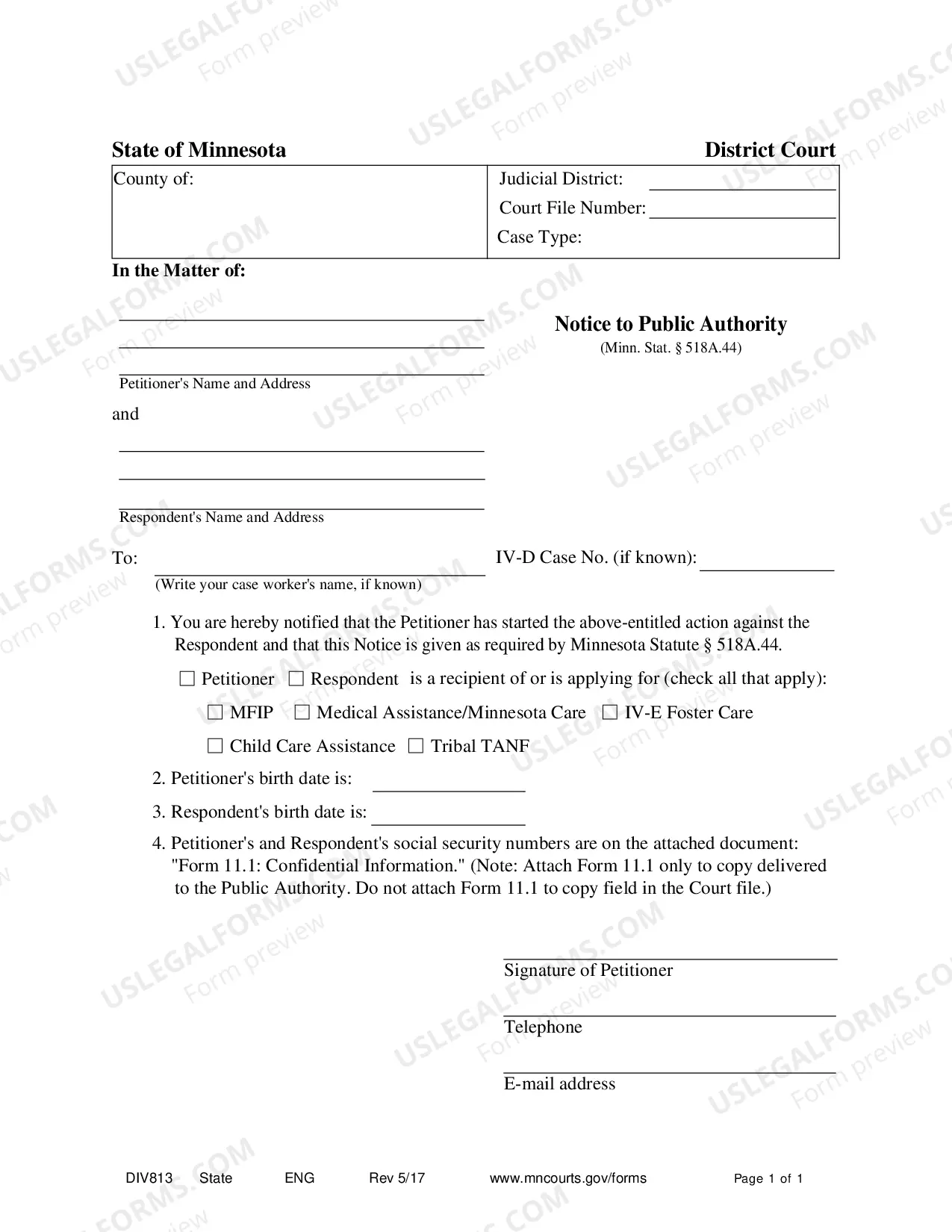
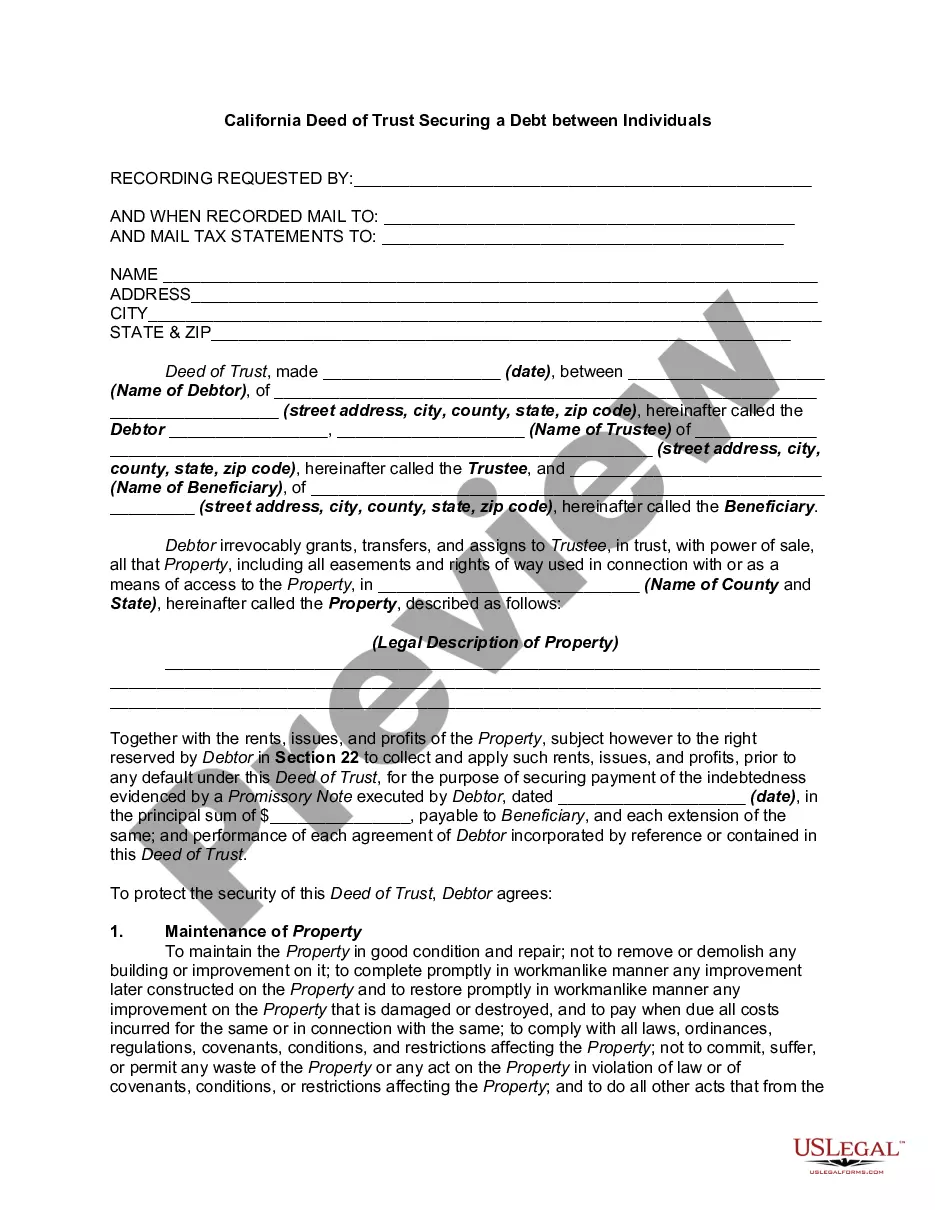
California Deed of Trust Securing a Debt between Individuals
Understanding this form
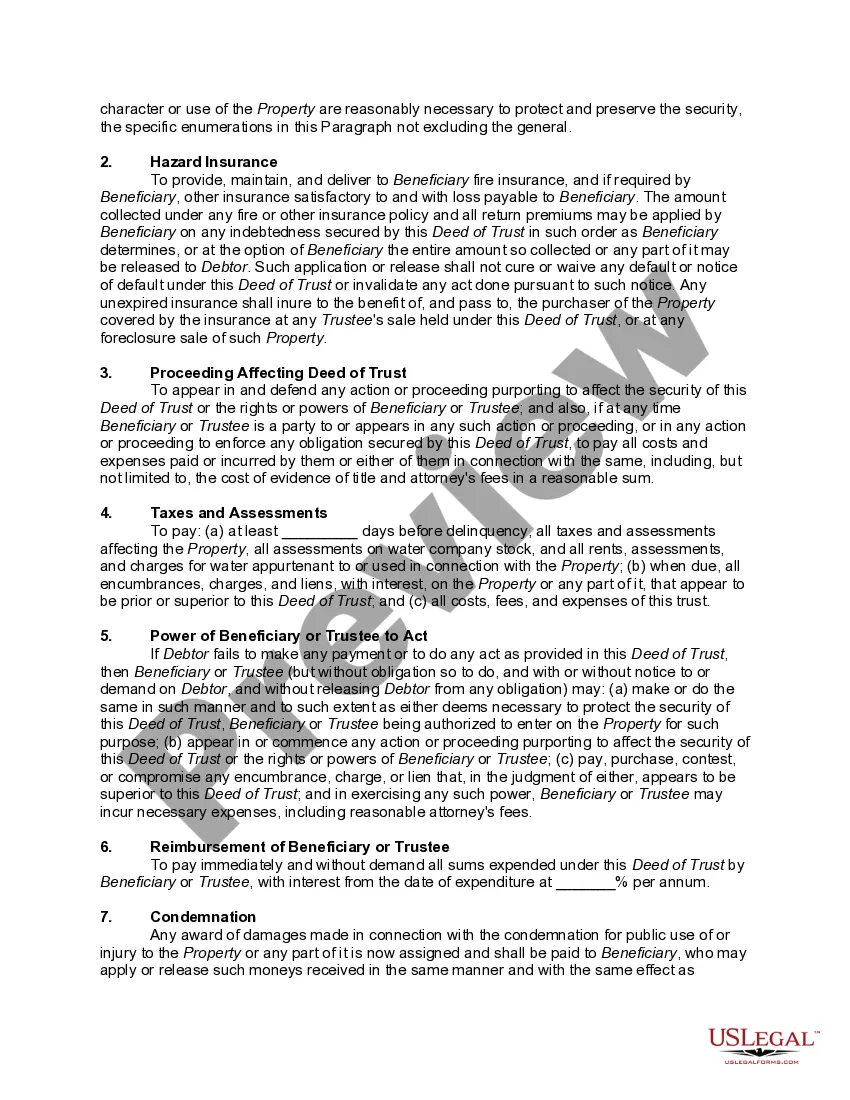
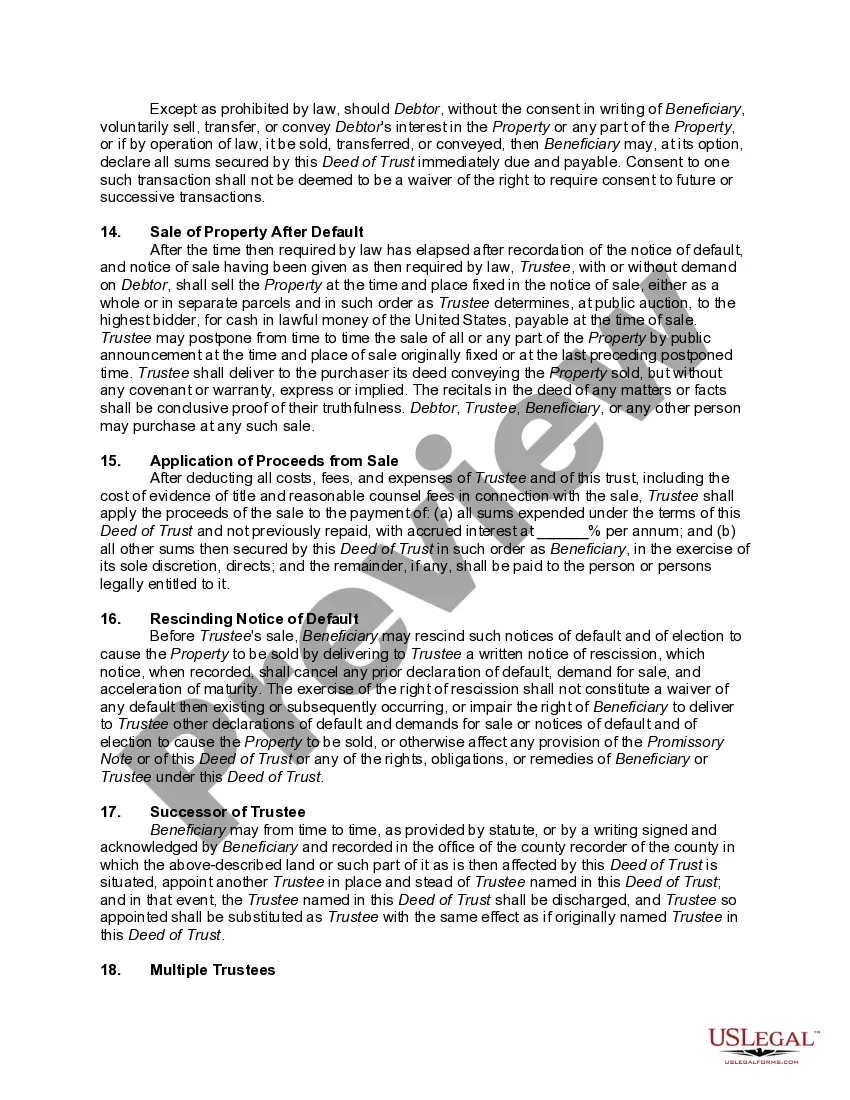
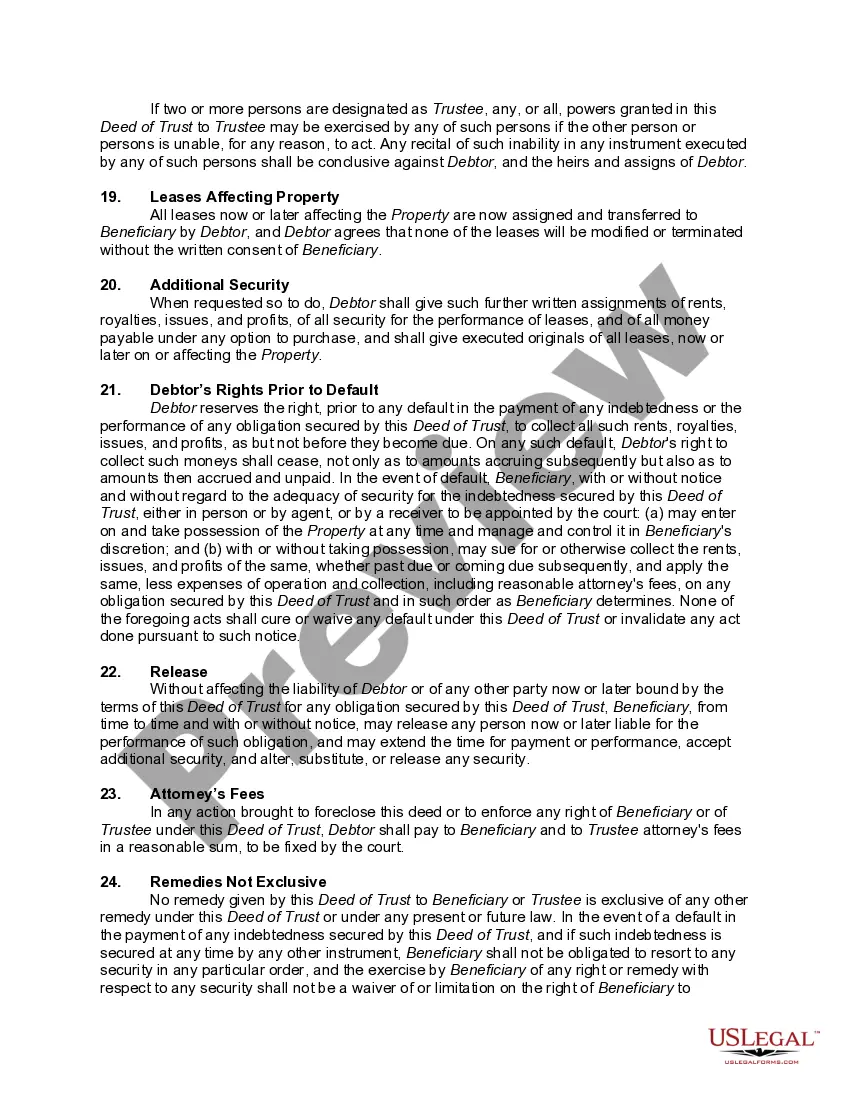
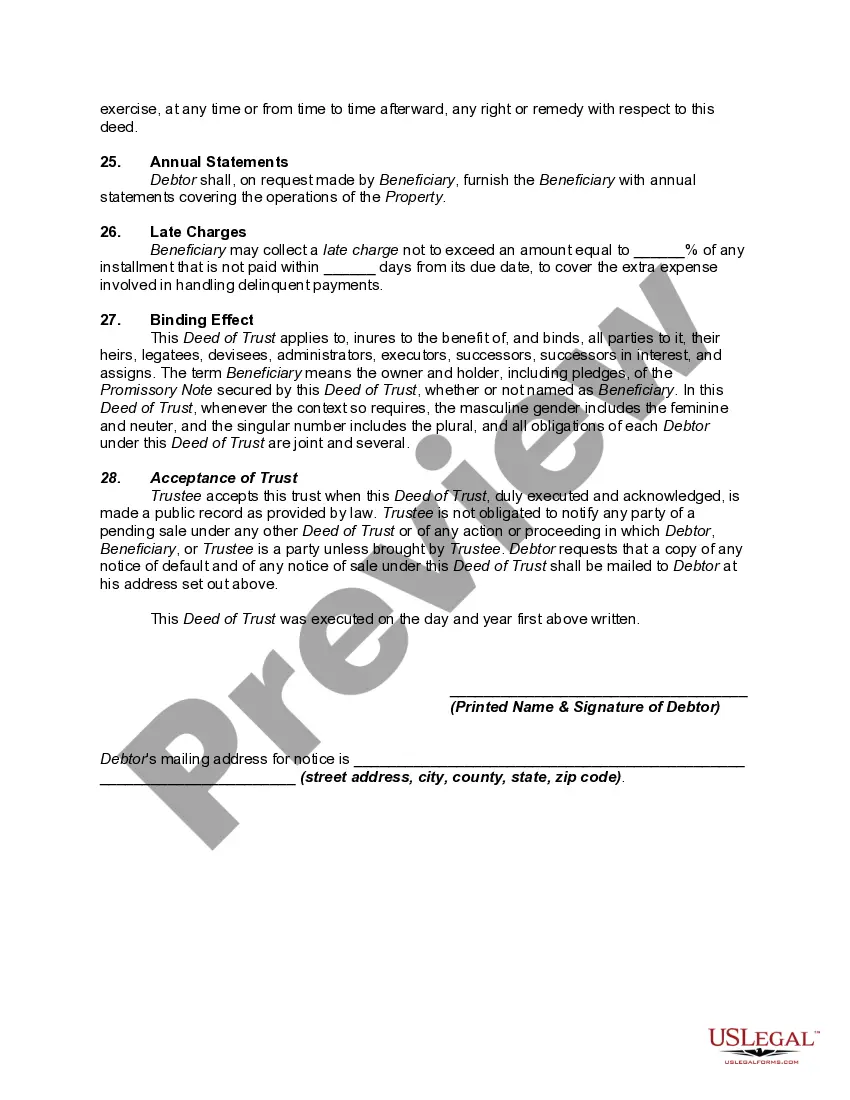
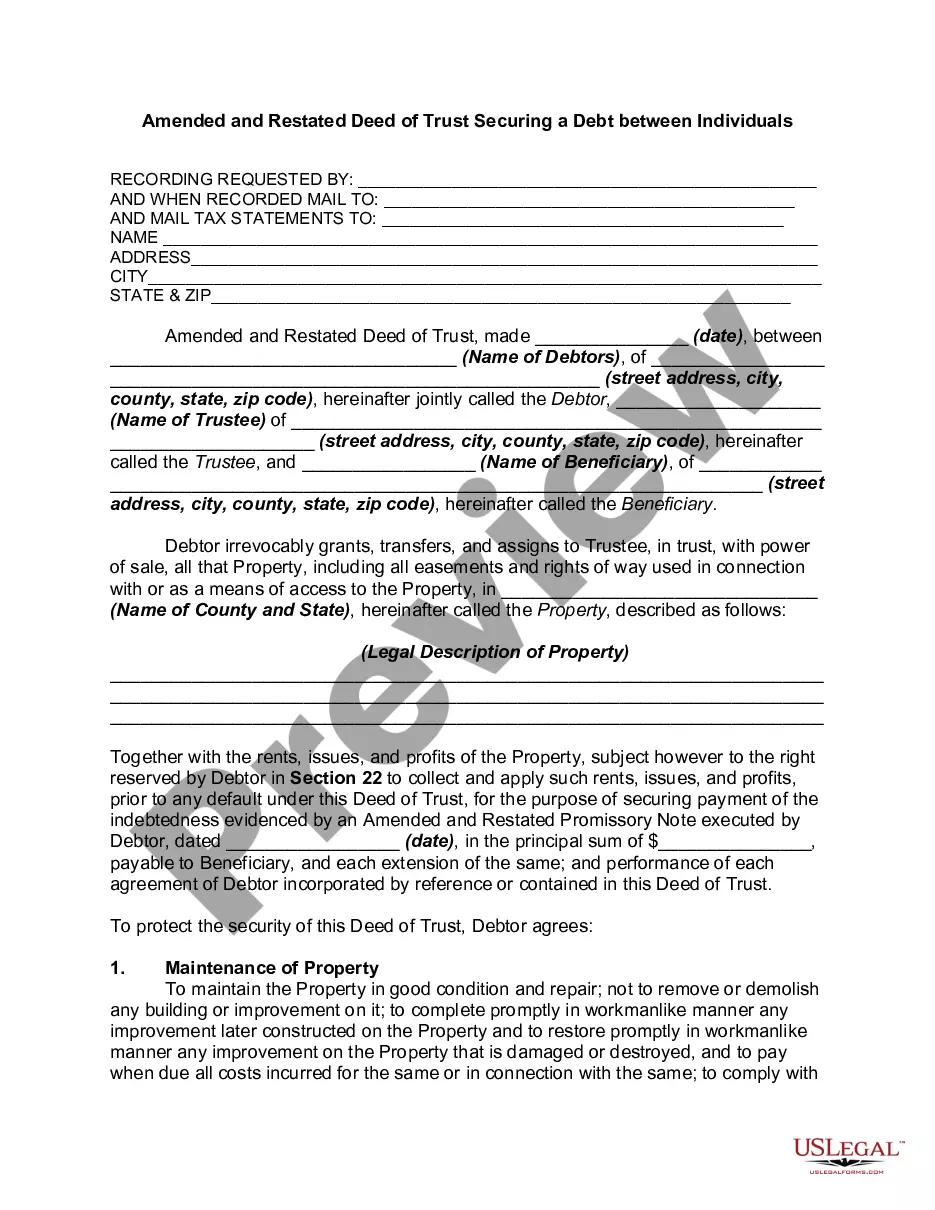
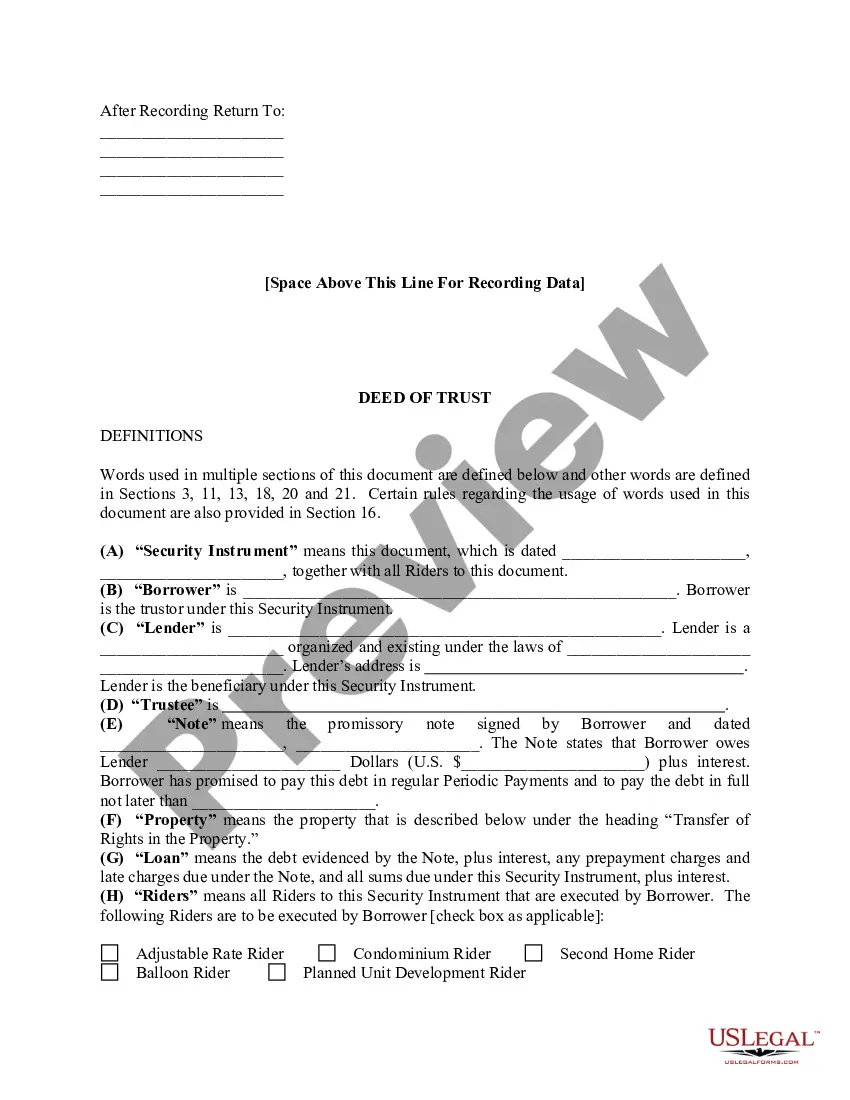
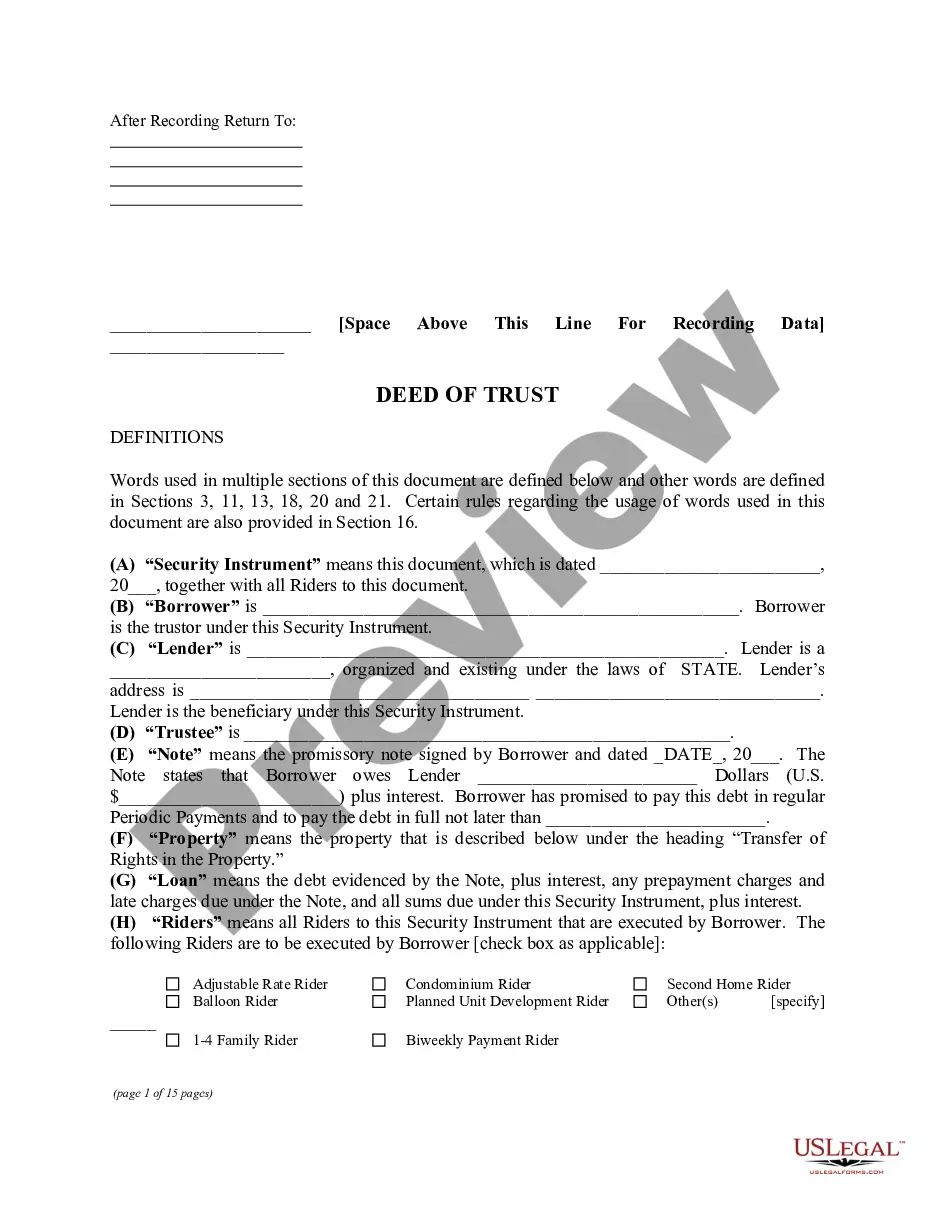
A California Deed of Trust is a legal document used to secure a loan with real property. It serves a similar purpose to a mortgage, but involves a third party, known as a trustee, who holds the title to the property on behalf of the lender. Unlike a mortgage, a deed of trust allows the trustee to foreclose on the property without court intervention if the borrower defaults. This form outlines the obligations of the parties involved and ensures the lender's interests are protected until the debt is paid in full.
Key parts of this document
- Identification of the debtor, trustee, and beneficiary.
- Legal description of the property being secured.
- Details regarding the loan amount and terms, including maintenance and insurance obligations.
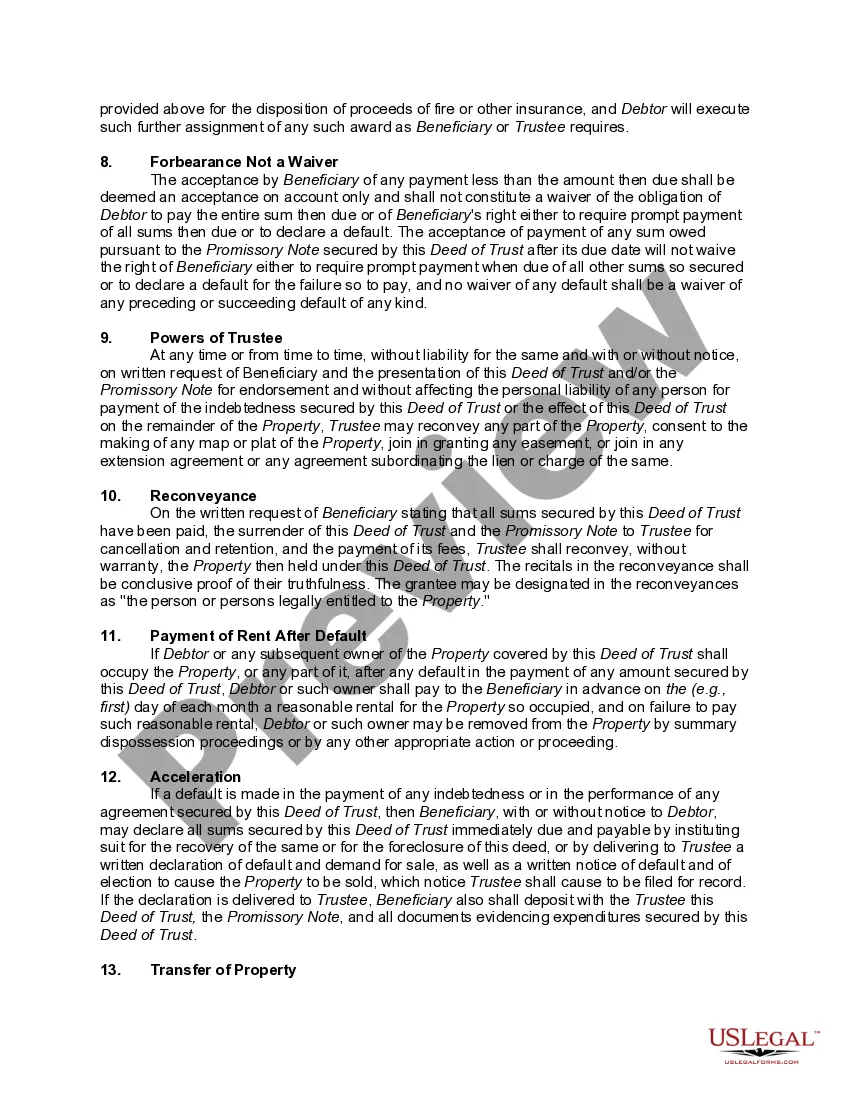
- Clauses outlining the trustee's powers in the event of default.
- Provisions for reconveyance of the title upon repayment of the loan.

Common use cases
This form is commonly used in situations where individuals are borrowing money secured by real estate. It is ideal for private loans, home purchases, or refinancing existing debt where the borrower wishes to create a security interest in the property. Additionally, it is appropriate when the lender requires a straightforward method for foreclosure, should the borrower default.
Who can use this document
- Individuals or parties seeking financing backed by real estate in California.
- Lenders who need to secure loans with property interests.
- Real estate investors managing financial arrangements involving trusts.
- Property owners who wish to formalize lending agreements with individuals.
Steps to complete this form
- Identify and enter the names and addresses of the debtor, trustee, and beneficiary.
- Provide the date of the deed and specify the loan amount.
- Include a legal description of the property being secured by the deed of trust.
- Ensure all parties sign the document and date it appropriately.
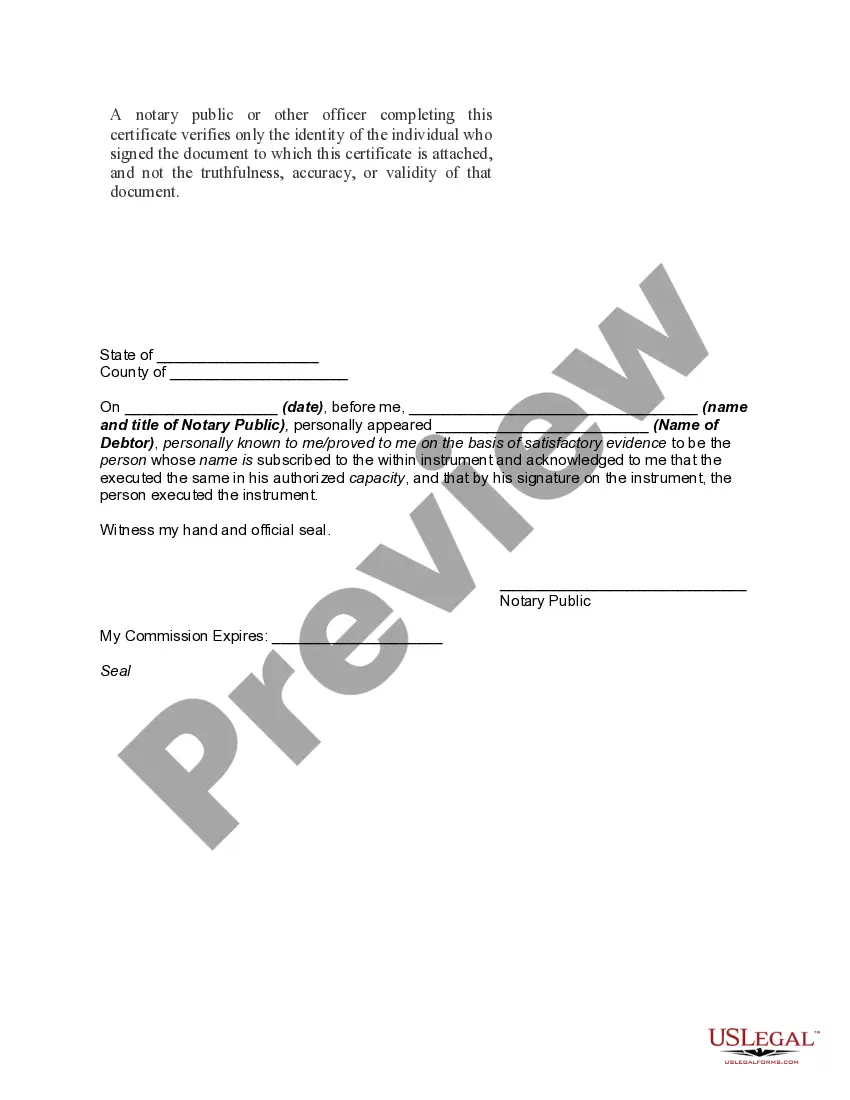
- Consider notarization if required or beneficial for legal verification.
Notarization requirements for this form
This form must be notarized to be legally valid. US Legal Forms provides secure online notarization powered by Notarize, allowing you to complete the process through a verified video call.
Get your form ready online
Our built-in tools help you complete, sign, share, and store your documents in one place.
Make edits, fill in missing information, and update formatting in US Legal Forms—just like you would in MS Word.
Download a copy, print it, send it by email, or mail it via USPS—whatever works best for your next step.
Sign and collect signatures with our SignNow integration. Send to multiple recipients, set reminders, and more. Go Premium to unlock E-Sign.
If this form requires notarization, complete it online through a secure video call—no need to meet a notary in person or wait for an appointment.
We protect your documents and personal data by following strict security and privacy standards.

Make edits, fill in missing information, and update formatting in US Legal Forms—just like you would in MS Word.

Download a copy, print it, send it by email, or mail it via USPS—whatever works best for your next step.

Sign and collect signatures with our SignNow integration. Send to multiple recipients, set reminders, and more. Go Premium to unlock E-Sign.

If this form requires notarization, complete it online through a secure video call—no need to meet a notary in person or wait for an appointment.

We protect your documents and personal data by following strict security and privacy standards.
Common mistakes
- Incomplete legal descriptions of the property.
- Failing to obtain signatures from all necessary parties.
- Not properly recording the deed of trust with the appropriate county office.
- Omitting essential loan details, which can lead to disputes later.
Benefits of using this form online
- Convenience of completing the form at your own pace.
- Instant access to legal templates that are compliant with California law.
- Editability, allowing for customization to fit specific agreements and terms.
- Lower costs compared to hiring an attorney for basic documents.
- Reliable legal language drafted by licensed attorneys.
Looking for another form?
Form popularity
FAQ
Transferring property from a trust to an individual in California involves several steps. You must review the trust agreement to determine if it allows for such a transfer and verify the trustee's authority. After that, you need to execute a deed that clearly states the transfer's intention, and ensure proper filing with the county recorder. When in doubt, consider using resources from US Legal Forms to guide you through this process smoothly.
Several factors can render a California Deed of Trust Securing a Debt between Individuals invalid. Common issues include lack of proper signatures, failure to comply with state laws regarding execution, or missing essential information like the borrower’s identity and property description. Furthermore, if the deed is recorded improperly, it may be unenforceable. Ensuring that all legal requirements are met is essential for maintaining validity.
Individuals often opt for a California Deed of Trust Securing a Debt between Individuals for its simplicity and efficiency. This method allows for a faster, less costly process compared to traditional mortgages. Additionally, it offers the lender a reliable means of securing their investment in real estate, which can be important for private lending arrangements. Using US Legal Forms can streamline this process, ensuring all documentation is accurate and legally compliant.
Yes, a California Deed of Trust Securing a Debt between Individuals serves as clear evidence of the debt. It outlines the terms agreed upon by both parties, including the amount borrowed and repayment conditions. This document grants the lender a security interest in the property, ensuring that their financial stake is protected. Therefore, it acts not only as a commitment but also as a legal safeguard.
One potential disadvantage of a California Deed of Trust Securing a Debt between Individuals is the risk of foreclosure. If the borrower fails to repay the debt, the lender may initiate a non-judicial foreclosure process. This process can be faster and less formal than judicial foreclosure, potentially leaving borrowers with limited options. Additionally, borrowers might not receive the same protections they would with a traditional mortgage.
A California Deed of Trust Securing a Debt between Individuals does not serve as proof of ownership; rather, it establishes a security interest in the property. The borrower retains ownership rights while the lender holds the deed as collateral. Thus, this document provides assurance to the lender, but does not denote outright ownership.
Trust deeds and mortgages are both used in bank and private loans for creating liens on real estate, and both are typically recorded as debt in the county where the property is located.
Can I borrow money whilst I'm in a Trust Deed? When you're in a Trust Deed, it is advisable not to take out any further credit. And anyway, as your credit rating is adversely affected, you'll probably find it difficult to take out any further borrowing until after your Trust Deed has been successfully completed.
A deed of trust is a written instrument with three parties: The trustor, who is the borrower and homeowner. The beneficiary, who is the lender. The trustee, who is a third party such as an insurance company or escrow management agency that holds actual title to the property in trust for the beneficiary.
The Deed of Trust (or Mortgage or Security Instrument) is a legal document that grants the lender the rights to take the property if the borrower goes into default and does not pay under the terms of the Note. The lender holds title to the property until the borrower has repaid the debt in full.