California Notice of Motion to Compel Attendance at Deposition
Understanding this form
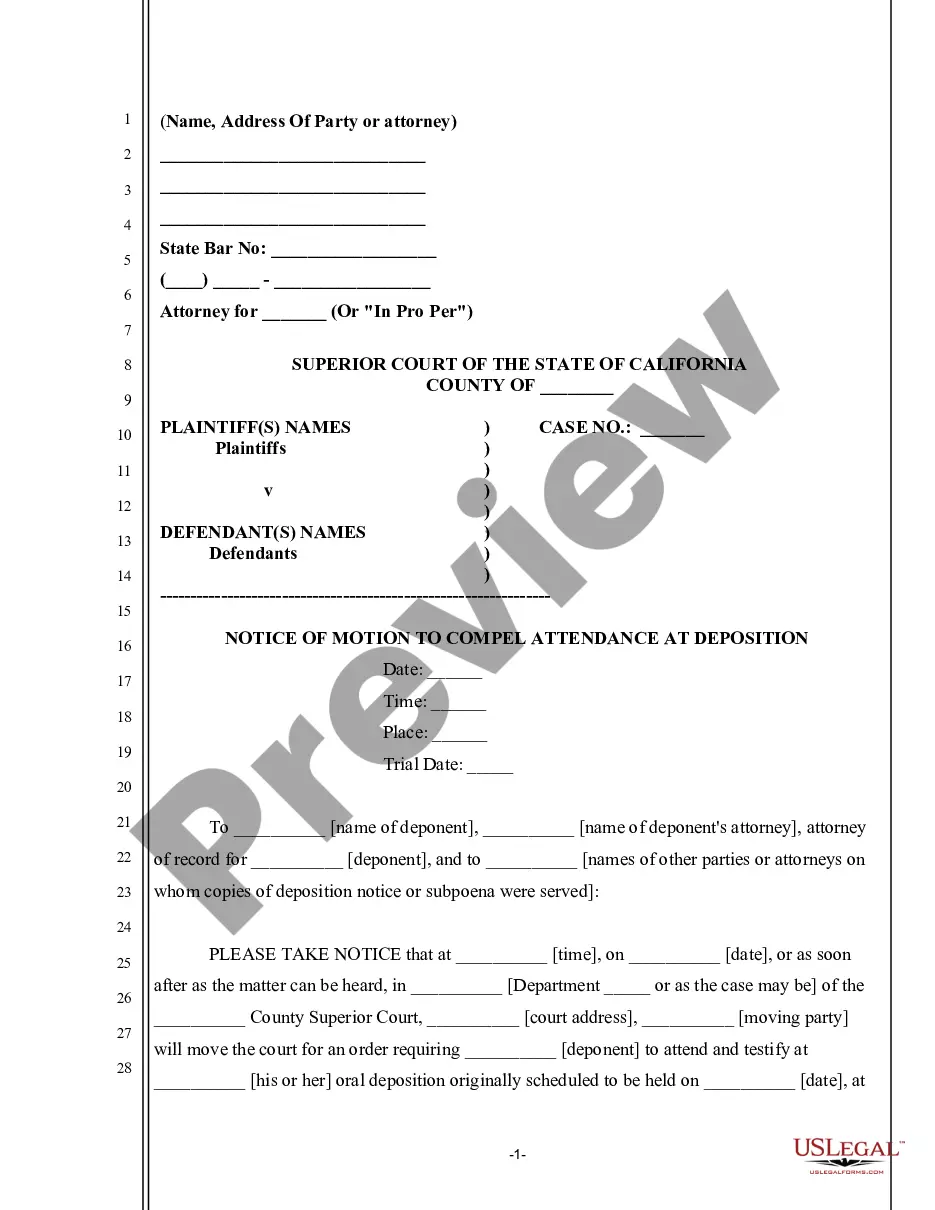
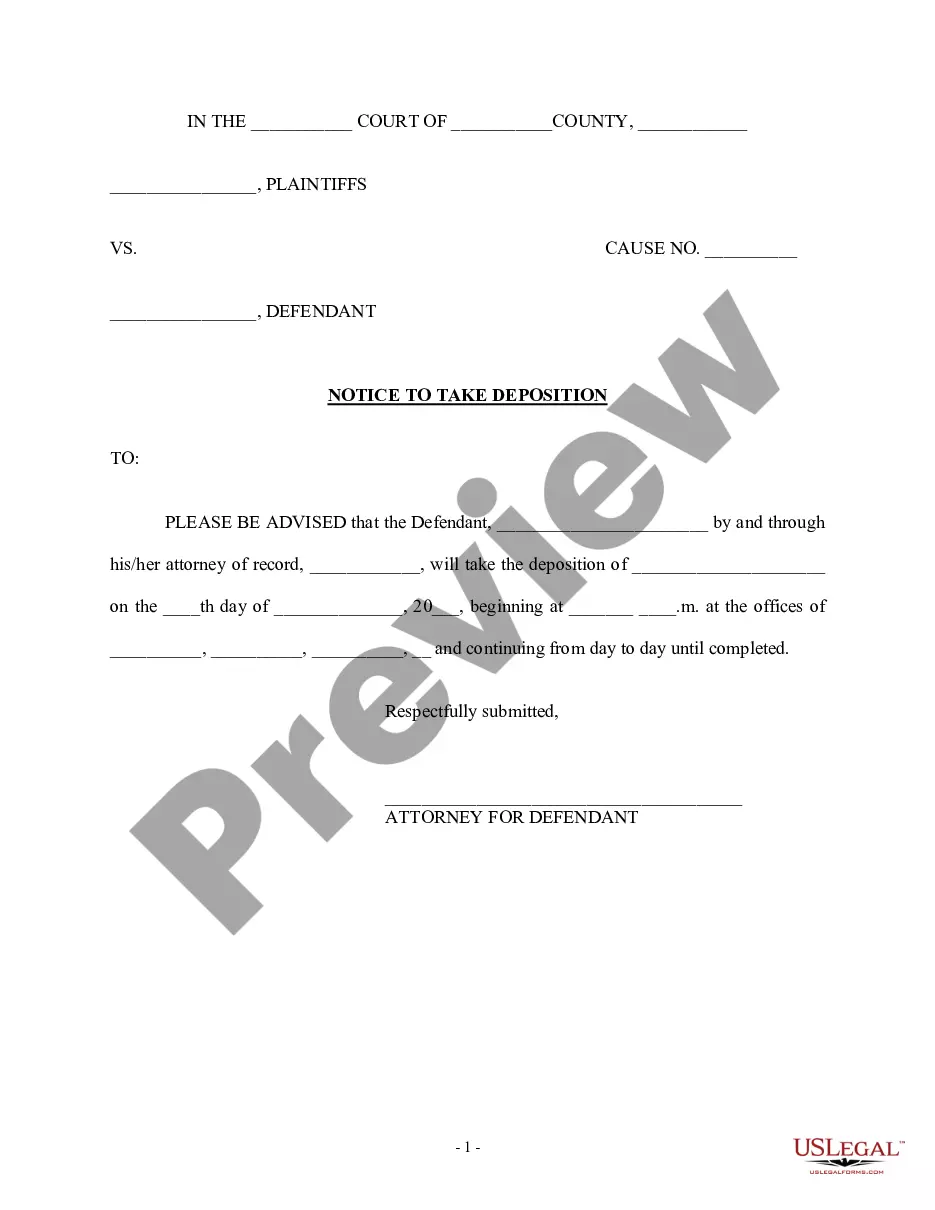
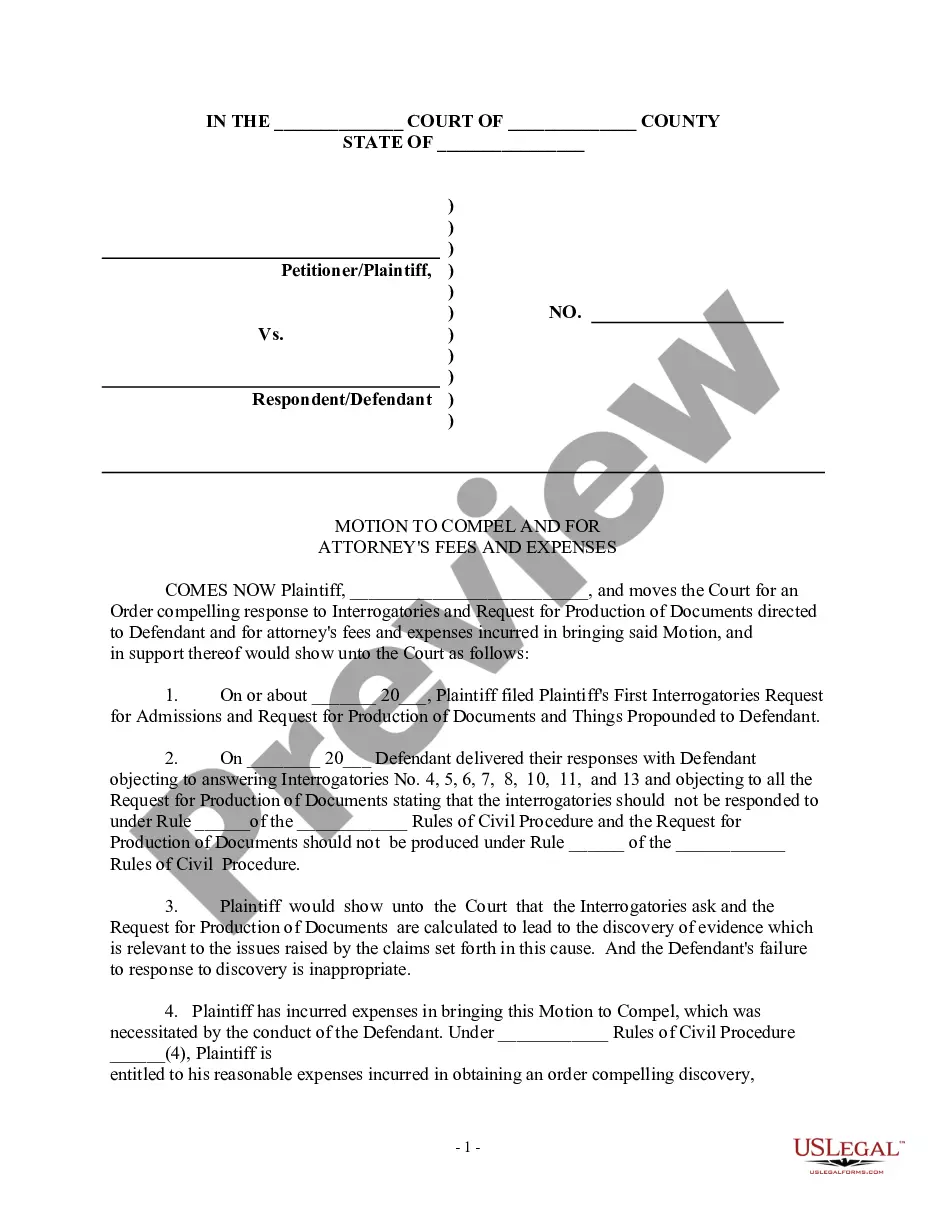
The Notice of Motion to Compel Attendance at a Deposition is a legal document used to request a court order requiring a witness to appear and testify during a deposition. It is a critical tool in litigation, especially when a deponent fails to attend a scheduled deposition. This form differs from other legal notices by specifically addressing the absence of a witness and seeking the court's intervention to ensure compliance.
What’s included in this form
- Case information: Includes names of plaintiffs and defendants, case number, and court details.
- Details of the deponent: Identifies the person whose attendance is being compelled.
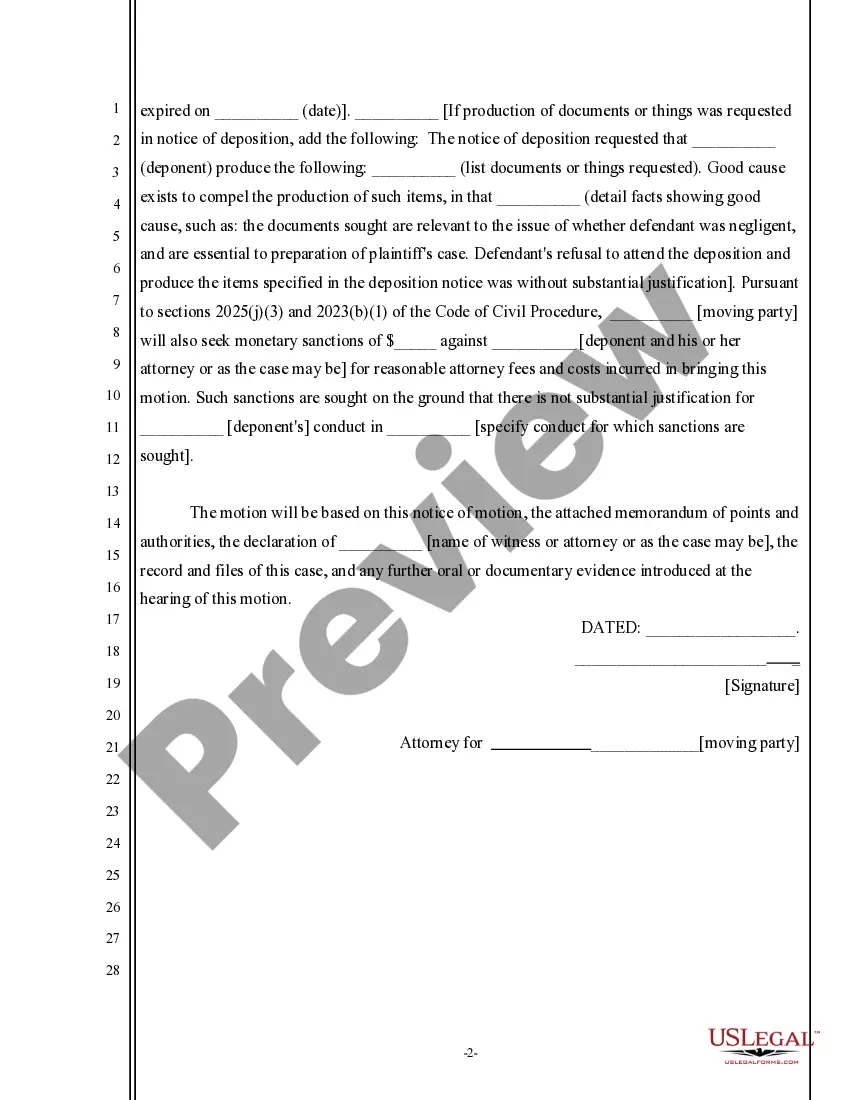
- Grounds for the motion: Specifies reasons why the court's order is necessary, such as failure to attend or testify.
- Request for documents: If applicable, details any documents the deponent is required to bring to the deposition.
- Request for sanctions: Outlines any monetary sanctions sought against the deponent for failing to comply.
- Signatures: Requires the attorneyâs signature and date of the motion.
Common use cases
This form should be used when a scheduled deponent fails to appear for a deposition without sufficient justification. It is particularly relevant in cases where the testimony or documents from the deponent are crucial for the litigation process and the party seeking the deposition needs to enforce attendance through the court. Additionally, it can be used if a deponent has not responded to a notice or has failed to comply with production requests during a deposition.
Who needs this form
This form is intended for:
- Attorneys representing parties in litigation who need to compel a witnessâs attendance.
- Individuals representing themselves (pro se litigants) who require the courtâs assistance to enforce deposition attendance.
- Any party involved in a civil case where deposition testimony is necessary for case preparation.
Instructions for completing this form
- Fill in the case information, including the names of all parties and the court details.
- Identify the deponent and their attorney, if applicable.
- Specify the reasons for compelling attendance, including details of the missed deposition.
- Add information about any documents the deponent must produce, if applicable.
- Indicate any sanctions sought against the deponent for non-compliance.
- Sign and date the form in the designated area.
Notarization guidance
This form does not typically require notarization unless specified by local law. However, it is important to verify specific jurisdictional requirements to ensure compliance.
Get your form ready online
Our built-in tools help you complete, sign, share, and store your documents in one place.
Make edits, fill in missing information, and update formatting in US Legal Forms—just like you would in MS Word.
Download a copy, print it, send it by email, or mail it via USPS—whatever works best for your next step.
Sign and collect signatures with our SignNow integration. Send to multiple recipients, set reminders, and more. Go Premium to unlock E-Sign.
If this form requires notarization, complete it online through a secure video call—no need to meet a notary in person or wait for an appointment.
We protect your documents and personal data by following strict security and privacy standards.

Make edits, fill in missing information, and update formatting in US Legal Forms—just like you would in MS Word.

Download a copy, print it, send it by email, or mail it via USPS—whatever works best for your next step.

Sign and collect signatures with our SignNow integration. Send to multiple recipients, set reminders, and more. Go Premium to unlock E-Sign.

If this form requires notarization, complete it online through a secure video call—no need to meet a notary in person or wait for an appointment.

We protect your documents and personal data by following strict security and privacy standards.
Common mistakes
- Failing to provide specific reasons for the motion, which can weaken the case for compulsion.
- Not including adequate details about the missed deposition and the attempts made to secure attendance.
- Omitting the necessary signatures or dates, which can invalidate the motion.
Benefits of using this form online
- Convenient access: Users can fill out and download the form at their convenience.
- Editability: The online format allows for easy adjustments and customizations.
- Accuracy: Using a professionally drafted template helps ensure compliance with legal standards.
Legal use & context
- The form serves as a legal notice to compel testimony, crucial in discovery processes.
- Compliance with this form helps uphold the rights of parties to obtain necessary witness testimonies.
- Failure to comply with a valid deposition notice may lead to additional legal consequences.
Key takeaways
- The Notice of Motion to Compel Attendance at a Deposition is essential for enforcing witness attendance.
- Properly completing and filing this form can positively influence litigation outcomes.
- Ensure compliance with state-specific rules to avoid delays in legal proceedings.
Looking for another form?
Form popularity
FAQ
To file a California Notice of Motion to Compel Attendance at Deposition, start by preparing the motion documents, which include the notice itself and a supporting declaration. Next, you need to file these documents with the court where the case is pending. It’s important to serve the motion on all parties involved in the case, ensuring everyone has proper notice. For assistance with the paperwork or to ensure compliance with court rules, consider using the US Legal Forms platform, which provides templates and guidance specific to your needs.
Winning a motion to compel involves presenting strong evidence that supports your case. You should detail all relevant communications and show that you have met the legal standards, such as the meet and confer requirement. By being well-prepared and strategic in your approach, you increase the chances of a favorable outcome when filing your California Notice of Motion to Compel Attendance at Deposition.
Common grounds for a motion to compel include the opposing party's failure to attend their deposition, refusal to provide requested documents, or inadequate responses to discovery requests. Each situation requires a clear demonstration of how the other party did not fulfill their legal obligations. A solid understanding of these grounds can help you craft an effective California Notice of Motion to Compel Attendance at Deposition.
California law requires parties to engage in a meet and confer process before filing a motion to compel. This means you should attempt to resolve the issue amicably with the other party. If you cannot reach an agreement, you can then proceed with your California Notice of Motion to Compel Attendance at Deposition.
In a motion to compel, the burden of proof lies with the party who is seeking the order. You must clearly show that the opposing party did not comply with the deposition notice. This evidence can include documentation of your attempts to schedule the deposition and any communication regarding the failure to attend.
To file a California Notice of Motion to Compel Attendance at Deposition, you must meet specific requirements. First, ensure that you have served the opposing party with a proper notice of deposition. Additionally, you need to demonstrate that the other party has failed to comply with this notice, which justifies your motion.
Writing a motion to compel involves setting a clear legal basis for your request, outlining the lack of compliance from the other party, and specifying the details of the deposition. Be sure to reference any applicable laws that support your motion, and format it according to court requirements. Crafting a well-structured California Notice of Motion to Compel Attendance at Deposition is essential for effective communication with the court.
To compel a deposition in California, you must file a motion with the court if the opposing party is uncooperative. Ensure you have valid grounds and follow the prescribed legal format. A properly drafted California Notice of Motion to Compel Attendance at Deposition can streamline this process and help enforce compliance.
A motion to compel is a serious legal step that indicates a party's noncompliance with discovery rules. It can disrupt timelines and negatively impact legal strategies. Therefore, understanding how to utilize the California Notice of Motion to Compel Attendance at Deposition can ensure compliance and move the case forward efficiently.
A motion to compel deposition is a request made to the court to require a party to appear for a deposition after they have refused or failed to do so. This step is vital in gathering evidence and information necessary for your case. Using the California Notice of Motion to Compel Attendance at Deposition helps you formally document this request.