Request for Information on Deferred Collections
Understanding this form
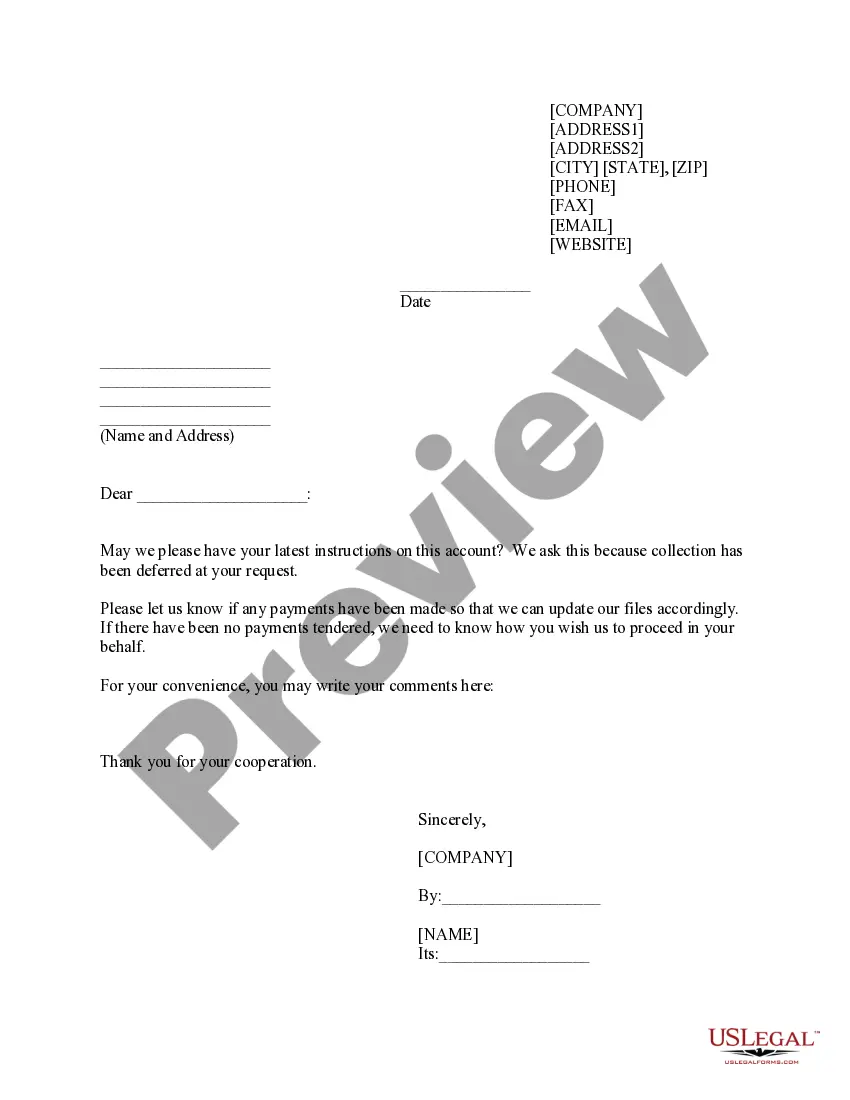
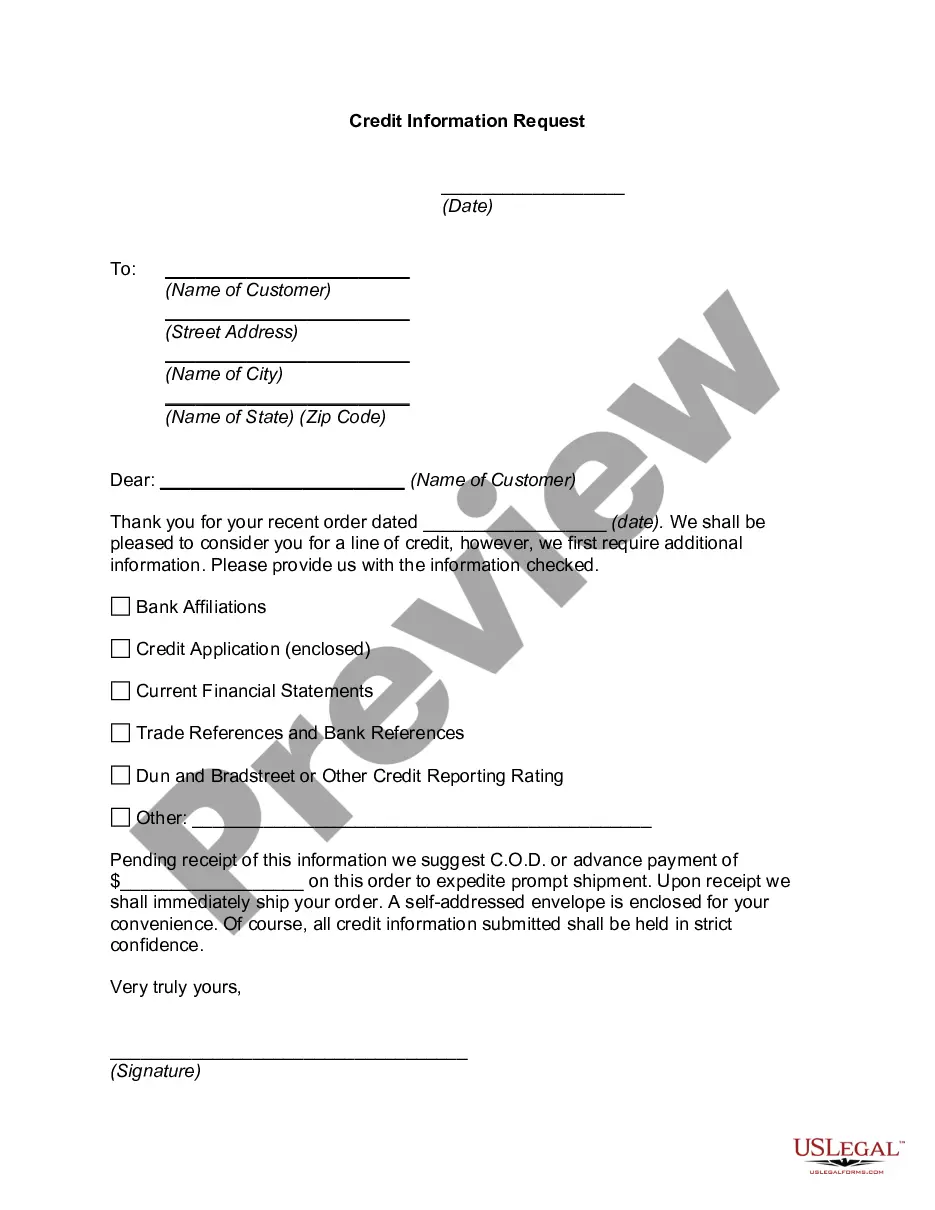
The Request for Information on Deferred Collections is a legal document used to formally request details and instructions regarding accounts where debt collection has been suspended at the request of the debtor. This form facilitates communication between creditors and debtors, ensuring that both parties are updated on any payments or changes in the account status. Unlike general collection notices, this specific form addresses situations where collection efforts have been deferred, providing clarity and structure in ongoing negotiations or communications.
Form components explained
Sender's Information: Includes fields for the address, phone number, fax, email, and website of the requesting party.
Date: The date when the request is made, which is essential for record-keeping and response timing.
Recipient's Information: Space to enter the name and address of the person or organization being contacted.
Account Inquiry: A section requesting the latest instructions on the account's status and payment history.
Comments Section: A designated area for the recipient to provide feedback or instructions regarding the account status.
Signature: The representative of the requesting company signs to validate the request.
Common use cases
You should use the Request for Information on Deferred Collections when you need to clarify the status of an account for which collection efforts have been paused at the debtor's request. This form is particularly useful in scenarios where you want to confirm if payments have been made, receive updated instructions, or require information to proceed with further actions regarding the account. It helps maintain proper documentation and communication between both parties involved.
Who should use this form
Creditors seeking to obtain an update on accounts where collection has been deferred.
Businesses or individuals managing outstanding debts and requiring clarity on payments or account management.
Legal representatives of creditors needing a formal method to request information on deferred collections.
How to prepare this document
Identify the sending party by filling in the sender's information at the top of the form.
Enter the date of the request to document when it is made.
Provide the recipient's name and address to ensure proper delivery of the request.
Clearly state your request for the latest instructions on the account and any payment information in the appropriate section.
Add any additional comments or requests in the comments section provided.
Sign the form to validate the request from your organization.
Notarization requirements for this form
This form does not typically require notarization unless specified by local law. However, having the document notarized may provide added legal assurance in some situations. Always check regional regulations to be certain of the requirements.
Get your form ready online
Our built-in tools help you complete, sign, share, and store your documents in one place.
Make edits, fill in missing information, and update formatting in US Legal Forms—just like you would in MS Word.
Download a copy, print it, send it by email, or mail it via USPS—whatever works best for your next step.
Sign and collect signatures with our SignNow integration. Send to multiple recipients, set reminders, and more. Go Premium to unlock E-Sign.
If this form requires notarization, complete it online through a secure video call—no need to meet a notary in person or wait for an appointment.
We protect your documents and personal data by following strict security and privacy standards.

Make edits, fill in missing information, and update formatting in US Legal Forms—just like you would in MS Word.

Download a copy, print it, send it by email, or mail it via USPS—whatever works best for your next step.

Sign and collect signatures with our SignNow integration. Send to multiple recipients, set reminders, and more. Go Premium to unlock E-Sign.

If this form requires notarization, complete it online through a secure video call—no need to meet a notary in person or wait for an appointment.

We protect your documents and personal data by following strict security and privacy standards.
Typical mistakes to avoid
Failing to include the date, which can lead to confusion about the timeline.
Leaving the recipient's information incomplete or incorrect, which can delay the response.
Not providing enough detail in the comments section, which may lead to miscommunication.
Neglecting to sign the form, resulting in the request being considered unofficial.
Why complete this form online
Convenience: Download the form anytime and from anywhere to streamline communication.
Editability: Easily fill in required fields digitally, reducing errors associated with handwritten documents.
Reliability: Access forms drafted by licensed attorneys, ensuring legal compliance and accuracy.
- The form serves as a formal request and can be used in legal proceedings to demonstrate attempts to collect due information.
- Proper completion and delivery of the form can help strengthen legal positions in collection disputes.
Key takeaways
The Request for Information on Deferred Collections allows creditors to inquire about suspended collections.
Completing the form accurately ensures clear communication regarding payment statuses.
Using this form can help maintain professional relations between creditors and debtors.