Request for Information on Credit Denial ( Not Agency )
About this form
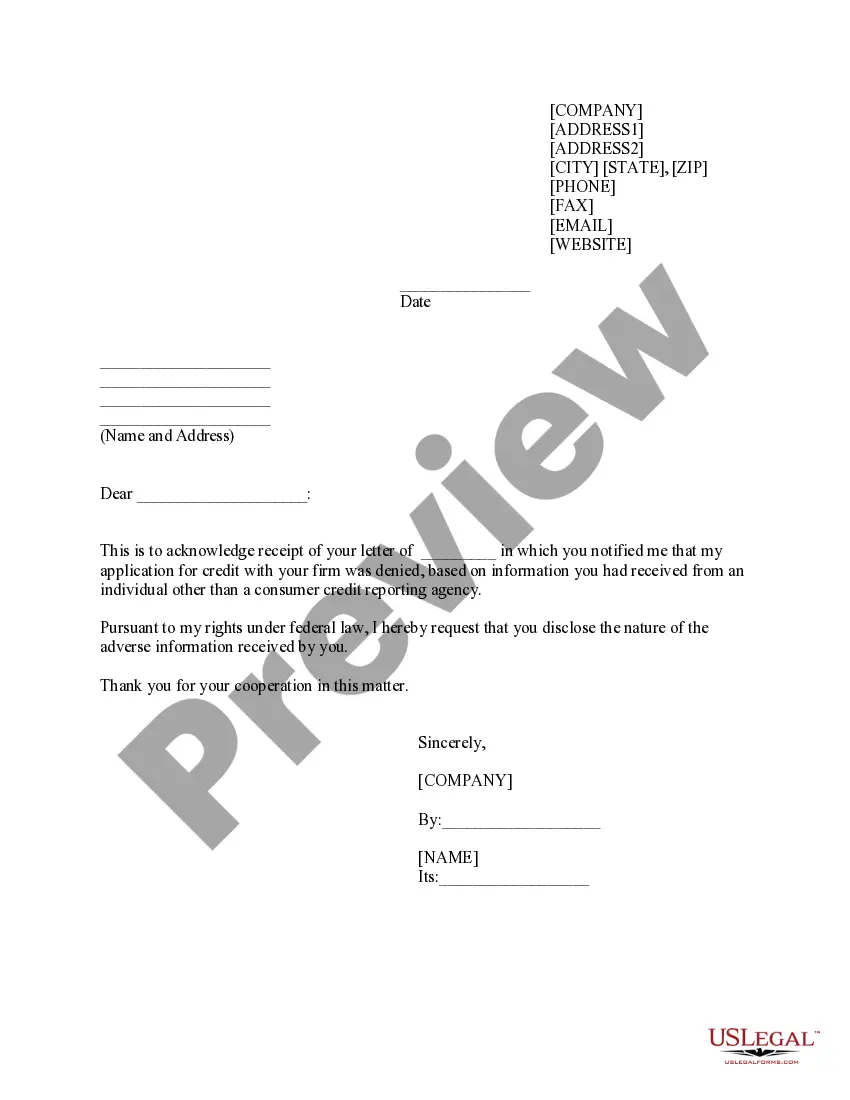
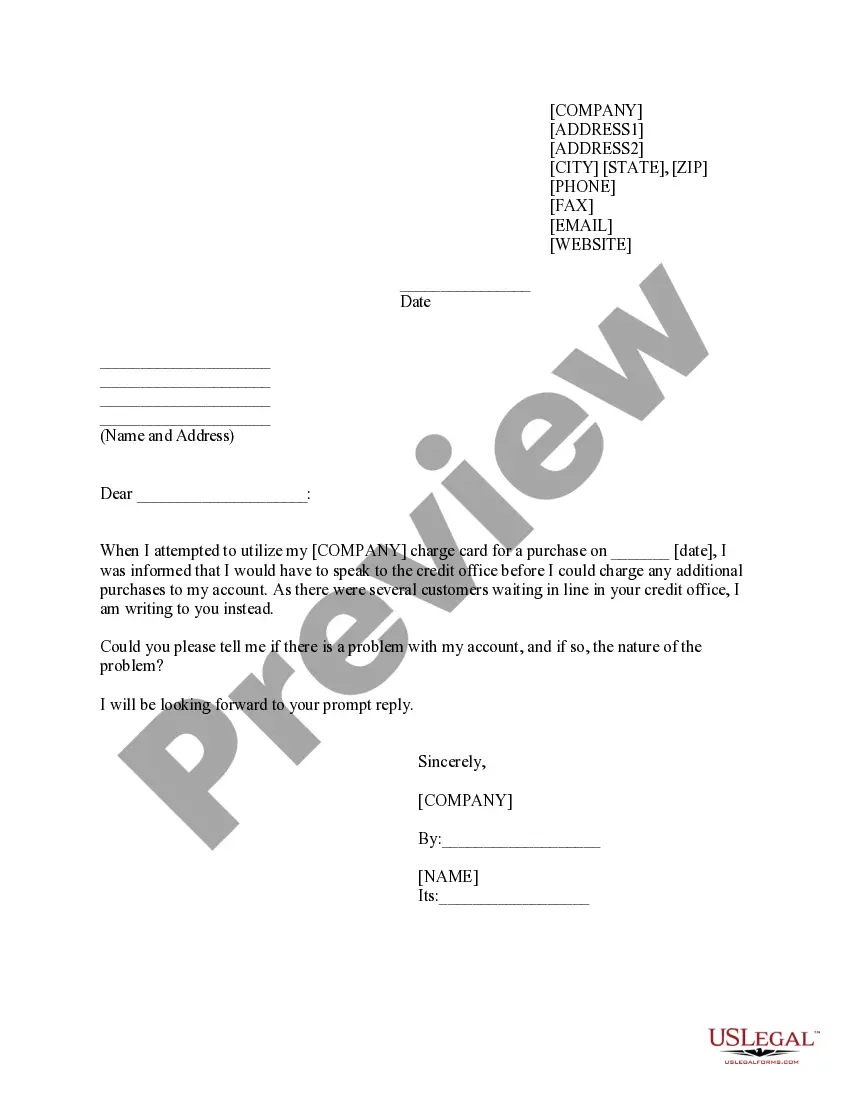
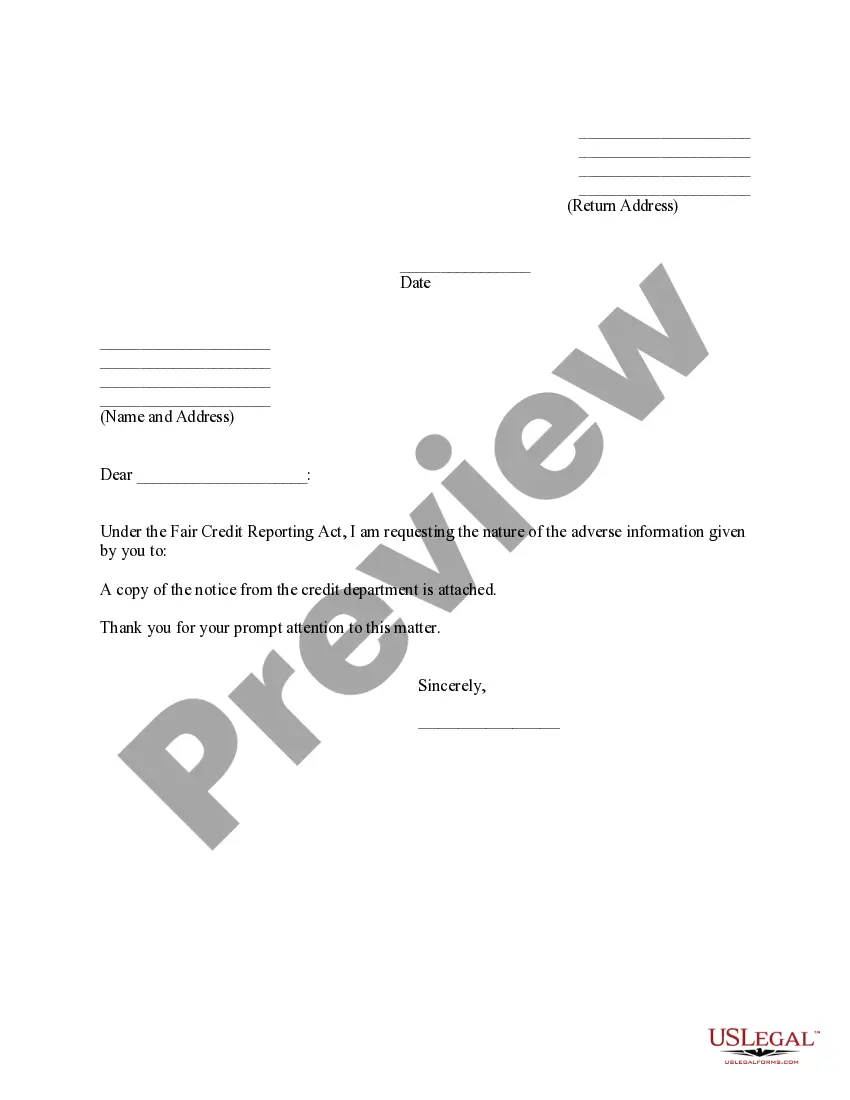
The Request for Information on Credit Denial is a legal document that allows individuals to request details regarding the denial of their credit application. This form is specifically used when the rejection is based on information from a source other than a consumer credit reporting agency. It empowers consumers by exercising their rights under federal law to understand the reason for their credit denial, ultimately aiding them in addressing any inaccuracies or issues that may impact their creditworthiness.
Form components explained
- Your contact information, including name and address.
- The date of the request.
- The name and address of the credit issuer.
- A statement acknowledging receipt of the credit denial notification.
- A request for the nature of the adverse information that led to the denial.
- A signature section, including the title of the person authorized to sign on behalf of the company.
Situations where this form applies
This form should be used when you receive a notice of credit denial and would like to obtain more information about the circumstances surrounding your application rejection. It's particularly useful if the denial is based on information from a source other than a credit reporting agency, giving you the opportunity to clarify misunderstandings and take corrective actions if necessary.
Who this form is for
The following individuals should consider using this form:
- Consumers whose applications for credit have been denied.
- Individuals who want to understand the reason for their credit denial.
- Those seeking to correct inaccuracies in the information provided by the credit issuer.
- Any person exercising their rights under federal law regarding credit information.
Instructions for completing this form
- Enter your personal contact information at the top of the form.
- Fill in the date you are submitting the request.
- Add the name and address of the company that denied your credit application.
- State your acknowledgment of their denial notice and request the nature of the adverse information.
- Sign the form, including your name and title if applicable.
Does this document require notarization?
This form does not typically require notarization unless specified by local law. You can complete it easily without the need for a notary public.
Get your form ready online
Our built-in tools help you complete, sign, share, and store your documents in one place.
Make edits, fill in missing information, and update formatting in US Legal Forms—just like you would in MS Word.
Download a copy, print it, send it by email, or mail it via USPS—whatever works best for your next step.
Sign and collect signatures with our SignNow integration. Send to multiple recipients, set reminders, and more. Go Premium to unlock E-Sign.
If this form requires notarization, complete it online through a secure video call—no need to meet a notary in person or wait for an appointment.
We protect your documents and personal data by following strict security and privacy standards.

Make edits, fill in missing information, and update formatting in US Legal Forms—just like you would in MS Word.

Download a copy, print it, send it by email, or mail it via USPS—whatever works best for your next step.

Sign and collect signatures with our SignNow integration. Send to multiple recipients, set reminders, and more. Go Premium to unlock E-Sign.

If this form requires notarization, complete it online through a secure video call—no need to meet a notary in person or wait for an appointment.

We protect your documents and personal data by following strict security and privacy standards.
Common mistakes
- Failing to include all required contact information.
- Not providing the correct name and address of the credit issuer.
- Neglecting to sign the form before submission.
- Using vague language when requesting information.
- Sending the form to the incorrect department or address.
Benefits of completing this form online
- Easy access to a legally vetted template, ensuring compliance with relevant laws.
- Convenient editing options to customize the form as needed.
- Secure download for your records, preventing loss of important documents.
- Quick and efficient process, allowing you to address credit issues promptly.
Legal use & context
- Provides a formal mechanism to request information under federal law regarding credit denials.
- Enhances consumer rights by allowing individuals to inquire about the specific reasons behind credit decisions.
- Helps consumers address potential errors in their credit evaluations, leading to better credit opportunities.
Quick recap
- The form requests critical information regarding the basis for a credit denial.
- It is essential for consumers seeking transparency from their creditors.
- Accurate completion ensures a prompt response from the creditor.
Looking for another form?

Form popularity
FAQ
If you deny a consumer credit based on information in a consumer report, you must provide an ?adverse action? notice to the consumer. if you grant credit, but on less favorable terms based on information in a consumer report, you must provide a ?risk-based pricing? notice.
An adverse action notice is to inform you that you have been denied credit, employment, insurance, or other benefits based on information in a credit report. The notice should indicate which credit reporting agency was used, and how to contact them.
If a lender rejects your application, it's required under the Equal Credit Opportunity Act (ECOA) to tell you the specific reasons your application was rejected or tell you that you have the right to learn the reasons if you ask within 60 days.
You should dispute with each credit bureau that has the mistake. Explain in writing what you think is wrong, include the credit bureau's dispute form (if they have one), copies of documents that support your dispute, and keep records of everything you send.
The FCRA also requires a creditor to disclose, as applicable, a credit score it used in taking adverse action along with related information, including up to four key factors that adversely affected the consumer's credit score (or up to five factors if the number of inquiries made with respect to that consumer report
Adverse action is a compliance requirement that gives a credit denial explanation to the prospect. Soft Pull Solutions can send adverse action letters to your customers, on your behalf to satisfy these obligations when you do hard pulls. This eliminates labor costs, human error, and sorting through files.
Send a letter asking for the reasons behind your credit denial. Be sure to save a copy of the signed letter for proof in case they don't respond. Get the credit report. Every adverse action notice should include the identity of any credit bureau that provided credit information used to deny you credit.
You are entitled to a free copy of your credit report You have the right to get a free copy of your credit report within 60 days of being denied credit. Simply contact the credit reporting agency that provided the credit report and ask for a free report. You can also get a free credit report every 12 months.