Mississippi Supplemental Motion for Trial Continuance
What this document covers
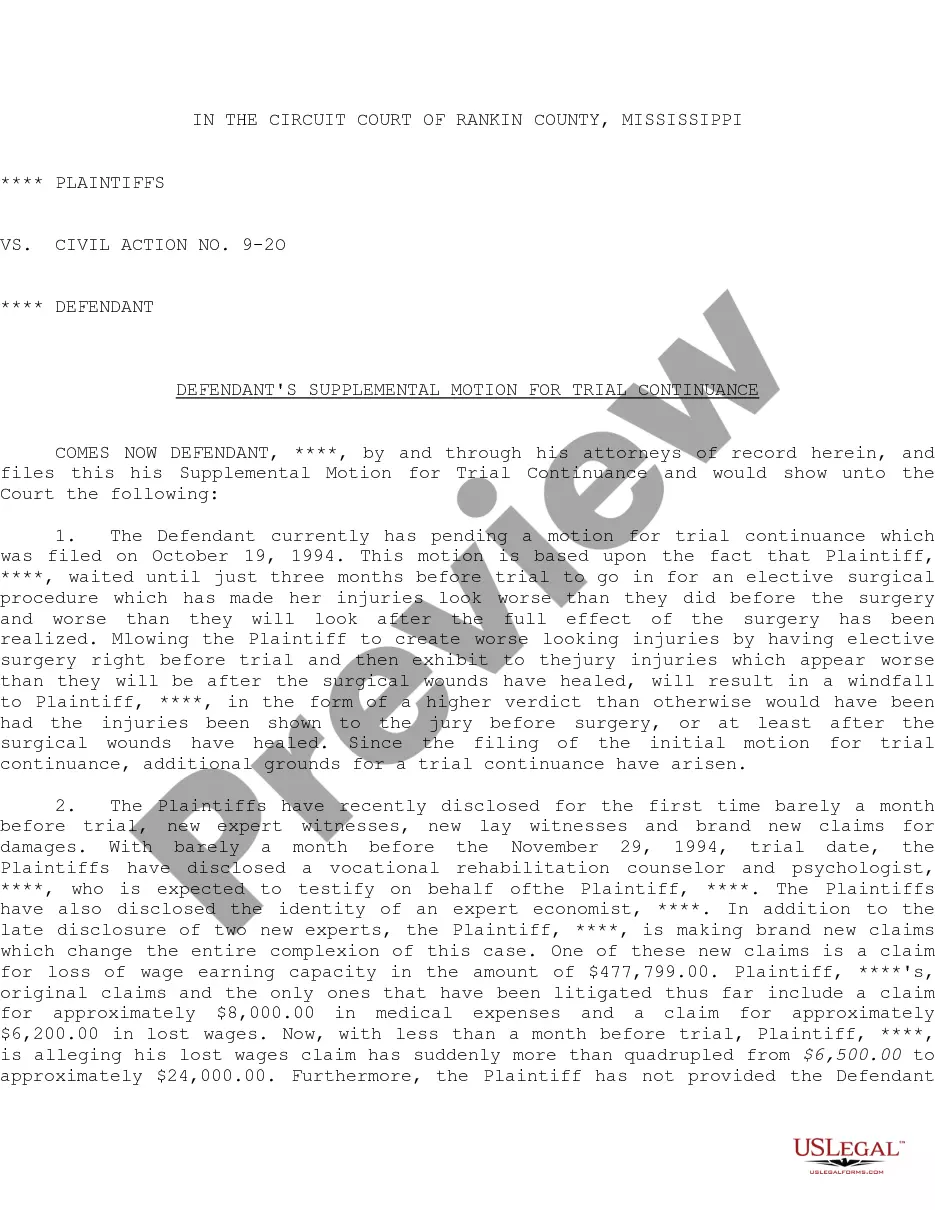
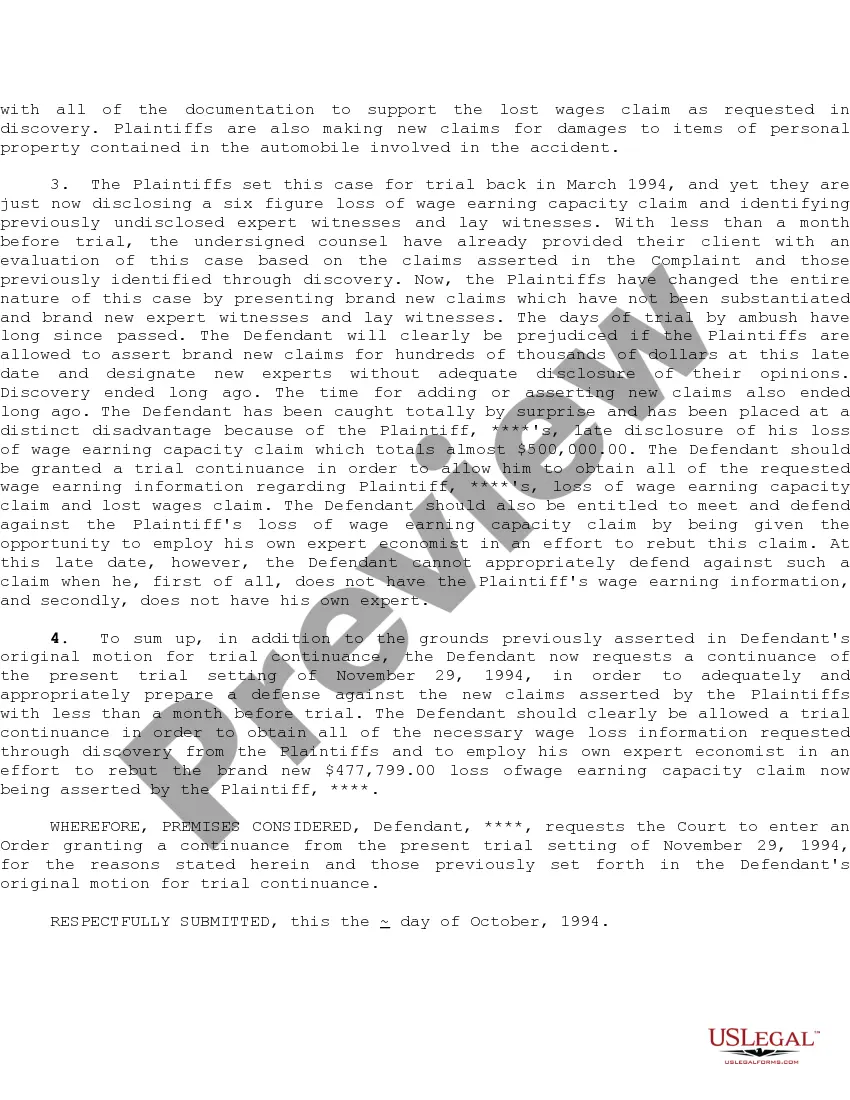
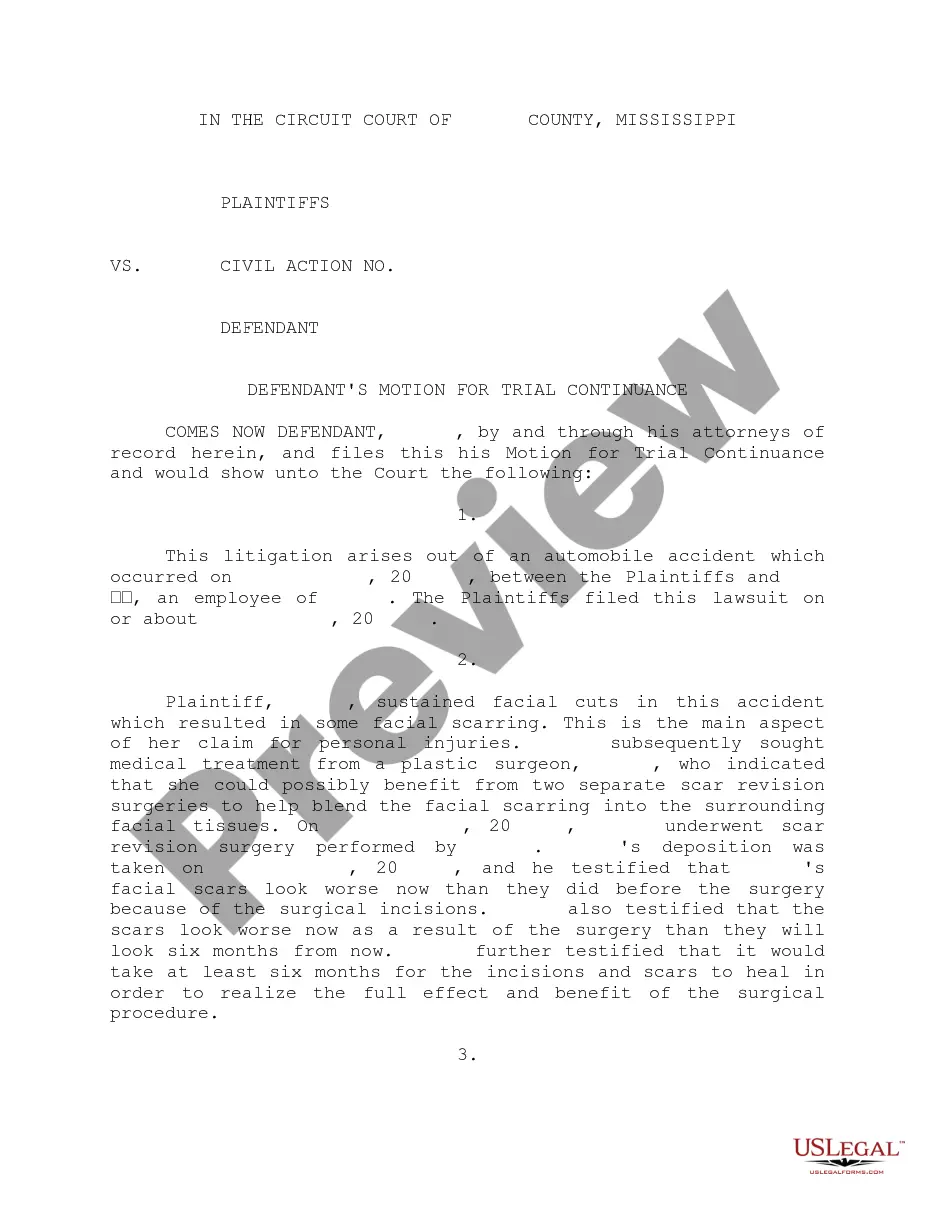
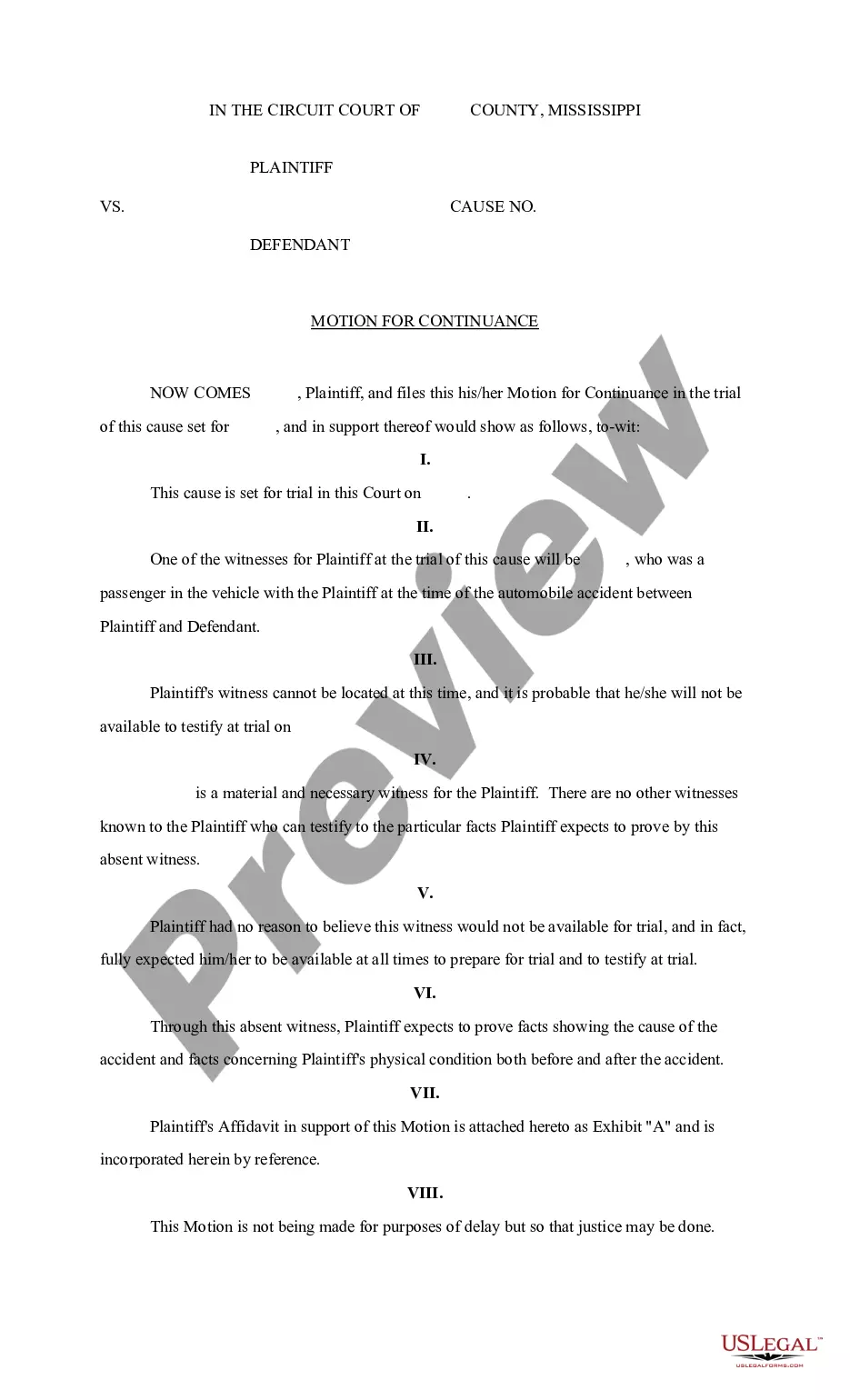
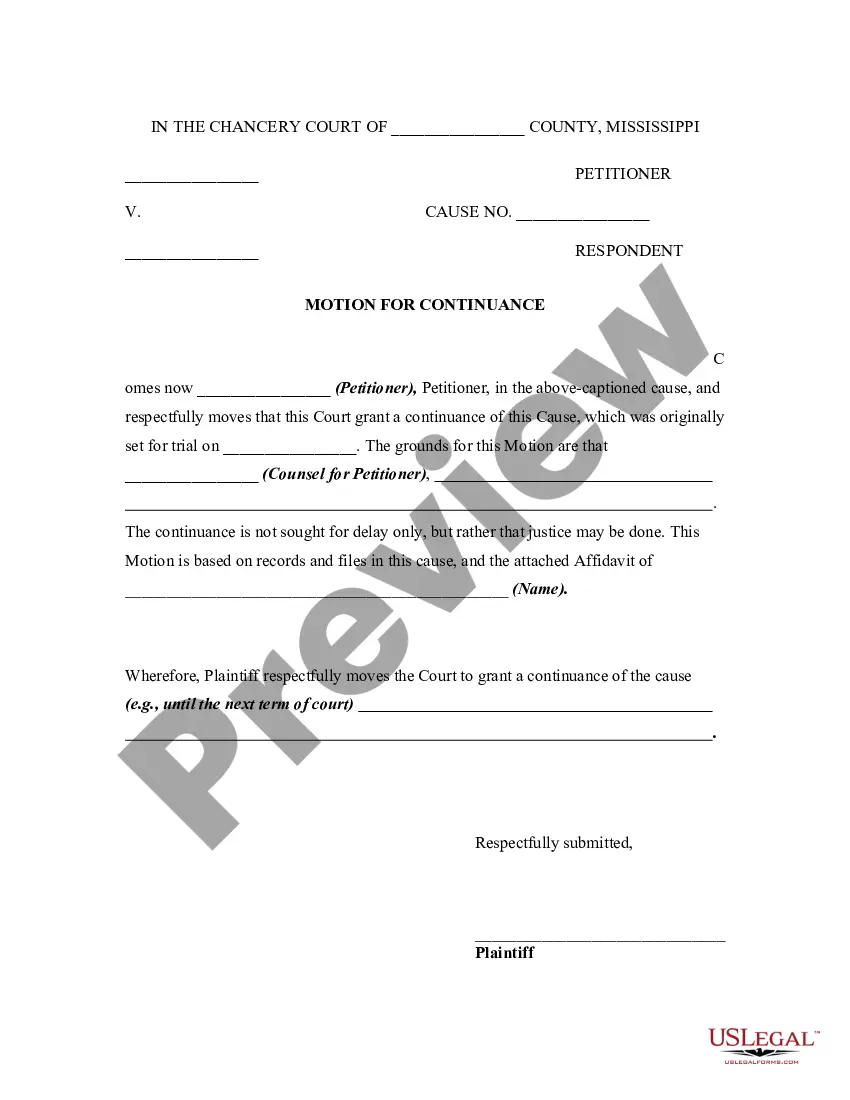
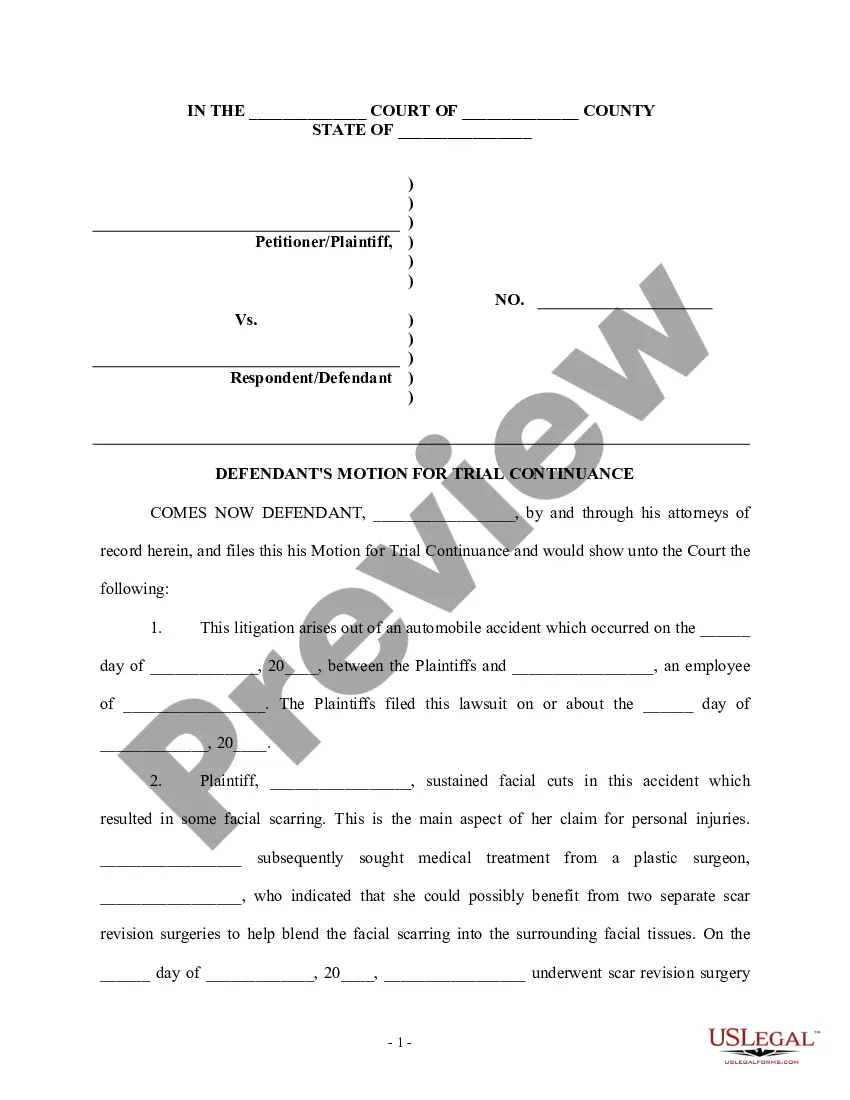
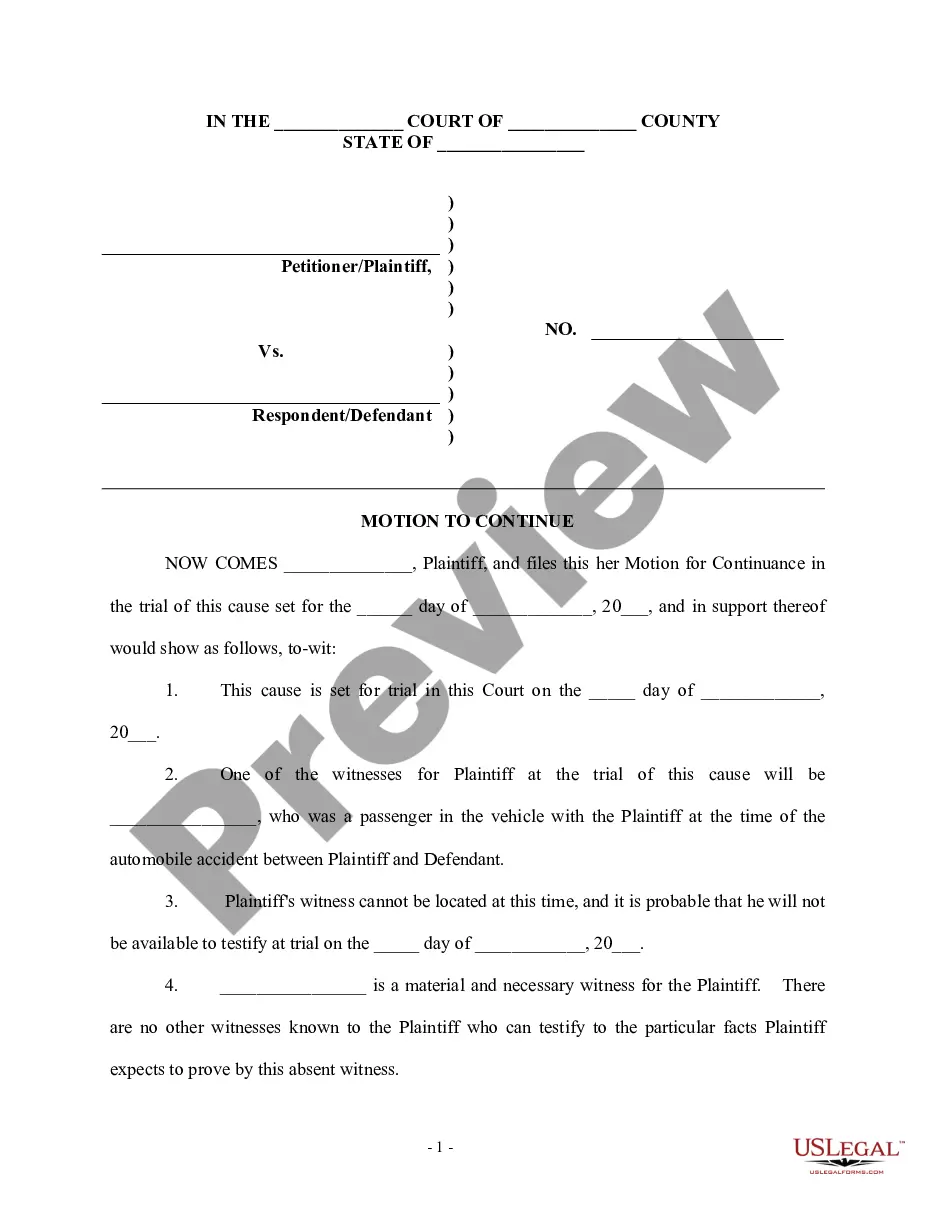
The Supplemental Motion for Trial Continuance is a formal request made to the court to postpone a scheduled trial. This document is essential when new information or claims emerge close to the trial date that could unfairly advantage one party. Unlike a standard motion for continuance, this supplemental form specifically addresses additional grounds for delaying the trial based on recent developments, ensuring that all parties have adequate time to prepare their cases effectively.
Main sections of this form
- Header section identifying the plaintiffs and defendants.
- Statement of the reasons for requesting the continuance.
- Details of new evidence or claims presented by the opposing party.
- A formal request for the court to grant an extension of the trial date.
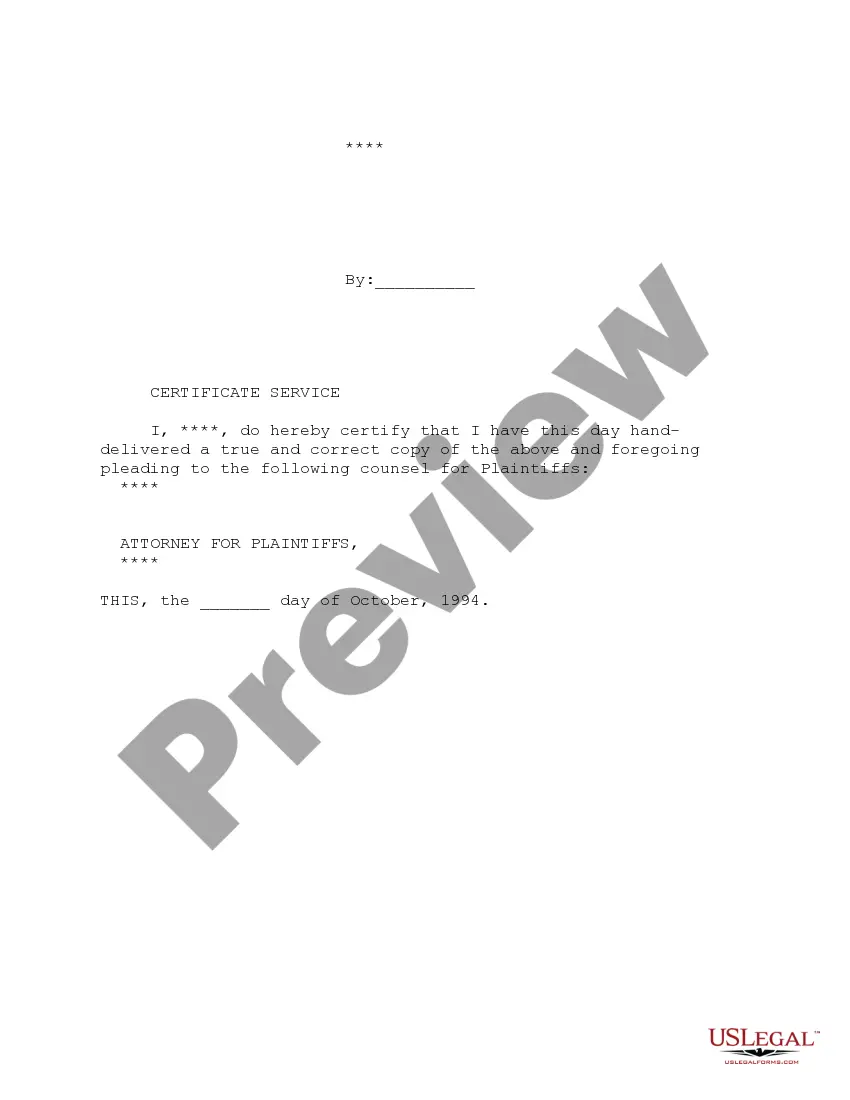
- Signature block for the defendant's attorney.
- Certificate of service confirming delivery of the motion to the opposing counsel.
When this form is needed
This form should be used when you receive unexpected or late disclosures from the opposing party that significantly affect the case. For example, if new expert witnesses are disclosed shortly before trial or if new claims with potential financial implications arise, utilizing this supplemental motion ensures you have the necessary time to prepare your defense appropriately.
Intended users of this form
- Defendants in civil cases who need additional time to prepare for trial.
- Parties who have recently received unexpected information or evidence from the opposing side.
- Individuals seeking to protect their right to a fair trial by ensuring all claims are thoroughly assessed.
How to complete this form
- Identify the parties involved in the case at the top of the form.
- Clearly state the reasons for the requested continuance in the body of the motion.
- Detail any new claims or evidence that have emerged since the initial motion was filed.
- Include a formal request at the end, asking the court to grant the continuance.
- Sign the document with the attorney's name and date it appropriately.
- Deliver a copy of the filed motion to the opposing counsel and complete the certificate of service.
Notarization requirements for this form
This form usually doesn’t need to be notarized. However, local laws or specific transactions may require it. Our online notarization service, powered by Notarize, lets you complete it remotely through a secure video session, available 24/7.
Get your form ready online
Our built-in tools help you complete, sign, share, and store your documents in one place.
Make edits, fill in missing information, and update formatting in US Legal Forms—just like you would in MS Word.
Download a copy, print it, send it by email, or mail it via USPS—whatever works best for your next step.
Sign and collect signatures with our SignNow integration. Send to multiple recipients, set reminders, and more. Go Premium to unlock E-Sign.
If this form requires notarization, complete it online through a secure video call—no need to meet a notary in person or wait for an appointment.
We protect your documents and personal data by following strict security and privacy standards.

Make edits, fill in missing information, and update formatting in US Legal Forms—just like you would in MS Word.

Download a copy, print it, send it by email, or mail it via USPS—whatever works best for your next step.

Sign and collect signatures with our SignNow integration. Send to multiple recipients, set reminders, and more. Go Premium to unlock E-Sign.

If this form requires notarization, complete it online through a secure video call—no need to meet a notary in person or wait for an appointment.

We protect your documents and personal data by following strict security and privacy standards.
Typical mistakes to avoid
- Failing to provide sufficient reasons for the continuance request.
- Not filing the motion within the timeframe set by the court.
- Neglecting to serve the document on the opposing party.
- Overlooking local rules that require hearings on continuance motions.
Benefits of completing this form online
- Instant access to professionally drafted legal documents.
- Ability to download and customize the form for your specific situation.
- Secure and hassle-free process without the need for in-person visits.
- Cost-effective solution to address legal needs efficiently.
Legal use & context
- This motion is legally recognized as a means to ensure due process in civil litigation.
- It helps maintain fairness in the legal process by allowing sufficient time for parties to prepare.
- The court generally favors granting continuances when justified by valid reasons.
Looking for another form?


Form popularity
FAQ
A pleading demands that the other party do something, while a motion requests that the judge in the case do something. These documents can be filed with the court before, during, or after the trial, though pleadings are typically filed at or near a case's outset.
Supplemental complaint refers to an additional complaint that either corrects a defect in the original complaint or adds relevant matters that occurred after the action began. Generally, a party must obtain the court's permission to file a supplemental complaint.
A pleading that sets forth transactions or occurrences or events which happened since the date of the pleading, with the purpose of supplementing it. The court may permit these through motion. Even if the original pleading was defective, it may still be supplemented. legal practice/ethics.
Amend- ed pleadings allow the party to add claims, parties, or defenses based on facts that occurred before the original pleading was filed. Supplemental pleadings allow the party to add claims or defenses based on facts that occurred after the original plead- ing was filed.
A pleading that sets forth transactions or occurrences or events which happened since the date of the pleading, with the purpose of supplementing it. The court may permit these through motion. Even if the original pleading was defective, it may still be supplemented. legal practice/ethics.
The motion for leave to file an answer to a complaint means that the defendant did not answer within the requisite time period, and is essentially asking for more time to answer the complaint.