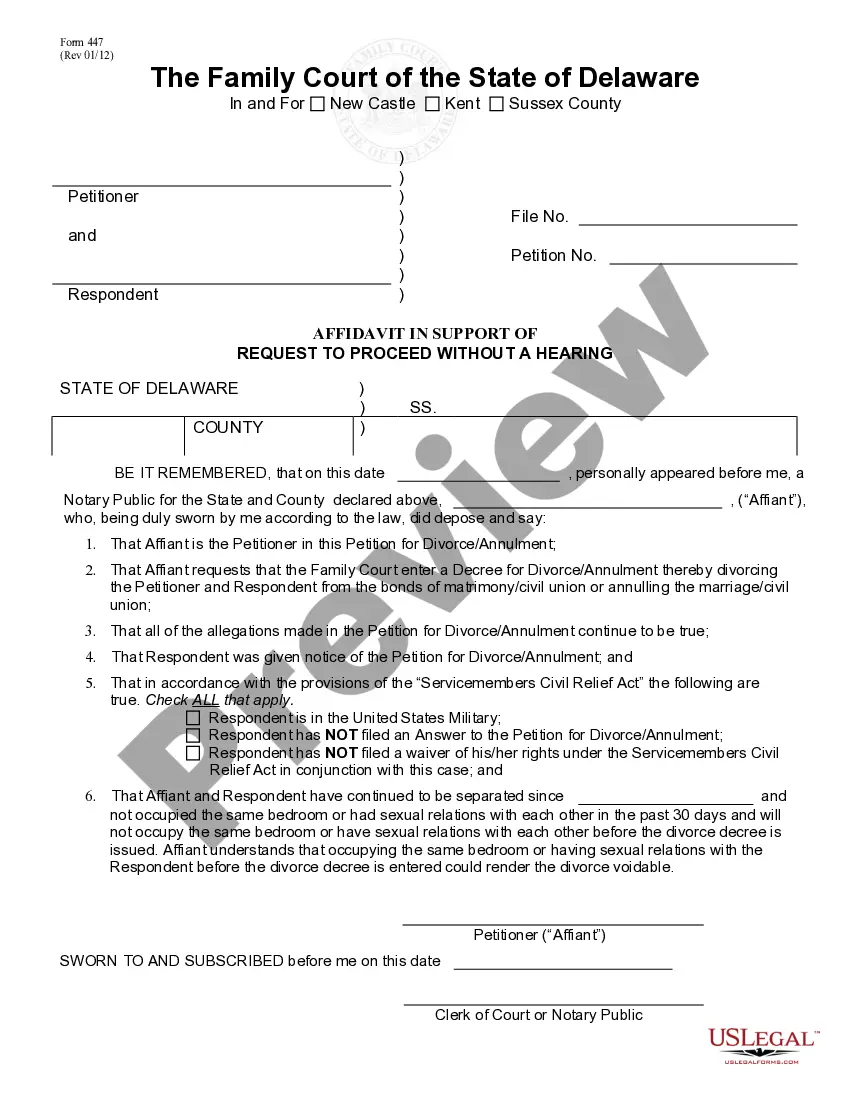
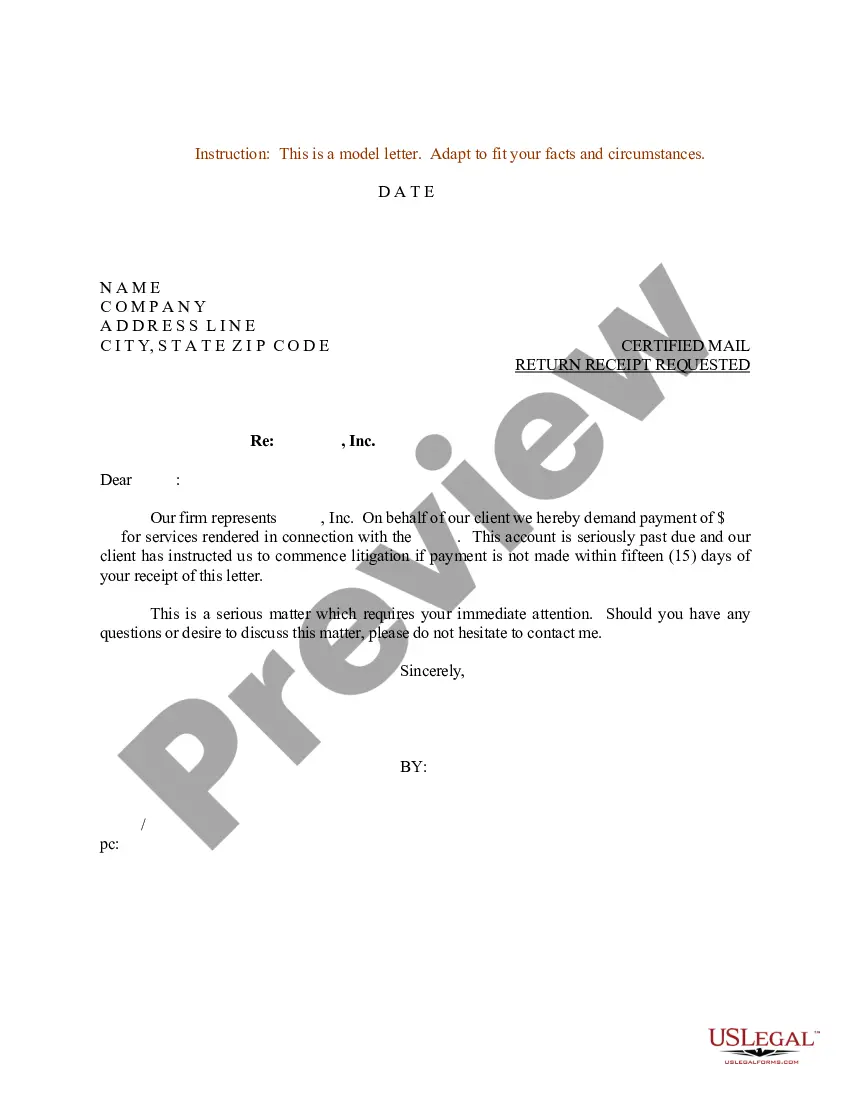
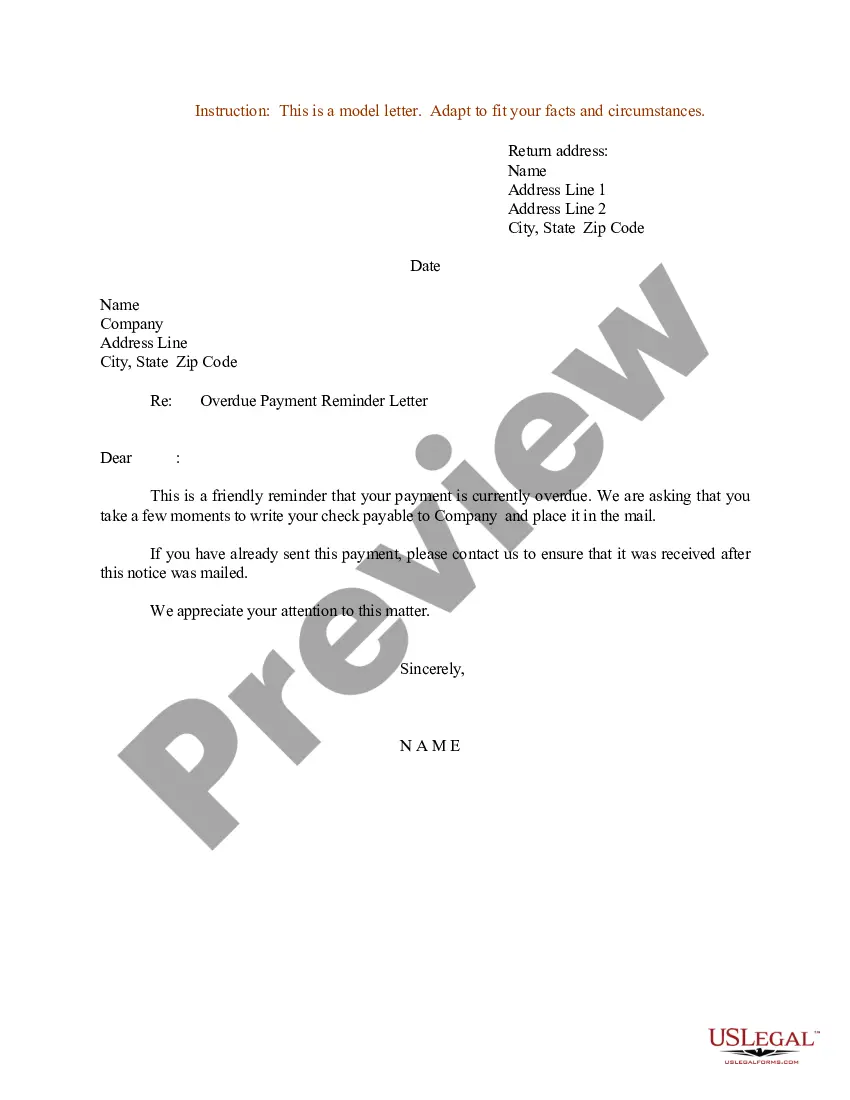
Sample Letter for Demand for Payment
Understanding this form
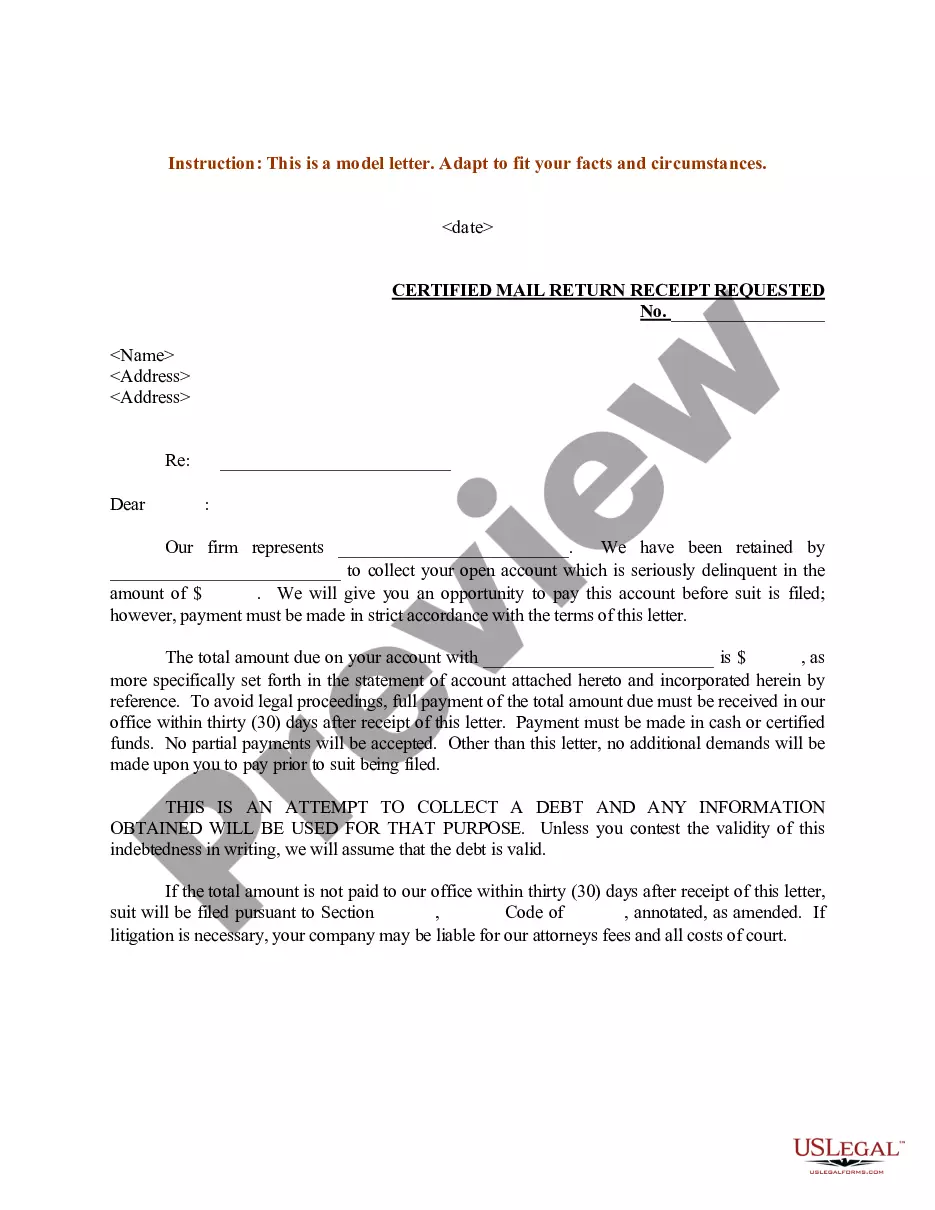
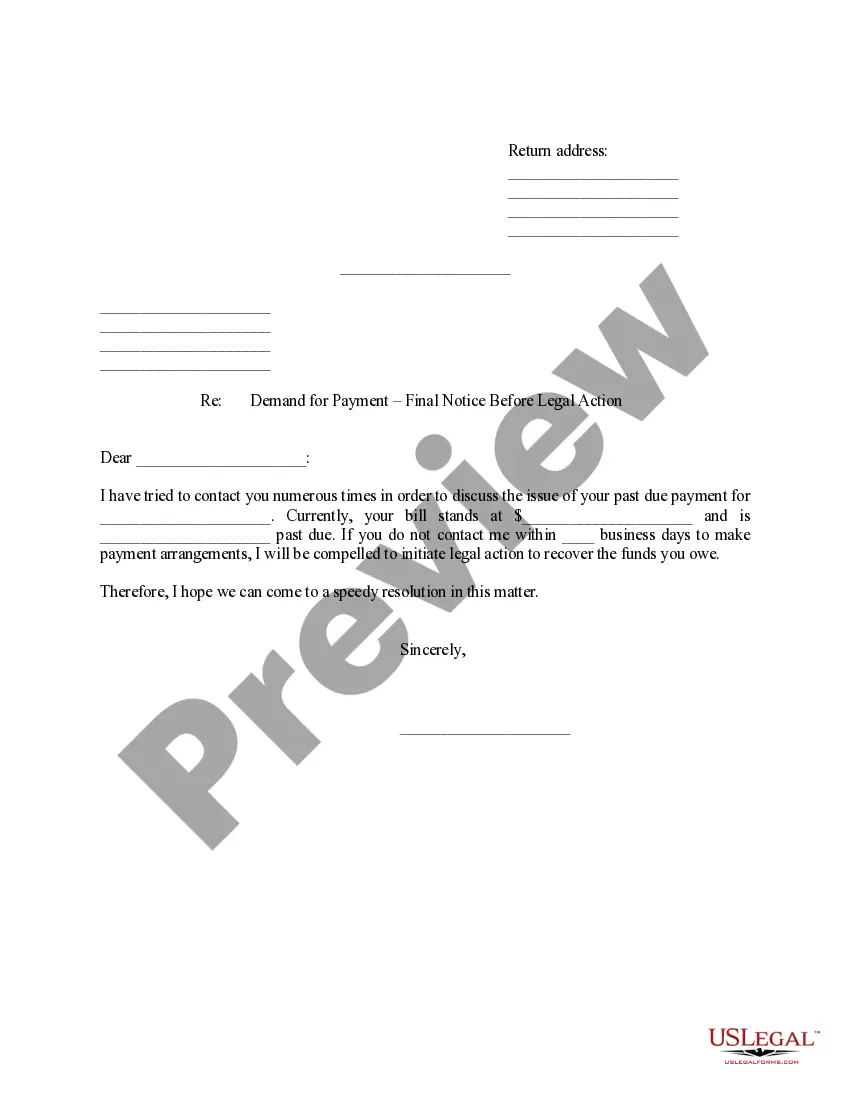
The Sample Letter for Demand for Payment is a formal document used to request payment from a debtor. This letter serves as a tool for individuals or businesses to officially communicate their expectation for payment and to outline the consequences of non-payment. Unlike other forms of correspondence, such as invoices, this demand letter is often the first step in pursuing overdue debts and establishes a record of communication for potential legal proceedings.
What’s included in this form
- Date of the letter.
- Debtor's name and address.
- A clear declaration that this is a demand for payment.
- Specific details on the amount owed.
- Consequences of non-payment, such as potential legal action.
- Signature and contact information of the sender.
Common use cases
This form should be used when an individual or business has not received payment by the due date and wishes to formally request the outstanding amount. It is suitable for various situations, including unpaid invoices for services rendered, loan repayments, or product sales. Sending a demand letter can often prompt action from the debtor and may help to avoid further collection efforts or legal action.
Who this form is for
Individuals or businesses in need of pursuing outstanding payments may benefit from using this form, including:
- Small business owners seeking payment for services or products.
- Freelancers and independent contractors owed money for their work.
- Individuals who have lent money or provided goods and services on credit.
- Property owners regarding unpaid rent.
How to complete this form
- Start by entering the date at the top of the letter.
- Fill in the debtor's name and address.
- Clearly state the amount owed and reference any relevant agreements.
- Include a statement about the seriousness of the matter and the need for prompt action.
- Provide your contact information for any questions or discussions.
- Sign the letter to validate your request.
Notarization requirements for this form
Notarization is generally not required for this form. However, certain states or situations might demand it. You can complete notarization online through US Legal Forms, powered by Notarize, using a verified video call available anytime.
Get your form ready online
Our built-in tools help you complete, sign, share, and store your documents in one place.
Make edits, fill in missing information, and update formatting in US Legal Forms—just like you would in MS Word.
Download a copy, print it, send it by email, or mail it via USPS—whatever works best for your next step.
Sign and collect signatures with our SignNow integration. Send to multiple recipients, set reminders, and more. Go Premium to unlock E-Sign.
If this form requires notarization, complete it online through a secure video call—no need to meet a notary in person or wait for an appointment.
We protect your documents and personal data by following strict security and privacy standards.

Make edits, fill in missing information, and update formatting in US Legal Forms—just like you would in MS Word.

Download a copy, print it, send it by email, or mail it via USPS—whatever works best for your next step.

Sign and collect signatures with our SignNow integration. Send to multiple recipients, set reminders, and more. Go Premium to unlock E-Sign.

If this form requires notarization, complete it online through a secure video call—no need to meet a notary in person or wait for an appointment.

We protect your documents and personal data by following strict security and privacy standards.
Mistakes to watch out for
- Failing to include the exact amount owed.
- Not providing a clear deadline for payment.
- Ignoring proper formatting or clear communication.
- Overlooking the importance of signing the letter.
Benefits of completing this form online
- Convenient access to the template anytime, anywhere.
- Editable to fit your specific situation and needs.
- Quick download and printing options for easy dissemination.
- Reliable templates reviewed by licensed attorneys for accuracy.
Looking for another form?

Form popularity
FAQ
Type your letter. Concisely review the main facts. Be polite. Write with your goal in mind. Ask for exactly what you want. Set a deadline. End the letter by stating you will promptly pursue legal remedies if the other party does not meet your demand. Make and keep copies.
Someone owes you money. There are various reasons that one party may owe money to another. Someone owes you an obligation in some way. For insurance claims after an injury.
Establish facts. Don't assume everyone knows the facts. Refer to evidence. If there's evidence (like a contract), you don't need to include it, but you should refer to it. Make a demand. Be specific as to what you want. Set a deadline and establish method of payment. Offer a consequence.
LETTER OF DEMAND BACKGROUND A demand generally amounts to a request for payment or a request to perform in terms of a legal obligation. A letter of demand is generally an initial step in the litigation process. In certain instances, a letter of demand is necessary to place the debtor in mora.
Involved parties information (the claimant and recipient's information) The date when the debt was incurred. If there is a dispute, the date when there was improper charging should be included.
Your company name and address. recipient's name and address. today's date. a clear reference and/or any account reference numbers. the amount outstanding. original payment due date. a brief explanation that no payment has been received.
Courts like to see that efforts have been made to settle disputes. Sending a demand letter by certified mail (with return receipt requested) and by regular mail provides proof that you made the effort. In some cases, sending a demand letter is required before going to court.
Although an attorney often writes the demand letter, you can also do it yourself in several cases:If you have a fairly simple legal issue and you want to go through the process yourself, without an attorney. If you want to clarify your thoughts on what happened and what you want.