Change Order by Contractor - Alternative Form
What this document covers
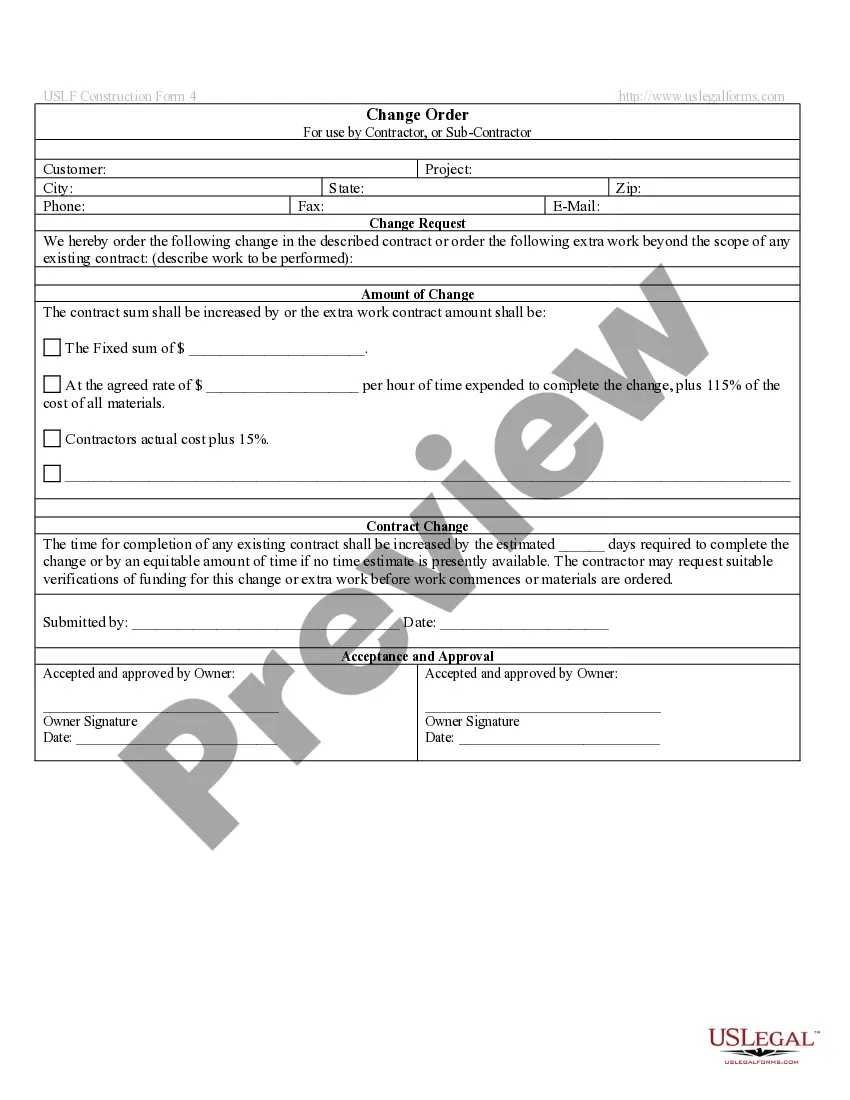
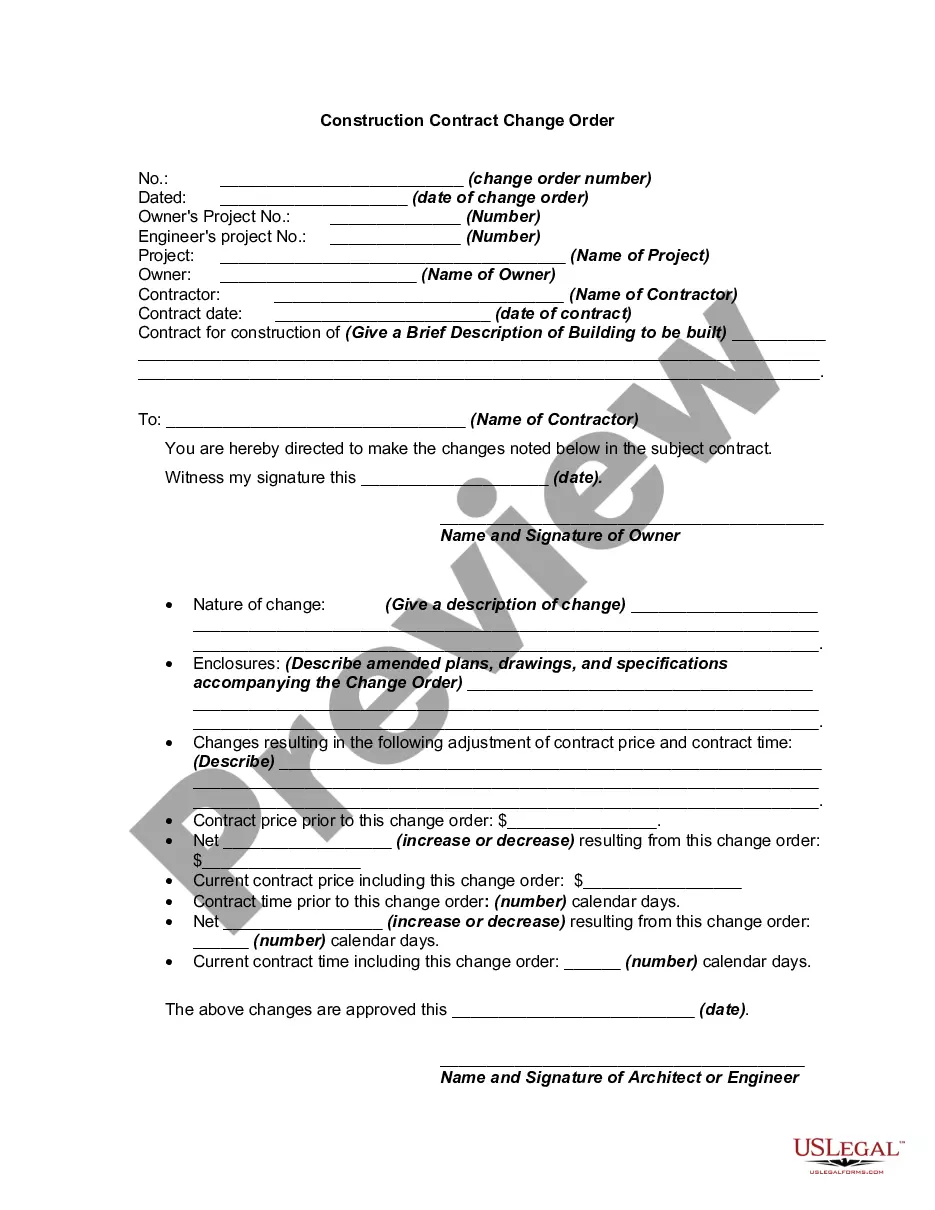
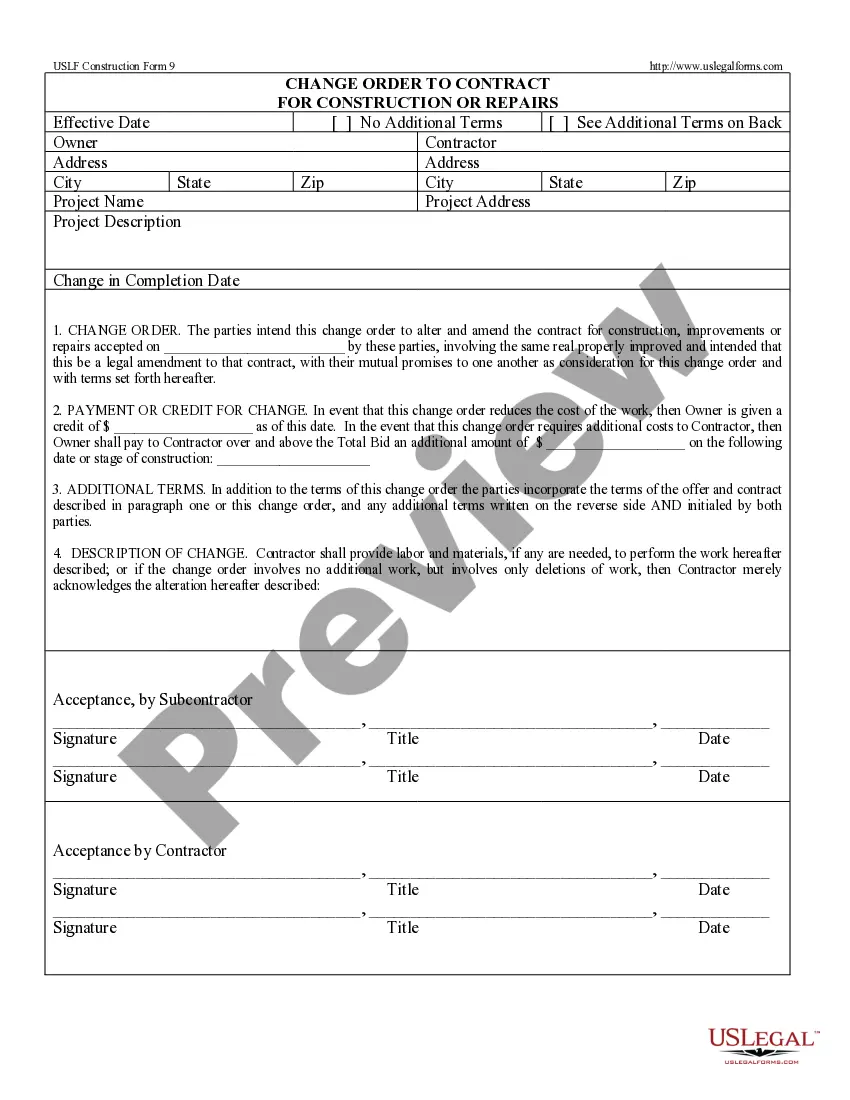
The Change Order by Contractor - Alternative Form is a legal document that enables contractors or subcontractors to propose alterations to an existing construction contract. This form is vital for formalizing changes in project responsibilities and costs once accepted by the owner. Unlike similar documents, this form specifically outlines additional work or modifications beyond the original scope, ensuring clarity and mutual agreement between all parties involved.
Main sections of this form
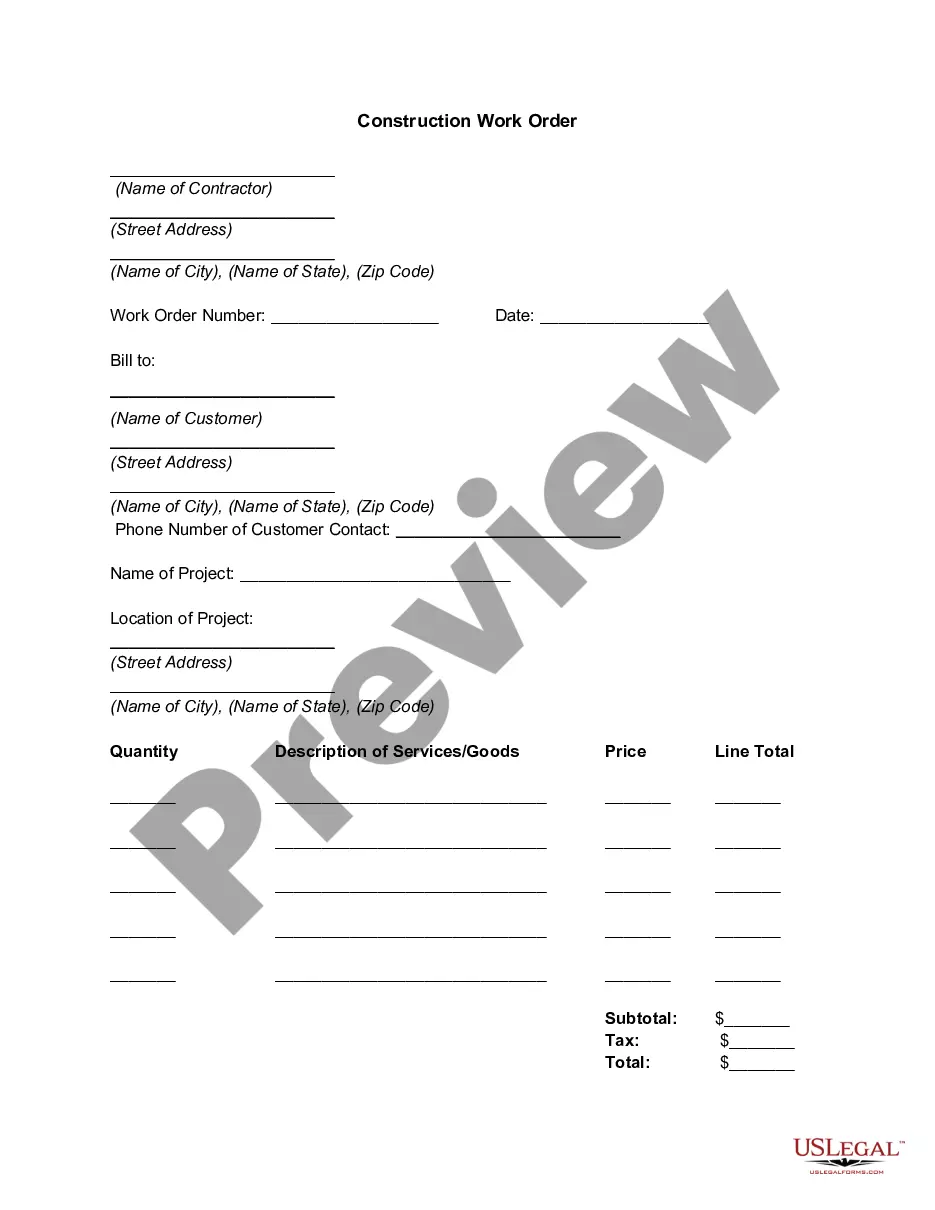
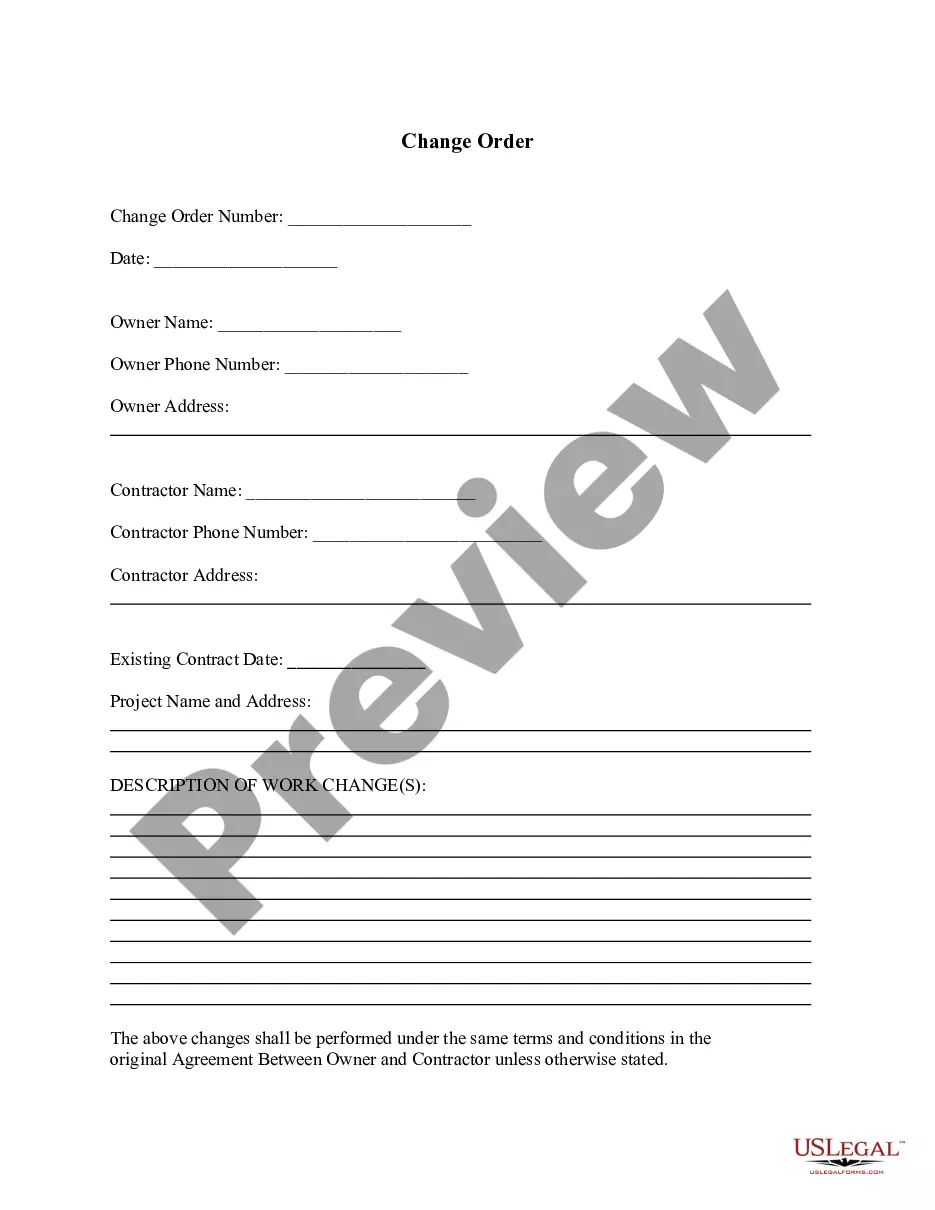
- Identification of parties involved, including contractor and owner details.
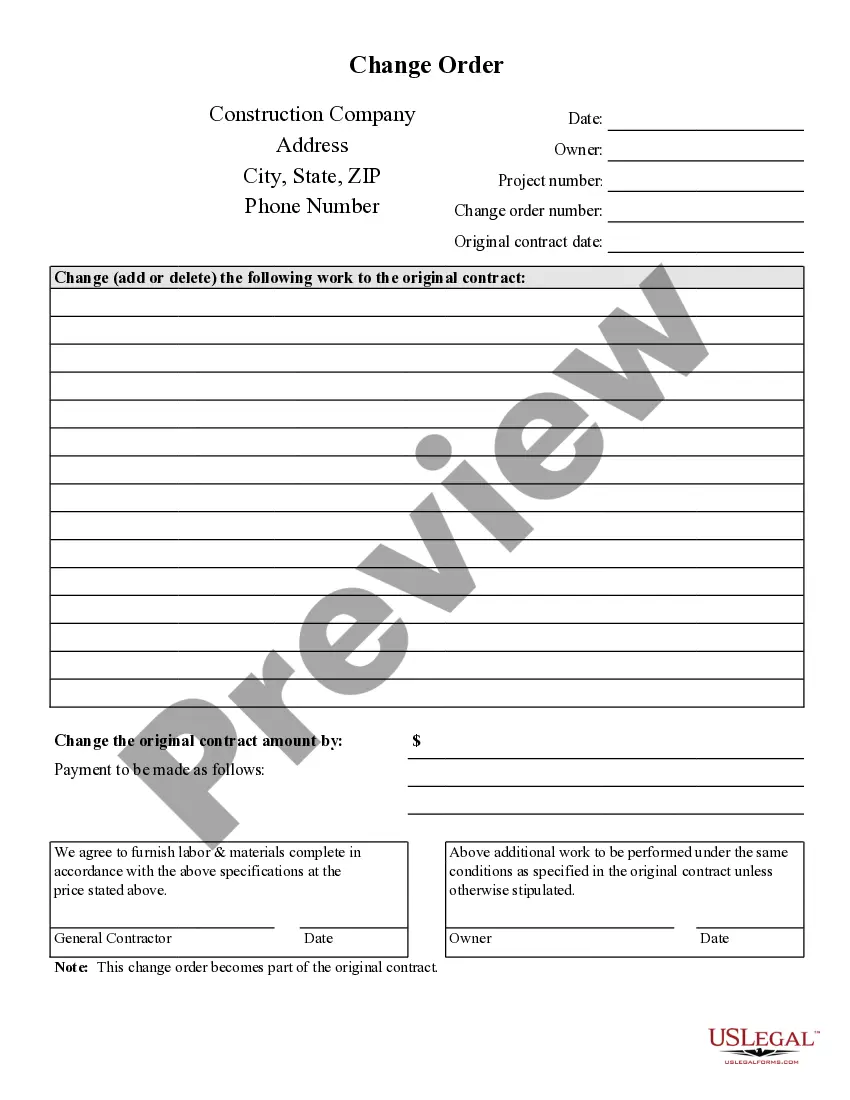
- Description of the changes or extra work proposed.
- Specification of the amount of change in contract sum or extra work cost.
- Estimated time for completion of the changes requested.
- Signature fields for the contractor and owner to accept the changes.
When this form is needed
This form should be used when a contractor or subcontractor identifies the need for changes to the original construction contract. Scenarios include when additional work is required due to unforeseen circumstances, design changes requested by the owner, or modifications necessary to meet compliance with new regulations. It formalizes the agreement to adjust project terms, ensuring all parties are legally bound to the new conditions.
Who can use this document
This form is suitable for:
- Contractors seeking to propose changes to existing contracts.
- Subcontractors who need to issue change requests to a contractor.
- Property owners who are considering modifications to their construction projects.
- Building project managers involved in coordinating between contractors and owners.
How to complete this form
- Enter the names and contact information for both the contractor and owner.
- Specify the exact changes or additional work to be performed.
- Indicate the financial implications of the change, detailing whether it is a fixed sum or based on an hourly rate.
- Provide the estimated additional time needed to complete the work.
- Secure signatures and dates from both the contractor and the owner to formally accept the change order.
Is notarization required?
This form does not typically require notarization unless specified by local law. However, notarization can provide an added layer of validation and security for the agreement.
Get your form ready online
Our built-in tools help you complete, sign, share, and store your documents in one place.
Make edits, fill in missing information, and update formatting in US Legal Forms—just like you would in MS Word.
Download a copy, print it, send it by email, or mail it via USPS—whatever works best for your next step.
Sign and collect signatures with our SignNow integration. Send to multiple recipients, set reminders, and more. Go Premium to unlock E-Sign.
If this form requires notarization, complete it online through a secure video call—no need to meet a notary in person or wait for an appointment.
We protect your documents and personal data by following strict security and privacy standards.

Make edits, fill in missing information, and update formatting in US Legal Forms—just like you would in MS Word.

Download a copy, print it, send it by email, or mail it via USPS—whatever works best for your next step.

Sign and collect signatures with our SignNow integration. Send to multiple recipients, set reminders, and more. Go Premium to unlock E-Sign.

If this form requires notarization, complete it online through a secure video call—no need to meet a notary in person or wait for an appointment.

We protect your documents and personal data by following strict security and privacy standards.
Typical mistakes to avoid
- Failing to provide a clear description of the changes requested.
- Not securing the owner's signature, which can render the document unenforceable.
- Omitting details related to costs or timelines, leading to disputes later.
- Using vague terms, which may create misunderstandings about the scope of work.
Benefits of completing this form online
- Convenient access to legal forms anytime and anywhere.
- Editable templates ensure that you can customize the form to your specific needs.
- Reliable legal content prepared by licensed attorneys, providing peace of mind.
- Quick download process saves time compared to traditional legal services.
Legal use & context
- This form is legally binding once signed by the owner and contractor, ensuring that both parties acknowledge the changes.
- Failure to properly document changes can lead to disputes or claims of breach of contract.
- Using this form helps to clarify the scope of work and associated costs, reducing the potential for misunderstandings.
Summary of main points
- The Change Order by Contractor - Alternative Form is essential for formally documenting changes to a construction contract.
- Clear communication and documentation are critical to avoiding legal disputes.
- Both parties must sign the form to ensure legal enforceability.
Glossary of terms
- Change Order: A document that modifies the terms of an existing contract, usually involving additional work or adjustments in cost.
- Contractor: A person or company that undertakes a contract to provide materials or labor for a project.
- Owner: The individual or entity who owns the property or project and is responsible for overseeing construction agreements.
Looking for another form?

Form popularity
FAQ
7.2. 1 " A change order is written instrument prepared by the architect and signed by the owner, contractor, and architect..."
A change order is simply an addendum or amendment to the original construction contract and scope of work and can be initiated by the owner or the contractor.
Job name, address and phone number. Owner's name. A complete description of new work to be performed. Total price for materials and labor to complete the change. Revised date of completion due to the change order. Signatures of the company representative.
Review Your Contract Anticipating Change Orders. Specifications for managing change orders should be spelled out clearly in the contract. Review All Plans. Write It Down. Set Communication Procedures. There's a Solution for That.
In such a case, the owner has no right to insist that the contractor do anything that was not part of the original scope of work.Contractors are not banks, yet they are routinely used as such by owners who order changes, but refuse to execute change orders, which can then be billed.
Job name, address and phone number. Owner's name. A complete description of new work to be performed. Total price for materials and labor to complete the change. Revised date of completion due to the change order. Signatures of the company representative.
The contractor prepares a change order proposal quoting a price for the extra work. Once the owner and contractor have agreed on scope, price, and schedule, a formal, written change order is prepared and signed by all parties. Then, the contractor proceeds to perform the changed work.
A change order is work that is added to or deleted from the original scope of work of a contract, however, depending on the magnitude of the change, it may or may not alter the original contract amount and/or completion date. A change order may force a new project to handle significant changes to the current project.
In such a case, the owner has no right to insist that the contractor do anything that was not part of the original scope of work.Contractors are not banks, yet they are routinely used as such by owners who order changes, but refuse to execute change orders, which can then be billed.