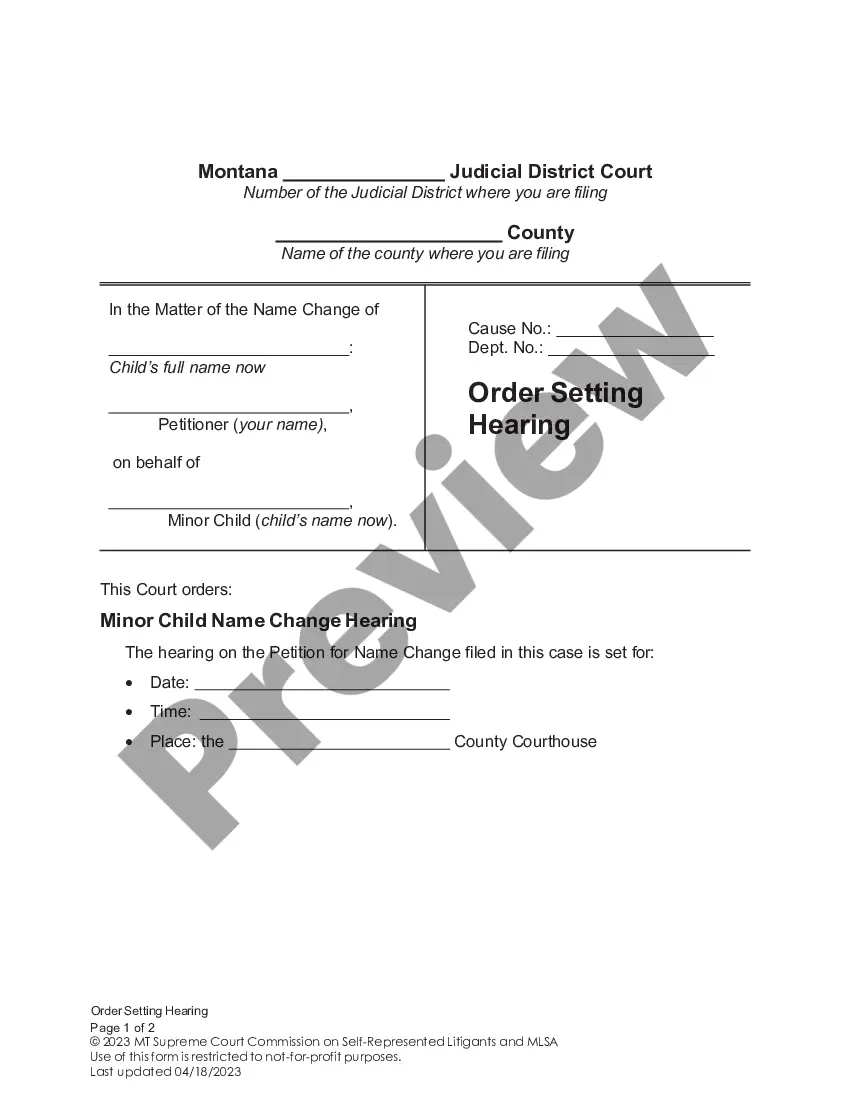
Complaint regarding Strict Product Liability - Breach of Expressed Warranty, Implied Warranty, Merchantability, Negligence, Punitive Damages - Delta Wood
Overview of this form
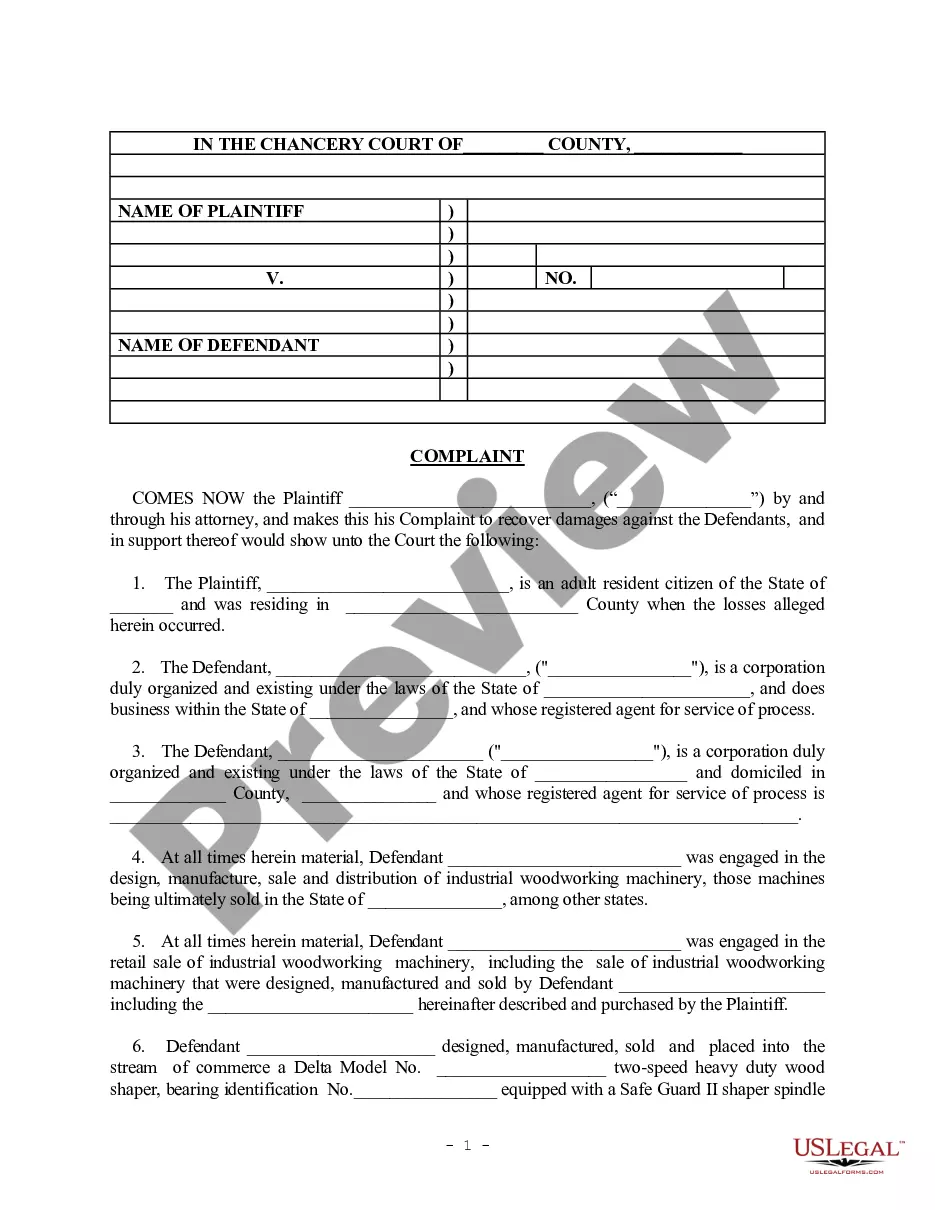
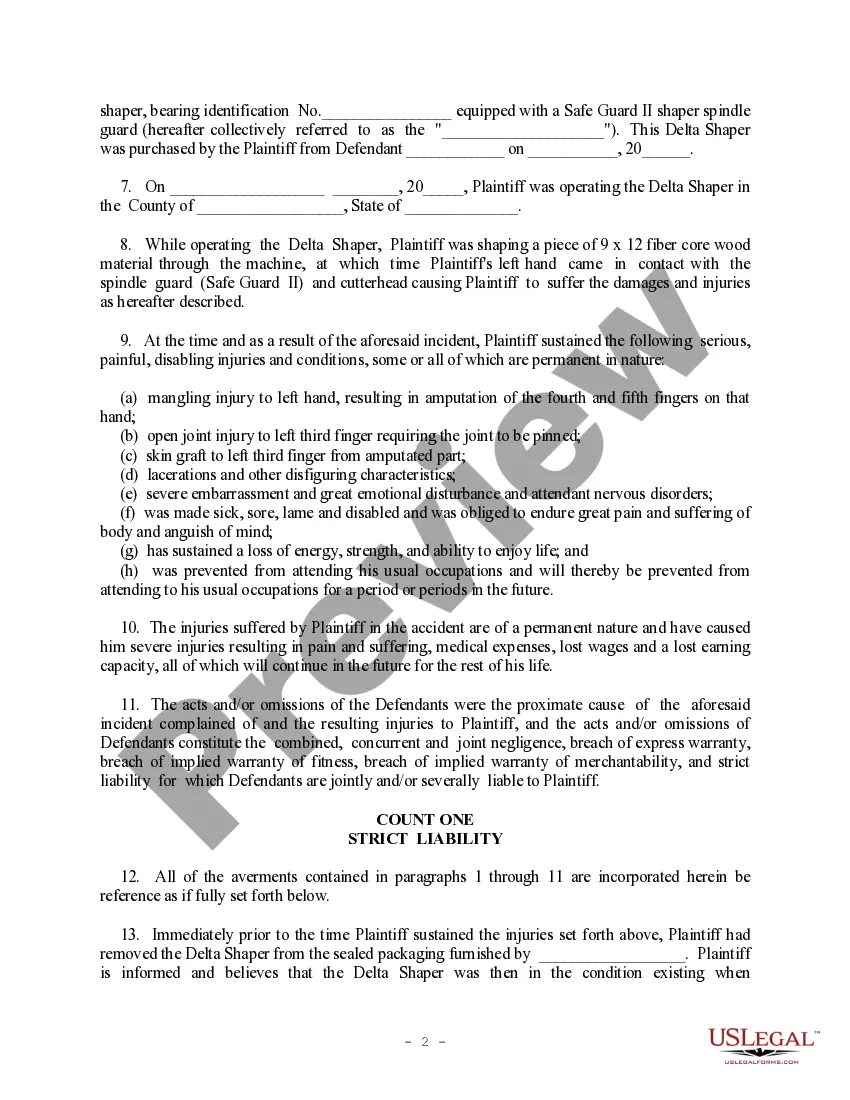
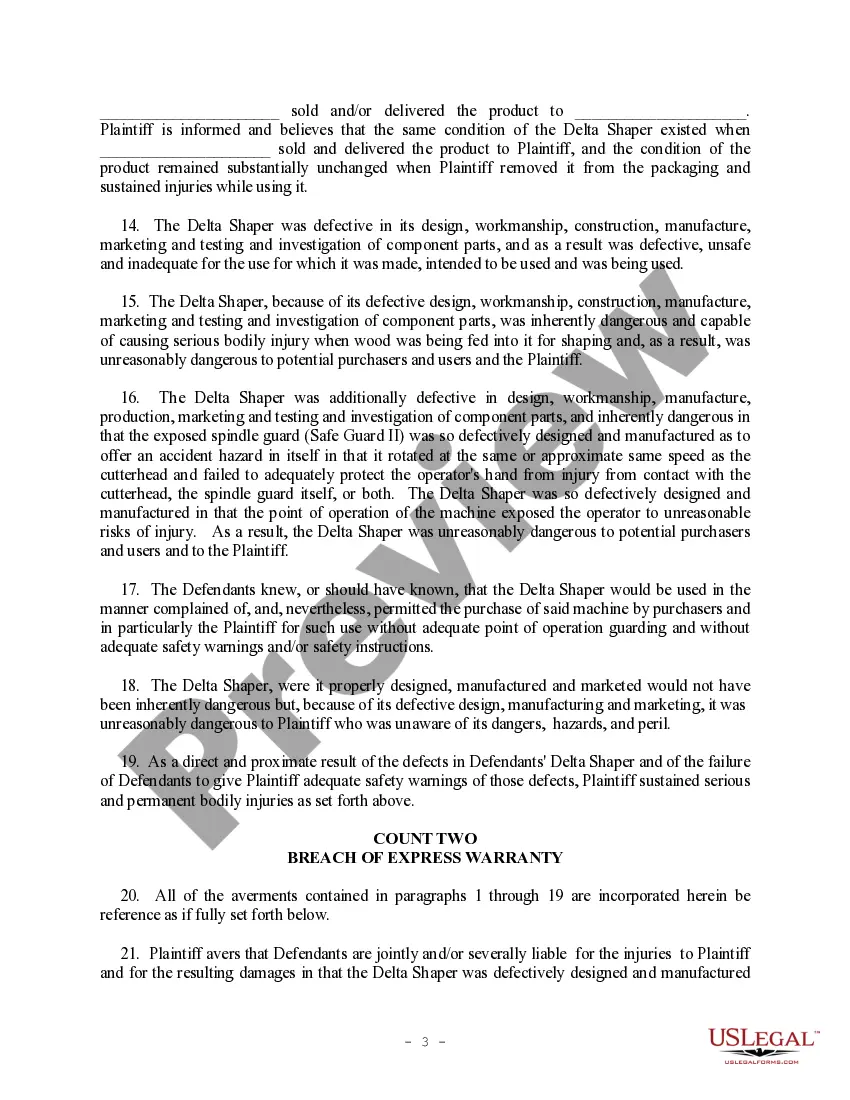
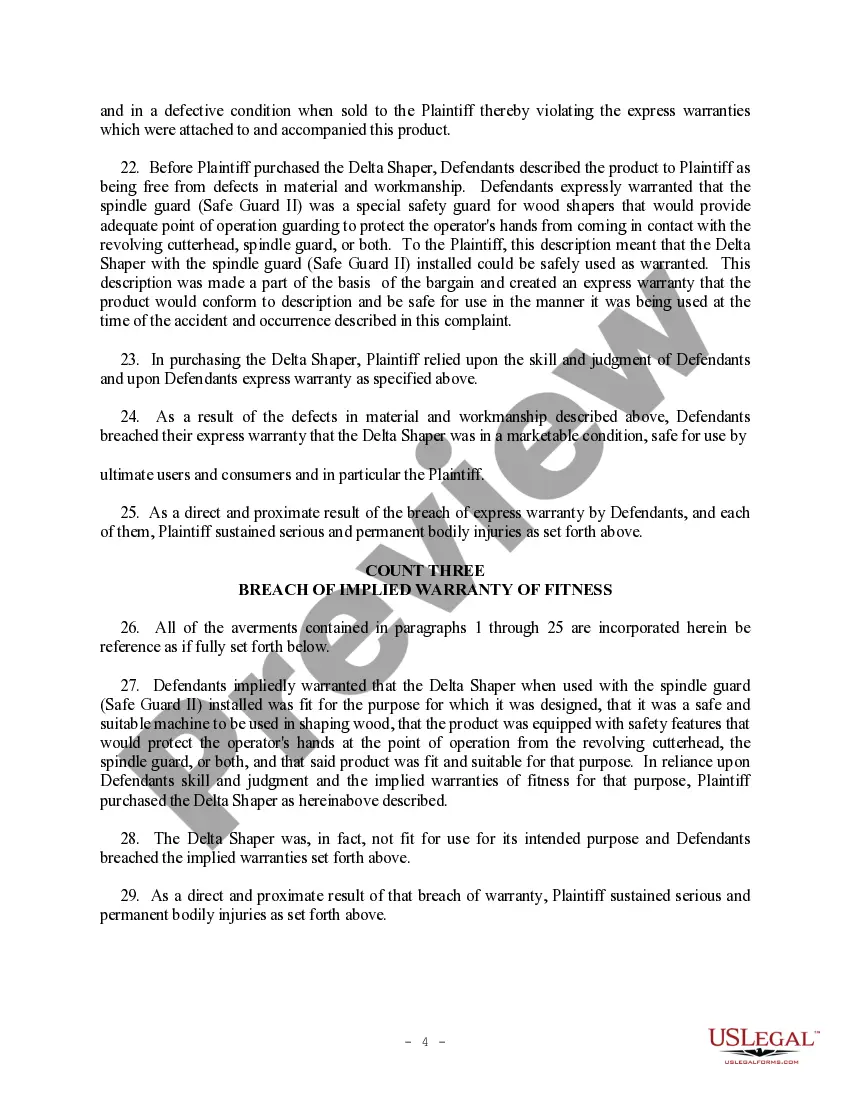
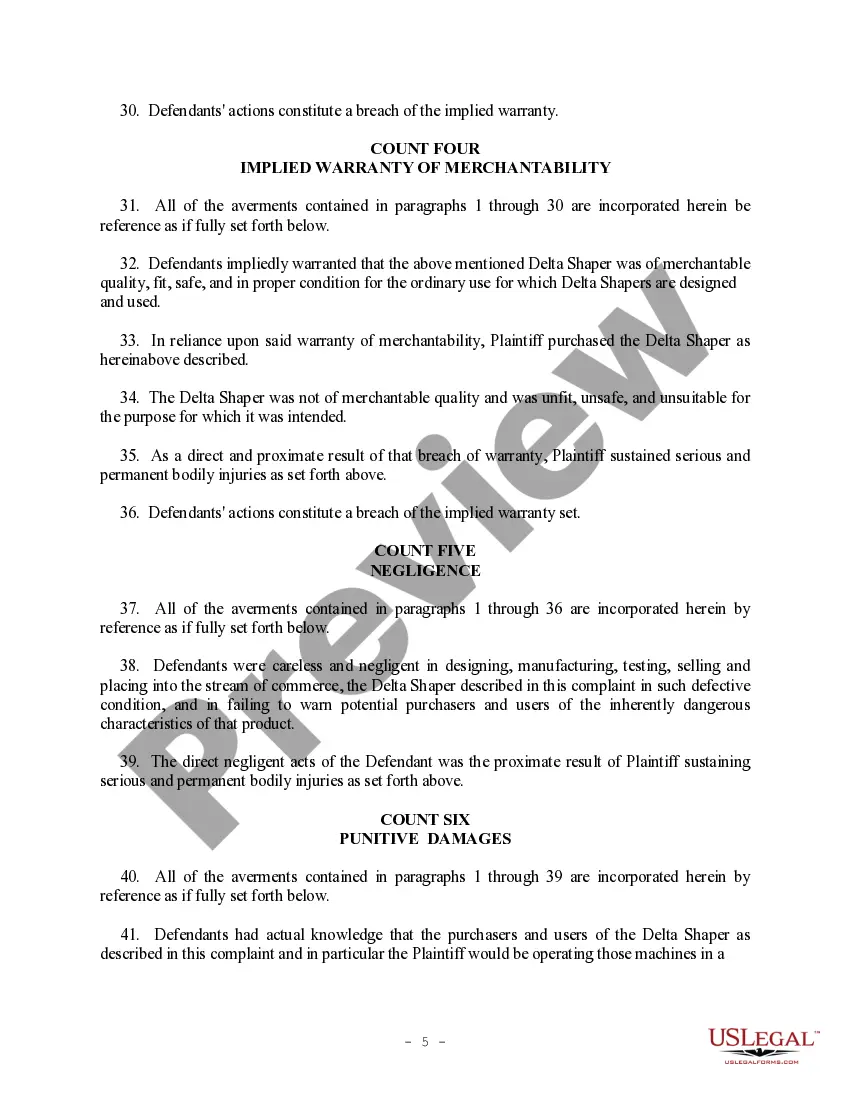
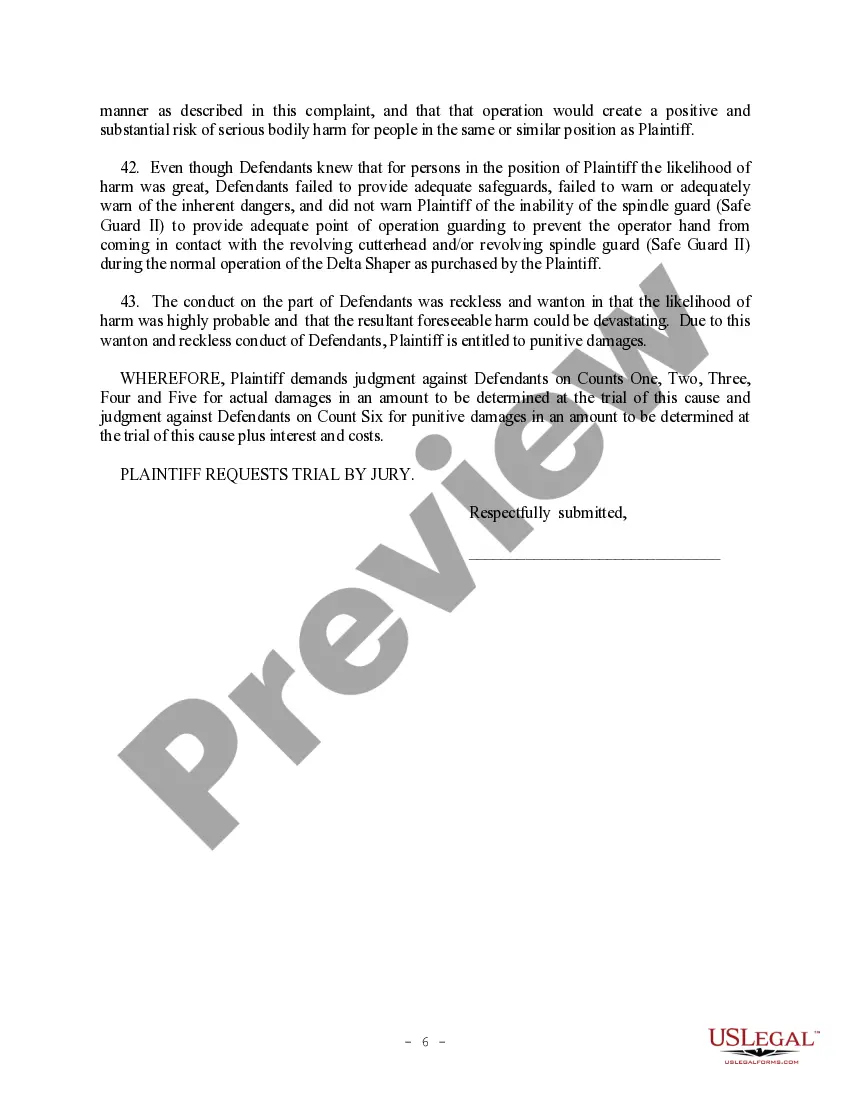
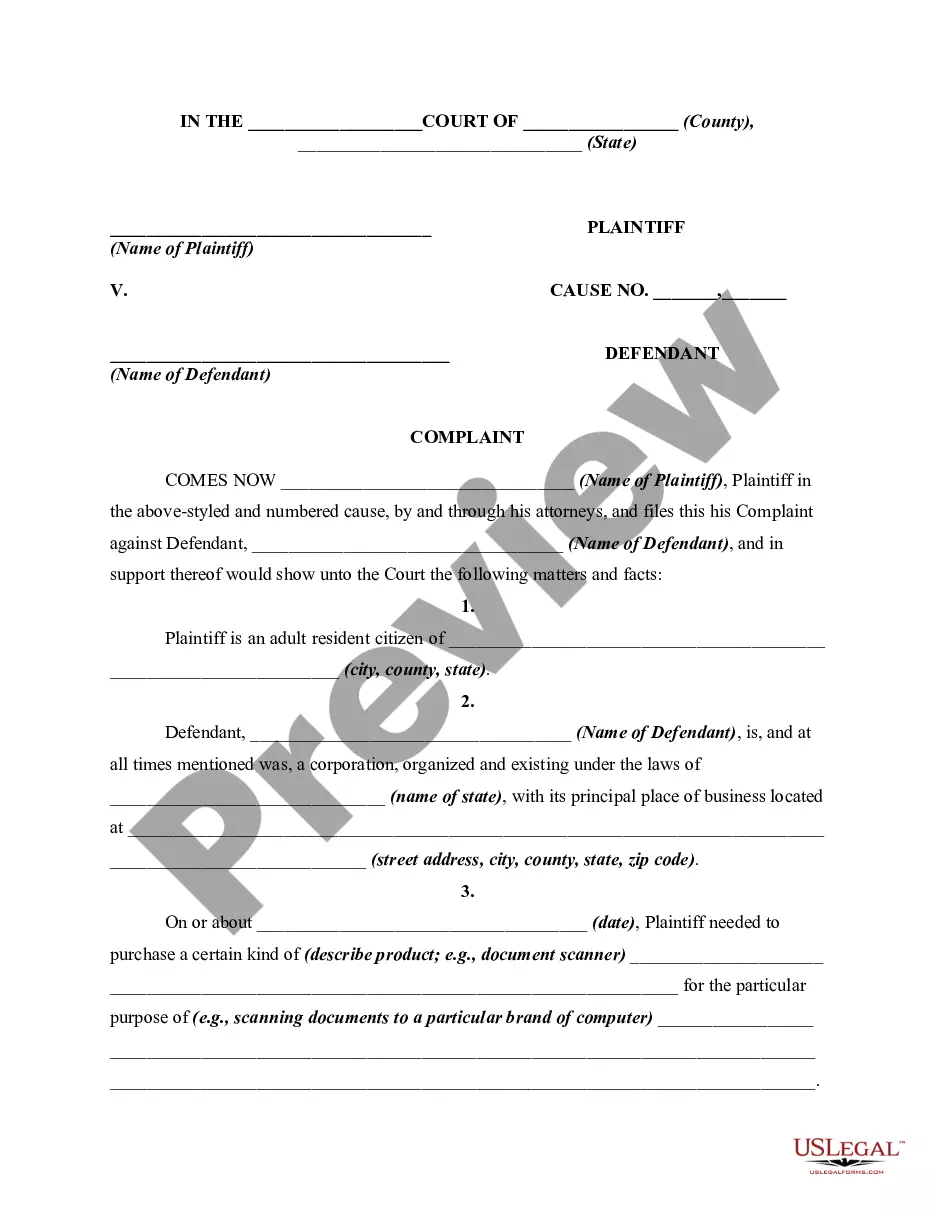
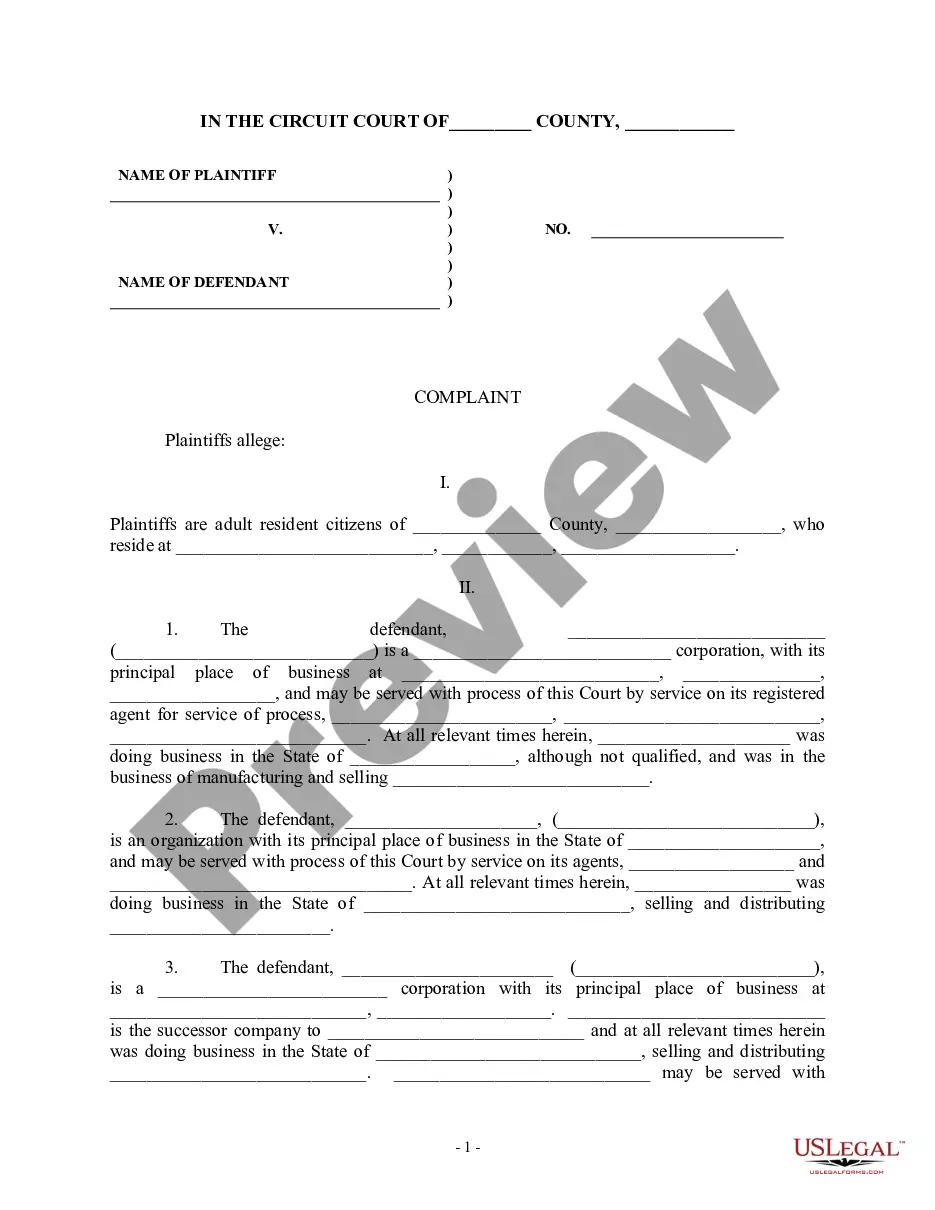
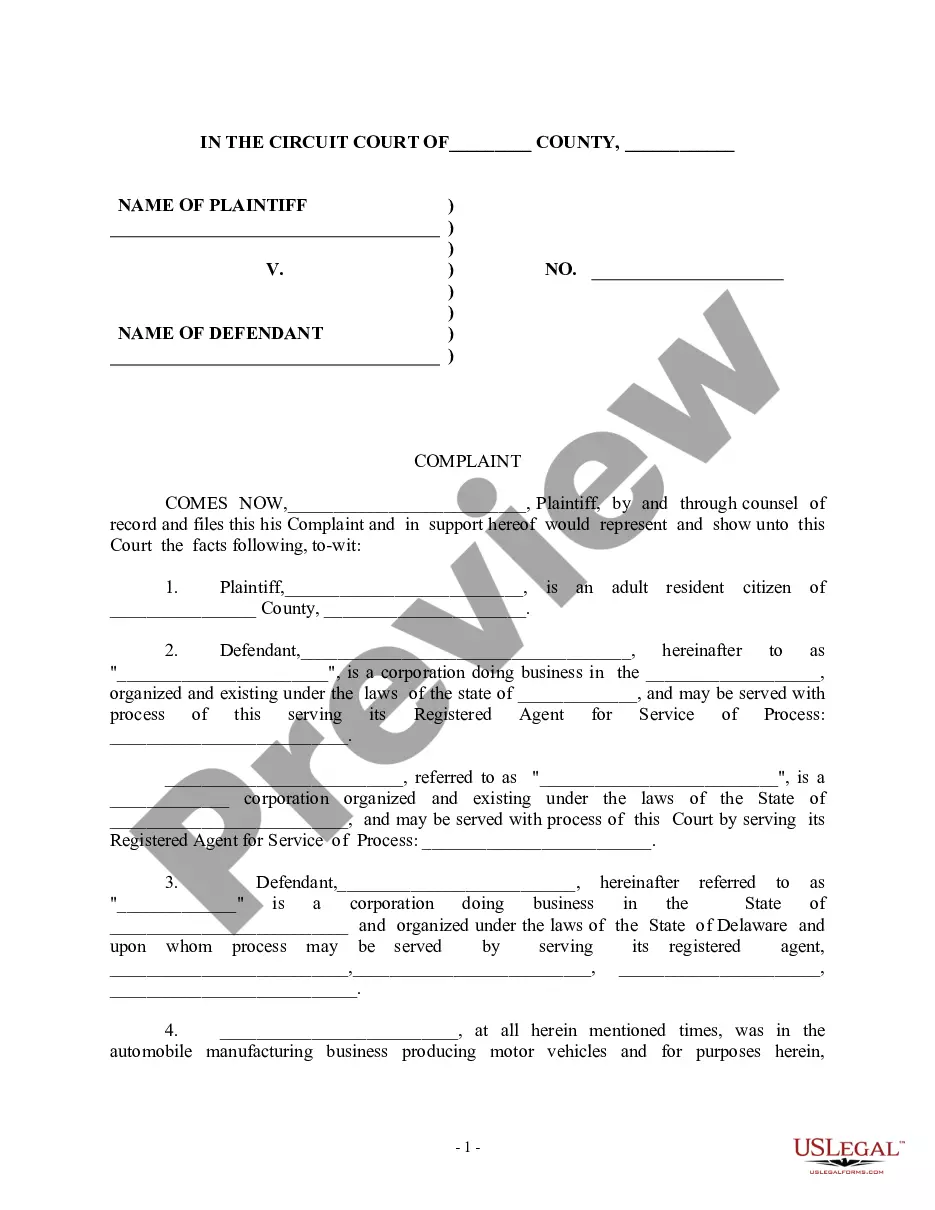
This Complaint regarding Strict Product Liability for Breach of Expressed Warranty, Implied Warranty, Merchantability, Negligence, and Punitive Damages is a legal document used by individuals seeking compensation for injuries or damages caused by a defective product. This form specifically addresses claims related to the Delta Wood industrial woodworking machinery, focusing on claims of negligence, breach of warranties, and strict liability. It differs from other product liability forms by detailing multiple legal grounds for seeking damages, including evidence of a defective design and failure to provide adequate safety warnings.
Main sections of this form
- Identification of the Plaintiff and Defendant, including residency and business information.
- Detailed account of the incident leading to the injury, including the specific product and circumstances of its use.
- Claims of strict liability, breach of expressed and implied warranties, negligence, and punitive damages.
- Specific details regarding the injuries sustained and the impact on the Plaintiff's life.
- Request for a jury trial and the nature of damages sought.
Situations where this form applies
This form should be used when a consumer sustains injuries or damages due to a defective product, such as the Delta Wood machinery described. It is particularly relevant in situations where the consumer has experienced significant injuries while using the product, resulting in medical expenses, lost wages, and pain and suffering attributable to design flaws or negligence by the manufacturer or seller. Use this form if you are considering legal action to recover damages from a company due to product liability claims.
Who can use this document
This form is intended for:
- Individuals who have been injured while using the Delta Wood machinery.
- Consumers seeking compensation for damages resulting from product defects.
- Legal representatives acting on behalf of injured parties in product liability cases.
Completing this form step by step
To complete this Complaint regarding Strict Product Liability, follow these steps:
- Identify and provide the names of the Plaintiff and the Defendant, including their addresses and residency information.
- Describe the nature of the product and the specific incident that led to the injury.
- Outline the claims being made against the Defendant, detailing the negligence, warranty breaches, and any resultant injuries.
- Specify the damages sought, including medical expenses, lost wages, and pain and suffering.
- Ensure to sign and date the form appropriately, and prepare for submission to the court.
Does this form need to be notarized?
This form does not typically require notarization unless specified by local law. Ensure you review any local requirements that may necessitate notarization prior to submission.
Get your form ready online
Our built-in tools help you complete, sign, share, and store your documents in one place.
Make edits, fill in missing information, and update formatting in US Legal Forms—just like you would in MS Word.
Download a copy, print it, send it by email, or mail it via USPS—whatever works best for your next step.
Sign and collect signatures with our SignNow integration. Send to multiple recipients, set reminders, and more. Go Premium to unlock E-Sign.
If this form requires notarization, complete it online through a secure video call—no need to meet a notary in person or wait for an appointment.
We protect your documents and personal data by following strict security and privacy standards.

Make edits, fill in missing information, and update formatting in US Legal Forms—just like you would in MS Word.

Download a copy, print it, send it by email, or mail it via USPS—whatever works best for your next step.

Sign and collect signatures with our SignNow integration. Send to multiple recipients, set reminders, and more. Go Premium to unlock E-Sign.

If this form requires notarization, complete it online through a secure video call—no need to meet a notary in person or wait for an appointment.

We protect your documents and personal data by following strict security and privacy standards.
Avoid these common issues
- Failing to accurately identify all parties involved in the lawsuit.
- Not providing sufficient details about the incident and sustaining injuries.
- Omitting the basis for claims, such as specific breaches of warranty or negligence.
- Neglecting to specify the damages or losses incurred.
Why complete this form online
- Conveniently complete the form online, saving time compared to paper forms.
- Edit and customize the document to suit your particular case.
- Access legal forms developed by licensed attorneys, ensuring reliability and accuracy.
The legal framework surrounding product liability varies by state, but this Complaint is grounded in established tort principles. It is based on proving that the product was defective and caused harm due to the negligence or failure to warn by the defendant. Adhering to local laws is crucial for enforceability.
Key takeaways
- The form is essential for those seeking damages for injuries caused by defective products.
- It outlines multiple legal claims within a single document to strengthen your case.
- Always review state-specific requirements for submission.
- Provide detailed accounts of the incident and injuries for the best chance of recovery.
Looking for another form?
Form popularity
FAQ
If a warranty is breached, the aggrieved party is not normally entitled to terminate the contract (unless it can be shown that the breach goes to the 'heart of the contract'), but may be entitled to claim damages for breach of contract (see below).
A breach of a warranty will not allow for termination, no matter how serious the breach may be.The breach must go to the root of the contract, frustrate its commercial purpose or deprive the innocent party of substantially the whole of its benefit. If it doesn't, the remedy will be damages.
The warranty of merchantability is based off the idea that the seller is in a better state to know whether a product will perform properly. It encourages merchants to ensure the quality of their products before placing them on the market.
As a default, the remedies for a breach of a warranty are indemnification, termination (requires a material breach) or proportionate reduction of the purchase price. The purchase agreement usually will limit the remedy for breaches to indemnification.
Breach of warranty is the violation of an express or implied contract of warranty, and thus it is a breach of contract. In other words, it occurs when the warrantor fails to provide the assurance warranted. A seller can expressly or implicitly assure the buyer about the quality or title of an item sold.
An implied warranty of merchantability is an unwritten and unspoken guarantee to the buyer that goods purchased conform to ordinary standards of care and that they are of the same average grade, quality, and value as similar goods sold under similar circumstances.
The effect of a breach of a warranty is that the aggrieved party cannot repudiate the whole contract however, can claim for the damages. Unlike in the case of breach of condition, in the breach of warranty, the buyer cannot treat the goods as repudiated.
1. A breach of warranty gives rise to a claim for damages but not to a right to reject the goods and treat the contract as repudiated.