Alibi
What is this form?
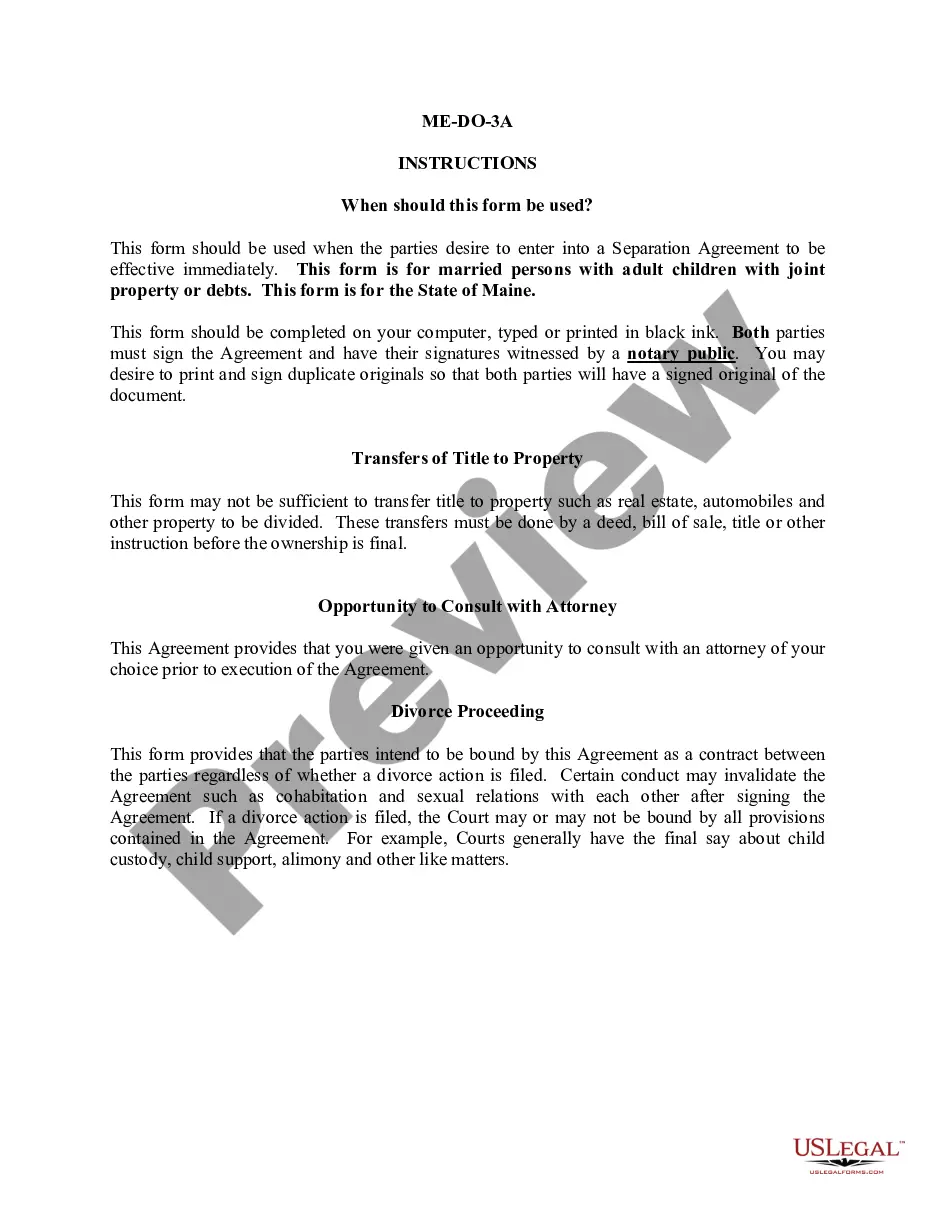
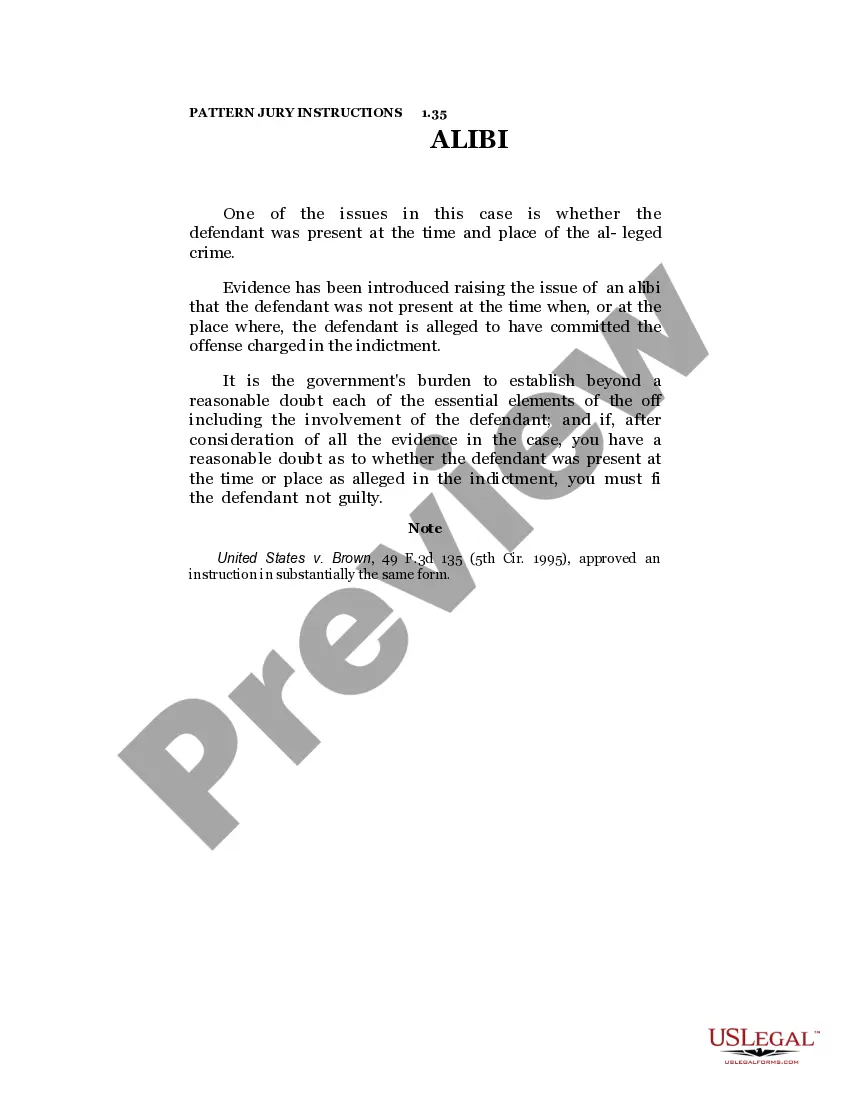
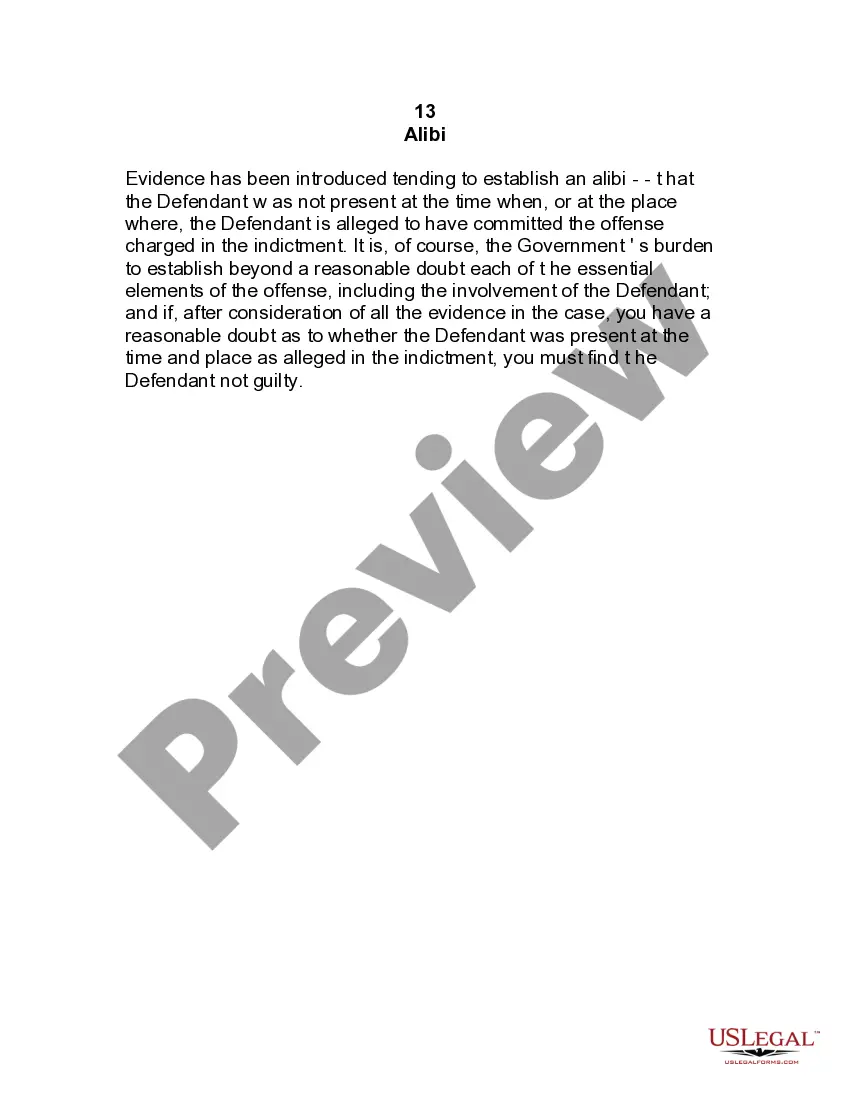
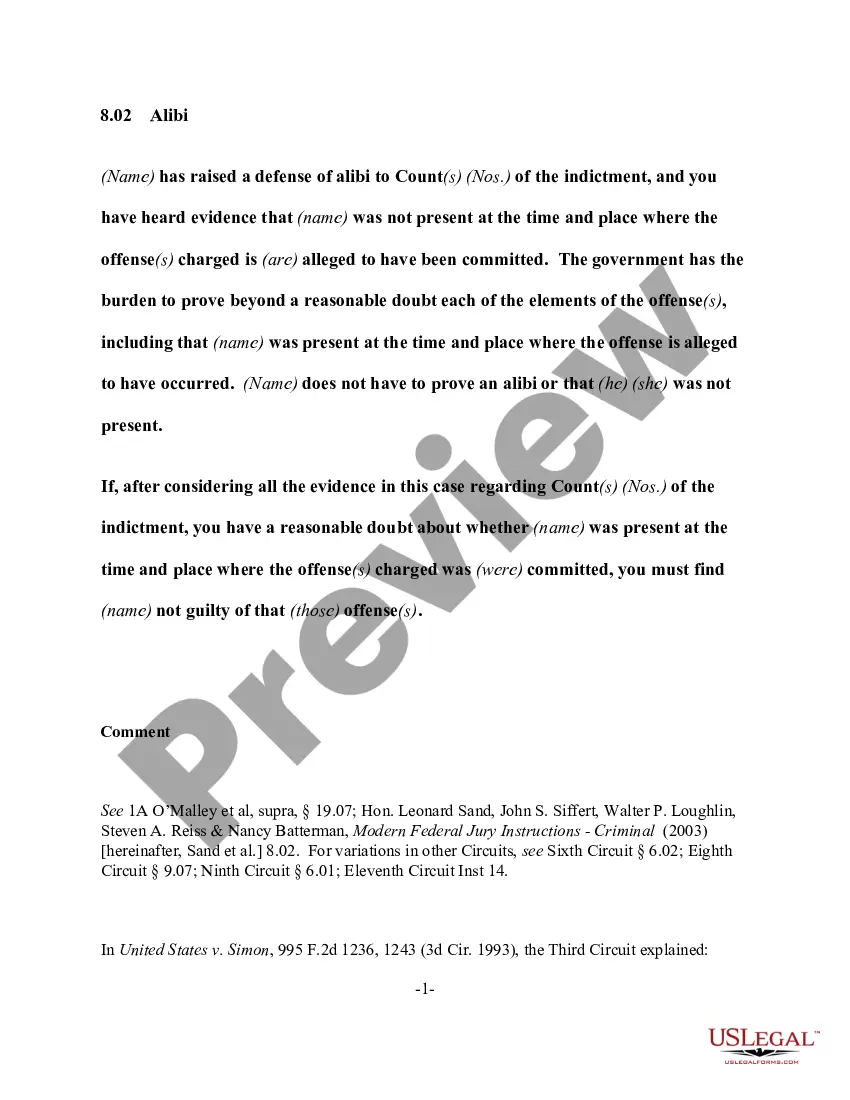
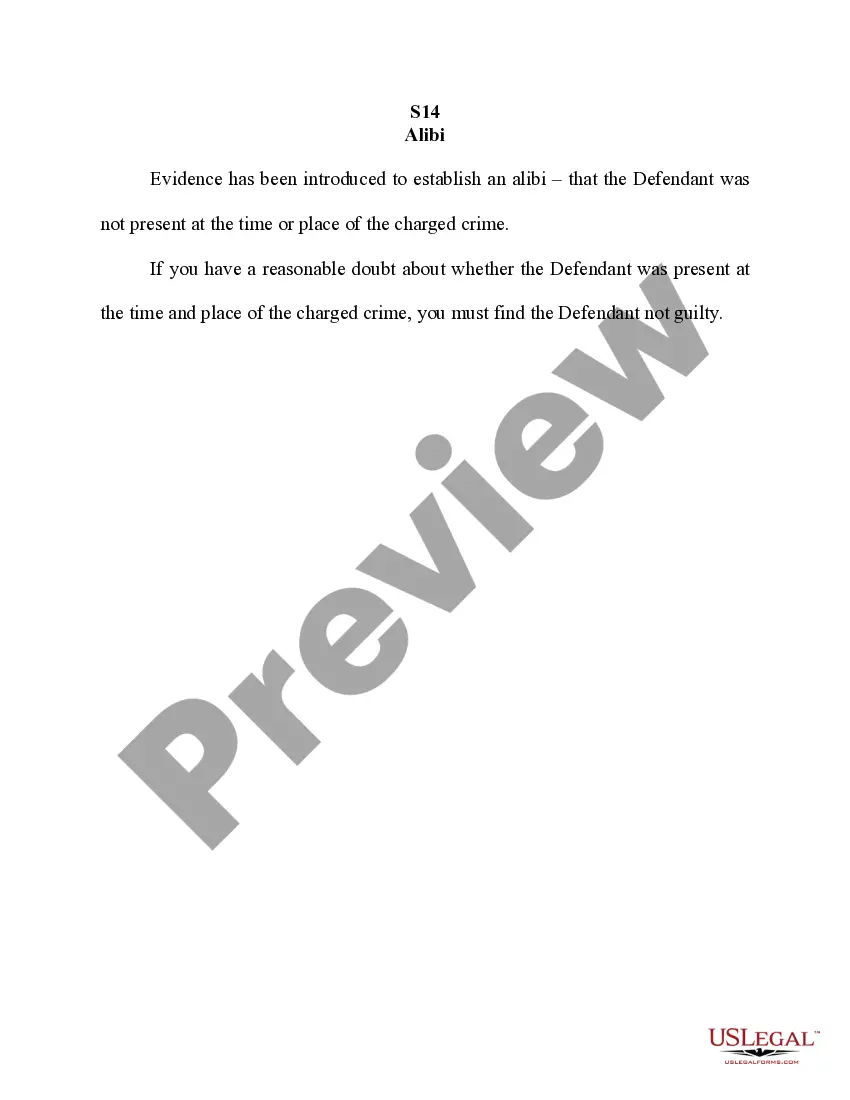
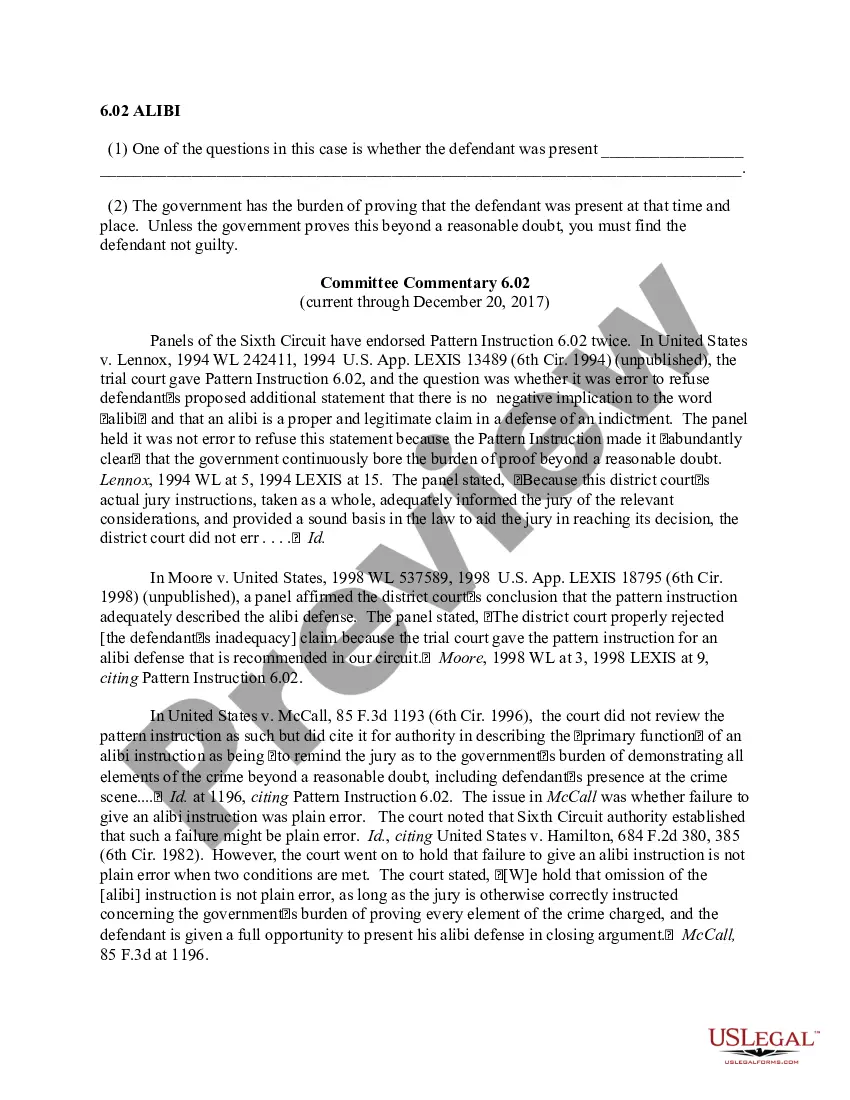
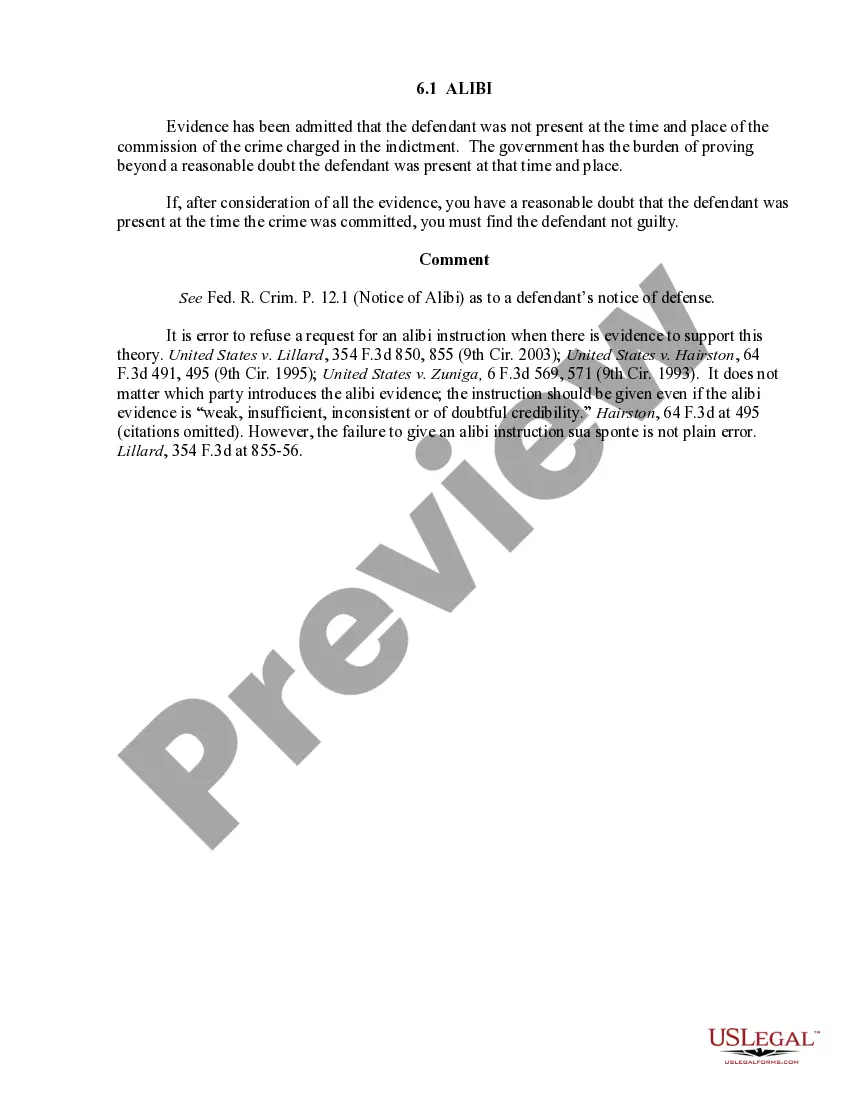
The Alibi form is a legal document that asserts the defendant's presence at a different location than where the alleged crime occurred. This form is crucial for establishing an alibi in criminal cases, indicating that the defendant could not have committed the offense charged in the indictment due to their absence from the scene. It serves to inform the court of the defendant's claim regarding their whereabouts, differentiating it from other legal forms used in criminal defense.
Key components of this form
- Defendant's information: Details identifying the defendant involved in the case.
- Claim of alibi: A clear statement specifying the time and location where the defendant was allegedly present.
- Supporting evidence: Any evidence, such as witness statements or documents, to support the alibi claim.
- Burden of proof: A reminder that the prosecution must prove the defendant's guilt beyond a reasonable doubt.
Situations where this form applies
This form should be used when a defendant needs to present a defense claiming they were not at the location where the crime took place. It is typically employed in criminal cases where the timing and location of the defendant are crucial for establishing their innocence.
Intended users of this form
- Defendants in criminal cases who wish to assert an alibi.
- Defense attorneys preparing a case for their clients.
- Individuals who have credible evidence or witnesses to support their alibi claims.
Completing this form step by step
- Identify the defendant: Fill in the name and any identifying information about the defendant.
- Provide the alibi details: Clearly state the time, date, and location where the defendant claims to have been.
- List supporting evidence: Include any evidence or documentation, such as witness names or records, that support the alibi.
- Sign and date the form: Ensure that the form is signed and dated by the defendant or their attorney.
Does this document require notarization?
In most cases, this form does not require notarization. However, some jurisdictions or signing circumstances might. US Legal Forms offers online notarization powered by Notarize, accessible 24/7 for a quick, remote process.
Get your form ready online
Our built-in tools help you complete, sign, share, and store your documents in one place.
Make edits, fill in missing information, and update formatting in US Legal Forms—just like you would in MS Word.
Download a copy, print it, send it by email, or mail it via USPS—whatever works best for your next step.
Sign and collect signatures with our SignNow integration. Send to multiple recipients, set reminders, and more. Go Premium to unlock E-Sign.
If this form requires notarization, complete it online through a secure video call—no need to meet a notary in person or wait for an appointment.
We protect your documents and personal data by following strict security and privacy standards.

Make edits, fill in missing information, and update formatting in US Legal Forms—just like you would in MS Word.

Download a copy, print it, send it by email, or mail it via USPS—whatever works best for your next step.

Sign and collect signatures with our SignNow integration. Send to multiple recipients, set reminders, and more. Go Premium to unlock E-Sign.

If this form requires notarization, complete it online through a secure video call—no need to meet a notary in person or wait for an appointment.

We protect your documents and personal data by following strict security and privacy standards.
Common mistakes to avoid
- Failing to provide sufficient details about the alibi location.
- Omitting evidence or witness information that could support the claim.
- Not signing or dating the form, which may render it invalid.
Why complete this form online
- Convenience: Download and fill out the form at your own pace from anywhere.
- Editability: Easily make changes or updates as needed.
- Reliable: Access templates that have been drafted by licensed attorneys to ensure compliance and accuracy.
Looking for another form?
Form popularity
FAQ
: an excuse usually intended to avert blame or punishment (as for failure or negligence) made up an alibi for why she missed the meeting.
Alibi (n.) 1743, "a plea of having been elsewhere when an action took place," from Latin alibi (adv.) "elsewhere, somewhere else," locative of alius "another, other, different" (from PIE root al- (1) "beyond").
Alibi evidence can also include non-witness testimony, such as photographs, credit card receipts, videos, signatures on contracts, cell phone data location, employment time cards, etc., all of which may be used to prove that the defendant was not near the location of the alleged offense when the offense was committed.
Did you know? In Latin, alibi was an adverb that meant ?elsewhere.? When the word was first adopted into English in the 18th century, it was still limited to its adverbial use. A person on trial might be said to prove himself alibi when the crime was committed.
Alibi as a noun is defined as a defense to a criminal charge alleging that the accused was somewhere other than at the scene of the crime at the time it occurred. For example, A could not confirm B's alibi that B was at the dentist office at the time of the robbery.
In simplest terms, an alibi is merely evidence that demonstrates a defendant in a criminal case was somewhere other than the scene of a crime at the time that the crime occurred. For example, John is charged with killing Steve. John offers evidence that he was in class that day at the time of the murder.
Examples of an Alibi Defense Witnesses could include Bill's boss, co-workers or the owner of the property ? any credible witness who knows Bill was at the site and did not leave around the time of the crime. Bill is not required to testify on his own behalf to raise this defense.
Alibi as a noun is defined as a defense to a criminal charge alleging that the accused was somewhere other than at the scene of the crime at the time it occurred. For example, A could not confirm B's alibi that B was at the dentist office at the time of the robbery.
Here are three examples of good alibis and how you can get legal help as a person of interest to law enforcement authorities. A Store Receipt. A store receipt is one way to prove that you weren't at the scene of the crime at the alleged time it occurred.Security Camera Footage.A Witness Statement.