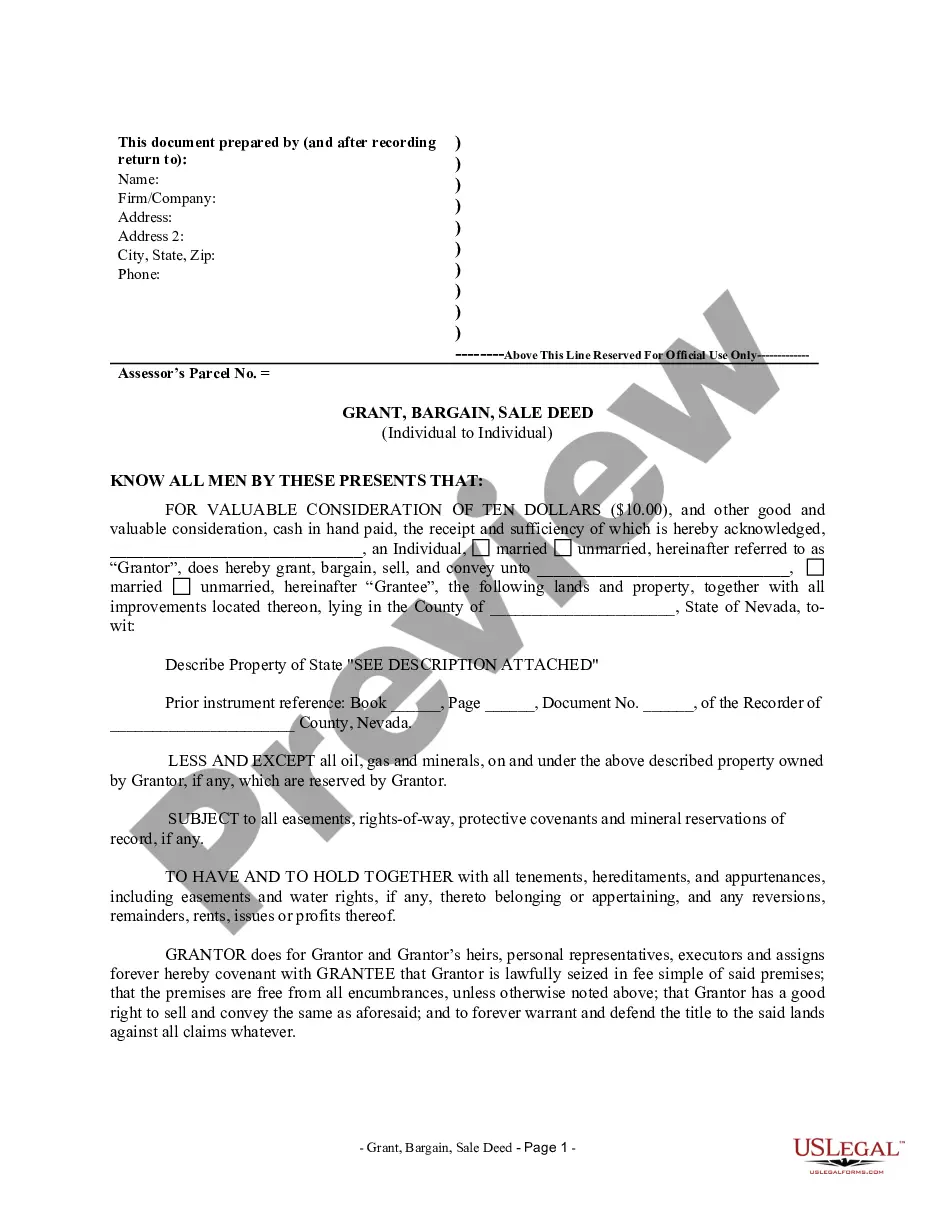
ALIBI
What this document covers
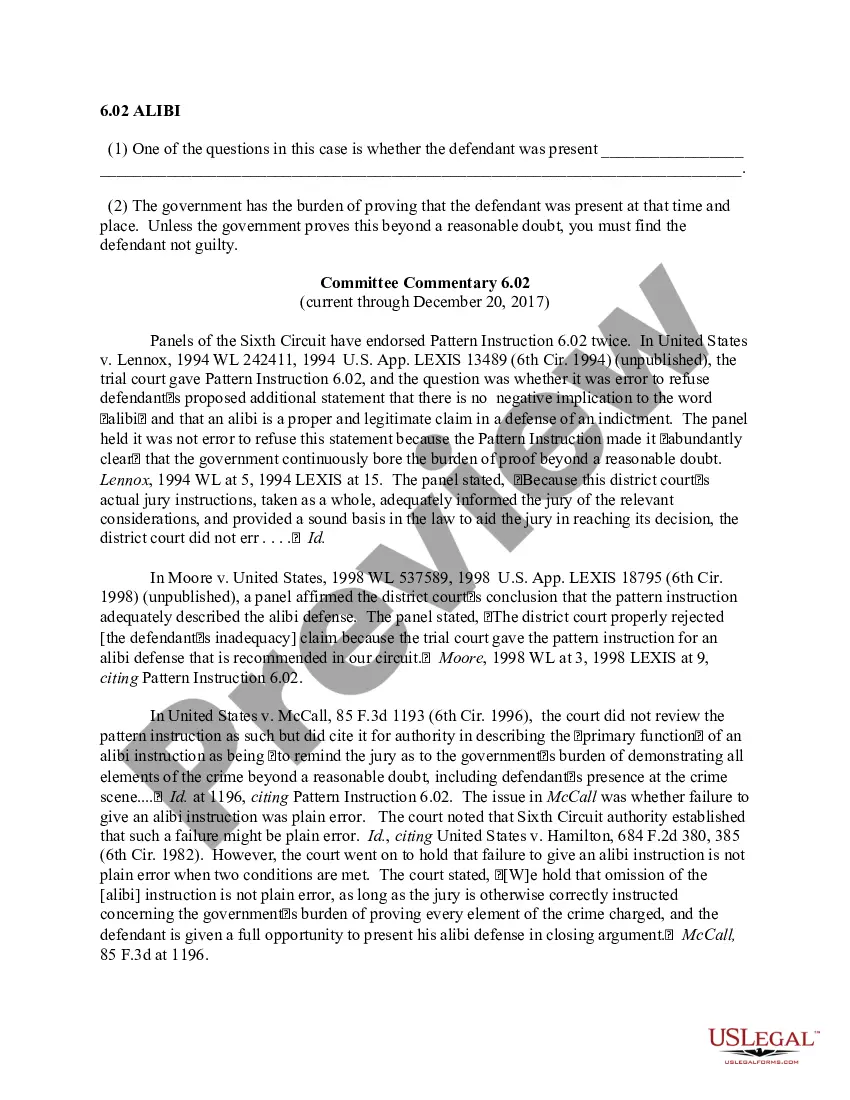
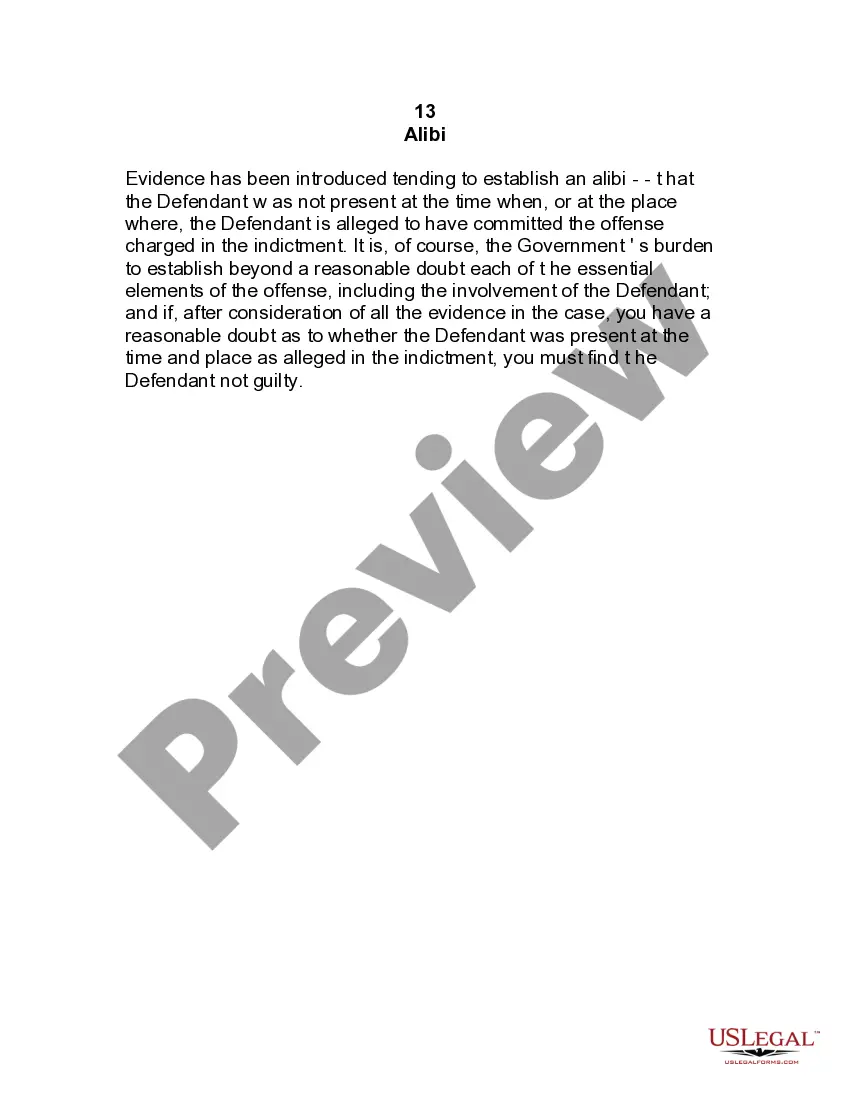
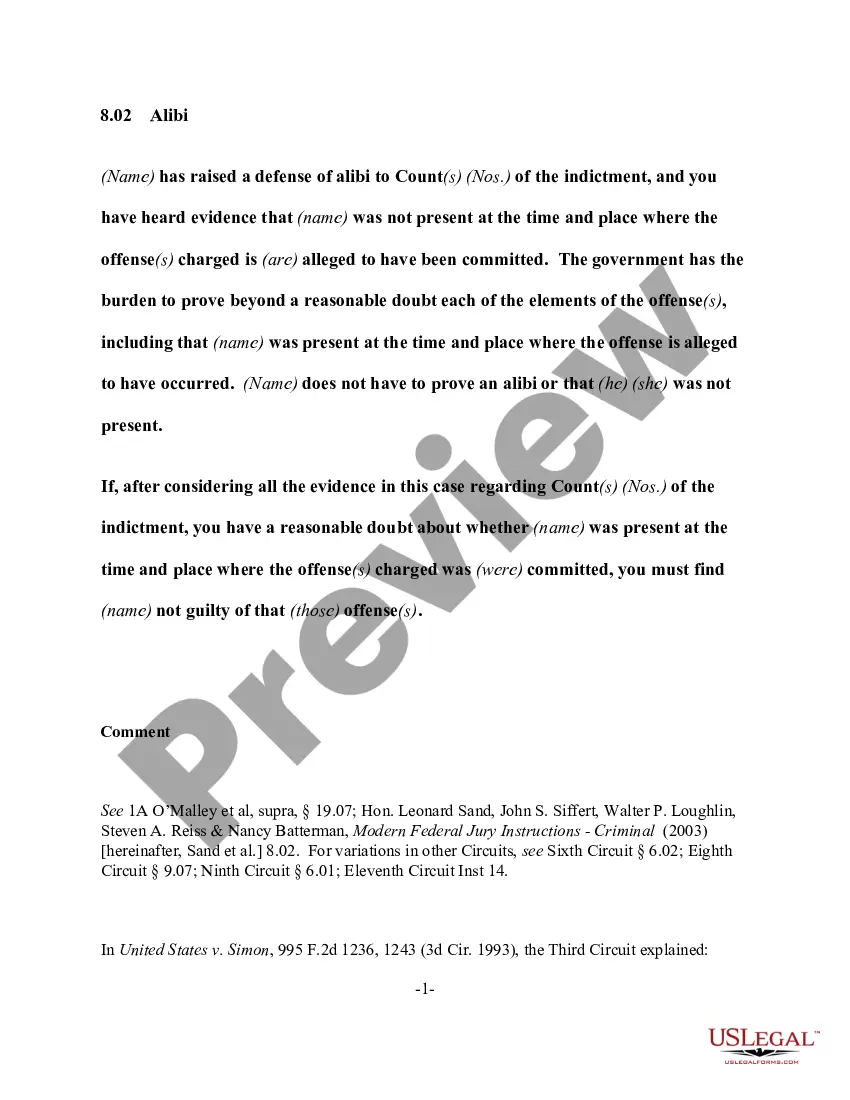
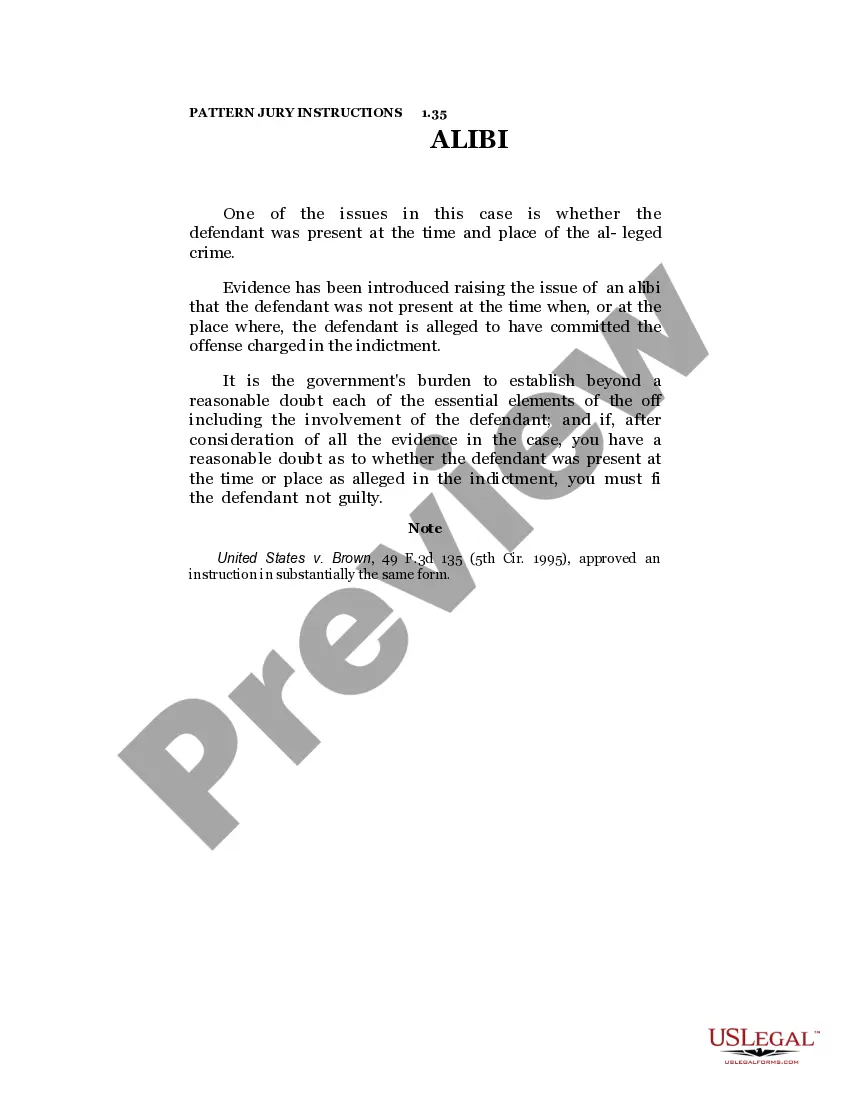
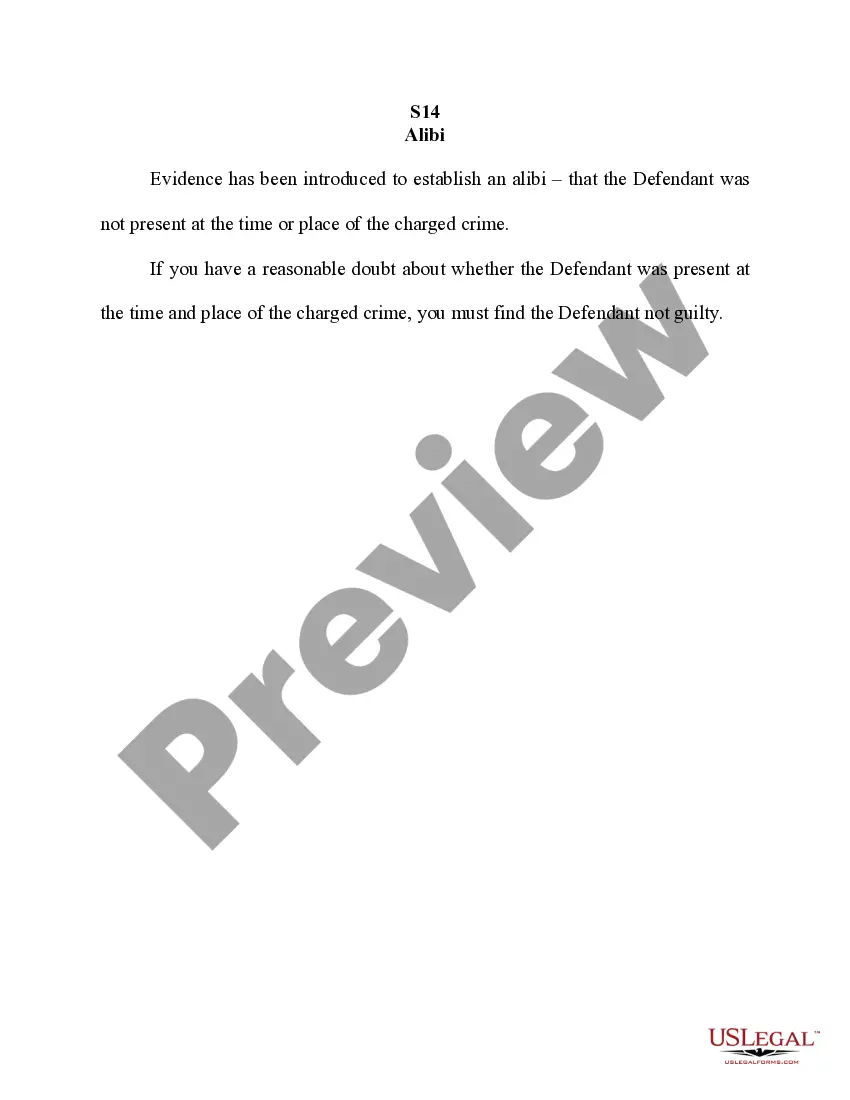
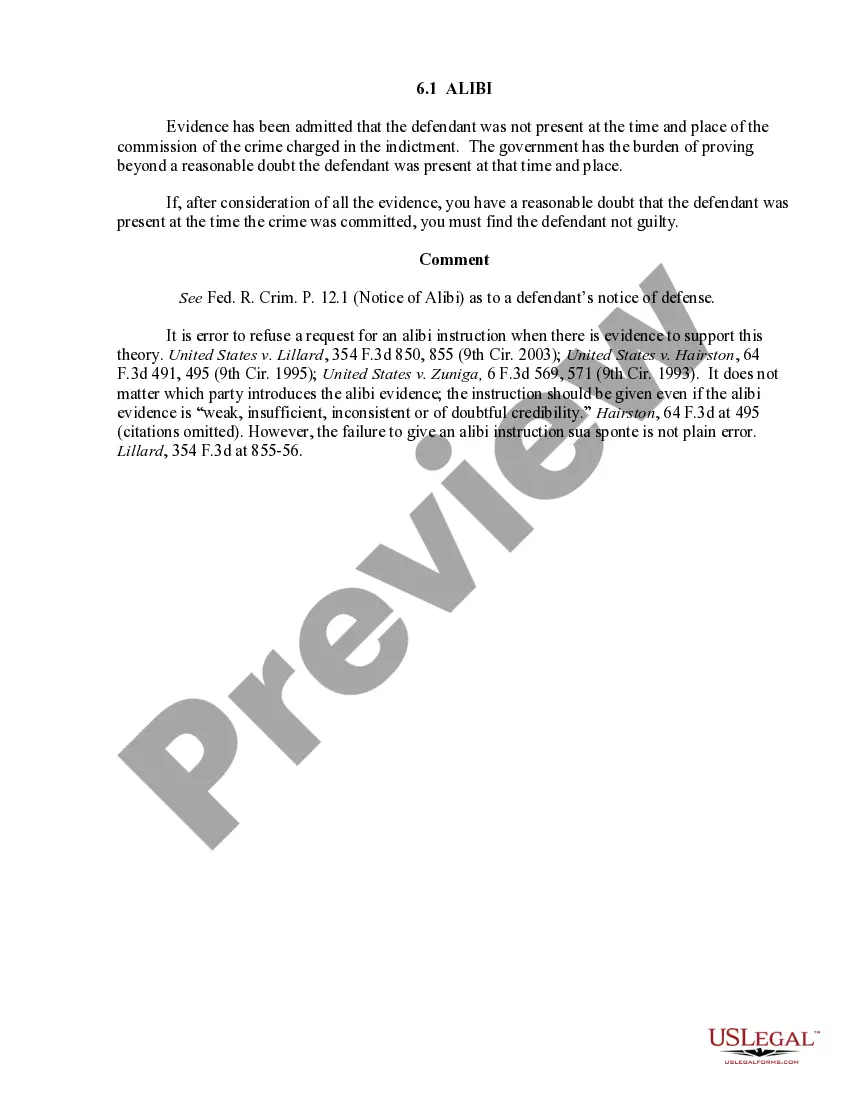
The ALIBI form is a legal instruction used in criminal defense cases to assert that the defendant was not present at the crime scene at the time the crime occurred. This form emphasizes the government's responsibility to prove the presence of the defendant beyond a reasonable doubt. It differs from other legal forms as it serves as a clear guideline for judges and juries about the burden of proof in an alibi defense, ensuring that the defendant's claims are judicially acknowledged and properly considered during the trial process.
Key parts of this document
- Section outlining the importance of the defendant's presence at the crime scene.
- Explanation of the government's burden to prove the defendant's presence.
- Clarification of the reasonable doubt standard.
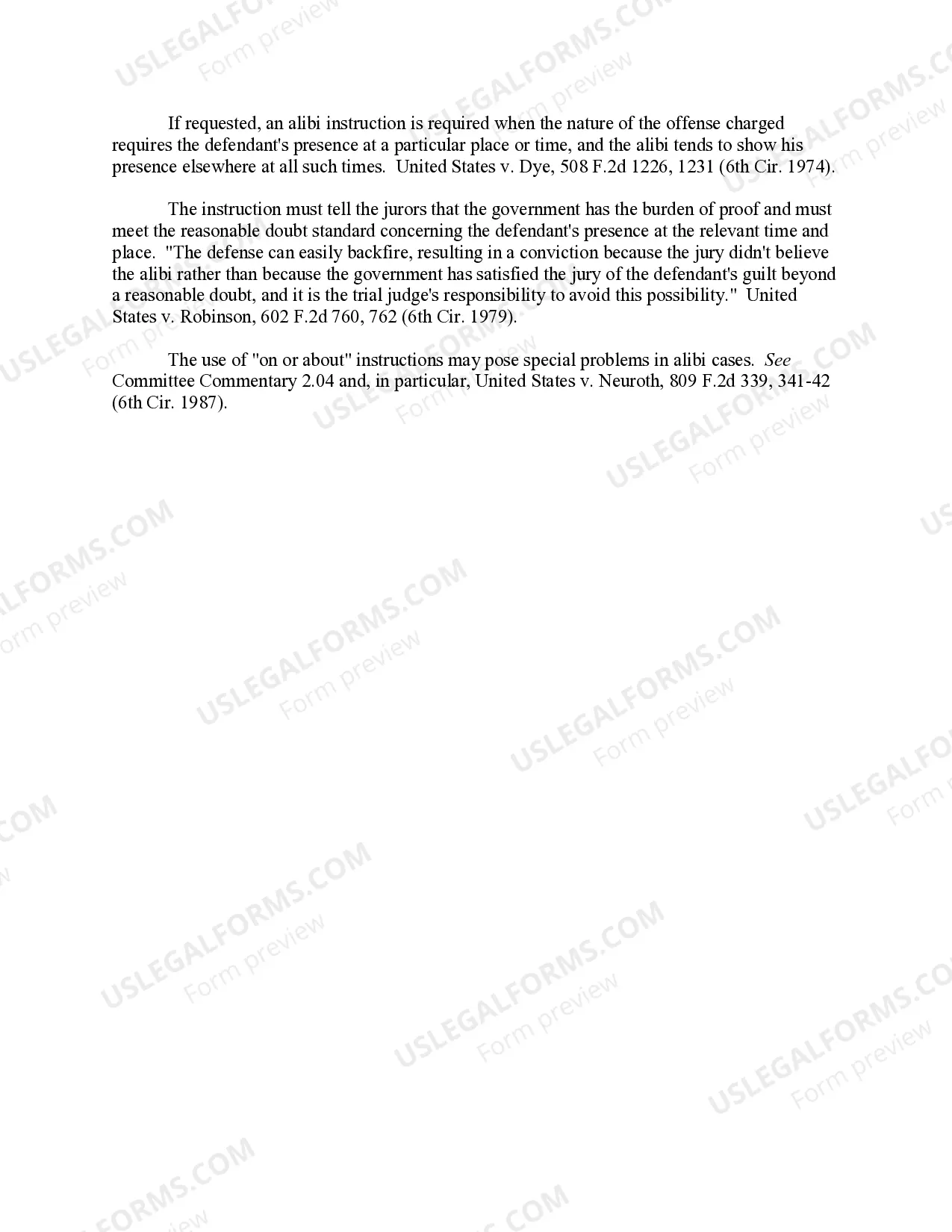
- Judicial commentary on the use and significance of the alibi defense.
- Guidelines on when an alibi instruction must be requested during a trial.
When to use this form
This form is used in criminal cases where the defendant claims to have been elsewhere at the time the crime was committed. It applies in situations where establishing a physical presence is crucial to the defense, such as in assaults, thefts, or murders. If the defense has evidence of the defendant's location that can serve as an alibi, this form should be utilized to inform jurors of the relevant legal standards regarding the burden of proof.
Who this form is for
- Defendants in a criminal case who are asserting an alibi as part of their defense.
- Attorneys representing clients who need to instruct the jury regarding the proper consideration of alibi evidence.
- Legal professionals looking to ensure that the jury understands the applicable burden of proof associated with an alibi defense.
Steps to complete this form
- Clearly state the defendant's alibi and the specific times and places where they claim to have been.
- Provide any supporting evidence or witnesses that can corroborate the alibi.
- Include relevant legal references or case law that support the necessity of the alibi instruction.
- Ensure that all parties involved in the trial are adequately informed of the alibi defense.
- Submit the completed form to the court as part of the defense's argument during the trial.
Notarization guidance
Notarization is not commonly needed for this form. However, certain documents or local rules may make it necessary. Our notarization service, powered by Notarize, allows you to finalize it securely online anytime, day or night.
Get your form ready online
Our built-in tools help you complete, sign, share, and store your documents in one place.
Make edits, fill in missing information, and update formatting in US Legal Forms—just like you would in MS Word.
Download a copy, print it, send it by email, or mail it via USPS—whatever works best for your next step.
Sign and collect signatures with our SignNow integration. Send to multiple recipients, set reminders, and more. Go Premium to unlock E-Sign.
If this form requires notarization, complete it online through a secure video call—no need to meet a notary in person or wait for an appointment.
We protect your documents and personal data by following strict security and privacy standards.

Make edits, fill in missing information, and update formatting in US Legal Forms—just like you would in MS Word.

Download a copy, print it, send it by email, or mail it via USPS—whatever works best for your next step.

Sign and collect signatures with our SignNow integration. Send to multiple recipients, set reminders, and more. Go Premium to unlock E-Sign.

If this form requires notarization, complete it online through a secure video call—no need to meet a notary in person or wait for an appointment.

We protect your documents and personal data by following strict security and privacy standards.
Common mistakes to avoid
- Failing to accurately document the time and place of the alibi.
- Not providing sufficient evidence or witness testimony to support the alibi.
- Overlooking the need to request the alibi instruction formally during the trial.
- Misunderstanding the burden of proof, allowing the prosecution's case to go unchallenged.
Benefits of using this form online
- Convenient access to a legal document drafted with input from licensed attorneys.
- Editable templates that allow users to customize the form to their specific needs.
- Immediate downloads, enabling prompt use in legal proceedings.
- Improved accuracy by using a professionally drafted format, which can lead to better outcomes in court.
Legal use & context
- This alibi instruction is recognized in various circuits, especially within the Sixth Circuit, and its use is backed by case law.
- An appropriate alibi defense can significantly impact the outcome of a trial by shifting the burden back to the prosecution.
- The legal framework surrounding this form is meant to guide jurors in understanding the importance of the government's burden to prove a case beyond a reasonable doubt.
Summary of main points
- The ALIBI form is crucial for defendants who need to assert their absence from a crime scene.
- Jurors must be informed about the prosecution's burden of proof regarding the defendant's presence.
- Proper completion and use of this form can safeguard against wrongful convictions based on insufficient proof.
Looking for another form?


Form popularity
FAQ
Alibi evidence can also include non-witness testimony, such as photographs, credit card receipts, videos, signatures on contracts, cell phone data location, employment time cards, etc., all of which may be used to prove that the defendant was not near the location of the alleged offense when the offense was committed.
In the U.S. military the term "alibi" is used in a briefing after everyone has had a chance to speak and the speaker or moderator, before closing, asks if there are any alibis, i.e. if anyone has any last comment that they may have failed to bring up earlier for whatever reason.
Examples of evidence you can use to back up your alibi include: Eyewitnesses?people who attest under oath that they saw you somewhere else when the crime occurred; Time-stamped pictures or video footage placing you at another location at the time of the crime; and.
Plural alibis. -?b?z. : the plea made by a person accused of a crime of having been at another place when the crime occurred. : an excuse intended to avoid blame.
Alibi (n.) 1743, "a plea of having been elsewhere when an action took place," from Latin alibi (adv.) "elsewhere, somewhere else," locative of alius "another, other, different" (from PIE root al- (1) "beyond").
Here are three examples of good alibis and how you can get legal help as a person of interest to law enforcement authorities. A Store Receipt. A store receipt is one way to prove that you weren't at the scene of the crime at the alleged time it occurred.Security Camera Footage.A Witness Statement.
Examples of an Alibi Defense Witnesses could include Bill's boss, co-workers or the owner of the property ? any credible witness who knows Bill was at the site and did not leave around the time of the crime. Bill is not required to testify on his own behalf to raise this defense.
Video footage, photos, swipe card records, and phone or GPS records can be the strongest alibi evidence, because this evidence usually does not depend on a witness being reliable or believable.