Sample Letter for Advocation of Legislation
About this form
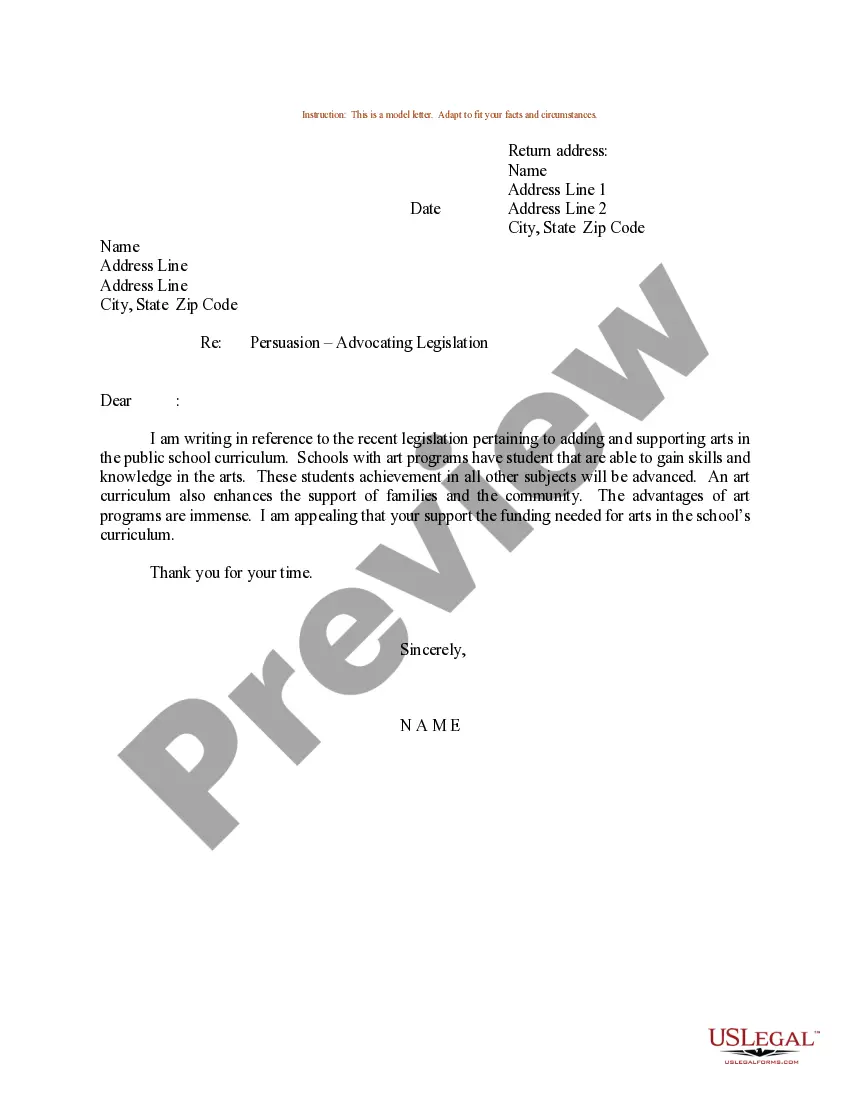
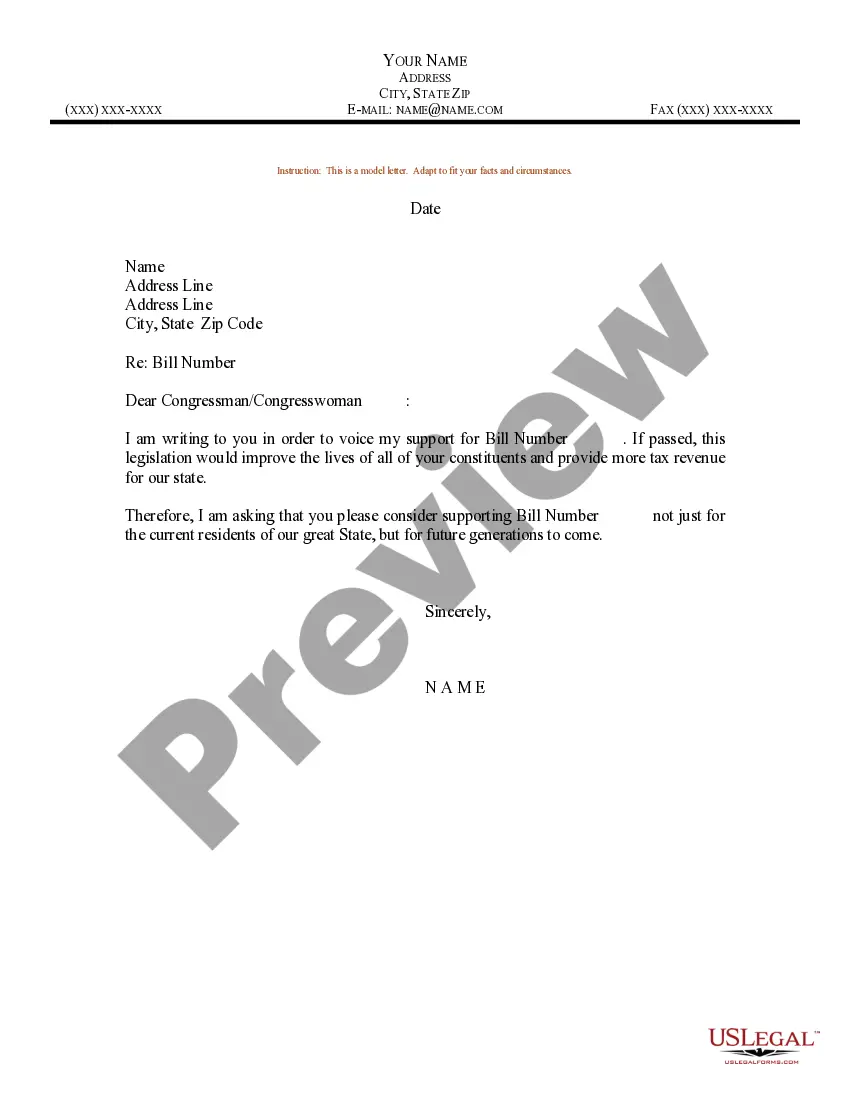
A Sample Letter for Advocation of Legislation is a template designed to help individuals effectively communicate their support for specific legislative measures. This form serves as a structured way to persuade lawmakers about the importance of proposed laws or amendments, differentiating it from general advocacy letters by its focus on legislative matters.
Main sections of this form
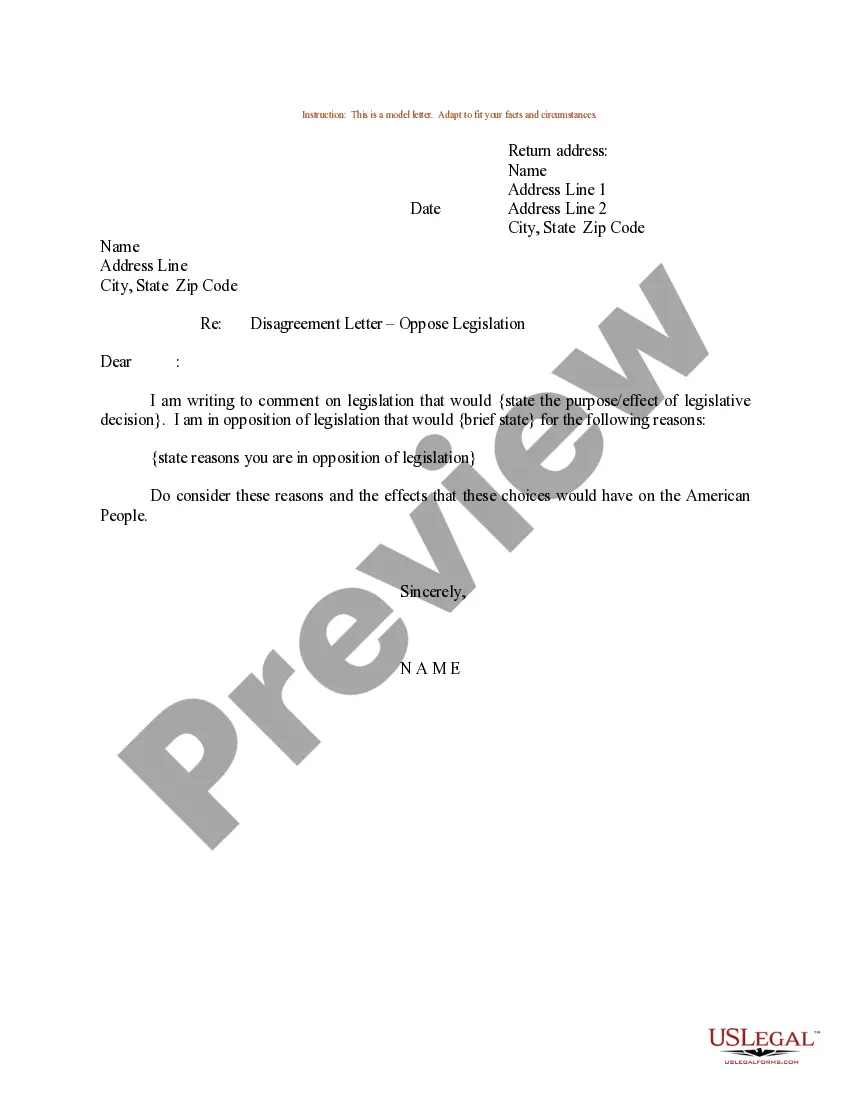
- Return address: Your name and address for correspondence.
- Date: The date you are sending the letter.
- Recipient's address: The name and address of the legislator or representative.
- Subject line: Clearly states the purpose of the letter.
- Body: A persuasive message advocating for specific legislation.
- Closing: A polite sign-off and your printed name.
When to use this document
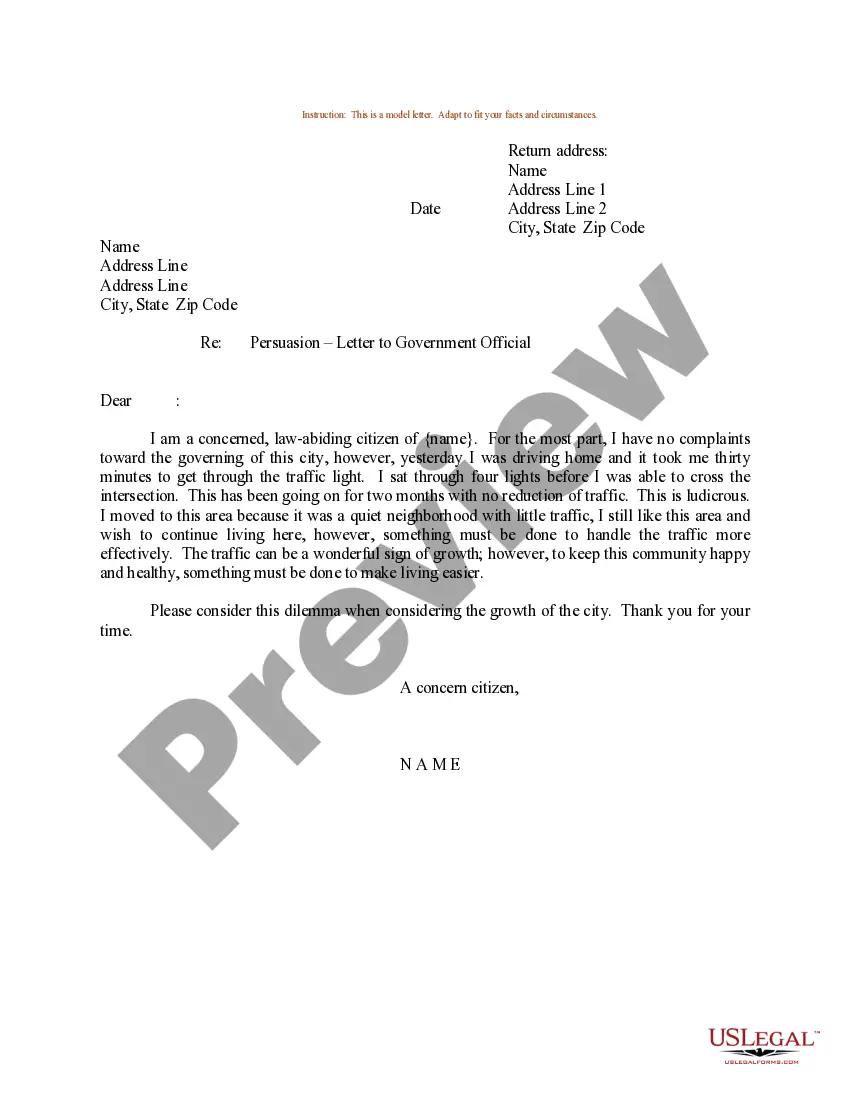
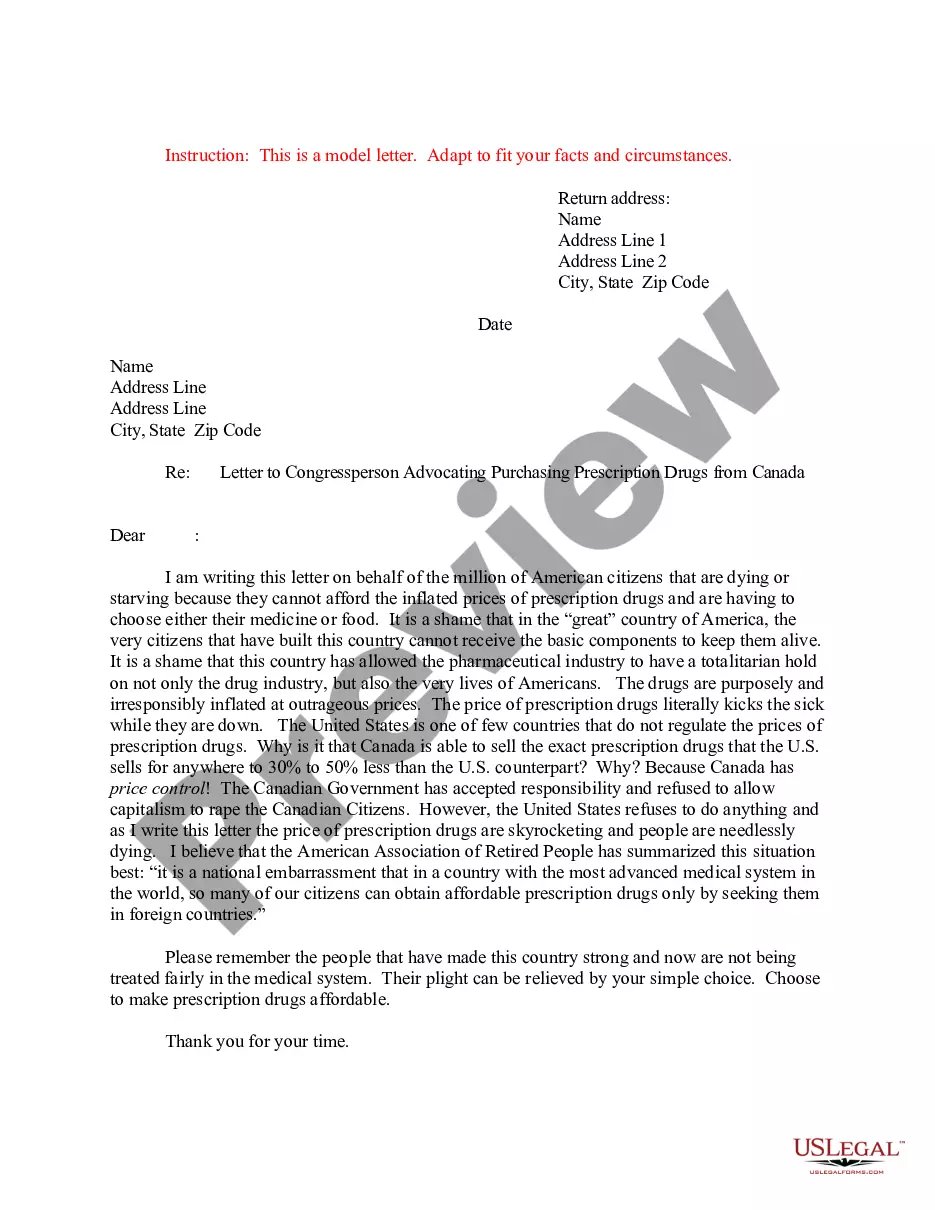
This form is particularly useful when you want to express your views to lawmakers regarding specific legislation. Use it to advocate for laws that impact your community, express support for environmental policies, healthcare reforms, or any legislation that matters to you. It's appropriate to use this letter when seeking to influence decision-makers or participate in civic engagement.
Intended users of this form
This form is intended for:
- Individuals seeking to advocate for specific legislative issues.
- Community leaders wishing to represent the views of their constituents.
- Nonprofit organizations looking to mobilize support for legislative changes.
- Concerned citizens aiming to influence policy decisions at local, state, or federal levels.
Steps to complete this form
- Identify yourself and include your return address at the top of the letter.
- Fill in the date you are sending the letter.
- Enter the recipientâs name and address, ensuring correct formatting.
- Write a clear subject line stating the purpose of your advocacy.
- Compose the body of the letter, making your case for the legislation you support.
- Sign off with a courteous closing, followed by your printed name.
Is notarization required?
This form does not typically require notarization unless specified by local law. Ensure to check your state regulations for any unique requirements pertaining to advocacy letters.
Get your form ready online
Our built-in tools help you complete, sign, share, and store your documents in one place.
Make edits, fill in missing information, and update formatting in US Legal Forms—just like you would in MS Word.
Download a copy, print it, send it by email, or mail it via USPS—whatever works best for your next step.
Sign and collect signatures with our SignNow integration. Send to multiple recipients, set reminders, and more. Go Premium to unlock E-Sign.
If this form requires notarization, complete it online through a secure video call—no need to meet a notary in person or wait for an appointment.
We protect your documents and personal data by following strict security and privacy standards.

Make edits, fill in missing information, and update formatting in US Legal Forms—just like you would in MS Word.

Download a copy, print it, send it by email, or mail it via USPS—whatever works best for your next step.

Sign and collect signatures with our SignNow integration. Send to multiple recipients, set reminders, and more. Go Premium to unlock E-Sign.

If this form requires notarization, complete it online through a secure video call—no need to meet a notary in person or wait for an appointment.

We protect your documents and personal data by following strict security and privacy standards.
Common mistakes
- Neglecting to personalize the letter for the specific legislator.
- Using overly complex language instead of clear, concise statements.
- Failing to provide specific details about the legislation being advocated.
- Omitting your contact information for follow-up.
Benefits of using this form online
- Convenience of downloading and editing the letter at any time.
- Access to a professionally created template, ensuring legal compliance.
- Time-saving as it streamlines the process of creating a persuasive letter.
Looking for another form?

Form popularity
FAQ
State clearly what you would like your reader to do. Explain briefly why you think he/she should do this. If the action you are requesting would require the reader to contact you, provide your telephone number, VP number, fax number and/or e-mail address.
What is an advocacy statement? It's a verbal expression made from one person to another (or an entire group). It asks for something - their time, their attention, their consideration, an action of some kind.
On the top left-hand corner of the page put down the name, address, and date. Below the name of the letter writer, it is important to include the name of the recipient and the relevant address. The letter then will open with Dear, Mr/Ms.
Step by step instructions: Identity the subject of the letter: the entity whom their responsibility is waived. If it is a person then provide full name, identification number, etc. Specify what exactly they are not responsible for any more.
Identify yourself as a constituent. Be brief and simple. State and report your position. Personalize your letter. Be polite and avoid ultimatums and rudeness. Do not enclose additional material. Do not exaggerate or lie. Make sure your message is timely.
What's a pull letter or letter of responsibility?Most importantly, the letter states that the publication will take financial responsibility for any products loaned and pay for replacements in the event of loss or damage.
Use letterhead. Verify the correct spelling of the legislator's name. Verify the correct title to use when addressing the legislator. Keep it short (one page maximum). Identify the issue. If the issue is a particular bill, verify the full name and bill number.
Use letterhead. Verify the correct spelling of the legislator's name. Verify the correct title to use when addressing the legislator. Keep it short (one page maximum). Identify the issue. If the issue is a particular bill, verify the full name and bill number.
Start Here. Organizations often don't jump into advocacy because it seems so daunting. Focus on These Kinds of Activities. Your organization has its place in your community and movement. Join Forces. Engage These Members First. Start Doing This From the Beginning. Get This In Order First.