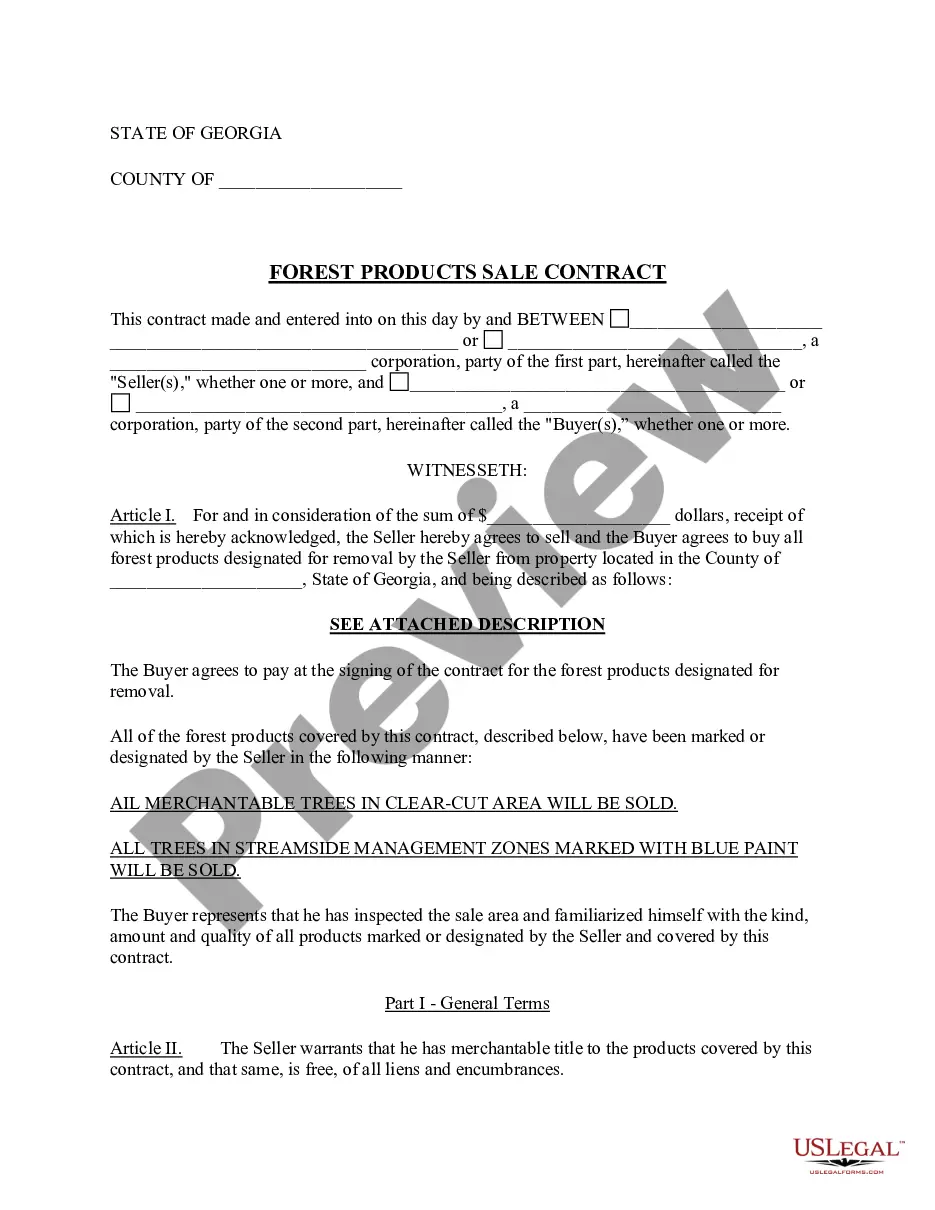
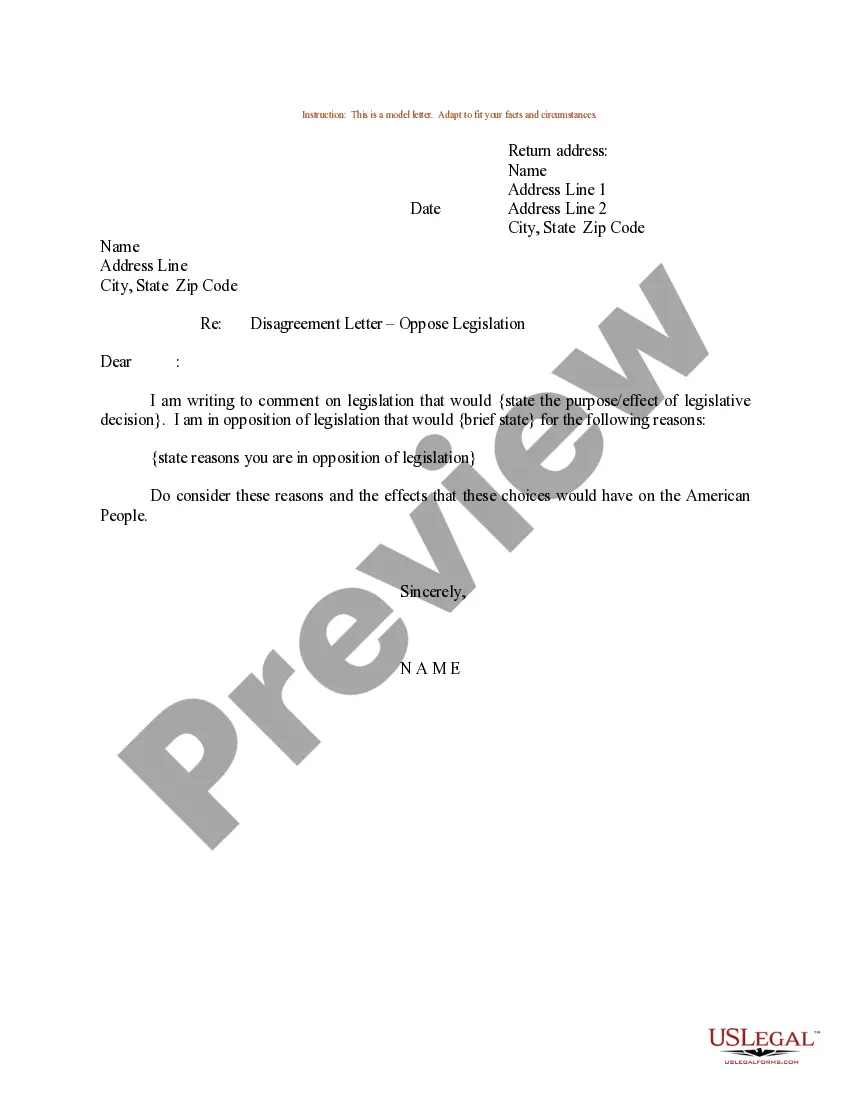
Sample Letter for Opposition to Legislation
What is this form?
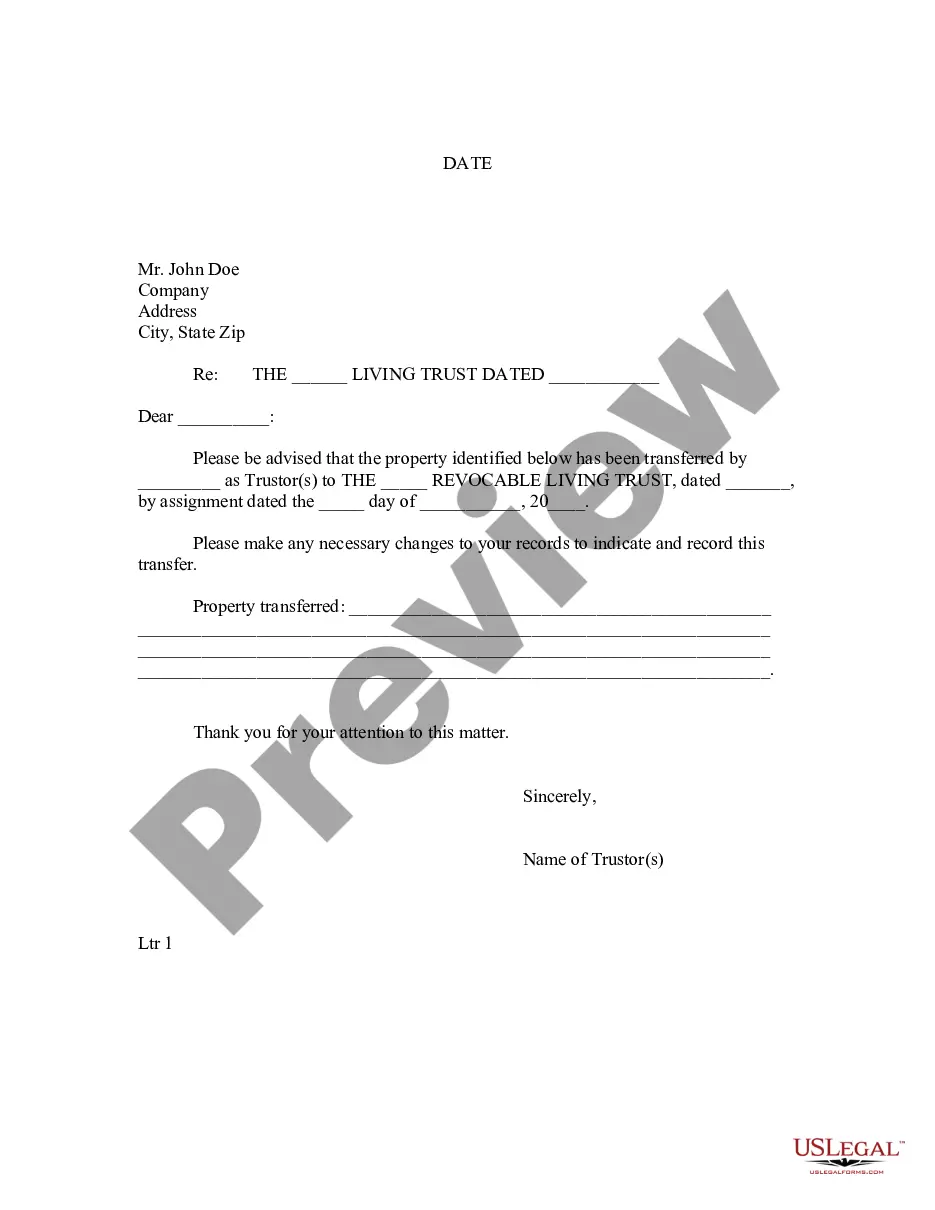
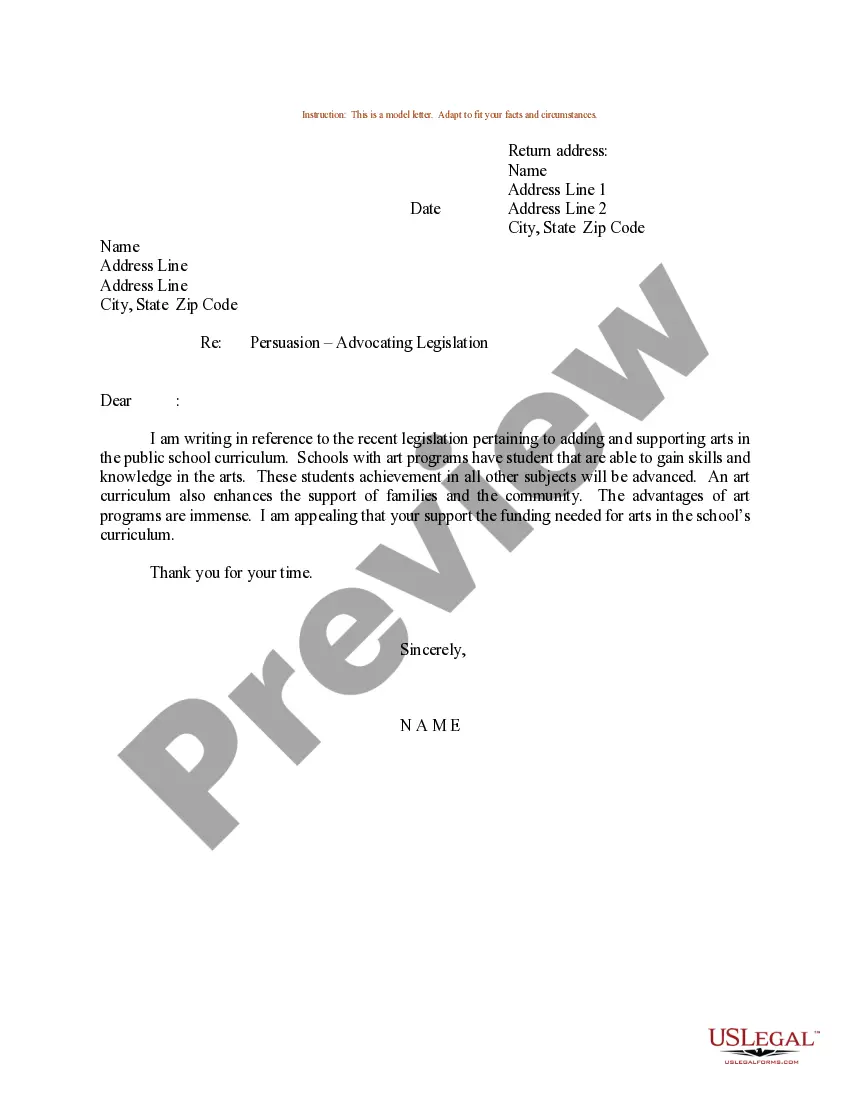
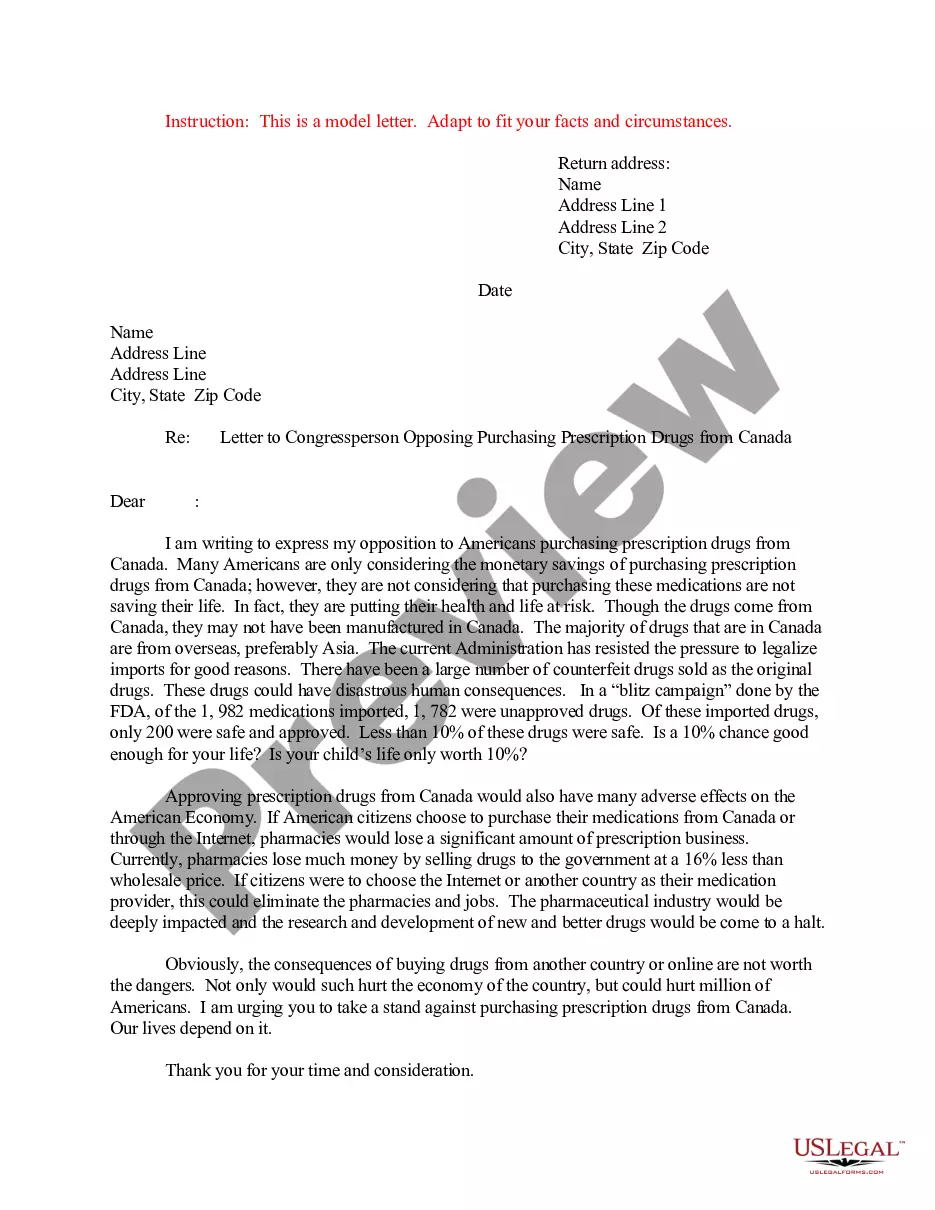
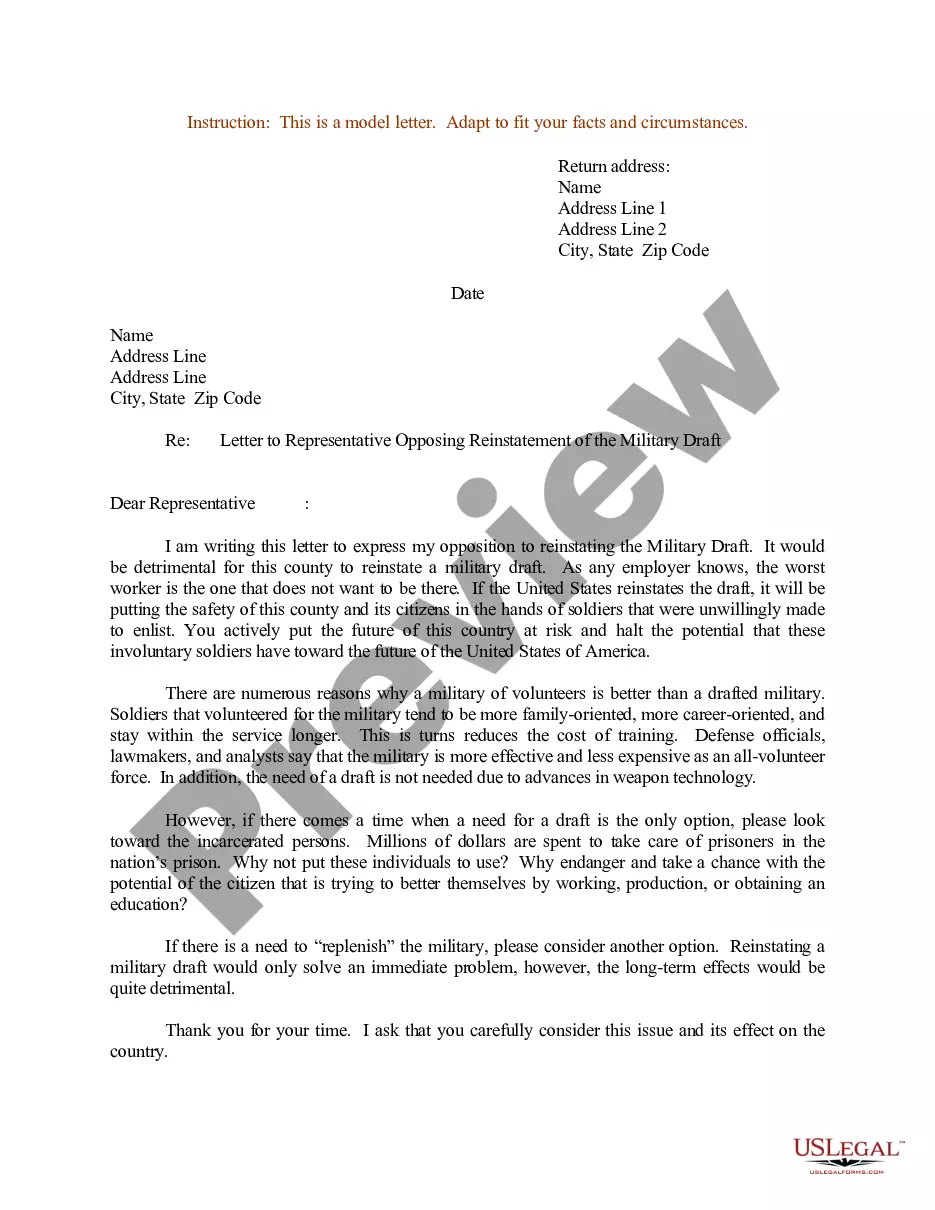
The Sample Letter for Opposition to Legislation is a template that allows individuals or organizations to formally express their disagreement with proposed legislative measures. This form helps streamline the communication process with lawmakers by providing a clear, structured format, distinguishing it from general complaint letters or petitions.
Key components of this form
- Return address: Your name and full address for correspondence.
- Date: The date you are sending the letter.
- Recipient's address: The name and address of the legislator or official you are addressing.
- Subject line: A concise statement about the letter's purpose, such as "Opposition to Legislation."
- Body content: A clear and persuasive description of your opposition to the specific legislation.
- Closing: A polite sign-off with your name.
When this form is needed
You should use this Sample Letter for Opposition to Legislation when you want to advocate against a specific bill or law that is being considered by your local, state, or federal government. This form is particularly useful if you wish to mobilize community support or contribute to public discourse on legislative issues that affect you or your organization.
Who can use this document
- Concerns individuals who want to voice their opposition to legislative measures.
- Community organizations advocating on behalf of their members.
- Businesses affected by proposed laws or regulations.
- Activists aiming to influence policy decisions at various government levels.
How to complete this form
- Identify the return address by including your full name and address.
- Enter the date of the letter.
- Specify the recipient's name and address correctly.
- Write the subject line indicating the specific legislation you oppose.
- Compose the body of the letter, clearly stating your position and reasoning.
- Sign off with your name after the closing statement.
Does this document require notarization?
In most cases, this form does not require notarization. However, some jurisdictions or signing circumstances might. US Legal Forms offers online notarization powered by Notarize, accessible 24/7 for a quick, remote process.
Get your form ready online
Our built-in tools help you complete, sign, share, and store your documents in one place.
Make edits, fill in missing information, and update formatting in US Legal Forms—just like you would in MS Word.
Download a copy, print it, send it by email, or mail it via USPS—whatever works best for your next step.
Sign and collect signatures with our SignNow integration. Send to multiple recipients, set reminders, and more. Go Premium to unlock E-Sign.
If this form requires notarization, complete it online through a secure video call—no need to meet a notary in person or wait for an appointment.
We protect your documents and personal data by following strict security and privacy standards.

Make edits, fill in missing information, and update formatting in US Legal Forms—just like you would in MS Word.

Download a copy, print it, send it by email, or mail it via USPS—whatever works best for your next step.

Sign and collect signatures with our SignNow integration. Send to multiple recipients, set reminders, and more. Go Premium to unlock E-Sign.

If this form requires notarization, complete it online through a secure video call—no need to meet a notary in person or wait for an appointment.

We protect your documents and personal data by following strict security and privacy standards.
Common mistakes to avoid
- Forgetting to include the date, which can make the letter seem outdated.
- Failing to address the letter to the correct official or using an incorrect title.
- Writing an overly emotional letter without clear facts or arguments.
- Neglecting to proofread for grammatical or spelling errors.
- Omitting your name or contact information, which may reduce the letter's impact.
Why complete this form online
- Convenience: Download and complete the form from anywhere at any time.
- Editability: Adjust the template easily to suit your specific opposition.
- Reliability: Use a professionally drafted letter, increasing credibility with officials.
- Time-saving: Quickly fill out and send your message without starting from scratch.
Legal use & context
- This letter serves as a formal record of your opposition, which may be referenced in legislative discussions.
- It is essential to send your letter through an appropriate channel to ensure it is received by policymakers.
- Ensure the content complies with any statutory deadlines for public opposition submissions.
What to keep in mind
- This form is useful for individuals and organizations opposing specific legislation.
- It provides a structured format to communicate effectively with legislators.
- Follow the instructions carefully to ensure your letter is complete and persuasive.
Looking for another form?
Form popularity
FAQ
Write the application reference number and name/address of the scheme at the top of your letter. Make clear that you object. Refer to development plan. Make clear if there are any other material considerations that should be taken into account. Don't be emotive, focus on the issues.
State clearly what you would like your reader to do. Explain briefly why you think he/she should do this. If the action you are requesting would require the reader to contact you, provide your telephone number, VP number, fax number and/or e-mail address.
Open with a statement that engages your audience. Present the problem. Share a story or give an example of the problem. Connect the issue to the audience's values, concerns or self-interest. Make your request (the ask).
The sender should introduce him or herself in the first two sentences giving some personal background such as education, training or occupation. Next, the letter should get straight to the point. The next two short paragraphs should summarize the situation and state the sender's concerns.
State your subject clearly in the email subject line or first sentence of the letter. Stick to just one issue in the letter. Identify yourself as a constituent. State your views, support them with your expert knowledge and, when appropriate, cite the bill number of relevant legislation (e.g., H.R.
(i.e., The Honorable , or Dear Senator ). Include your name and address on both your letter and envelope. Include your other important contact information in the letter Name, address, telephone number and e-mail address. reason for writing what you want and why.
Below are some simple tips that you can use to write more effective letters: Use Proper Salutation. The salutation should be "Dear Representative Smith" or Dear Senator Smith" or "Dear Assemblyman Smith" depending on the office held. The address should read: Honorable Jim Smith, Address, City, State, Zip.
SAMPLE LETTER THAT YOU CAN USE TO WRITE TO YOUR LEGISLATOR Choose up to three of the strongest points that support your position and state them clearly.) (Include a personal story. Tell your representative why the issue is important to you and how it affects you, your family member and your community.)
Use letterhead. Verify the correct spelling of the legislator's name. Verify the correct title to use when addressing the legislator. Keep it short (one page maximum). Identify the issue. If the issue is a particular bill, verify the full name and bill number.