Jury Instruction - Alibi
Understanding this form
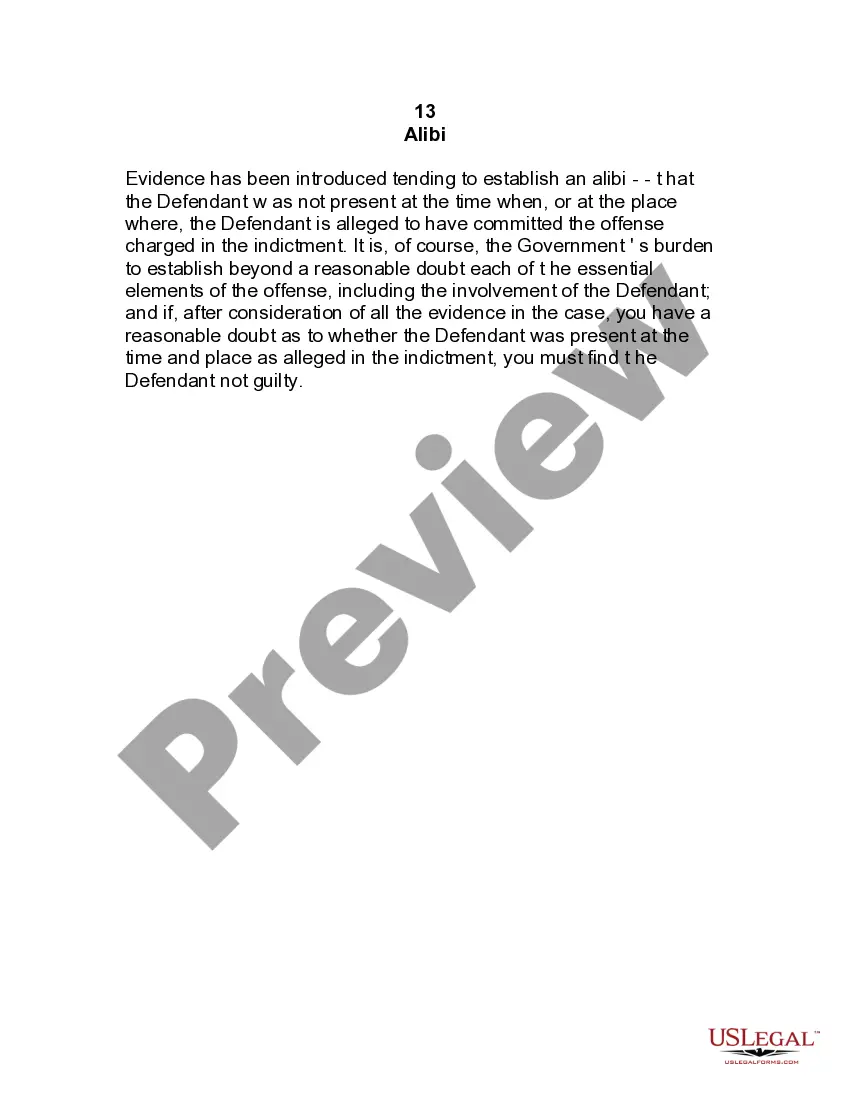
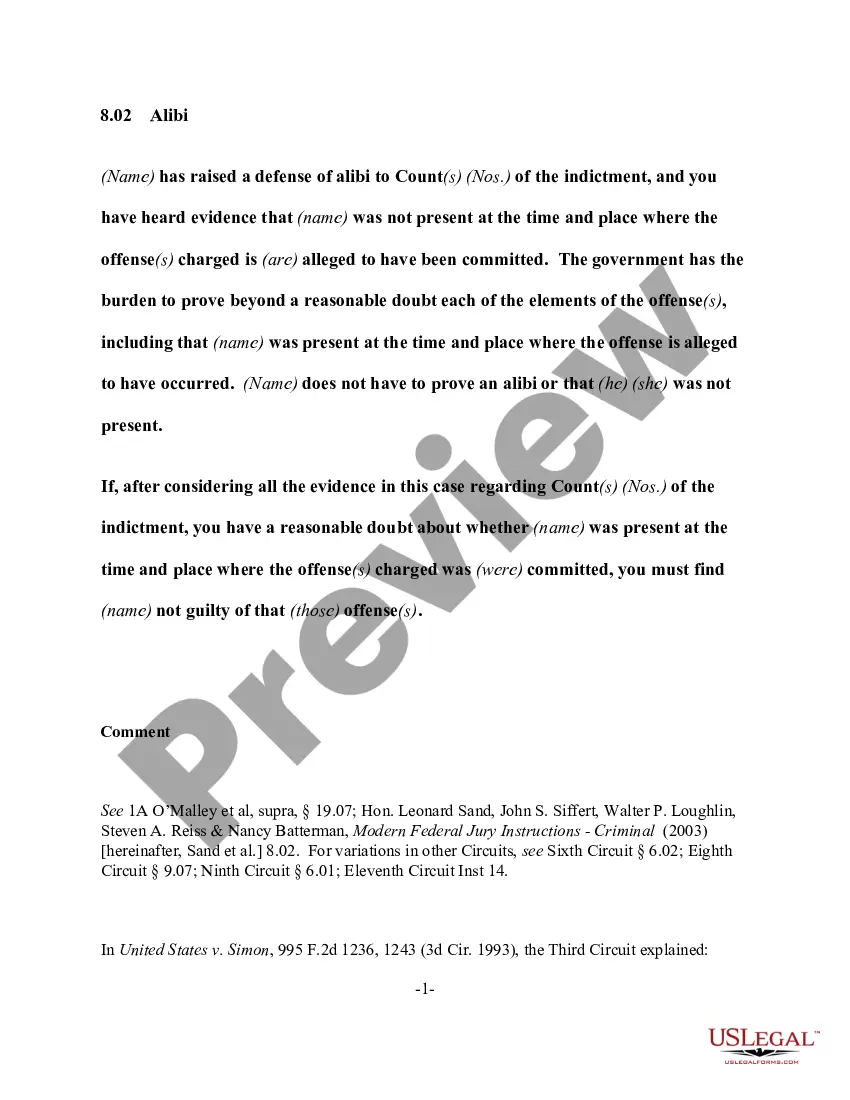
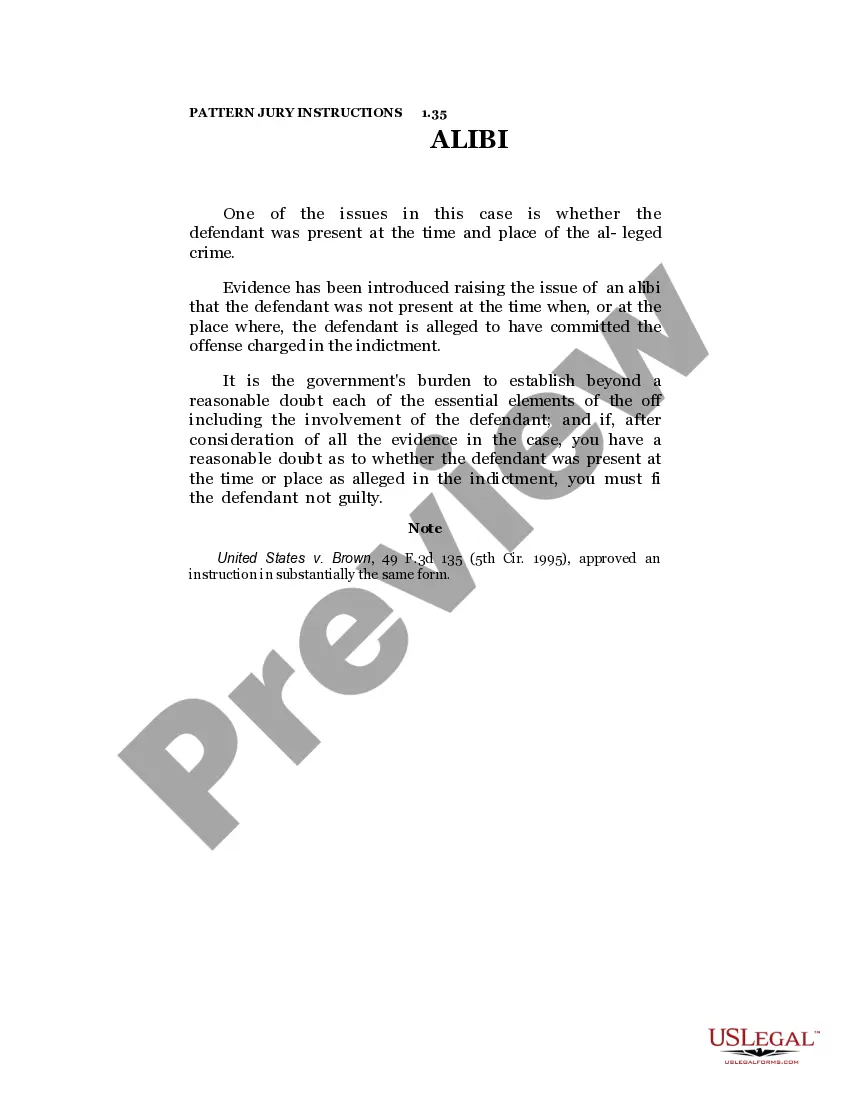
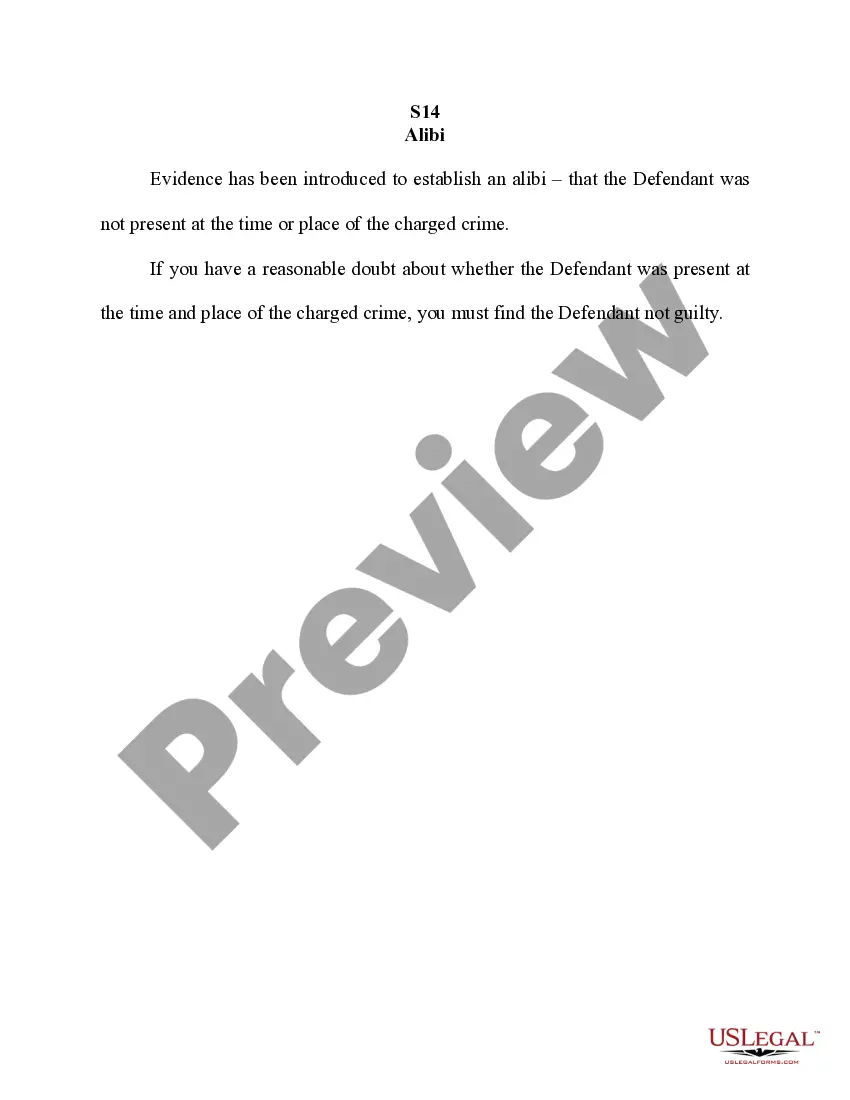
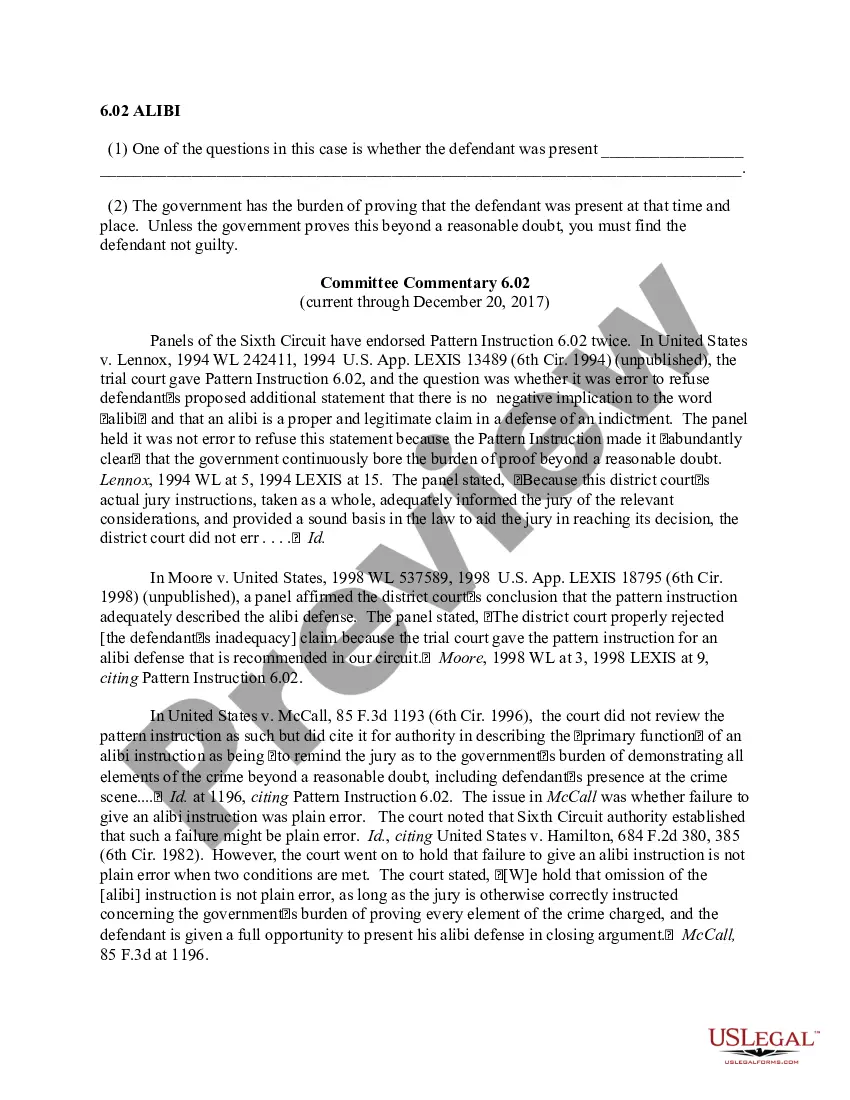
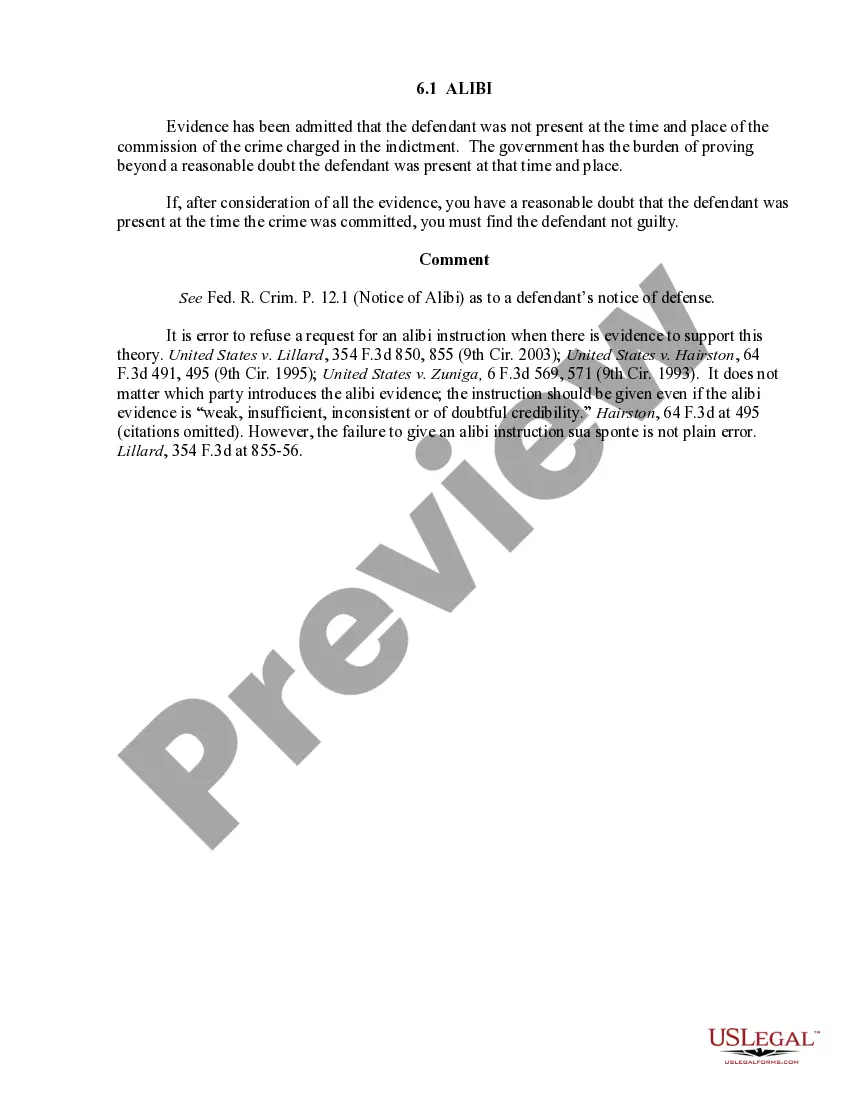
The Jury Instruction - Alibi form provides model jury instructions that can be used in criminal trials across the United States. This form specifically addresses the concept of alibi evidence, which suggests that the defendant was not present at the time and place the crime was allegedly committed. Unlike other jury instructions, this form focuses on establishing reasonable doubt regarding a defendant's presence, clarifying the burden of proof that lies with the government.
Key parts of this document
- Definition of alibi evidence and its significance in a trial.
- Statement of the government's burden to prove guilt beyond a reasonable doubt.
- Requirement to consider all evidence in determining the defendant's presence.
- Instruction to find the defendant not guilty if reasonable doubt exists.
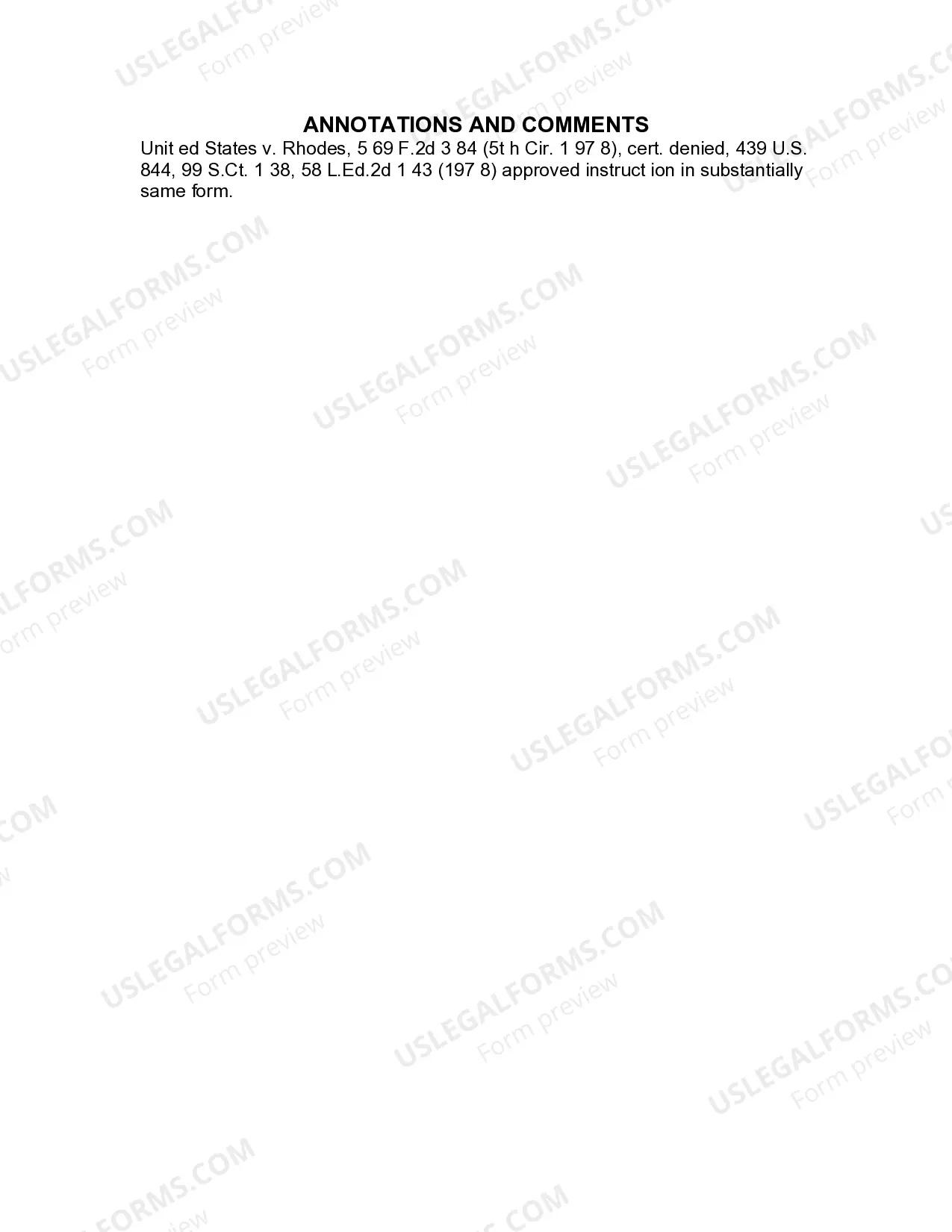
- Legal citation supporting the use of these instructions in court.
When to use this document
This form is essential in scenarios where a defendant asserts an alibi during a criminal trial. It should be used when evidence is presented to support the claim that the defendant was elsewhere at the time of the alleged offense. This form helps guide jurors in evaluating whether to accept the alibi as a valid defense, particularly when there is conflicting evidence about the defendant's location.
Who should use this form
- Defense attorneys representing clients claiming an alibi.
- Prosecutors seeking to understand the implications of alibi evidence.
- Judges who need to provide clear instructions to a jury regarding alibi considerations.
- Legal professionals involved in criminal defense or prosecution cases.
How to prepare this document
- Review the case details to determine the appropriate legal context for the alibi.
- Customize the language of the form to fit the specifics of your case and jurisdiction.
- Present the evidence supporting the alibi clearly and concisely.
- Ensure that all jurors are instructed on the burden of proof and reasonable doubt.
- Consult with co-counsel or legal advisors to confirm clarity and comprehensiveness of instructions.
Does this form need to be notarized?
This form usually doesn’t need to be notarized. However, local laws or specific transactions may require it. Our online notarization service, powered by Notarize, lets you complete it remotely through a secure video session, available 24/7.
Get your form ready online
Our built-in tools help you complete, sign, share, and store your documents in one place.
Make edits, fill in missing information, and update formatting in US Legal Forms—just like you would in MS Word.
Download a copy, print it, send it by email, or mail it via USPS—whatever works best for your next step.
Sign and collect signatures with our SignNow integration. Send to multiple recipients, set reminders, and more. Go Premium to unlock E-Sign.
If this form requires notarization, complete it online through a secure video call—no need to meet a notary in person or wait for an appointment.
We protect your documents and personal data by following strict security and privacy standards.

Make edits, fill in missing information, and update formatting in US Legal Forms—just like you would in MS Word.

Download a copy, print it, send it by email, or mail it via USPS—whatever works best for your next step.

Sign and collect signatures with our SignNow integration. Send to multiple recipients, set reminders, and more. Go Premium to unlock E-Sign.

If this form requires notarization, complete it online through a secure video call—no need to meet a notary in person or wait for an appointment.

We protect your documents and personal data by following strict security and privacy standards.
Typical mistakes to avoid
- Failing to modify the instructions to align with jurisdiction-specific language.
- Overlooking key elements of the burden of proof requirement.
- Providing insufficient context for the jury regarding the significance of alibi evidence.
- Using boilerplate text without adapting it to the unique facts of the case.
Why complete this form online
- Immediate access to professionally drafted jury instructions.
- Ability to download and edit forms to suit specific case needs quickly.
- Convenience of using trusted legal templates without needing extensive legal knowledge.
- Save time and reduce errors by utilizing standardized legal language.
Looking for another form?

Form popularity
FAQ
A notice of alibi or entrapment shall contain specific information as to the place at which the defendant claims to have been at the time of the alleged offense and, as particularly as known to defendant or the defendant's attorney, the names and addresses of the witnesses by whom the defendant proposes to establish an
A judgment notwithstanding the verdict (or JNOV) is an order by a judge after a jury has returned its verdict. The judge can overturn the jury's verdict if he or she feels it cannot reasonably be supported by the evidence or if it contradicts itself.
Jury instructions, directions to the jury, or judge's charge are legal rules that jurors should follow when deciding a case.
A jury instruction is given by the judge to the jury to explain what is happening in the court, to explain the points of law relevant to the case, to explain certain aspects of the evidence presented and to assist the jurors in understanding their duties in reaching a verdict.
Instructions to the Jury The judge instructs the jury about the relevant laws that should guide its deliberations. (In some jurisdictions, the court may instruct the jury at any time after the close of evidence. This sometimes occurs before closing arguments.) The judge reads the instructions to the jury.
The judge instructs the jury about the relevant laws that should guide its deliberations. (In some jurisdictions, the court may instruct the jury at any time after the close of evidence.The judge reads the instructions to the jury. This is commonly referred to as the judge's charge to the jury.
These are civil or criminal jury instructions approved by a state court, bench committee, or bar association. They are commonly used by courts in the relevant jurisdiction, as they ease the process of drafting fair jury instructions and theoretically do not have errors.
It provides that a defendant must notify the government of his intention to rely upon the defense of alibi. Upon receipt of such notice, the government must advise the defendant of the specific time, date, and place at which the offense is alleged to have been committed.