Technology Licensing Agreement
What this document covers
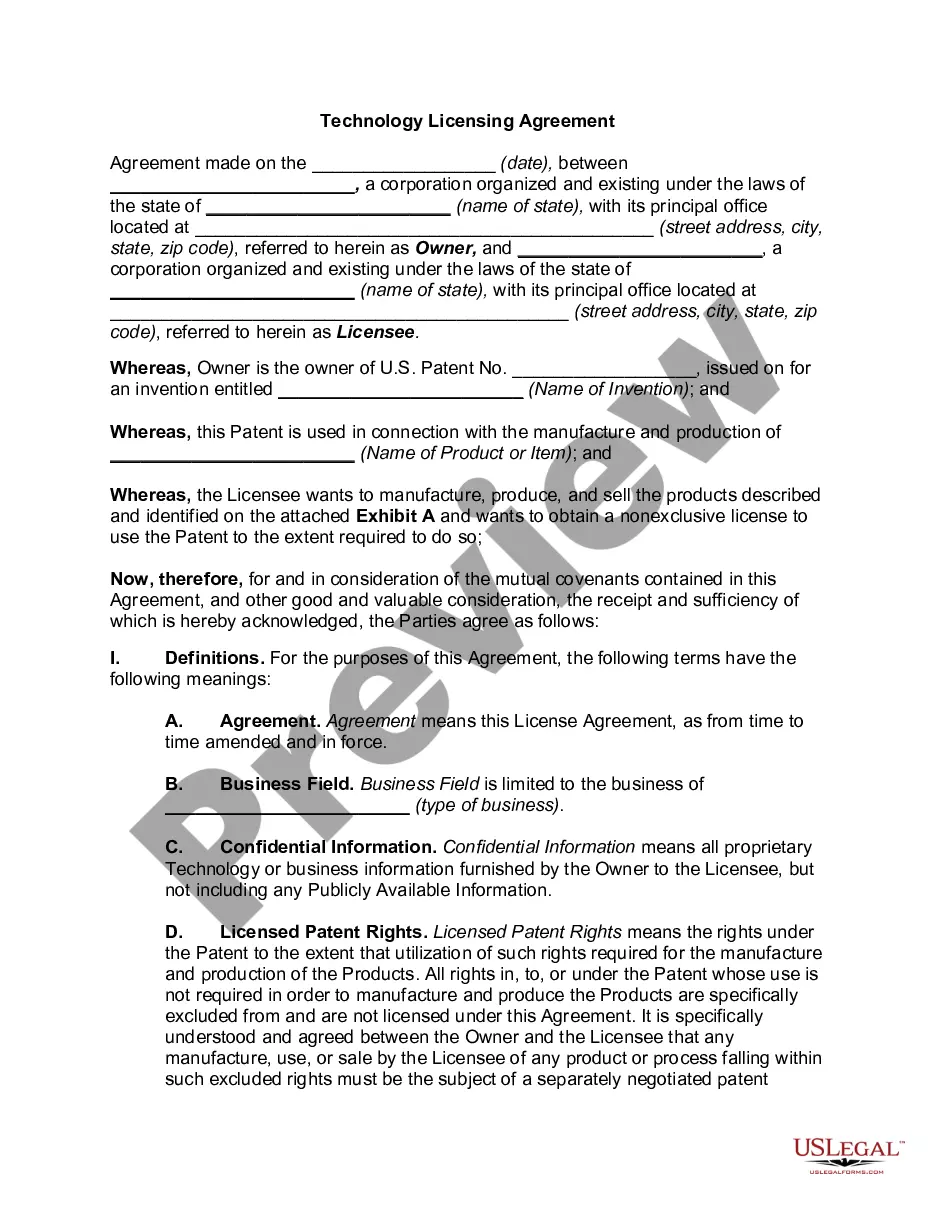
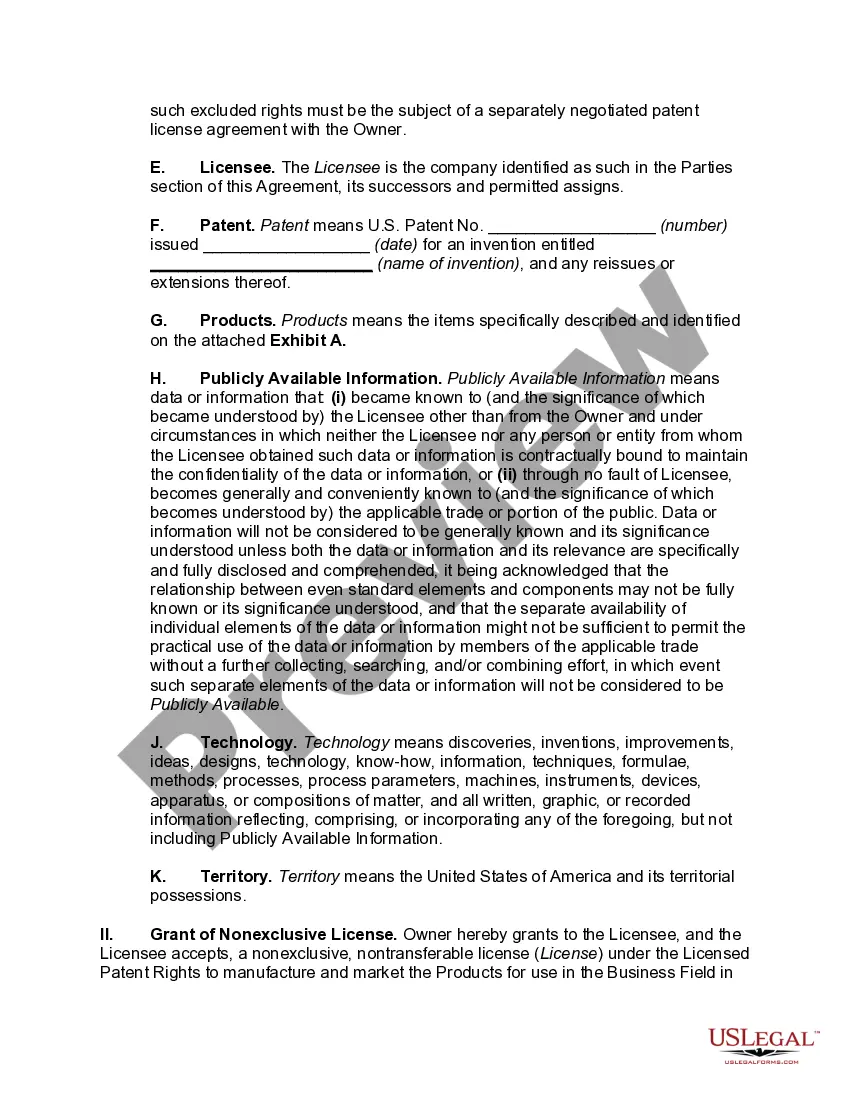
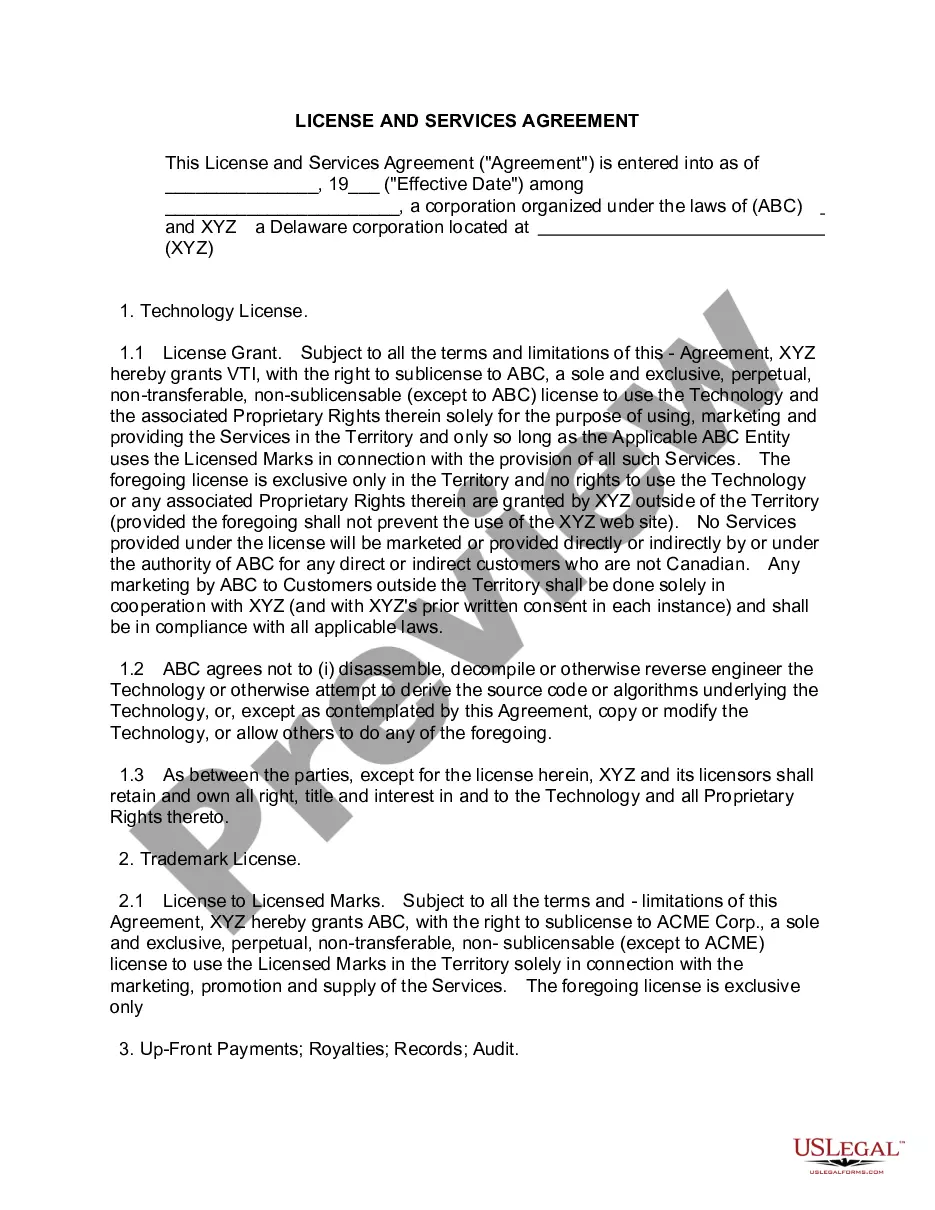
The Technology Licensing Agreement is a legal document that formalizes the relationship between the owner of a patent and a licensee who wishes to use that patent for commercial purposes. This form is essential for defining the terms of licensing, ensuring that the intellectual property rights of the patent owner are protected while enabling the licensee to manufacture and sell products based on the patent. Unlike other agreements, this document specifically outlines the nature of the patent rights being granted and the obligations of both parties involved.
Main sections of this form
- Parties Involved: Identifies the owner (licensor) and licensee, including their legal status and address.
- Definitions: Clarifies key terms such as "Licensed Patent Rights," "Confidential Information," and "Products."
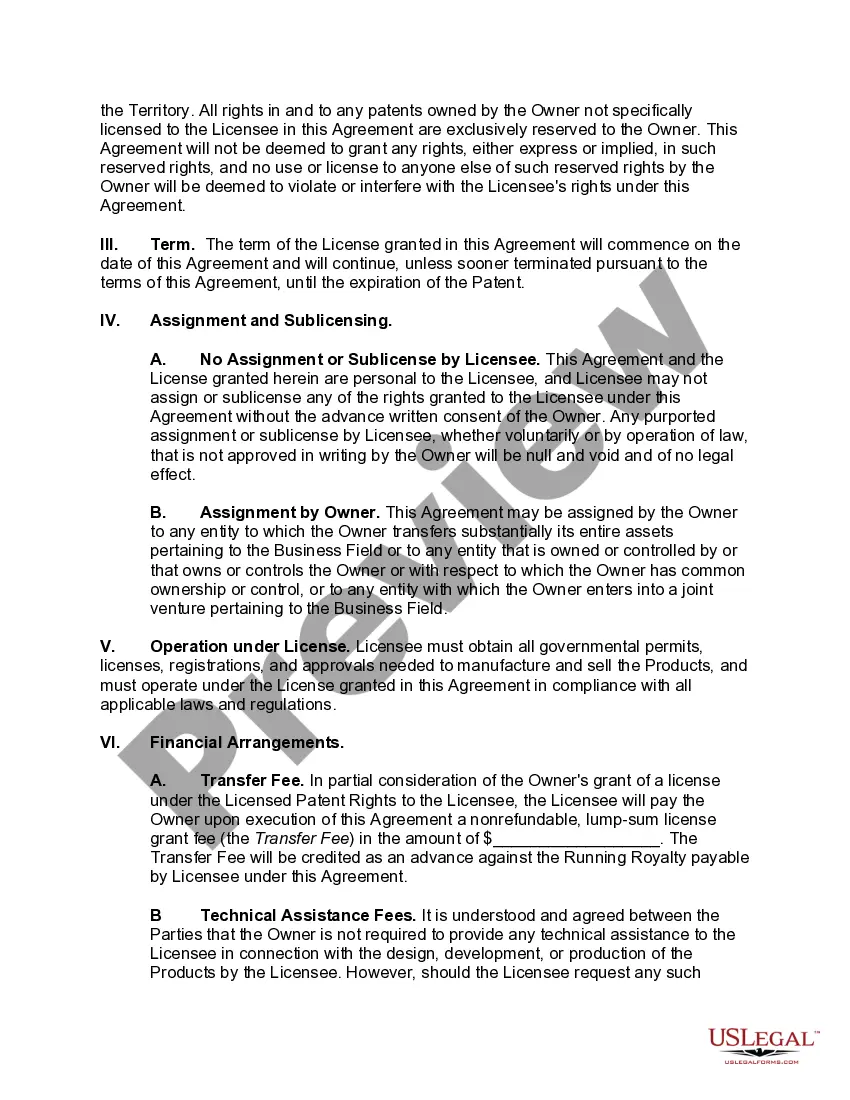
- Grant of License: Specifies the scope of the non-exclusive license granted to the licensee.
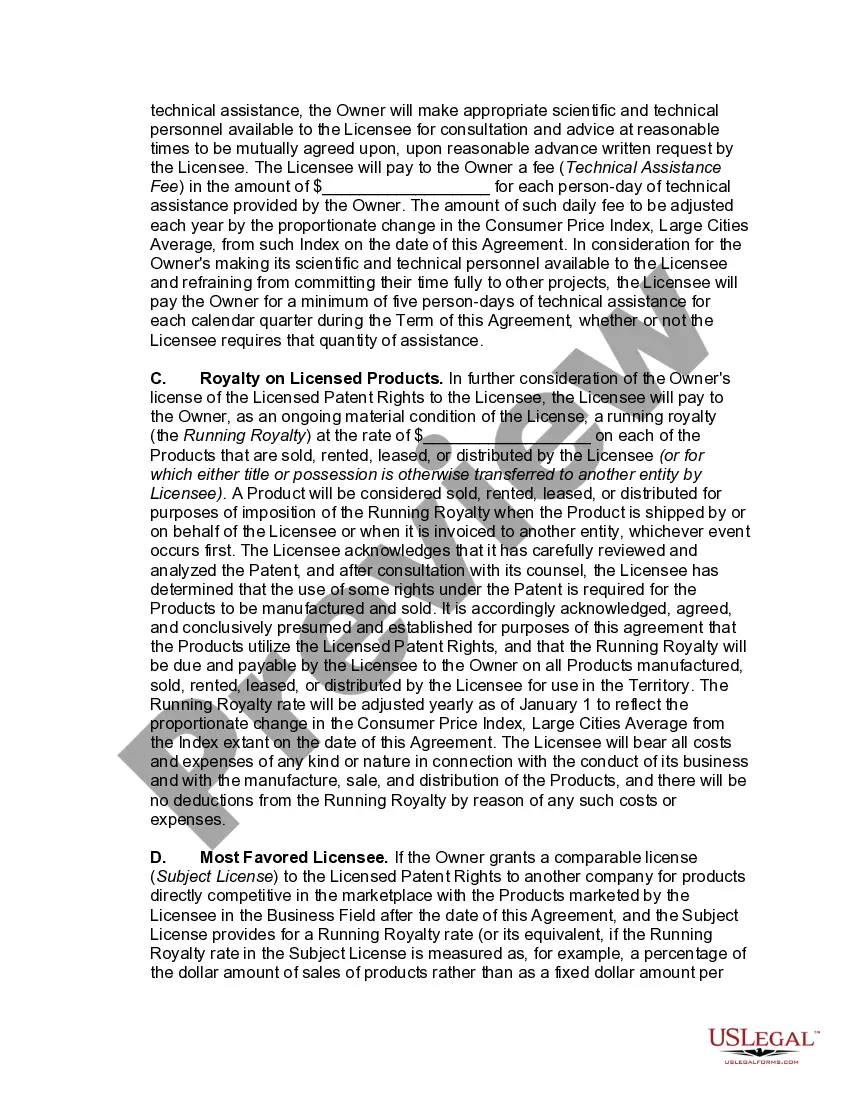
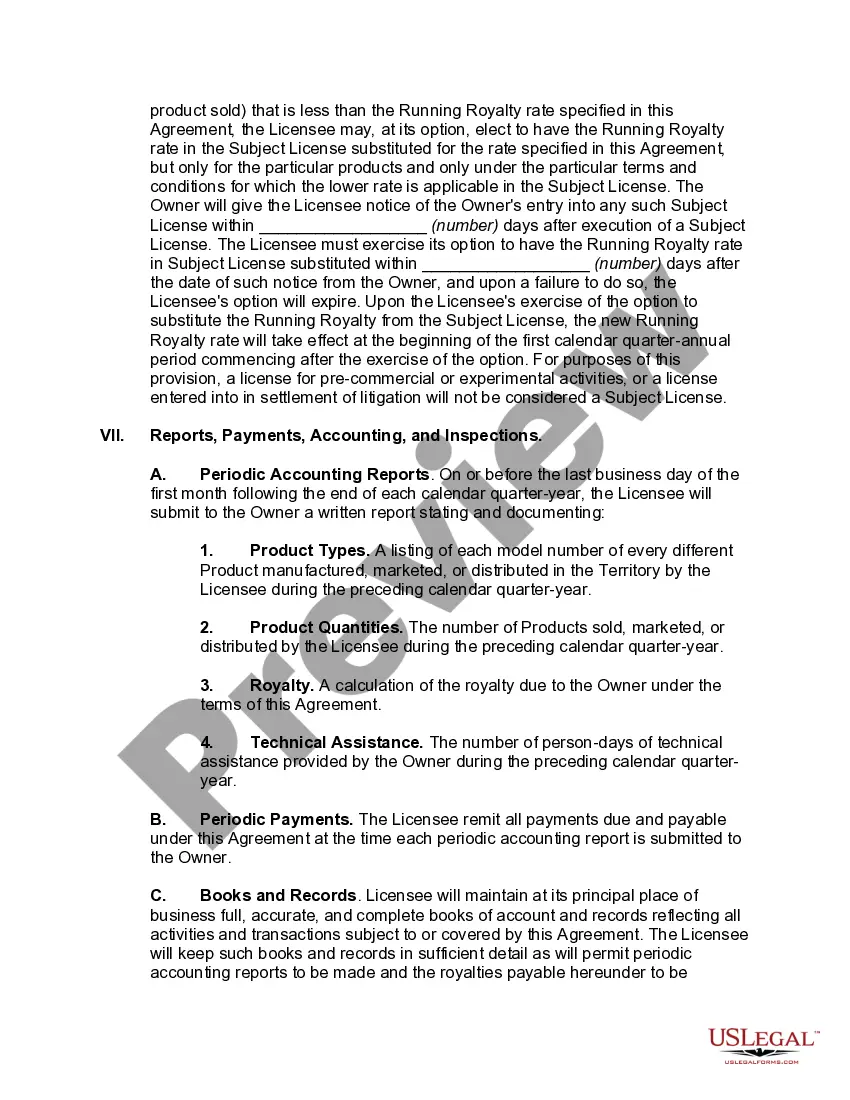
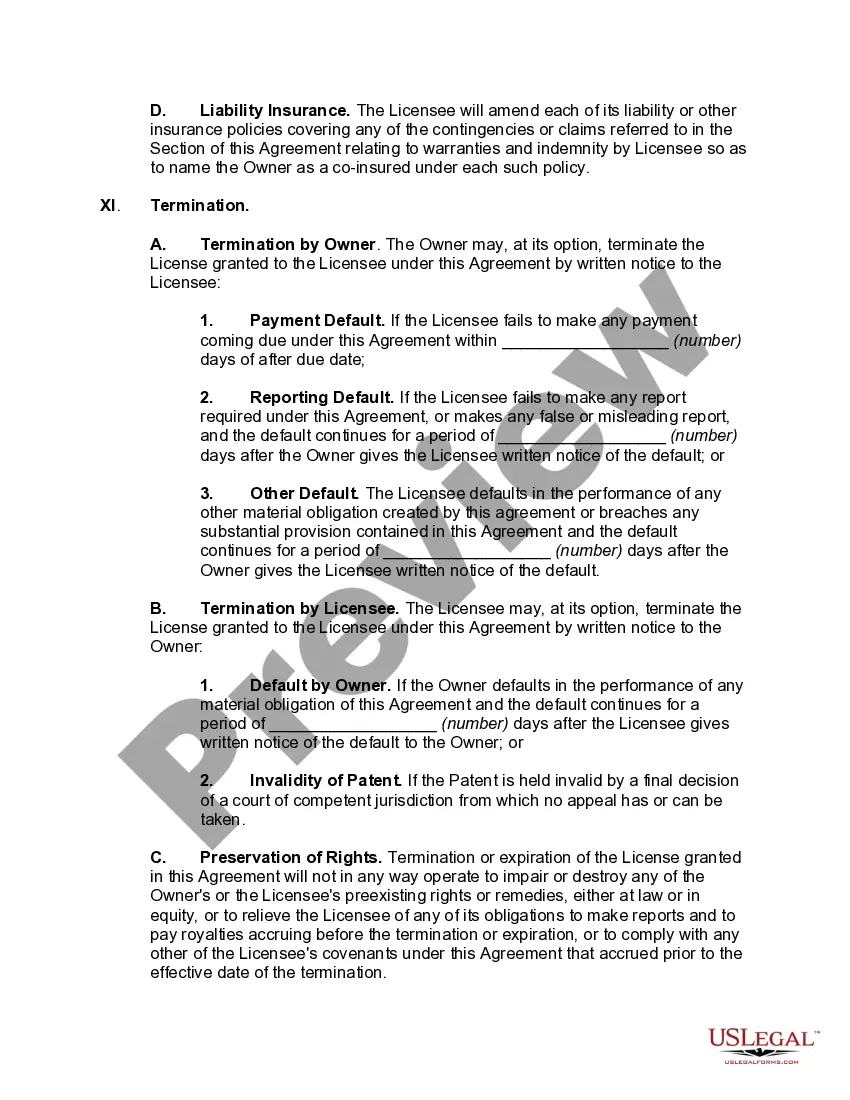
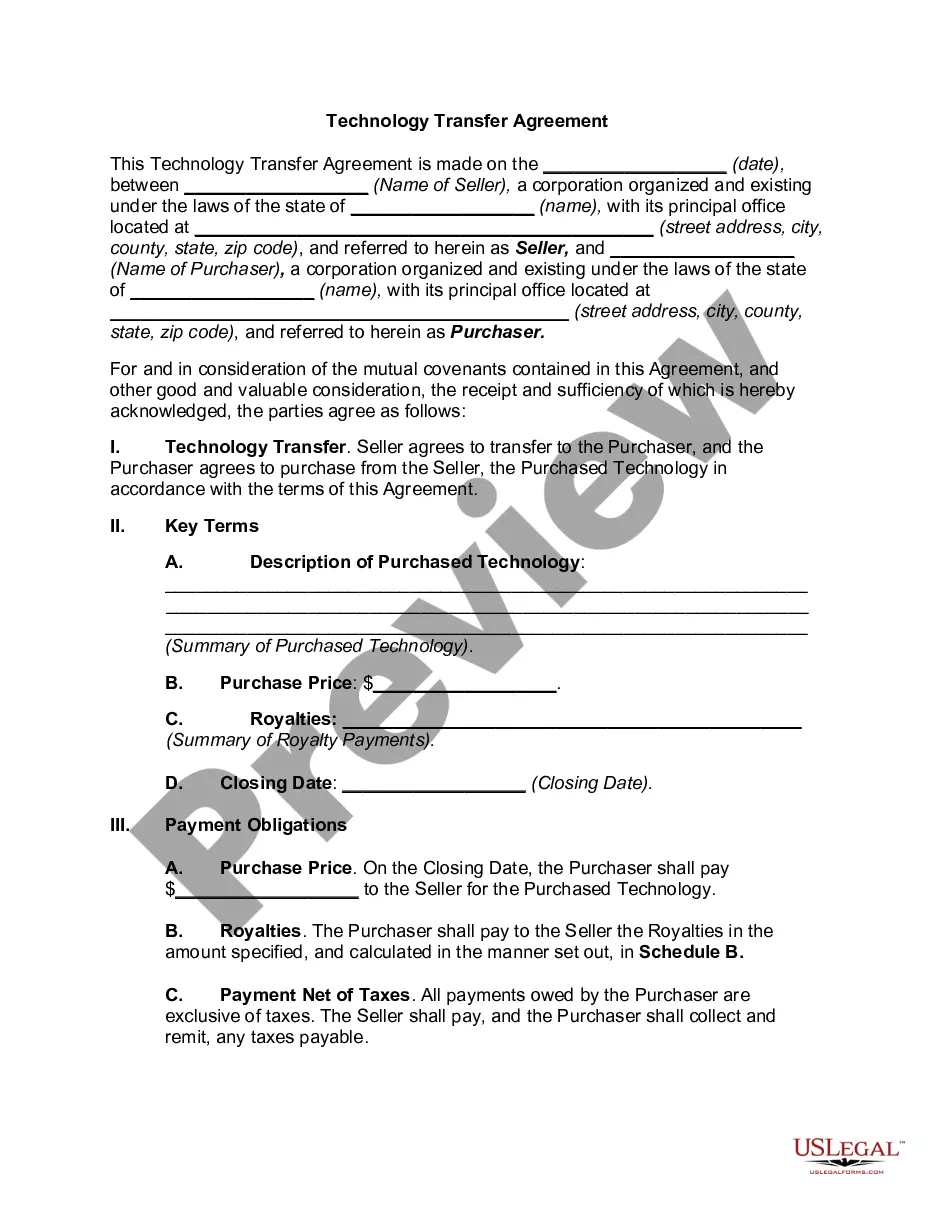
- Financial Arrangements: Details payments such as transfer fees, royalties, and potential technical assistance fees.
- Termination Conditions: Outlines the grounds for termination of the agreement by either party.


When to use this document
This Technology Licensing Agreement should be used when a company or individual (the licensee) seeks to use, manufacture, or sell a product that is protected by a patent owned by another party (the owner). It is necessary for establishing the legal rights and obligations of both parties in cases where the licensee intends to enter a market using patented technology. This form creates a clear framework for use, financial terms, and compliance with laws and regulations specific to the patented technology.
Who can use this document
- Patent owners looking to license their inventions to other businesses.
- Companies interested in obtaining a license to manufacture or sell products based on patented technology.
- Entrepreneurs entering into agreements involving patent use and hoping to specify financial and operational terms.
- Legal professionals representing clients in technology transfer and intellectual property matters.
Steps to complete this form
- Identify the parties by filling in the legal names and addresses of the owner and licensee.
- Enter the date of the agreement and the specific U.S. patent number related to the technology.
- Clearly define the licensed products referenced in Exhibit A and their intended business field.
- Specify the financial terms, including any transfer fees, royalties, and technical assistance fees if applicable.
- Ensure that both parties sign and date the agreement to validate the contract.
Is notarization required?
This form does not typically require notarization unless specified by local law. However, having the agreement notarized can add an extra layer of authenticity and security to the licensing arrangement, ensuring that the parties have entered into the agreement knowingly and voluntarily.
Get your form ready online
Our built-in tools help you complete, sign, share, and store your documents in one place.
Make edits, fill in missing information, and update formatting in US Legal Forms—just like you would in MS Word.
Download a copy, print it, send it by email, or mail it via USPS—whatever works best for your next step.
Sign and collect signatures with our SignNow integration. Send to multiple recipients, set reminders, and more. Go Premium to unlock E-Sign.
If this form requires notarization, complete it online through a secure video call—no need to meet a notary in person or wait for an appointment.
We protect your documents and personal data by following strict security and privacy standards.

Make edits, fill in missing information, and update formatting in US Legal Forms—just like you would in MS Word.

Download a copy, print it, send it by email, or mail it via USPS—whatever works best for your next step.

Sign and collect signatures with our SignNow integration. Send to multiple recipients, set reminders, and more. Go Premium to unlock E-Sign.

If this form requires notarization, complete it online through a secure video call—no need to meet a notary in person or wait for an appointment.

We protect your documents and personal data by following strict security and privacy standards.
Common mistakes to avoid
- Failing to accurately identify all parties involved in the agreement.
- Omitting critical definitions that could lead to ambiguities in the terms.
- Not specifying the financial terms or leaving out key figures like royalty rates.
- Neglecting to include product descriptions in Exhibit A, which can create confusion regarding licensing scope.
- Overlooking the process for terminating the agreement, which can result in disputes.
Advantages of online completion
- Convenience of accessing the form anytime, enabling quick adaptation to business needs.
- Editable format ensures you can customize the agreement to fit specific licensing situations.
- Reliability from templates drafted by licensed attorneys ensures legal compliance and clarity.
- Instant downloads allow for immediate use, saving time on legal procedures.
Looking for another form?
Form popularity
FAQ
Exclusive or non-exclusive. In an exclusive license, the intellectual property holder is licensing the work only to one person, for that particular use/territory. Territory. Use. Attribution. Derivative works. Confidentiality. Time frame. Termination.
What is a Licensing Agreement? A licensing agreement is a contract between two parties (the licensor and licensee) in which the licensor grants the licensee the right to use the brand name, trademark, patented technology, or ability to produce and sell goods owned by the licensor.
Do your homework. Before you begin negotiating, you need to understand your licensee's business. Start with a term sheet. Manage your expectations. Be patient. Have a win-win attitude. Don't lose your sense of humor. Remember to hold something back. Put yourself in their shoes.
Licensing as a revenue model for technology products. A licensing revenue model allows technology producers to monetize their new technology products by licensing them to other companies so that they may be integrated into an end-product.
The most important commercial arrangement for the transfer of technology is the licence agreement pursuant to which one party, the 'licensor', grants intellectual property rights to another party, the 'licencee'.
A license agreement is a business contract between two parties. The licensor (the seller of the license) owns the asset being licensed and the licensee (the buyer) pays for the right to use the license. The licensee pays royalties to the owner in exchange for the right to sell the product or use the technology.
Download a template for a licensing agreement. Choose your role as the licensor or licensee. Define the license(s) in the agreement. Decide whether the license is exclusive or not. Settle the matter of fees and payment schedule. Add a renewal date and rules.
An example of a licensing agreement is a contract between the copyright holders of software and another company, allowing the latter to use the computer software for their daily business operations.