Technology License
What is this form?
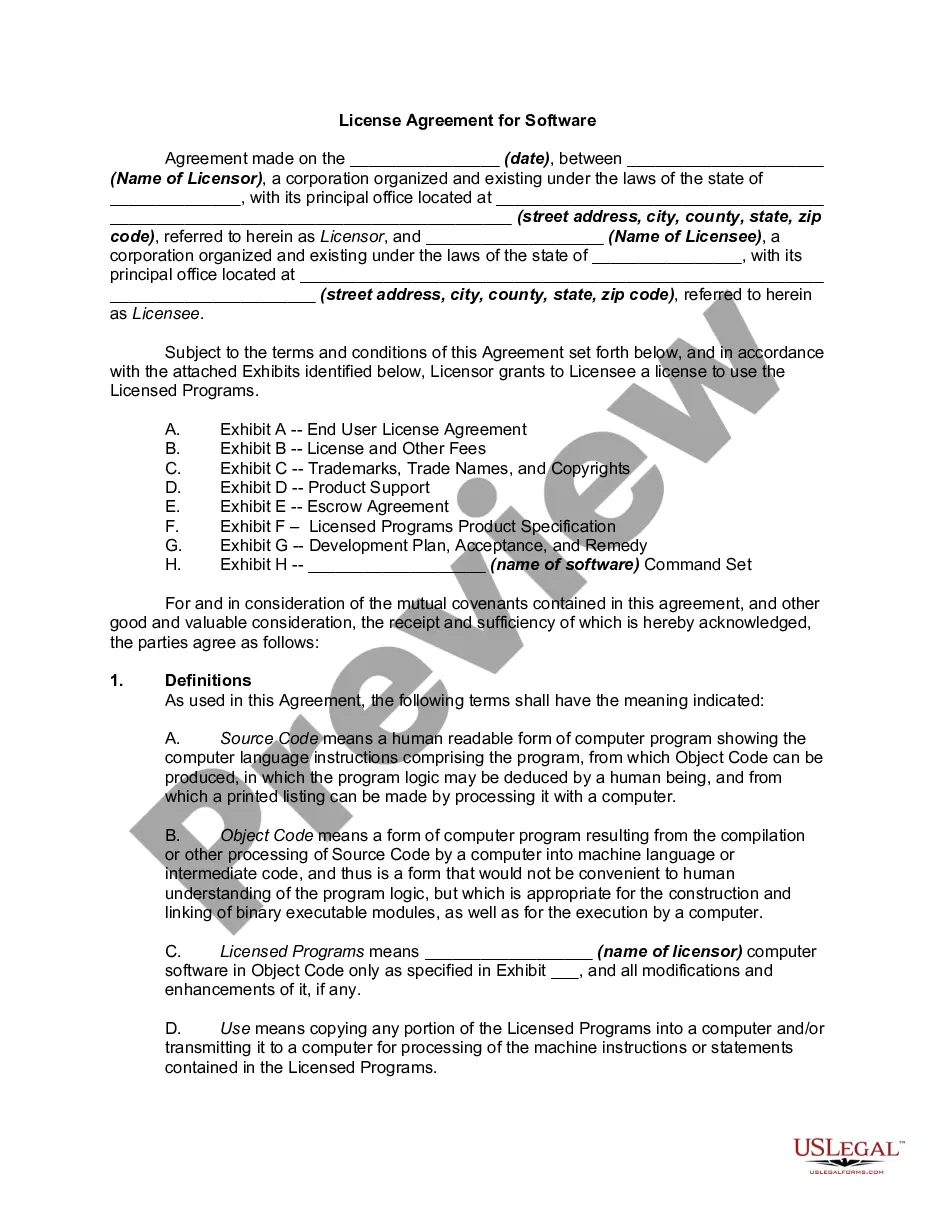
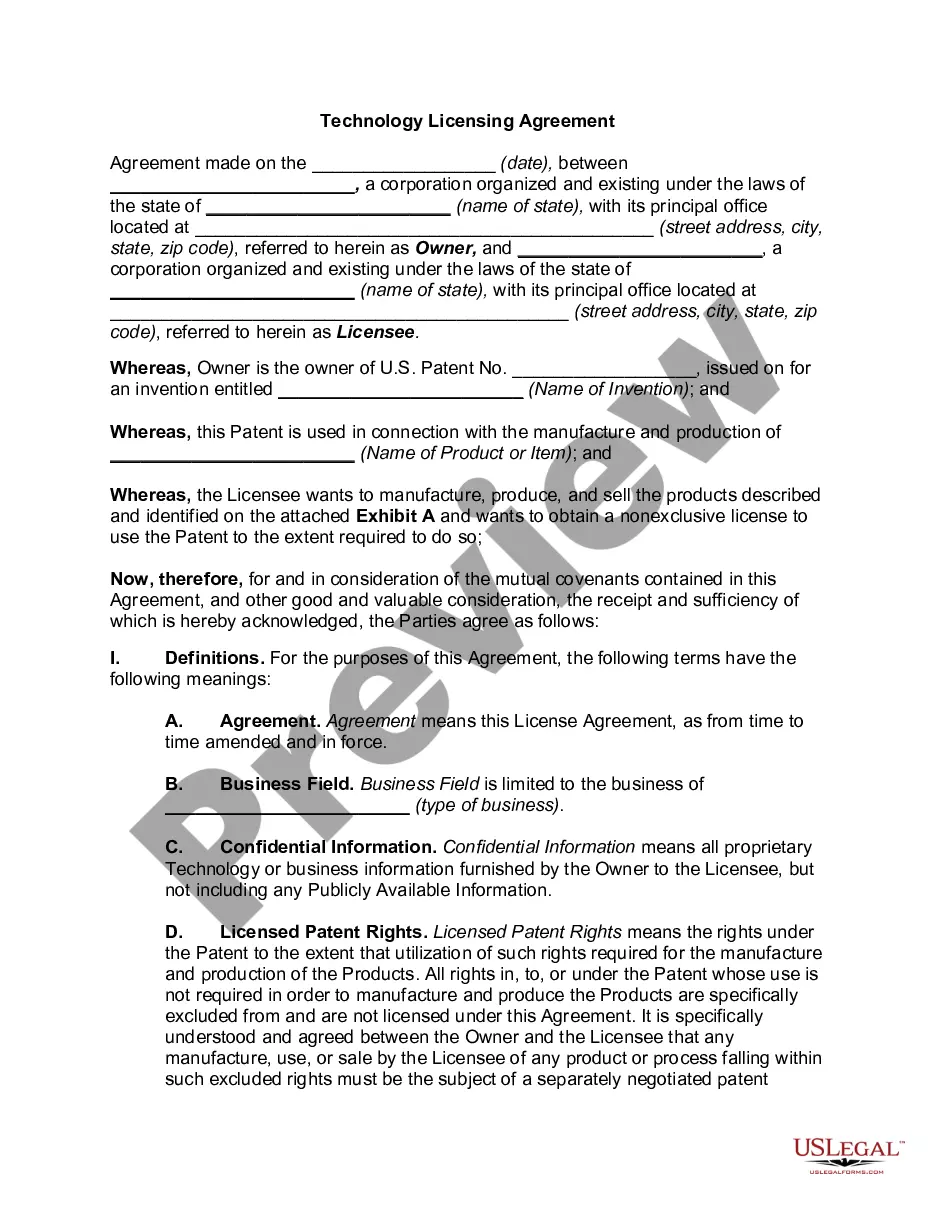
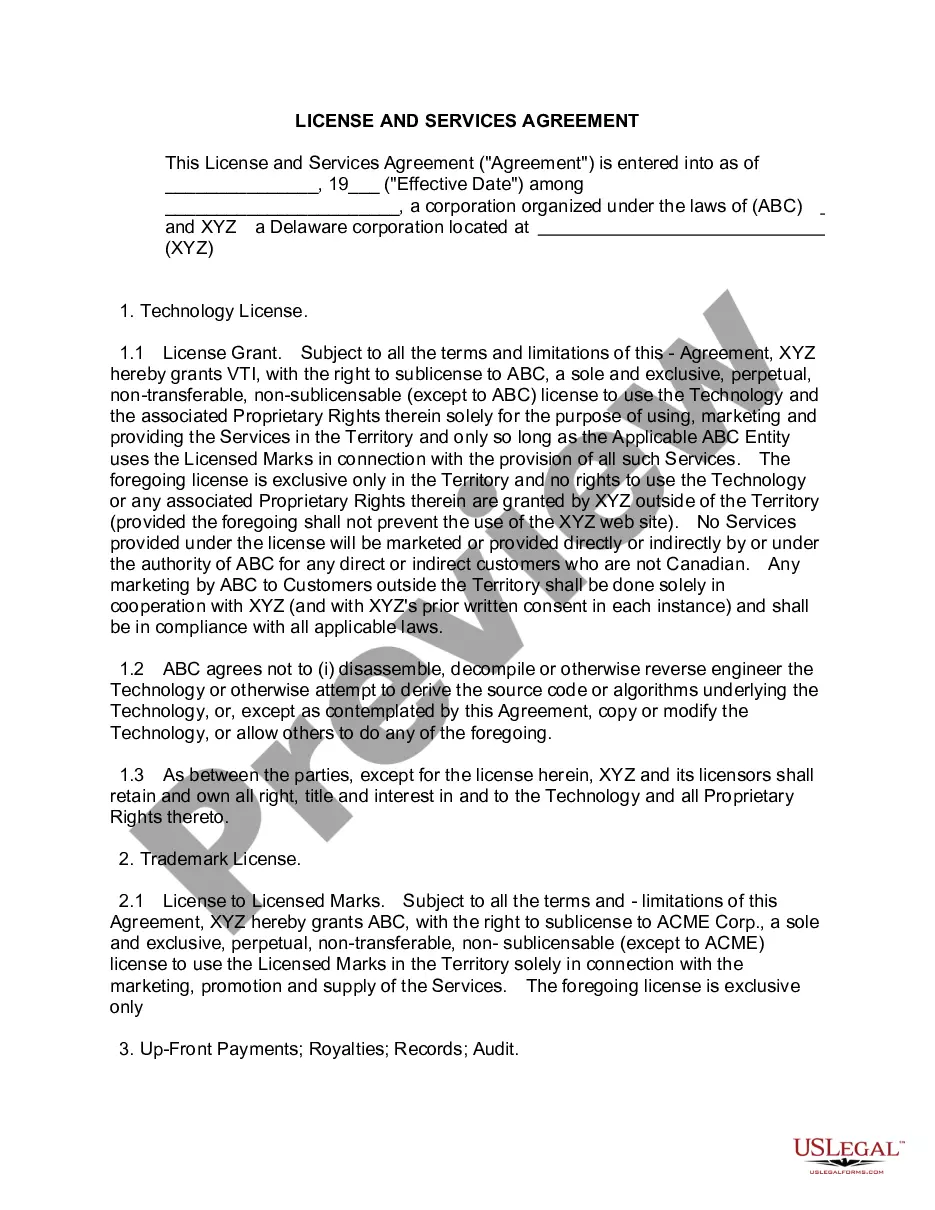
The Technology License is a legal document that outlines the agreement between two companies entering a joint venture. This document grants the Licensee specific rights to utilize the Licensor's technology and intellectual property for the manufacturing and selling of agreed products. It differs from other licensing agreements by focusing specifically on technology transfer within the context of a joint venture, facilitating collaboration in product marketing and production.
What’s included in this form
- Definitions: Clear definitions of key terms used in the agreement.
- License Grant: Details on the exclusive rights granted to the Licensee regarding the use of the Licensor's technology.
- Charges for Technology Rights: Information on royalties and payments based on the Revenue resulting from the use of the technology.
- Term and Termination: Describes the duration of the license and conditions for termination.
- Indemnification: Outlines liabilities and the responsibilities of both parties in case of legal claims.











When this form is needed
This form is essential when two companies are forming a joint venture to collaborate on product manufacturing and marketing. If your business needs to obtain rights to a partner's technology to fulfill contractual obligations or share intellectual property for development purposes, the Technology License is necessary to establish clear terms and protect both parties' interests.
Who needs this form
This Technology License is intended for:
- Businesses forming joint ventures that require technology sharing.
- Companies looking to access and utilize another company's intellectual property.
- Parties seeking to clarify rights and responsibilities related to technology use and product development.
Completing this form step by step
- Identify the parties involved: Fill in the names and business designations of both the Licensor and Licensee.
- Specify the effective date: Enter the effective date of the agreement.
- Outline the technology details: Provide a brief description of the technology and products affected by the license.
- Define the territory: State the geographic area where the Licensee can operate under this agreement.
- Enter payment terms: Detail the royalty structure and payment timelines associated with the license.
Notarization requirements for this form
This form usually doesn’t need to be notarized. However, local laws or specific transactions may require it. Our online notarization service, powered by Notarize, lets you complete it remotely through a secure video session, available 24/7.
Get your form ready online
Our built-in tools help you complete, sign, share, and store your documents in one place.
Make edits, fill in missing information, and update formatting in US Legal Forms—just like you would in MS Word.
Download a copy, print it, send it by email, or mail it via USPS—whatever works best for your next step.
Sign and collect signatures with our SignNow integration. Send to multiple recipients, set reminders, and more. Go Premium to unlock E-Sign.
If this form requires notarization, complete it online through a secure video call—no need to meet a notary in person or wait for an appointment.
We protect your documents and personal data by following strict security and privacy standards.

Make edits, fill in missing information, and update formatting in US Legal Forms—just like you would in MS Word.

Download a copy, print it, send it by email, or mail it via USPS—whatever works best for your next step.

Sign and collect signatures with our SignNow integration. Send to multiple recipients, set reminders, and more. Go Premium to unlock E-Sign.

If this form requires notarization, complete it online through a secure video call—no need to meet a notary in person or wait for an appointment.

We protect your documents and personal data by following strict security and privacy standards.
Typical mistakes to avoid
- Failing to clearly define all key terms, leading to misunderstandings later.
- Omitting details about the geographic territory, restricting the right to operate effectively.
- Not specifying payment structures, which can lead to disputes over royalty calculations.
Benefits of completing this form online
- Convenience: Download and complete the form instantly from any location.
- Editability: Make necessary modifications to meet specific needs before finalizing.
- Reliability: Access reliable, attorney-drafted documents that adhere to legal standards.
Legal use & context
- This Technology License provides a legally enforceable agreement outlining the rights and obligations of both parties.
- It helps prevent disputes over technology use and clarifies the implications of intellectual property rights.
Key takeaways
- The Technology License facilitates collaboration between companies through established agreements on technology use.
- Clear definitions and terms within the document protect both parties and outline their responsibilities.
- Using this form can streamline the joint venture process and mitigate legal risks associated with technology sharing.
Looking for another form?
Form popularity
FAQ
Licensing as a revenue model for technology products. A licensing revenue model allows technology producers to monetize their new technology products by licensing them to other companies so that they may be integrated into an end-product.
Technology licensing agreements are contracts or arrangements that involve an owner of a technology-based intellectual property, also known as a licensor, who will accept compensation in exchange for allowing an outside party, known as the licensee, resell the property, make alterations to it, or simply use it.
An example of a licensing agreement is a contract between the copyright holders of software and another company, allowing the latter to use the computer software for their daily business operations.
A license agreement is a business contract between two parties. The licensor (the seller of the license) owns the asset being licensed and the licensee (the buyer) pays for the right to use the license. The licensee pays royalties to the owner in exchange for the right to sell the product or use the technology.
What is a Licensing Agreement? A licensing agreement is a contract between two parties (the licensor and licensee) in which the licensor grants the licensee the right to use the brand name, trademark, patented technology, or ability to produce and sell goods owned by the licensor.
A licensing agreement is a legal contract between two parties, known as the licensor and the licensee. In a typical licensing agreement, the licensor grants the licensee the right to produce and sell goods, apply a brand name or trademark, or use patented technology owned by the licensor.
Download a template for a licensing agreement. Choose your role as the licensor or licensee. Define the license(s) in the agreement. Decide whether the license is exclusive or not. Settle the matter of fees and payment schedule. Add a renewal date and rules.
Exclusive or non-exclusive. In an exclusive license, the intellectual property holder is licensing the work only to one person, for that particular use/territory. Territory. Use. Attribution. Derivative works. Confidentiality. Time frame. Termination.