South Carolina FALSE STATEMENT IN PASSPORT APPLICATION
What is this form?
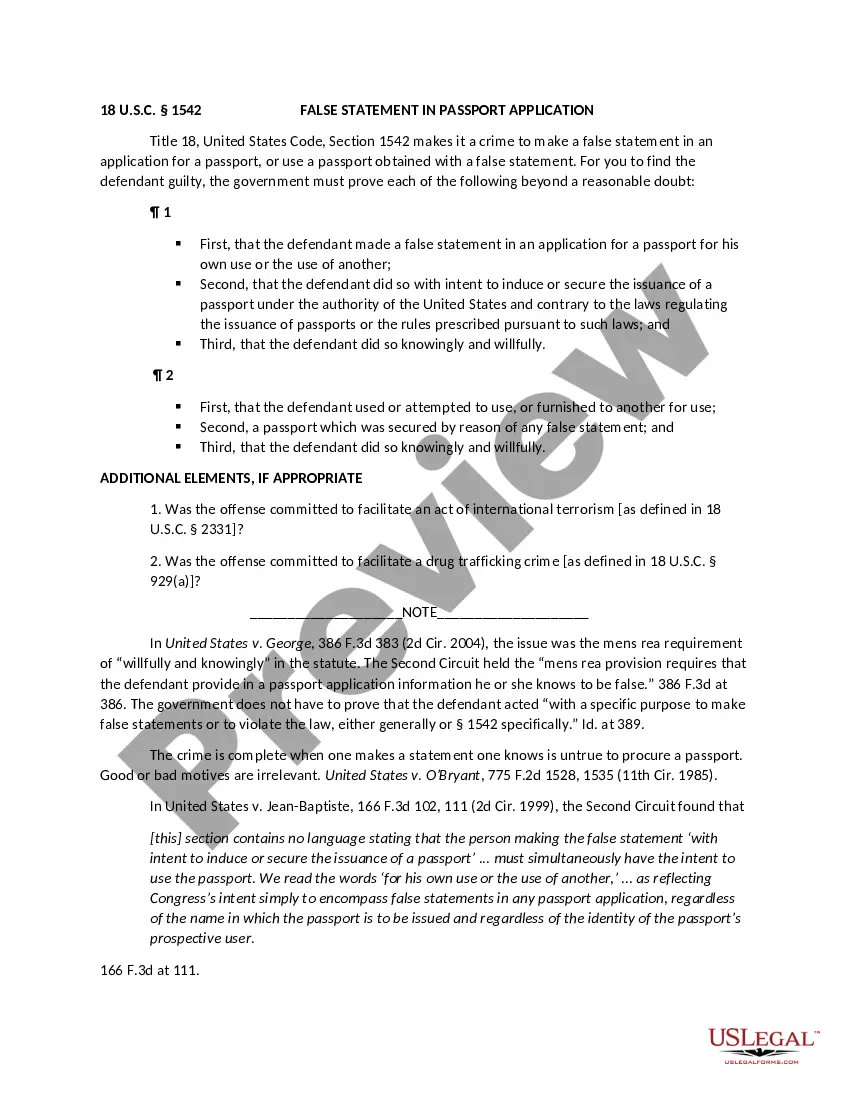
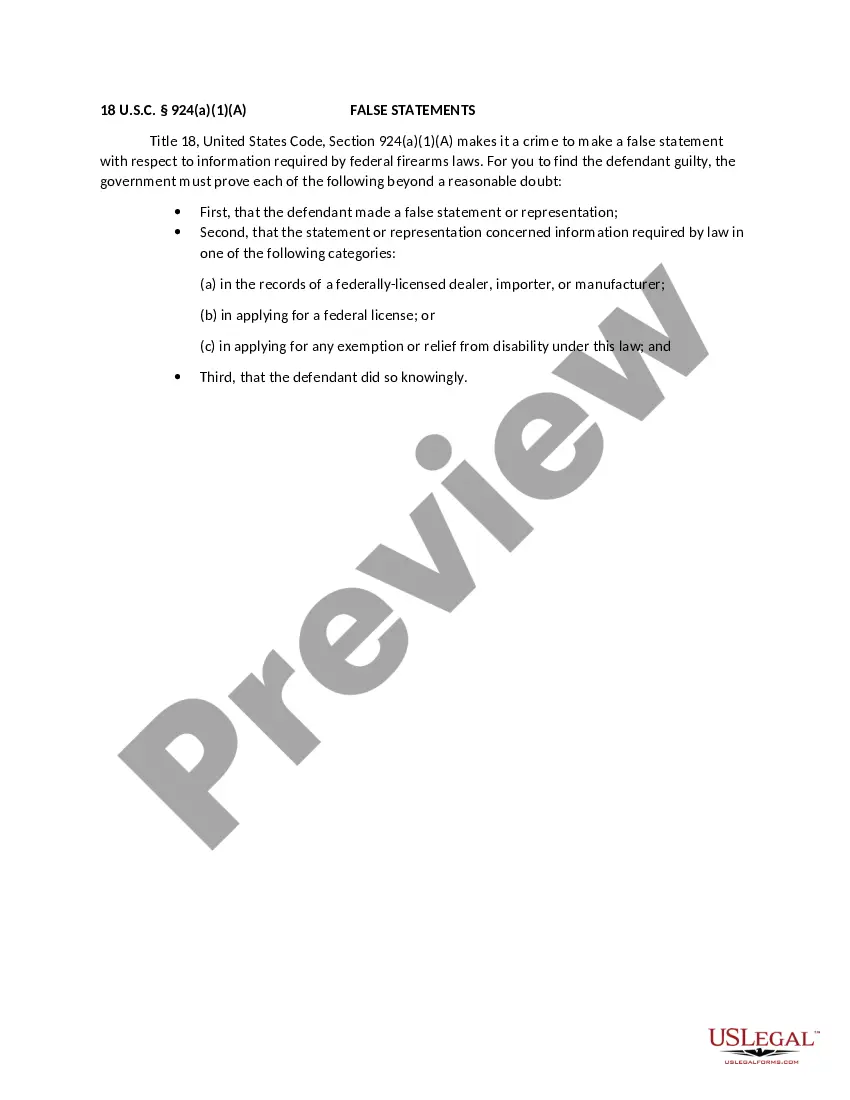
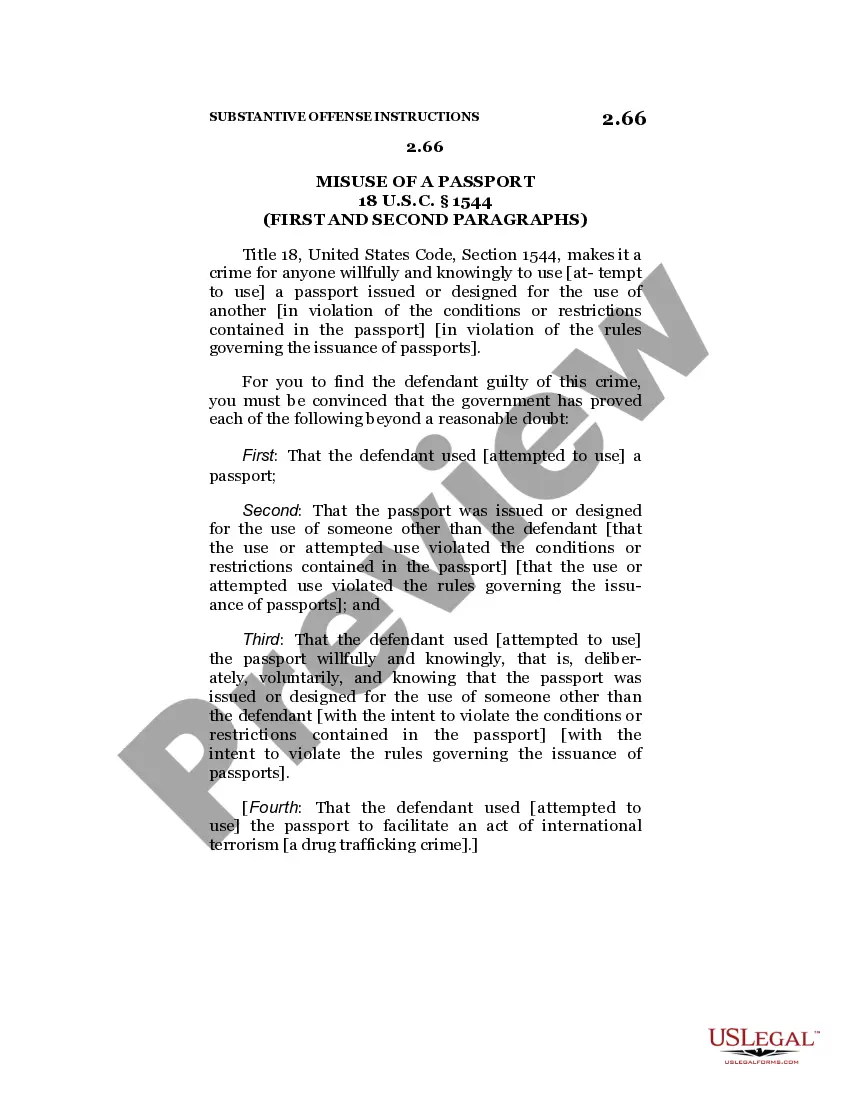
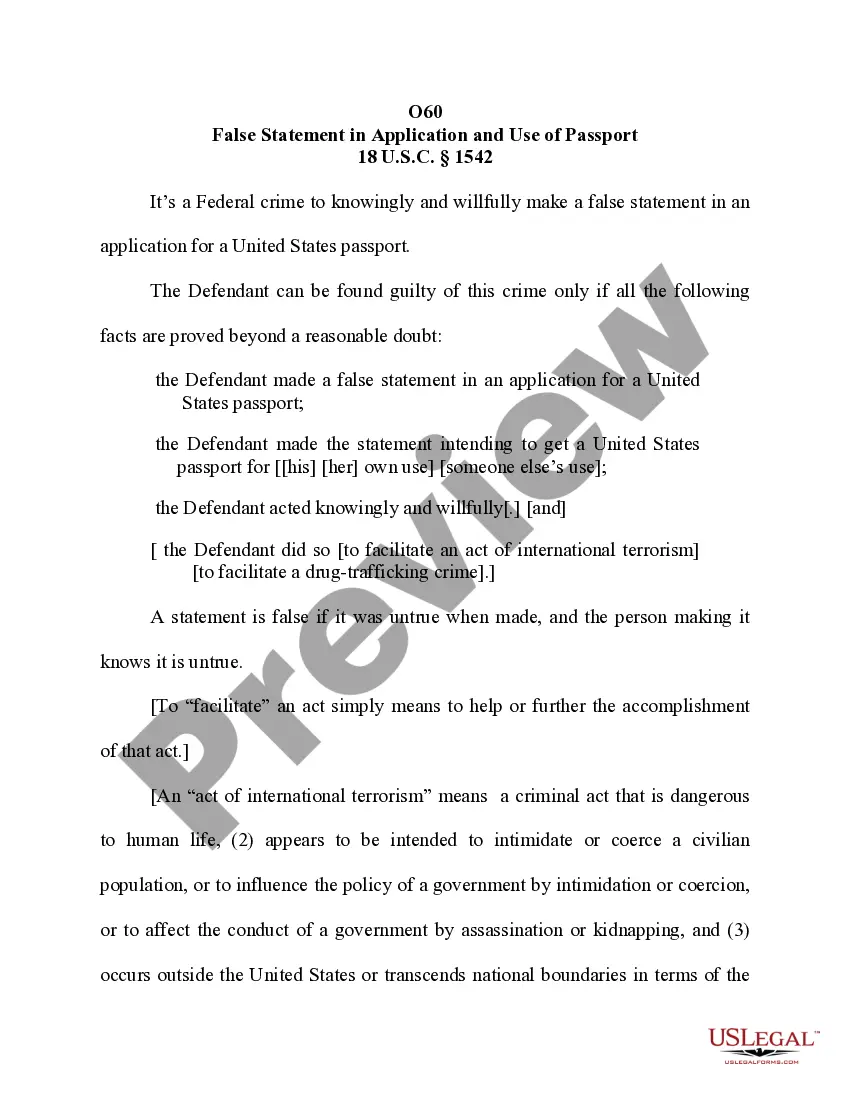
The False Statement in Passport Application form is a legal document used to address issues related to making false statements in an application for a passport. This form is essential in cases where individuals are accused of providing inaccurate information with the intent to deceive the government into issuing a passport. Unlike other legal forms, this document specifically focuses on the implications of falsifying passport information under Title 18, United States Code, Section 1542.
What’s included in this form
- Definition of a false statement related to passport applications.
- Intent requirements for making false statements.
- Consequences of using a passport obtained through false information.
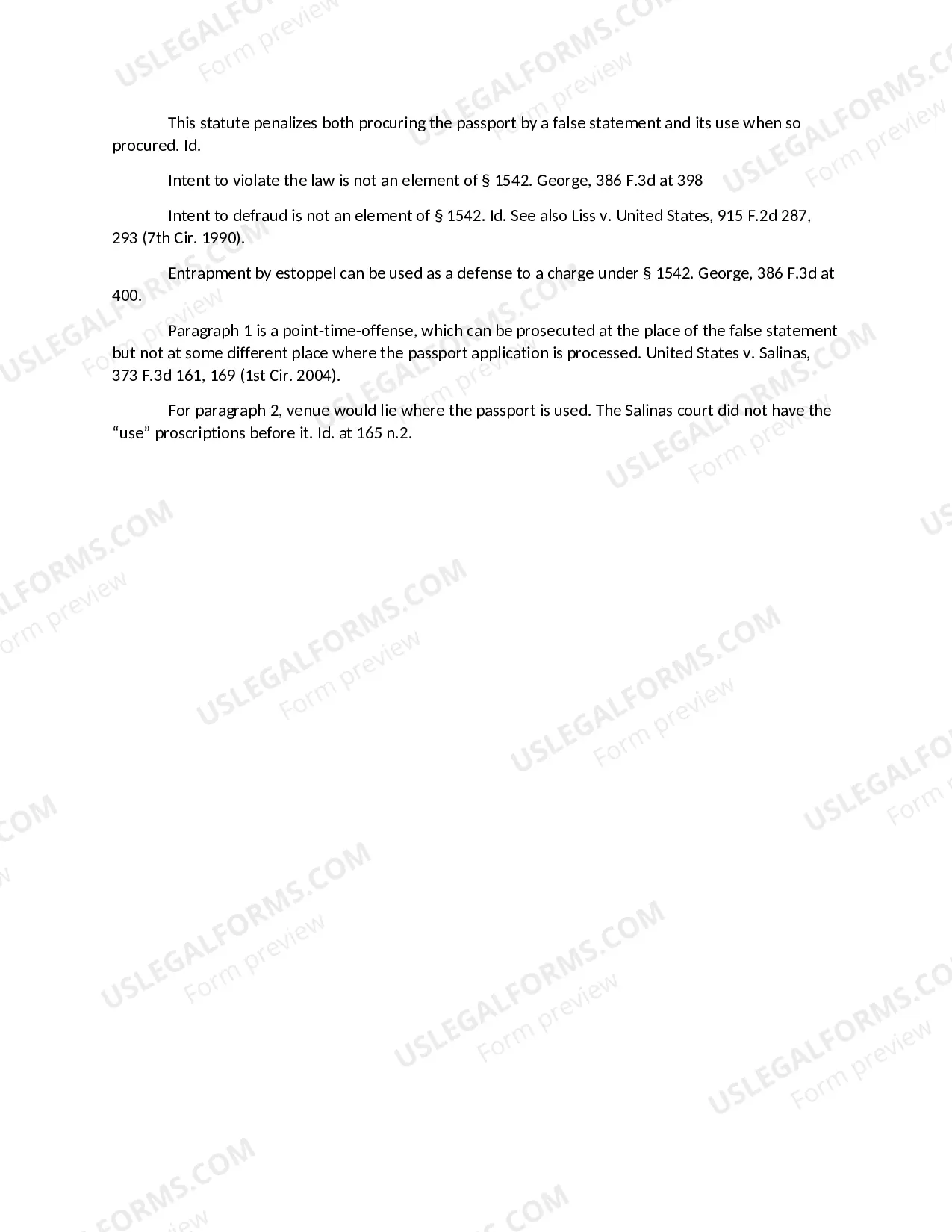
- Clarifications regarding criminal implications, including mens rea.
- Potential defenses, including entrapment by estoppel.
When to use this document
This form is used in legal proceedings where a person is accused of making a false statement in their passport application. It is necessary when an individual is facing criminal charges related to passport fraud, either for themselves or for others. If you are involved in a legal case concerning misleading information on a passport application, this form is crucial in understanding the legal context and potential defenses.
Intended users of this form
- Individuals accused of making false statements during their passport application process
- Legal professionals representing clients in passport fraud cases
- Anyone involved in a legal investigation related to passport applications
Instructions for completing this form
- Review the definitions and intent requirements outlined in the form.
- Gather evidence or documentation that pertains to false statements made.
- Identify and state the precise nature of the false statement(s) involved.
- Consult with legal counsel if applicable to ensure compliance with legal standards.
- Submit the form along with any necessary documentation to the appropriate legal authority.
Notarization requirements for this form
Notarization is generally not required for this form. However, certain states or situations might demand it. You can complete notarization online through US Legal Forms, powered by Notarize, using a verified video call available anytime.
Get your form ready online
Our built-in tools help you complete, sign, share, and store your documents in one place.
Make edits, fill in missing information, and update formatting in US Legal Forms—just like you would in MS Word.
Download a copy, print it, send it by email, or mail it via USPS—whatever works best for your next step.
Sign and collect signatures with our SignNow integration. Send to multiple recipients, set reminders, and more. Go Premium to unlock E-Sign.
If this form requires notarization, complete it online through a secure video call—no need to meet a notary in person or wait for an appointment.
We protect your documents and personal data by following strict security and privacy standards.

Make edits, fill in missing information, and update formatting in US Legal Forms—just like you would in MS Word.

Download a copy, print it, send it by email, or mail it via USPS—whatever works best for your next step.

Sign and collect signatures with our SignNow integration. Send to multiple recipients, set reminders, and more. Go Premium to unlock E-Sign.

If this form requires notarization, complete it online through a secure video call—no need to meet a notary in person or wait for an appointment.

We protect your documents and personal data by following strict security and privacy standards.
Avoid these common issues
- Failing to fully understand the intent requirement of mens rea.
- Not providing sufficient evidence to support claims made in the application.
- Overlooking the implications of using a passport obtained falsely.
- Neglecting to consult a legal professional for advice.
Benefits of completing this form online
- Convenient access to necessary legal documents from anywhere.
- Editability allows users to fill out the form at their own pace.
- Reliable templates drafted by licensed attorneys ensure legal compliance.
Looking for another form?

Form popularity
FAQ
Section 1542. 1542. A general release does not extend to claims that the creditor or releasing party does not know or suspect to exist in his or her favor at the time of executing the release and that, if known by him or her, would have materially affected his or her settlement with the debtor or released party.
The statute of limitations for violations of 18 U.S.C. §§ 1541 to 1544 is 10 years.
The statute of limitations for a § 1001 prosecution is five years and commences upon completion of the crime, e.g., upon making of false statement or submission of false document.
§ 53.1 Passport requirement; definitions. (a) It is unlawful for a citizen of the United States, unless excepted under 22 CFR 53.2, to enter or depart, or attempt to enter or depart, the United States, without a valid U.S. passport.
Lying on a passport application is a federal offense. So is giving someone a passport based on known false information. Forgery or False Use of Passport (18 U.S.C. 1543).
18 U.S.C. 1542 -- False Statement In Application For Passport And Use Of A Passport Fraudulently Obtained. Section 1542 of Title 18 proscribes both false statements made to obtain a passport, and use of any passport so obtained.
For a basic, first offense of passport fraud under 18 U.S.C. § 1542, such as lying on a passport application, you can be fined $250,000 and sentenced to up to ten years in prison. If the fraud involves trafficking in narcotics, the penalty increases to up to 20 years in prison.