Louisiana Petition to Disavow Paternity
What this document covers
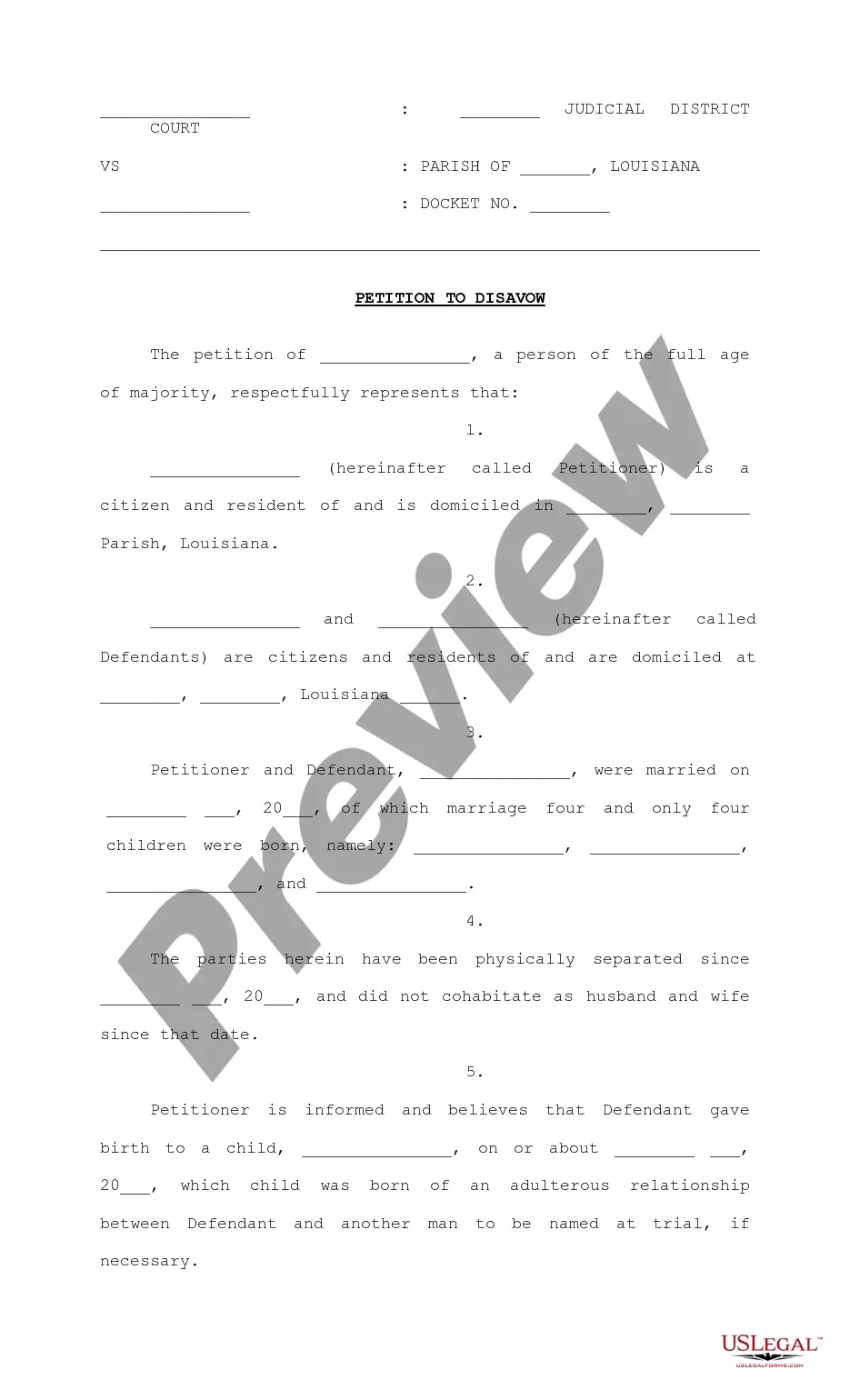
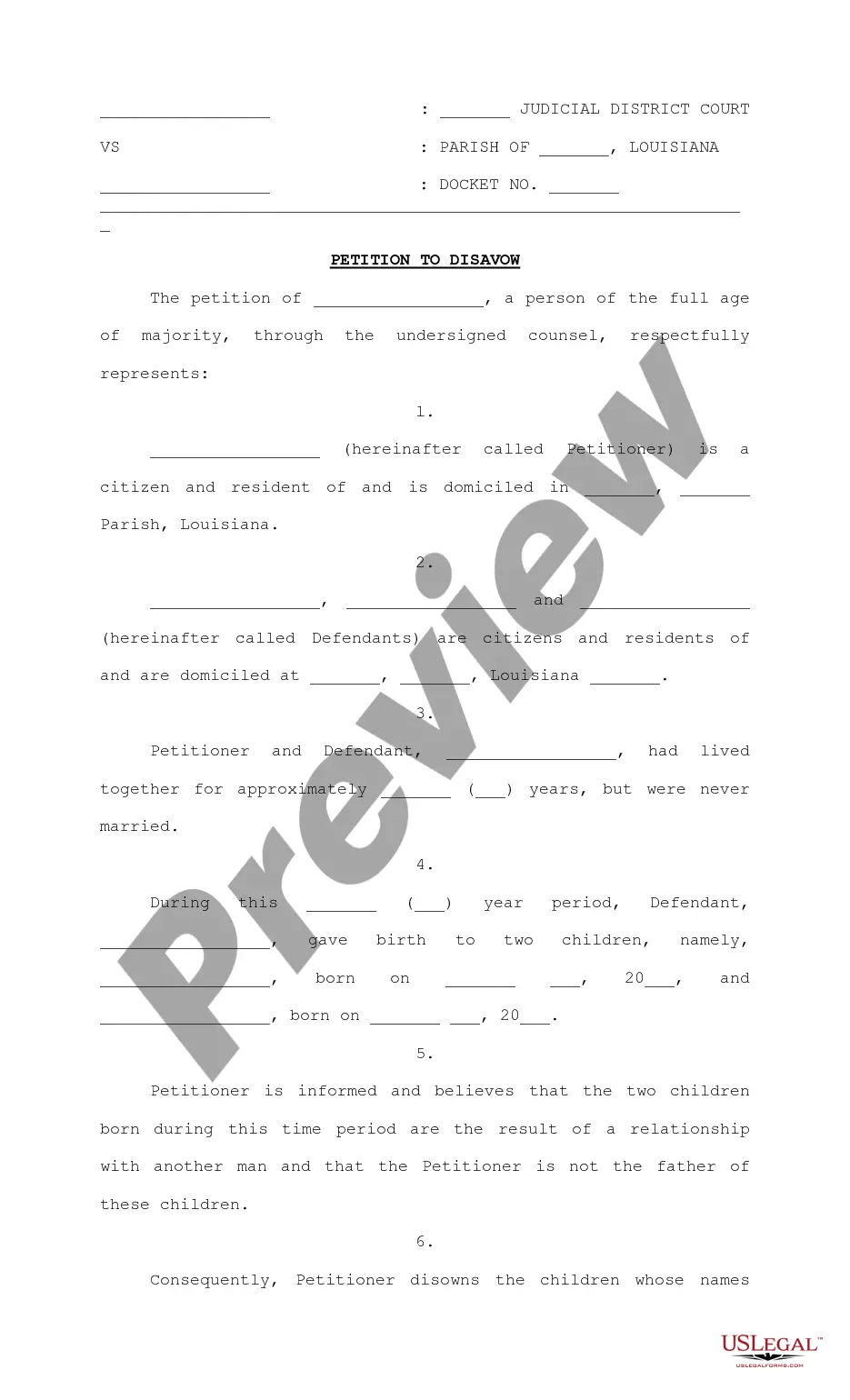
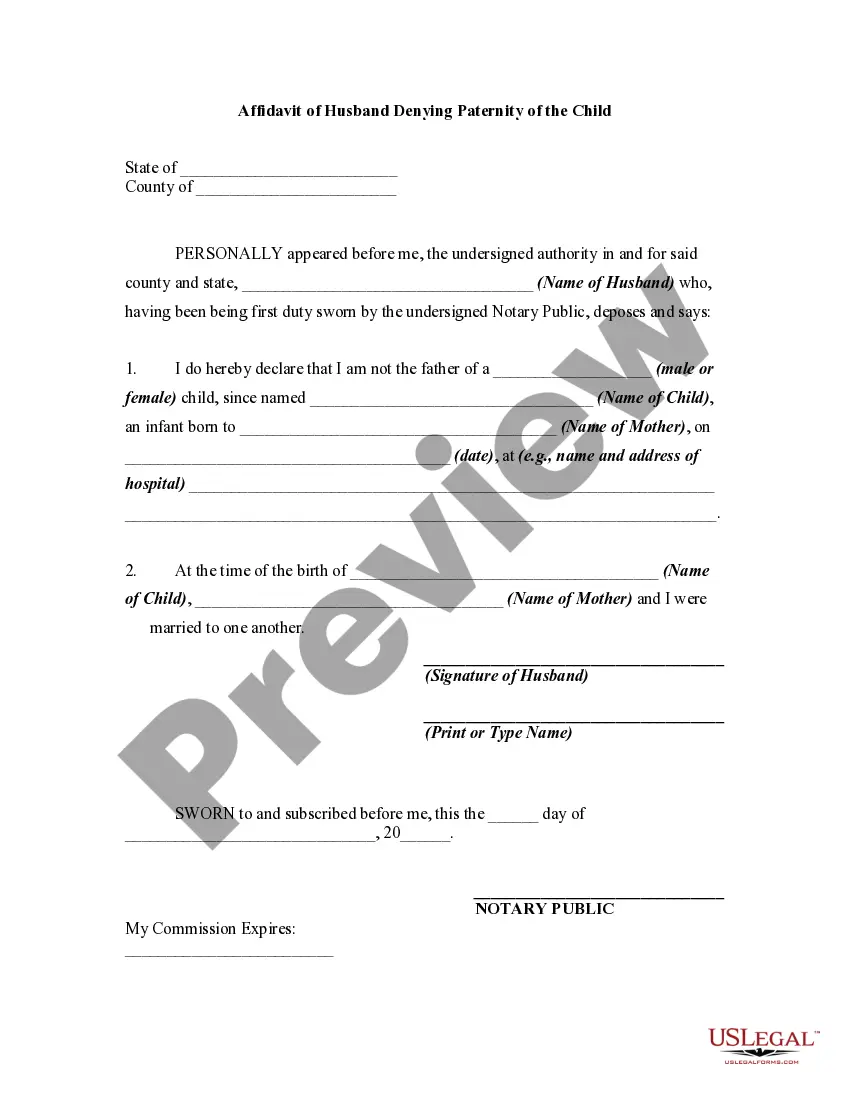
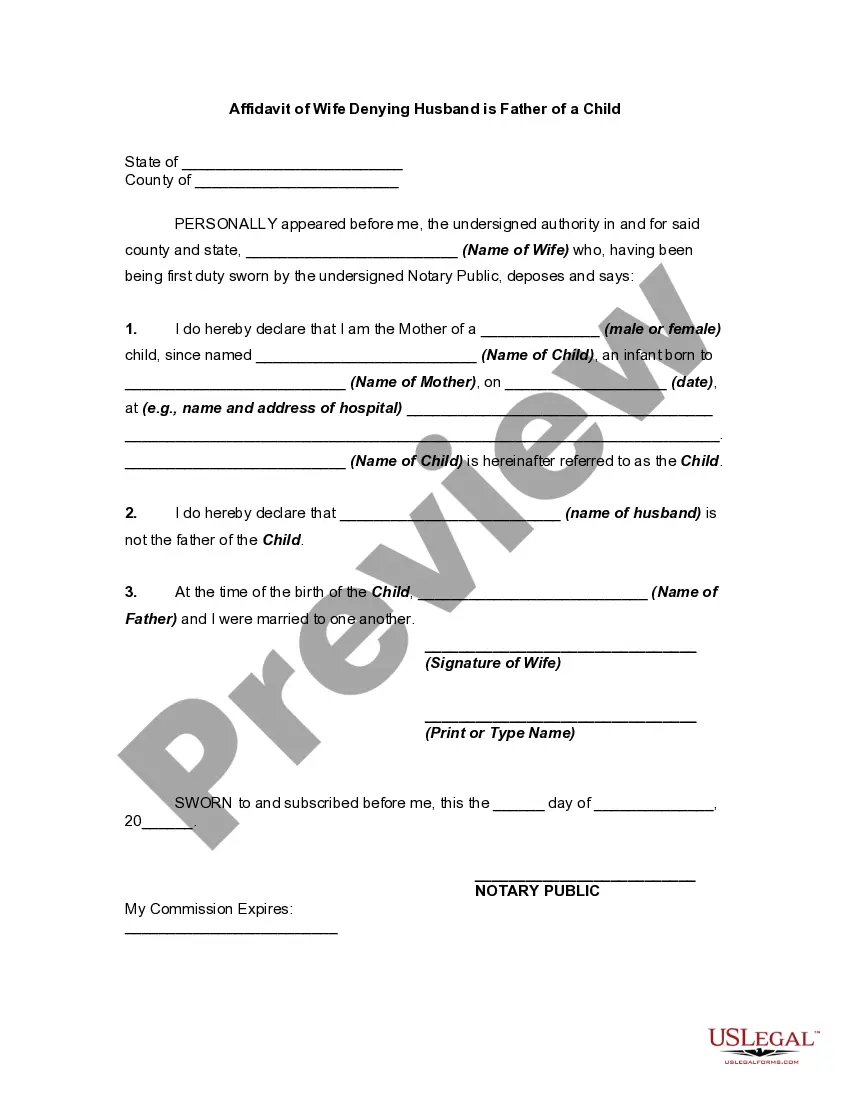
The Petition to Disavow Paternity is a legal document used by an individual (the petitioner) to request a court judgment declaring that a specified child is not biologically theirs. This form is particularly relevant in situations involving allegations of infidelity during marriage, where the biological father of the child may be another man. This form ensures that the child's legal interests are represented in these proceedings, distinguishing it from other paternity-related forms that may establish or confirm parenthood.
Form components explained
- Petitionerâs identification: Information about the individual seeking to disavow paternity.
- Defendantâs details: Information about the child's mother and any other involved parties.
- Marriage history: Details regarding the marriage between the petitioner and the defendant.
- Child's information: The name and birth details of the child in question, along with an acknowledgment of the childâs conception circumstances.
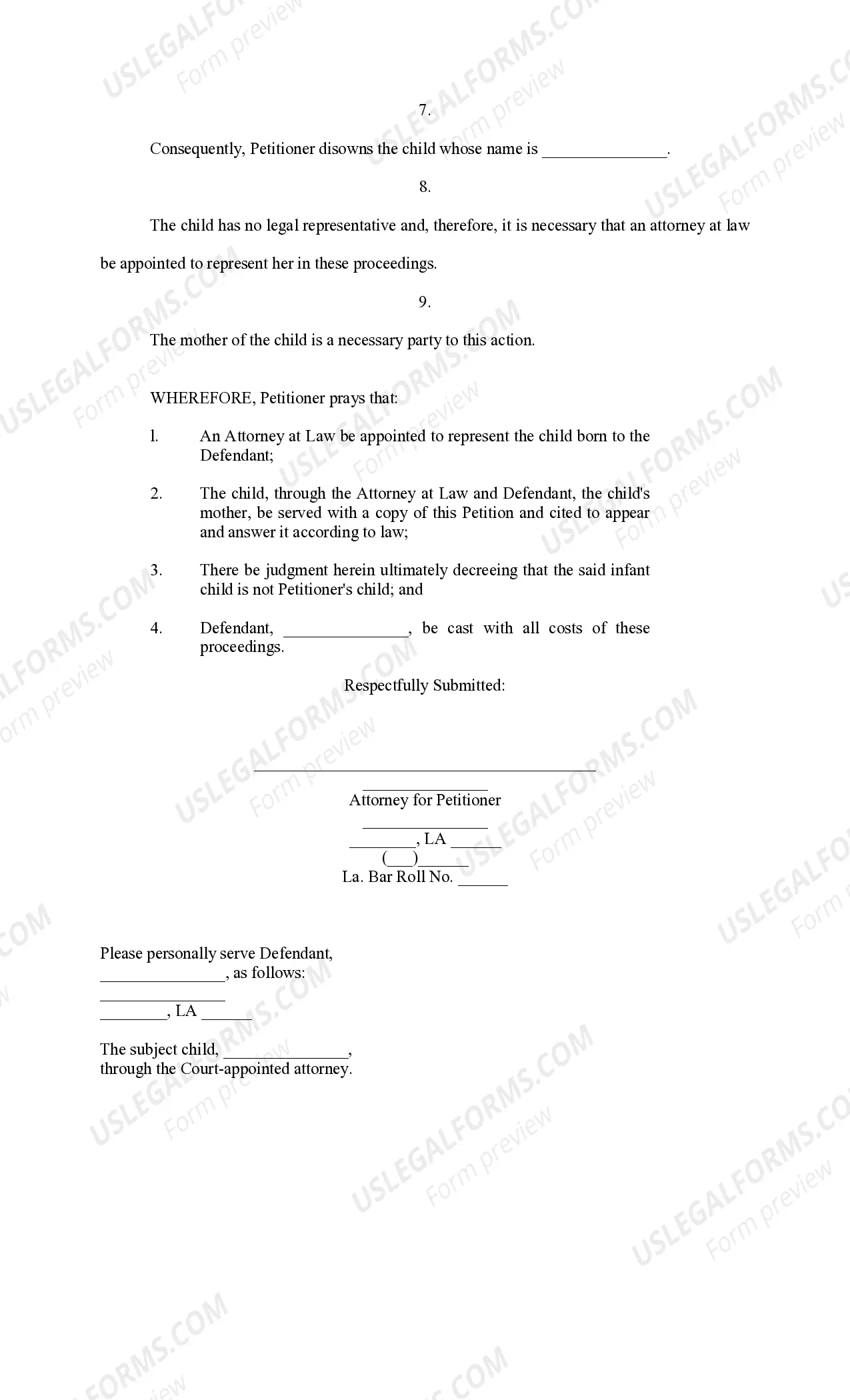
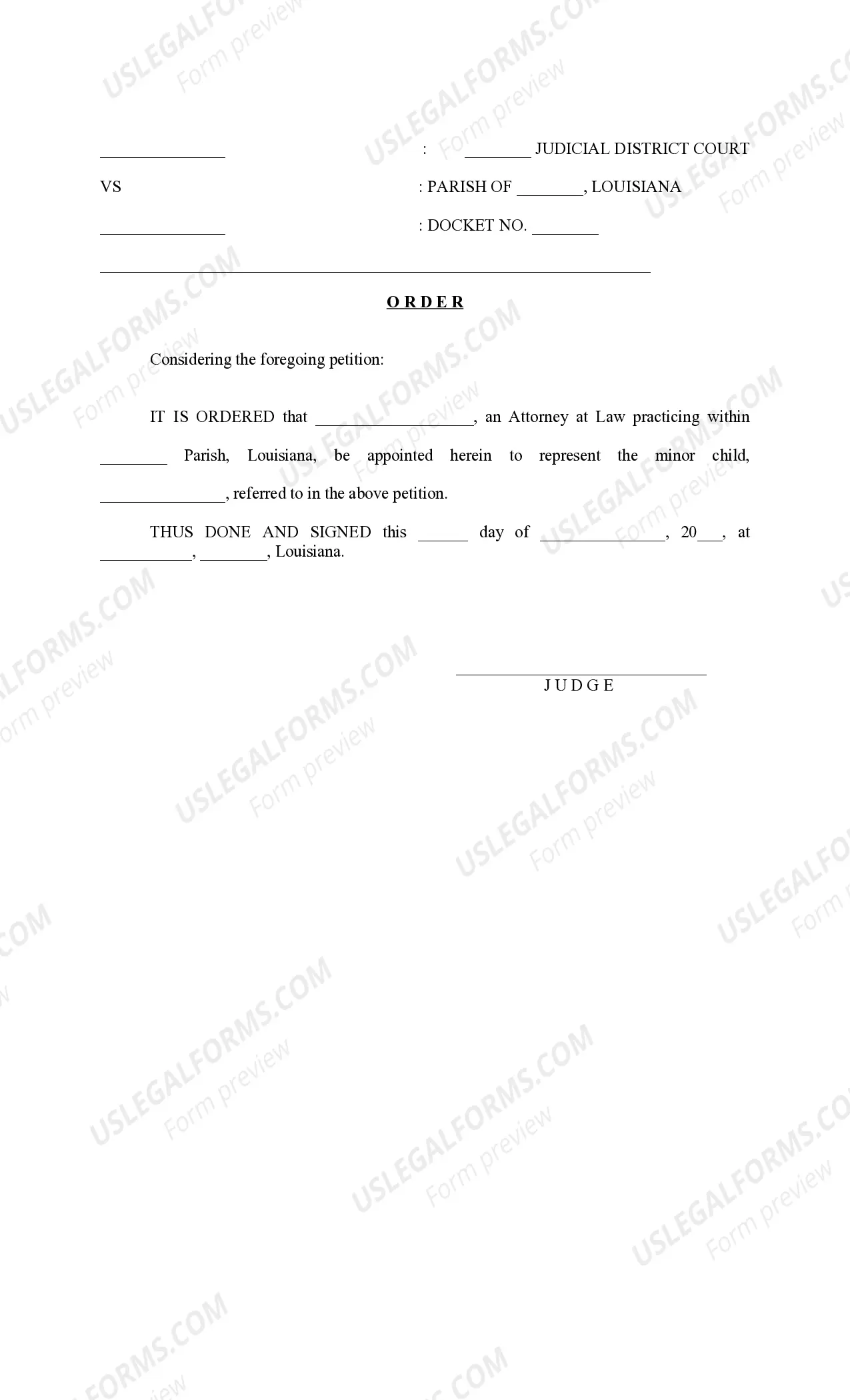
- Requests for legal representation: A request for the appointment of an attorney to represent the child during the proceedings.
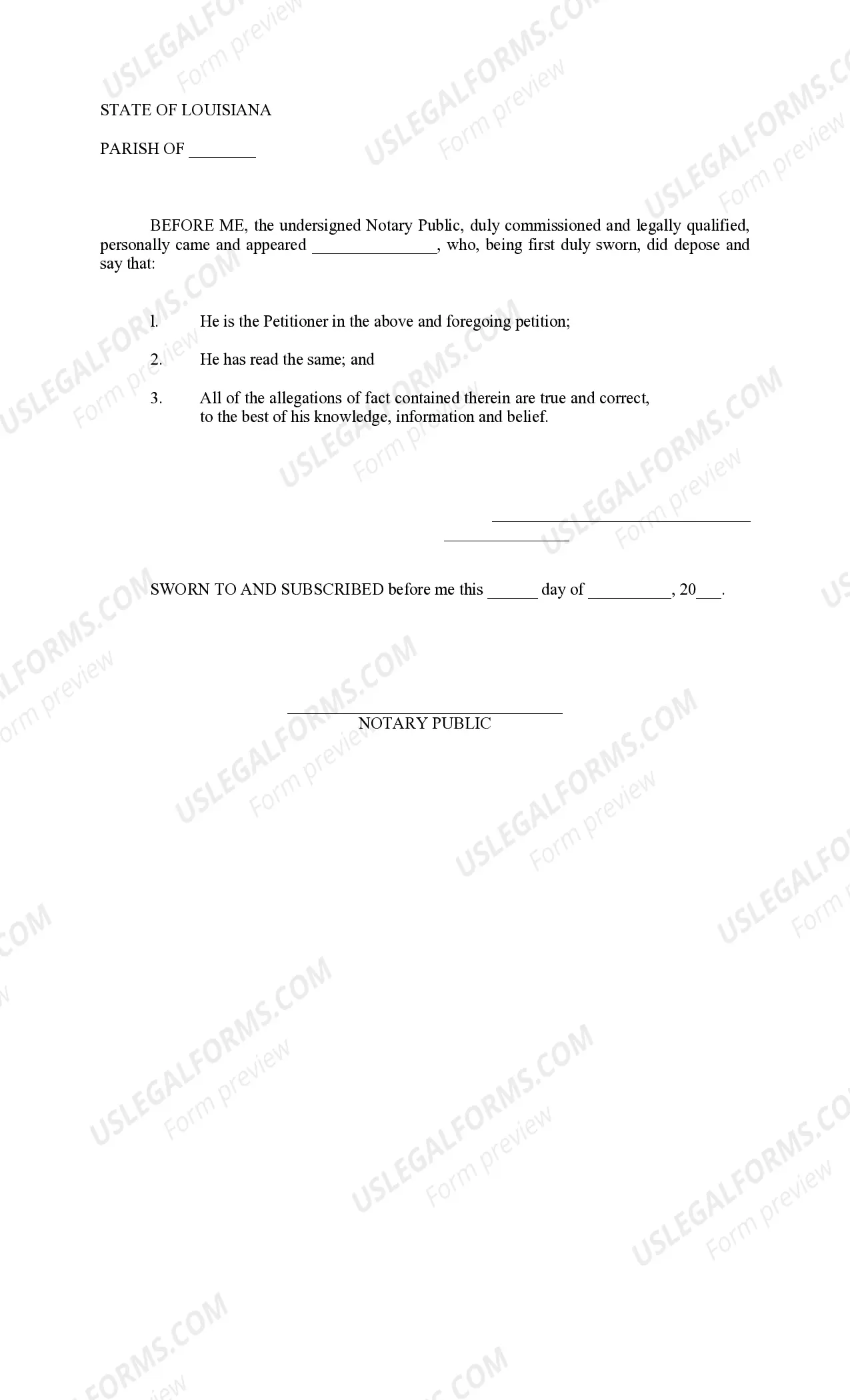
- Legal declarations: Affirmations regarding the petitionerâs position on paternity and the necessary court actions to be taken.
When to use this form
This form should be used in situations where an individual believes they are wrongly presumed to be the father of a child. Such scenarios may arise during divorce proceedings, particularly when infidelity is suspected. The petition allows the individual to legally disavow paternity and seek appropriate legal representation for the childâs interests in court.
Who should use this form
- Individuals seeking to contest paternity claims.
- Married persons who suspect their spouse had an adulterous relationship resulting in the birth of a child.
- Parents who want to establish legal clarity regarding their parental responsibilities.
- Individuals involved in child custody or support disputes where paternity is contested.
How to complete this form
- Identify the parties: Enter the names and addresses of the petitioner and the defendants, including the child's mother.
- Provide marriage details: State the date and location of the marriage between the petitioner and the child's mother.
- Specify information about the child: Include the name and birth date of the child in question, along with details of the circumstances surrounding their conception.
- Request attorney representation: Clearly state the need for legal representation for the child within the proceedings.
- Sign and date the petition: Ensure you sign the document in front of a notary to affirm the truth of the statements made.
Notarization guidance
Yes, this form must be notarized to be legally valid. This ensures that the signatures and declarations made within the petition are verified. US Legal Forms offers integrated online notarization, allowing you to complete this process securely via video call, ensuring convenience without the need for travel.
Get your form ready online
Our built-in tools help you complete, sign, share, and store your documents in one place.
Make edits, fill in missing information, and update formatting in US Legal Forms—just like you would in MS Word.
Download a copy, print it, send it by email, or mail it via USPS—whatever works best for your next step.
Sign and collect signatures with our SignNow integration. Send to multiple recipients, set reminders, and more. Go Premium to unlock E-Sign.
If this form requires notarization, complete it online through a secure video call—no need to meet a notary in person or wait for an appointment.
We protect your documents and personal data by following strict security and privacy standards.

Make edits, fill in missing information, and update formatting in US Legal Forms—just like you would in MS Word.

Download a copy, print it, send it by email, or mail it via USPS—whatever works best for your next step.

Sign and collect signatures with our SignNow integration. Send to multiple recipients, set reminders, and more. Go Premium to unlock E-Sign.

If this form requires notarization, complete it online through a secure video call—no need to meet a notary in person or wait for an appointment.

We protect your documents and personal data by following strict security and privacy standards.
Avoid these common issues
- Failing to provide complete and accurate information about all parties involved.
- Not specifying the reasons for contesting paternity clearly within the document.
- Overlooking the requirement to appoint an attorney for the child, which is necessary in these cases.
- Neglecting to properly sign and date the form, including notarization if required.
Why complete this form online
- Convenient access to a legally vetted template, ensuring accuracy and compliance.
- Editable fields allow for personalized information to be easily inputted.
- Immediate availability for download, enabling prompt action on legal matters.
- Guidance provided for each section, helping users navigate the requirements confidently.
Legal use & context
- This form is used in court to assert the claim of non-paternity legally.
- Submitting the petition may lead to litigation regarding paternal rights and responsibilities.
- The court will evaluate the claims based on provided evidence and representations made in the form.
Summary of main points
- The Petition to Disavow Paternity is essential for those contesting paternity claims.
- Clear, accurate information is crucial for a successful petition.
- Legal representation for minors is mandatory in such proceedings.
- Understanding state-specific requirements is vital before filing.
Looking for another form?



Form popularity
FAQ
You have to convince the court to accept your petition, even at the outset, because the statute technically does not allow a person who is looking to disavow paternity to file a paternity petition in family court. If the father is married, the contest is best done through the Supreme Court and in a divorce proceeding.
The legal father of a child is presumed if he and the mother of the child were married at the time of birth or if he signed the birth certificate at the time of birth, or through a court order when both parents acknowledge paternity.
The person must complete a Revocation of Acknowledgment of Paternity and file it with Vital Records within the 60 day period. After 60 days, a parent must file a petition in court in Louisiana to rescind (revoke) the acknowledgment pursuant to R.S. 2 A (7) (a & b) or R.S. 6.
Take a Paternity Test. In some cases, disputing paternity can be as simple as taking a DNA test. Understand Automatic Paternity. Respond to Summons and Complaint Regarding Parental Obligations. Cancel a Voluntary Declaration of Paternity. Dispute a Petition to Establish Parental Relationship. Hire a Family Lawyer.
When children are born, they naturally form an automatic, strong, and loving bond with their parents.When it comes to parental rights, a Louisiana father's right to custody and visitation is equal to that of a child's mother, whether the father is aware of these rights or not.
California family law assumes that when parents conceive a child during a marriage, the wife is the mother, and the husband is the father.The father can challenge the paternity, however, by a court-ordered genetic test. However, an individual must request the test within two years of the birth of the child.
There are two methods that unmarried Louisiana couples with a baby can take to establish paternity: the parents can sign an affidavit of acknowledgement, or the question of the baby's paternity can be adjudicated (decided) by a judge of district court after someone files a paternity lawsuit.
It is not possible to remove father from birth certificate who is the natural father of a child. Therefore, no matter how strained your relationship is with your former partner you are not able to remove father from birth certificate.
For example, in a paternity fraud case, the judge may hold a person in contempt for lying or falsifying information about the paternity test. When this occurs, the judge may issue a contempt order, which can result in criminal charges.