Sample Letter to Include Article Relating to Tax Sales
What this document covers
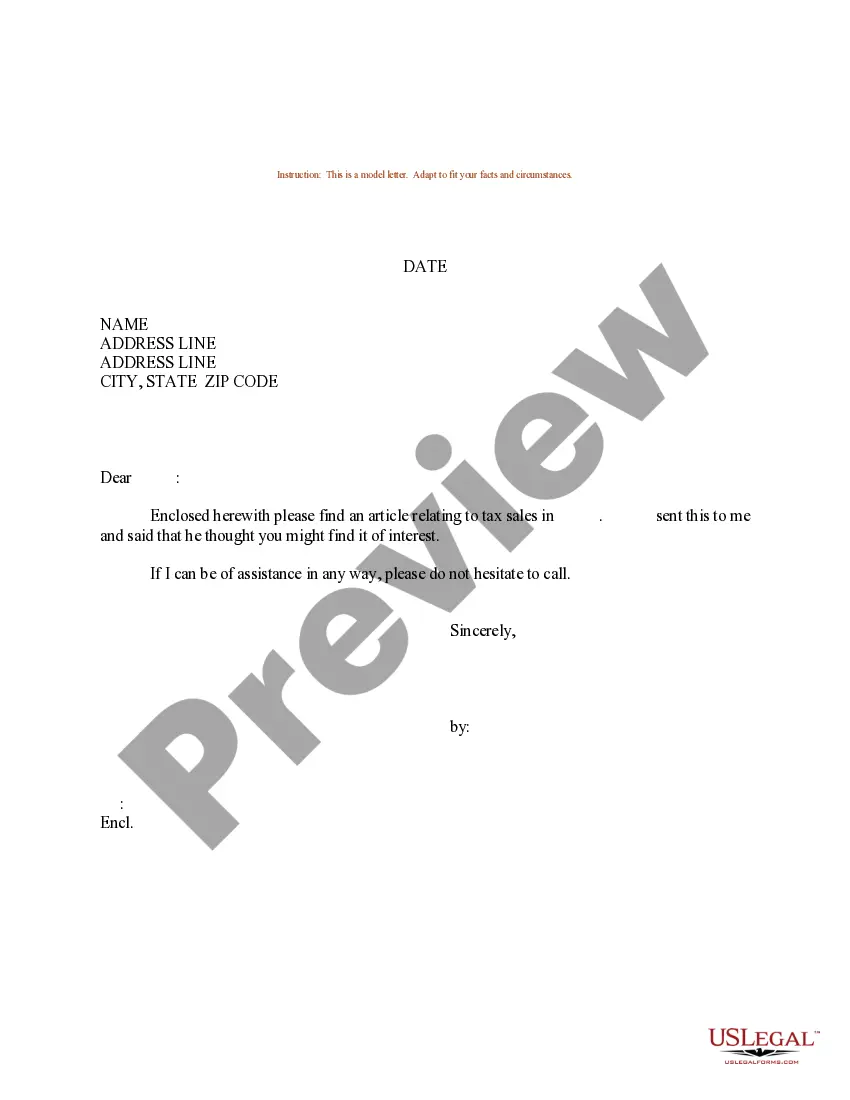
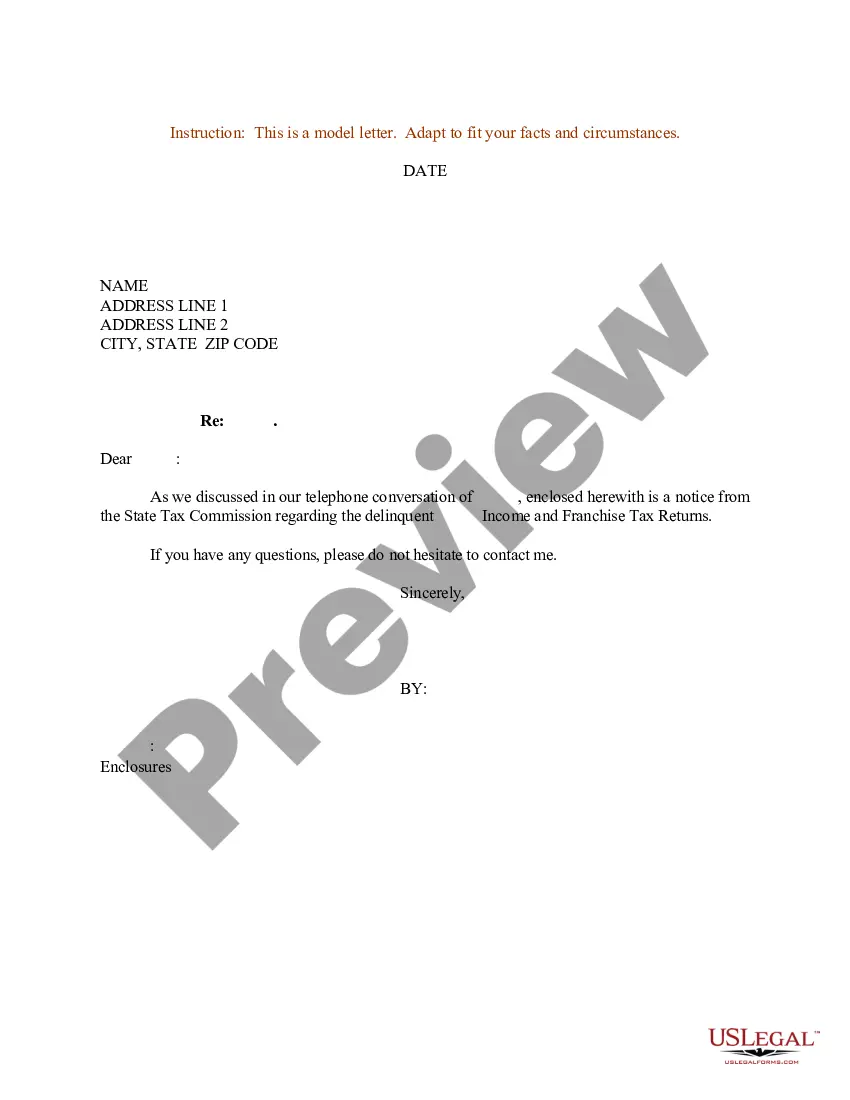
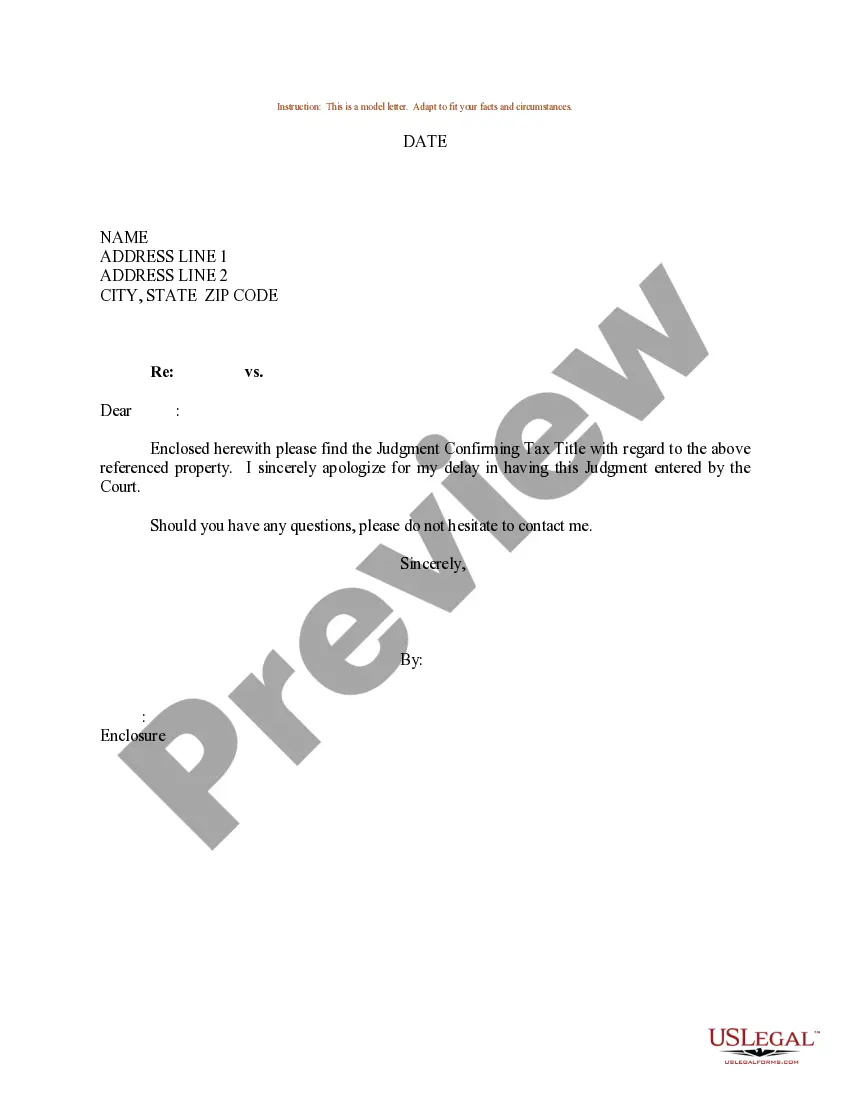
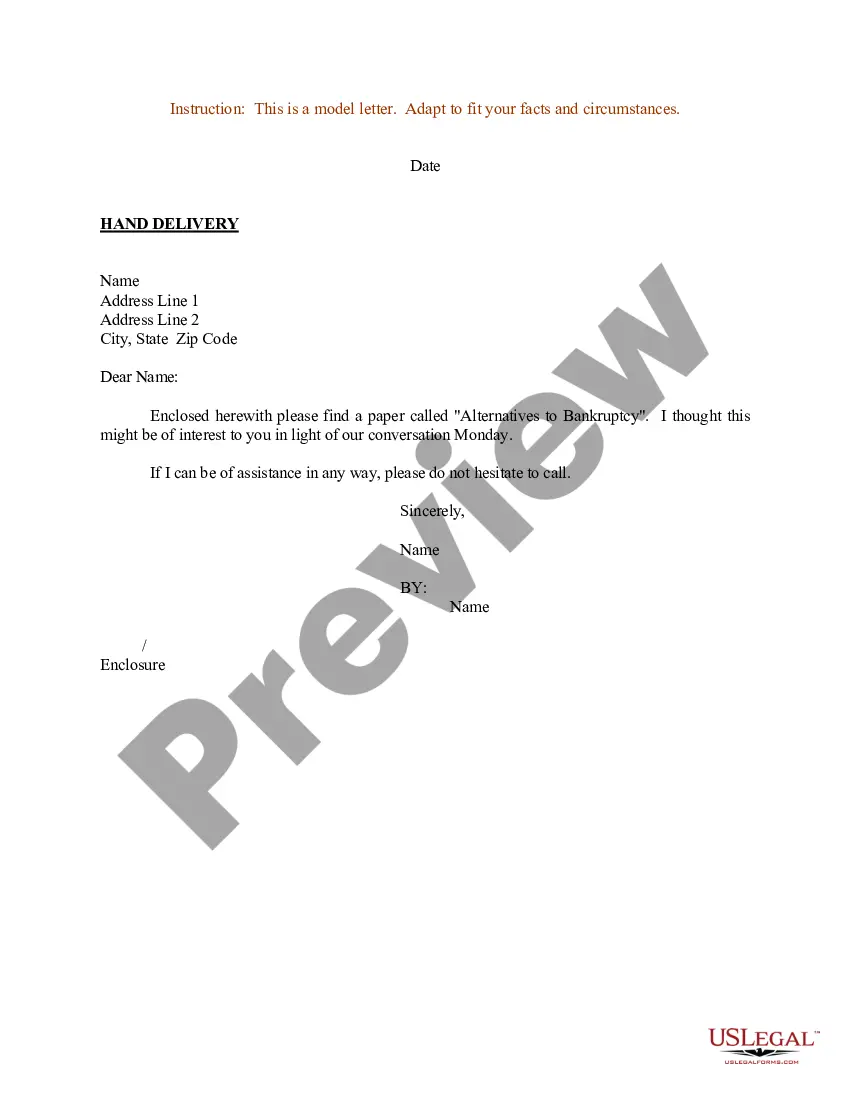
The Sample Letter to Include Article Relating to Tax Sales is a formal document used to communicate information regarding tax sales. This letter can serve as a notification or inclusion of relevant articles about tax sales in legal proceedings or discussions. It is distinct from other legal forms in that it specifically addresses matters related to tax sales, which are sales of properties due to unpaid taxes.
Key parts of this document
- Date of the letter
- Name of the recipient
- Address lines for the recipient
- City, state, and ZIP code of the recipient
Common use cases
This letter is useful when you need to reference or provide documentation about tax sales. Situations may include notifying an interested party about a tax sale event, addressing a concerned party regarding unpaid taxes, or introducing an article that provides relevant tax sale information. This form helps ensure that all necessary parties are informed and have a record of the communication.
Who needs this form
- Property owners facing tax sales
- Real estate agents representing clients in tax sale situations
- Lawyers dealing with tax-related legal matters
- Anyone needing to communicate tax sale information formally
How to prepare this document
- Enter the current date at the top of the letter.
- Fill in the recipientâs name in the designated field.
- Provide the full address of the recipient, including street address, city, state, and ZIP code.
- Make sure to include any additional articles or data as needed in the body of the letter.
- Review the letter for accuracy before sending.
Is notarization required?
This form does not typically require notarization unless specified by local law. Always check local regulations to ensure compliance with any specific requirements for legal documents.
Get your form ready online
Our built-in tools help you complete, sign, share, and store your documents in one place.
Make edits, fill in missing information, and update formatting in US Legal Forms—just like you would in MS Word.
Download a copy, print it, send it by email, or mail it via USPS—whatever works best for your next step.
Sign and collect signatures with our SignNow integration. Send to multiple recipients, set reminders, and more. Go Premium to unlock E-Sign.
If this form requires notarization, complete it online through a secure video call—no need to meet a notary in person or wait for an appointment.
We protect your documents and personal data by following strict security and privacy standards.

Make edits, fill in missing information, and update formatting in US Legal Forms—just like you would in MS Word.

Download a copy, print it, send it by email, or mail it via USPS—whatever works best for your next step.

Sign and collect signatures with our SignNow integration. Send to multiple recipients, set reminders, and more. Go Premium to unlock E-Sign.

If this form requires notarization, complete it online through a secure video call—no need to meet a notary in person or wait for an appointment.

We protect your documents and personal data by following strict security and privacy standards.
Avoid these common issues
- Forgetting to include the recipient's correct address.
- Neglecting to specify the date of the tax sale.
- Not reviewing the letter for clarity and typos.
- Failing to include important attached articles related to tax sales.
Benefits of using this form online
- Convenient access to pre-drafted legal language tailored for your needs.
- Editable formats that allow you to customize text.
- Reliability, as the forms are drafted by licensed attorneys.
- Immediate download, so you can complete the form at your convenience.
Legal use & context
- This letter serves as formal notification and may be used as evidence in legal proceedings related to tax sales.
- Complying with notice requirements can help protect against future legal disputes.
Main things to remember
- The Sample Letter to Include Article Relating to Tax Sales notifies parties affected by tax sales.
- It is important to provide accurate and detailed information in the letter.
- Using the letter template online simplifies the process of drafting legal notices.
Looking for another form?


Form popularity
FAQ
Contrary to popular belief, the IRS does not have to record an NFTL before it can levy bank accounts or receivables. Once the Final Notice has been issued and 30 days have passed, the IRS can levy bank accounts and/or accounts receivable. The IRS does not perform a lien search prior to issuing a levy.
What Is a Tax Lien Foreclosure? Tax lien foreclosure is the sale of a property resulting from the property owner's failure to pay their tax liabilities. A tax lien foreclosure occurs when the property owner has not paid the required taxes, including property taxes and federal and state income taxes.
County and municipal governments create a tax lien certificate that states how much is owed in property taxes, along with any interest or penalties due. These certificates can then go to auction for investors, allowing the governments to collect payment on the past-due taxes, interest, and penalties.
Worthless Property. Sometimes owners stop paying their property taxes because the property is worthless. Foreclosure Risks. When you purchase a tax lien, state statutes limit the amount of time you have to foreclose on the property before the lien expires worthless. Municipal Fines and Costs. Bankruptcy.
After a tax sale happens, the homeowner might be able to redeem the property. "Redemption" is the right of the property owner to reclaim the property by paying the entire sale price, plus certain additional costs and interest, after the sale so long as it is within the time period allowed by statute.
Paying someone else's delinquent taxes can get you a property, but not always. Paying someone's taxes does not give you claim or ownership interest in a property, unless it's through a tax deed sale. This means that paying taxes on a property you're interested in buying won't do you any good.
A tax sale is the sale of a real estate property that results when a taxpayer reaches a certain point of delinquency in their owed property tax payments.
A tax lien sale is a method many states use to force an owner to pay unpaid taxes.The highest bidder gets the lien against the property. The tax collector uses the money earned at the tax lien sale to compensate for unpaid back taxes. The homeowner has to pay back the lien holder, plus interest, or face foreclosure.
What is sold is a tax sale certificate, a lien on the property. Tax sale certificates can earn interest of up to 18 per cent, depending on the winning percentage bid at the auction. At the auction, bidders bid down the interest rate that will be paid by the owner for continuing interest on the certificate amount.