Website Subscription User Agreement for Online Advice Service
What this document covers
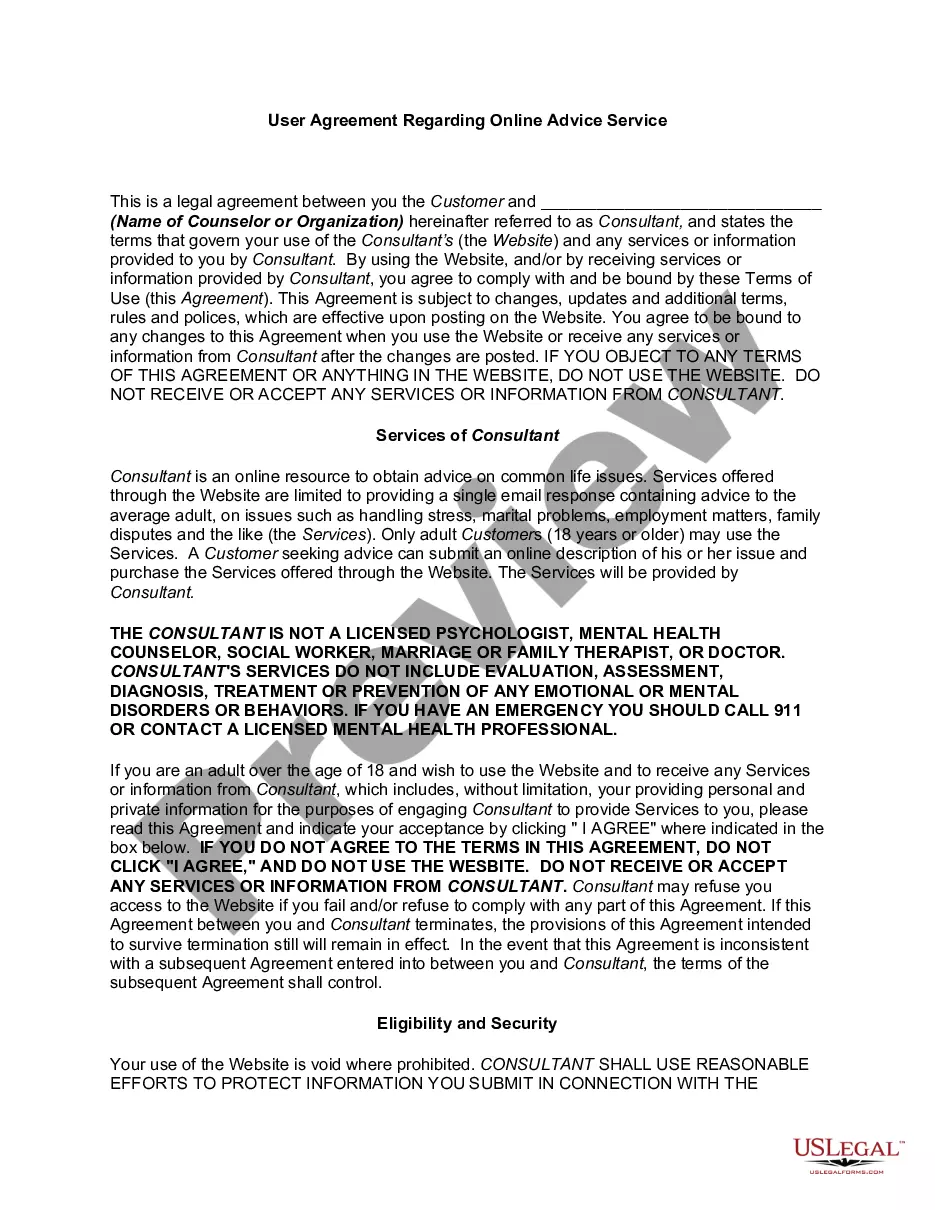
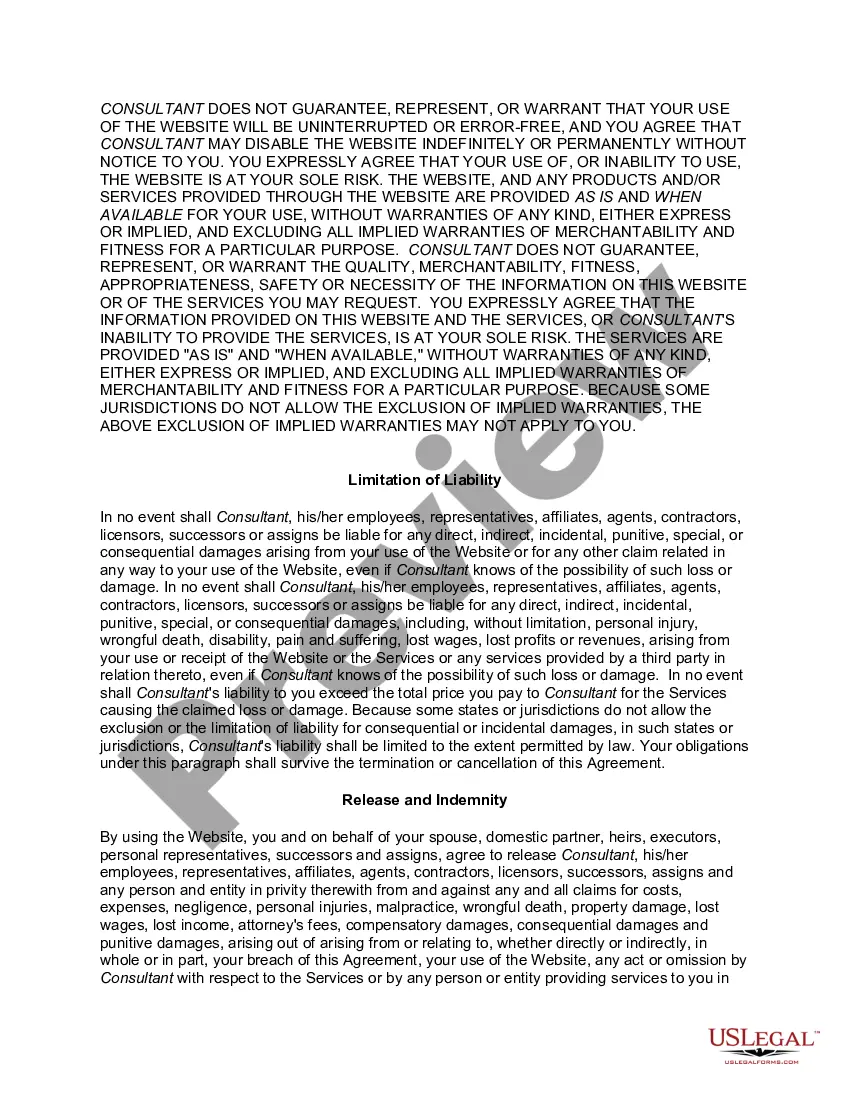
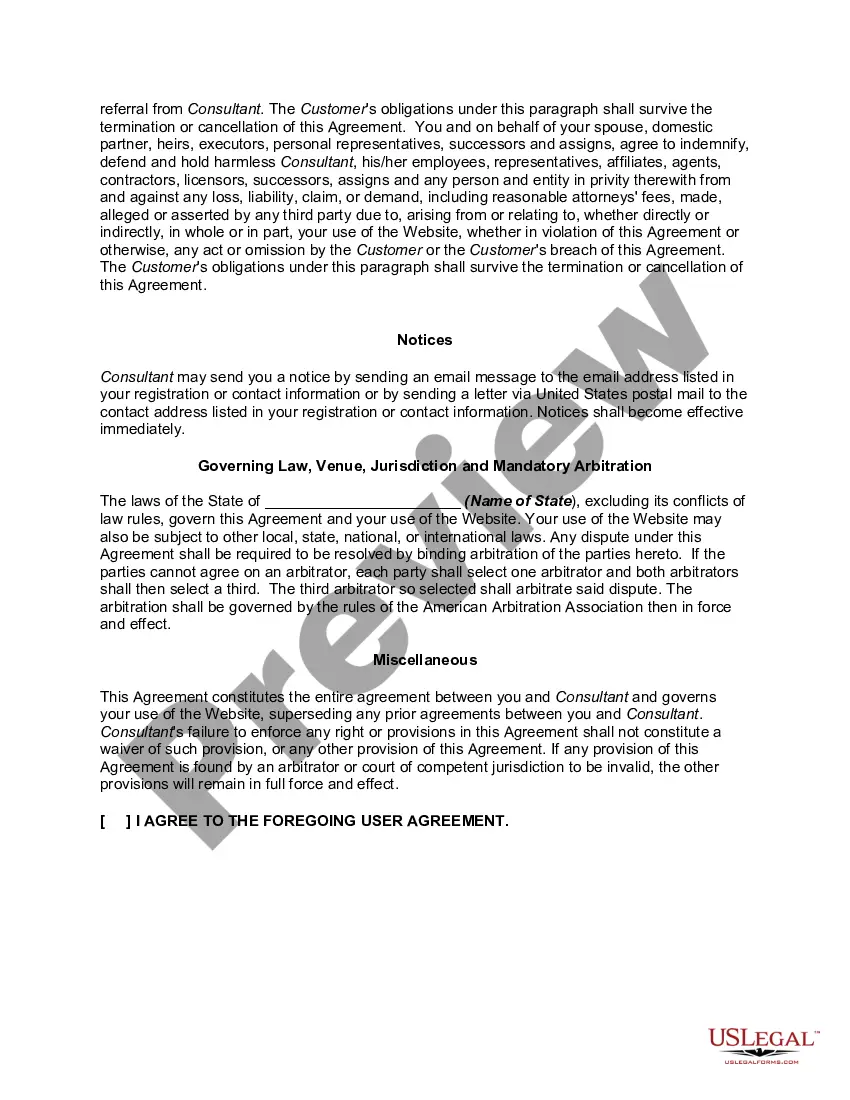
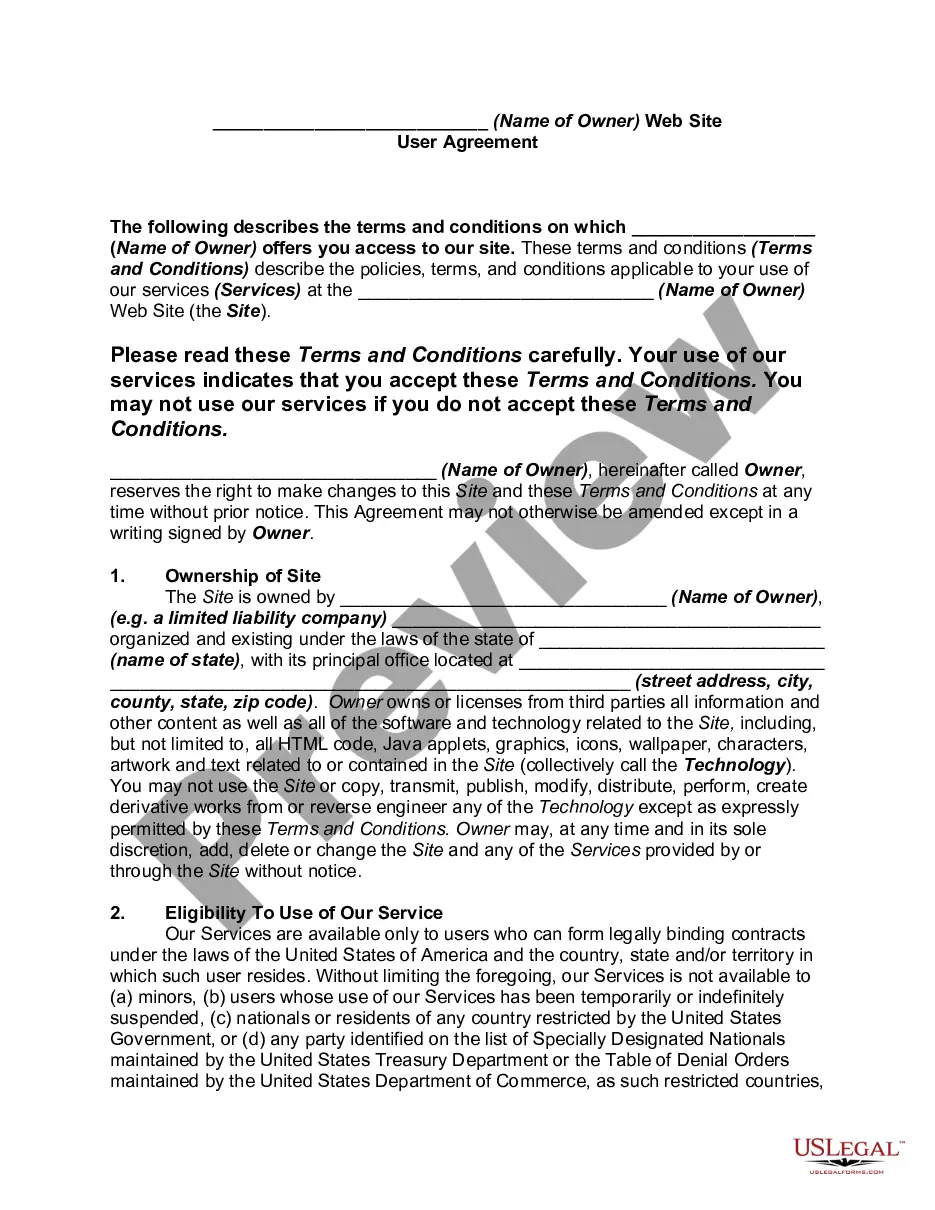
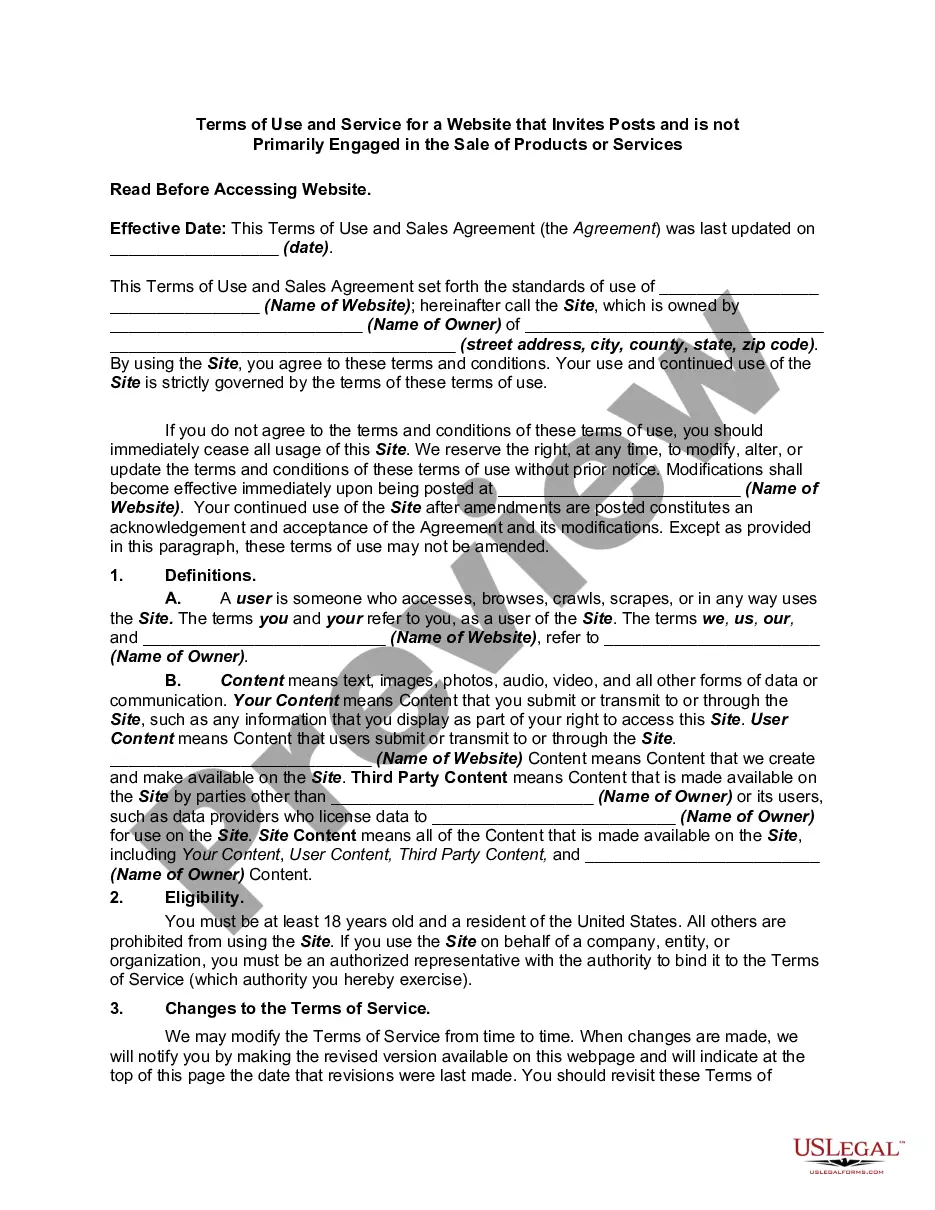
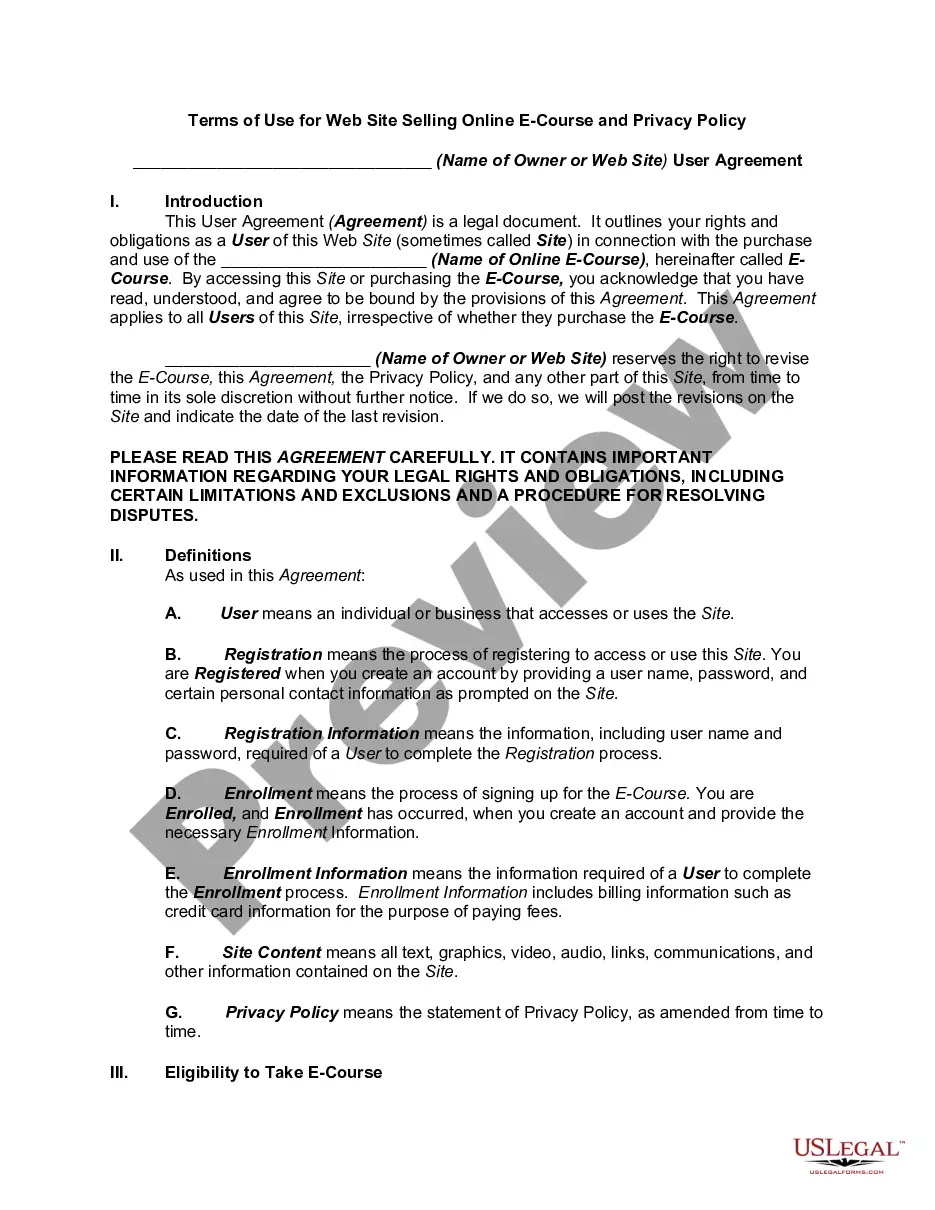
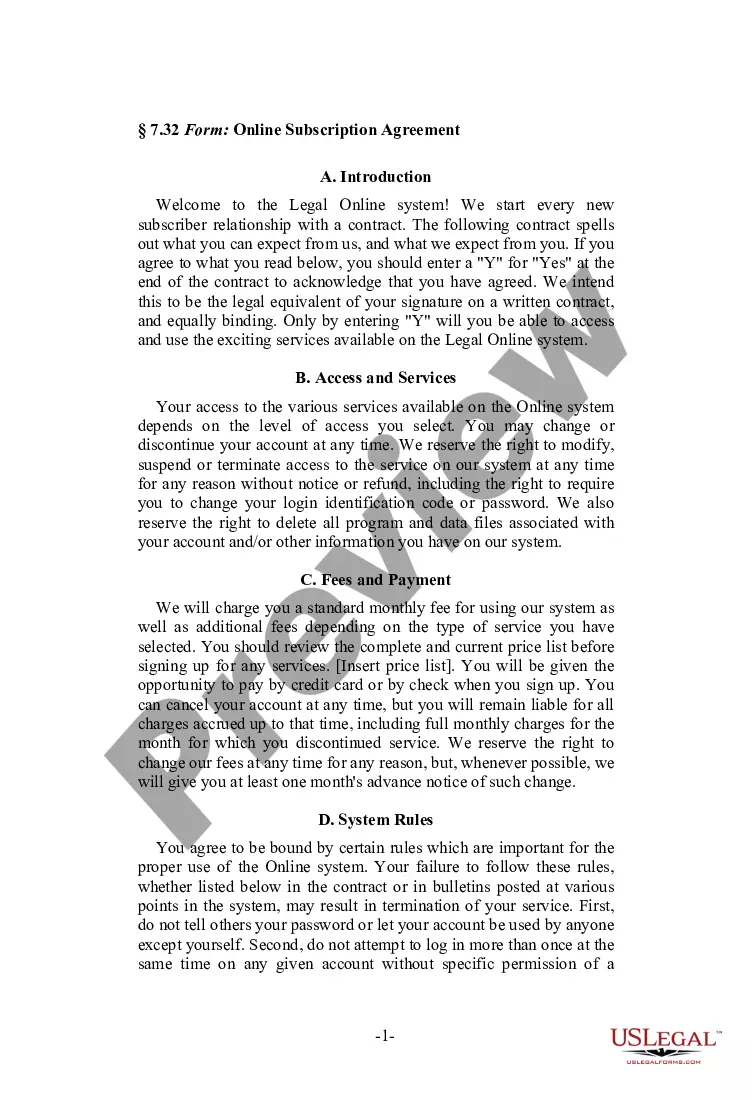
The Website Subscription User Agreement for Online Advice Service is a legal document that outlines the terms and conditions governing your use of an online advice service. This agreement specifies the limitations of the services provided, ensuring users understand that the advice does not come from licensed professionals, such as psychologists or doctors. Unlike other legal agreements, this one is specifically tailored for online consultations related to common life issues.
Key components of this form
- Definition of the services provided by the consultant.
- Eligibility requirements, specifying that only adults (18 years or older) may use the service.
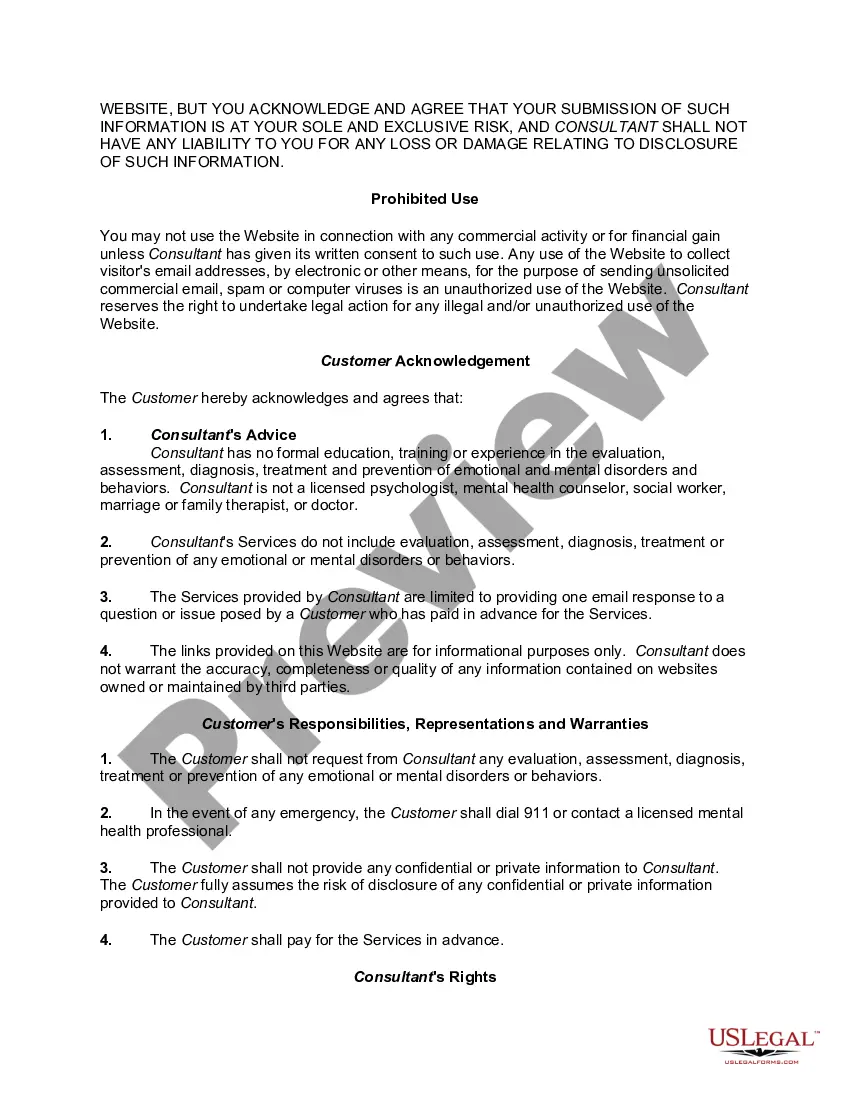
- Disclaimer clarifying the consultant is not a licensed mental health professional.
- Conditions under which users must agree to the terms before accessing services.
- Details on customer responsibilities, including payment obligations and handling personal information.
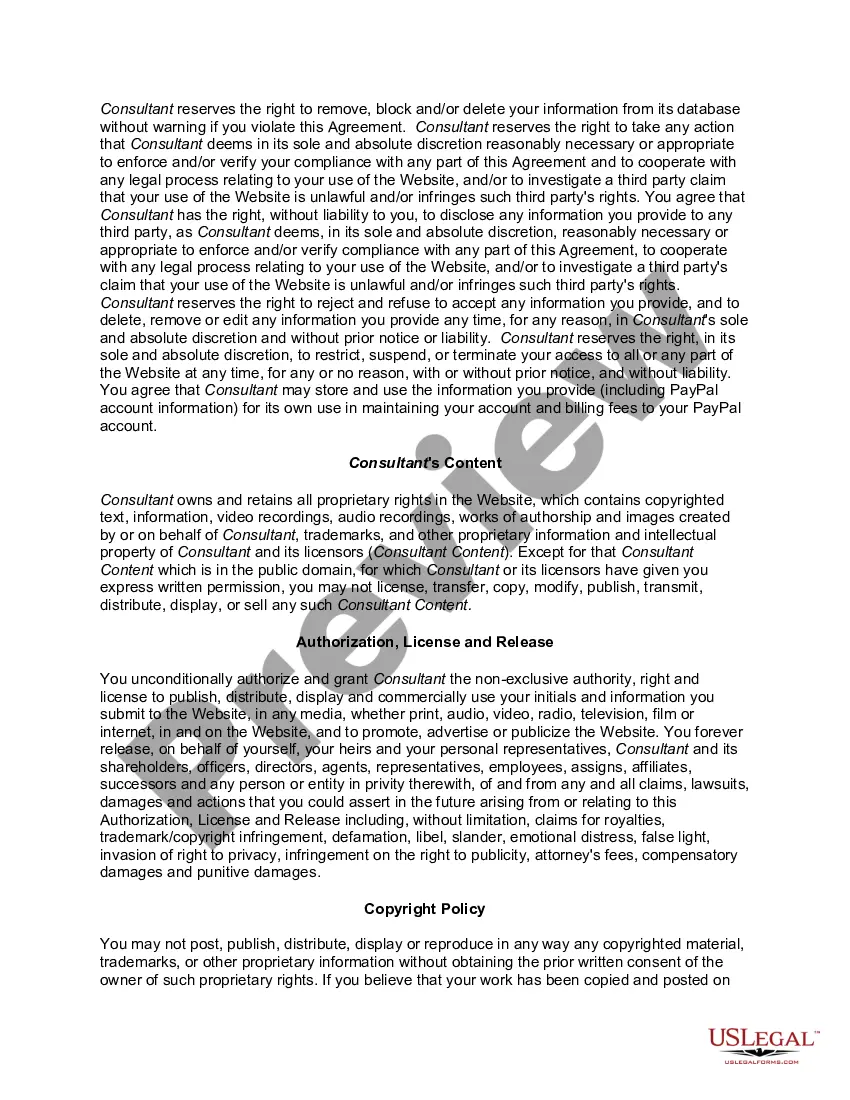
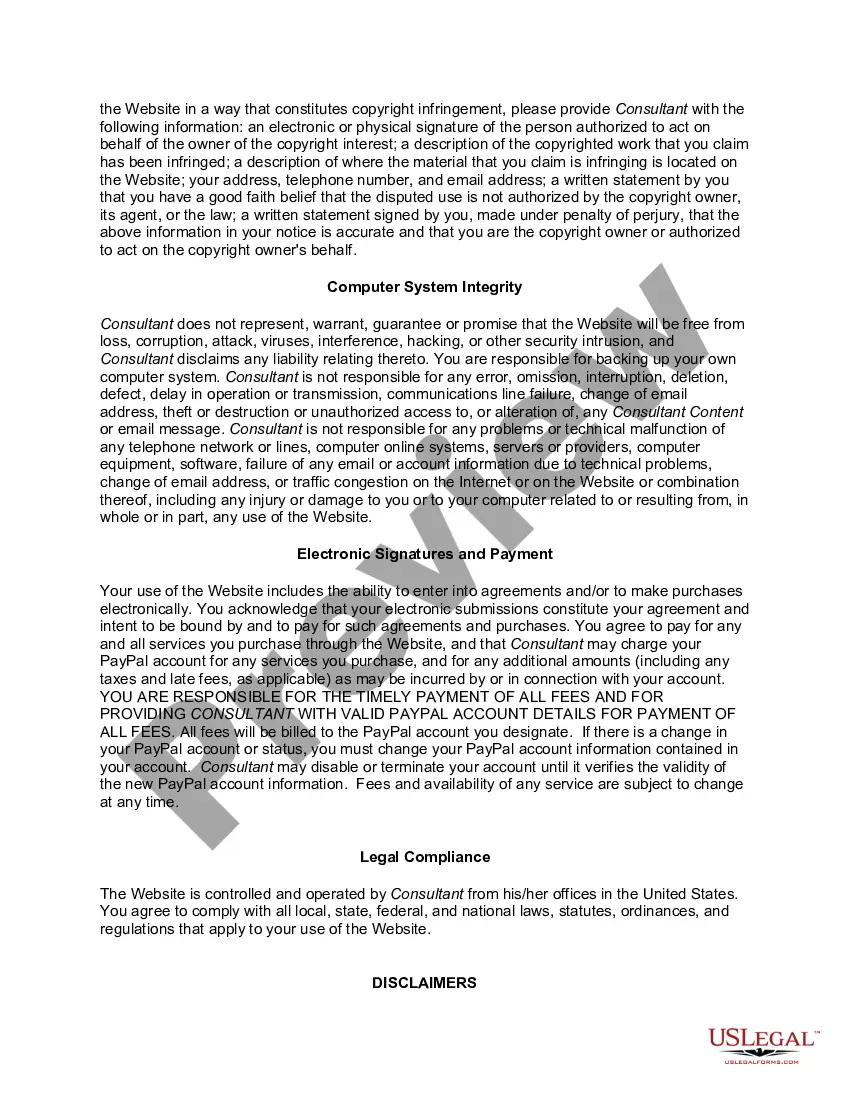
- Provisions for legal compliance and arbitration in case of disputes.
When to use this form
This agreement should be used when an individual seeks to obtain online advice from a consultant regarding everyday life issues such as stress management, family disputes, or employment concerns. It's necessary to complete the agreement before using the services to ensure that the user understands their rights and responsibilities.
Who can use this document
- Adults (18 years and older) seeking advice on common life challenges.
- Individuals who prefer online consultation rather than in-person meetings.
- Users who need a clear understanding of the terms of service from an online advice platform.
Completing this form step by step
- Begin by reading the entire agreement carefully.
- Fill in the name of the counselor or organization providing the services.
- Confirm your understanding that the consultant is not a licensed professional.
- Provide any necessary personal information as requested.
- Indicate your acceptance of the terms by clicking the "I AGREE" button.
- Ensure all required fields are completed before submission.
Notarization requirements for this form
This form does not typically require notarization unless specified by local law.
Get your form ready online
Our built-in tools help you complete, sign, share, and store your documents in one place.
Make edits, fill in missing information, and update formatting in US Legal Forms—just like you would in MS Word.
Download a copy, print it, send it by email, or mail it via USPS—whatever works best for your next step.
Sign and collect signatures with our SignNow integration. Send to multiple recipients, set reminders, and more. Go Premium to unlock E-Sign.
If this form requires notarization, complete it online through a secure video call—no need to meet a notary in person or wait for an appointment.
We protect your documents and personal data by following strict security and privacy standards.

Make edits, fill in missing information, and update formatting in US Legal Forms—just like you would in MS Word.

Download a copy, print it, send it by email, or mail it via USPS—whatever works best for your next step.

Sign and collect signatures with our SignNow integration. Send to multiple recipients, set reminders, and more. Go Premium to unlock E-Sign.

If this form requires notarization, complete it online through a secure video call—no need to meet a notary in person or wait for an appointment.

We protect your documents and personal data by following strict security and privacy standards.
Typical mistakes to avoid
- Failing to read the entire agreement, leading to misunderstandings.
- Not verifying eligibility before using the service.
- Providing confidential information that could lead to privacy concerns.
Why use this form online
- Convenience of accessing legal agreements from home.
- Editability allows users to enter specific information easily.
- Immediate download of the agreement enables prompt use of services.
Legal use & context
- This agreement outlines the terms under which the advice service operates.
- Users are advised to consult local laws to ensure compliance with any jurisdiction-specific requirements.
- The limitations of liability protect the consultant from certain claims related to the services provided.
What to keep in mind
- Understand the scope and limitations of the advice provided through this service.
- Ensure you meet the age requirement before proceeding.
- Be aware of your responsibilities and the legal implications of using the service.
Looking for another form?

Form popularity
FAQ
Use of Information. This section should explain to your users how and why you use the information that you collect from them. Third Party Disclosure. Information Protection. Cookies. Notification of Changes. Contact Information.
Inform your store visitors about the private data you collect and manage. Give your visitors a choice to opt in and opt out. Give your visitors access to the information you and third parties collect. Inform your visitors of how you secure their data.
Identify the customer and service provider. Describe the services being provided. Outline a payment schedule. Establish terms about confidentiality, non-solicitation, and non-competition. Address ownership of materials. Personalize your Service Agreement.
Writing Your Terms and Conditions. Start with a statement regarding the acceptance of your terms and conditions. Your very first paragraph should always be an acceptance of terms clause. This clause ensures that your users understand that by using your service they are accepting the terms and conditions.
A Service Agreement, also sometimes called a General Services Agreement, is a document between a service provider and a client. Within these agreements, the service provider and client outline their expectations for behavior and agree to the bounds of the relationship between them.
Identify the customer and the service provider. Add both parties' contact information. Describe the services that will be provided. Outline a schedule for payments. Establish any necessary legal terms. If the services are creative, decide who owns the creative product.
Your policy should disclose that your site will collect and maintain personal information provided by its users, including their names, addresses, mobile telephone numbers, email addresses, and so forth.
Write your Privacy Policy in plain, easy-to-understand language. Update your policy regularly to reflect changes in the law, in your business, or within your protocols. Notify users of these updates, and include the effective date with your policy. Be transparent and remain true to your commitment to user privacy.
A brief introduction. The effective date. Jurisdiction/governing law. Link to your Privacy Policy. Contact information. Limitation of liability and disclaimer of warranties. Rules of conduct. User restrictions.