Louisiana Petition to Disavow, with Request for Paternity Test
What is this form?
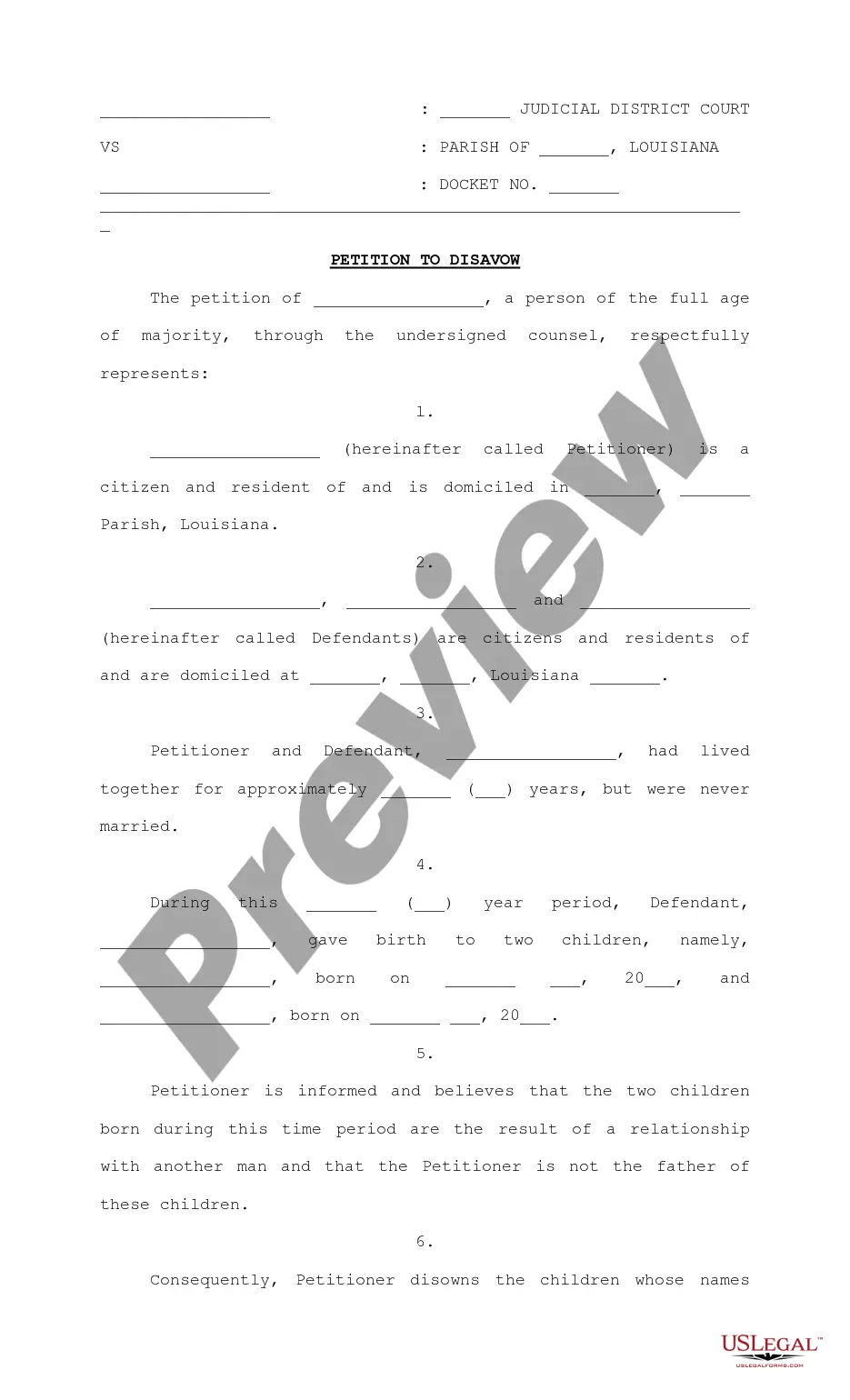
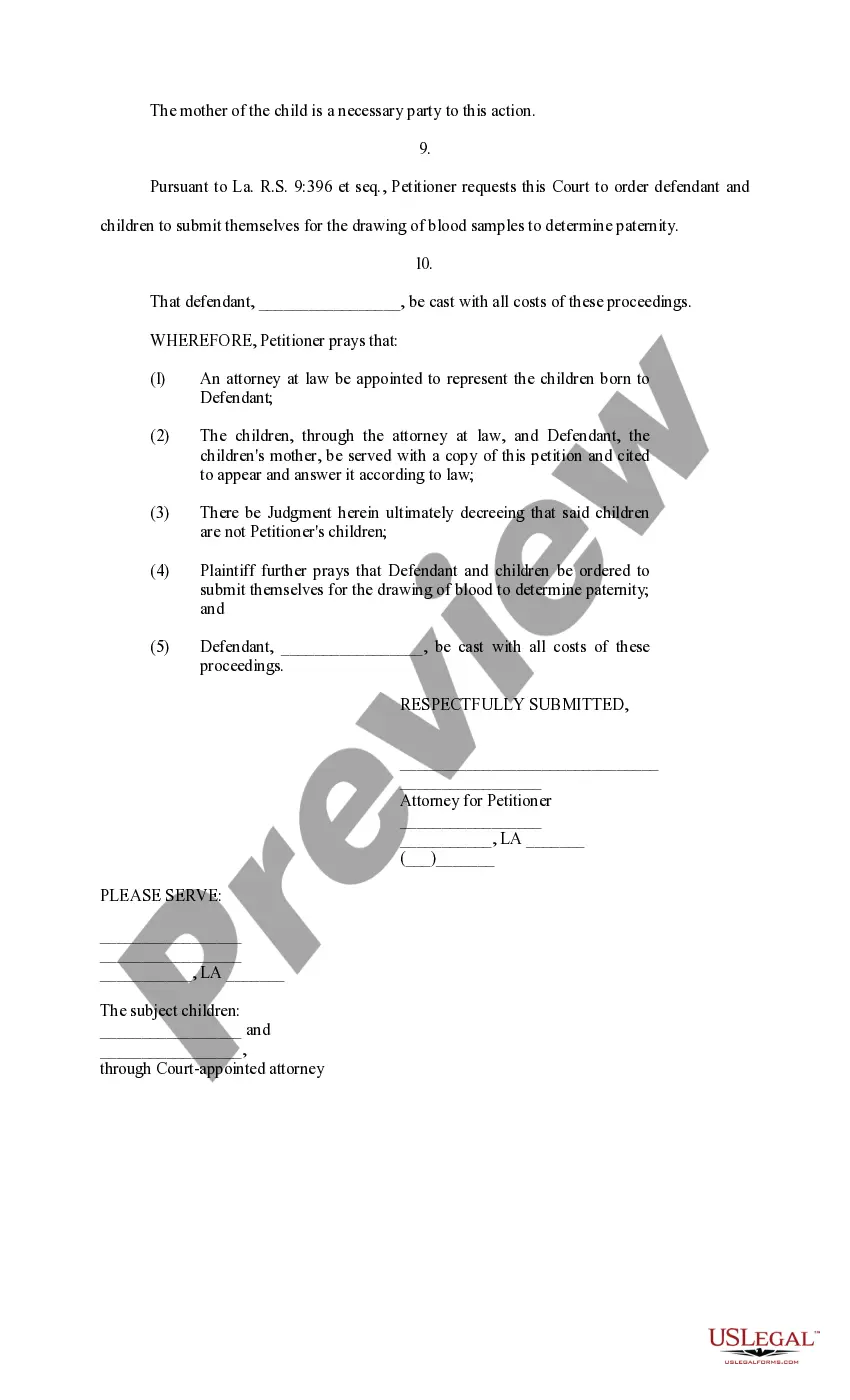
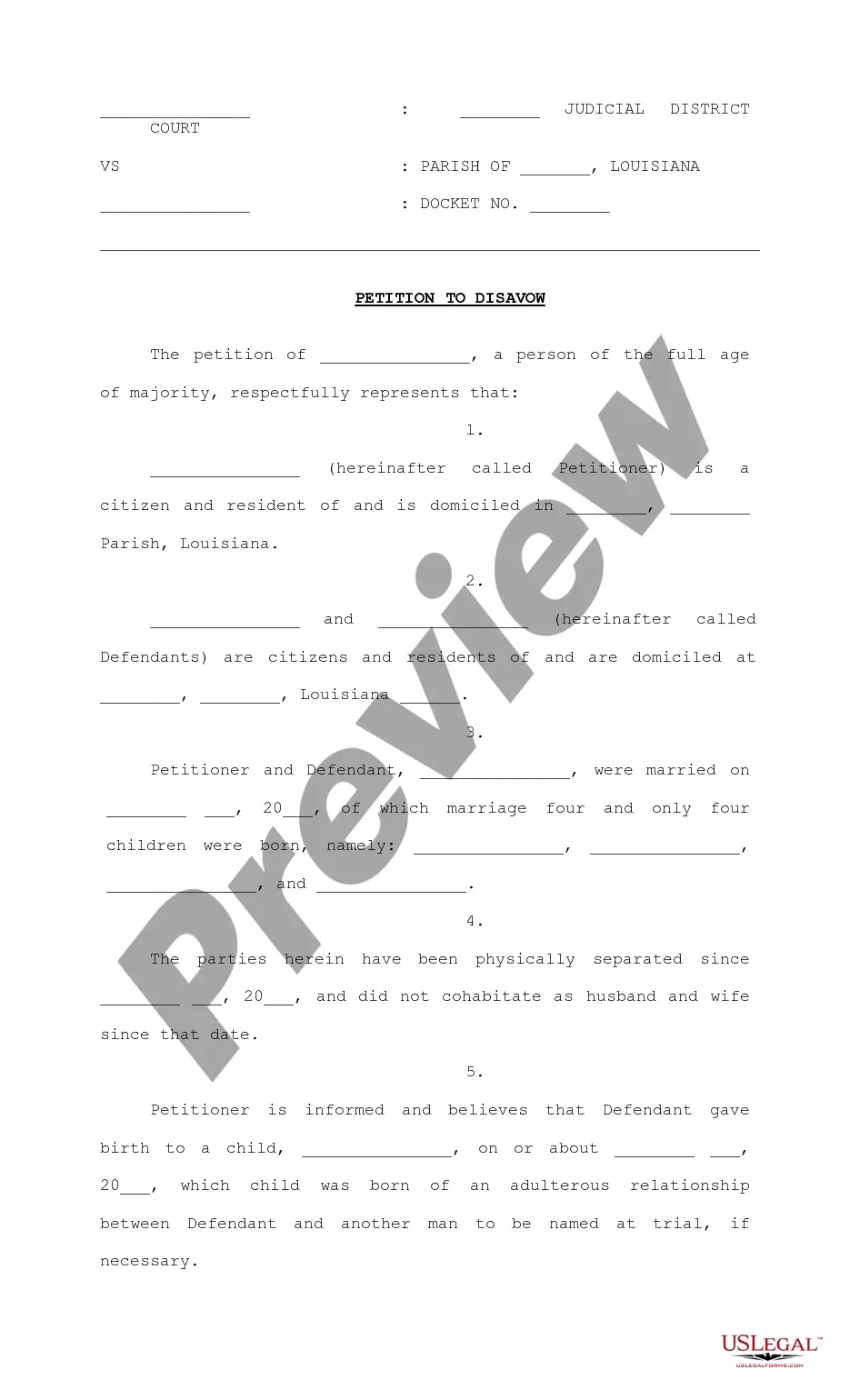
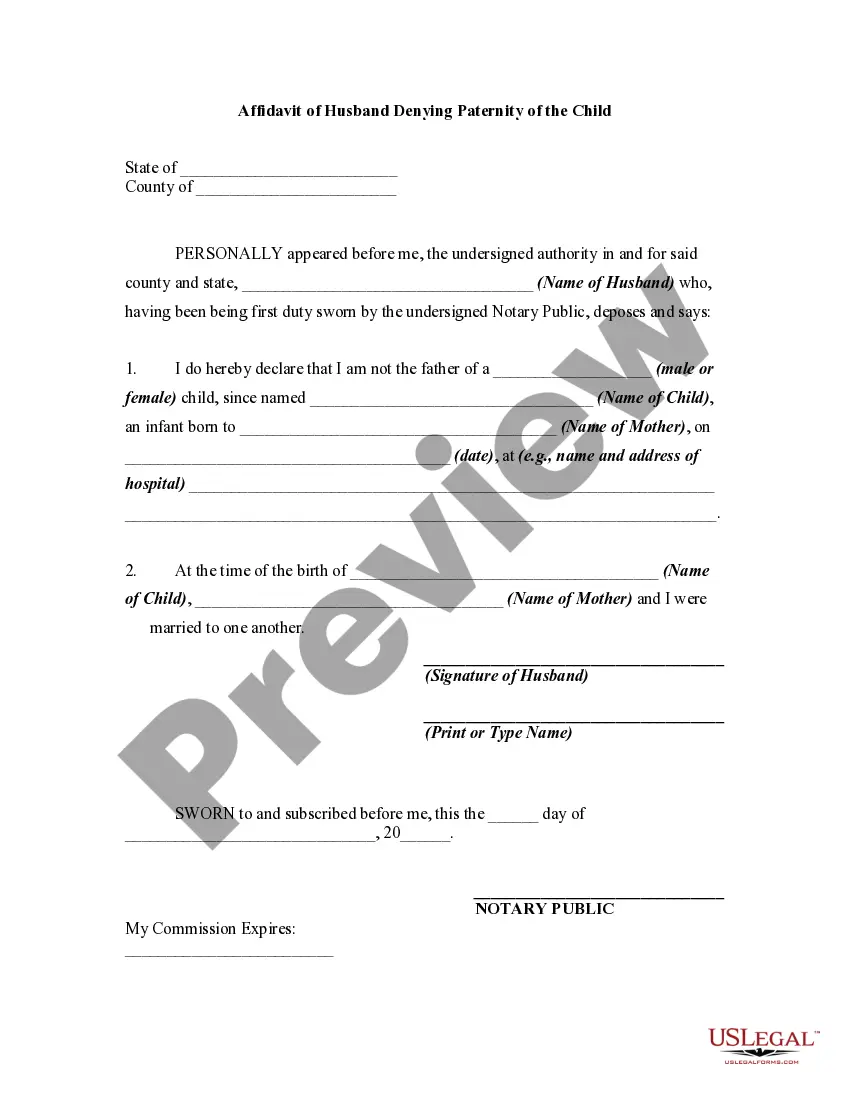
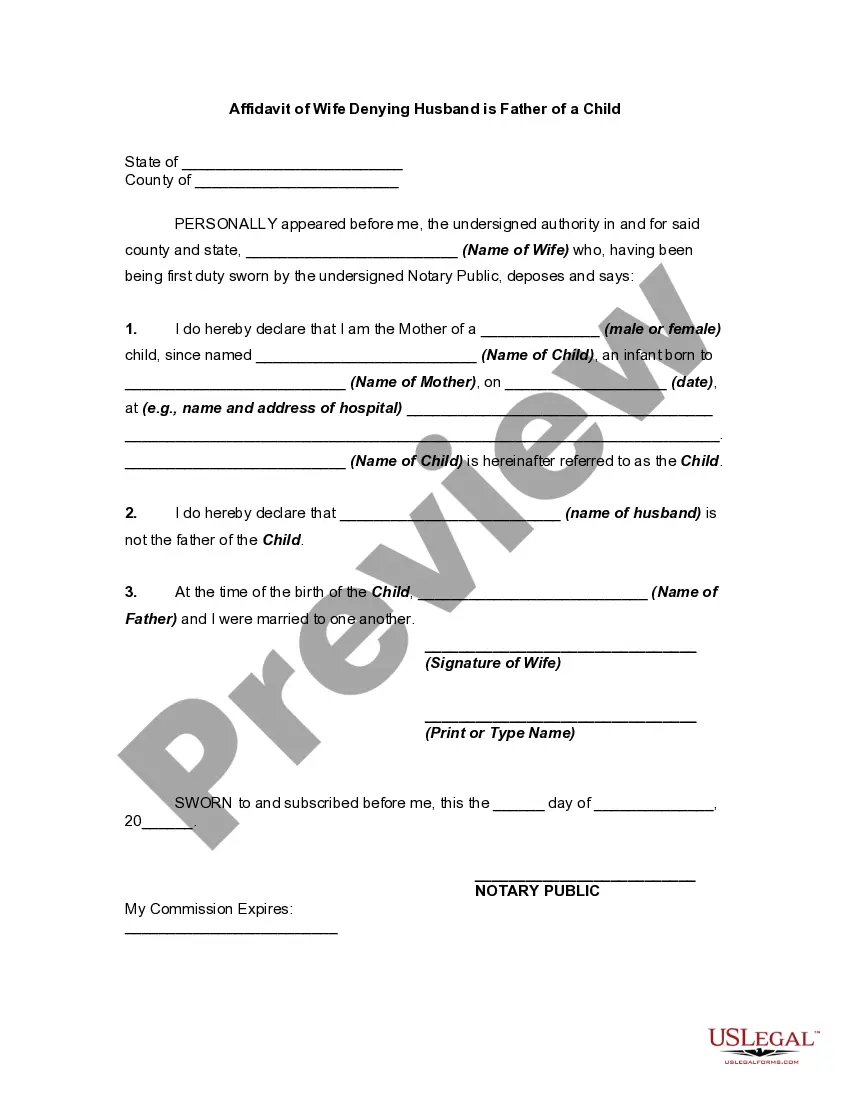
The Petition to Disavow, with Request for Paternity Test is a legal document used by an individual (the petitioner) to request a court judgment declaring that certain children are not biologically theirs. This form is distinct from paternity acknowledgment forms, as it specifically seeks to disavow paternity and includes a request for blood tests to confirm the biological relationship.
Key parts of this document
- Petitioner's information, including their residential details.
- Details regarding the defendant and the children in question.
- Allegations stating that the petitioner believes they are not the biological parent of the children.
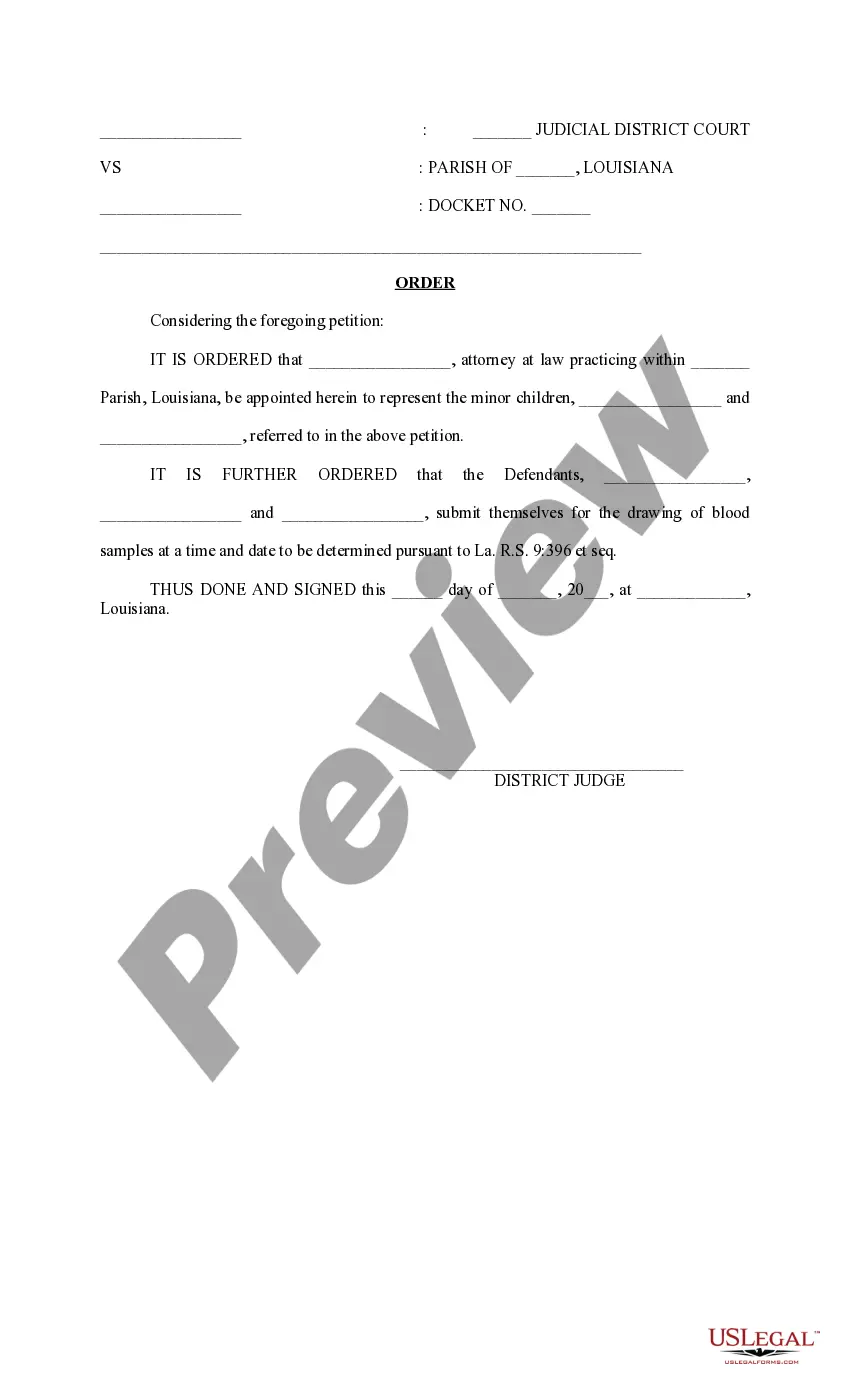
- Request for an attorney to represent the children.
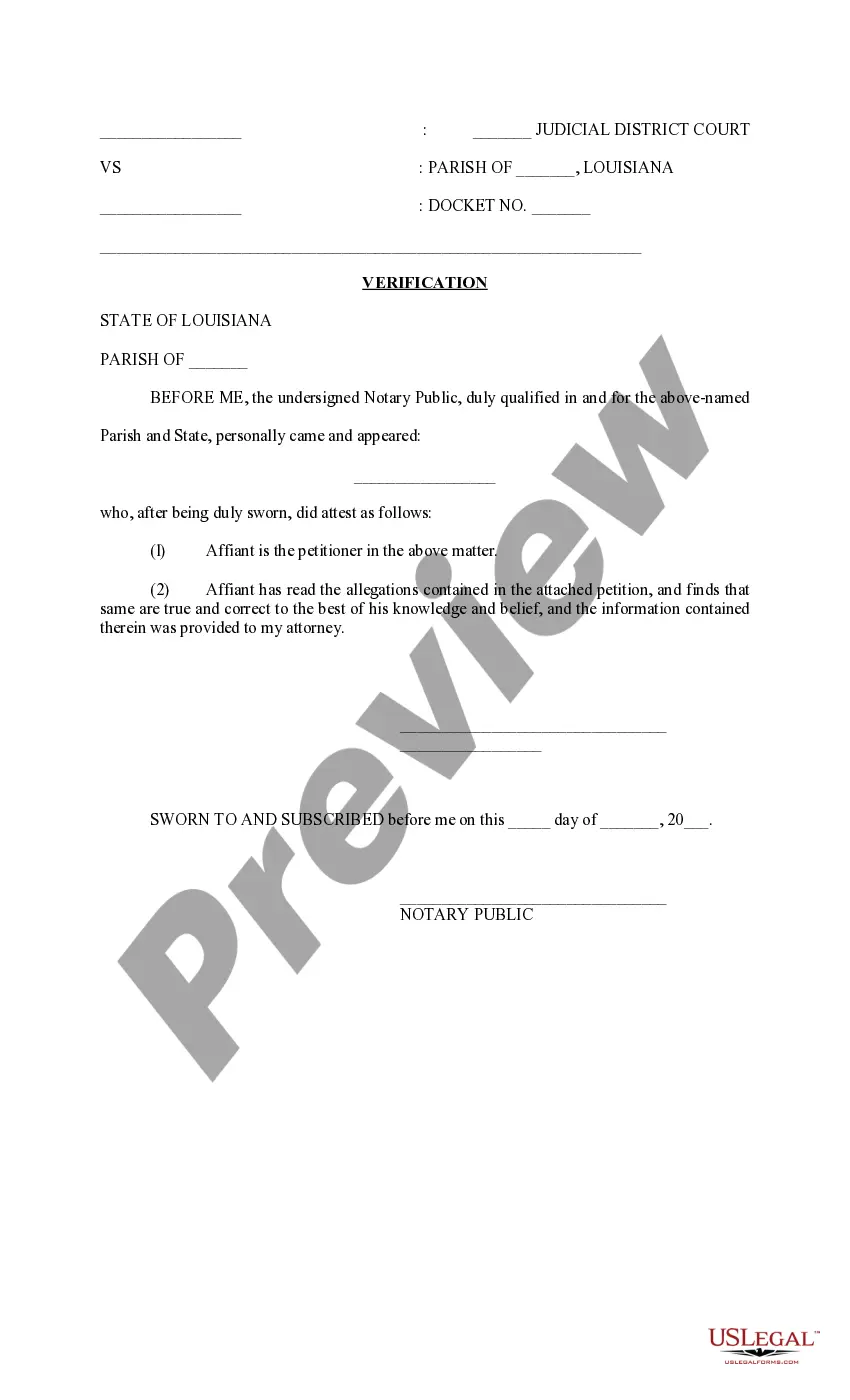
- Request for the court to order blood tests to determine paternity.
- Statement of costs associated with the proceedings.
When to use this form
This form should be used when an individual seeks to legally disavow paternity for children they believe are not biologically theirs. It is applicable in situations where there has been a relationship with the mother of the children, but doubts exist regarding the paternity of those children. This legal step is necessary if the petitioner wants to formally establish a lack of biological relationship and clear any obligations related to paternity.
Who this form is for
- Individuals who are not married to the children's mother but suspect they may be listed as a father on birth certificates.
- People seeking to disavow legal paternity due to new evidence regarding biological parentage.
- Individuals wishing to appoint an attorney for the children mentioned in the petition.
How to prepare this document
- Identify and enter the petitioner's name and contact information.
- Provide details about the defendant and the children involved.
- Include any relevant facts that support the claim of disavowal.
- Request the appointment of an attorney for the children.
- Sign and date the petition in front of a notary public as required.
Does this document require notarization?
Notarization is required for this form to take effect. Our online notarization service, powered by Notarize, lets you verify and sign documents remotely through an encrypted video session, available 24/7.
Get your form ready online
Our built-in tools help you complete, sign, share, and store your documents in one place.
Make edits, fill in missing information, and update formatting in US Legal Forms—just like you would in MS Word.
Download a copy, print it, send it by email, or mail it via USPS—whatever works best for your next step.
Sign and collect signatures with our SignNow integration. Send to multiple recipients, set reminders, and more. Go Premium to unlock E-Sign.
If this form requires notarization, complete it online through a secure video call—no need to meet a notary in person or wait for an appointment.
We protect your documents and personal data by following strict security and privacy standards.

Make edits, fill in missing information, and update formatting in US Legal Forms—just like you would in MS Word.

Download a copy, print it, send it by email, or mail it via USPS—whatever works best for your next step.

Sign and collect signatures with our SignNow integration. Send to multiple recipients, set reminders, and more. Go Premium to unlock E-Sign.

If this form requires notarization, complete it online through a secure video call—no need to meet a notary in person or wait for an appointment.

We protect your documents and personal data by following strict security and privacy standards.
Typical mistakes to avoid
- Failing to provide complete information on the parties involved.
- Neglecting to check for proper legal representation for the children.
- Submitting the form without notarization when required.
Advantages of online completion
- Convenient access to legal documents anytime and anywhere.
- Editable templates that allow users to personalize their information easily.
- Reliable guidance from experienced legal professionals through templates created by licensed attorneys.
Main things to remember
- The Petition to Disavow is necessary for individuals disputing legal paternity.
- It includes requests for biological testing and legal representation for children.
- Ensure compliance with relevant Louisiana laws when using this form.
Looking for another form?




Form popularity
FAQ
Generally speaking, a mother cannot refuse a paternity test, as there is no good reason for her to do so.If an alleged father refuses to take a paternity test, he can be held in contempt of court, which is a crime that carries hefty fines and possible jail time.
Chadwick Hodge, that a man may sue a woman for paternity fraud. A man who has been told by the mother that he is the father of her child can sue her if she is lying.He may also bring a civil action for paternity fraud against the mother to recover damages and any emotional distress.
For example, in a paternity fraud case, the judge may hold a person in contempt for lying or falsifying information about the paternity test. When this occurs, the judge may issue a contempt order, which can result in criminal charges.
Generally speaking, a mother cannot refuse a paternity test, as there is no good reason for her to do so.If an alleged father refuses to take a paternity test, he can be held in contempt of court, which is a crime that carries hefty fines and possible jail time.
The law cannot force a paternity test.This means that, if a man refuses to submit to paternity testing, the court may order the man to make child support payments.
Yes, a Judge may deny a request for a paternity test if doing so would be in the child's best interests. Typically a Guardian ad Litem would be appointed to determine bests interests before a Judge would deny the request.
You have to convince the court to accept your petition, even at the outset, because the statute technically does not allow a person who is looking to disavow paternity to file a paternity petition in family court. If the father is married, the contest is best done through the Supreme Court and in a divorce proceeding.
Courts in the United States will not accept results from a home paternity test. The reason is becausewith a home paternity testthe court has no way of verifying if the DNA submitted for testing actually belongs to the people whose names are listed on the test.
Though it can be a frustrating situation, it is important to know that a mother has rights if the alleged father refuses to take a paternity test. She can file a petition for paternity with the court, and have the court then order the alleged father to submit to a paternity test.