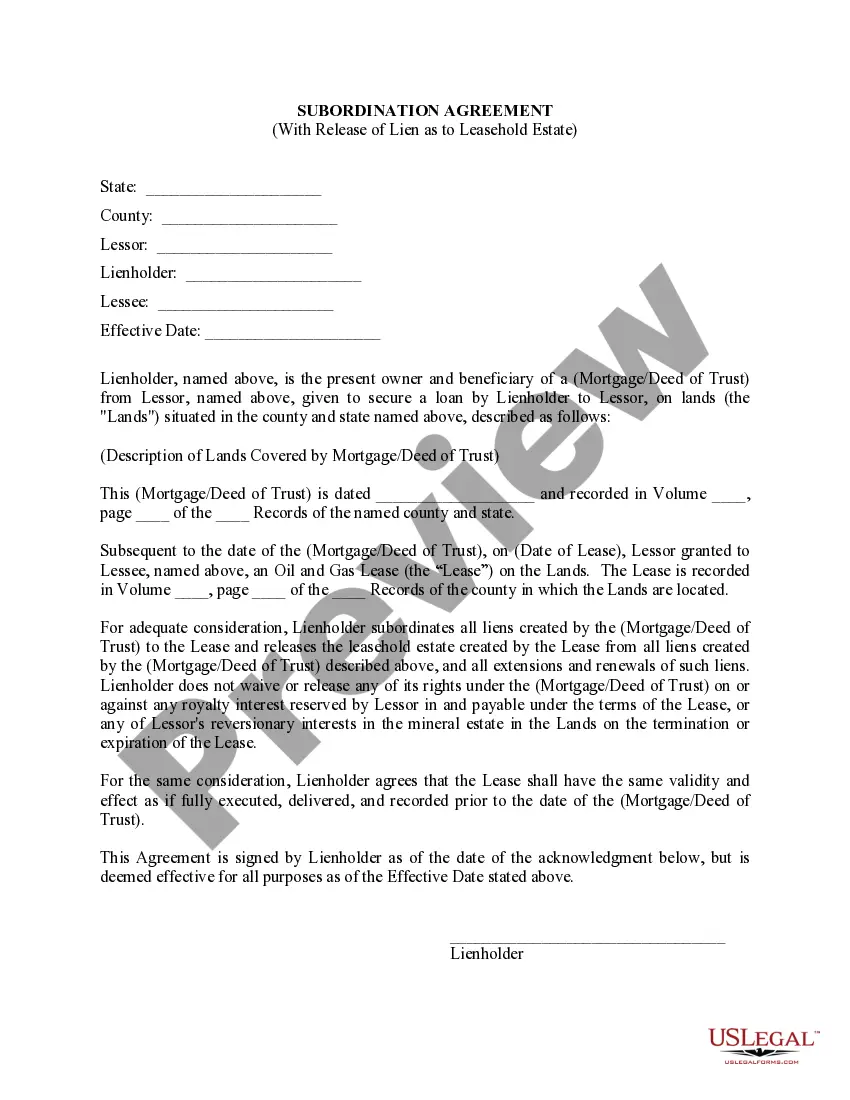
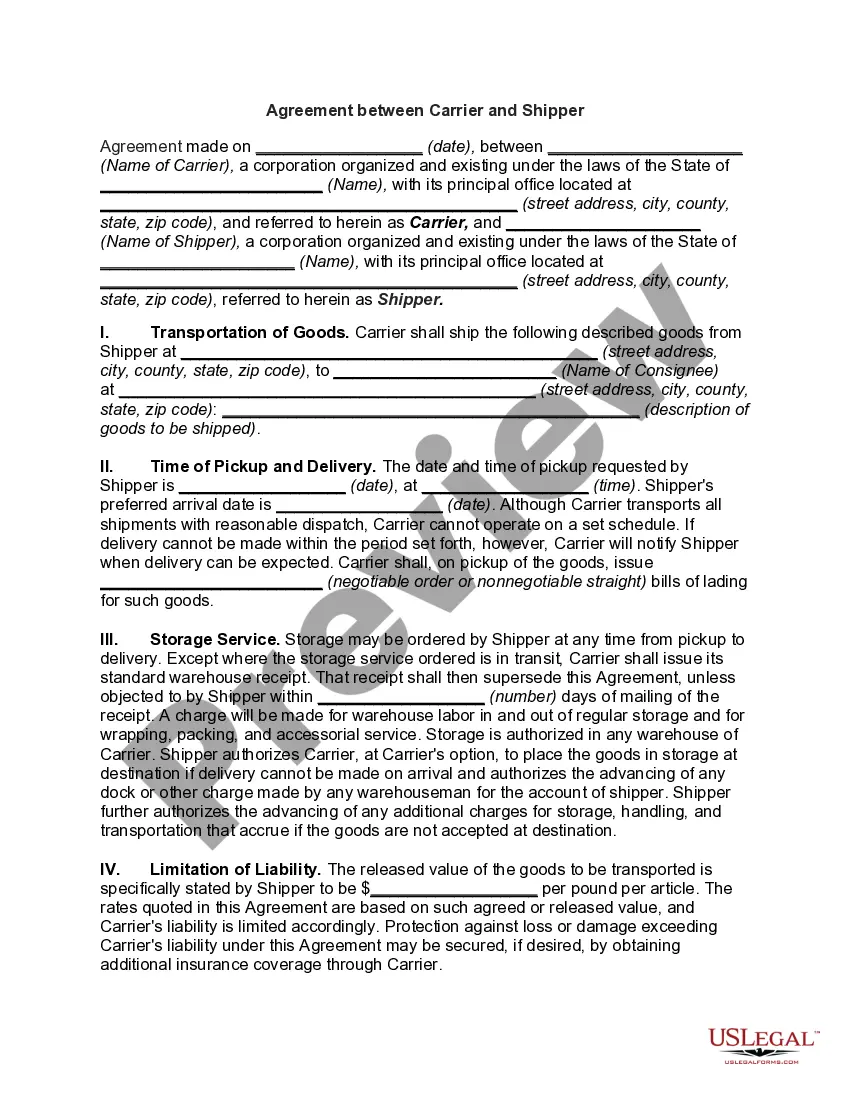
Agreement between Carrier and Shipper with Guaranteed Monthly Shipments of Manufactured Goods
What is this form?
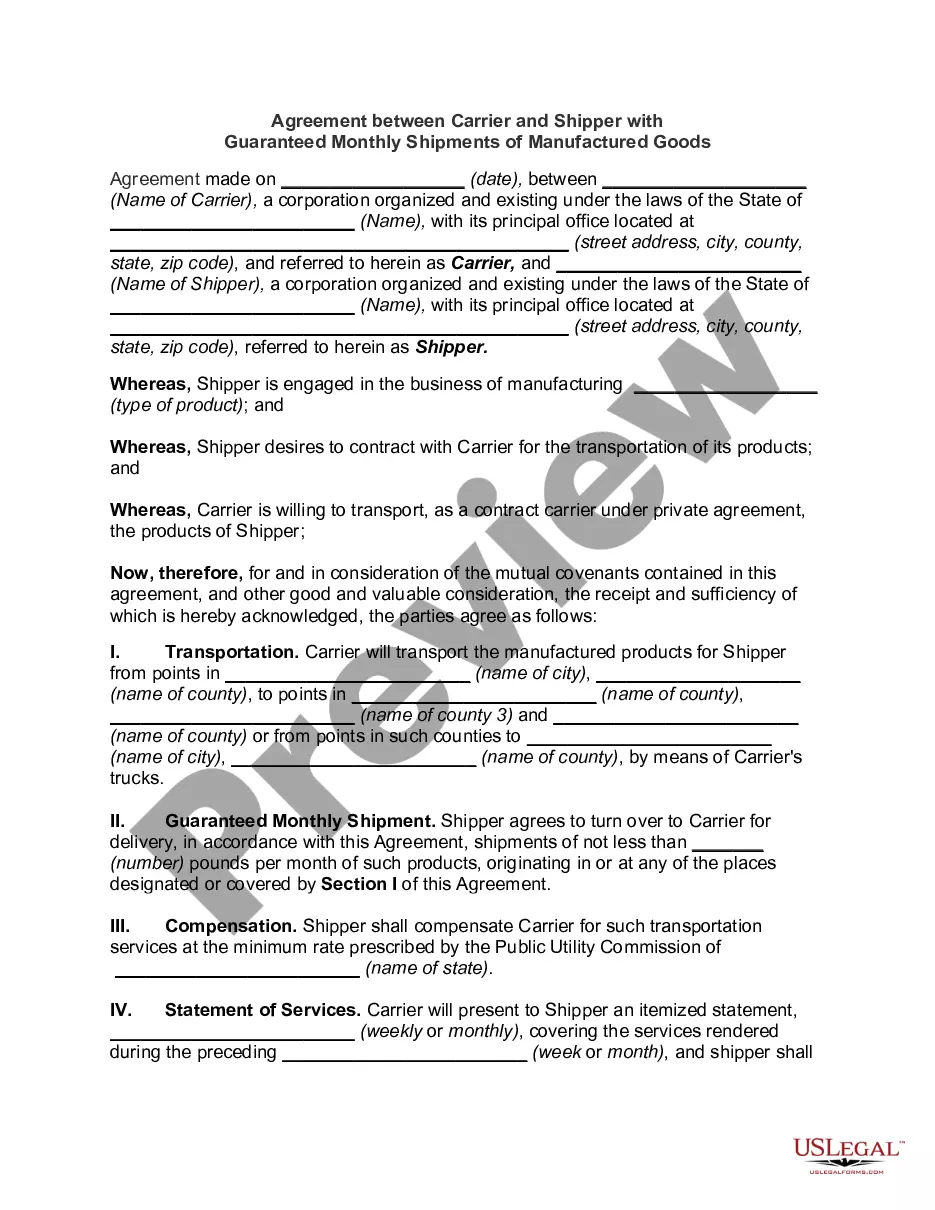
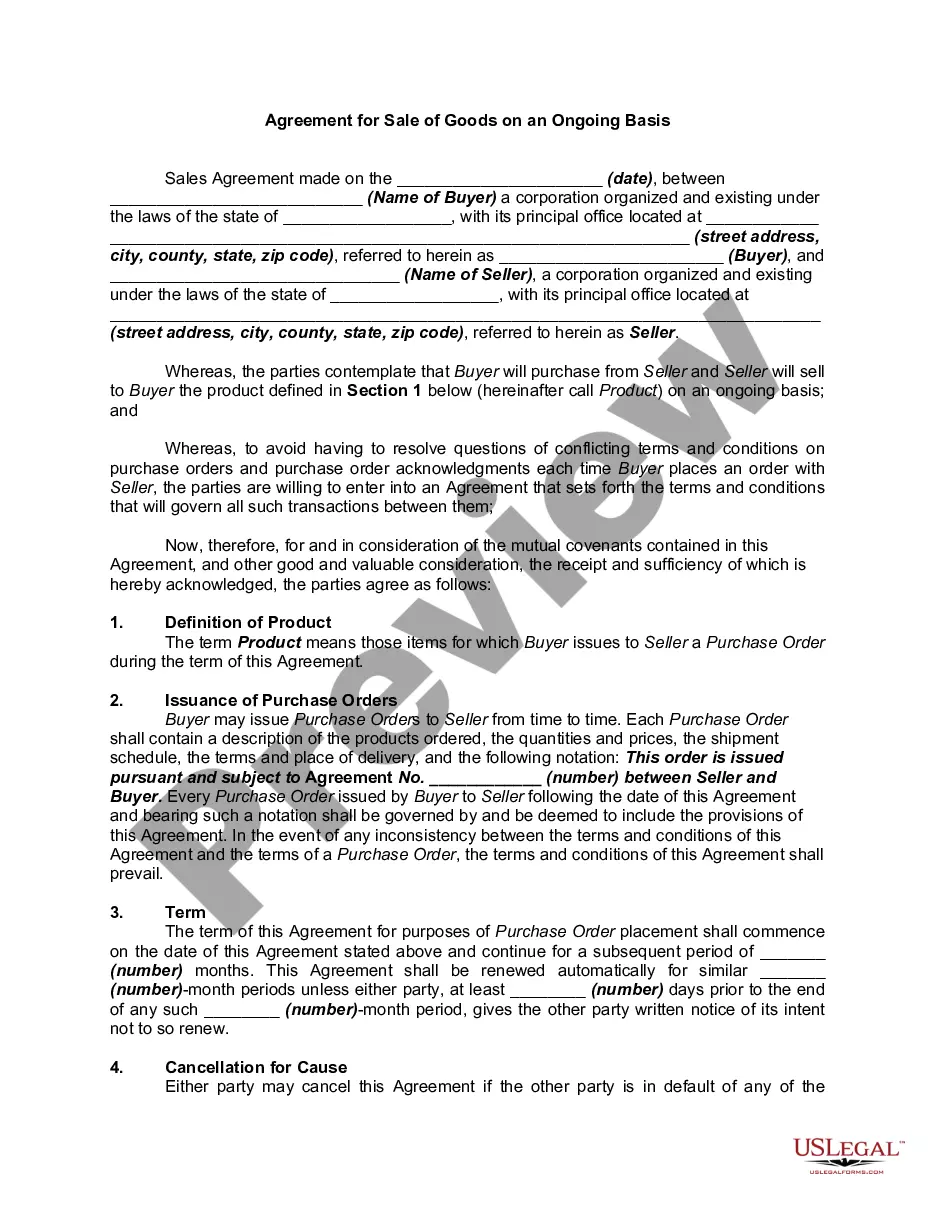
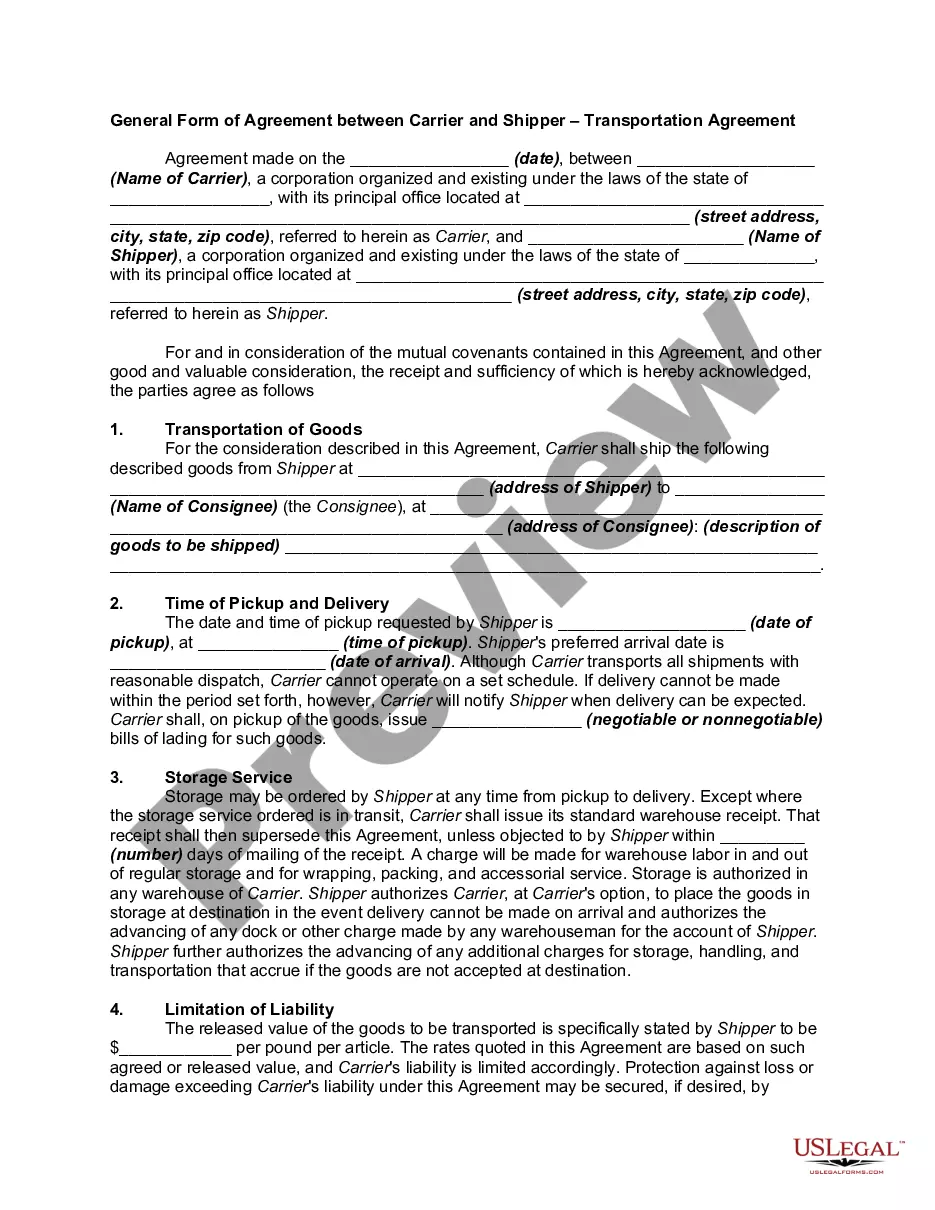
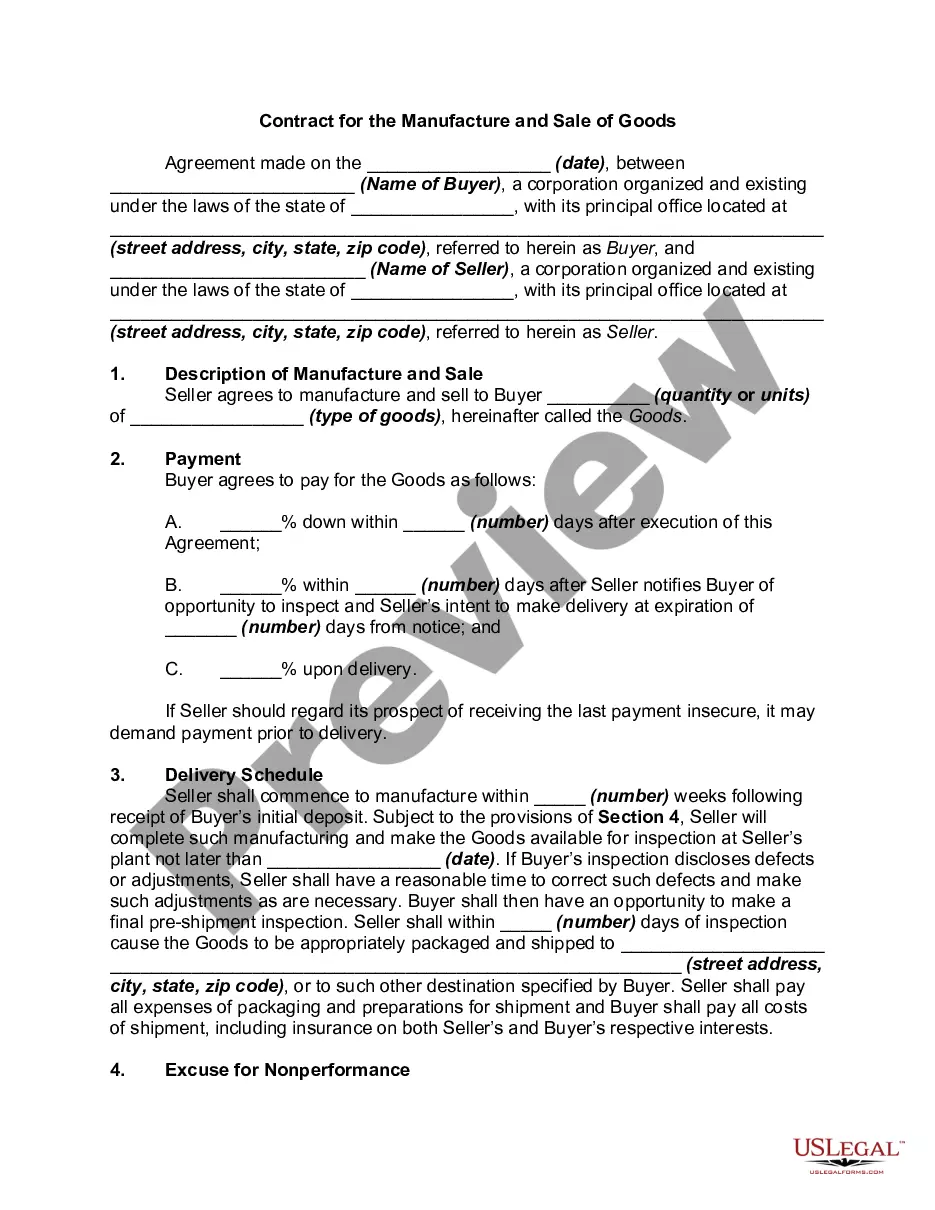
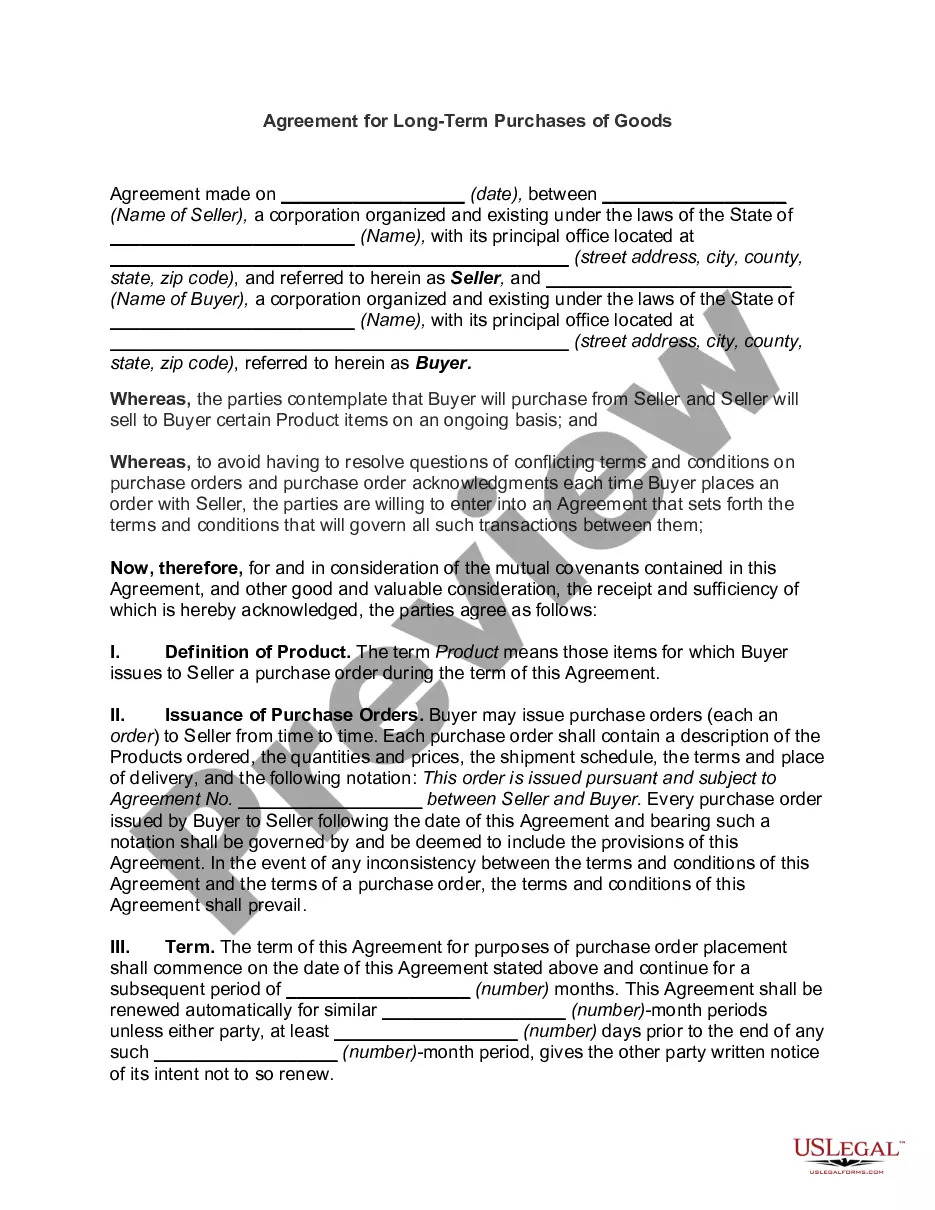
This Agreement between Carrier and Shipper with Guaranteed Monthly Shipments of Manufactured Goods outlines the terms under which a Carrier agrees to transport goods for a Shipper consistently each month. This type of agreement is essential for businesses that rely on predictable logistics for their manufactured products, ensuring reliability in their supply chain. Unlike standard shipping agreements, this form emphasizes guaranteed monthly shipments, making it particularly suited for companies with ongoing shipping needs.
Form components explained
- Transportation details: Specifies origin and destination of shipments.
- Guaranteed monthly shipment: Sets the minimum amount of goods to be shipped monthly.
- Compensation terms: Outlines payment for transportation services based on regulatory rates.
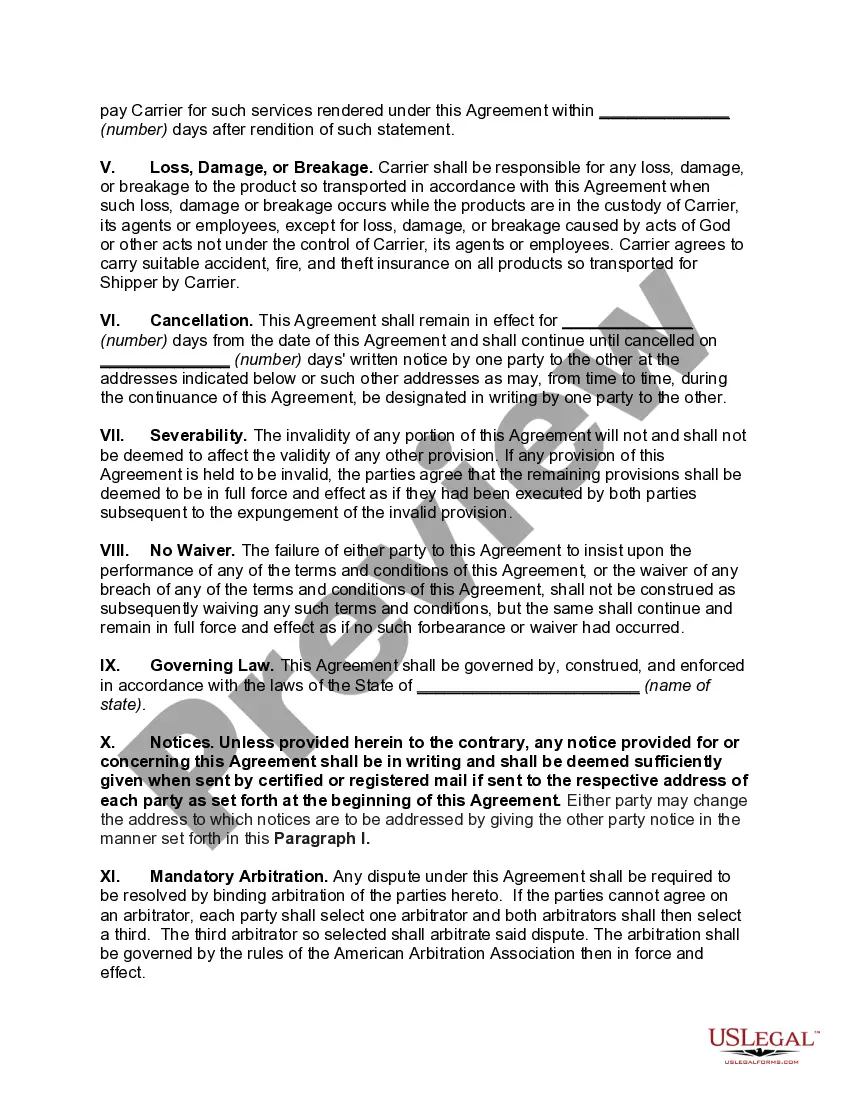
- Loss, damage, or breakage provisions: Specifies Carrier's responsibility for goods during transport.
- Cancellation policy: Details how either party can terminate the agreement.
- Governing law: States the applicable law that governs the agreement.
When to use this form
This form is useful when a manufacturer needs to ensure consistent delivery of their products to designated locations each month. It is ideal for businesses that want to secure a long-term shipping arrangement with a Carrier, particularly when the volume of shipments is significant and predictable. The form protects both parties by clearly defining their roles, responsibilities, and compensation.
Who this form is for
- Manufacturers looking for reliable shipping partners.
- Businesses requiring guaranteed transportation of products monthly.
- Logistics managers coordinating shipping contracts.
- Companies needing a formal agreement to outline shipping responsibilities.
Steps to complete this form
- Identify the parties by entering names and addresses of both the Carrier and Shipper.
- Specify the type of products being shipped and their intended destination.
- Fill in the guaranteed monthly shipment amount in pounds.
- Detail the compensation terms in accordance with local utility commission rates.
- Enter the duration of the agreement and termination notice period.
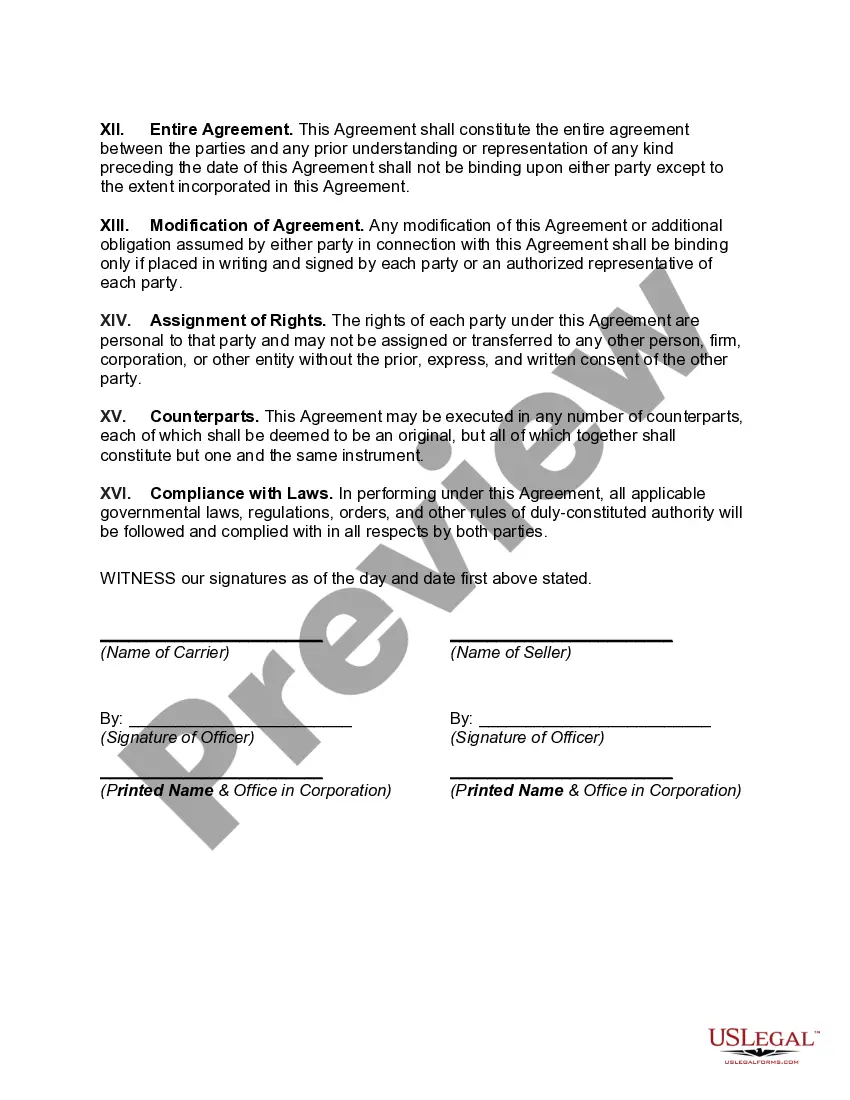
- Ensure that both parties sign and date the document to validate the agreement.
Notarization requirements for this form
This form does not typically require notarization to be legally valid. However, some jurisdictions or document types may still require it. US Legal Forms provides secure online notarization powered by Notarize, available 24/7 for added convenience.
Get your form ready online
Our built-in tools help you complete, sign, share, and store your documents in one place.
Make edits, fill in missing information, and update formatting in US Legal Forms—just like you would in MS Word.
Download a copy, print it, send it by email, or mail it via USPS—whatever works best for your next step.
Sign and collect signatures with our SignNow integration. Send to multiple recipients, set reminders, and more. Go Premium to unlock E-Sign.
If this form requires notarization, complete it online through a secure video call—no need to meet a notary in person or wait for an appointment.
We protect your documents and personal data by following strict security and privacy standards.

Make edits, fill in missing information, and update formatting in US Legal Forms—just like you would in MS Word.

Download a copy, print it, send it by email, or mail it via USPS—whatever works best for your next step.

Sign and collect signatures with our SignNow integration. Send to multiple recipients, set reminders, and more. Go Premium to unlock E-Sign.

If this form requires notarization, complete it online through a secure video call—no need to meet a notary in person or wait for an appointment.

We protect your documents and personal data by following strict security and privacy standards.
Mistakes to watch out for
- Failing to specify exact product details, leading to confusion about what is being shipped.
- Not including accurate addresses for both parties, which can affect legal enforceability.
- Neglecting to define the compensation structure clearly.
- Overlooking state-specific regulations that may impact the agreement.
Benefits of using this form online
- Convenience of instant access and downloadable format for easy editing.
- Reliable templates drafted by licensed attorneys ensure legal compliance.
- Time-saving solution compared to traditional methods of obtaining legal documents.
Legal use & context
- This agreement serves as a legally binding contract, outlining the responsibilities of both the Carrier and Shipper.
- Enforceability may hinge on compliance with local transportation laws.
- Parties should retain copies of the signed agreement for their records to resolve any disputes that may arise.
Main things to remember
- Clearly defines shipping terms to ensure reliable logistics for manufacturers.
- Enhances legal clarity around responsibilities and liabilities between parties.
- Customizable to align with specific state regulations and business needs.
Looking for another form?
Form popularity
FAQ
Some businesses that may be classified as common carriers include taxi services, trucking companies, rail freight services, waste removal services, couriers, vehicle towing services, and air freight services.
A common carrier is a person or a commercial enterprise that transports passengers or goods for a fee and establishes that their service is open to the general public. Typical examples of common carriers include, a shipowner, railroad, airline, taxi service, etc.
What is a Carrier Agreement? A carrier agreement is a legal contract between a customer and a carrier that outlines the terms and conditions in which the carrier provides certain services to the customer. A carrier agreement is typically between a customer and a carrier like UPS or FedEx.
An example of a common freight carrier is FedEx (they are also a contract carrier), and DHL is an example of a contract carrier.
Common carrier means a person holding itself out to the general public to provide transportation for compensation. Contract carrier means a person providing transportation for compensation under continuing agreements with one person or a limited number of persons.
A contract of carriage is a negotiated contract between the carrier and shipper for the transportation of cargo.
A carrier generally enters into an agreement (aka, bill of lading) with the shipper to limit its liability to an agreed upon value if the shipment is lost or damaged.
A private carrier does not hold itself out as ready and willing to transport for the public, transports only by special agreement, and is not bound to serve every person who may apply. In contrast, a common carrier is one that holds itself out to the public as ready to carry for anyone who requests its services.