Petty Cash Funds
What this document covers
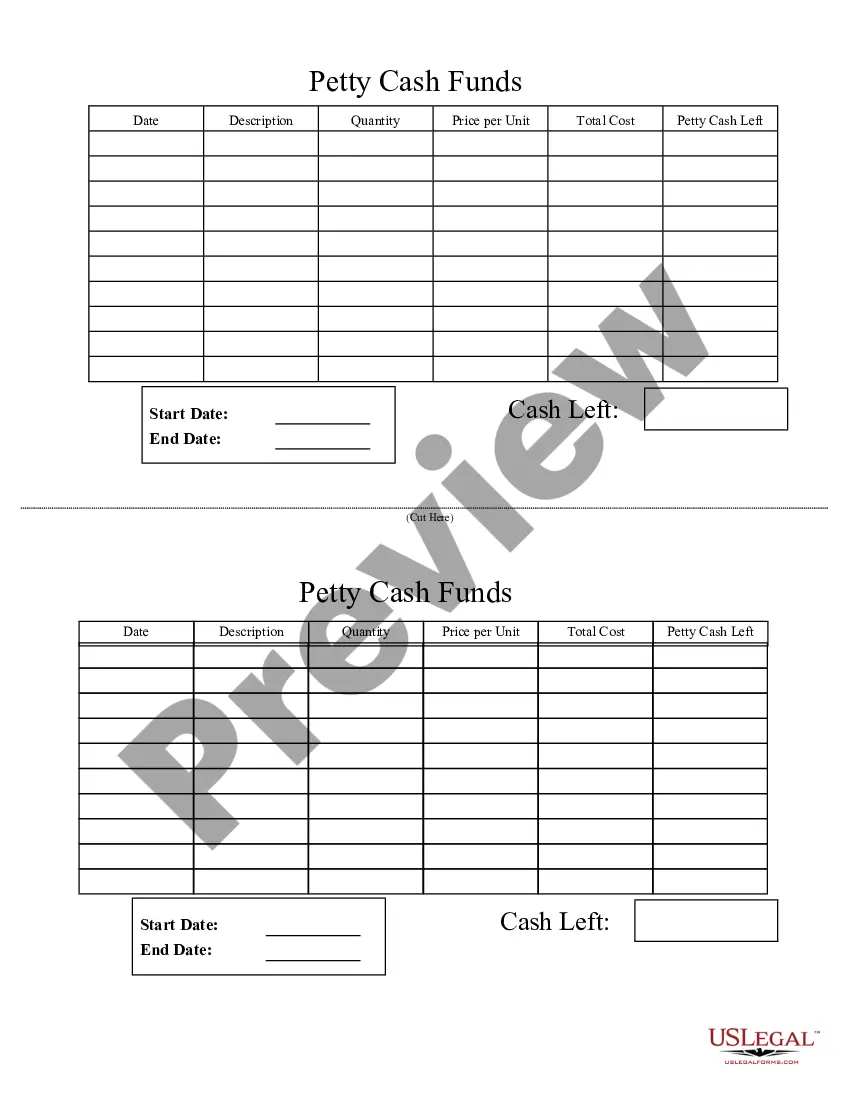
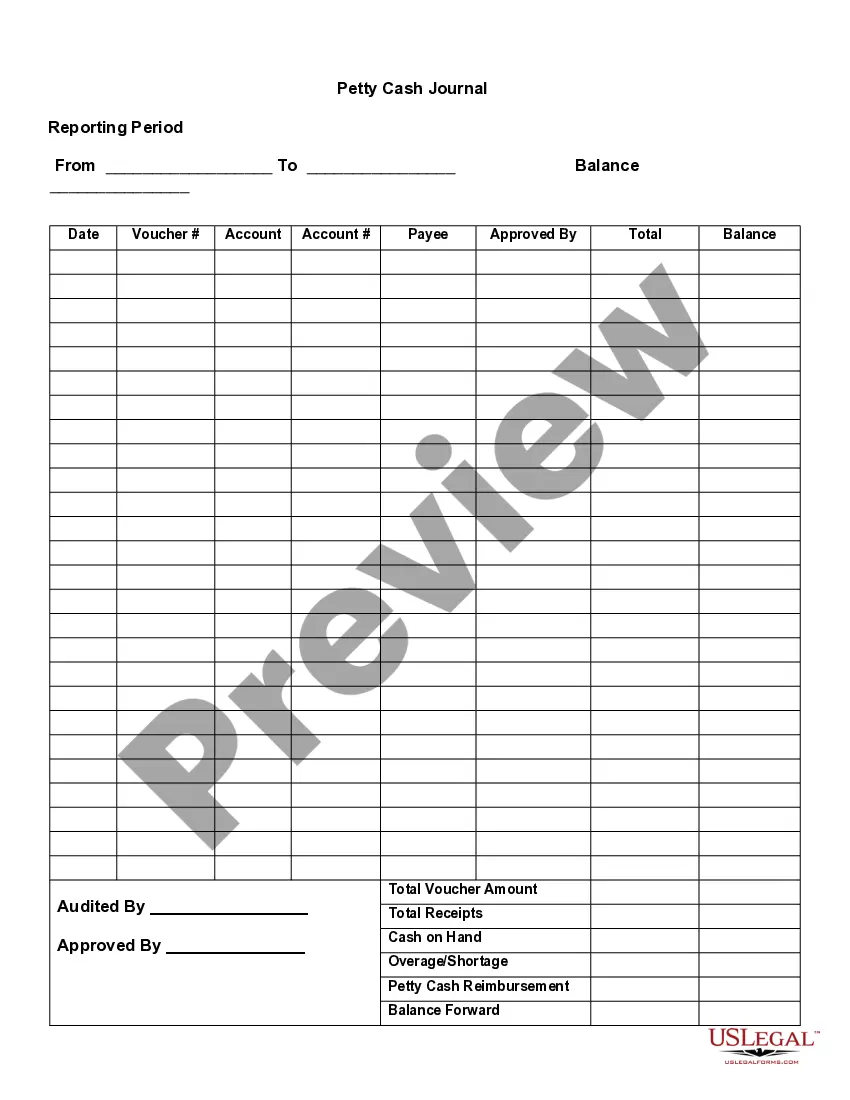
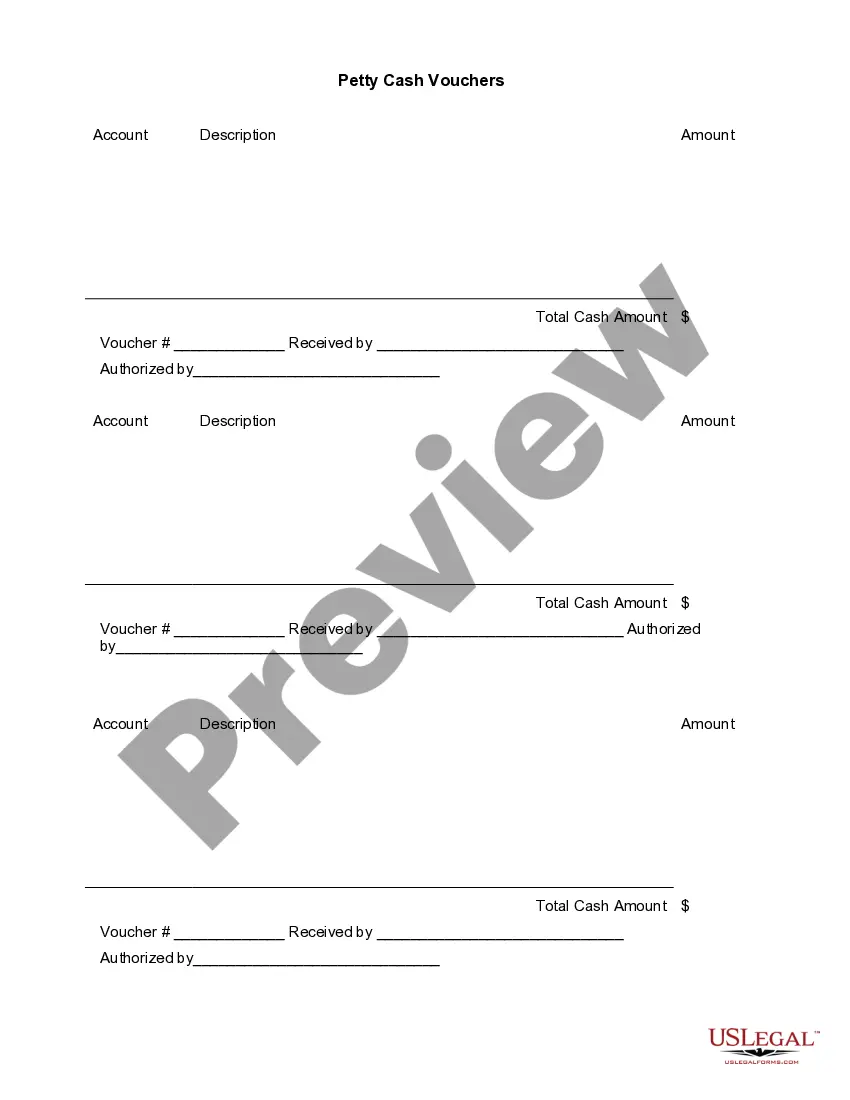
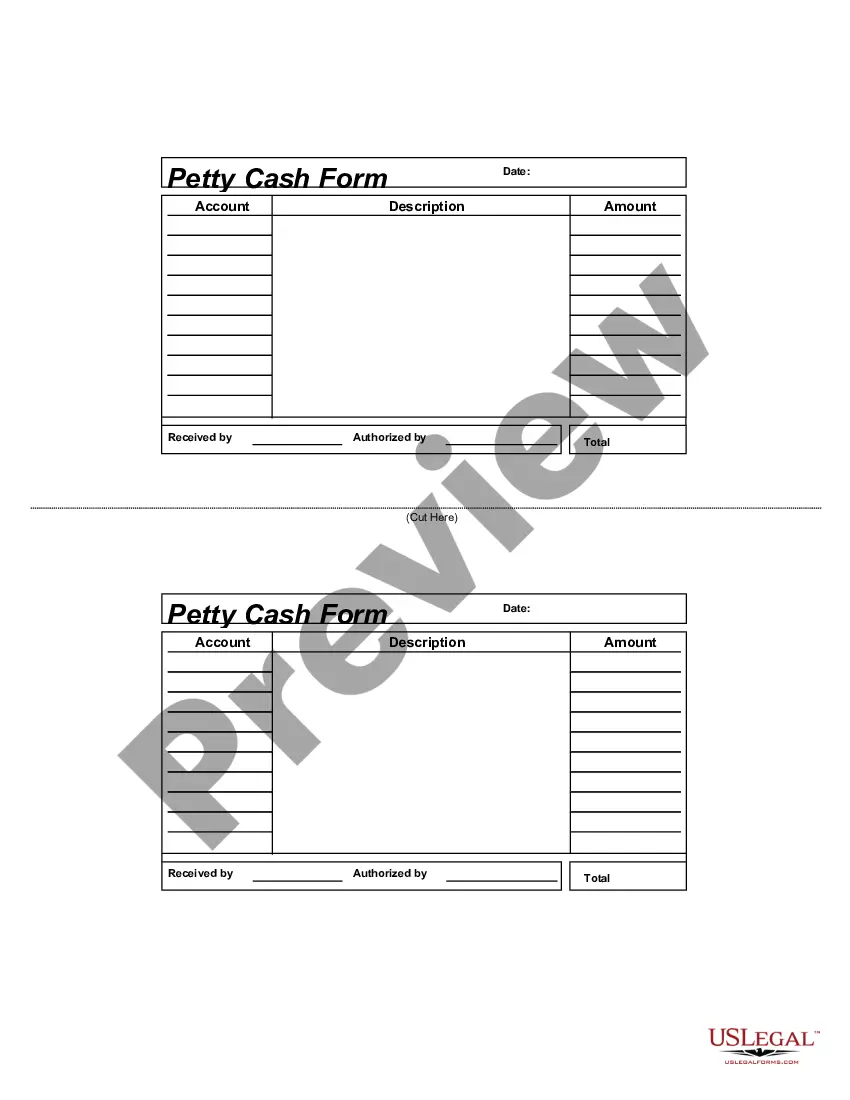
The Petty Cash Funds form is a business document designed to help organizations manage their petty cash effectively. It provides a standardized approach to tracking minor cash expenditures and reimbursements, differentiating it from other financial forms. This form simplifies the process and ensures compliance with internal controls, making it essential for any business handling petty cash transactions.
Key parts of this document
- Header section for company name and address
- Designated fields for budget allocation and cash limits
- Sections for detailed entries of transactions
- Area for signatures of authorized personnel
- Space for dates and descriptions of each cash transaction
When to use this form
This form is useful for businesses that regularly engage in small cash transactions for operational purposes. It is commonly used when a company wants to establish a petty cash fund for employee reimbursements, minor office supplies, or other small expenses that do not require formal purchase orders. Utilizing this form helps maintain accurate records and facilitates budget management.
Intended users of this form
- Business owners managing petty cash funds
- Finance or accounting staff responsible for recording transactions
- Managers who authorize petty cash expenditures
- Employees involved in petty cash disbursements or reimbursements
Steps to complete this form
- Enter the company name and address in the header section.
- Specify the budget amount allocated for petty cash in the designated field.
- Document each transaction by entering the date, description, and amount spent in the designated sections.
- Collect signatures from authorized personnel for each disbursement made.
- Maintain a running total to ensure the petty cash balance is accurate.
Notarization requirements for this form
This form does not typically require notarization unless specified by local law. It is recommended to review your specific state regulations to ensure compliance.
Get your form ready online
Our built-in tools help you complete, sign, share, and store your documents in one place.
Make edits, fill in missing information, and update formatting in US Legal Forms—just like you would in MS Word.
Download a copy, print it, send it by email, or mail it via USPS—whatever works best for your next step.
Sign and collect signatures with our SignNow integration. Send to multiple recipients, set reminders, and more. Go Premium to unlock E-Sign.
If this form requires notarization, complete it online through a secure video call—no need to meet a notary in person or wait for an appointment.
We protect your documents and personal data by following strict security and privacy standards.

Make edits, fill in missing information, and update formatting in US Legal Forms—just like you would in MS Word.

Download a copy, print it, send it by email, or mail it via USPS—whatever works best for your next step.

Sign and collect signatures with our SignNow integration. Send to multiple recipients, set reminders, and more. Go Premium to unlock E-Sign.

If this form requires notarization, complete it online through a secure video call—no need to meet a notary in person or wait for an appointment.

We protect your documents and personal data by following strict security and privacy standards.
Common mistakes to avoid
- Failing to keep accurate records of transactions.
- Not having the appropriate authorizations for disbursements.
- Neglecting to provide thorough descriptions of each expense.
- Overlooking regular reconciliation of petty cash balances.
Why complete this form online
- Convenient download and easy accessibility for record management.
- Editability in Adobe Acrobat or Word for customizable use.
- Structured format reduces errors and improves accuracy.
- Time-saving as it eliminates the need for manual drafting.
Legal use & context:
- Helps maintain transparency in the handling of small cash transactions.
- Ensures accountability by tracking who manages petty cash funds.
- Can be used as a record in financial audits or reviews.
Key takeaways
Key takeaways:
- The Petty Cash Funds form is essential for managing small expenses.
- Accurate record-keeping and approvals are critical for compliance.
- Using this form can streamline financial management in a business.
Looking for another form?
Form popularity
FAQ
Examples of Cash In accounting, a company's cash includes the following: currency and coins.petty cash.
An imprest is a cash account that a business relies on to pay for routine, small expenses.The term "imprest" can also mean a monetary advance that is given to a person for a specific purpose.
Petty cash is a small amount of cash that is kept on the company premises to pay for minor cash needs. Examples of these payments are office supplies, cards, flowers, and so forth.A separate accounting system is used to track petty cash transactions.
The difference between cash and petty cash is that petty cash is the money that you keep on hand to make small payments where you do not want to use a check or credit card, while cash on hand is any accessible cash.
When petty cash is used for business expenses, the appropriate expense account -- such as office supplies or employee reimbursement -- should be expensed.
You reconcile petty cash by comparing the total of the original amount of cash placed in the drawer with the total cash remaining and records of total cash withdrawn.
Petty cash works on the imprest system, in which there is an initial amount of money put into an account, which is drawn upon for a specific purpose (in this case, petty cash). When the account goes below a certain specified amount, the system is replenished.
How much petty cash should you keep on hand? That depends on how many small expenses you make and how often you make them, but most businesses seem fine carrying between $100 and $200 in petty cash.
Petty cash, also known as imprest cash, is a fund established for making small payments that are impractical to pay by check. Examples include postage due, reimbursement to employees for small purchases of office supplies, and numerous similar items.