Louisiana Answer to Plaintiff's Petition for Divorce
Overview of this form
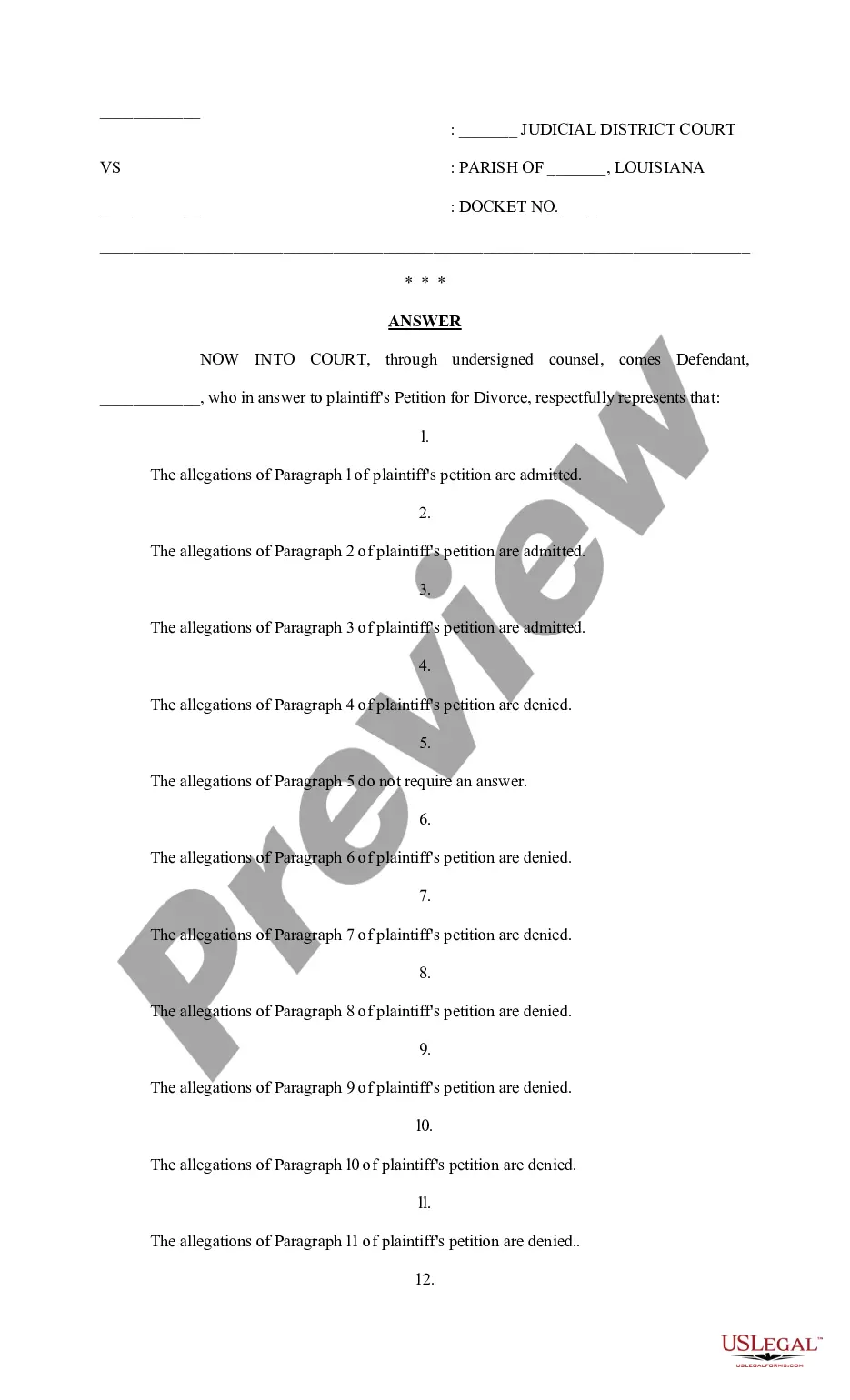
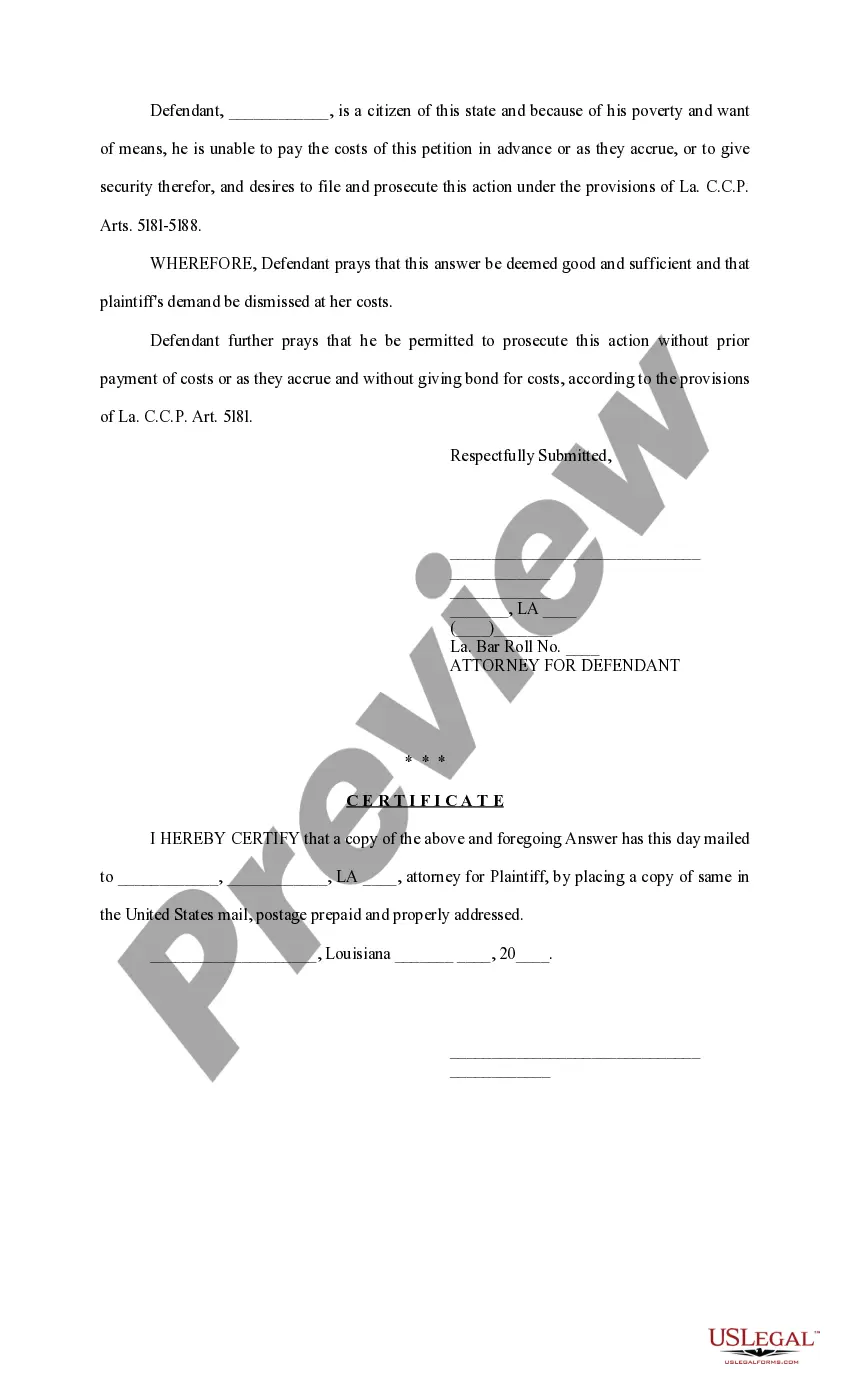
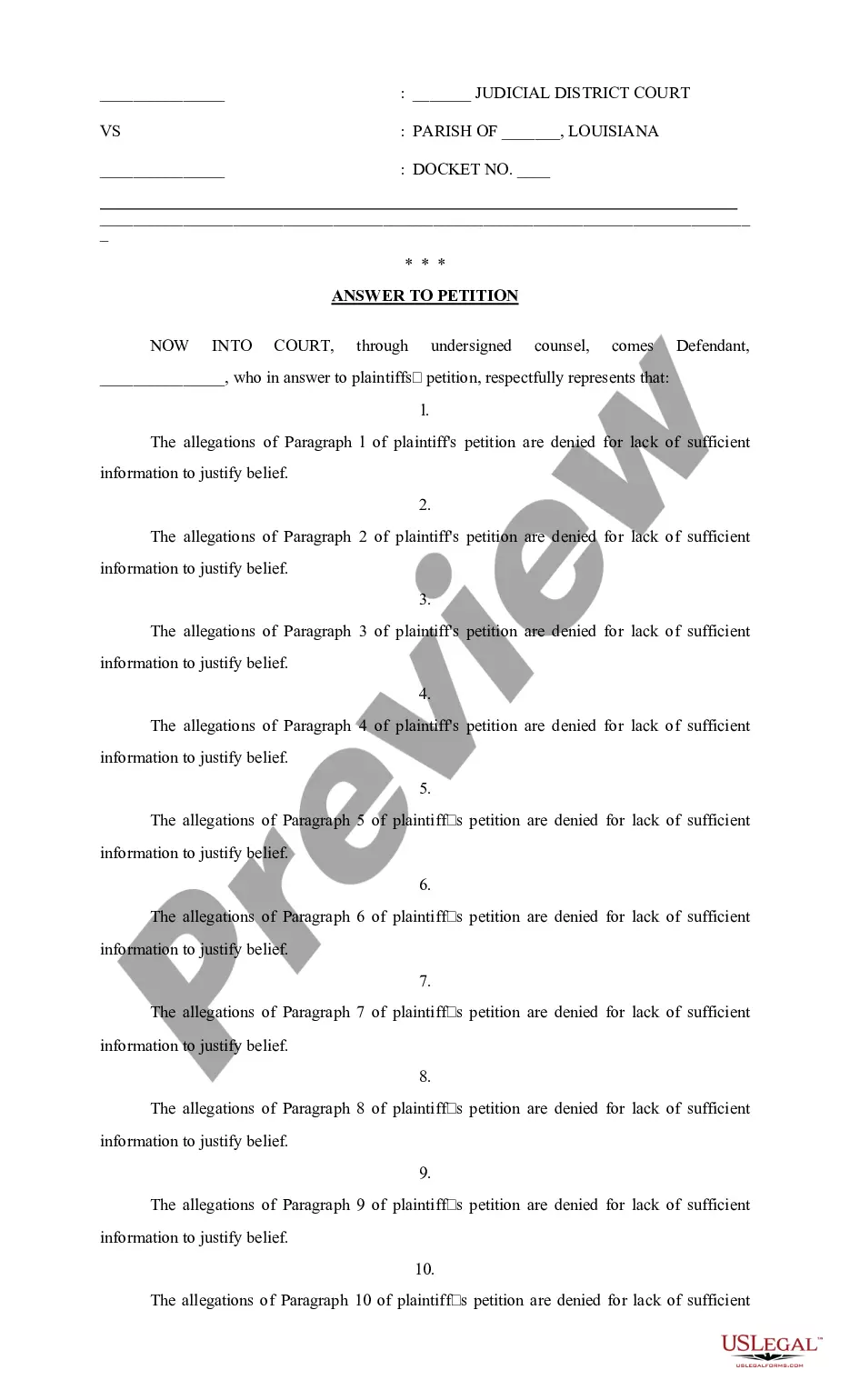
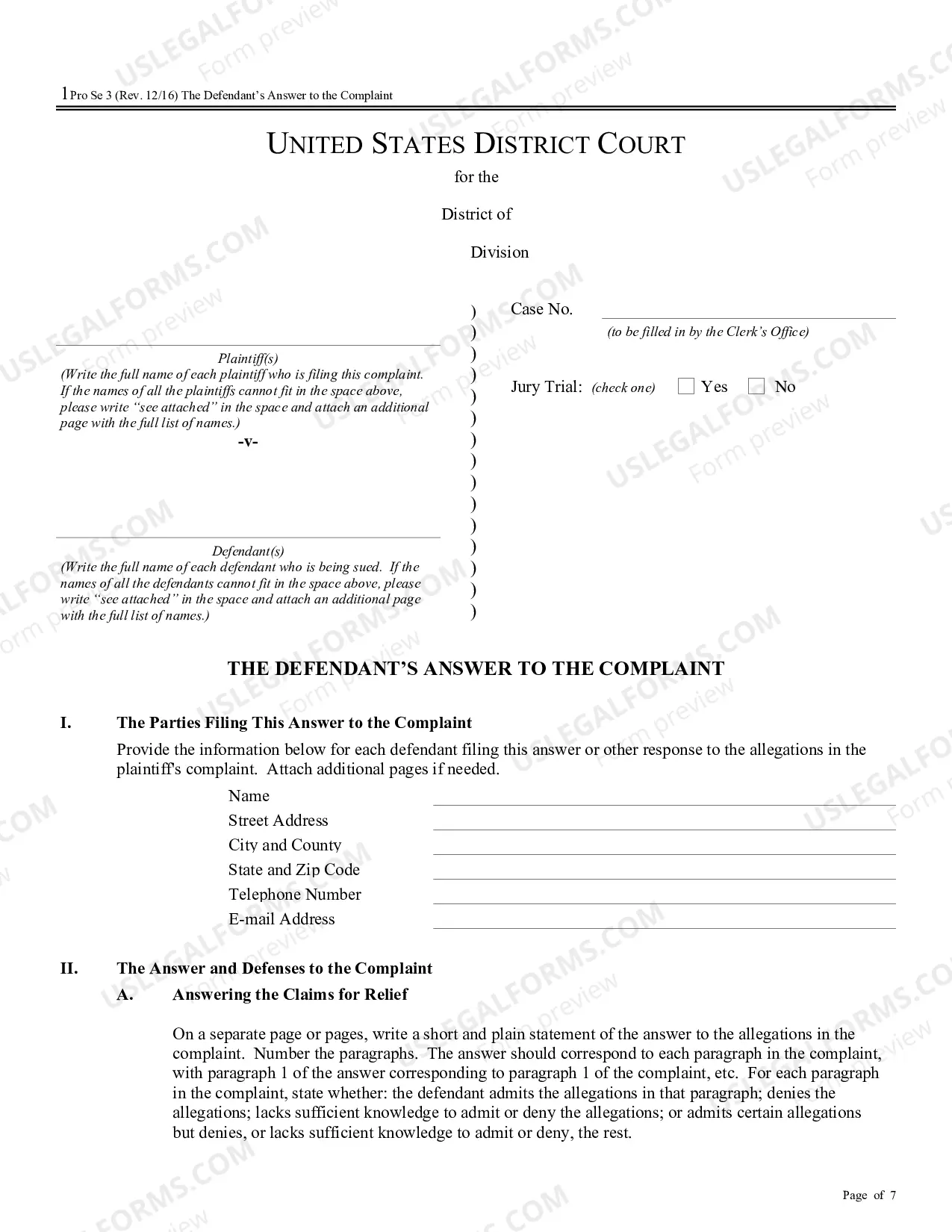
This form, known as the Answer to Plaintiff's Petition for Divorce, serves as a defendant's official response in a divorce proceedings. It allows the defendant to address the allegations made by the plaintiff, and request the court to waive certain costs due to financial hardship. This form is critical for anyone responding to a divorce suit in Louisiana, as it ensures the defendant's voice is heard and his or her rights are protected.
Form components explained
- Identification of court and case details.
- Admission or denial of allegations made by the plaintiff.
- Request for waiver of court costs due to poverty.
- Formal request for dismissal of the plaintiff's suit
- Signature and contact information of the defendant's attorney.
When to use this document
This form should be used when a defendant has been served with a Petition for Divorce and needs to formally respond to the allegations. It is essential in cases where the defendant disputes some or all of the claims made by the plaintiff, and it is particularly applicable if the defendant is unable to afford the costs associated with the divorce proceedings.
Who can use this document
This form is intended for:
- Defendants in divorce proceedings in Louisiana.
- Individuals who need to respond to allegations in a divorce petition.
- Those who require a waiver of court costs due to financial reasons.
Instructions for completing this form
- Identify the parties involved in the court case.
- Read through the plaintiffâs allegations to determine which you admit and deny.
- State your request for a waiver of costs due to financial hardship.
- Include the request for dismissal of the plaintiffâs suit if applicable.
- Sign and date the form to verify your response.
Is notarization required?
This form does not typically require notarization unless specified by local law. Ensure you check Louisiana's local requirements for any additional documentation that may be necessary.
Get your form ready online
Our built-in tools help you complete, sign, share, and store your documents in one place.
Make edits, fill in missing information, and update formatting in US Legal Forms—just like you would in MS Word.
Download a copy, print it, send it by email, or mail it via USPS—whatever works best for your next step.
Sign and collect signatures with our SignNow integration. Send to multiple recipients, set reminders, and more. Go Premium to unlock E-Sign.
If this form requires notarization, complete it online through a secure video call—no need to meet a notary in person or wait for an appointment.
We protect your documents and personal data by following strict security and privacy standards.

Make edits, fill in missing information, and update formatting in US Legal Forms—just like you would in MS Word.

Download a copy, print it, send it by email, or mail it via USPS—whatever works best for your next step.

Sign and collect signatures with our SignNow integration. Send to multiple recipients, set reminders, and more. Go Premium to unlock E-Sign.

If this form requires notarization, complete it online through a secure video call—no need to meet a notary in person or wait for an appointment.

We protect your documents and personal data by following strict security and privacy standards.
Typical mistakes to avoid
- Failing to respond within the stipulated timeframe.
- Not adequately addressing all allegations made by the plaintiff.
- Neglecting to request a waiver of costs if unable to pay.
- Omitting required signatures or contact information.
Benefits of completing this form online
- Convenience of downloading and filling the form at your own pace.
- Access to templates that are legally compliant and up-to-date.
- Ability to edit and customize the form to fit your specific situation.
Looking for another form?
Form popularity
FAQ
Reply the notice, asking for divorce by mutual consent. Call or mail me for assistance. Please give me complete information about your case only then you can be given a good advice. If you ever need legal advice, you can call or WhatsApp me at .
You answer the divorce petition to let the court know your position in the divorce case.If you don't answer the divorce petition and you don't go to a hearing, it's still possible that the judge can grant the divorce. If that happens, the judge also can make other decisions in the divorce.
An Answer & Counterclaim for Divorce responds to the Complaint for Divorce and gives you an opportunity to tell the court what you want to happen with the divorce. Admit or Deny.
Typically, they will have at least 20 days to respond. States have different laws and requirements regarding what can and/or should be filed. In some states you may just need to file a piece of paper acknowledging receipt of the petition.
Filing an AnswerYou can ignore the filing, in which case your divorce will proceed by default. This means the court will likely grant whatever request your spouse makes regarding the division of property and debt, child custody, child support, and alimony. Alternatively, you can file an answer with the court.
The Court can grant a divorce order, even if the spouse refuses to sign any documents.Otherwise, the spouse may ask the Court to appear by telephone. While a spouse can refuse to sign the divorce papers, it is highly likely that the divorce will still take place. However, some situations could delay the divorce.
As the Petitioner, all you should have to pay when you file your Petition for Dissolution of Marriage is $388. If your spouse, as the Respondent, files an Answer or other responsive pleading later, he or she will pay the $251 response fee. There are other ways to keep divorce filing fees to a minimum.
You answer the divorce petition to let the court know your position in the divorce case.If you don't answer the divorce petition and you don't go to a hearing, it's still possible that the judge can grant the divorce. If that happens, the judge also can make other decisions in the divorce.
Answer only. An "Answer" tells the judge and your spouse what parts of the complaint you agree with and disagree with. Answer with a Counterclaim.