Artist Licensing Agreement
What this document covers
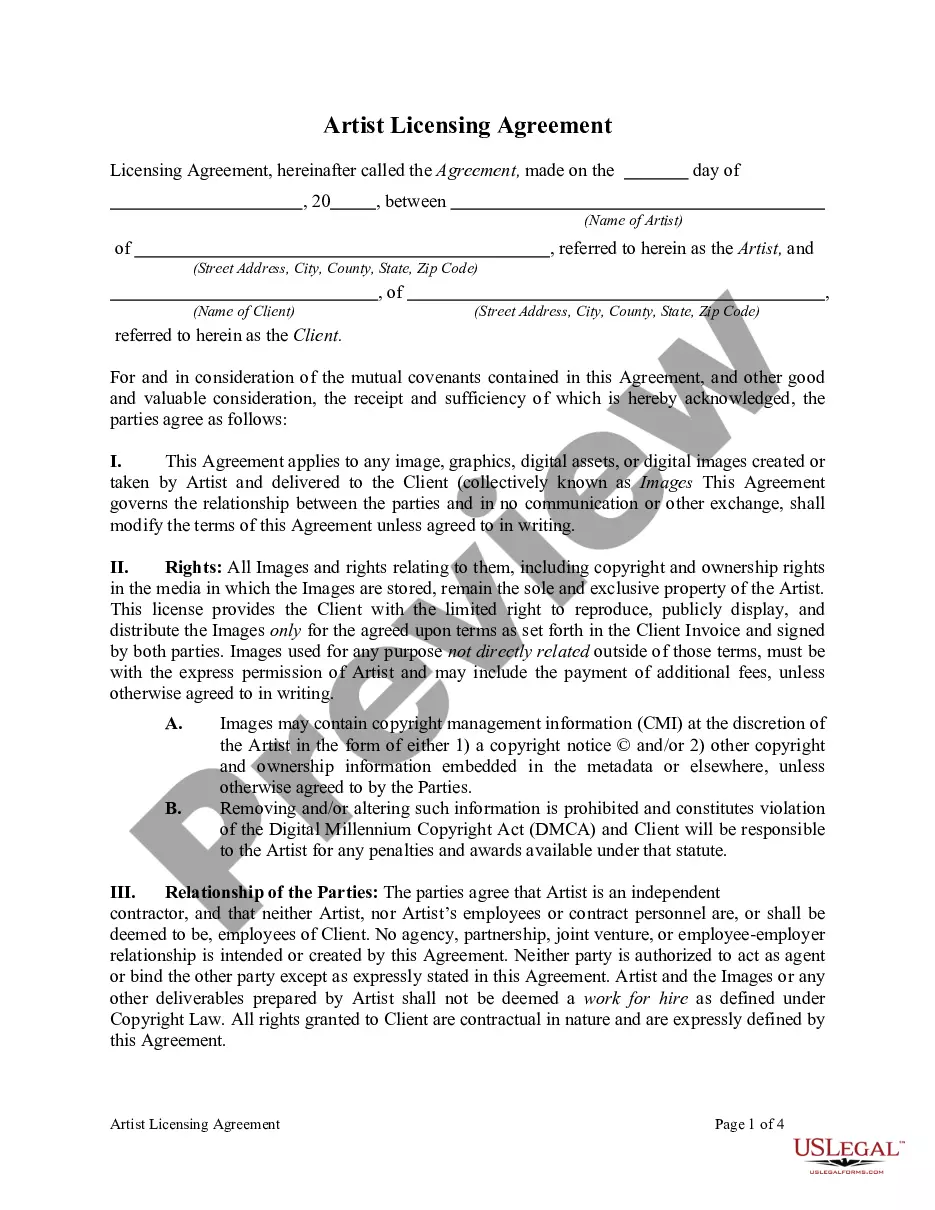
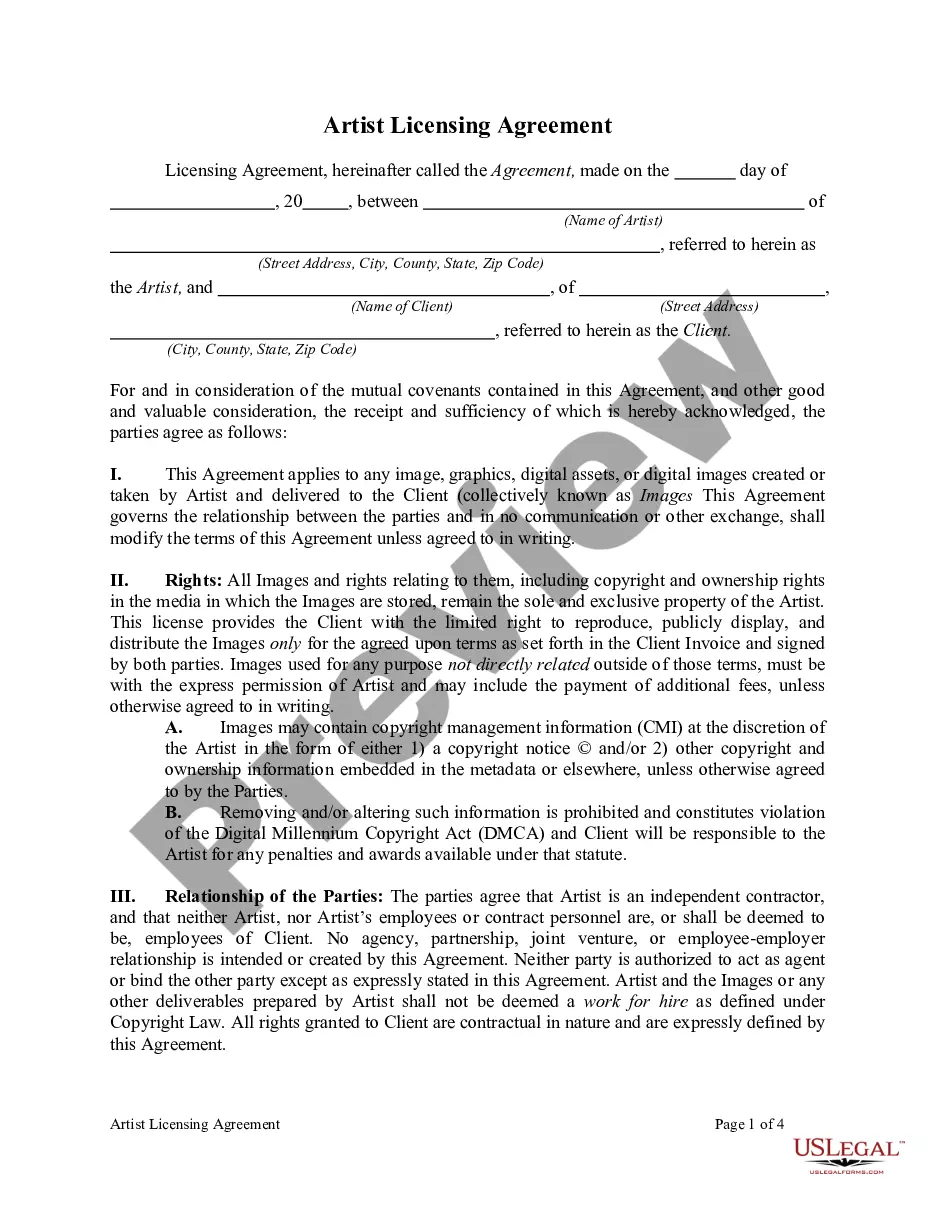
The Artist Licensing Agreement is a legal document that allows an artist to grant a client the right to use their images in exchange for payment. Unlike simply selling an artwork, a licensing agreement provides artists with ongoing financial benefits and control over the use of their work. This agreement clarifies the rights and responsibilities of both parties, making it essential for artists looking to monetize their creations while maintaining ownership.
Main sections of this form
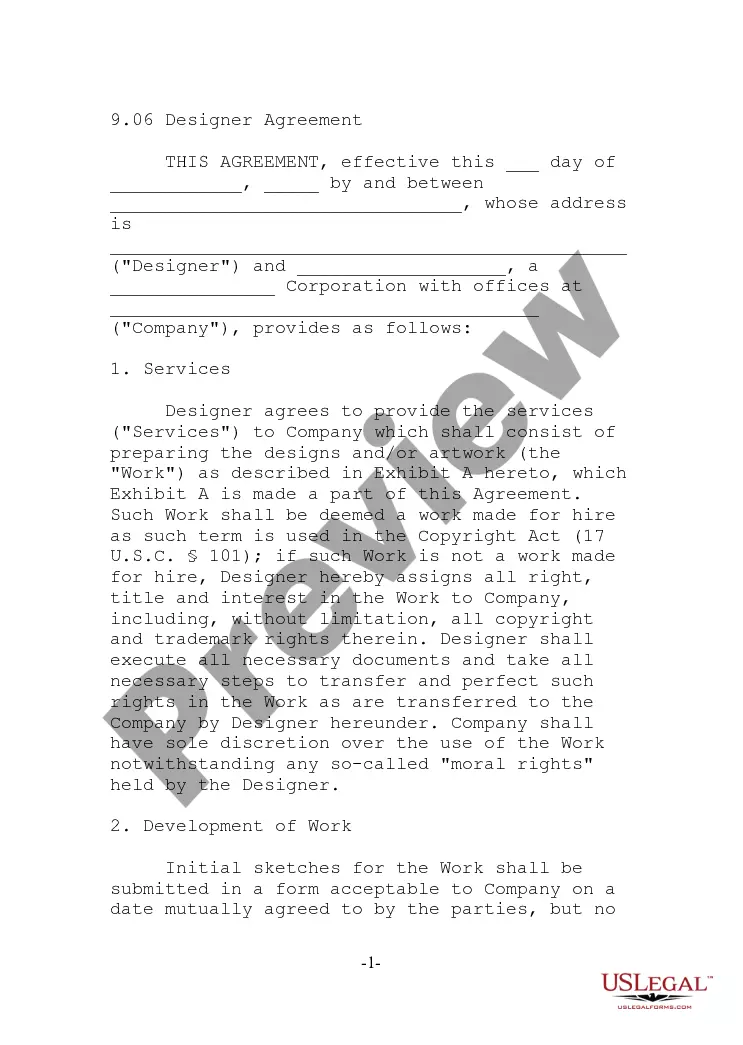
- Rights: Specifies that all images remain the exclusive property of the artist, and outlines the client's limited rights to use the images.
- Relationship of the Parties: Defines the independent contractor status of the artist and clarifies that no employment relationship is created.
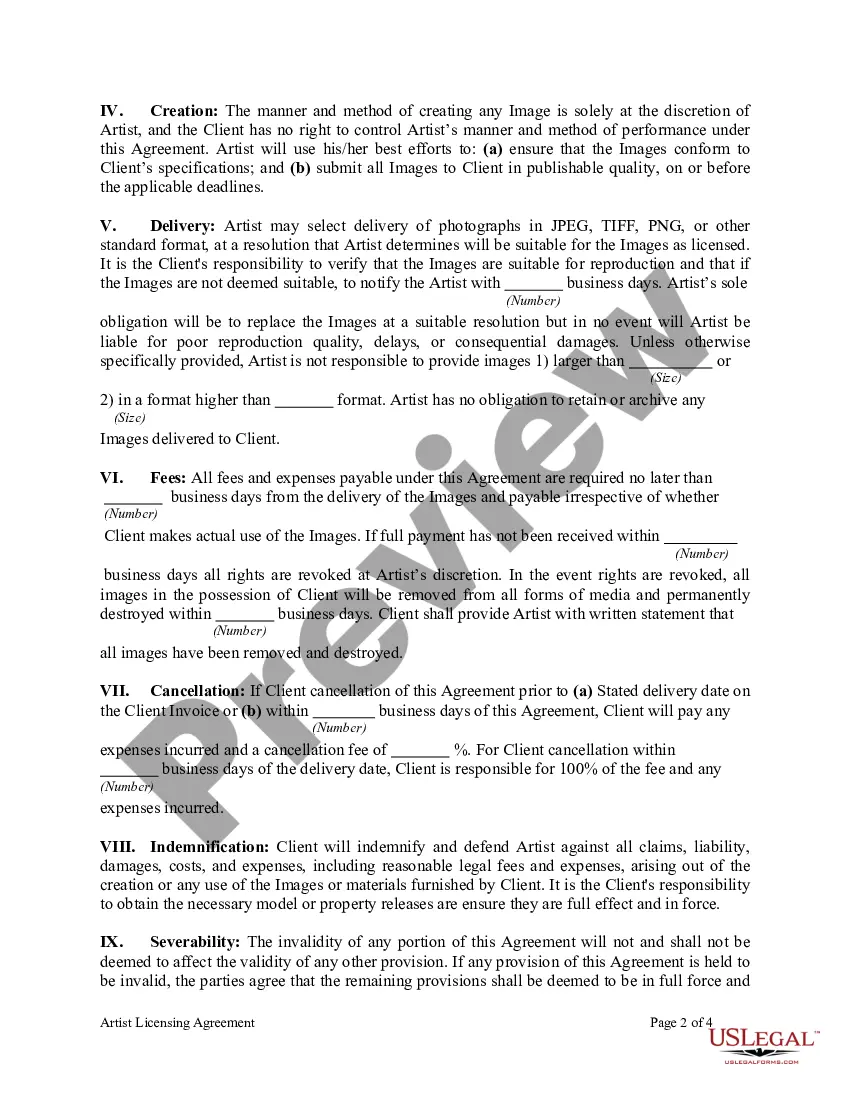
- Creation: Grants the artist discretion in how to create the images while ensuring they meet the client's specifications.
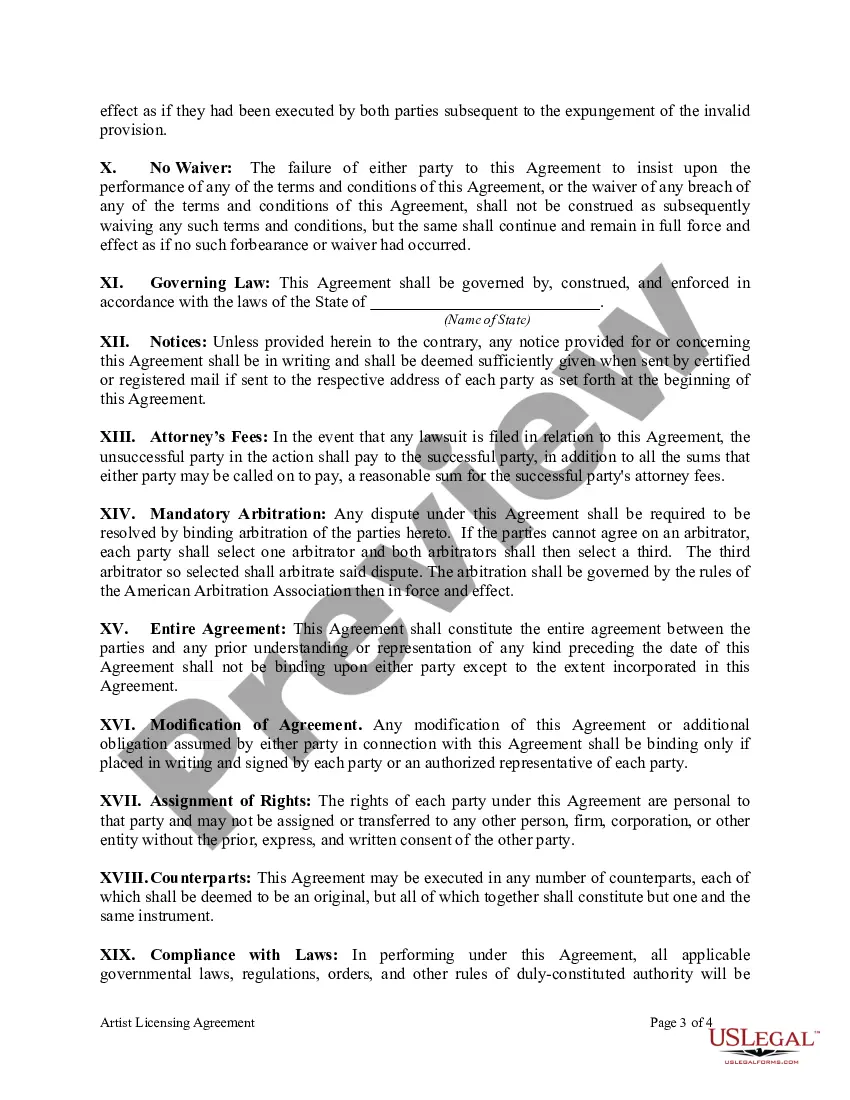
- Severability: Ensures that if any part of the agreement is deemed invalid, the rest remains enforceable.
- Mandatory Arbitration: Outlines that any disputes will be resolved through binding arbitration rather than court.
Situations where this form applies
This form is useful when an artist wants to allow a client to publish, copy, or distribute their images without transferring ownership. For instance, a photographer licensing images for use in marketing campaigns or an illustrator allowing a company to use their artwork in branded products would benefit from this agreement. It is particularly important in creative industries where image rights and ownership are vital for financial sustainability.
Who should use this form
The following individuals and entities should consider using this form:
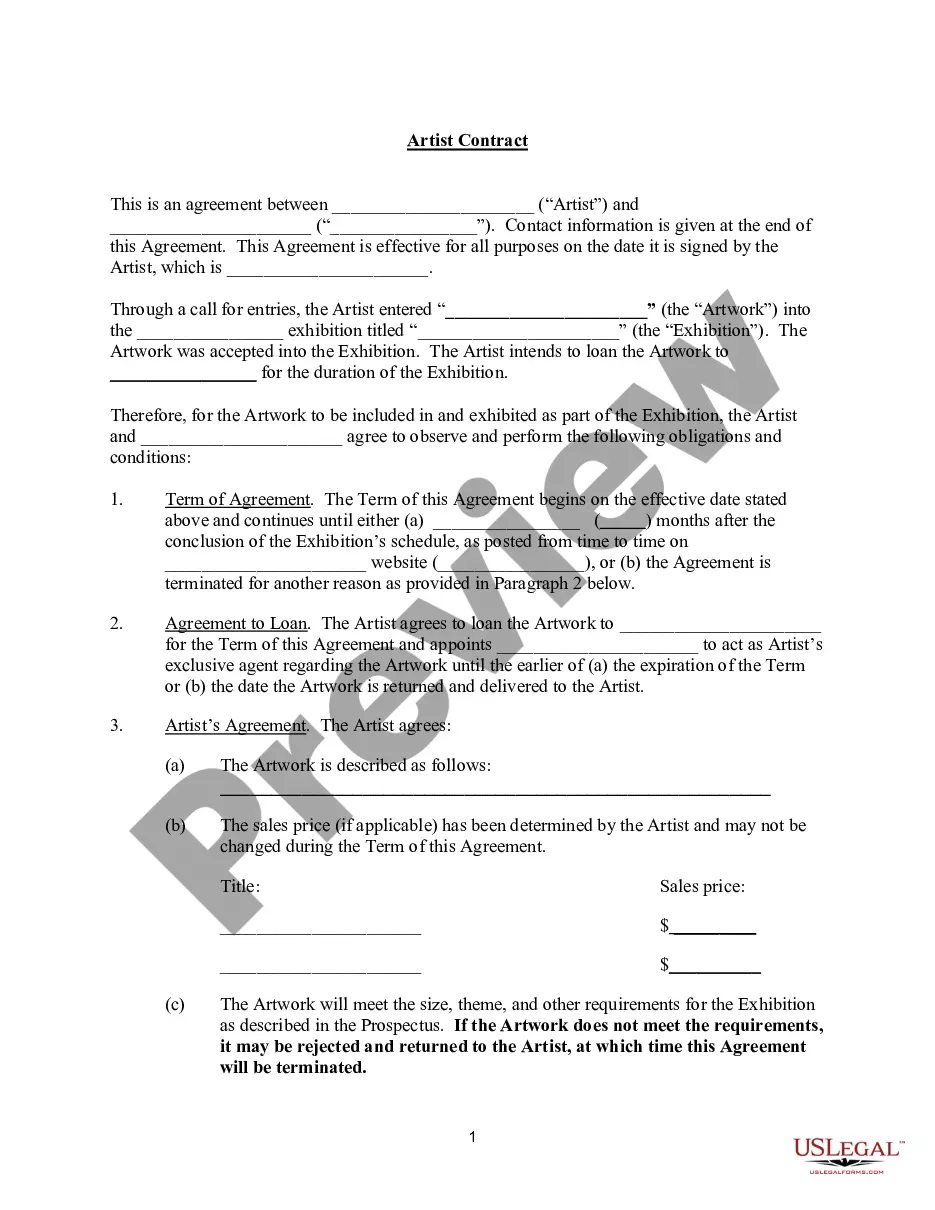
- Artists such as photographers, illustrators, and graphic designers looking to monetize their work.
- Clients interested in using artistic images for commercial purposes, like marketing or advertising.
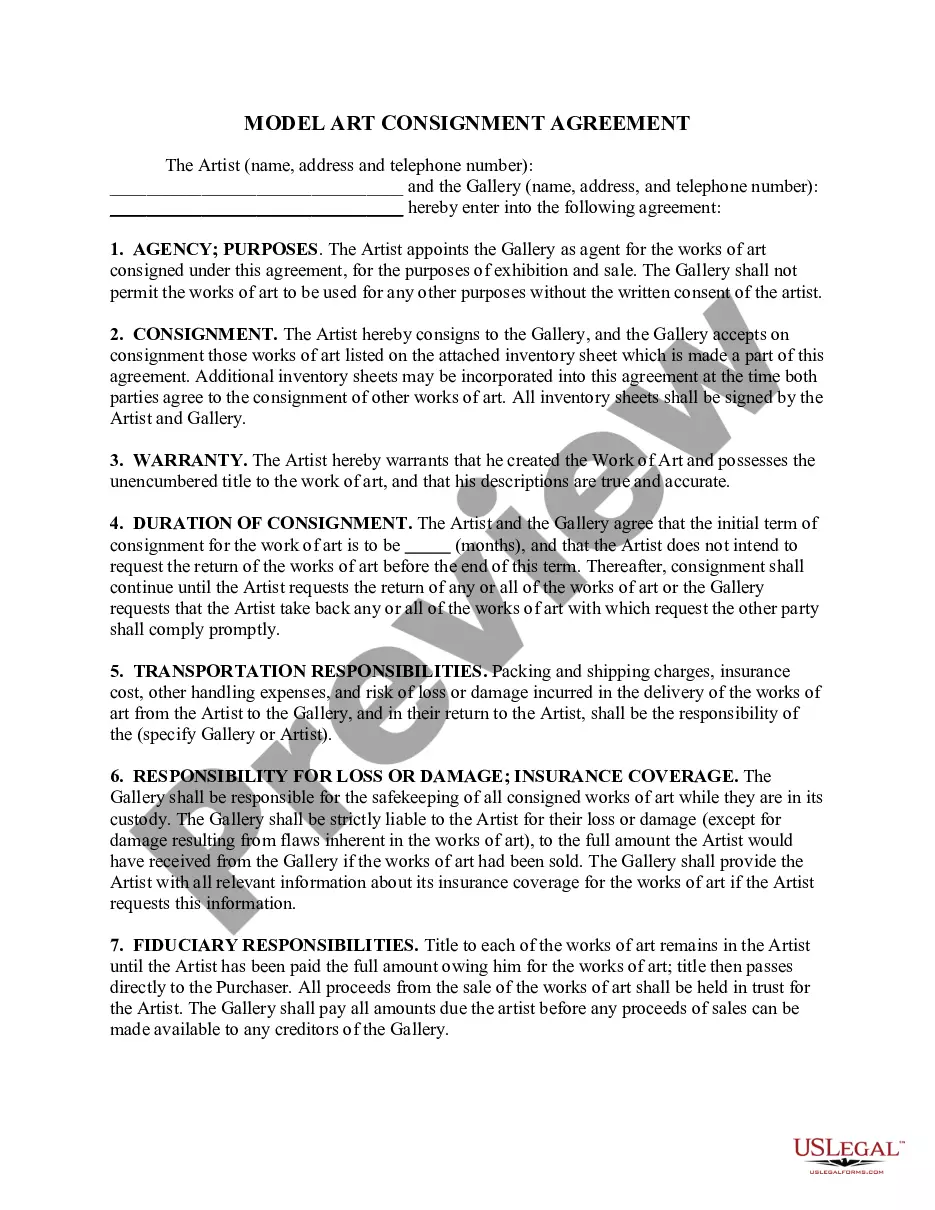
- Art galleries or businesses that want to clarify distribution rights of artwork.
How to complete this form
- Identify the artist and client: Clearly state the names and contact information of both parties.
- Describe the images: Include detailed descriptions of the artworks being licensed.
- Specify usage rights: Clearly outline the rights being granted to the client, including any limitations.
- Include payment terms: State the agreed compensation for the licensing rights.
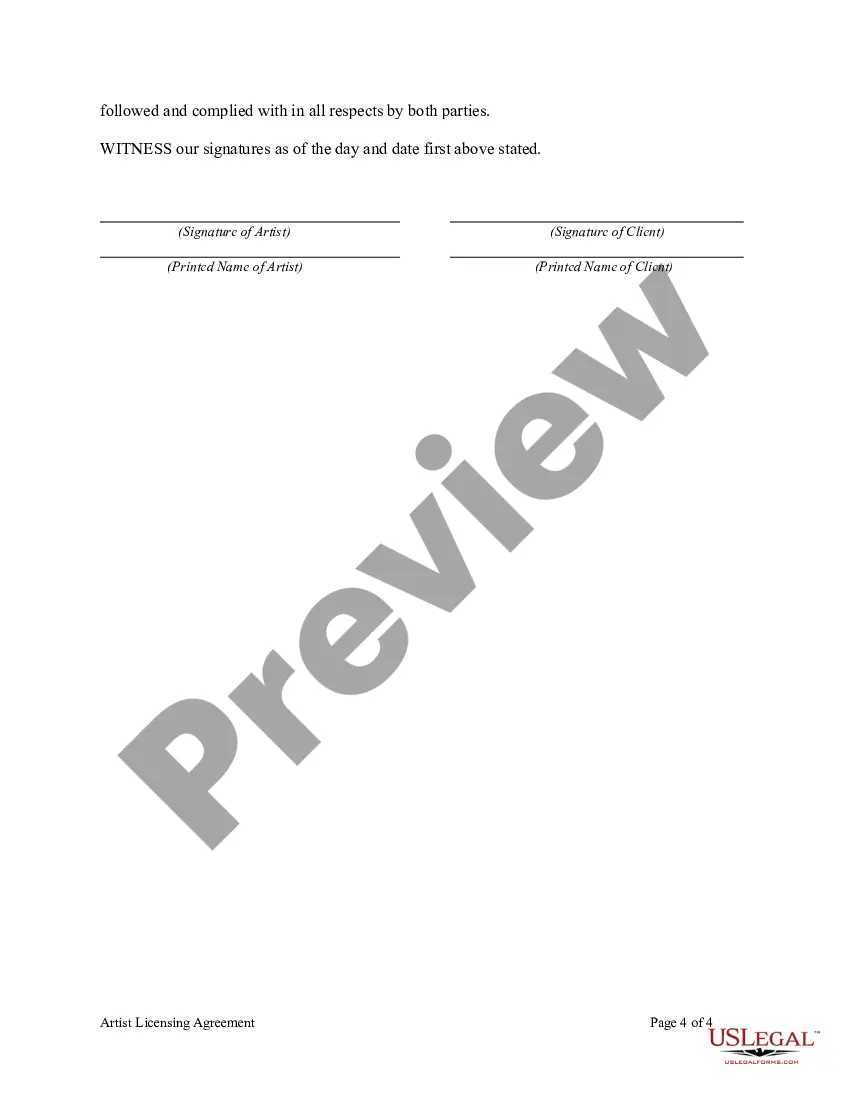
- Sign the agreement: Ensure that both parties sign and date the document for it to be legally binding.
Notarization guidance
This form does not typically require notarization unless specified by local law. However, obtaining notarization can add an extra layer of validation to the agreement.
Get your form ready online
Our built-in tools help you complete, sign, share, and store your documents in one place.
Make edits, fill in missing information, and update formatting in US Legal Forms—just like you would in MS Word.
Download a copy, print it, send it by email, or mail it via USPS—whatever works best for your next step.
Sign and collect signatures with our SignNow integration. Send to multiple recipients, set reminders, and more. Go Premium to unlock E-Sign.
If this form requires notarization, complete it online through a secure video call—no need to meet a notary in person or wait for an appointment.
We protect your documents and personal data by following strict security and privacy standards.

Make edits, fill in missing information, and update formatting in US Legal Forms—just like you would in MS Word.

Download a copy, print it, send it by email, or mail it via USPS—whatever works best for your next step.

Sign and collect signatures with our SignNow integration. Send to multiple recipients, set reminders, and more. Go Premium to unlock E-Sign.

If this form requires notarization, complete it online through a secure video call—no need to meet a notary in person or wait for an appointment.

We protect your documents and personal data by following strict security and privacy standards.
Avoid these common issues
- Failing to specify the terms of use clearly, leading to misunderstandings later on.
- Not including the details of compensation, which can result in disputes over payment.
- Overlooking the need for both parties to sign the agreement, making it unenforceable.
Why use this form online
- Convenience: Easily access and download the agreement from anywhere.
- Editability: Customize the form to fit specific needs without legal complications.
- Reliability: Ensure the agreement is drafted according to standard legal practices by licensed attorneys.
Legal use & context
- This agreement is legally binding, provided all parties agree to the terms outlined within.
- It protects the artistâs copyright while allowing the client to utilize the work within specified parameters.
- Consultation with a legal expert is advised for specific legal questions or concerns regarding enforceability.
Quick recap
- The Artist Licensing Agreement is crucial for defining the terms of image usage.
- The artist retains ownership while allowing clients limited rights for specific purposes.
- Clear communication and signatures are essential for a valid agreement.
Looking for another form?
Form popularity
FAQ
What is a Licensing Agreement? A licensing agreement is a contract between two parties (the licensor and licensee) in which the licensor grants the licensee the right to use the brand name, trademark, patented technology, or ability to produce and sell goods owned by the licensor.
If you want a licensing agreement tailored to your specific situation, most attorneys charge $100-$300 or more an hour.
Royalty rates vary per industry, but a good rule of thumb is between 2-3% on the low end, and 7-10% on the high end. I have licensed consumer products for as low as 3% and as high as 7%, with 5% being the most common and a generally fair number. But 5% of what?
Download a template for a licensing agreement. Choose your role as the licensor or licensee. Define the license(s) in the agreement. Decide whether the license is exclusive or not. Settle the matter of fees and payment schedule. Add a renewal date and rules.
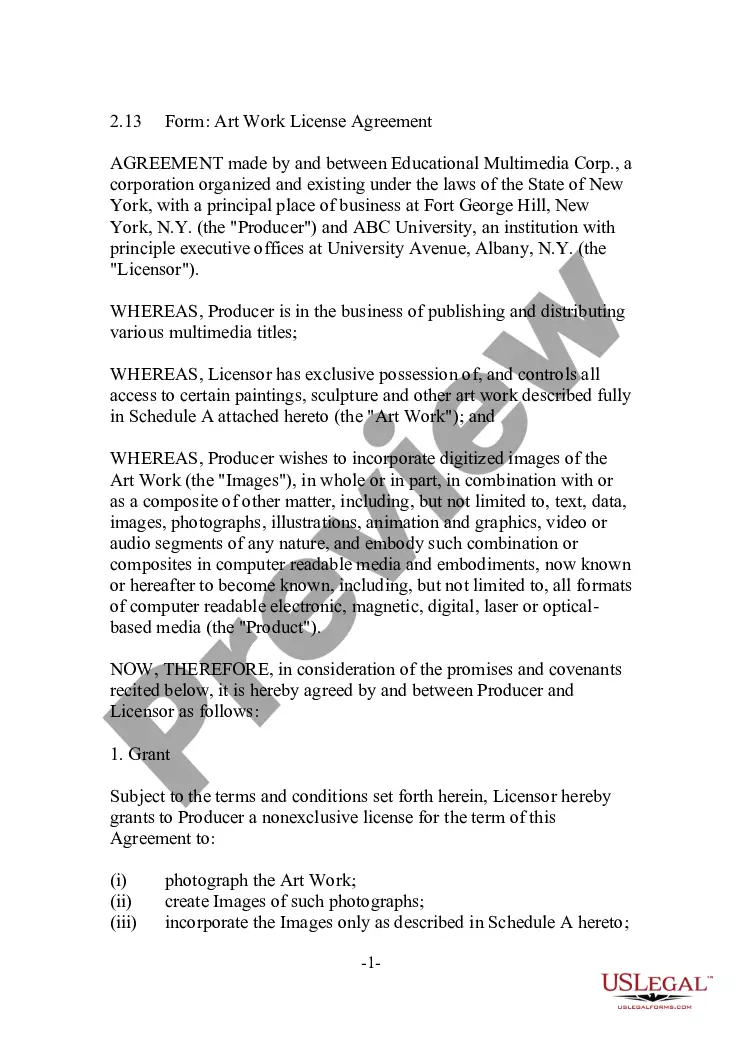
An example of a licensing agreement is a contract between the copyright holders of software and another company, allowing the latter to use the computer software for their daily business operations.