Instructions to Software License Due Diligence Checklist
Overview of this form
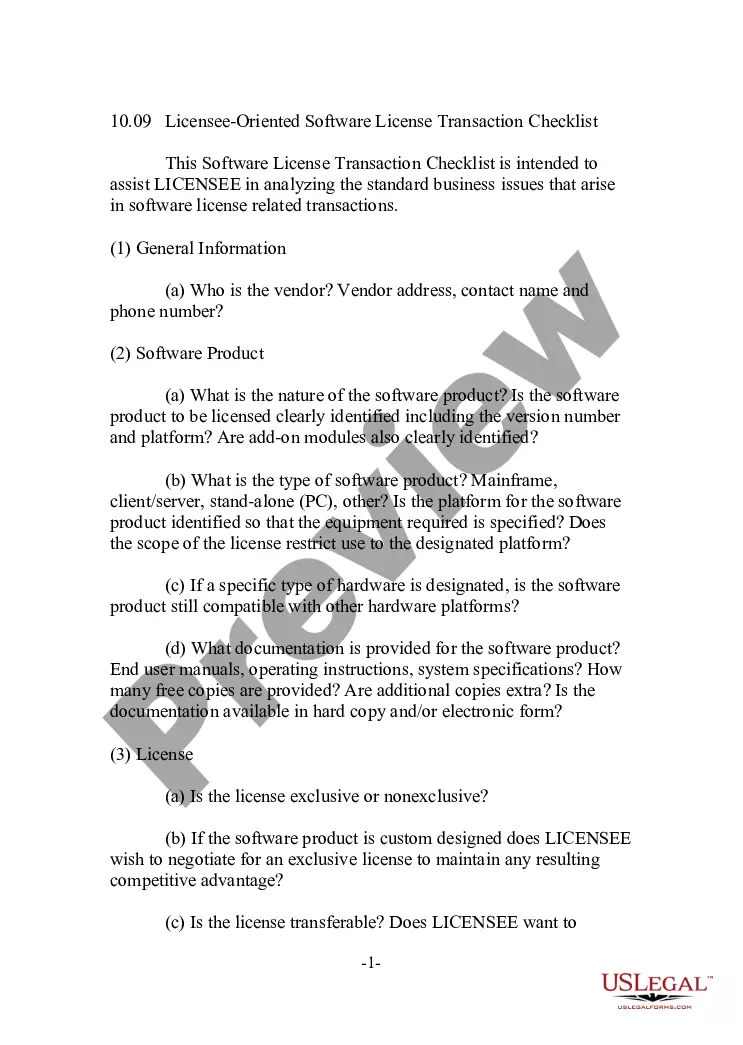
The Instructions to Software License Due Diligence Checklist provides a structured approach for evaluating software licenses during business transactions. This form aids users in ensuring comprehensive assessments of contractual obligations and limitations associated with software use. Unlike general business checklists, this specific checklist focuses on legal considerations and compliance needs related to software licensing agreements.
Form components explained
- Background information on computer technology and legal treatment of software.
- Guidelines for completing the checklist, including project identification details.
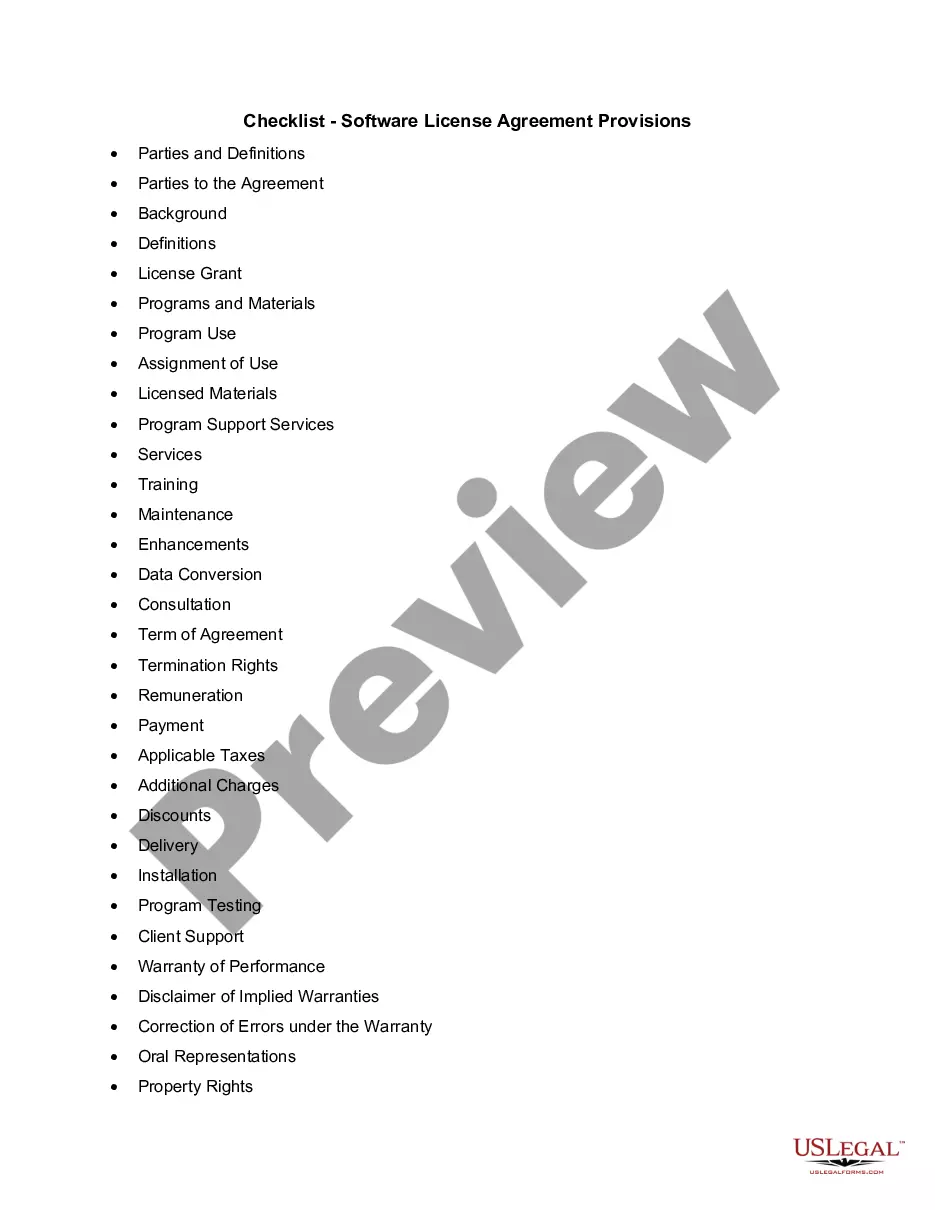
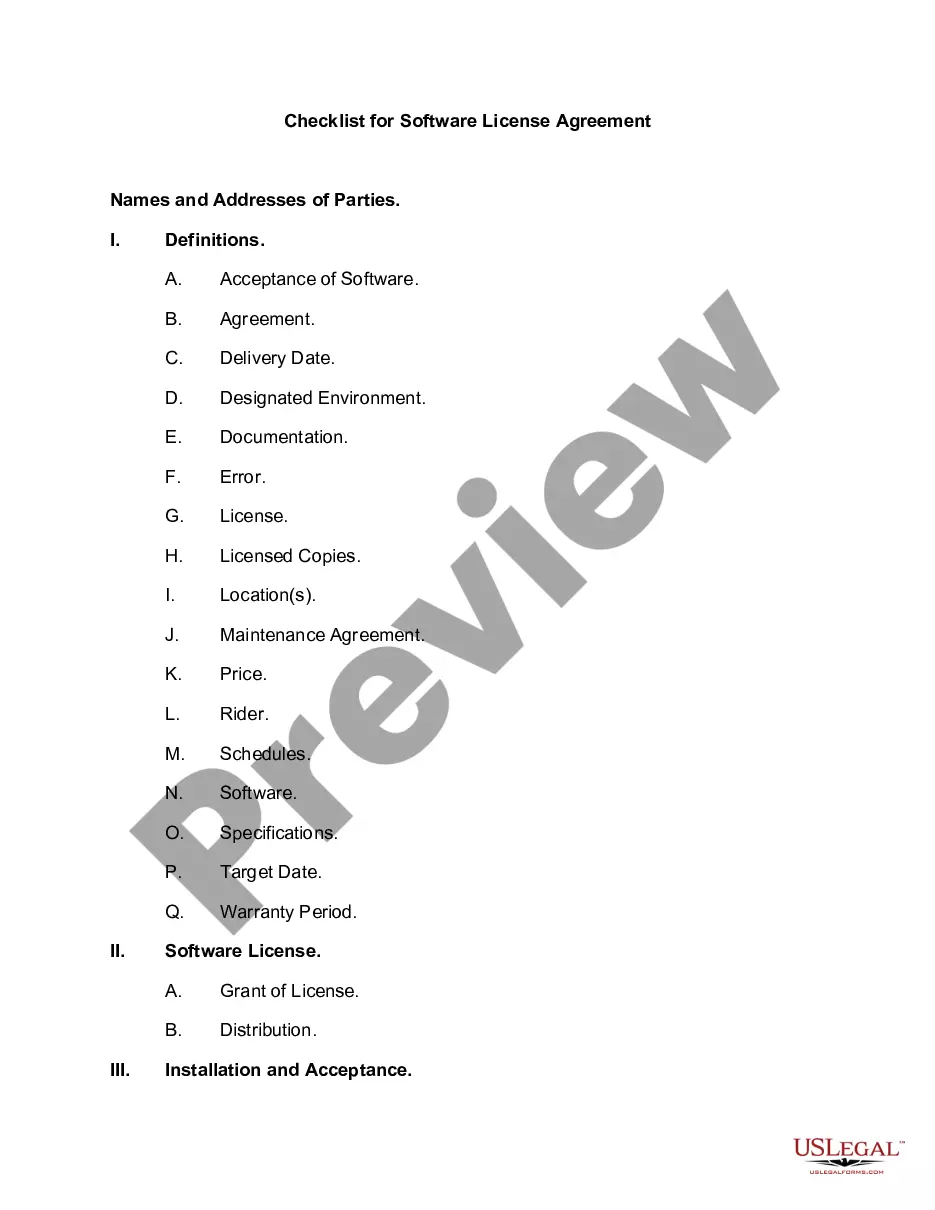
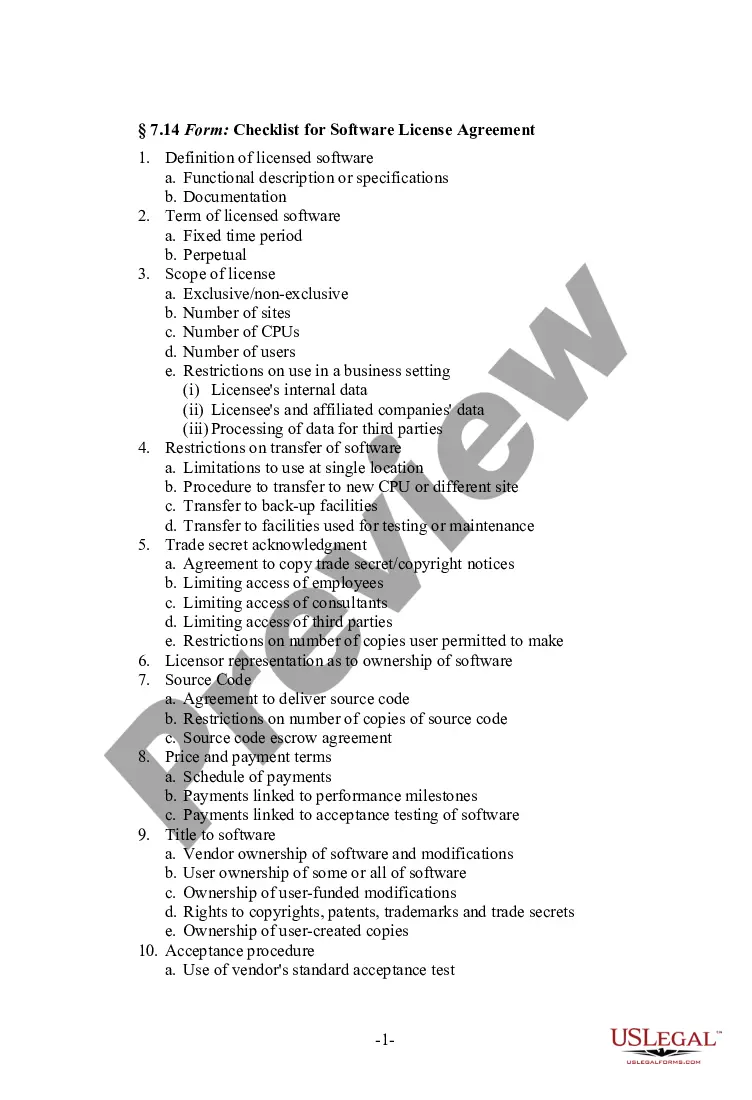
- A comprehensive item-by-item breakdown for assessing contract provisions related to software licenses.
- Instructions on handling issues such as sublicensing, upgrades, and modifications.
- Details about data processing and confidentiality concerns related to third-party access.





When to use this form
This form is essential when preparing for software license negotiations, conducting audits of existing licensing agreements, or when entering a new software licensing arrangement. It helps organizations evaluate the legal and financial implications of software use and ensures they comprehend all obligations stated in licensing contracts.
Who needs this form
- Business professionals involved in software purchasing or licensing.
- Legal advisors analyzing software agreements for compliance.
- IT managers responsible for managing software use within an organization.
- Procurement officers overseeing software acquisition processes.
How to prepare this document
- Identify the project name and the parties involved in the top right corner of the checklist.
- Follow the item-by-item instructions to evaluate each clause in the software license agreement.
- Take notes on relevant contractual provisions and attach copies of significant documents to the checklist.
- Indicate any restrictions, such as sublicensing and modifications, as directed in the form.
- Review all completed notes for accuracy before finalizing your assessment.
Notarization requirements for this form
Notarization is generally not required for this form. However, certain states or situations might demand it. You can complete notarization online through US Legal Forms, powered by Notarize, using a verified video call available anytime.
Get your form ready online
Our built-in tools help you complete, sign, share, and store your documents in one place.
Make edits, fill in missing information, and update formatting in US Legal Forms—just like you would in MS Word.
Download a copy, print it, send it by email, or mail it via USPS—whatever works best for your next step.
Sign and collect signatures with our SignNow integration. Send to multiple recipients, set reminders, and more. Go Premium to unlock E-Sign.
If this form requires notarization, complete it online through a secure video call—no need to meet a notary in person or wait for an appointment.
We protect your documents and personal data by following strict security and privacy standards.

Make edits, fill in missing information, and update formatting in US Legal Forms—just like you would in MS Word.

Download a copy, print it, send it by email, or mail it via USPS—whatever works best for your next step.

Sign and collect signatures with our SignNow integration. Send to multiple recipients, set reminders, and more. Go Premium to unlock E-Sign.

If this form requires notarization, complete it online through a secure video call—no need to meet a notary in person or wait for an appointment.

We protect your documents and personal data by following strict security and privacy standards.
Common mistakes to avoid
- Failing to properly identify the parties involved in the contract.
- Neglecting to take notes on provisions that do not have a direct item reference.
- Overlooking to indicate restrictions related to third-party data processing.
- Failing to attach copies of relevant documents for substantiation.
Why complete this form online
- Convenient downloadable format that allows quick edits and customizations.
- Access to attorney-drafted templates ensures legal compliance.
- Provides a structured and guided approach, simplifying the due diligence process.
- Available for use anytime, allowing for flexibility in document management.
Legal use & context
- The form is designed to help users understand their rights and obligations under software licenses.
- Inadequate due diligence in software licensing can lead to disputes or financial loss.
- The legal framework surrounding software licenses can vary, including copyright and contract law.
Summary of main points
- This checklist is crucial for navigating software license agreements effectively.
- Completing the form thoroughly helps mitigate risk and ensure compliance.
- Proper documentation and note-taking during the checklist process are essential for future reference.
Looking for another form?


Form popularity
FAQ
Due diligence is the investigation of every aspect of a property that could affect its value and suitability as a home or investment. Unfortunately for many buyers, due diligence involves little more than a building and pest inspection and contract review. These steps are essential, but only form part of the process.
Due diligence is an investigation, audit, or review performed to confirm facts or details of a matter under consideration. In the financial world, due diligence requires an examination of financial records before entering into a proposed transaction with another party.
A due diligence checklist is an organized way to analyze a company. The checklist will include all the areas to be analyzed, such as ownership and organization, assets and operations, the financial ratios, shareholder value, processes and policies, future growth potential, management, and human resources.
Due Diligence Examples Conducting thorough inspections on a property before buying it in order to make sure that it is a good investment. An underwriter auditing an issuer's business and operations prior to selling it.
Due diligence is the process of examining the details of a transaction to make sure it's legal, and to fully apprise both the buyer and seller of as many facts in the deal as possible. When the deal satisfies both aspects of due diligence, the two parties can finalize and correctly price the transaction.
Step 1: Company Capitalization. Step 2: Revenue, Margin Trends. Step 3: Competitors & Industries. Step 4: Valuation Multiples. Step 5: Management and Ownership. Step 6: Balance Sheet Exam. Step 7: Stock Price History. Step 8: Stock Options & Dilution.
Company information. Who owns the company? Finances. Where are the company's quarterly and annual financial statements from the past several years? Products and services. What are the company's current and future products and services? Customers. Technology assets. IP assets. Physical assets. Legal issues.
A due diligence checklist is an organized way to analyze a company that you are acquiring through sale, merger, or another method. By following this checklist, you can learn about a company's assets, liabilities, contracts, benefits, and potential problems.