Art Work License Agreement
Understanding this form
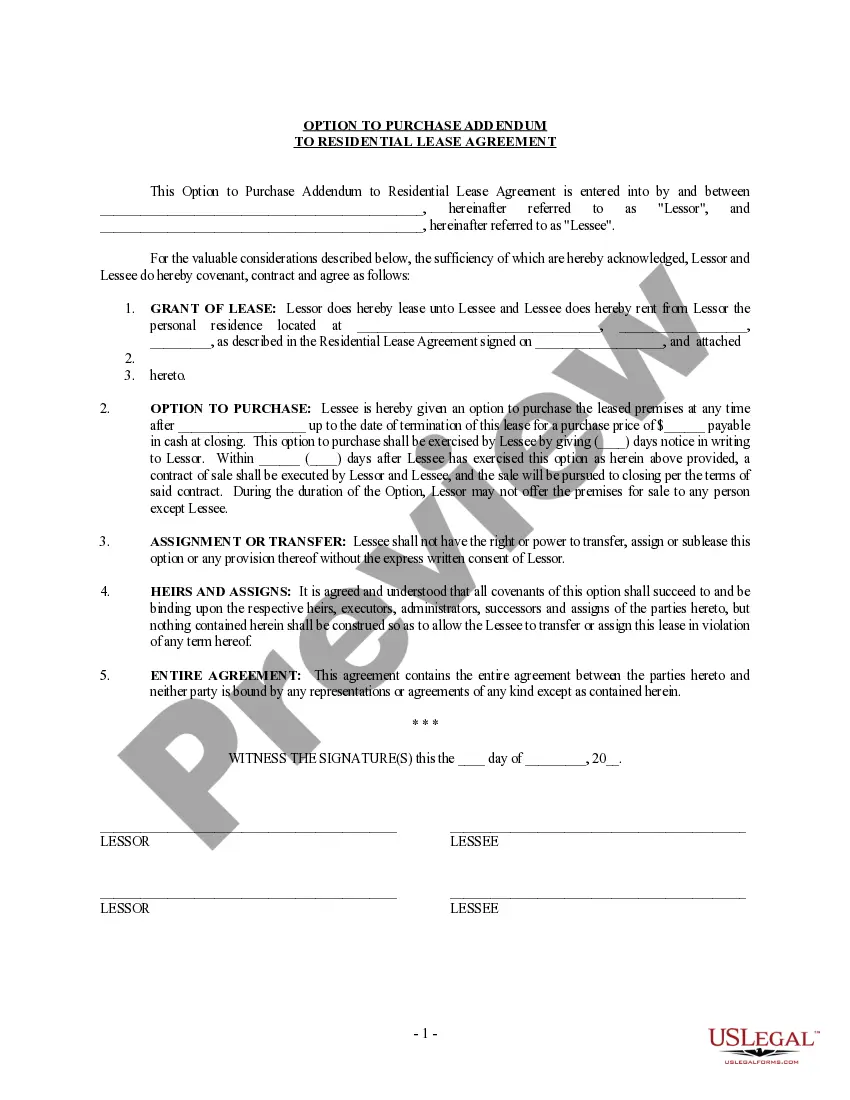
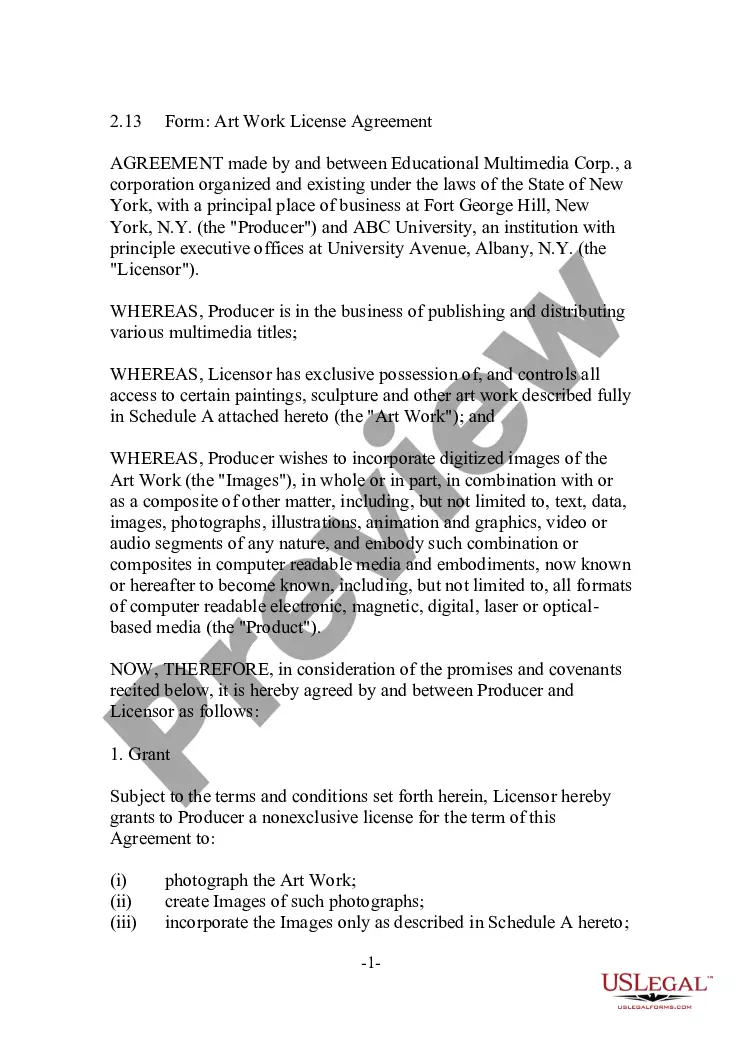
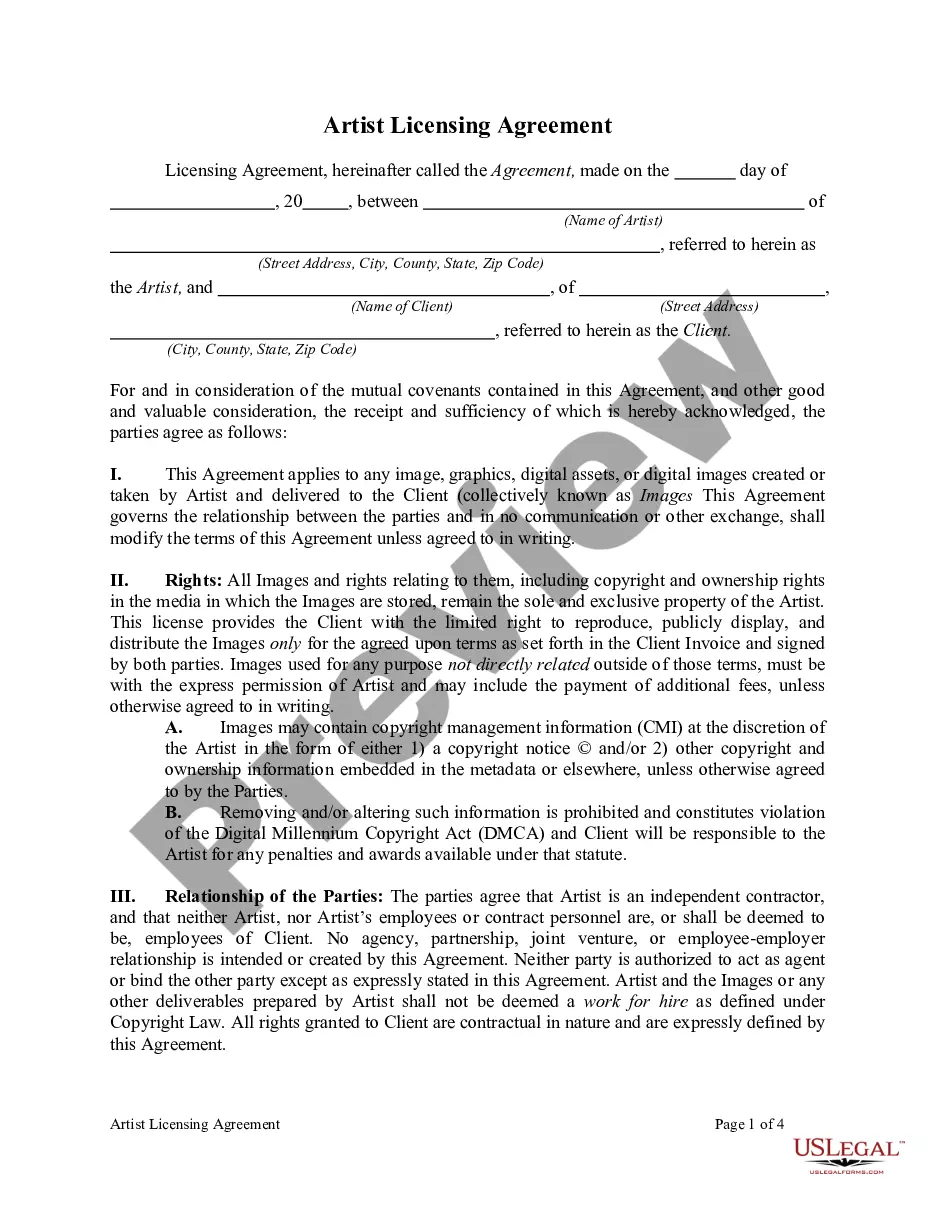
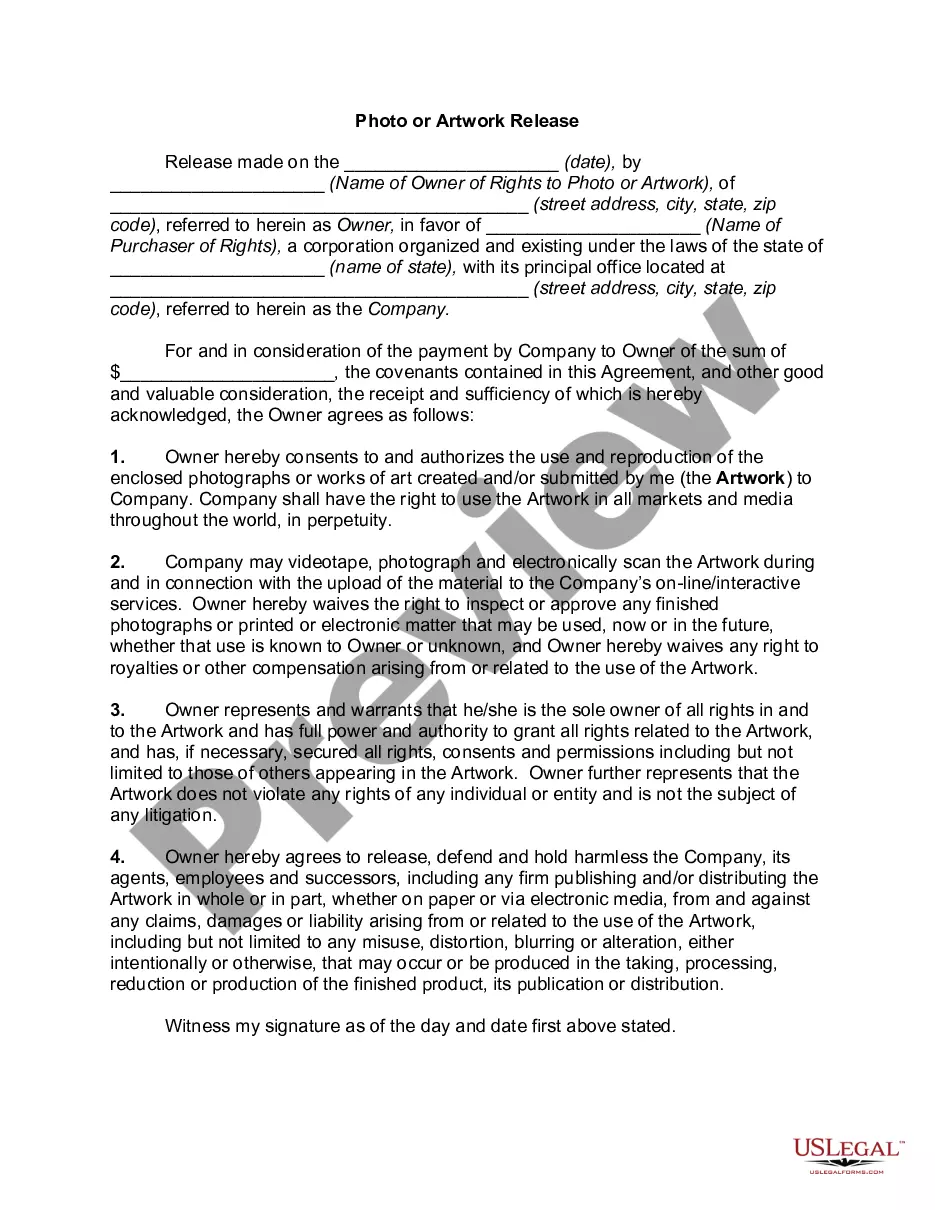
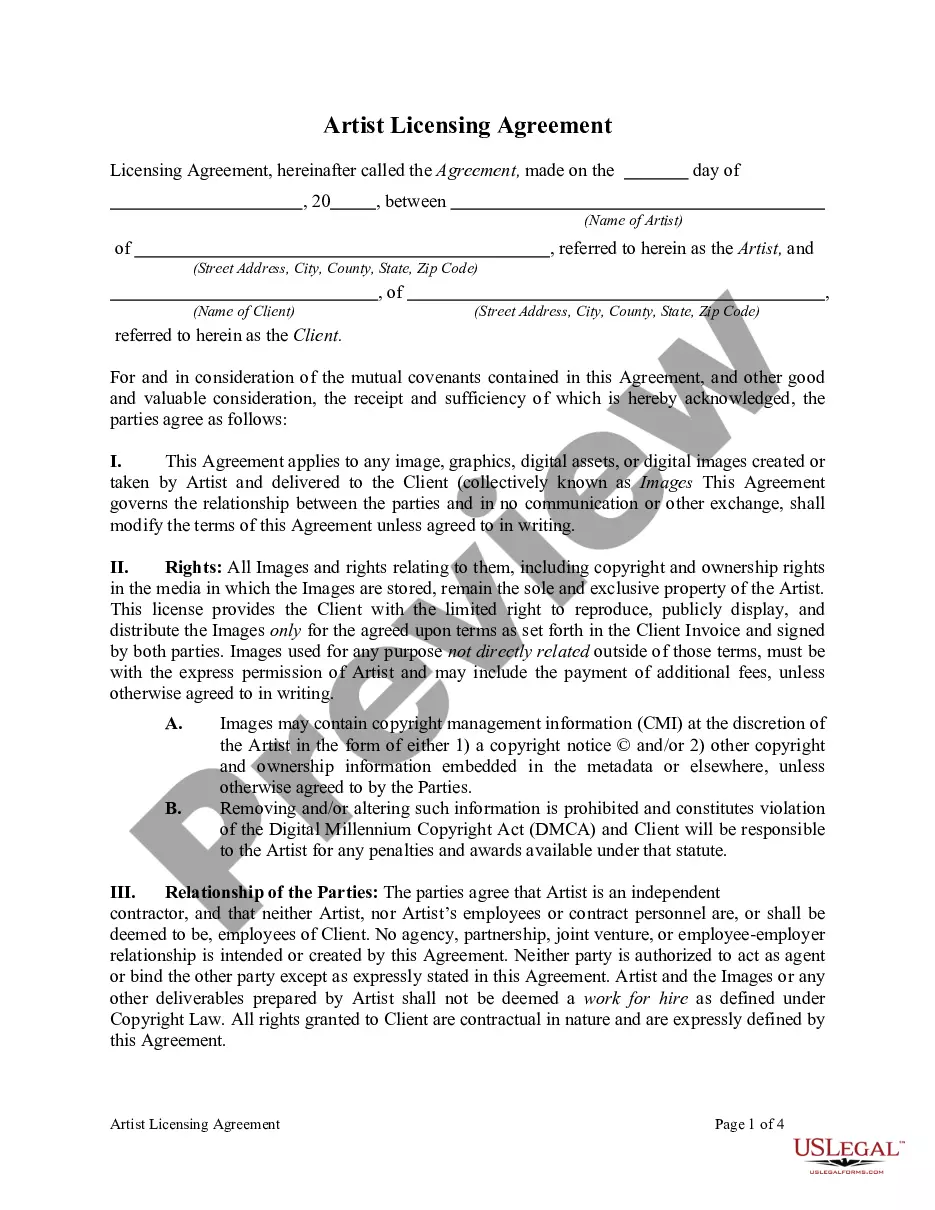
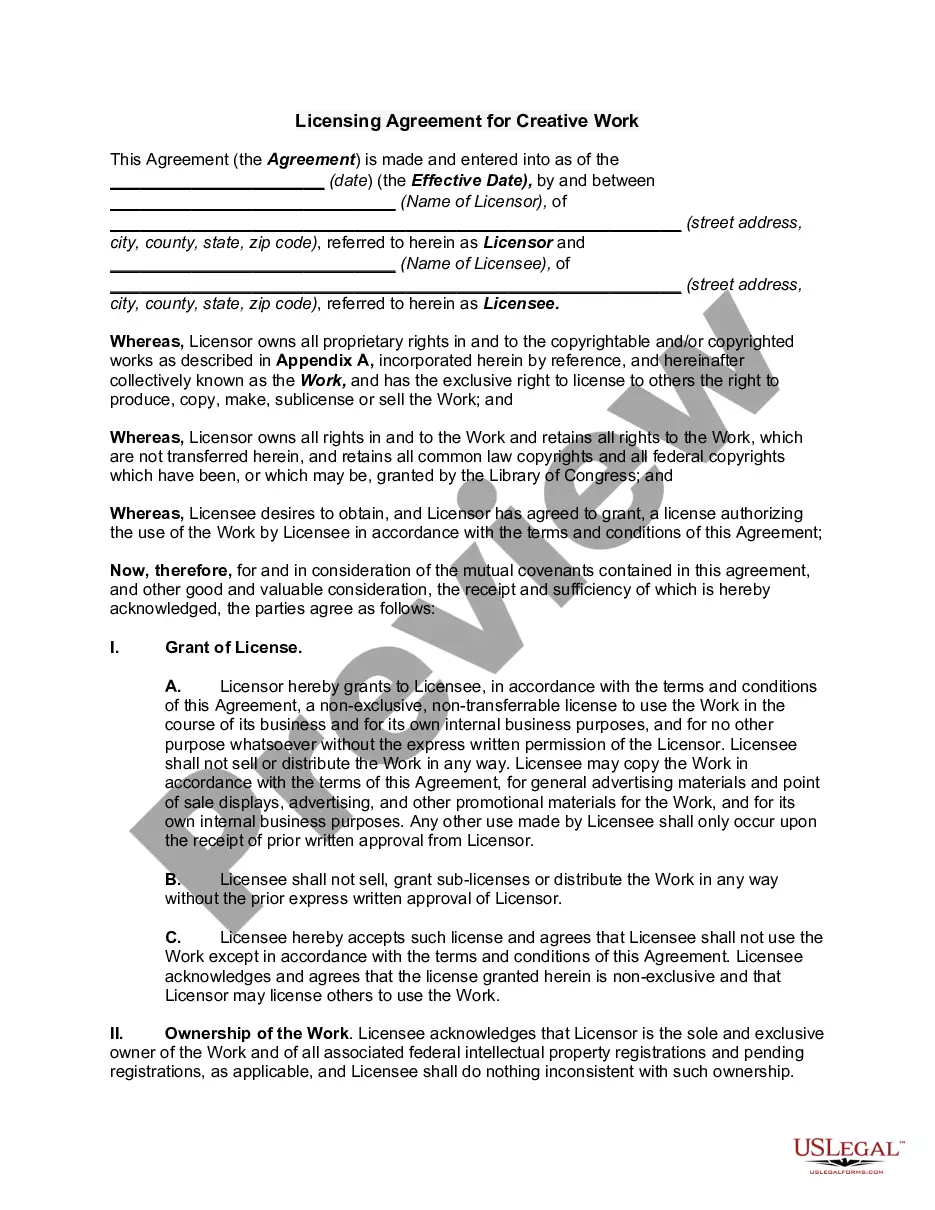
The Art Work License Agreement is a legally binding contract that allows the Producer to license artwork from the Licensor for specific uses, such as reproduction and distribution in multimedia products. This agreement details the rights granted, the responsibilities of both parties, and the terms under which the artwork can be used. Unlike simple permission forms, this comprehensive agreement outlines the detailed terms of use, ownership rights, and compensation for the use of the art.
What’s included in this form
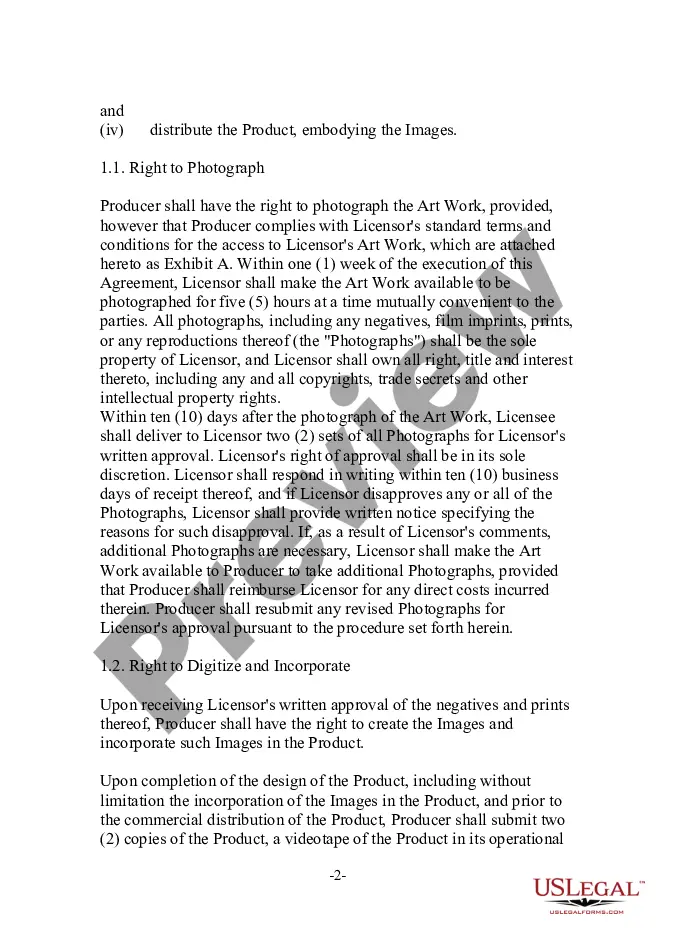
- Grant of license to use, photograph, and incorporate artwork into products.
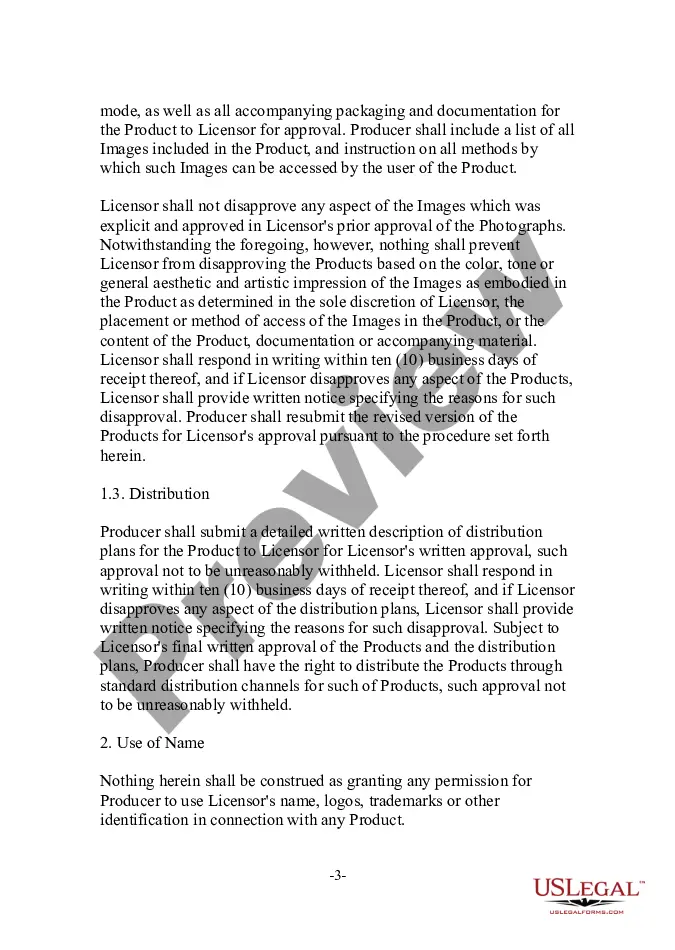
- Provisions for approval of photographs and final products by the Licensor.
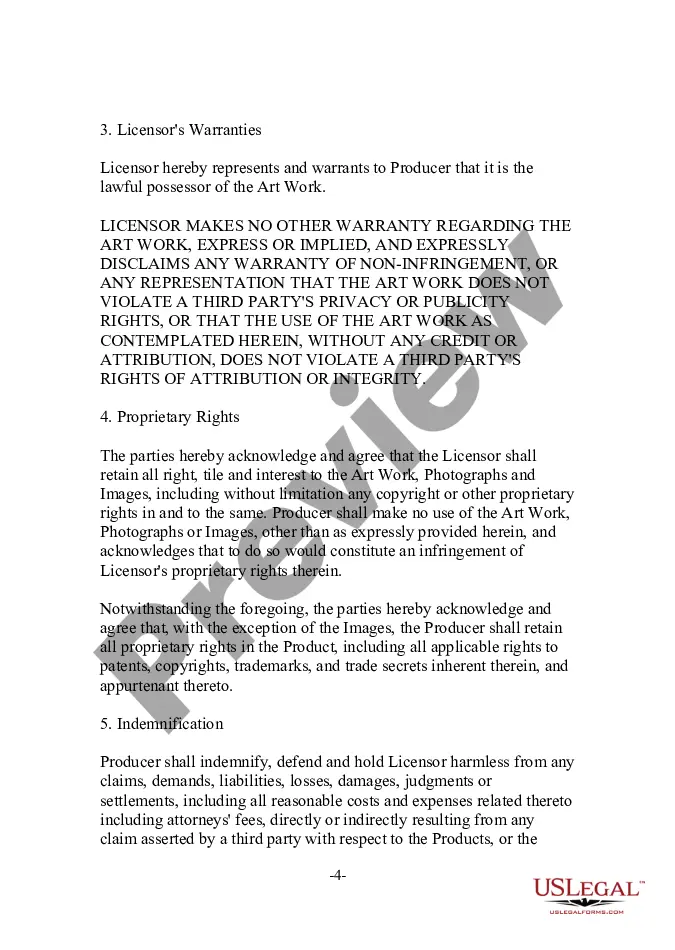
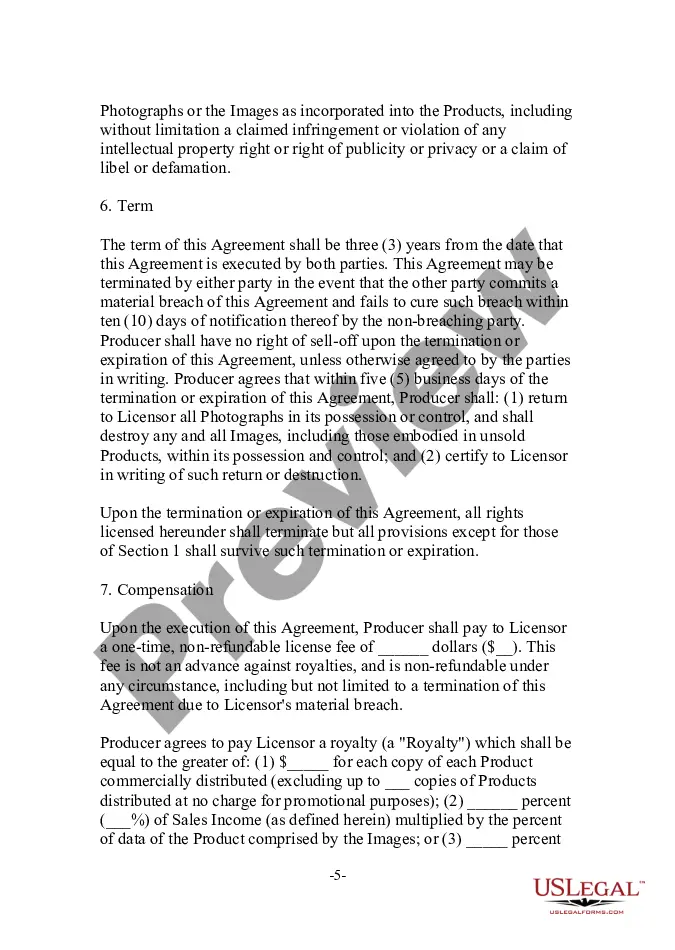
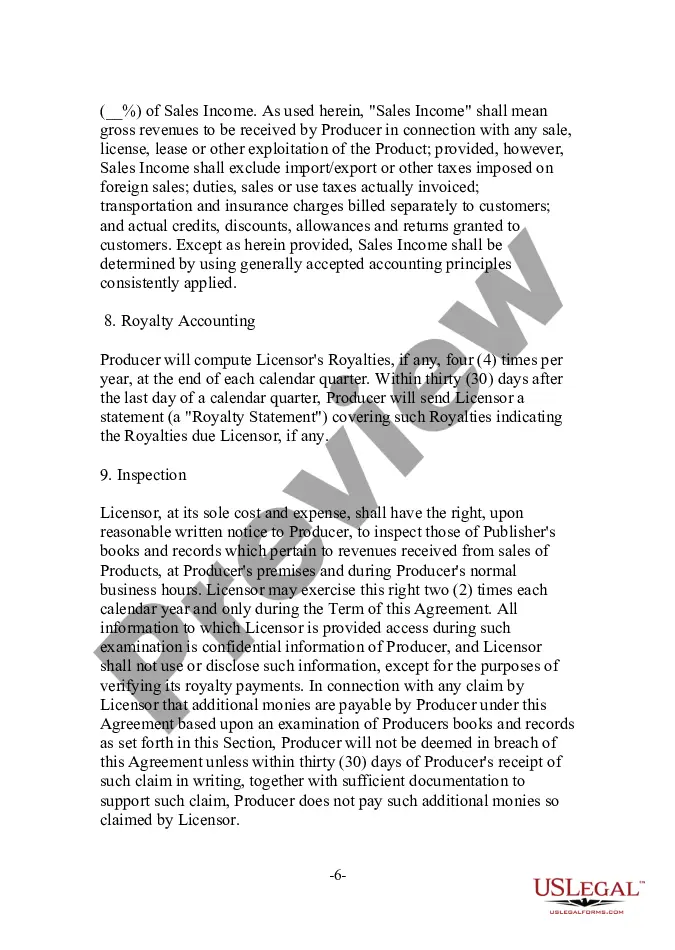
- Details on compensation, including license fees and royalties based on sales.
- Indemnification clauses to protect against third-party claims.
- Term duration and conditions for termination of the agreement.
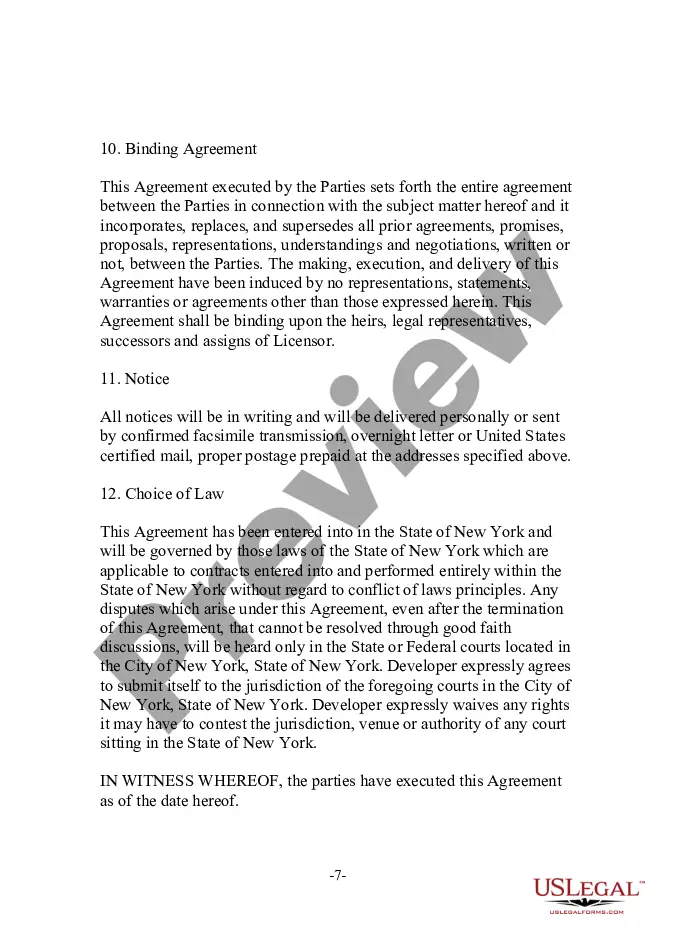
- Governing laws and jurisdiction for any disputes arising from the agreement.
Situations where this form applies
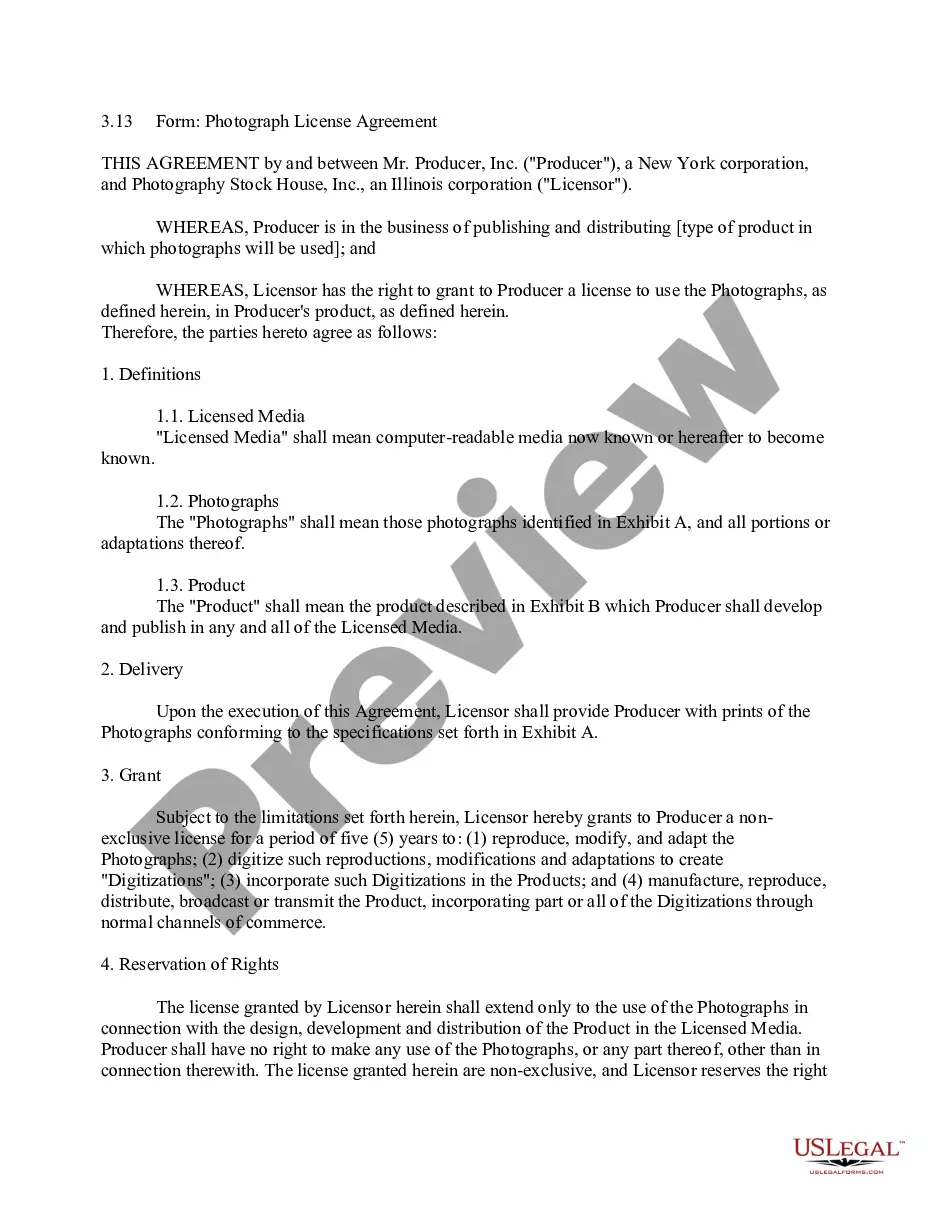
This form should be used when a producer wants to utilize specific artwork for commercial purposes, such as in multimedia projects, publications, or online content. It is particularly relevant in cases where the producer requires exclusive rights to use the artwork, or when the artwork is protected by copyright and requires formal licensing to avoid legal issues related to unauthorized use.
Who needs this form
- Producers in the multimedia or publishing industries seeking to use artwork in their projects.
- Artists or art institutions willing to license their artwork for commercial use.
- Business owners looking to integrate artistic elements into products or promotional materials.
How to prepare this document
- Identify the parties involved in the agreement: Producer and Licensor.
- Specify the artwork being licensed in the attached Schedule A.
- Detail the rights being granted, including any specific uses of the artwork.
- Include terms for compensation and royalties as agreed upon by both parties.
- Obtain signatures from authorized representatives of both parties to finalize the agreement.
Does this form need to be notarized?
Notarization is generally not required for this form. However, certain states or situations might demand it. You can complete notarization online through US Legal Forms, powered by Notarize, using a verified video call available anytime.
Get your form ready online
Our built-in tools help you complete, sign, share, and store your documents in one place.
Make edits, fill in missing information, and update formatting in US Legal Forms—just like you would in MS Word.
Download a copy, print it, send it by email, or mail it via USPS—whatever works best for your next step.
Sign and collect signatures with our SignNow integration. Send to multiple recipients, set reminders, and more. Go Premium to unlock E-Sign.
If this form requires notarization, complete it online through a secure video call—no need to meet a notary in person or wait for an appointment.
We protect your documents and personal data by following strict security and privacy standards.

Make edits, fill in missing information, and update formatting in US Legal Forms—just like you would in MS Word.

Download a copy, print it, send it by email, or mail it via USPS—whatever works best for your next step.

Sign and collect signatures with our SignNow integration. Send to multiple recipients, set reminders, and more. Go Premium to unlock E-Sign.

If this form requires notarization, complete it online through a secure video call—no need to meet a notary in person or wait for an appointment.

We protect your documents and personal data by following strict security and privacy standards.
Typical mistakes to avoid
- Failing to specify the exact artwork in the agreement.
- Not detailing the terms of approval for images and products, leading to confusion.
- Overlooking the need for proper signatures from both parties.
Benefits of completing this form online
- Convenience of completing the form digitally at your own pace.
- Easy editing to tailor the agreement to specific needs.
- Quick access to legal templates that comply with local laws.
Looking for another form?


Form popularity
FAQ
Client Info. Begin your contract with each parties' name, business, address, email, and phone number to make it clear who is involved and how you can get in touch. Project Info and Terms. Project Timeline. Costs and Payment Terms. Itemization. Artist's Rights. Cancellation Terms. Acceptance of Agreement.
A license agreement is a business contract between two parties. The licensor (the seller of the license) owns the asset being licensed and the licensee (the buyer) pays for the right to use the license. The licensee pays royalties to the owner in exchange for the right to sell the product or use the technology.
Art licensing is a way of making money wherein, as licensing expert Tara Reed puts it, you rent your artwork to companies to put on their products. An artist who chooses to license their art may not sell any originals at all, but simply license the images for use on commercial products.
The 3 P's of collegiate licensing are protection, promotion, and profit.
The agreement or contract is the legal document between an artist or owner of an artwork and a borrowing institution, or between an exhibition organiser and the host venue.They are written to specify details about work to be undertaken and the expected outcomes.
What is a Licensing Agreement? A licensing agreement is a contract between two parties (the licensor and licensee) in which the licensor grants the licensee the right to use the brand name, trademark, patented technology, or ability to produce and sell goods owned by the licensor.
An example of a licensing agreement is a contract between the copyright holders of software and another company, allowing the latter to use the computer software for their daily business operations.
Exclusive or non-exclusive. In an exclusive license, the intellectual property holder is licensing the work only to one person, for that particular use/territory. Territory. Use. Attribution. Derivative works. Confidentiality. Time frame. Termination.