Entertainment Services Contract
Overview of this form
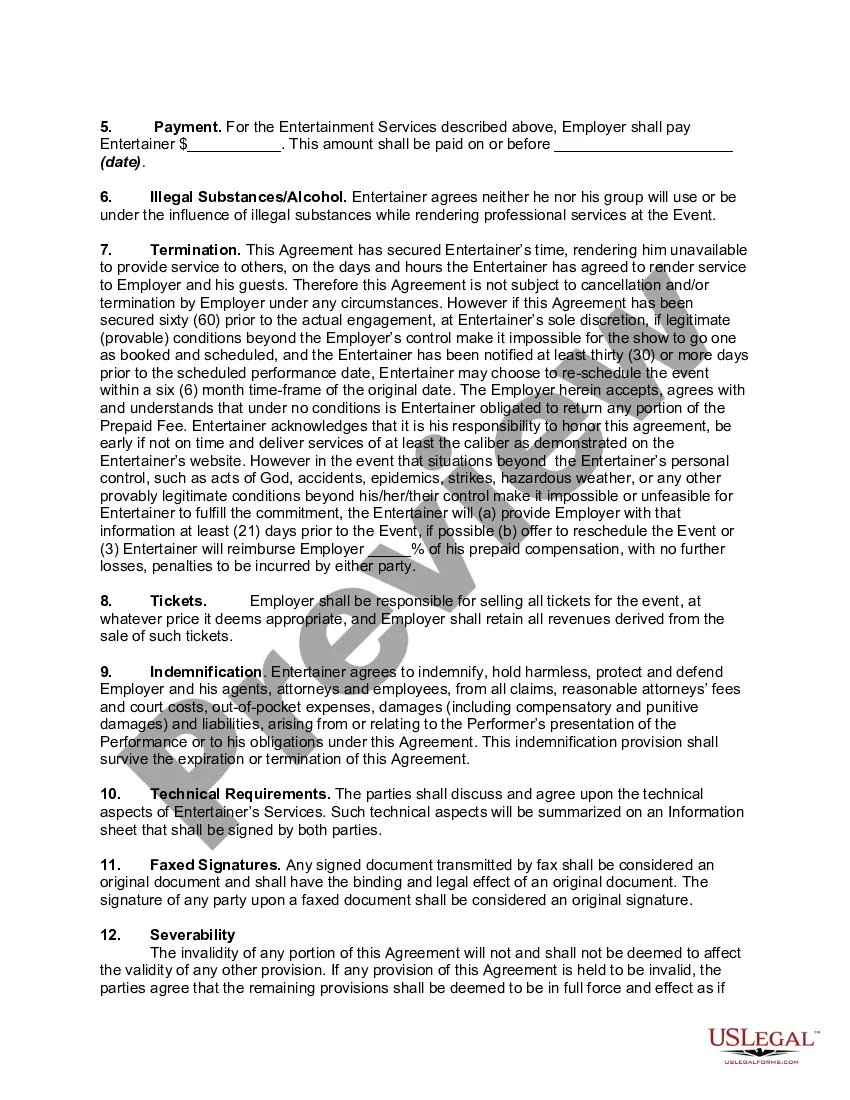
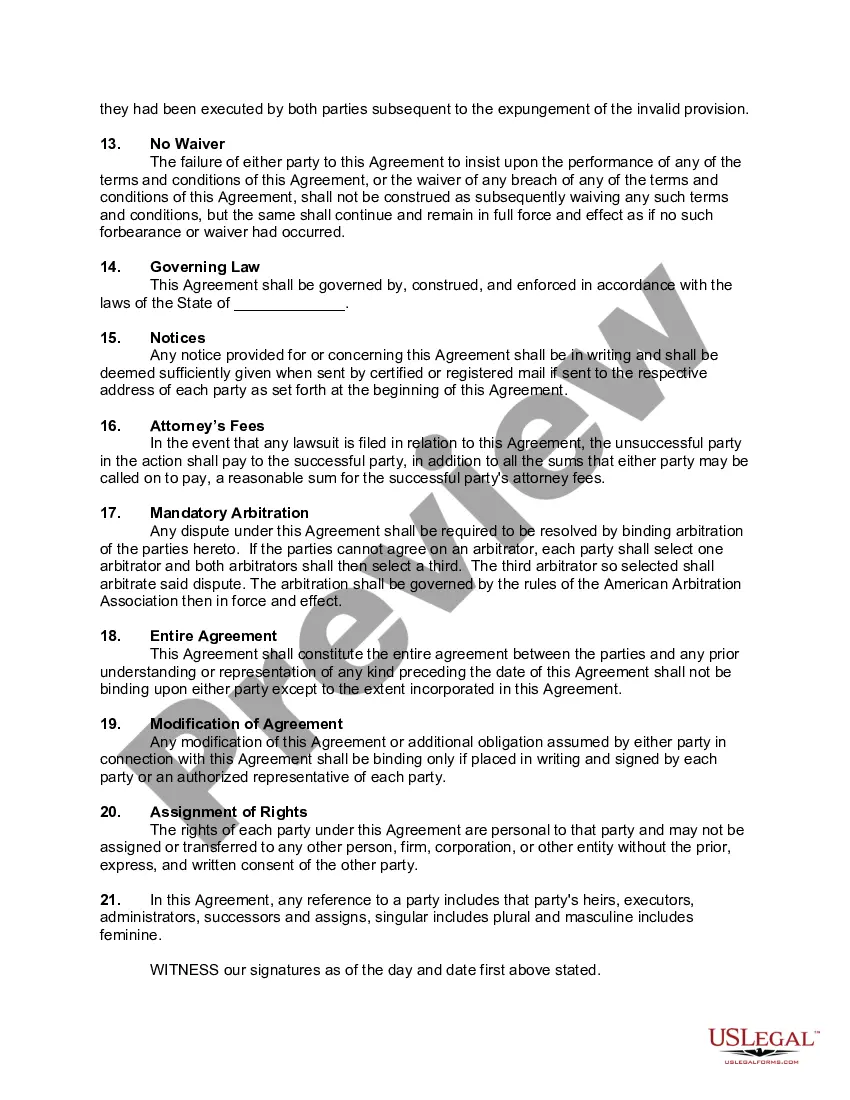
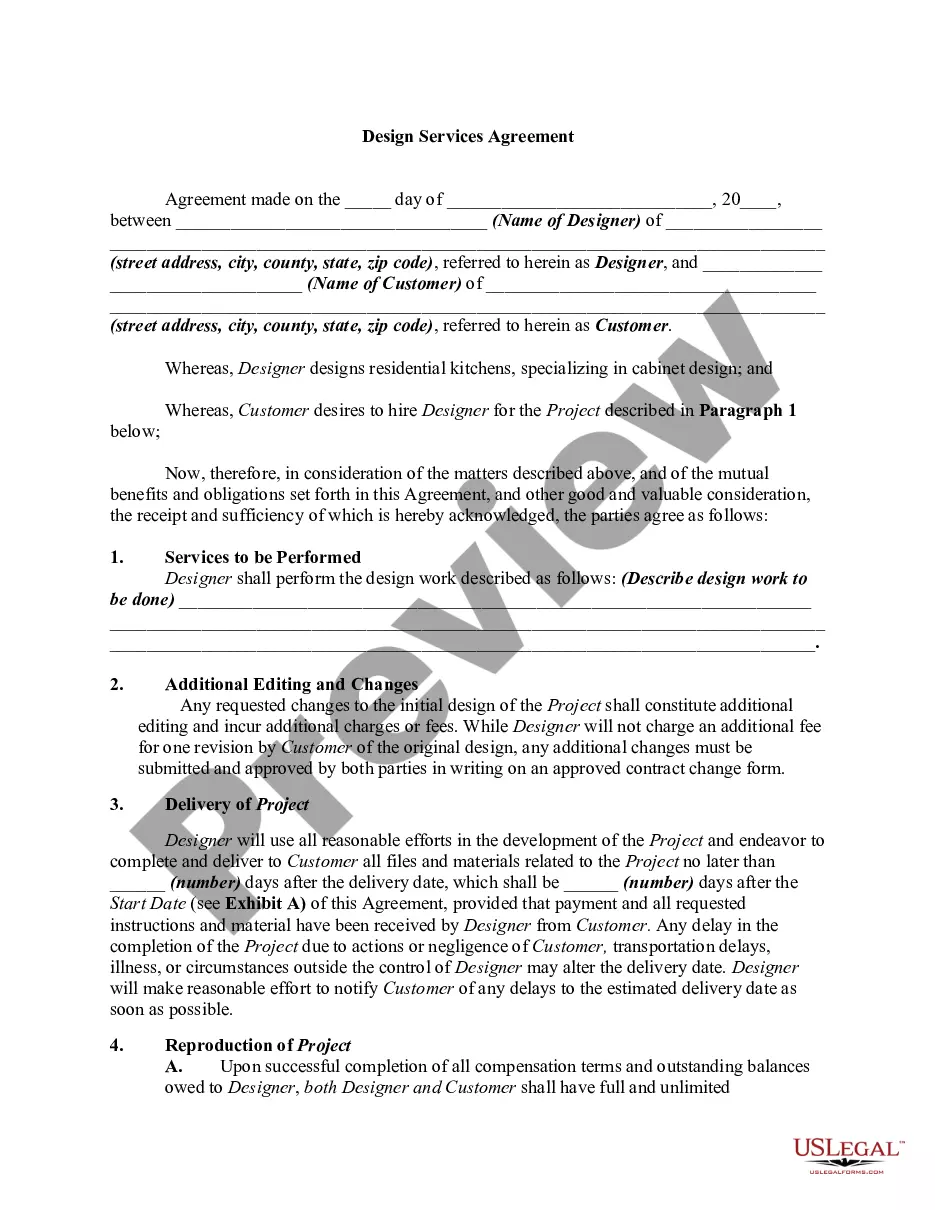
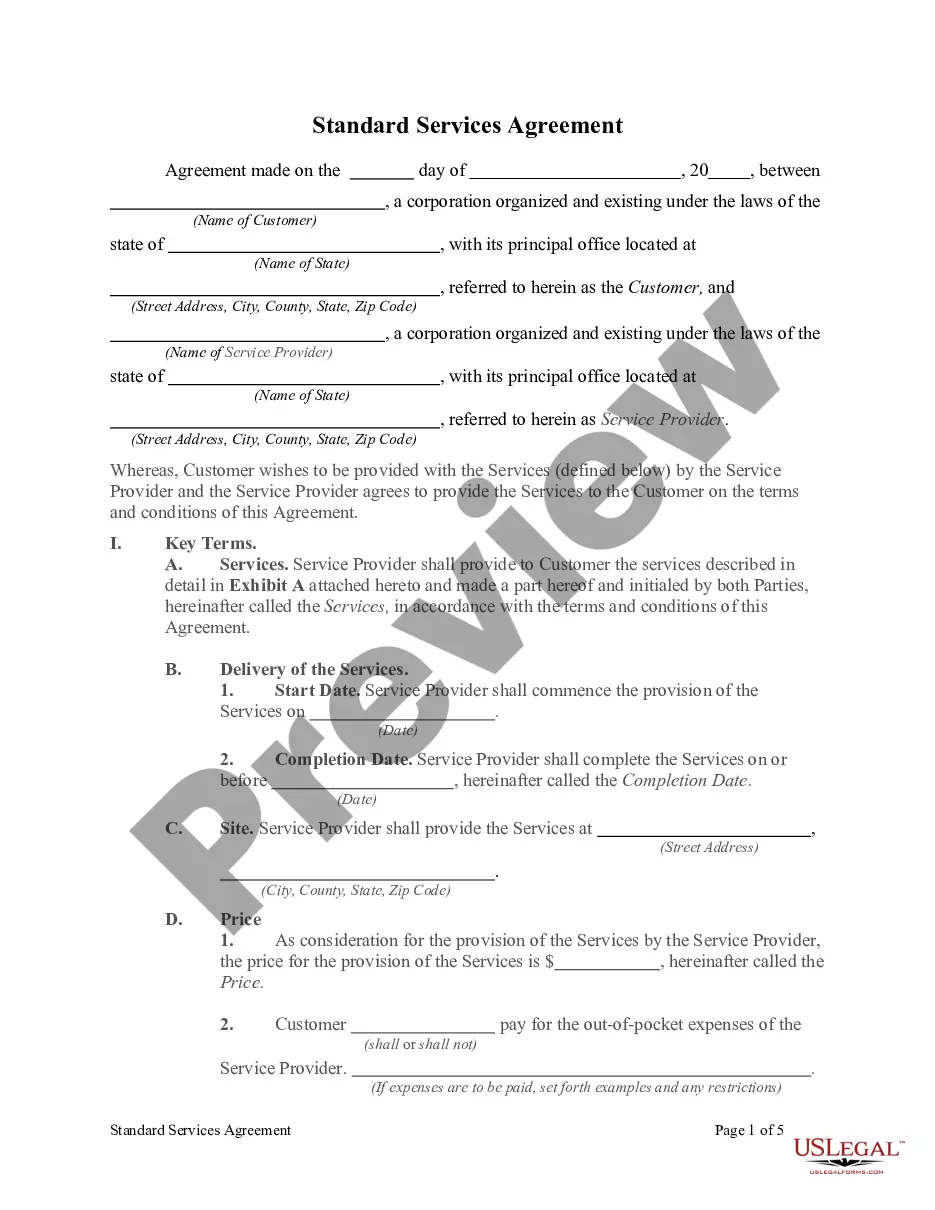
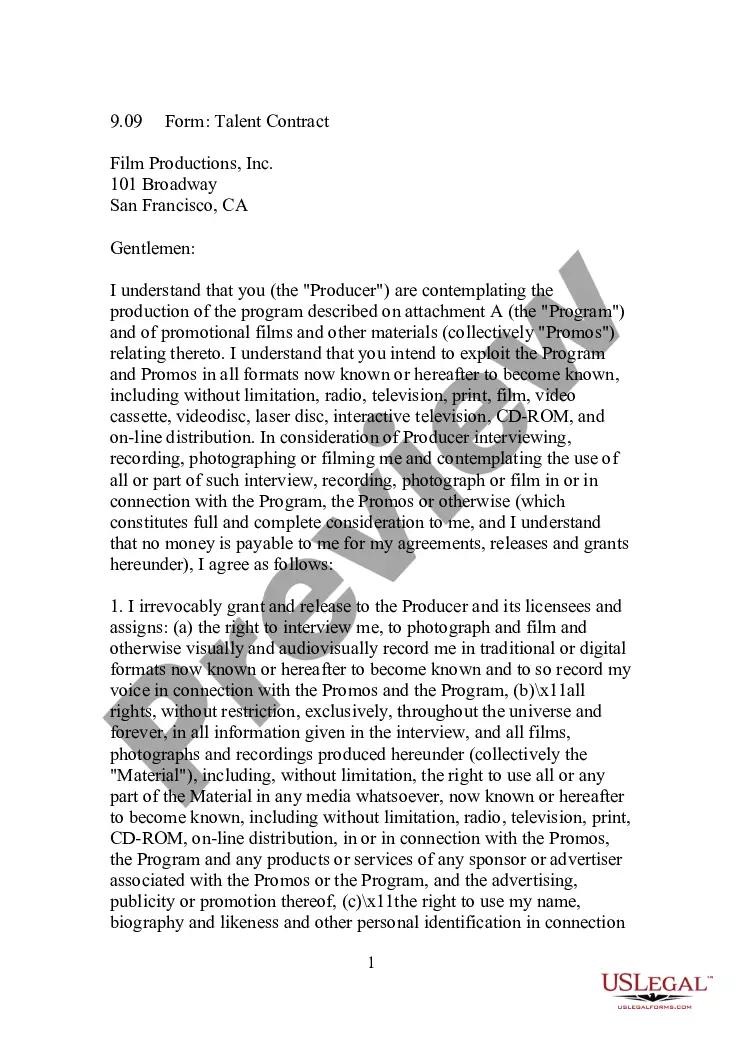
The Entertainment Services Contract is a legal agreement between an entertainer and an employer outlining the terms under which entertainment services will be provided. This form is essential to establish clear expectations regarding performance details, payment, and legal obligations. Unlike generic contracts, this specific form addresses the unique aspects involved in hiring entertainment services, ensuring both parties understand their rights and obligations.
Main sections of this form
- Identification of the parties: Names and addresses of both the entertainer and employer.
- Event details: Description of the entertainment services, date, time, and location of the event.
- Payment terms: Specific payment amount and due date.
- Indemnification clause: Protection for the employer from claims related to the entertainer's performance.
- Cancellation and rescheduling policies: Conditions under which the agreement can be altered.



When to use this form
This form should be used whenever an employer hires an entertainer for an event, such as a concert, party, or corporate gathering. It is particularly useful when defining the roles and responsibilities of both the entertainer and the employer, ensuring that all details are addressed to avoid misunderstandings or conflicts.
Who this form is for
- Event planners seeking to contract entertainers for parties or corporate events.
- Individuals organizing personal events in need of professional entertainment.
- Entertainers who wish to formalize their agreements with clients and protect their interests.
How to prepare this document
- Identify the parties: Fill in the names and addresses of the entertainer and employer.
- Specify event details: Describe the entertainment services, event date, location, and start/end times.
- Enter payment details: State the amount to be paid and the due date for payment.
- Review the terms: Read through all clauses carefully to ensure mutual understanding.
- Sign the agreement: Ensure both parties sign and date the contract to validate it.
Notarization requirements for this form
Notarization is not commonly needed for this form. However, certain documents or local rules may make it necessary. Our notarization service, powered by Notarize, allows you to finalize it securely online anytime, day or night.
Get your form ready online
Our built-in tools help you complete, sign, share, and store your documents in one place.
Make edits, fill in missing information, and update formatting in US Legal Forms—just like you would in MS Word.
Download a copy, print it, send it by email, or mail it via USPS—whatever works best for your next step.
Sign and collect signatures with our SignNow integration. Send to multiple recipients, set reminders, and more. Go Premium to unlock E-Sign.
If this form requires notarization, complete it online through a secure video call—no need to meet a notary in person or wait for an appointment.
We protect your documents and personal data by following strict security and privacy standards.

Make edits, fill in missing information, and update formatting in US Legal Forms—just like you would in MS Word.

Download a copy, print it, send it by email, or mail it via USPS—whatever works best for your next step.

Sign and collect signatures with our SignNow integration. Send to multiple recipients, set reminders, and more. Go Premium to unlock E-Sign.

If this form requires notarization, complete it online through a secure video call—no need to meet a notary in person or wait for an appointment.

We protect your documents and personal data by following strict security and privacy standards.
Common mistakes
- Failing to specify the details of the entertainment services.
- Not addressing payment terms clearly, leading to disputes.
- Overlooking cancellation policies, which can lead to unexpected fees.
- Not having both parties sign the agreement, rendering it unenforceable.
Benefits of completing this form online
- Convenience: Easily downloadable and fillable from any location.
- Editability: Allows customization to meet specific event needs without legal jargon complications.
- Reliability: Drafted by licensed attorneys, ensuring legal validity and completeness.
Looking for another form?
Form popularity
FAQ
A description of the parties involved in the agreement. A description of the services to be performed. A description of fees and payment schedules. The effective date of the contract, when work will begin, and the terms under which it can be terminated. Include a place for signatures.
Identify the customer and service provider. Describe the services being provided. Outline a payment schedule. Establish terms about confidentiality, non-solicitation, and non-competition. Address ownership of materials. Personalize your Service Agreement.
Drafting a contract. Provide details of the parties. Describe services or results. Set out payment details. Assign intellectual property rights. Explain how to treat confidential information. Identify who is liable indemnity. Provide insurance obligations.
A client agreement is a contract that you make with a customer. In it, you explain the terms and conditions under which you will provide your service to them. Previously, client agreements commonly took the form of a service agreement signed by both parties.
Include Contact Information of Both Parties. Specify Project Terms and Scope. Establish Payment Terms. Set the Schedule. Decide What Happens If a Contract Is Terminated. Determine Who Owns Final Copyrights.
Start With Expectations. Build in Milestones. Agree on the Terms. Schedule Accountability Meetings. Establish Outcome Results and Consequences. Sign and Date It.
The most basic rule of contract law is that a legal contract exists when one party makes an offer and the other party accepts it. For most types of contracts, this can be done either orally or in writing.
A description of the parties involved in the agreement. A description of the services to be performed. A description of fees and payment schedules. The effective date of the contract, when work will begin, and the terms under which it can be terminated. Include a place for signatures.
Creditor's Name and Address; Debtor's Name and Address; Acknowledgment of the Balance Owed; Amount Owed; Interest Rate (if any); Repayment Period; Payment Instructions; Late Payment (if any); and.