Licensing Agreement for Creative Work
Understanding this form
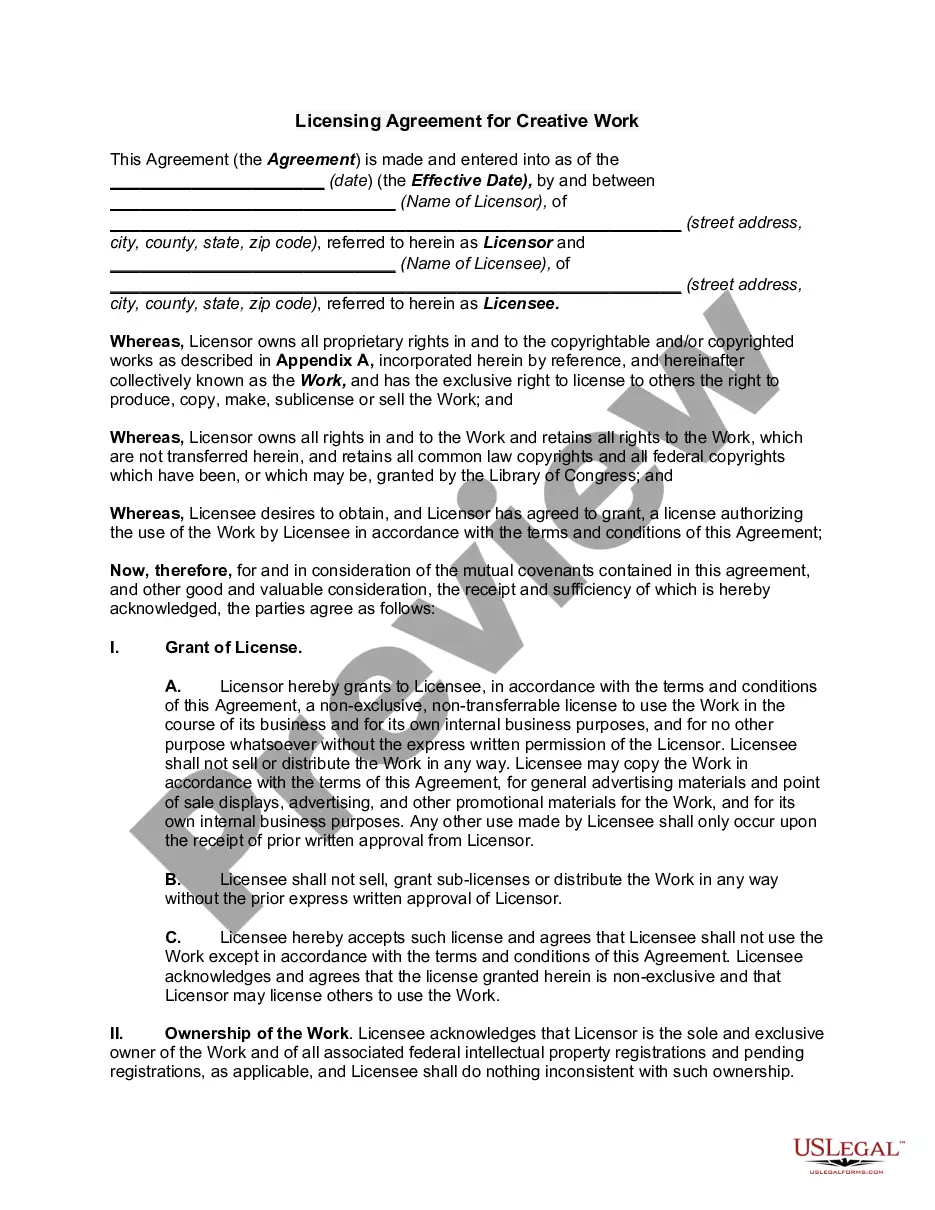
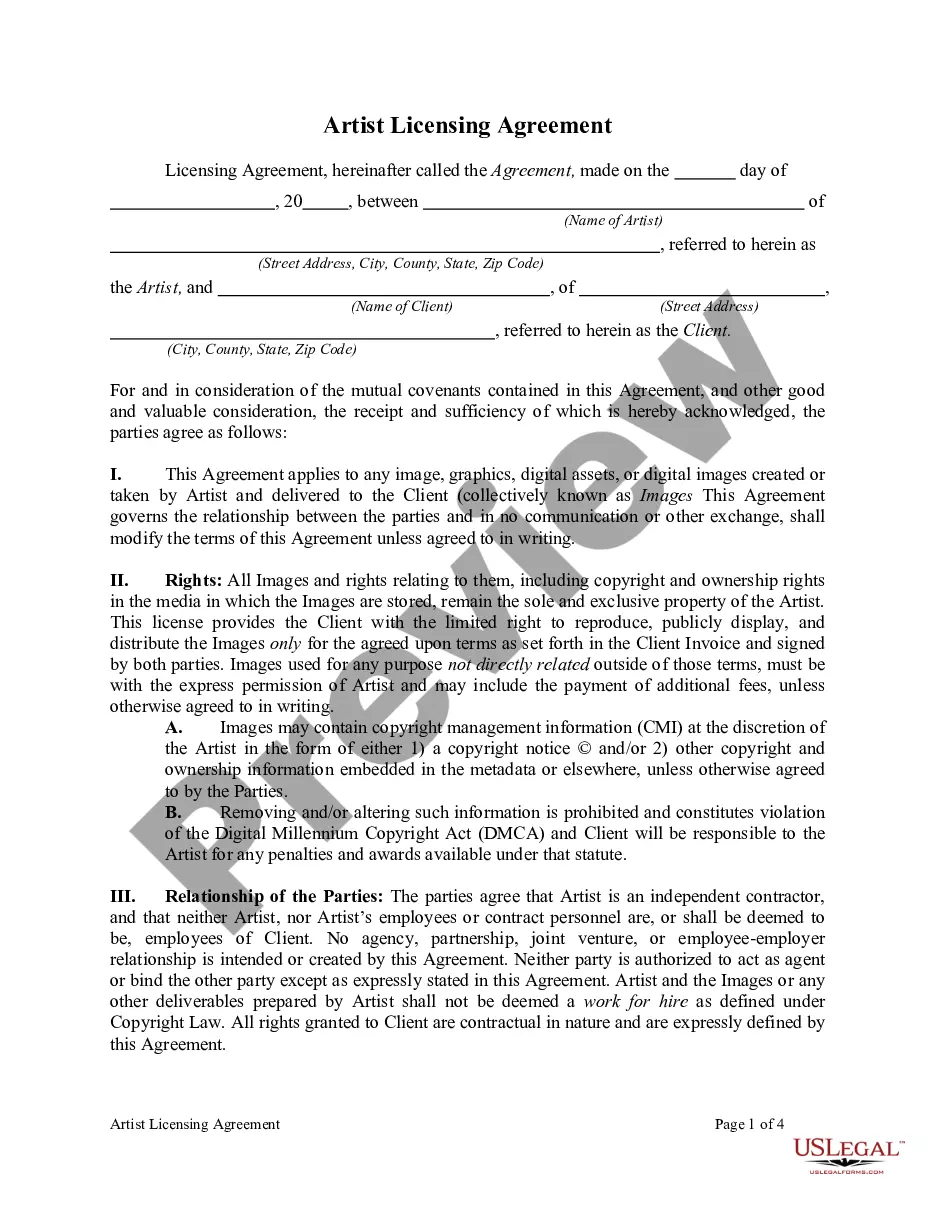
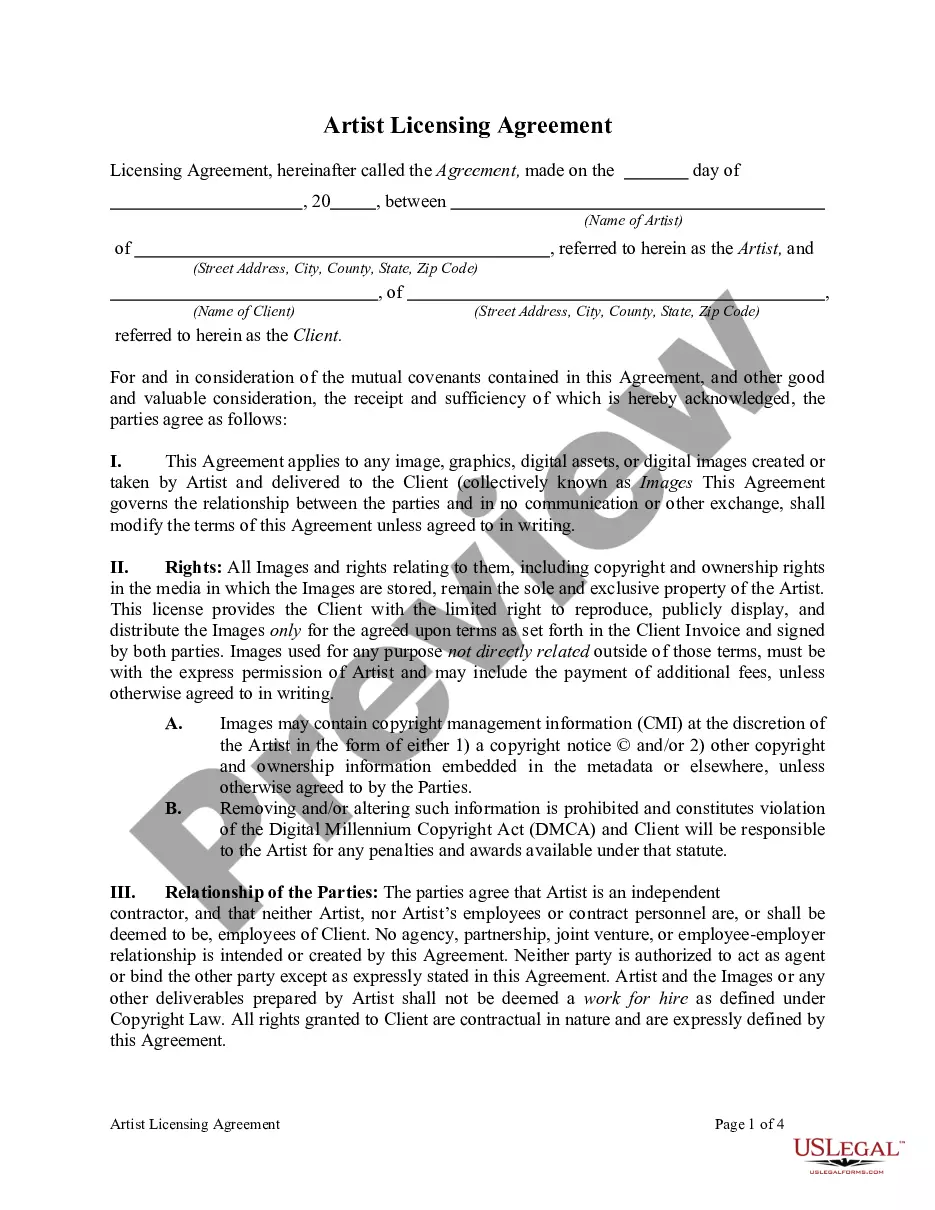
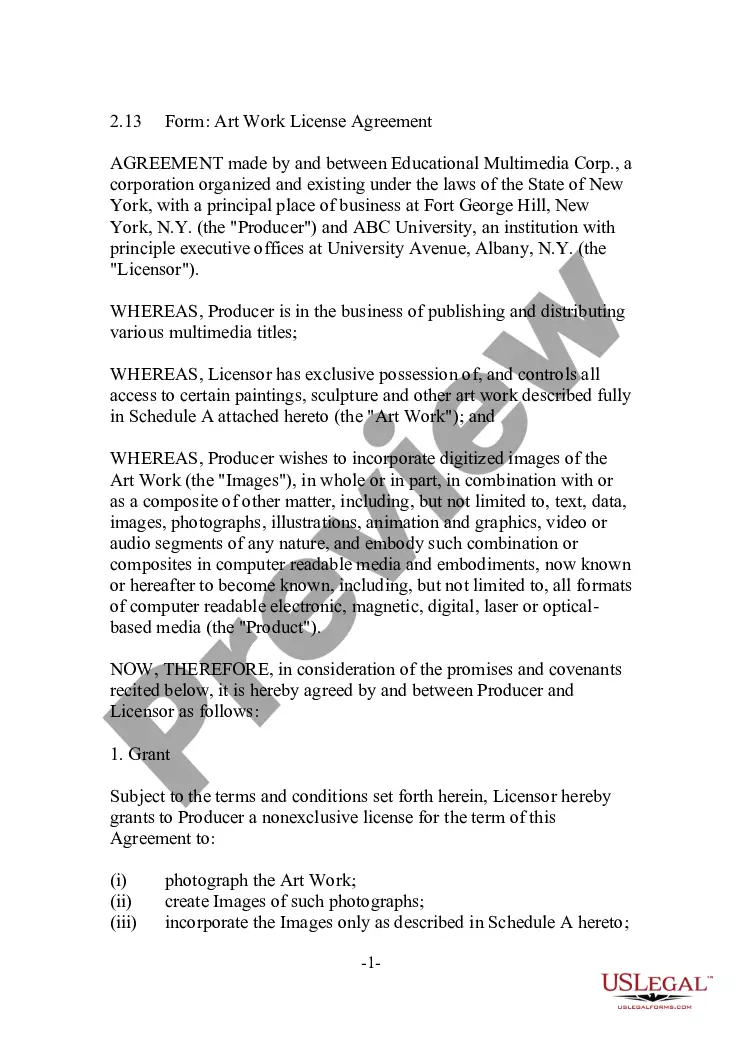
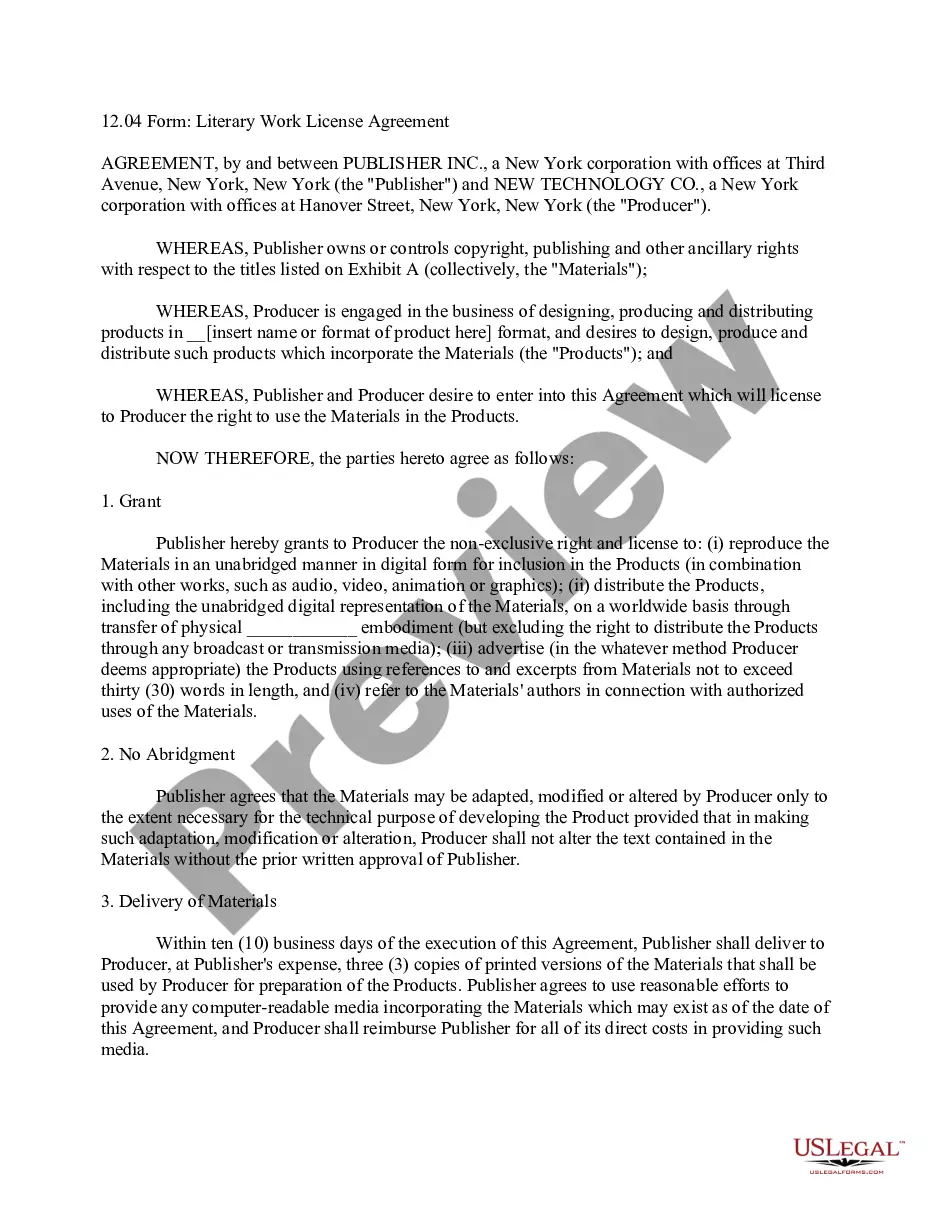
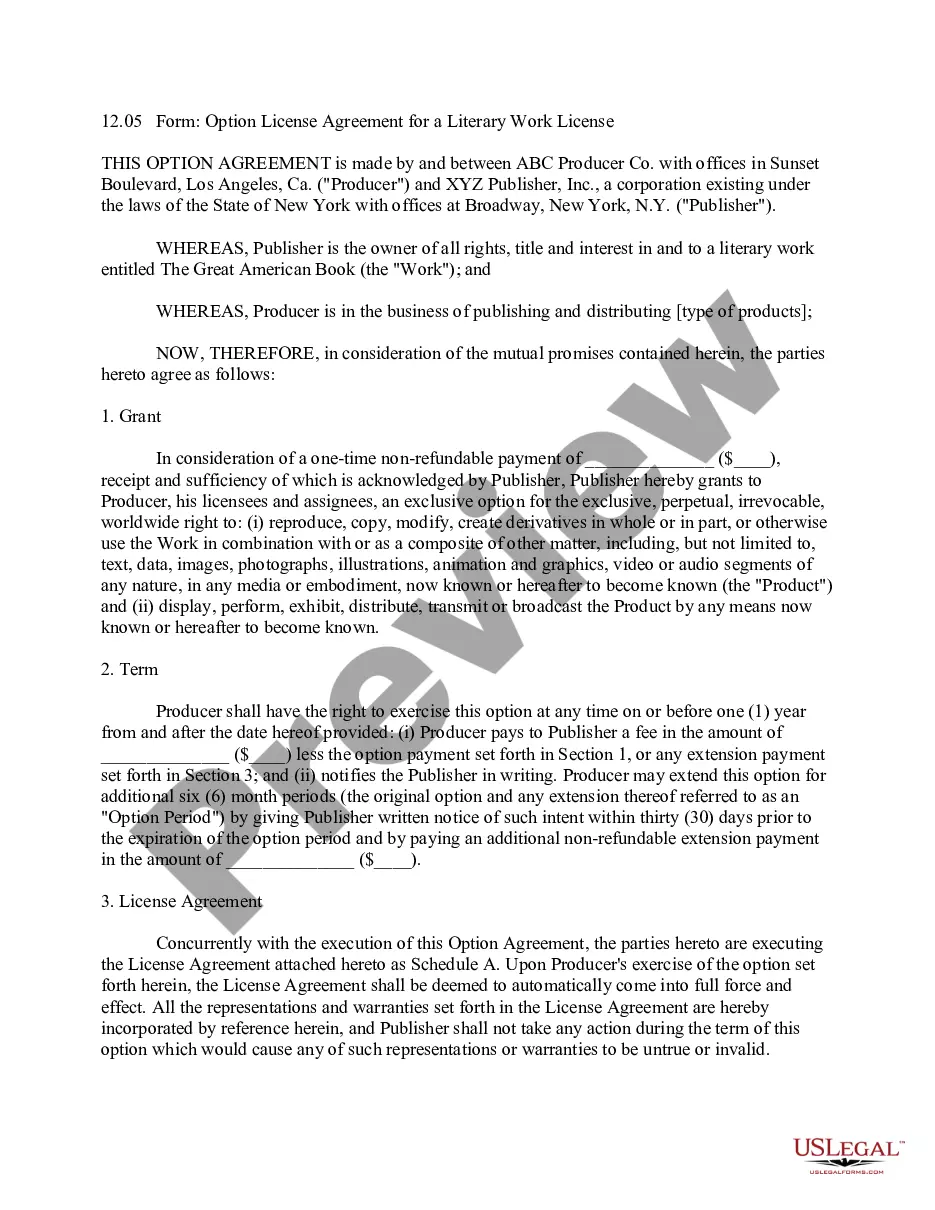
The Licensing Agreement for Creative Work is a legal document that outlines the terms under which a Licensor grants a Licensee permission to use copyrighted creative works. This agreement specifies that the license is non-exclusive and limited, meaning the Licensor retains the ownership rights and can license the work to others. Unlike other agreements, this form is designed for specific licensing scenarios, making it essential for those looking to use creative works in a defined manner without transferring ownership.
What’s included in this form
- Parties Involved: Identification of the Licensor and Licensee, including their addresses.
- Grant of License: Terms outlining what the Licensee can do with the Work, including restrictions on resale and sublicensing.
- Ownership Rights: Confirmation that the Licensor retains all rights to the Work and that the Licensee cannot claim ownership.
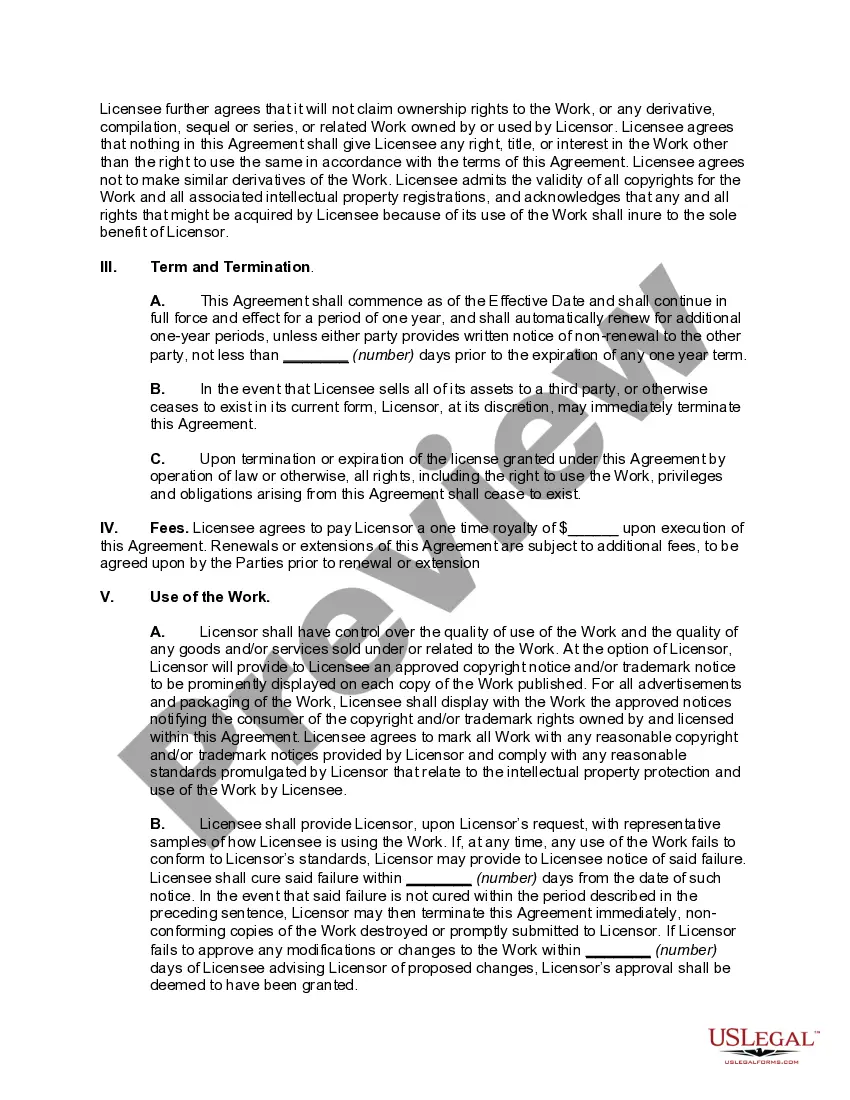
- Term and Termination: Duration of the agreement and conditions under which it can be terminated or renewed.
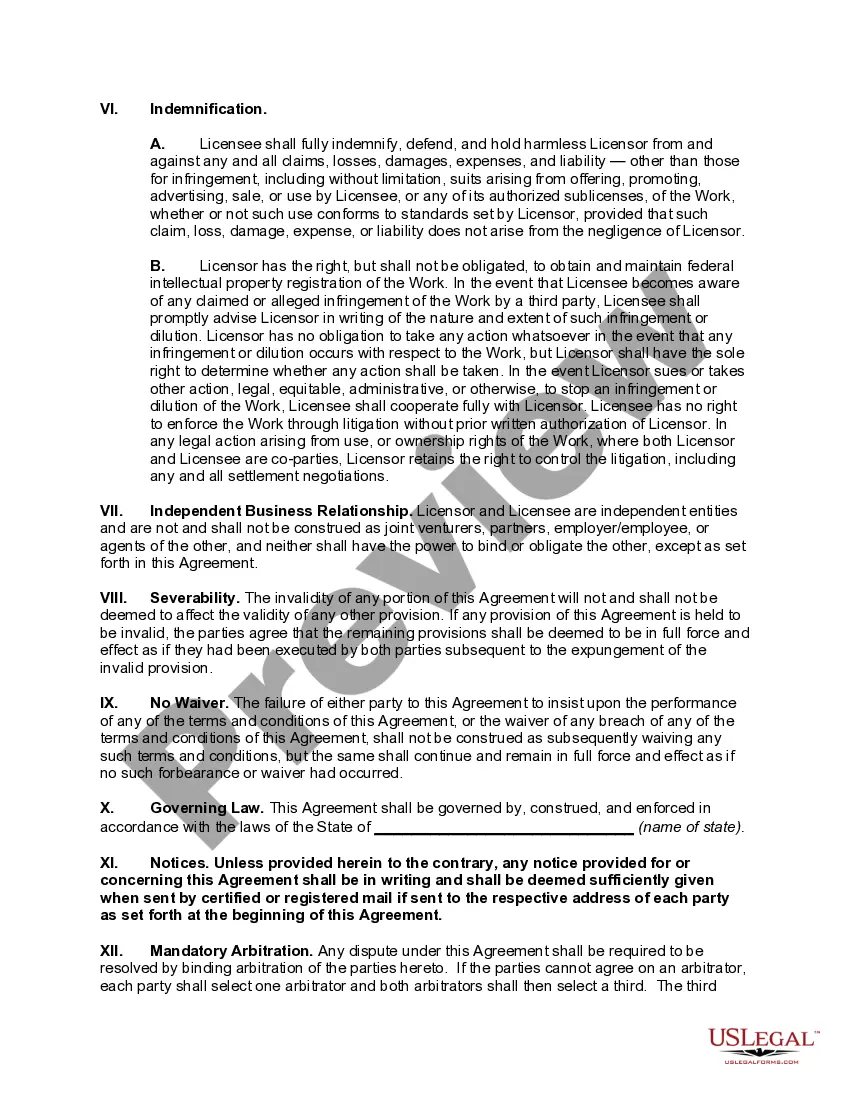
- Indemnification: Obligations for both parties concerning liability and infringement claims.
When to use this form
This Licensing Agreement for Creative Work should be utilized when a creator or owner of copyrighted material (Licensor) wishes to grant permission to another party (Licensee) to use their work for particular business purposes. Common scenarios include situations where a business wants to utilize musical works, artistic designs, or written content without purchasing full ownership, such as for promotional advertising or internal business use.
Who this form is for
- Creators of artistic works, such as artists, musicians, or writers looking to license their work.
- Businesses seeking to use creative content for marketing or promotional projects.
- Professionals in the creative industry who need to clarify usage rights while retaining ownership.
- Individuals or organizations that require a clear legal framework for using copyrighted materials.
Completing this form step by step
- Identify the parties involved by entering the names and addresses of both the Licensor and Licensee.
- Specify the date the agreement becomes effective on the designated line.
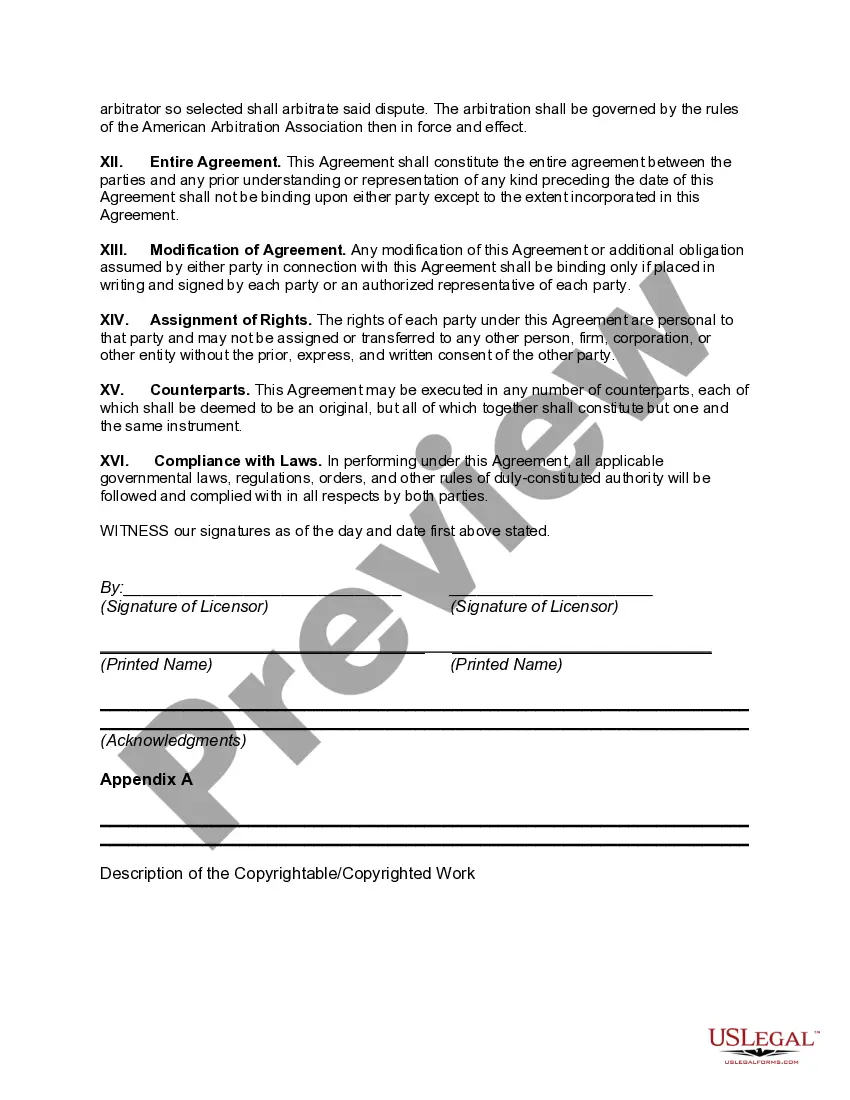
- Describe the copyrighted creative work in Appendix A, providing necessary details for clarity.
- Set forth the agreed payment terms, including the one-time fee for the license.
- Include any additional terms or conditions relevant to the use of the Work, ensuring compliance with industry standards.
Is notarization required?
This form usually doesn’t need to be notarized. However, local laws or specific transactions may require it. Our online notarization service, powered by Notarize, lets you complete it remotely through a secure video session, available 24/7.
Get your form ready online
Our built-in tools help you complete, sign, share, and store your documents in one place.
Make edits, fill in missing information, and update formatting in US Legal Forms—just like you would in MS Word.
Download a copy, print it, send it by email, or mail it via USPS—whatever works best for your next step.
Sign and collect signatures with our SignNow integration. Send to multiple recipients, set reminders, and more. Go Premium to unlock E-Sign.
If this form requires notarization, complete it online through a secure video call—no need to meet a notary in person or wait for an appointment.
We protect your documents and personal data by following strict security and privacy standards.

Make edits, fill in missing information, and update formatting in US Legal Forms—just like you would in MS Word.

Download a copy, print it, send it by email, or mail it via USPS—whatever works best for your next step.

Sign and collect signatures with our SignNow integration. Send to multiple recipients, set reminders, and more. Go Premium to unlock E-Sign.

If this form requires notarization, complete it online through a secure video call—no need to meet a notary in person or wait for an appointment.

We protect your documents and personal data by following strict security and privacy standards.
Common mistakes
- Failing to specify the scope of the license, leading to misunderstandings about permitted uses.
- Not clearly defining the creative work being licensed, which complicates rights enforcement.
- Neglecting to include renewal terms or procedures, resulting in lapses in licensing rights.
- Omitting signatures or dates, making the agreement unenforceable.
Why complete this form online
- Convenient access to legal templates that are easy to fill out and download.
- Editability allows users to customize the form to meet specific needs.
- Reliability by guaranteeing that the templates have been drafted and/or reviewed by licensed attorneys.
Looking for another form?

Form popularity
FAQ
For a songwriter or publisher to get paid by a PRO, they must sign an agreement that allows the PRO to license their musical works (or musical work share) and collect and distribute that share of musical work performance royalties.
An artist licensing agreement allows an artist while retaining full copyright ownership of their work, to grant permission to another party to use their art.
A license contract, also known as a license agreement or licensing agreement, is a type of contract where one party (the licensor) grants another party (the licensee) the right to produce, use, sell, and/or display the licensor's protected material.
Examples of Licensing Agreements An example of a licensing agreement in the restaurant space would be when a McDonald's franchisee has a licensing agreement with the McDonald's Corporation that lets them use the company's branding and marketing materials.
A licensing agreement allows one party (the licensee) to use and/or earn revenue from the property of the owner (the licensor). Licensing agreements generate revenues, called royalties, earned by a company for allowing its copyrighted or patented material to be used by another company.
How to begin licensing your art Do the research. Read books, websites and blogs such as MariaBrophy.com, Theabundantartist.com and ArtsyShark.com on how artists can license their art.Know your market.Make the pitch.Create a plan.Mock-up a catalog.Follow up.Use social media.License the work yourself.
In a typical licensing agreement, the licensor grants the licensee the right to produce and sell goods, apply a brand name or trademark, or use patented technology owned by the licensor.
The percentage will vary, but it is usually 10 percent or less unless the licensee is selling posters or prints of the artwork. Sometimes royalties are calculated not ing to net sales but ing to the total number of products that are sold or manufactured. This is known as a per unit royalty.