Indemnification Provisions
Overview of this form
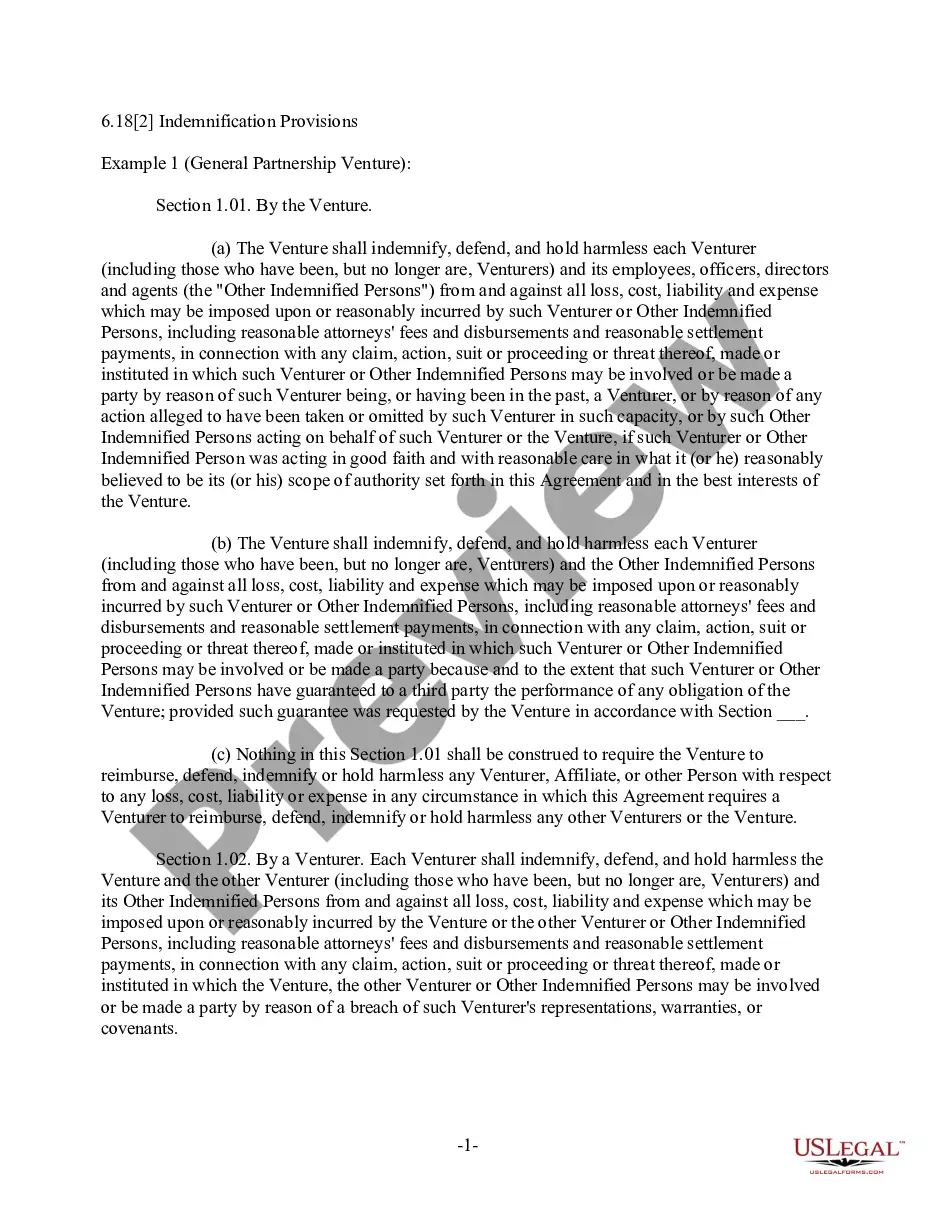
The indemnification provisions form is a legal document that establishes agreements between parties for financial protection against certain losses. It is commonly used in partnership agreements to outline how one party will compensate another for specific liabilities incurred during the course of their business relationship. This form helps mitigate risks and provides clarity on each party's responsibilities, making it essential for anyone entering into a partnership.
Main sections of this form
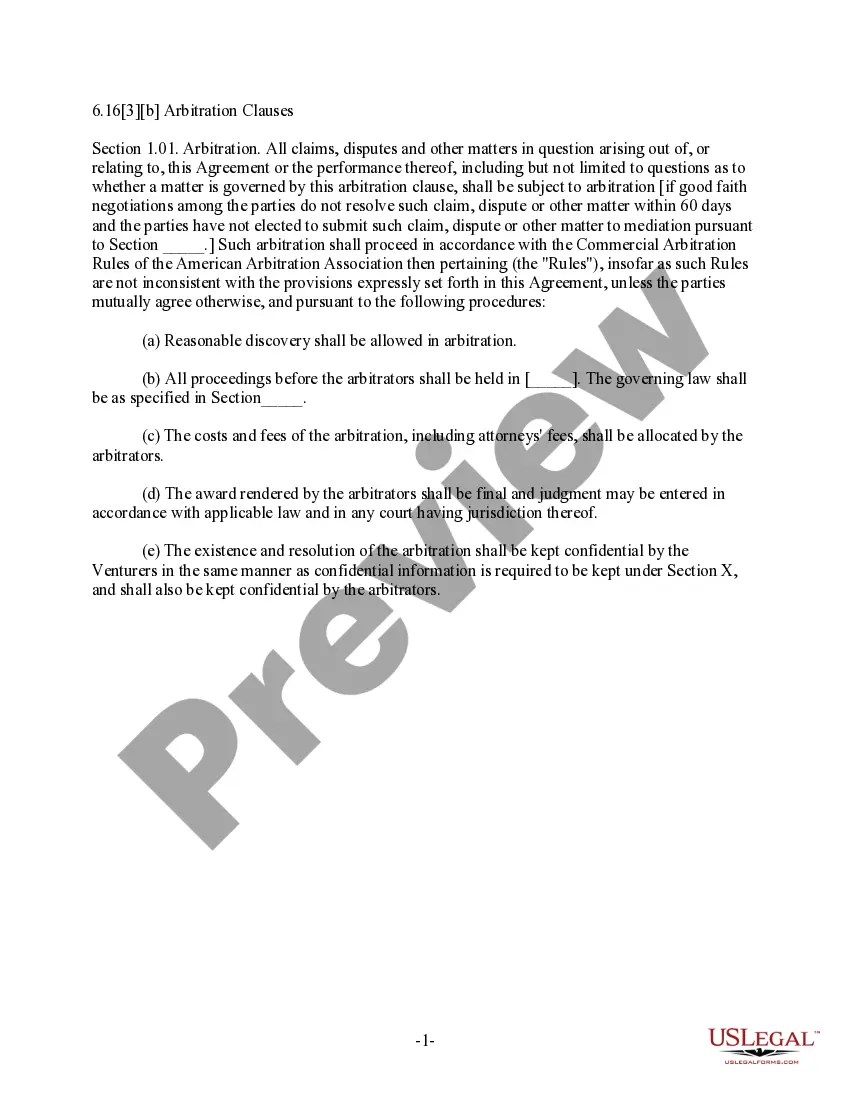
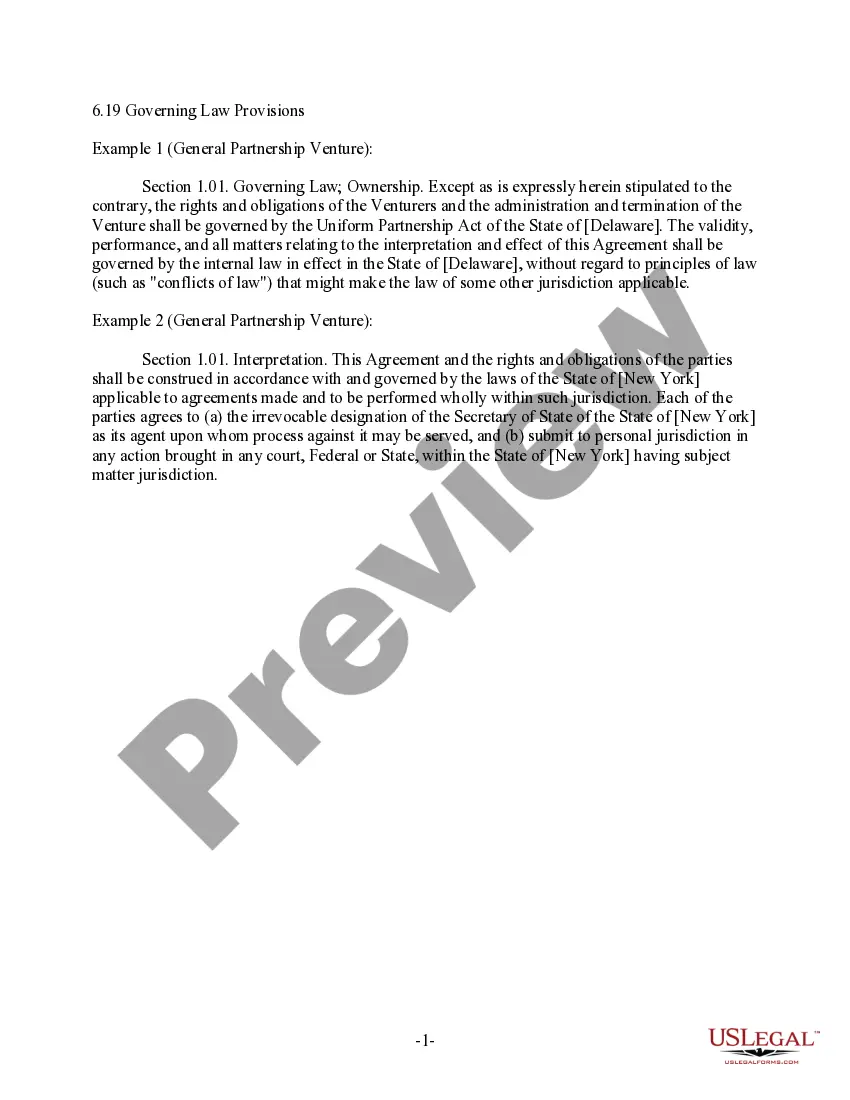
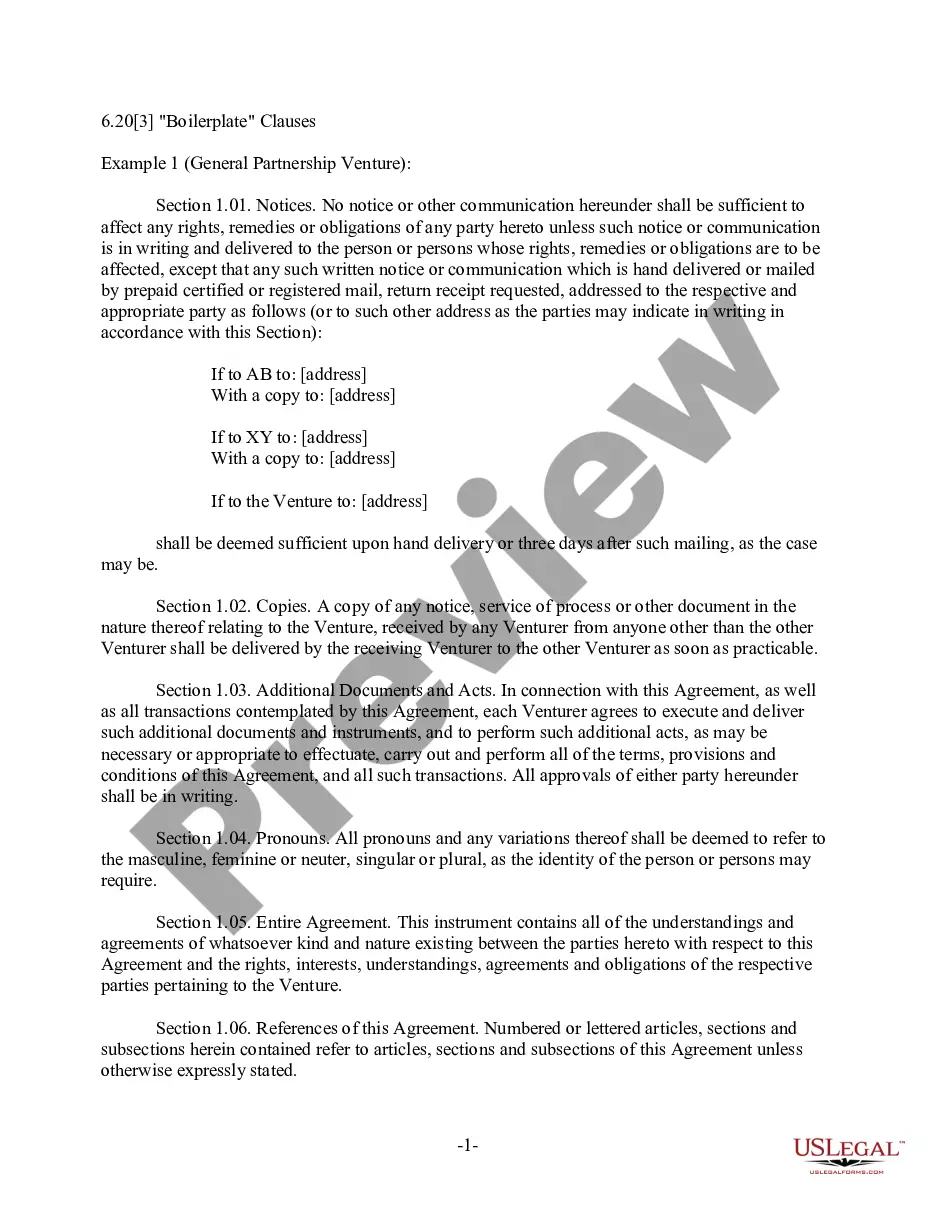
- Section on indemnification by the venture, covering liabilities related to claims against venturers.
- Clauses detailing indemnification responsibilities of each venturer towards other venture parties.
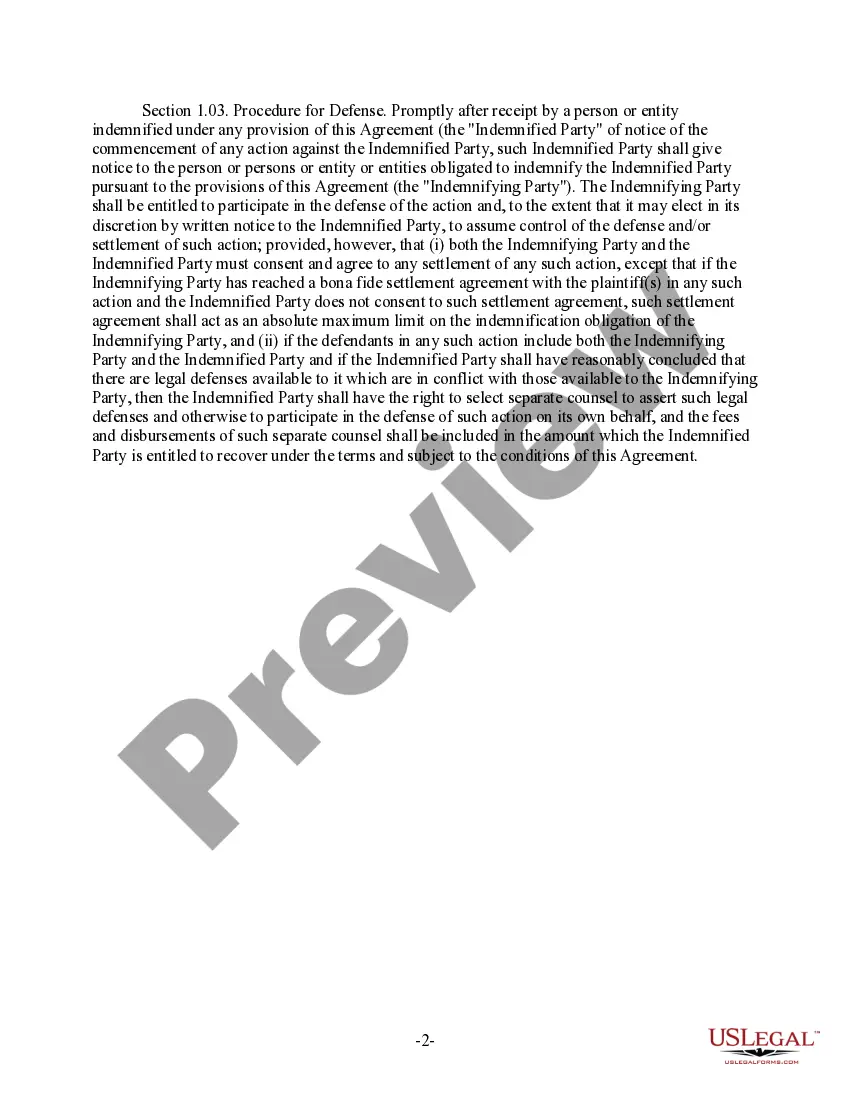
- Procedures for notifying and managing claims involving indemnified parties.
- Terms clarifying the extent of indemnification and limitations on reimbursement requirements.
When this form is needed
This form should be used when forming a partnership or joint venture and when there is a need to clarify the indemnification responsibilities of each party involved. It is particularly important in scenarios where one party may incur losses due to the actions or negligence of another party, such as in business operations, contract disputes, or third-party claims. Using this form can help prevent misunderstandings and provide legal protection if disputes arise in the future.
Who should use this form
This form is ideal for:
- Business partners entering into a partnership agreement.
- Venturers involved in joint ventures.
- Attorneys and legal professionals seeking to create solid agreements for their clients.
- Businesses looking to limit their liability in various operations.
Instructions for completing this form
- Identify the parties involved in the partnership and their roles.
- Fill in specific clauses regarding indemnification responsibilities.
- Clearly outline the procedures for notice of claims and defense obligations.
- Review indemnification limitations and insert any necessary conditions.
- Ensure all parties sign and date the document to validate the agreement.
Notarization requirements for this form
This form does not typically require notarization to be legally valid. However, some jurisdictions or document types may still require it. US Legal Forms provides secure online notarization powered by Notarize, available 24/7 for added convenience.
Get your form ready online
Our built-in tools help you complete, sign, share, and store your documents in one place.
Make edits, fill in missing information, and update formatting in US Legal Forms—just like you would in MS Word.
Download a copy, print it, send it by email, or mail it via USPS—whatever works best for your next step.
Sign and collect signatures with our SignNow integration. Send to multiple recipients, set reminders, and more. Go Premium to unlock E-Sign.
If this form requires notarization, complete it online through a secure video call—no need to meet a notary in person or wait for an appointment.
We protect your documents and personal data by following strict security and privacy standards.

Make edits, fill in missing information, and update formatting in US Legal Forms—just like you would in MS Word.

Download a copy, print it, send it by email, or mail it via USPS—whatever works best for your next step.

Sign and collect signatures with our SignNow integration. Send to multiple recipients, set reminders, and more. Go Premium to unlock E-Sign.

If this form requires notarization, complete it online through a secure video call—no need to meet a notary in person or wait for an appointment.

We protect your documents and personal data by following strict security and privacy standards.
Avoid these common issues
- Failing to define the scope of indemnification clearly.
- Not specifying the procedures for handling claims.
- Leaving out signatures or dates from the final document.
- Using vague language that could lead to misinterpretation.
Why use this form online
- Convenient access anywhere, anytime.
- Editable documents to tailor the terms to your specific needs.
- Created by licensed attorneys to ensure legal compliance and accuracy.
- Quick and easy download process to save time.
Legal use & context
- Important for protecting parties against potential lawsuits related to business operations.
- Helps to establish liability in the event of disputes among partners.
- Enforceability can vary by state, so legal advice may be necessary to ensure compliance.
Main things to remember
- The indemnification provisions form is essential for partnership agreements.
- Clearly defined terms help prevent future disputes and set expectations.
- Available for use across multiple states, adaptable to jurisdictional needs.
- Completing the form accurately ensures legal protection for all parties involved.
Looking for another form?

Form popularity
FAQ
Indemnity is a contractual agreement between two parties. In this arrangement, one party agrees to pay for potential losses or damages caused by another party.With indemnity, the insurer indemnifies the policyholderthat is, promises to make whole the individual or business for any covered loss.
Indemnity is defined by Black's Law Dictionary as a duty to make good any loss, damage, or liability incurred by another. Indemnity has a general meaning of holding one harmless; that is to say, that one party holds the other harmless for some loss or damage.
Indemnity is defined by Black's Law Dictionary as a duty to make good any loss, damage, or liability incurred by another. Indemnity has a general meaning of holding one harmless; that is to say, that one party holds the other harmless for some loss or damage.
The most important part of an indemnification clause is that it protects the indemnified party from lawsuits filed by third parties. This protection is important because damaged parties are still able to pursue compensation for their losses even if this clause isn't in the contract.
To indemnify another party is to compensate that party for losses that that party has incurred or will incur as related to a specified incident.
To indemnify means to compensate someone for his/her harm or loss. In most contracts, an indemnification clause serves to compensate a party for harm or loss arising in connection with the other party's actions or failure to act. The intent is to shift liability away from one party, and on to the indemnifying party.
Company/Business/Individual Name shall fully indemnify, hold harmless and defend _______ and its directors, officers, employees, agents, stockholders and Affiliates from and against all claims, demands, actions, suits, damages, liabilities, losses, settlements, judgments, costs and expenses (including but not
Indemnification clauses are clauses in contracts that set out to protect one party from liability if a third-party or third entity is harmed in any way. It's a clause that contractually obligates one party to compensate another party for losses or damages that have occurred or could occur in the future.
As discussed, an indemnity provision transfers risk from one party (called the indemnitee) to another party (called the indemnitor). Under an indemnity provision, the indemnitor agrees to reimburse the indemnitee for losses resulting from a claim or claims brought by a third-party.