Governing Law Provisions
Understanding this form
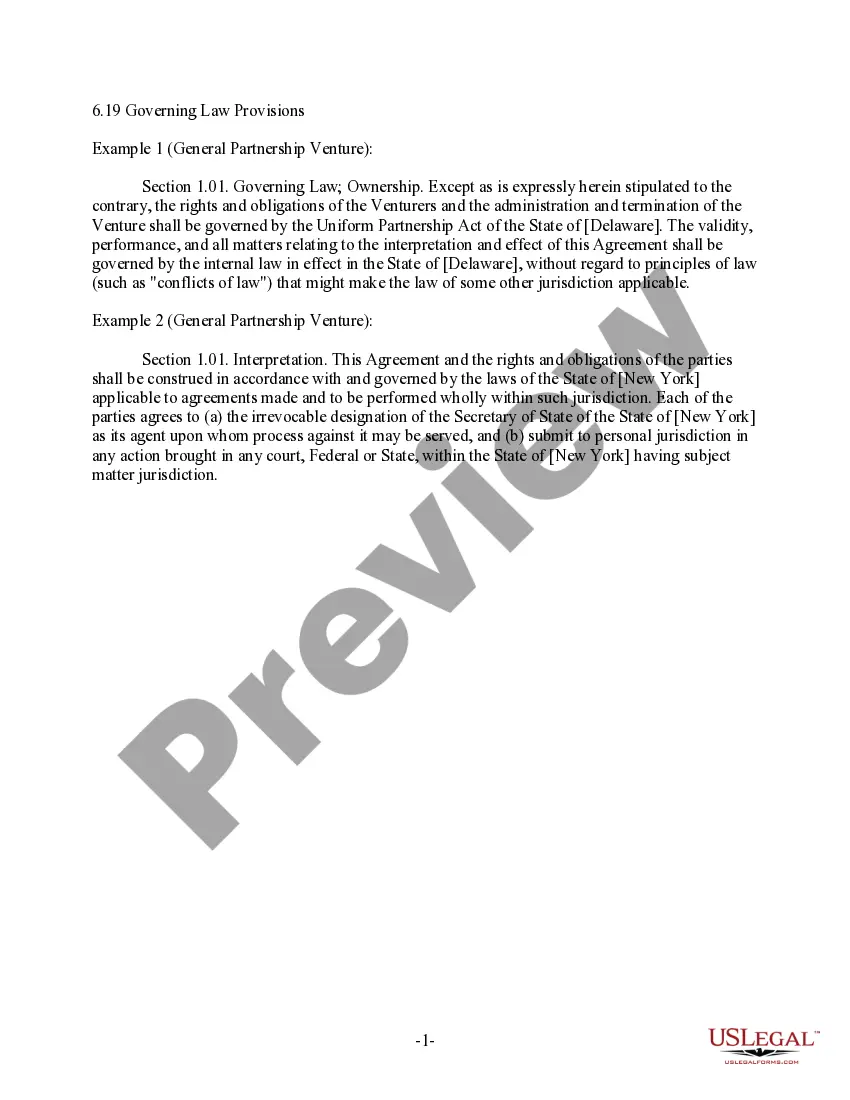
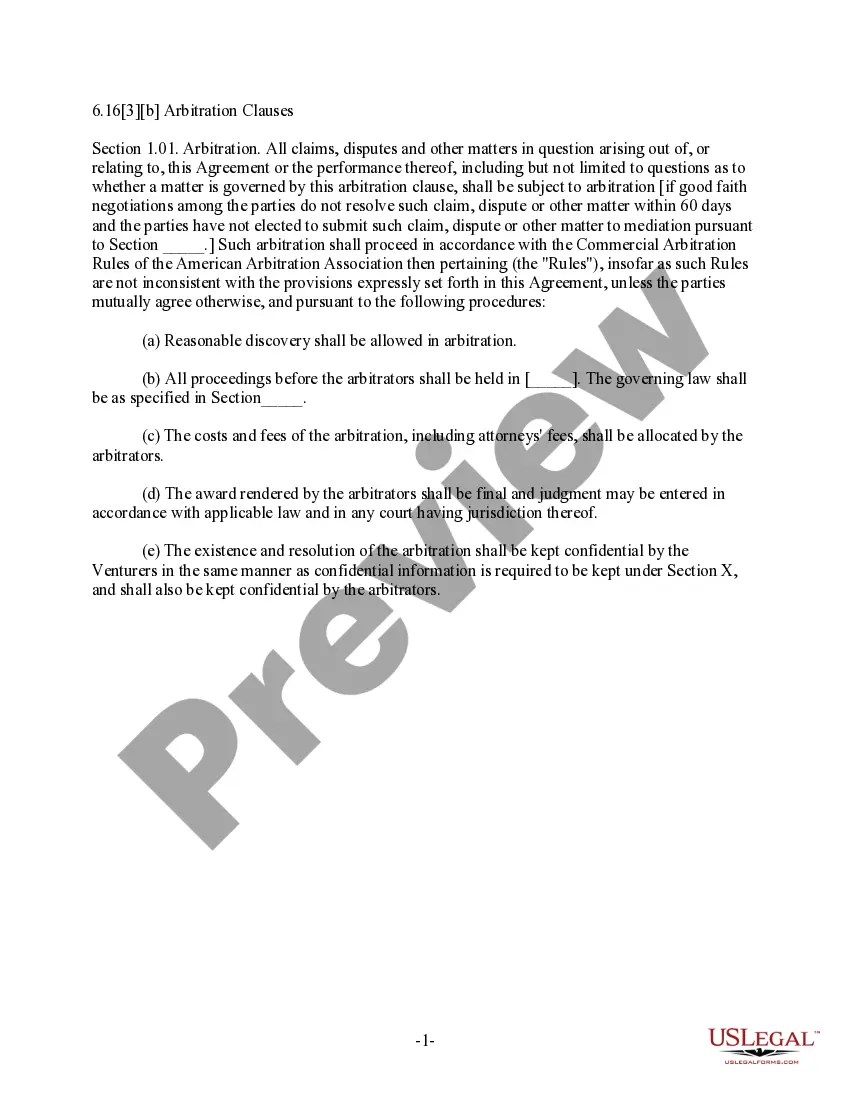
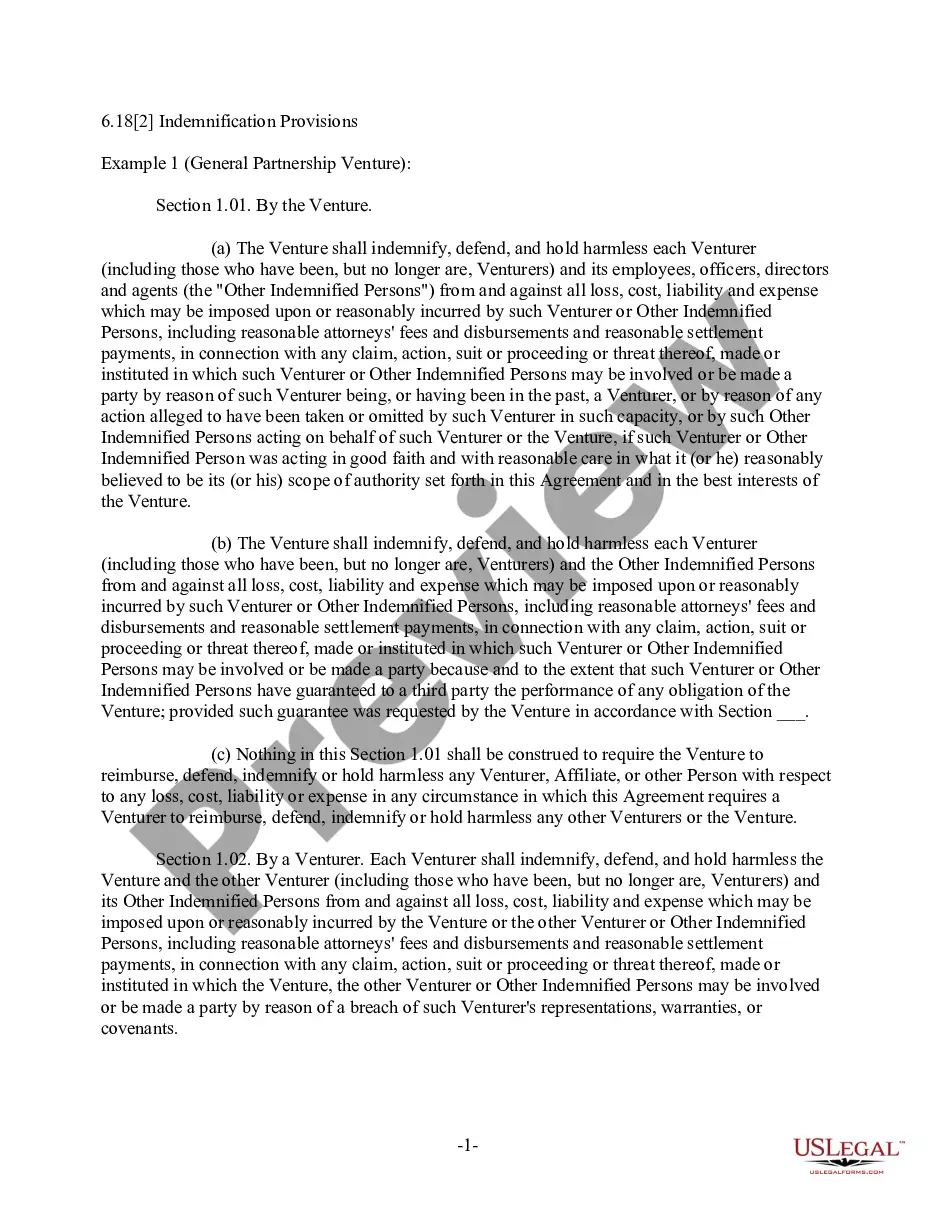
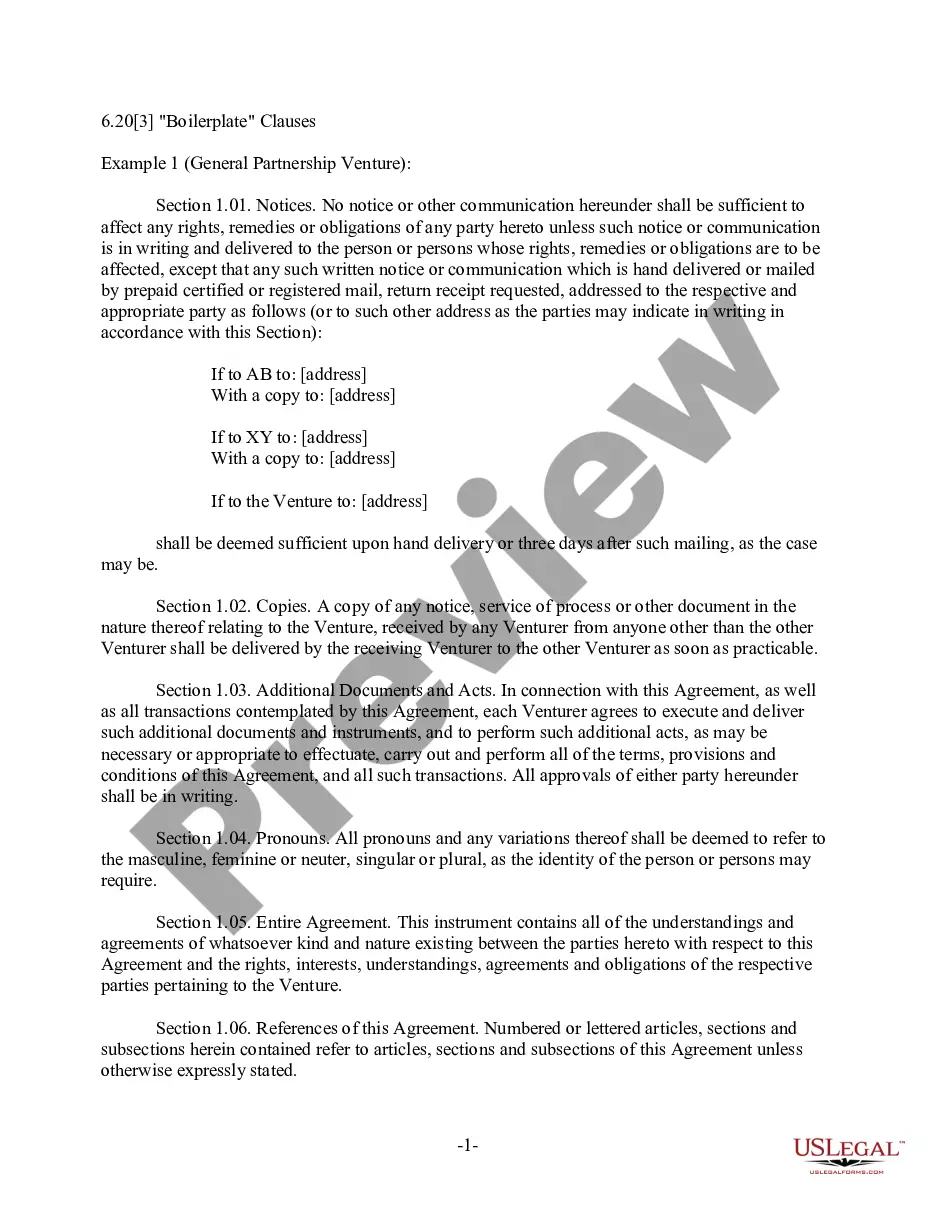
The Governing Law Provisions form is a legal document used to specify the jurisdiction whose laws will govern a partnership agreement. This form ensures clarity on the applicable laws, providing peace of mind to all parties involved. It is essential for establishing the legal framework within which partnership matters will be interpreted, distinguished from other legal forms by its specific focus on governing law and jurisdictional issues.
Main sections of this form
- Governing Law Clause: Identifies the specific state's laws that will be applicable.
- Jurisdiction Clause: Stipulates where any legal disputes should be resolved.
- Revocable Designation of Agent: Assigns a state official as the agent for legal processes.
- Interpretation Clause: Outlines how the agreement should be understood under the selected state law.
Situations where this form applies
This form is suitable for use when forming a partnership and when it is important to clarify which state's laws will apply. It is particularly useful in scenarios where partners are from different states or when there is a desire to establish predictability in legal matters related to the partnership. Use this form to prevent potential disputes over jurisdiction in case of legal challenges.
Who can use this document
- Business partners forming a new partnership.
- Existing partnerships that need to clarify their governing law.
- Legal practitioners drafting partnership agreements.
- Individuals or businesses operating in multiple states.
Completing this form step by step
- Identify the parties involved in the partnership.
- Specify the governing law by selecting the appropriate state.
- Enter the jurisdiction details where legal actions may be pursued.
- Complete any additional clauses that may pertain to your partnership agreement.
- Review all information for accuracy and ensure all parties sign the document.
Notarization requirements for this form
This form does not typically require notarization unless specified by local law. However, it is recommended to check the requirements specific to your jurisdiction for compliance.
Get your form ready online
Our built-in tools help you complete, sign, share, and store your documents in one place.
Make edits, fill in missing information, and update formatting in US Legal Forms—just like you would in MS Word.
Download a copy, print it, send it by email, or mail it via USPS—whatever works best for your next step.
Sign and collect signatures with our SignNow integration. Send to multiple recipients, set reminders, and more. Go Premium to unlock E-Sign.
If this form requires notarization, complete it online through a secure video call—no need to meet a notary in person or wait for an appointment.
We protect your documents and personal data by following strict security and privacy standards.

Make edits, fill in missing information, and update formatting in US Legal Forms—just like you would in MS Word.

Download a copy, print it, send it by email, or mail it via USPS—whatever works best for your next step.

Sign and collect signatures with our SignNow integration. Send to multiple recipients, set reminders, and more. Go Premium to unlock E-Sign.

If this form requires notarization, complete it online through a secure video call—no need to meet a notary in person or wait for an appointment.

We protect your documents and personal data by following strict security and privacy standards.
Avoid these common issues
- Failing to specify the governing law accurately, leading to confusion later.
- Neglecting to ensure all parties sign the document.
- Overlooking jurisdictional differences that may impact enforcement.
- Using outdated or inappropriate legal terminology.
Advantages of online completion
- Accessible: Download the form anytime and anywhere.
- Customizable: Adapt the template to fit your specific partnership needs.
- Time-saving: Save on legal consultation fees by using an attorney-drafted template.
- Reliable: Ensure compliance with state laws through a professionally prepared form.
Legal use & context
- The Governing Law Provisions can protect partners by defining their legal standing under chosen laws.
- Properly executed, the form holds up in legal disputes, reducing the risk of ambiguous jurisdictional challenges.
- Create clear expectations for dispute resolution based on the selected governing law.
Summary of main points
- Clearly define the governing law to avoid future disputes.
- Ensure that all relevant parties understand and agree to the stipulations.
- Regularly review and update the form as laws and partnerships evolve.
Looking for another form?




Form popularity
FAQ
This determination is often referred to as choice of law. Typically, if the contract does not address choice of law, the court will use the law of the state in which the transaction was consummated or where a substantial portion of the subject matter of the agreement shall occur.
Out-of-State Employers Beware: New California Law Prohibits Non-California Choice of Law and Venue Clauses in Employment Contracts.
Contracts are usually governed and enforced by the laws in the state where the agreement was made. Depending upon the subject matter of the agreement (i.e. sale of goods, property lease), a contract may be governed by one of two types of state law: The Common Law.
The Common Law. The majority of contracts (i.e. employment agreements, leases, general business agreements) are controlled by the state's common law -- a tradition-based but constantly evolving set of laws that is mostly judge-made, from court decisions over the years. The Uniform Commercial Code (UCC).
A "Governing Law" clause is a clause used in legal agreements where you can declare which rules and laws will govern the agreement if legal issues arise. A "Governing Law" clause will be found consistently in contracts and legal agreements between companies and their users.
Governing Jurisdiction means the jurisdiction whose law governs the internal affairs of an entity.
A "choice of law" or "governing law" provision in a contract allows the parties to agree that a particular state's laws will be used to interpret the agreement, even if they live in (or the agreement is signed in) a different state.
Difference between law and jurisdictionJurisdiction refers to either the court or court system in which your case is going to be tried. To clarify, this statement jurisdiction can be the state courts of a particular country, whereas governing law can be connected to the state laws of a different country.