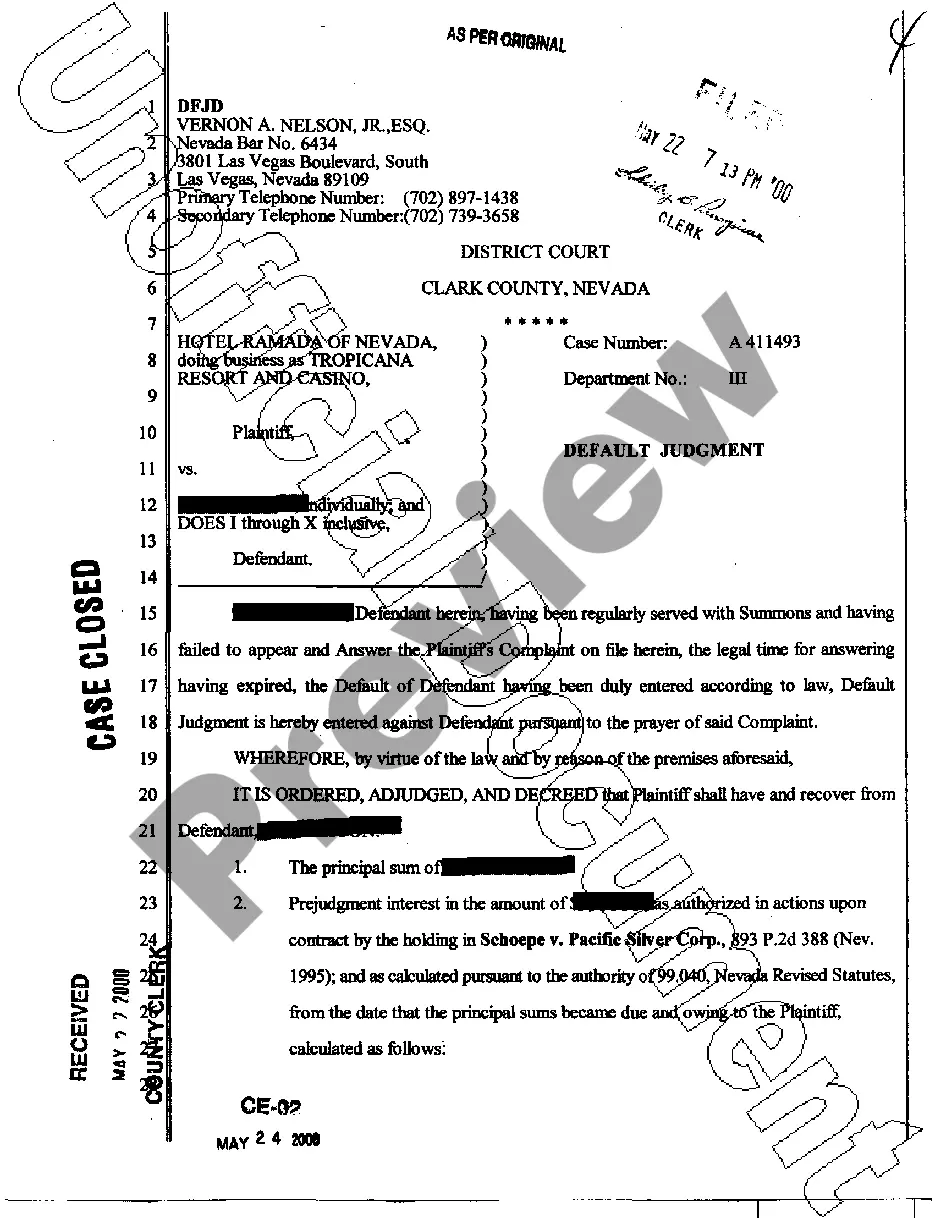
Florida Claim of Lien Form - Construction - Mechanic Liens - Corporation or LLC
What is this form?
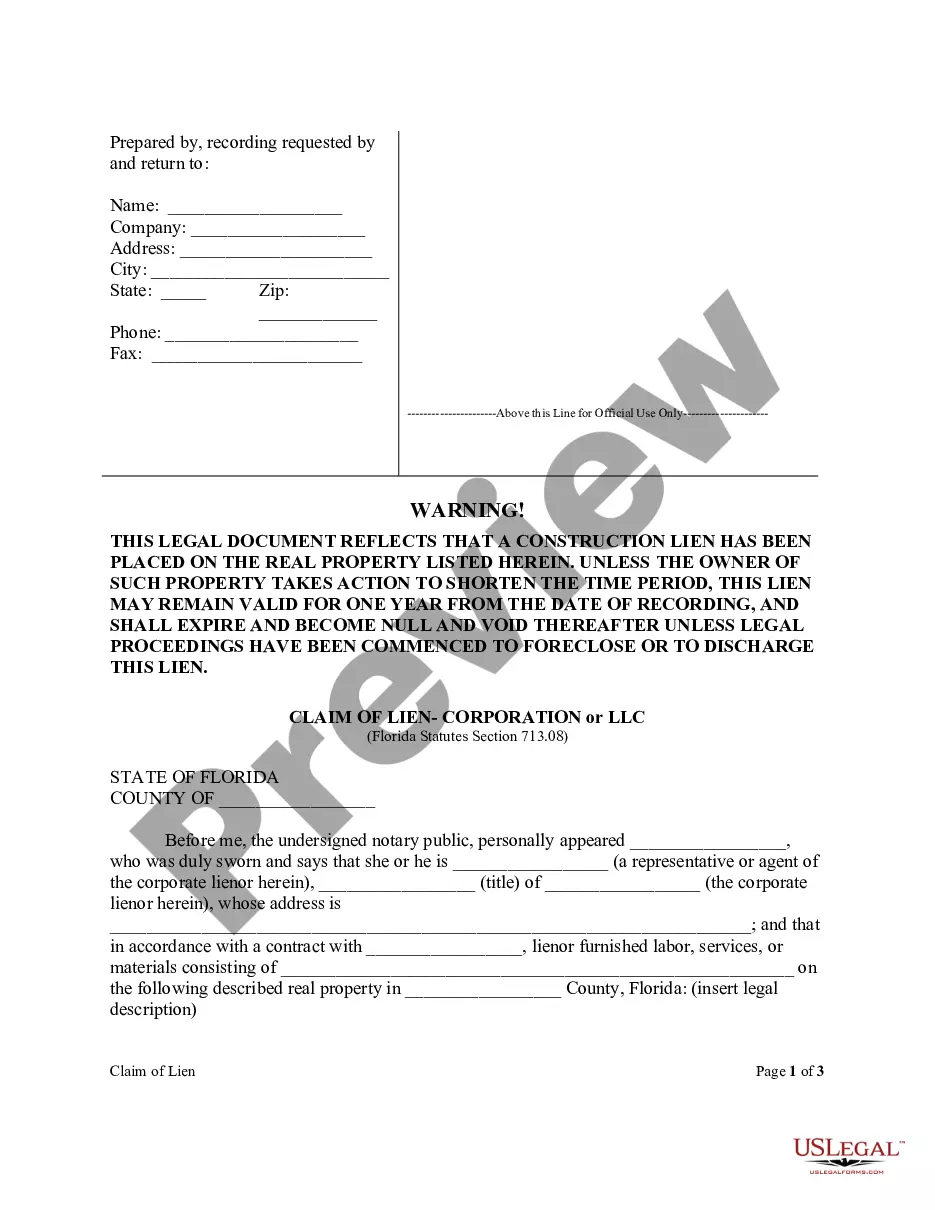
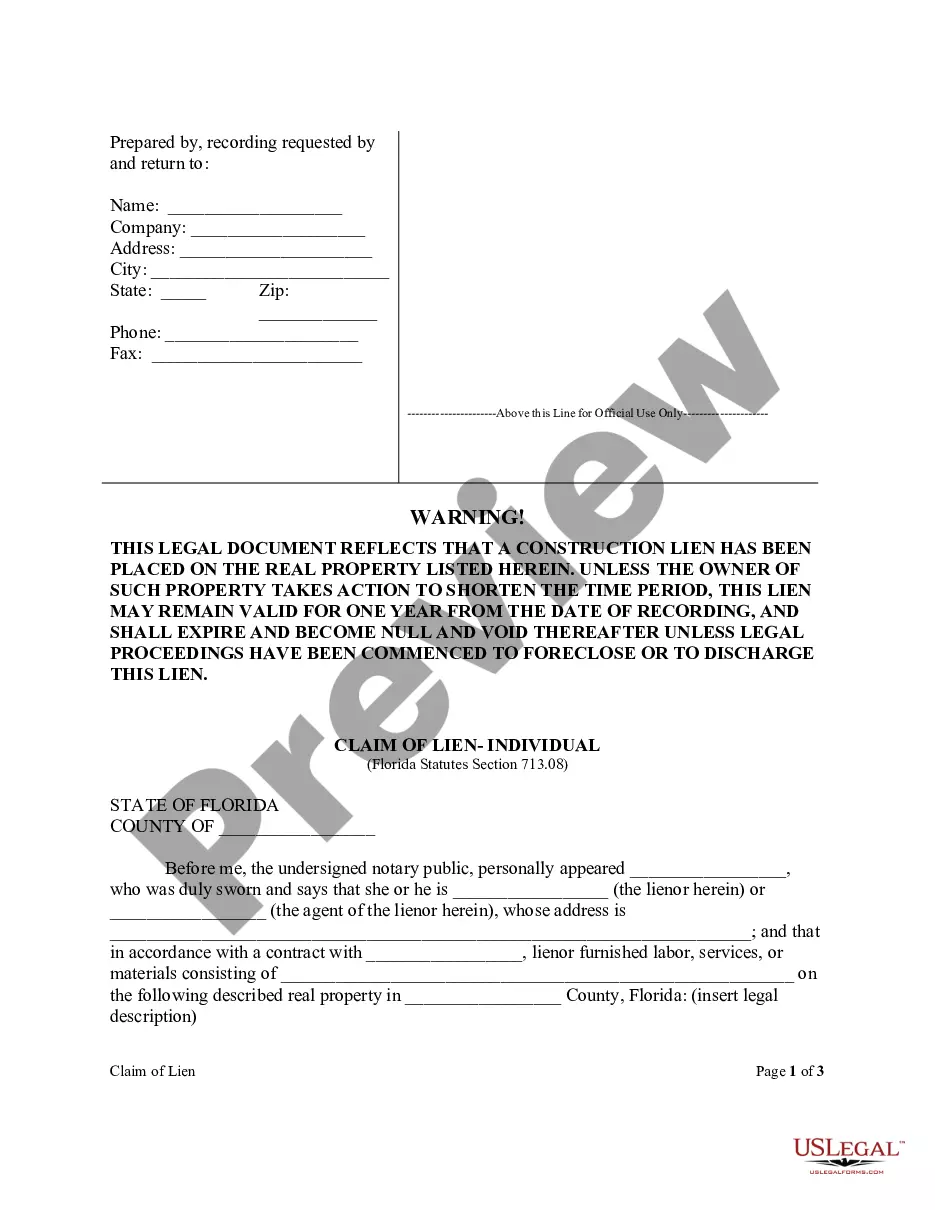
The Claim of Lien Form - Construction - Mechanic Liens - Corporation or LLC is a legal document used by corporate entities or limited liability companies (LLCs) to place a lien on a property for unpaid work, materials, or services related to construction. This form serves to protect the rights of lien claimants in the construction industry and is distinct from other lien forms as it specifically addresses the actions of corporations and LLCs in filing mechanic liens.
Key components of this form
- Identification section for the claimant, including name, company, and contact details.
- Statement of the legal description of the property on which the lien is being claimed.
- Details about the project, including dates of service and total amount owed.
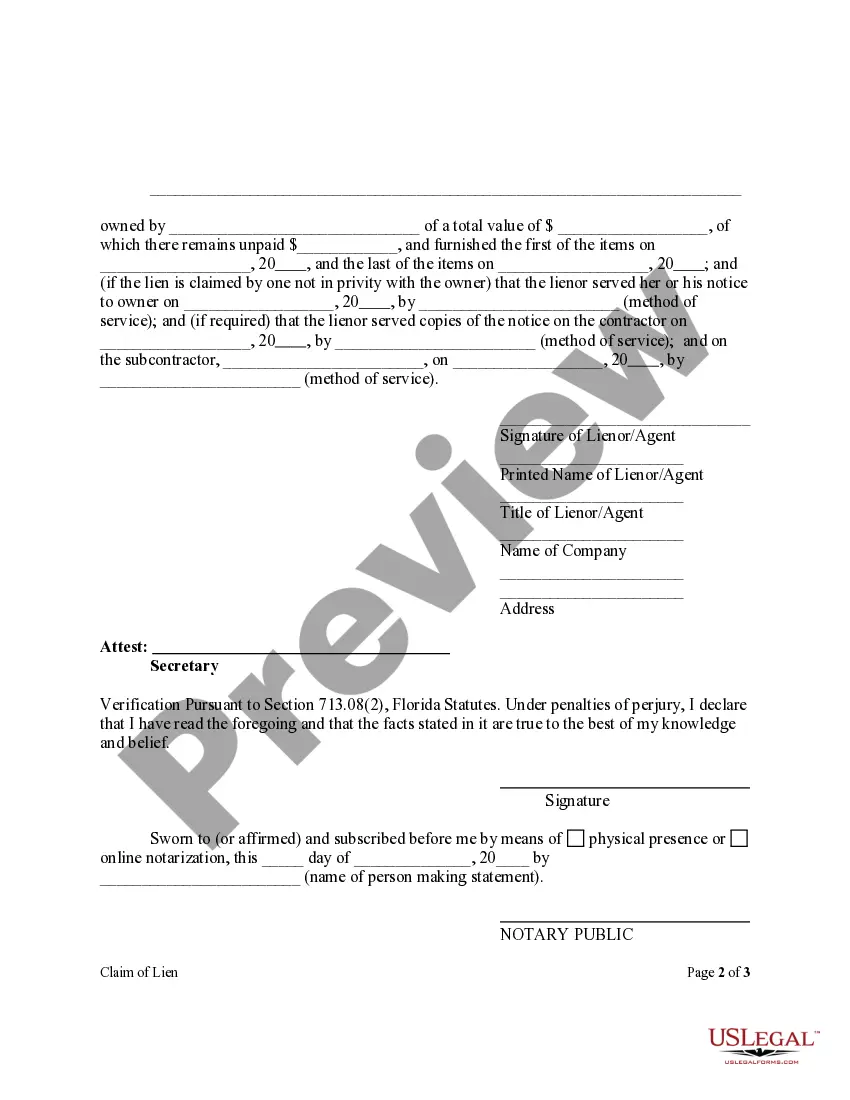
- Signature of the lien claimant or their agent, along with title and company name.
- Notary acknowledgment to validate the claim.
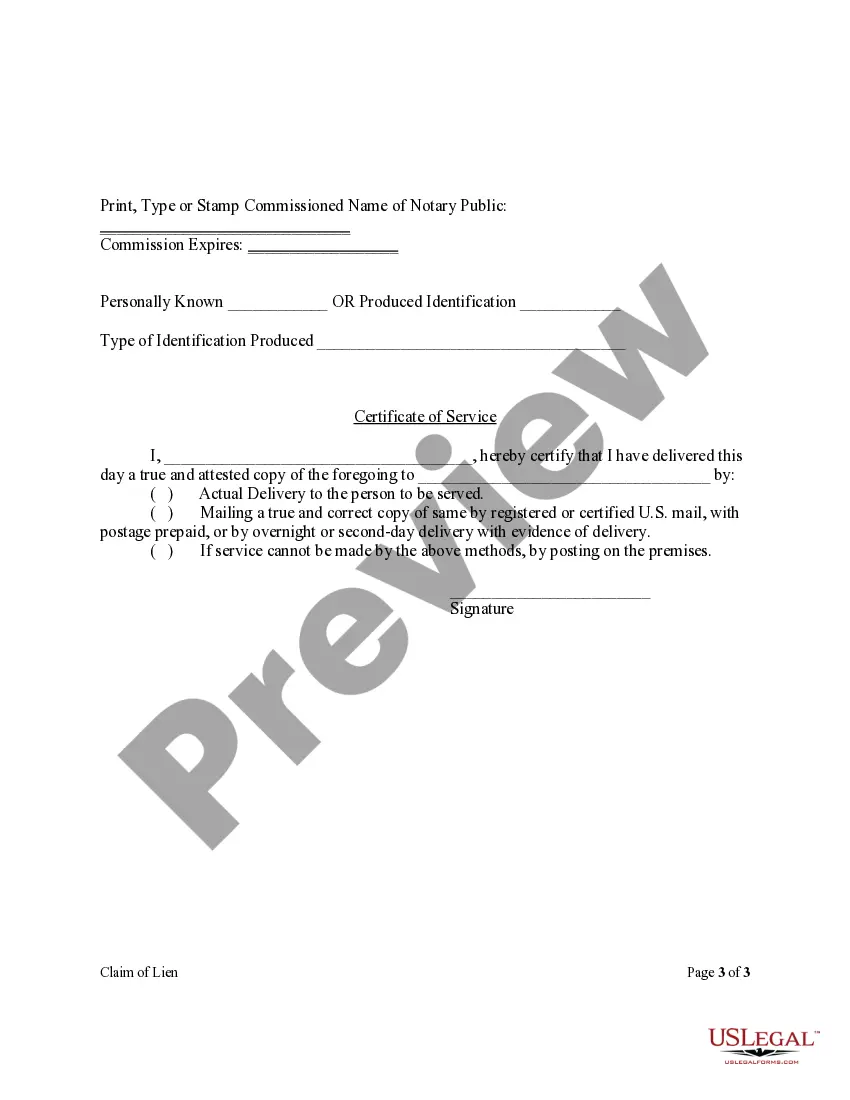
- Certificate of service detailing how the lien was delivered to the property owner and other relevant parties.
Situations where this form applies
This form should be used when a corporation or LLC has provided labor, materials, or services for construction or improvement of real property and has not received payment. Filing this lien serves as a legal claim to ensure payment is secured, especially before commencing a foreclosure action to enforce the lien rights.
Who can use this document
- Corporations or LLCs engaged in construction projects.
- Companies that have not received payment for services or materials provided.
- Contractors and subcontractors who need to assert their rights to payment through a lien.
Completing this form step by step
- Identify the parties involved by filling in the claimant's name, company, and contact information.
- Provide the legal description of the property where the work was performed.
- Enter the total value of the labor, services, or materials provided and the amount still owed.
- Include relevant dates for the service period and any notices served.
- Obtain the necessary signatures and have the form notarized.
Does this form need to be notarized?
To make this form legally binding, it must be notarized. Our online notarization service, powered by Notarize, lets you verify and sign documents remotely through an encrypted video session.
Get your form ready online
Our built-in tools help you complete, sign, share, and store your documents in one place.
Make edits, fill in missing information, and update formatting in US Legal Forms—just like you would in MS Word.
Download a copy, print it, send it by email, or mail it via USPS—whatever works best for your next step.
Sign and collect signatures with our SignNow integration. Send to multiple recipients, set reminders, and more. Go Premium to unlock E-Sign.
If this form requires notarization, complete it online through a secure video call—no need to meet a notary in person or wait for an appointment.
We protect your documents and personal data by following strict security and privacy standards.

Make edits, fill in missing information, and update formatting in US Legal Forms—just like you would in MS Word.

Download a copy, print it, send it by email, or mail it via USPS—whatever works best for your next step.

Sign and collect signatures with our SignNow integration. Send to multiple recipients, set reminders, and more. Go Premium to unlock E-Sign.

If this form requires notarization, complete it online through a secure video call—no need to meet a notary in person or wait for an appointment.

We protect your documents and personal data by following strict security and privacy standards.
Common mistakes
- Failing to include the correct legal description of the property.
- Not signing or improperly notarizing the document.
- Missing deadlines for filing the lien or serving notice to owners.
Advantages of online completion
- Convenience of downloading and printing the form instantly.
- Editability allows you to customize the form easily prior to submission.
- Access to legal templates drafted by licensed attorneys ensures reliability.
Legal use & context
- This form legally establishes a lien on the property until payment is made.
- The lien is valid for one year, unless legal action is taken to enforce it.
- Proper filing can protect the claimant's financial interests in cases of non-payment.
What to keep in mind
- This Claim of Lien Form is specifically for Corporations or LLCs in Florida.
- Ensure all information is accurate and complete to avoid delays or invalidation.
- Notarization is a critical step in the filing process.
- Use this form to secure your right to payment for construction-related services.
Looking for another form?
Form popularity
FAQ
This form lets a corporation or LLC place a lien on real property for unpaid construction work, materials, or services. It is used when a corporate or LLC claimant has not been paid and wants to secure payment, including sections for claimant identification, property description, project details, signature with title and company, notary acknowledgment, and a certificate of service.
To file this lien, provide the claimant’s identification, the property's legal description, project details (dates of service and total amount owed), the lien claimant’s signature or that of their agent with title and company name, a notary acknowledgment, and a certificate of service showing how the lien was delivered to the owner and other parties.
A corporation or LLC uses this form to assert a lien on real property for unpaid construction work or materials. The form requires identification, property description, project details, signature, notary, and a service certificate. Filing creates a legal claim that can precede foreclosure to enforce payment.
In Florida, this form is a tool for corporations or LLCs to claim a mechanic lien on real property when construction-related work is unpaid. It collects the claimant’s information, property description, project details, signature, notary, and a service certificate, and is typically used before pursuing foreclosure to enforce payment.
This form acts as the notice of lien for a corporation or LLC claiming unpaid construction-related work. It records the lien with property details, claimant information, project details, and the delivery of notice through the certificate of service and necessary signatures.
This form is specifically designed for corporations or LLCs filing a mechanic lien. It requires the claimant’s title and company name on the signature line, a notary acknowledgment, and a certificate of service to prove delivery, distinguishing it from forms intended for individuals or noncorporate claimants.