Subcontractor Affidavit and Release of Claims and Lien Waiver
Understanding this form
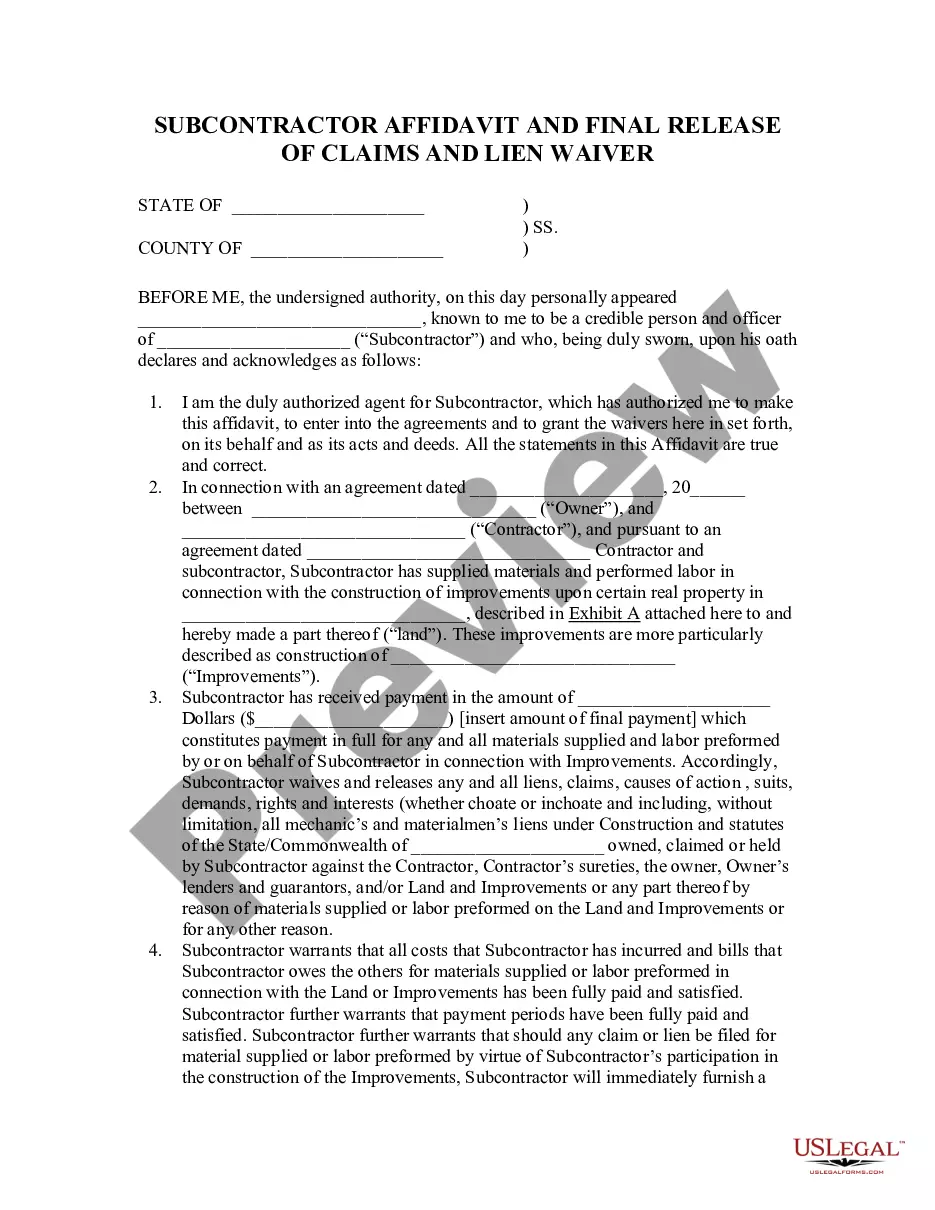
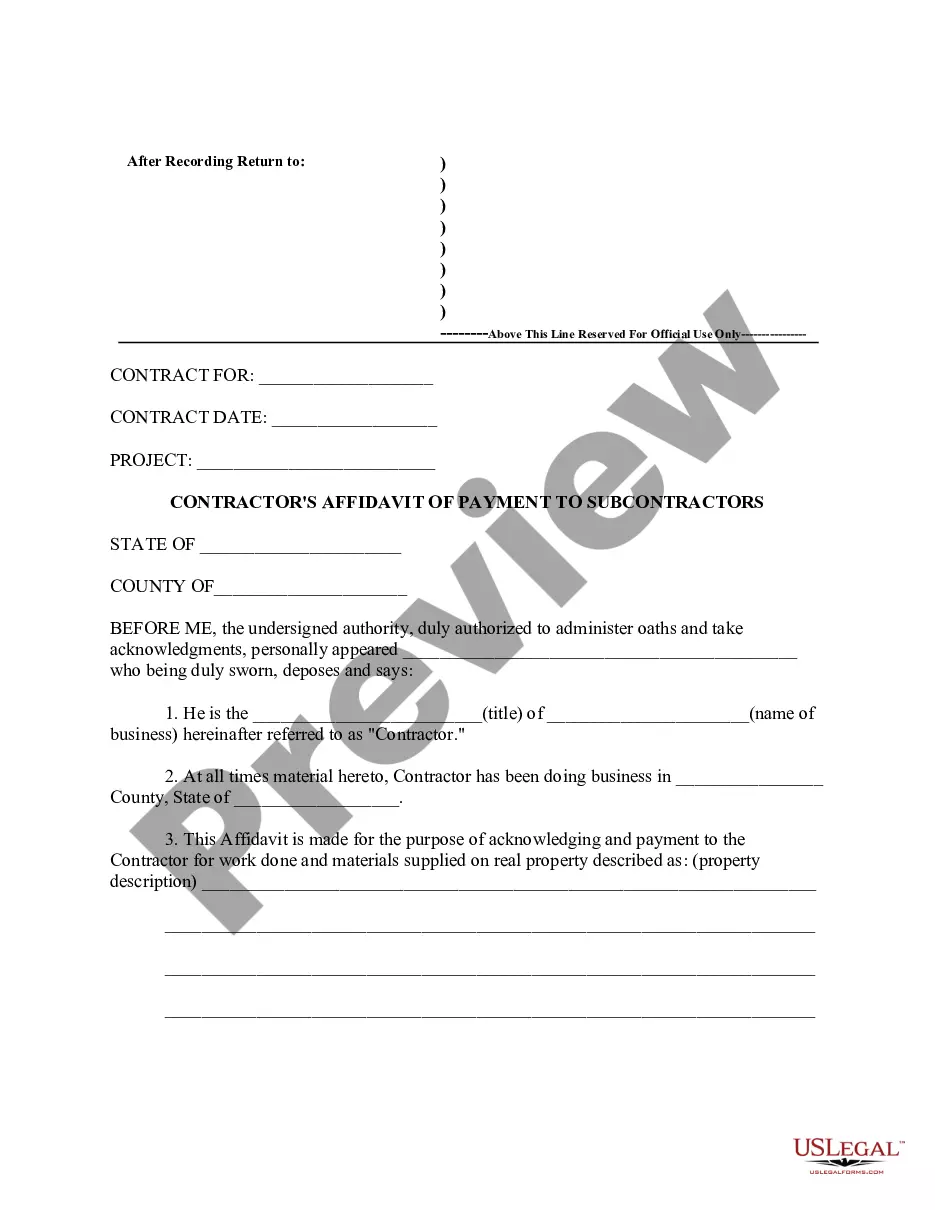
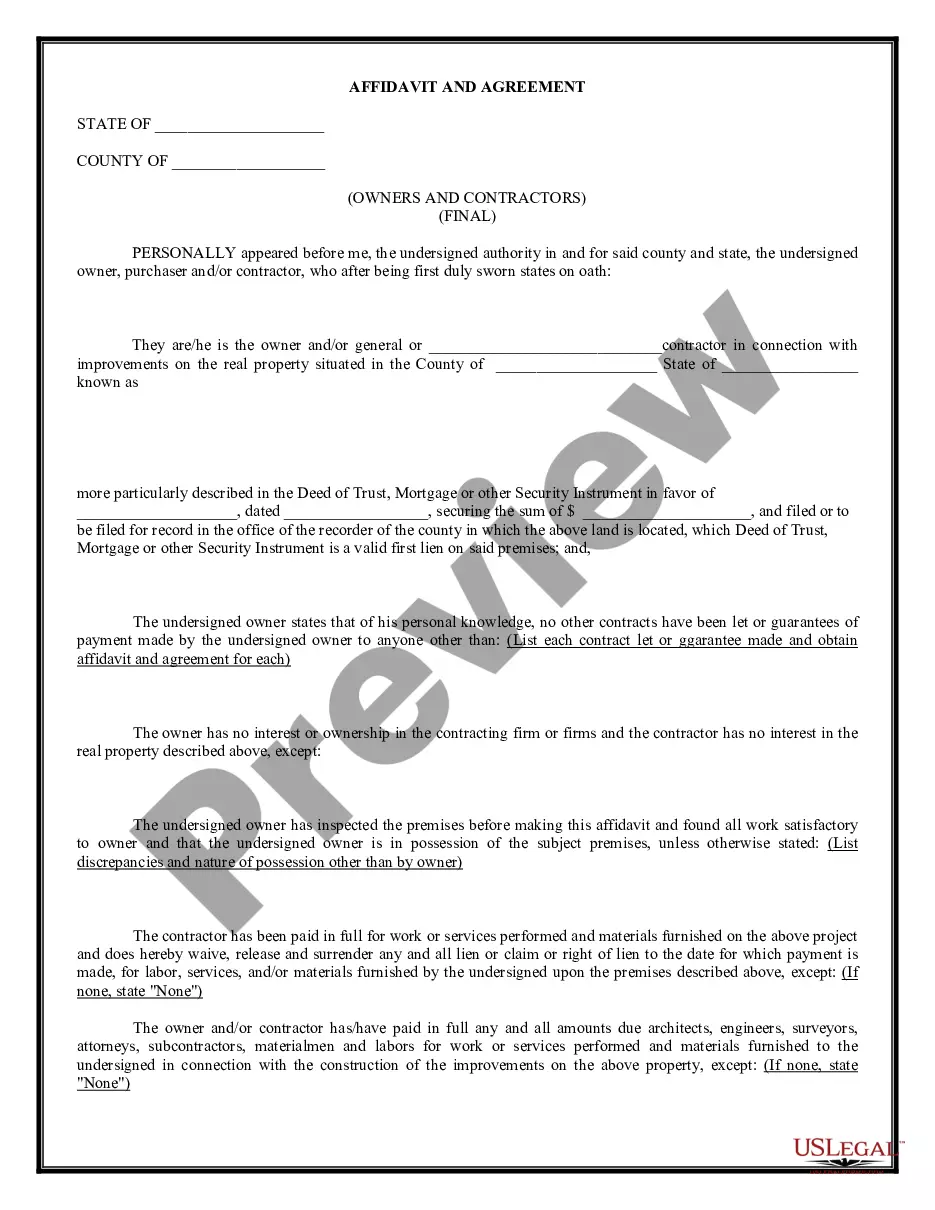
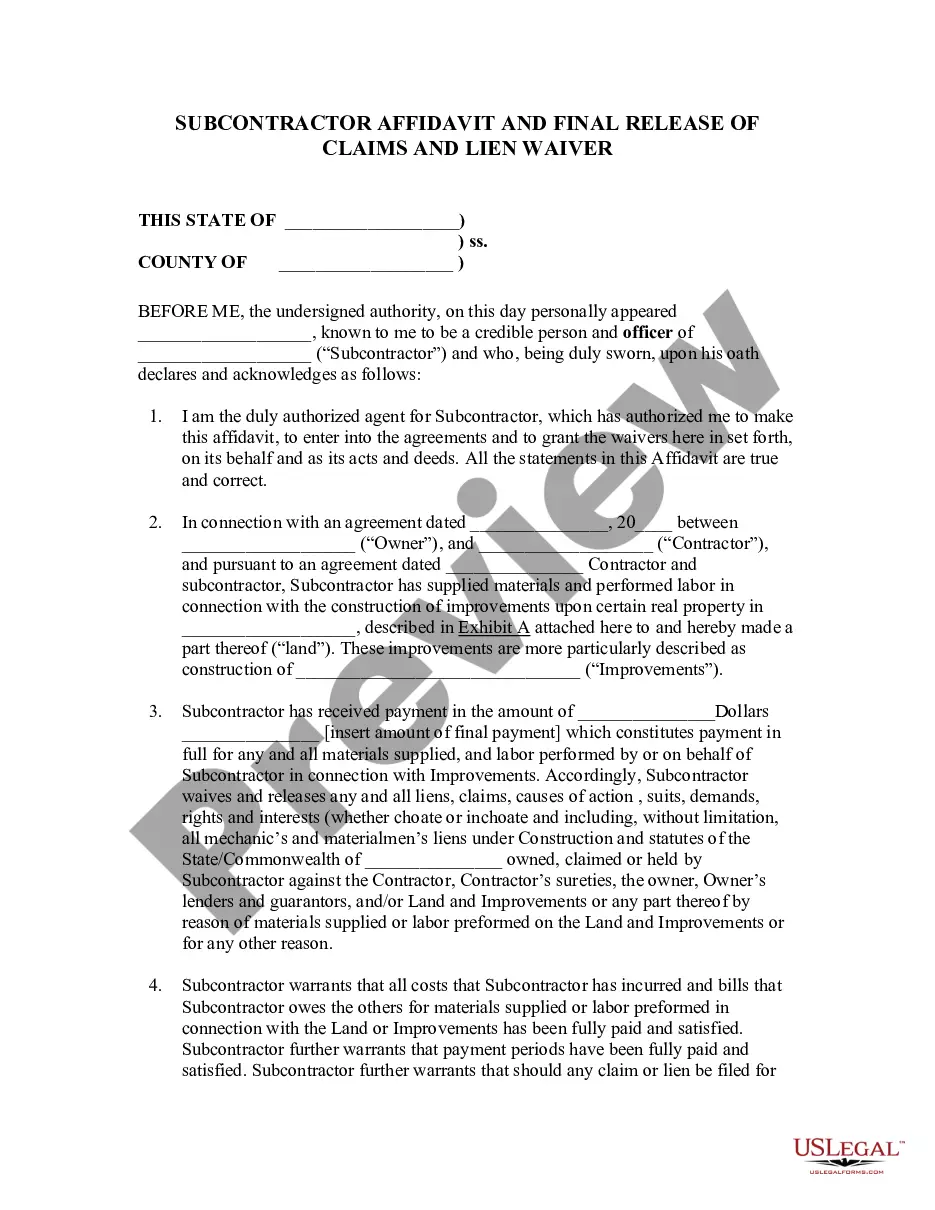
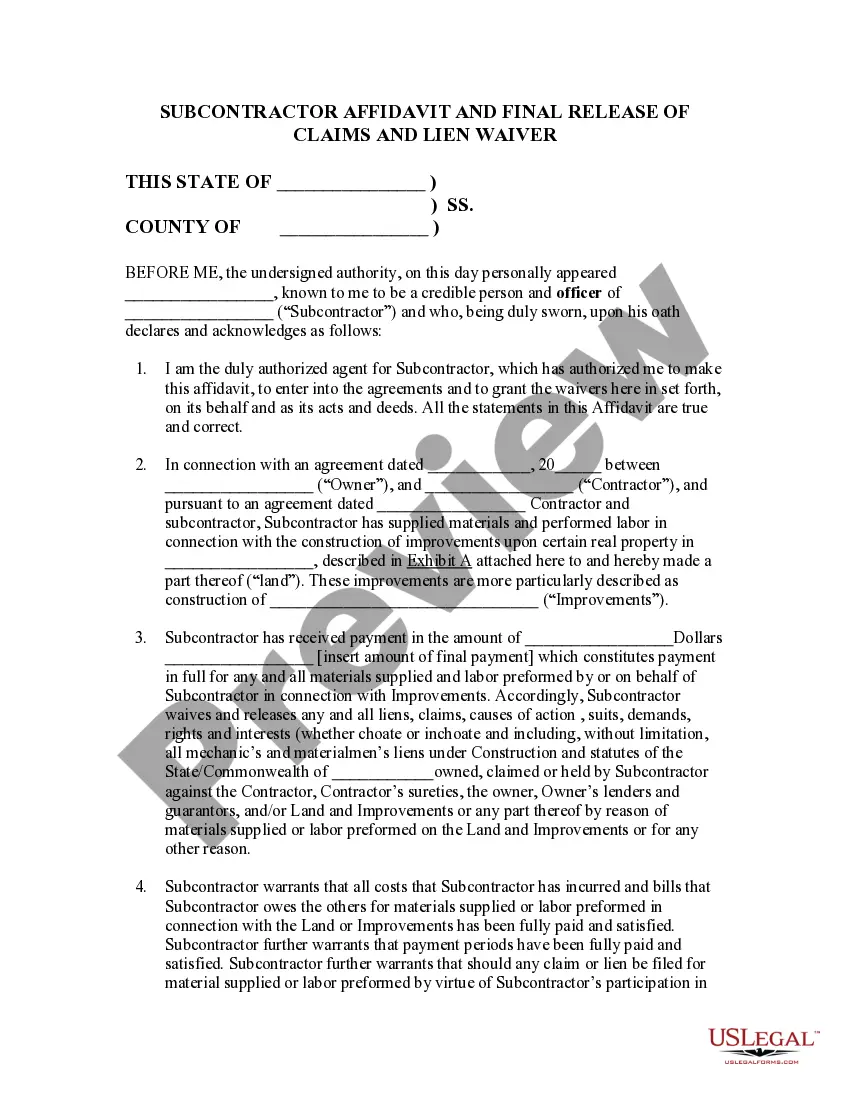
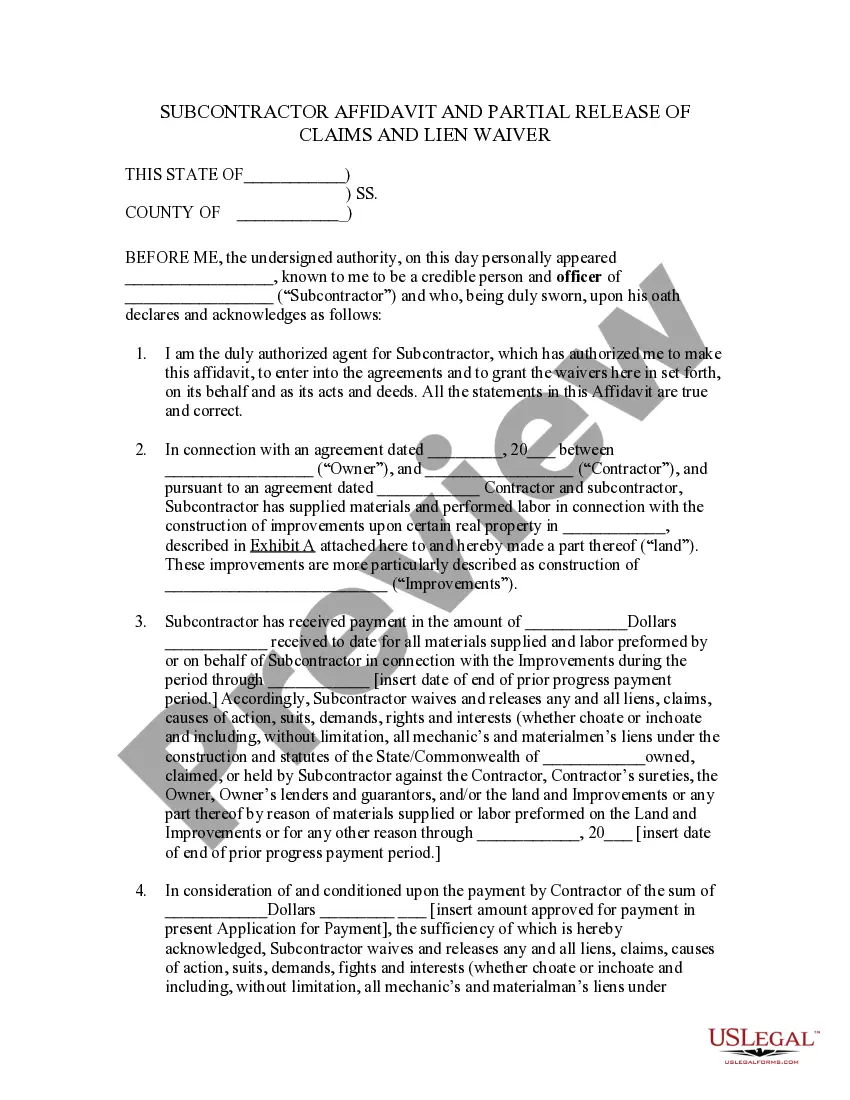
The subcontractor affidavit and release of claims and lien waiver is a legal document that allows subcontractors to formally waive their right to file a lien against a property in exchange for final payment. This form is signed by the subcontractor, confirming they have been compensated in full for labor and materials provided for a specific construction project. It differs from other forms by specifically addressing the waiver of lien rights, ensuring that all parties involved have a clear understanding of any potential claims related to the construction work performed.
Key parts of this document
- Identification of the subcontractor, owner, and contractor involved in the project.
- Description of the construction project, including location and improvements made.
- Statement confirming receipt of final payment and waiver of lien rights.
- Warranties regarding payment for all services and materials provided.
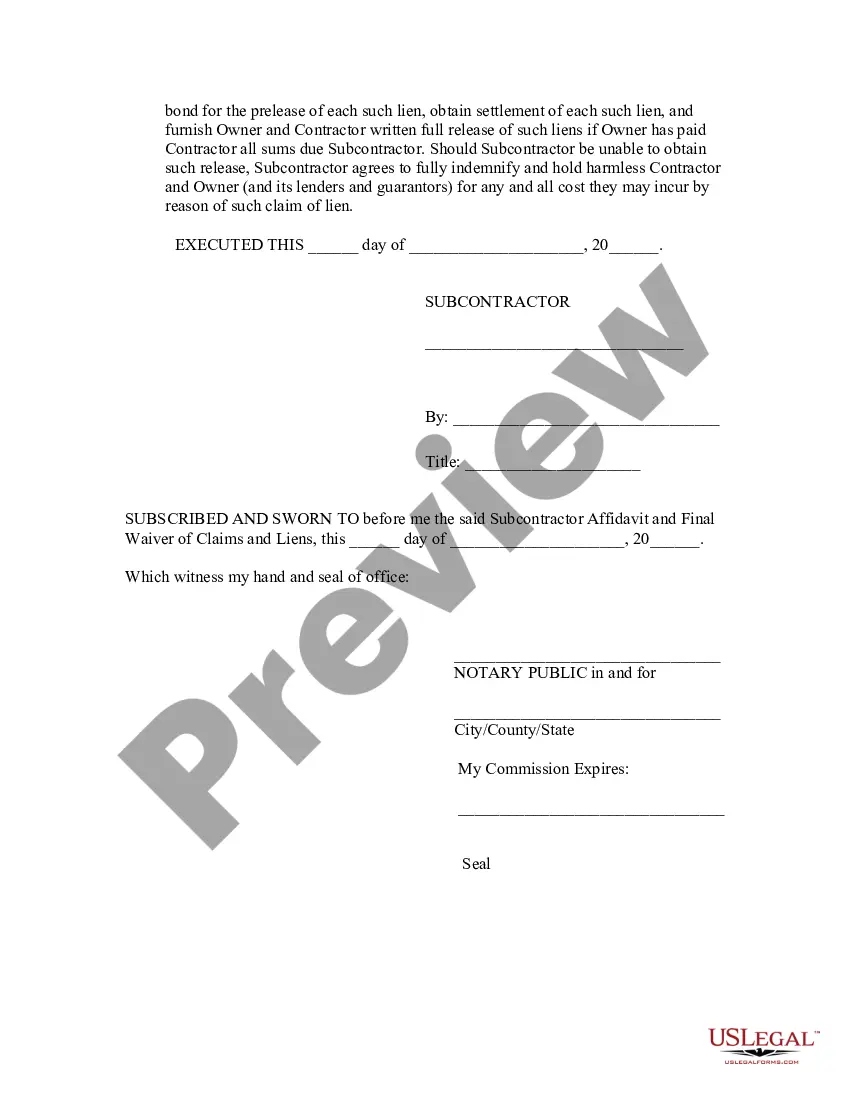
- Indemnification clause to protect the owner and contractor from future claims.
- Signature and notarization requirements for validating the affidavit.
Situations where this form applies
This form should be used when a subcontractor has completed their work on a construction project and has received their final payment. It is important for subcontractors to complete this form to prevent any future claims or liens that may arise from unpaid materials or labor. It is also essential for general contractors and property owners who wish to confirm that subcontractors have been paid in full and to protect their interests.
Who needs this form
- Subcontractors who have completed work on a project and received final payment.
- Contractors who need to ensure all subcontractors have waived their lien rights.
- Property owners who want to protect themselves against potential claims from subcontractors.
- Construction project managers overseeing the completion of projects with multiple subcontractors.
Instructions for completing this form
- Identify all parties involved: the subcontractor, owner, and contractor.
- Specify the project details, including the location and description of improvements.
- Enter the amount received as final payment and confirm it is payment in full.
- Review and sign the affidavit, including the title of the signatory.
- Obtain notarization to validate the form, as required.
Notarization guidance
Yes, this form must be notarized to be legally valid. Notarization adds an extra layer of assurance that the document is authentic and the signatory is indeed who they claim to be. With US Legal Forms, you have access to integrated online notarization services, available twenty-four seven, allowing you to complete the process securely via video call without needing to travel.
Get your form ready online
Our built-in tools help you complete, sign, share, and store your documents in one place.
Make edits, fill in missing information, and update formatting in US Legal Forms—just like you would in MS Word.
Download a copy, print it, send it by email, or mail it via USPS—whatever works best for your next step.
Sign and collect signatures with our SignNow integration. Send to multiple recipients, set reminders, and more. Go Premium to unlock E-Sign.
If this form requires notarization, complete it online through a secure video call—no need to meet a notary in person or wait for an appointment.
We protect your documents and personal data by following strict security and privacy standards.

Make edits, fill in missing information, and update formatting in US Legal Forms—just like you would in MS Word.

Download a copy, print it, send it by email, or mail it via USPS—whatever works best for your next step.

Sign and collect signatures with our SignNow integration. Send to multiple recipients, set reminders, and more. Go Premium to unlock E-Sign.

If this form requires notarization, complete it online through a secure video call—no need to meet a notary in person or wait for an appointment.

We protect your documents and personal data by following strict security and privacy standards.
Typical mistakes to avoid
- Failing to accurately enter the final payment amount.
- Not obtaining notarization, if required by local law.
- Leaving out essential project details, which could void the release.
- Signing the affidavit without verifying that all payments to suppliers and laborers have been made.
Why complete this form online
- Convenience of immediate access to a legally binding document.
- Editability to customize the form for specific project needs.
- Reliable templates that meet legal standards drafted by licensed attorneys.
- No need for physical paperwork; download and complete from any device.
What to keep in mind
- The subcontractor affidavit and release of claims and lien waiver is essential for protecting all parties involved in a construction project.
- This form confirms that the subcontractor has been paid in full and waives future claims.
- All necessary details must be accurately completed to ensure the document's validity.
Looking for another form?
Form popularity
FAQ
Filing a Florida mechanics lien As far as the deadline to file, the general rule is that the mechanics lien must be filed within 90 days from the last day they provided labor, services or materials to a construction or renovation project.
North Carolina lien waivers do not need to be notarized to be effective.
Who Can Claim A Lien On My Property? Contractors, laborers, materials suppliers, subcontractors and professionals such as architects, landscape architects, interior designers, engineers or land surveyors all have the right to file a claim of lien for work or materials.
Wisconsin has no requirement that a lien waiver must be notarized, but it must be written and signed by the lien claimant.
Once a subcontractor, sub-subcontractor, or material supplier has finished providing labor, services or materials, they will have up to 90 days to file a claim of lien, a copy of which must be served on the owner no later than 15 days after it has been recorded.
The lien laws in Florida explicitly require the property owner or the general contractor to file a notice of commencement.
Failure to have a written contract on such projects, will preclude an original contractor from filing a lien claim.
Subcontractors of any tier have mechanics lien rights On commercial projects, general contractors, subcontractors (of any tier), material suppliers, and laborers can file a mechanics lien if they aid in the improvement of real property.