Florida Contractor's Final Affidavit Form - Construction - Mechanic Liens - Individual
What is this form?
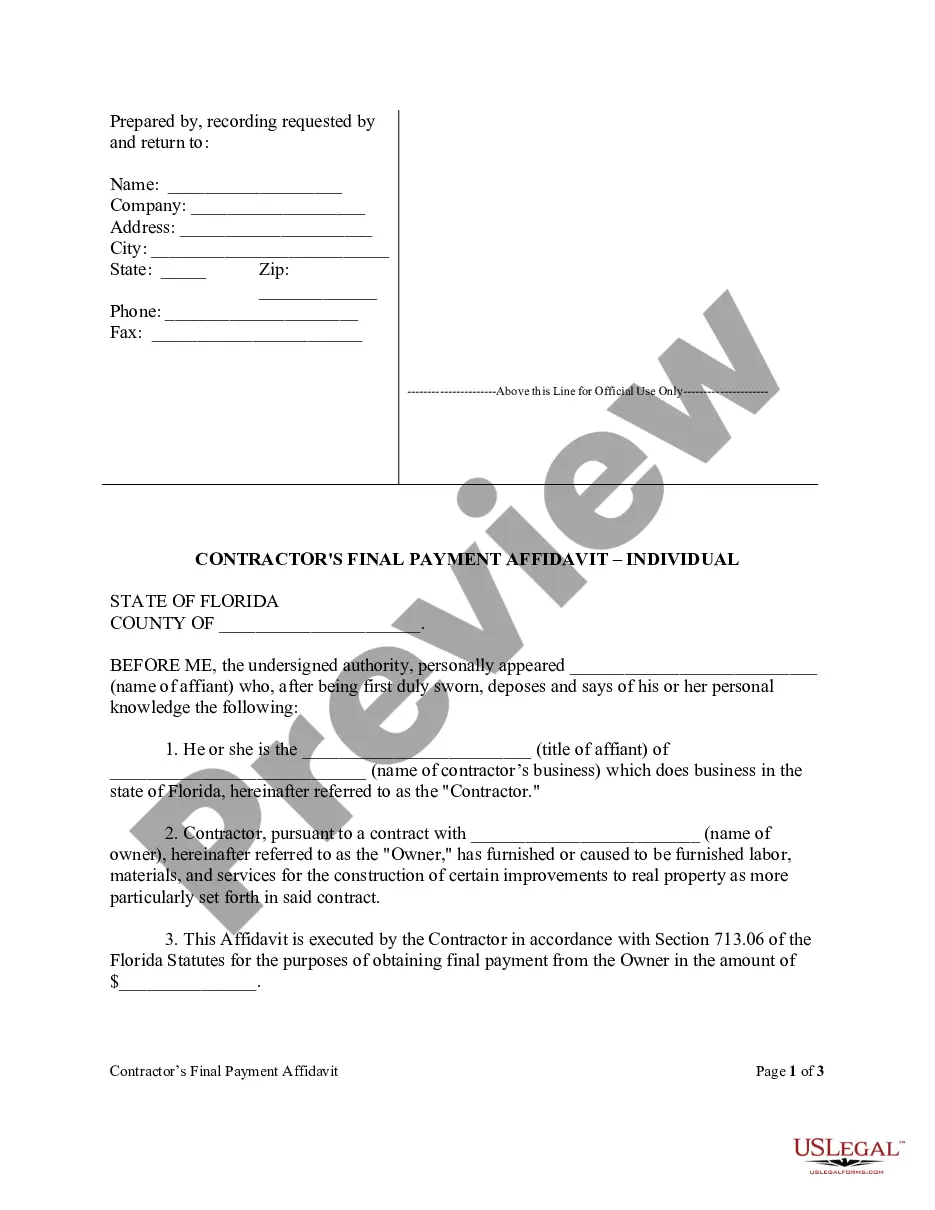
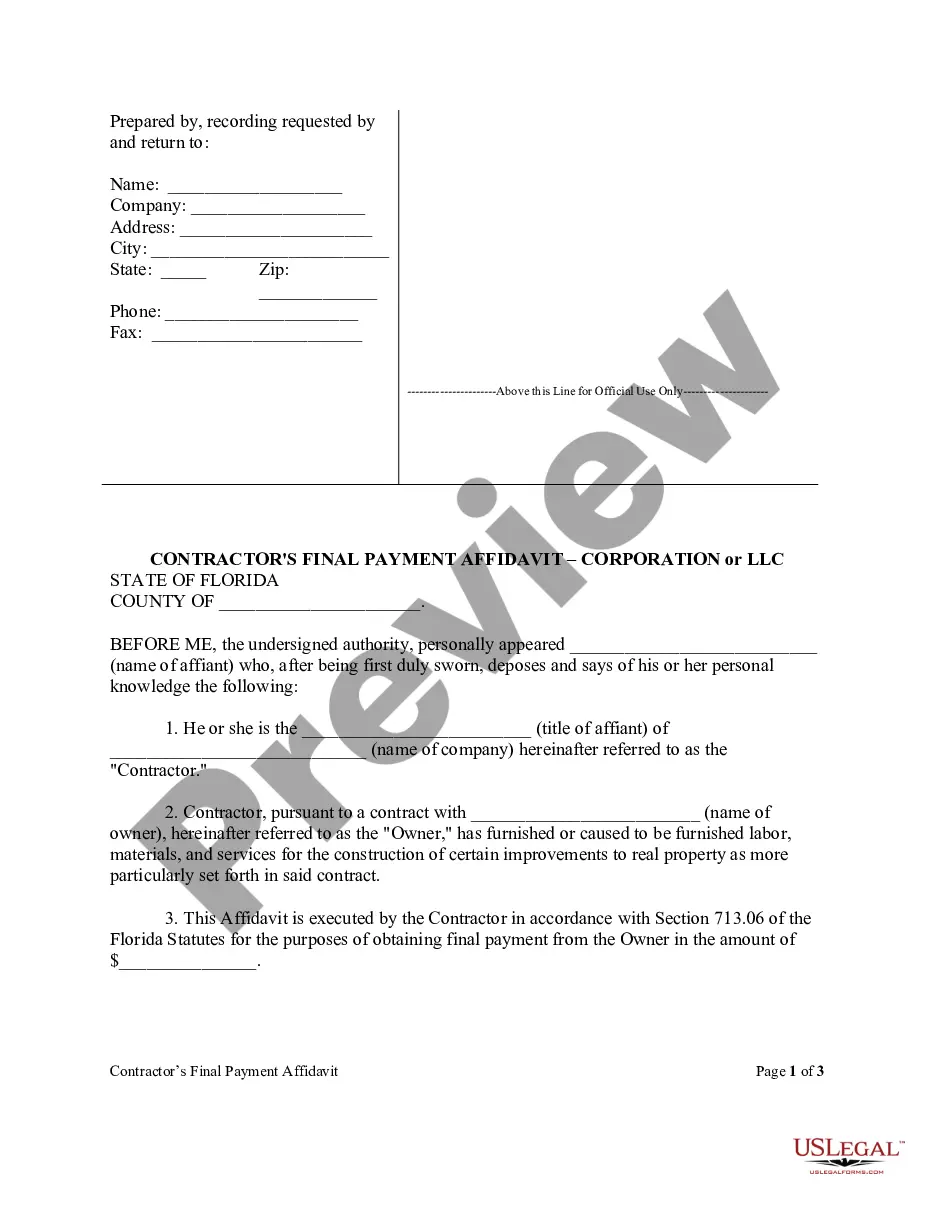
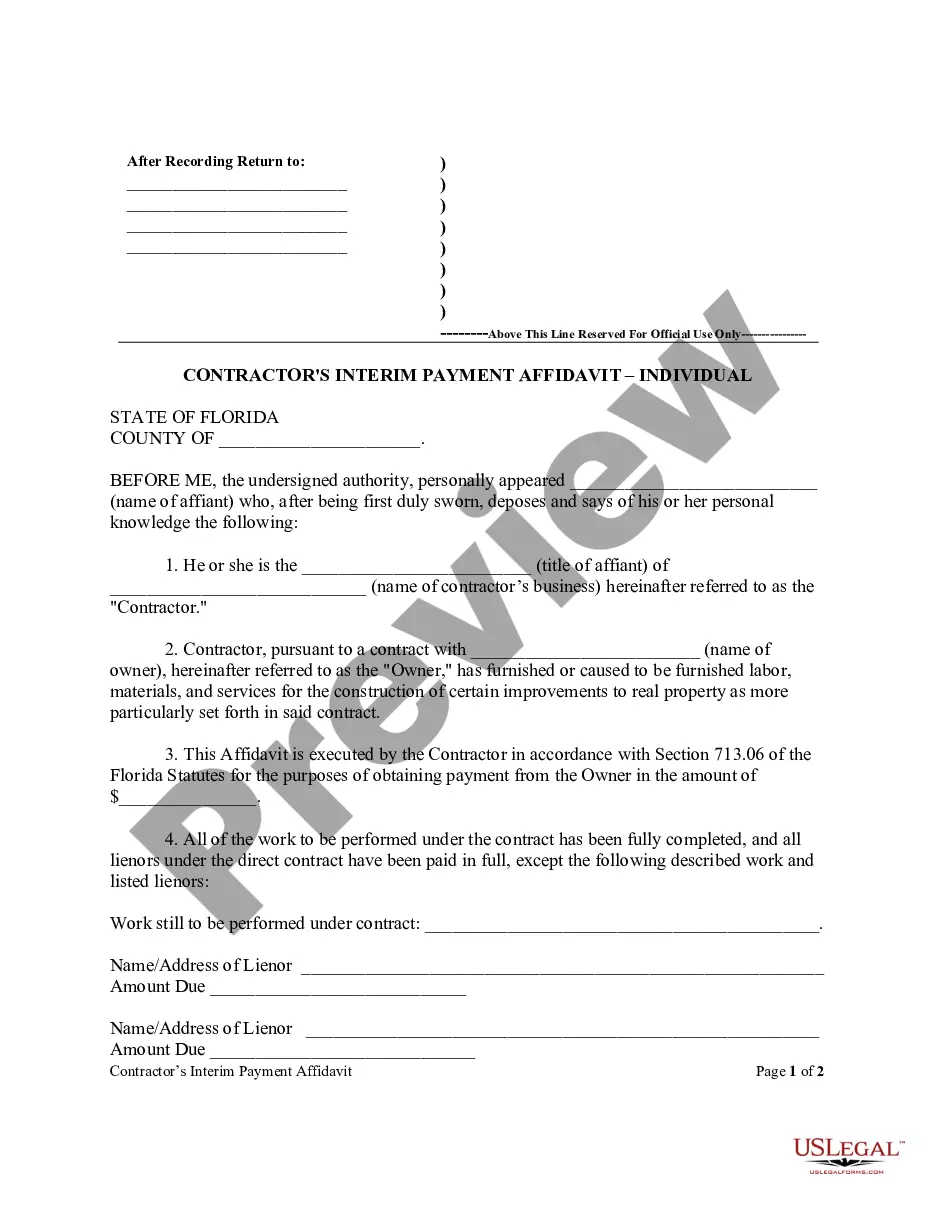
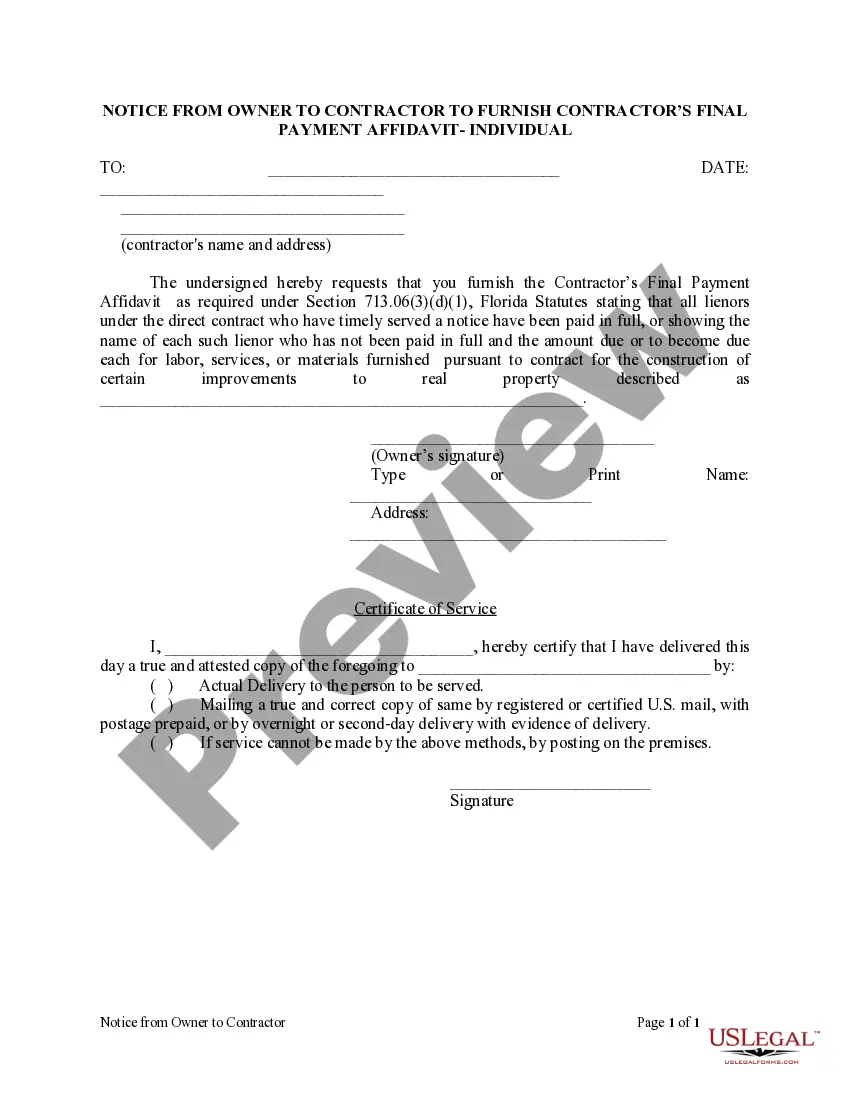
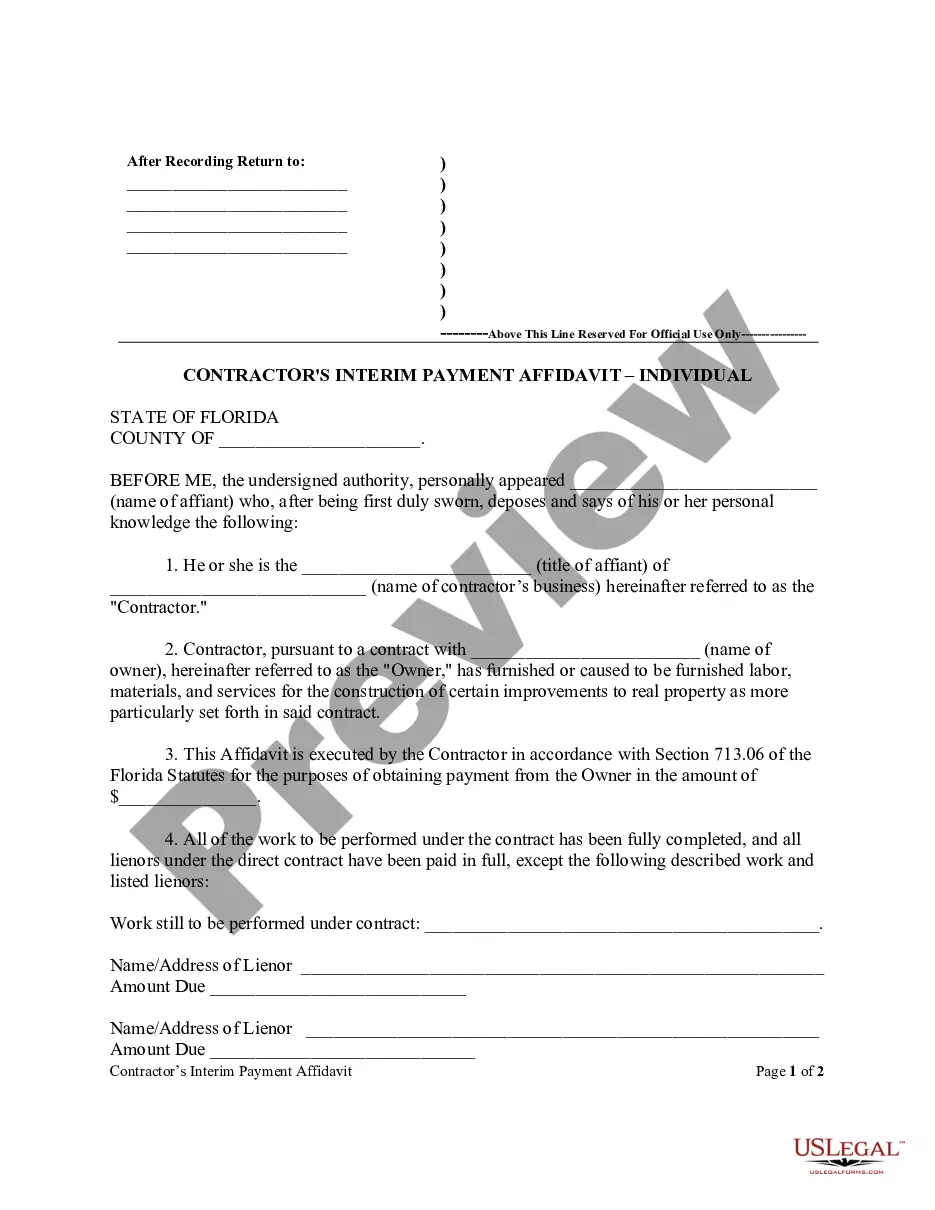
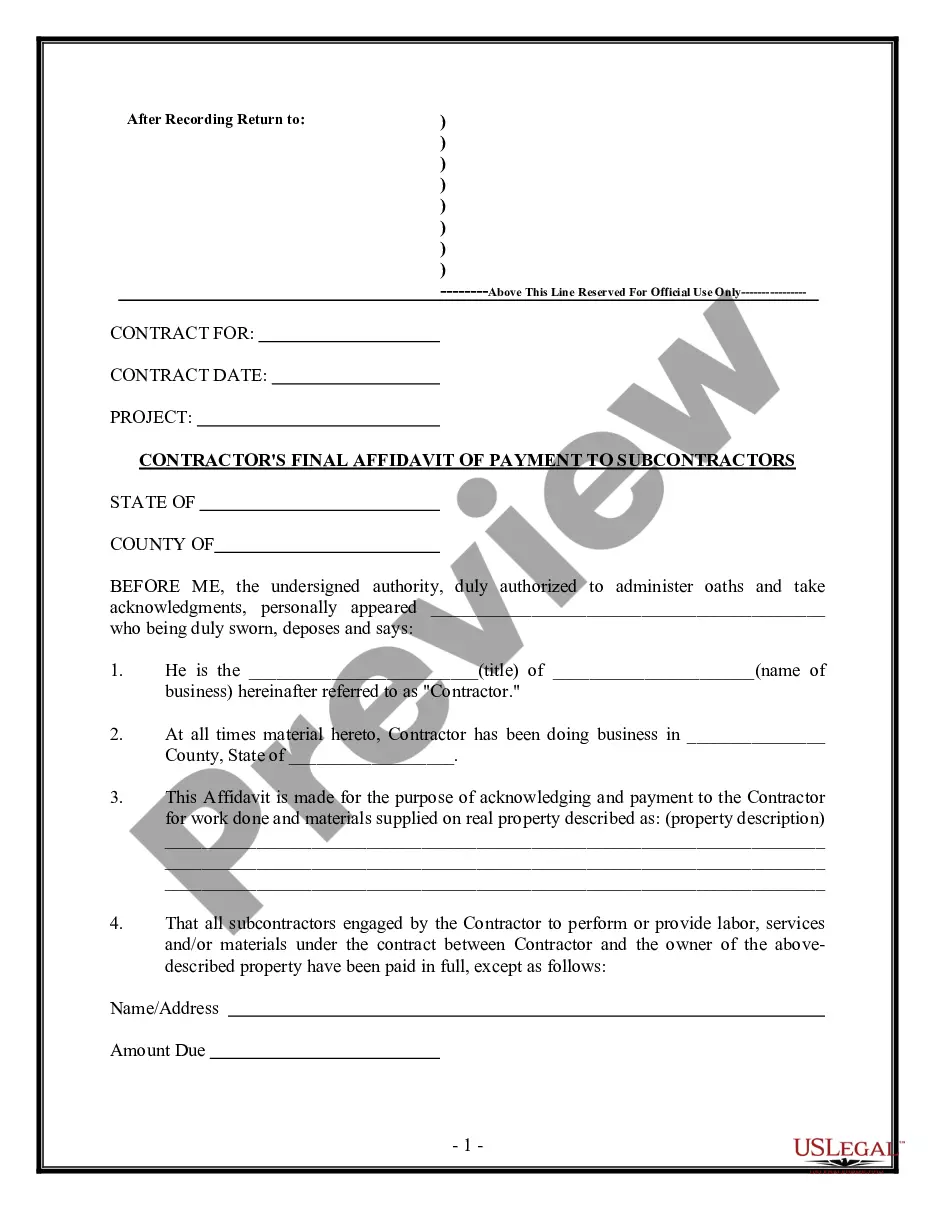
The Contractor's Final Affidavit Form is a legal document used by individual contractors in Florida to declare that all work under a construction contract has been completed and that all workers and suppliers have been fully paid. This form serves as a certification to the property owner before the final payment is made. Unlike other forms, this affidavit specifically outlines the contractor's obligations under the mechanic lien laws in Florida, ensuring that both the contractor and the owner are protected in the transaction.
Key parts of this document
- Name and contact information of the contractor.
- Title and business name of the contractor.
- Details of the contract with the property owner.
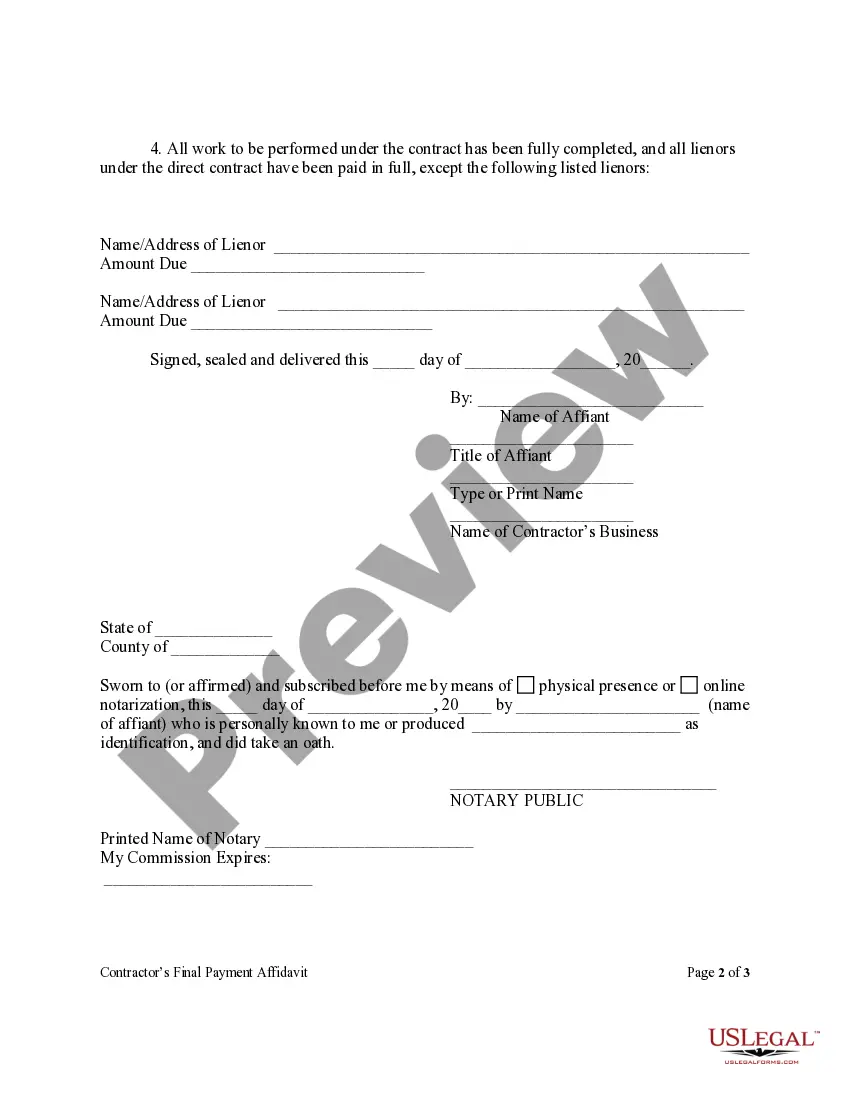
- Statement of all work completed and payments made to lienors.
- Liens due, if any, including names and amounts.
- Notary acknowledgment section.
When this form is needed
This form is typically used when a contractor has completed a construction project and is seeking final payment from the property owner. It is essential when the contractor needs to ensure that all debts related to the project have been settled to avoid potential mechanic liens. Use this affidavit when the contractor is ready to confirm fulfillment of their contractual obligations.
Who can use this document
- Individual contractors working on construction projects in Florida.
- Contractors who are finalizing payments with property owners.
- Contractors who have regulated contracts with ownership agreements.
Completing this form step by step
- Identify all parties involved by filling in the names, titles, and contact information.
- Detail the contract specifics, including the name of the owner and the project description.
- Clearly state the total amount due for final payment.
- List any lienors that have not been fully paid, including their names and amounts due.
- Ensure that the affidavit is signed in front of a notary public to validate the document.
Is notarization required?
This form needs to be notarized to ensure legal validity. US Legal Forms provides secure online notarization powered by Notarize, allowing you to complete the process through a verified video call, available anytime.
Get your form ready online
Our built-in tools help you complete, sign, share, and store your documents in one place.
Make edits, fill in missing information, and update formatting in US Legal Forms—just like you would in MS Word.
Download a copy, print it, send it by email, or mail it via USPS—whatever works best for your next step.
Sign and collect signatures with our SignNow integration. Send to multiple recipients, set reminders, and more. Go Premium to unlock E-Sign.
If this form requires notarization, complete it online through a secure video call—no need to meet a notary in person or wait for an appointment.
We protect your documents and personal data by following strict security and privacy standards.

Make edits, fill in missing information, and update formatting in US Legal Forms—just like you would in MS Word.

Download a copy, print it, send it by email, or mail it via USPS—whatever works best for your next step.

Sign and collect signatures with our SignNow integration. Send to multiple recipients, set reminders, and more. Go Premium to unlock E-Sign.

If this form requires notarization, complete it online through a secure video call—no need to meet a notary in person or wait for an appointment.

We protect your documents and personal data by following strict security and privacy standards.
Mistakes to watch out for
- Failing to include all lienors or amounts due.
- Not signing the document in the presence of a notary.
- Leaving out crucial details about the project or contract.
- Submitting the affidavit without confirming that all payments have been made.
Why use this form online
- Immediate access to a professionally drafted legal form.
- The convenience of filling out the form from any device.
- Editable fields to customize the affidavit to specific needs.
- Secure storage and easy download options for your records.
Looking for another form?
Form popularity
FAQ
It is a Florida-specific sworn document used by an individual contractor to certify that all work under a construction contract is complete and that all workers and suppliers have been paid. Filed before final payment, it protects both owner and contractor by detailing contract details, work completed, payments to lienors, and any due liens, with a notary acknowledgment.
Used when final payment is due on a Florida project, the Contractor's Final Affidavit Form records the contract, confirms that the work is completed, verifies that lienors have been paid, and includes the contractor’s name, title, and business name along with a notary acknowledgment. This helps prevent undisclosed liens and confirms compliance before final payment.
Florida affidavits typically must be sworn statements and notarized. The Florida Contractor's Final Affidavit Form requires the contractor’s name and contact information, title and business name, contract details, a statement of work completed and payments made to lienors, any liens due, and a notary acknowledgment, ensuring accuracy and enforceability under state rules.
While this form documents completion and payment status before final payment, it is not itself a lien release. If a mechanic lien already exists, separate action under Florida law is typically required to resolve or remove the lien. The form’s purpose is to minimize future lien risk by confirming obligations are met.
The form does not set deadlines for contesting liens. Florida mechanics lien law governs enforcement timelines. The form is used to certify completion and payment status to reduce the likelihood of liens and to facilitate final payment once obligations are satisfied. Consult a licensed attorney for specific deadlines.
This form is specifically for individual contractors (not a corporate version) and includes fields for the contractor’s name, contact information, title, and business name, plus a notary acknowledgment. It targets Florida’s mechanic lien framework and final payment process for individuals, protecting both owner and contractor during the final payment.