Photo Release Form for Employees
What is this form?
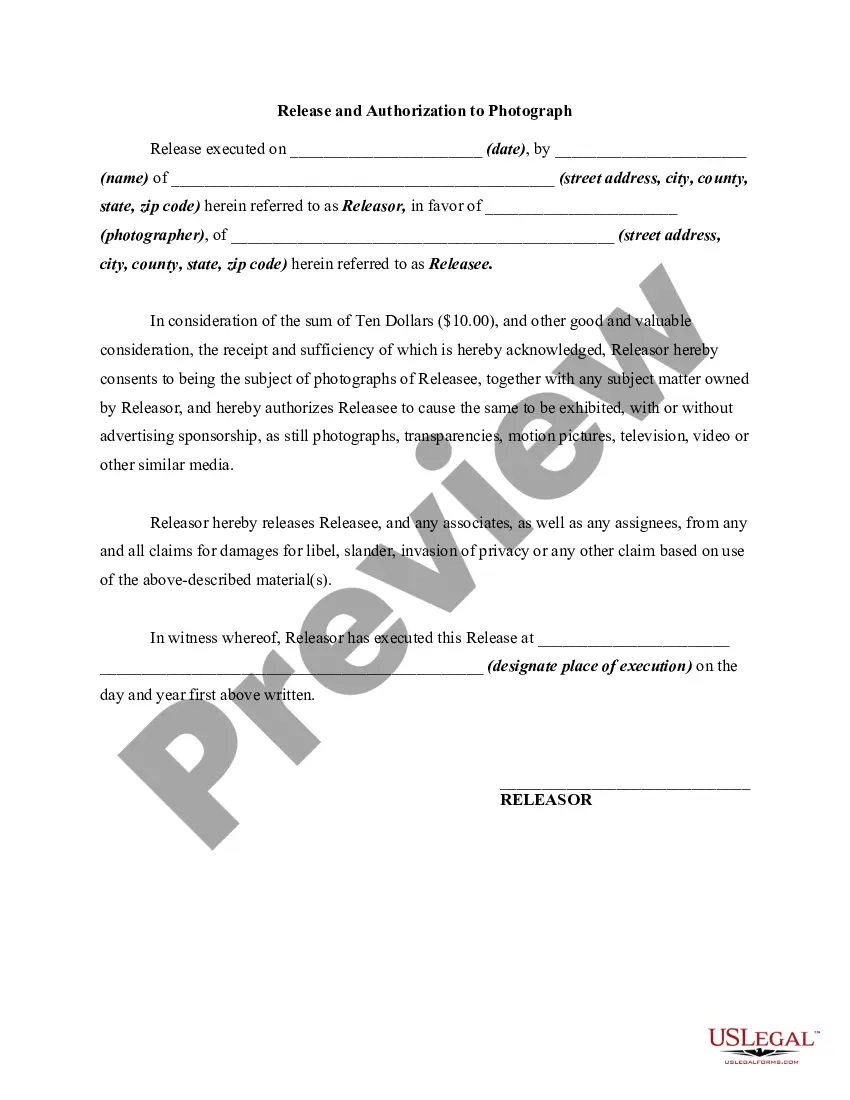
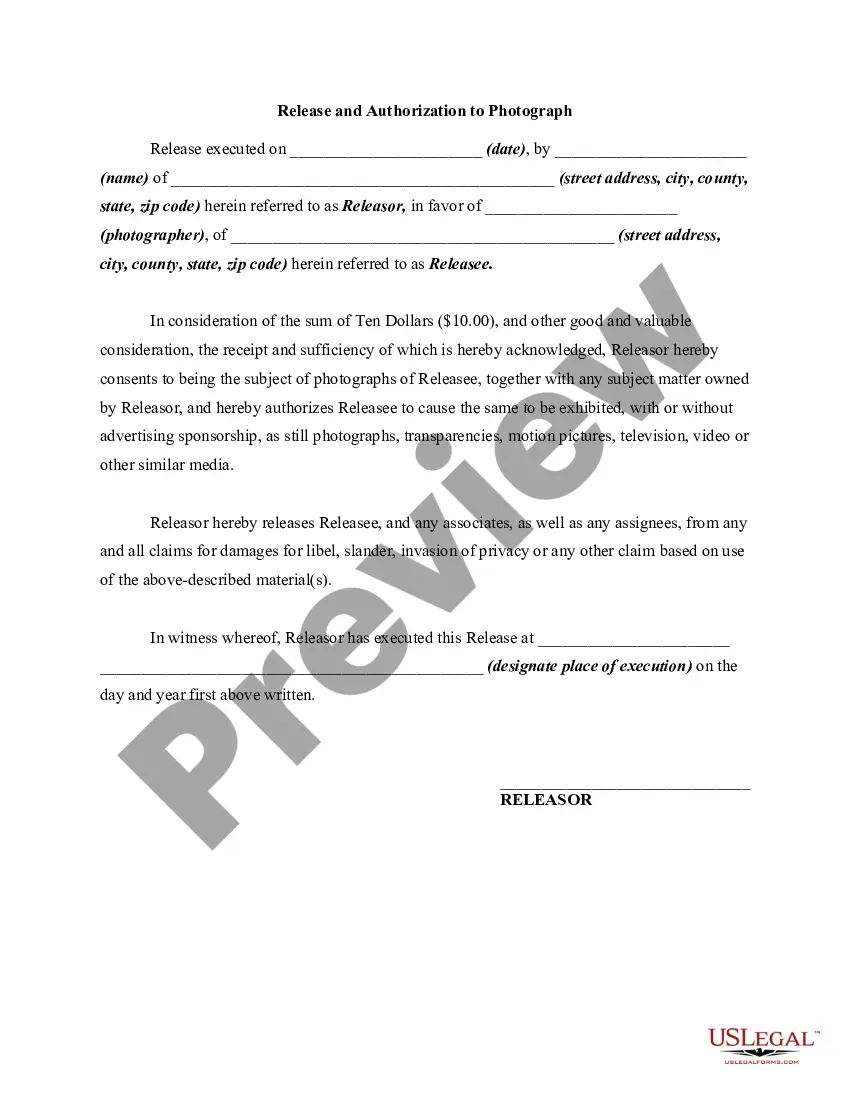
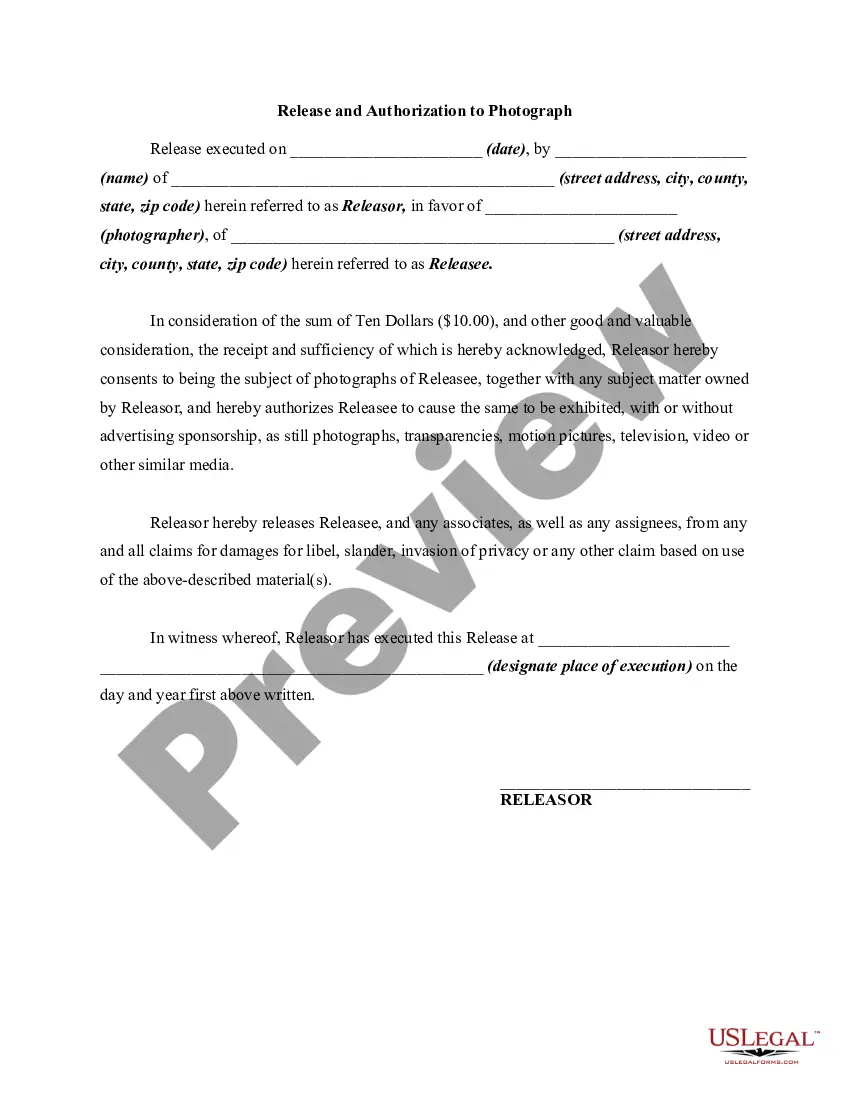
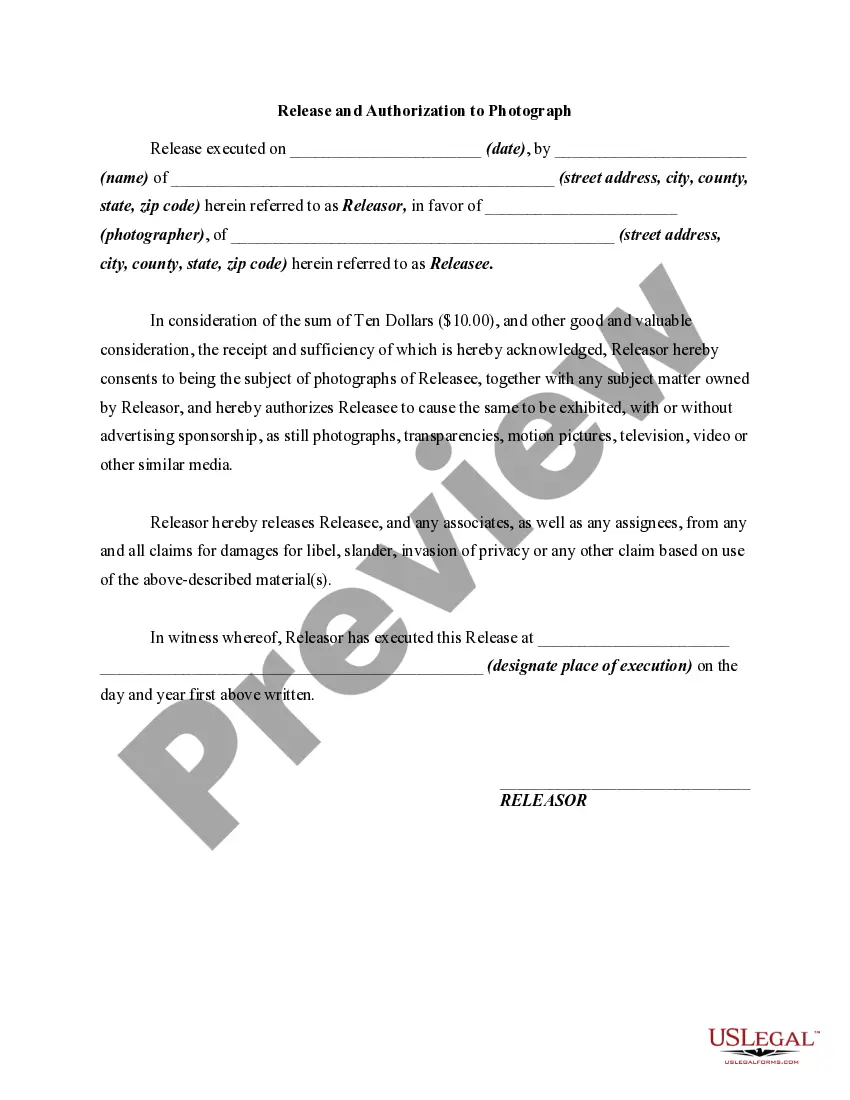
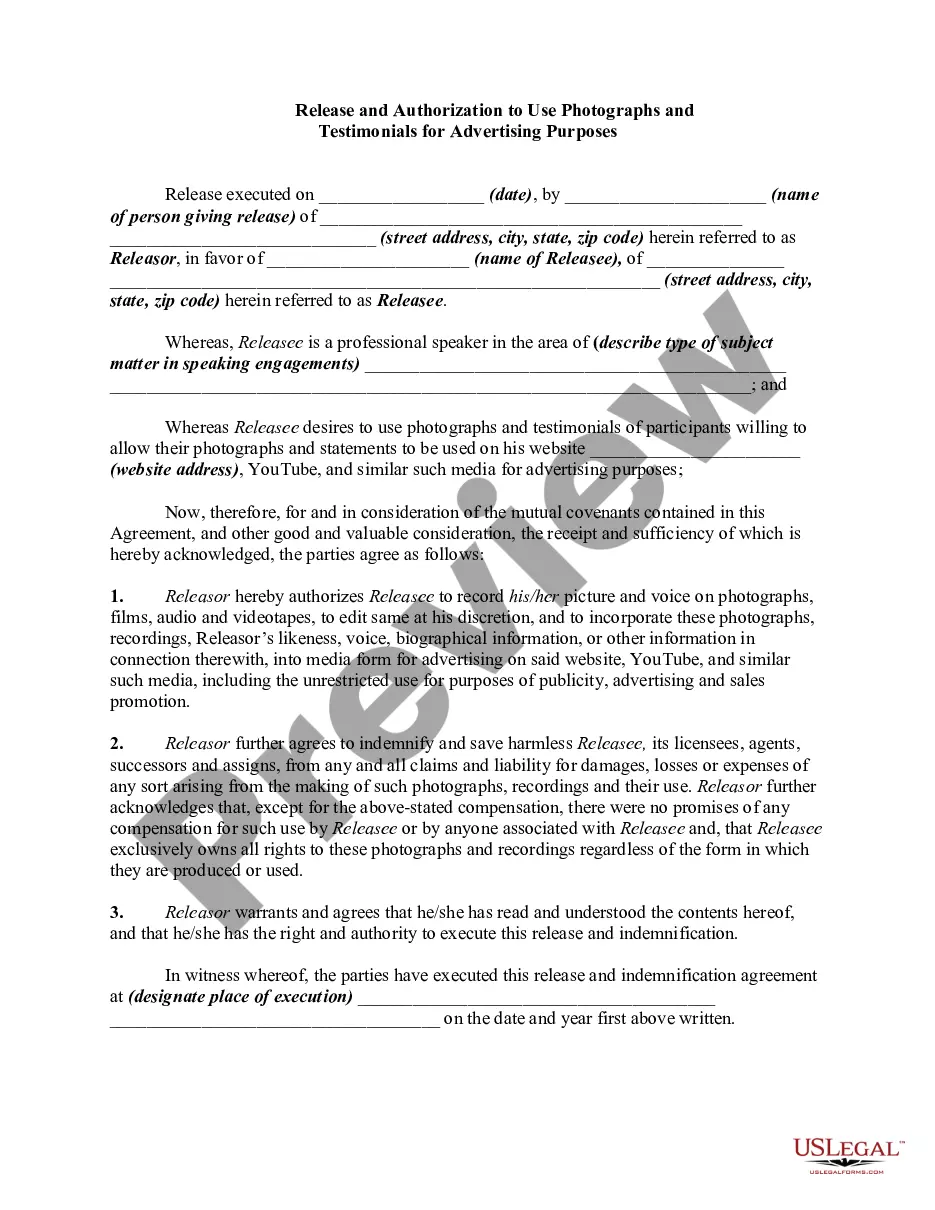
The Photo Release Form for Employees is a legal document that allows an employer to obtain permission from an employee to take and use their photographs for various purposes, such as advertising or promotional materials. This form is essential for ensuring that the employee understands their rights regarding the use of their image, as well as protecting the employer from potential legal claims related to the use of the photographs.
Main sections of this form
- Name and address of the employee giving permission.
- Name of the employer and their corporate details.
- Consent for the employer to take and use the employee's photographs.
- A statement waiving the right to inspect or approve the use of photographs.
- Release of liability for any claims related to image use.
- Signatures of the employee and witnesses, along with the date.

Common use cases
This form should be used when an employer plans to photograph employees for promotional or marketing purposes. It is particularly important when the employer wishes to use the images for purposes beyond internal use, including publications, social media, or advertisements. Having this form signed ensures that both parties are protected and aware of the intended use of the photographs.
Who should use this form
- Employers who require images of employees for marketing or advertising.
- Human resources departments managing employee policies.
- Employees who need to understand their rights concerning the use of their images.
- Photographers hired by employers who need consent documentation.
Steps to complete this form
- Identify the employee by entering their full name and address.
- Insert the name of the employer and their corporate information.
- Provide clear consent regarding the purpose of the photographs and the rights being waived.
- Have the employee sign the form along with the date.
- Ensure witnesses sign and print their names and dates as well.
Notarization requirements for this form
This form does not typically require notarization unless specified by local law. It is important to check if your jurisdiction requires additional notarization for the form to be legally valid.
Get your form ready online
Our built-in tools help you complete, sign, share, and store your documents in one place.
Make edits, fill in missing information, and update formatting in US Legal Forms—just like you would in MS Word.
Download a copy, print it, send it by email, or mail it via USPS—whatever works best for your next step.
Sign and collect signatures with our SignNow integration. Send to multiple recipients, set reminders, and more. Go Premium to unlock E-Sign.
If this form requires notarization, complete it online through a secure video call—no need to meet a notary in person or wait for an appointment.
We protect your documents and personal data by following strict security and privacy standards.

Make edits, fill in missing information, and update formatting in US Legal Forms—just like you would in MS Word.

Download a copy, print it, send it by email, or mail it via USPS—whatever works best for your next step.

Sign and collect signatures with our SignNow integration. Send to multiple recipients, set reminders, and more. Go Premium to unlock E-Sign.

If this form requires notarization, complete it online through a secure video call—no need to meet a notary in person or wait for an appointment.

We protect your documents and personal data by following strict security and privacy standards.
Typical mistakes to avoid
- Forgetting to include witness signatures, which may make the form invalid.
- Leaving out key details about the purpose of the photographs.
- Not providing a clear understanding of the employee's rights regarding the use of their images.
- Failing to check if state-specific requirements apply.
Benefits of using this form online
- Convenient access to a legally sound document.
- Editability allows for customization to fit specific employer needs.
- Reliable and secure process for obtaining employee consent.
- Instant availability helps to streamline workflows in human resources.
Looking for another form?
Form popularity
FAQ
The Photo Release Form for Employees is a standard release that lets an employer obtain written permission to use an employee’s image in company materials and media. Use it whenever employees’ photos will appear in marketing, websites, training materials, or internal communications. It is designed for multi-state use and typically defines the scope of permitted uses and requires the employee’s signature.
Yes. When an employer plans to publish or share an employee’s photo beyond internal contexts, a photo release is usually needed. This form provides written consent from the employee, documenting permission for the employer to use the image in permitted materials and outlets.
A photo release form should clearly state that the employee consents to the employer’s use of their image and describe the general types of materials or channels where the image may appear (e.g., marketing, website, training). It should identify the parties, the scope of use, and the date or duration of the release.
It should convey that the employee consents to the employer’s use of their photograph for specified purposes, in specified media, by the employer or its assigns. It should be signed and dated by the employee, with clear acknowledgement of the release terms and any limitations on use.
Use clear, straightforward language that states the employee’s consent to the employer’s use of their image for defined purposes and media. Avoid legal jargon; specify the parties, the permitted uses, and the duration of the release, and obtain a dated signature to document consent.
It focuses on an employment context, aligning consent with the employer’s use of employee images across typical work-related materials. It’s intended for multi-state workplaces and emphasizes the employee relationship, rather than third-party or public usage alone.