Idaho Guaranty Attachment to Lease for Guarantor or Cosigner
What this document covers
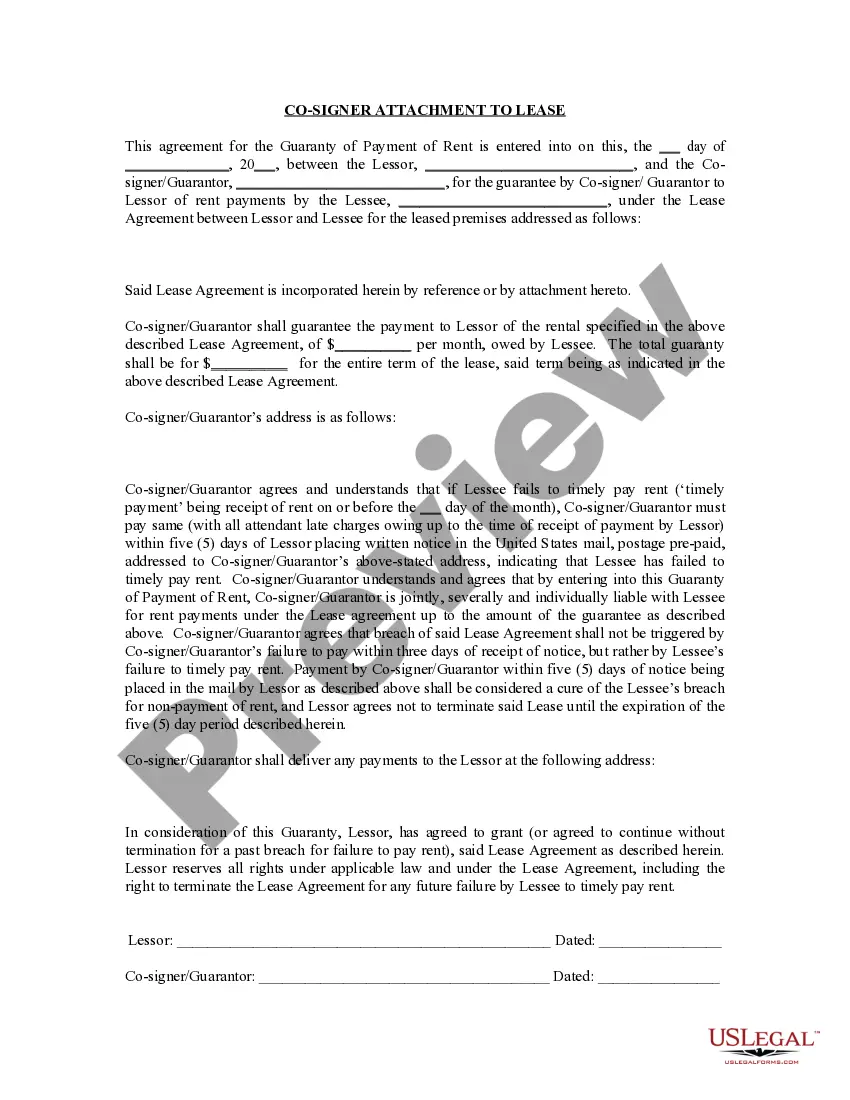
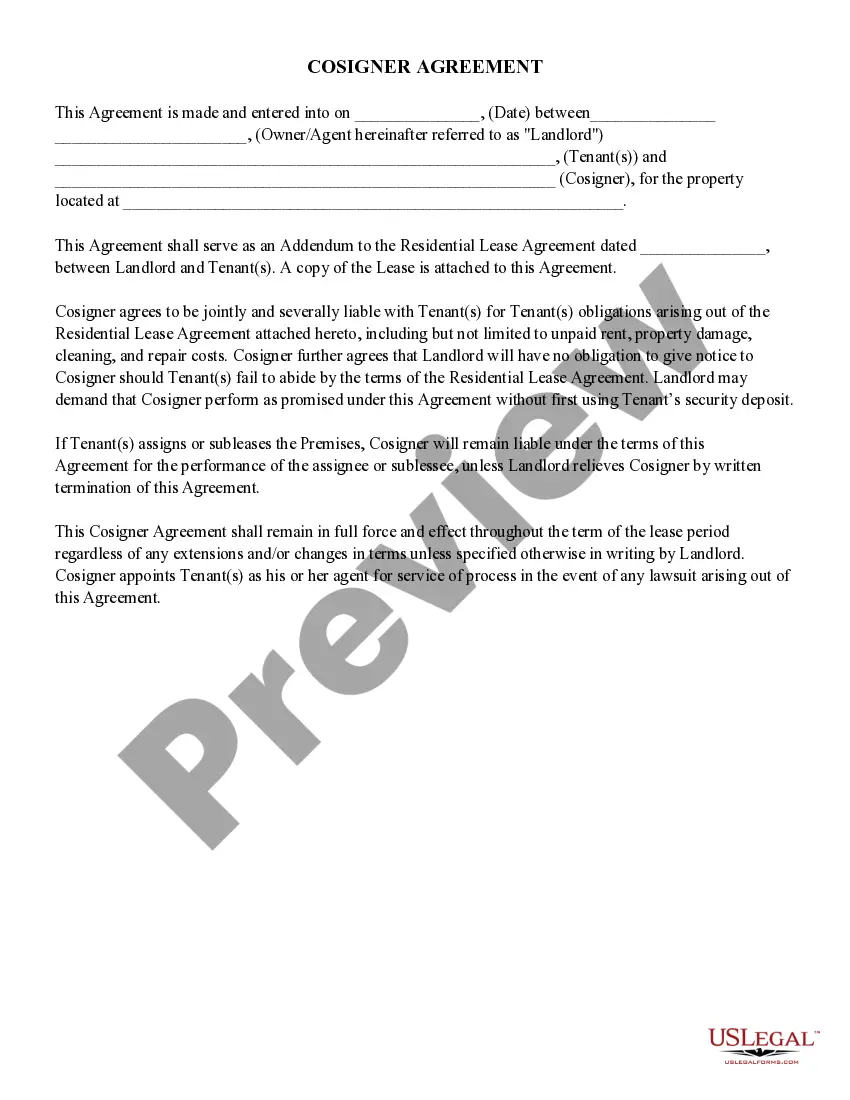
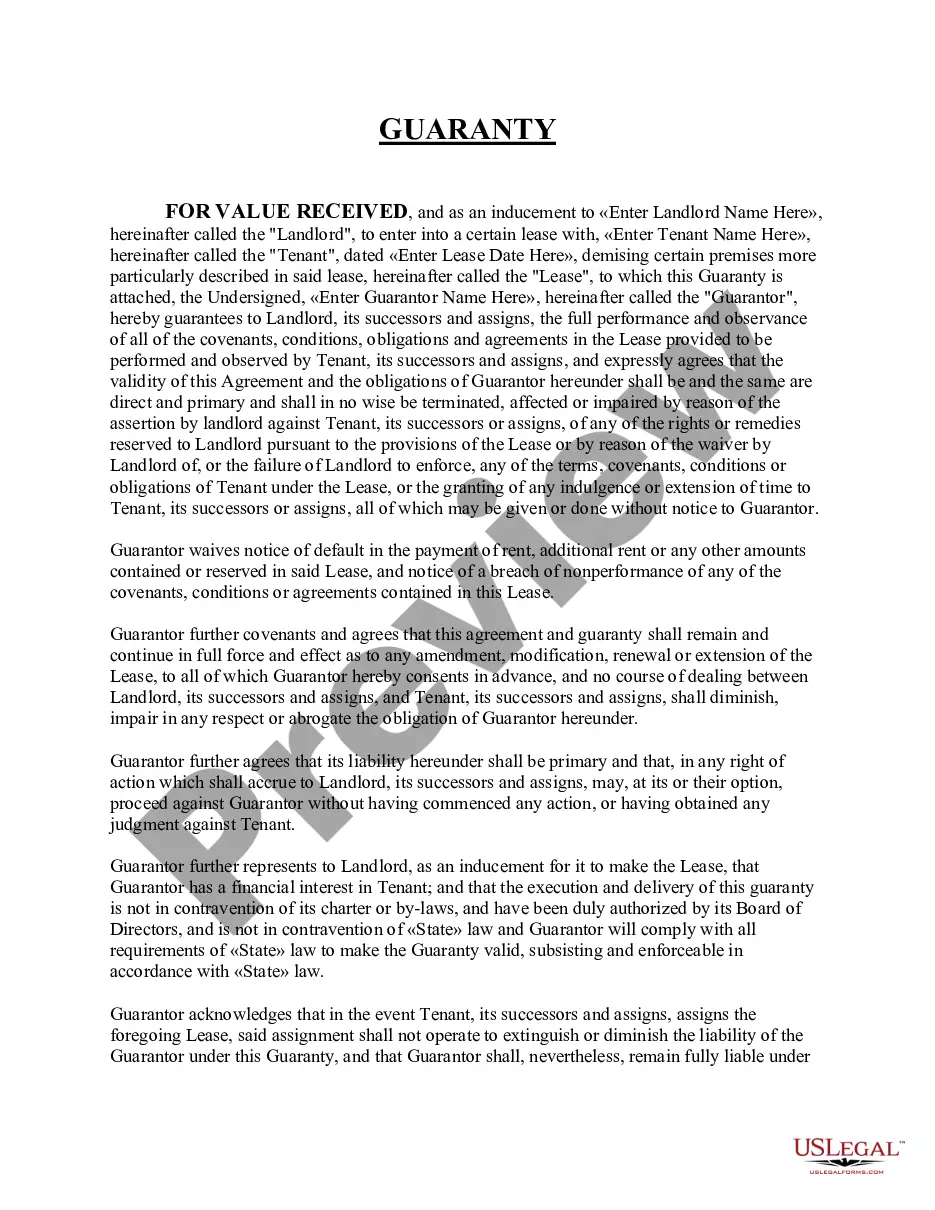
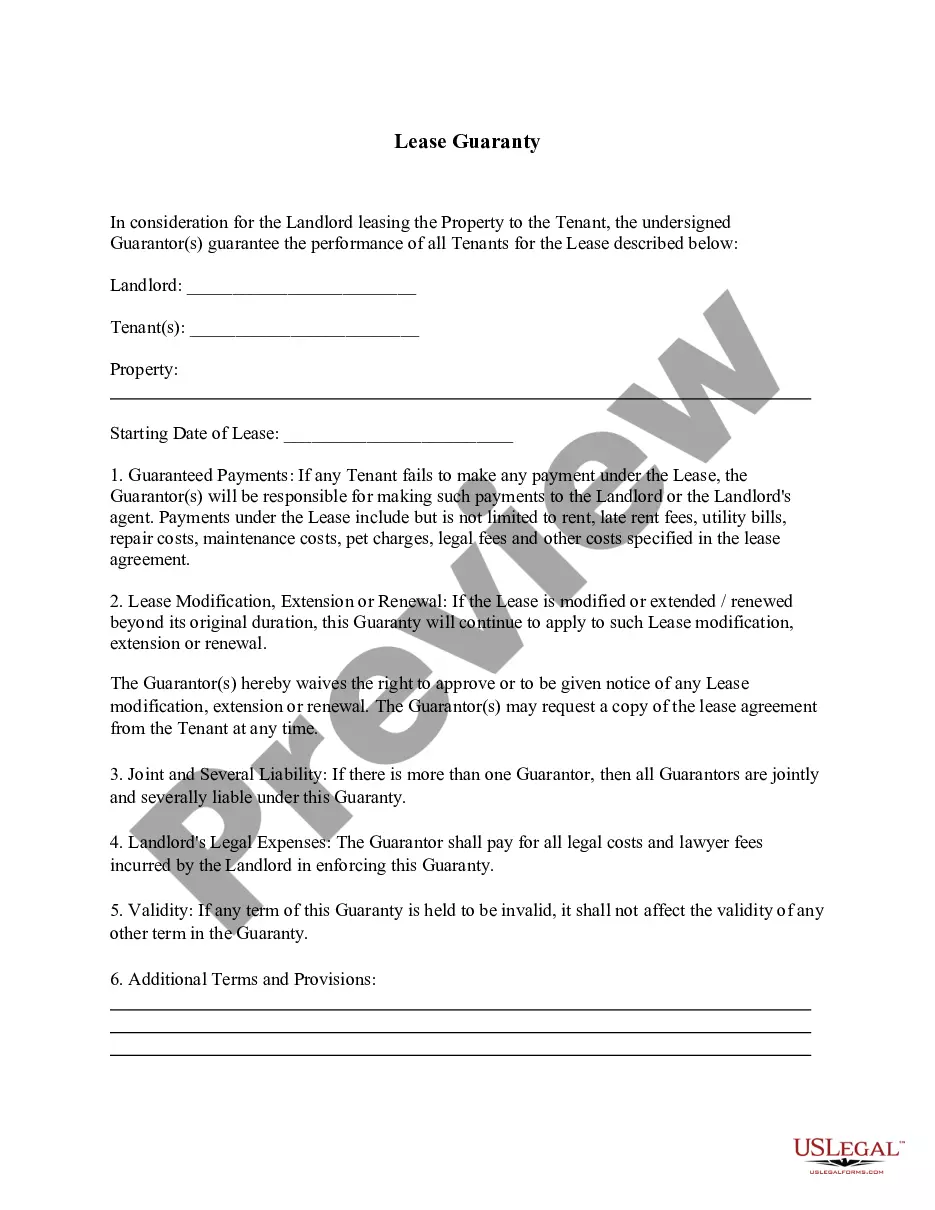
The Guaranty Attachment to Lease for Guarantor or Cosigner is a legal document where a third party agrees to co-sign a lease. This third party, known as the guarantor, commits to ensuring the payment of rent if the tenant fails to do so. Unlike a lease agreement, which binds the tenant and landlord, this form specifically outlines the financial responsibilities of the guarantor, providing additional security to the lessor.
Key parts of this document
- Co-signer/Guarantor's address: Required to identify the individual guaranteeing the lease.
- Lessor's information: Details about the landlord or leasing entity.
- Date fields: Indicates when the agreement is signed by both parties.
- Signature lines: Essential for both the co-signer and lessor to validate the agreement.
When to use this document
This form is useful when a tenant lacks a strong credit history, sufficient income, or rental references. Landlords may require a guarantor to minimize the risk of unpaid rent. It is commonly utilized in rental situations for apartments, single-family homes, or commercial leases where additional security is deemed necessary.
Who can use this document
- Tenants seeking to lease a property who may need a guarantor due to financial concerns.
- Guarantors willing to co-sign a lease to support a friend or family member.
- Property owners or managers who require added assurance of rent payment from tenants.
Instructions for completing this form
- Identify the parties involved: Fill in the names and addresses of the lessor and the co-signer/guarantor.
- Specify the property: Clearly detail the address of the leased property.
- Enter the date: Note the date on which both parties are signing the document.
- Sign the form: Have both the guarantor and the lessor sign to confirm their agreements to the terms.
Notarization requirements for this form
This form does not typically require notarization unless specified by local law. However, verifying local requirements is crucial to ensure the validity of the agreement.
Get your form ready online
Our built-in tools help you complete, sign, share, and store your documents in one place.
Make edits, fill in missing information, and update formatting in US Legal Forms—just like you would in MS Word.
Download a copy, print it, send it by email, or mail it via USPS—whatever works best for your next step.
Sign and collect signatures with our SignNow integration. Send to multiple recipients, set reminders, and more. Go Premium to unlock E-Sign.
If this form requires notarization, complete it online through a secure video call—no need to meet a notary in person or wait for an appointment.
We protect your documents and personal data by following strict security and privacy standards.

Make edits, fill in missing information, and update formatting in US Legal Forms—just like you would in MS Word.

Download a copy, print it, send it by email, or mail it via USPS—whatever works best for your next step.

Sign and collect signatures with our SignNow integration. Send to multiple recipients, set reminders, and more. Go Premium to unlock E-Sign.

If this form requires notarization, complete it online through a secure video call—no need to meet a notary in person or wait for an appointment.

We protect your documents and personal data by following strict security and privacy standards.
Mistakes to watch out for
- Failing to provide accurate addresses for all parties involved.
- Not signing the document, leaving it unenforceable.
- Forgetting to date the form, which can create confusion about the agreement timeline.
Advantages of online completion
- Convenience: Access and download the form anytime, from the comfort of your home.
- Editability: Fill in the required fields directly on your device, ensuring accuracy.
- Reliability: Use forms drafted by licensed attorneys tailored to meet legal standards.
Quick recap
- The Guaranty Attachment to Lease provides security for landlords against unpaid rent.
- It establishes the legal obligation of the guarantor to pay if the tenant defaults.
- Completing the form accurately is vital to ensure enforceability.
Looking for another form?
Form popularity
FAQ
Whether a guarantor or cosigner is required for a tenant varies depending on the landlord's policies and the tenant's financial stability. Many landlords request an Idaho Guaranty Attachment to Lease for Guarantor or Cosigner, especially for tenants with limited credit history or income. This requirement ensures that the lease payments are more secure, reducing risks for landlords. It ultimately serves as a helpful safeguard for both the tenant and the property owner.
The cosigner, simply by signing on to the debt, is liable for the debt without the creditor needing to to take any additional actions. The guarantor is only liable for the debt after the creditor has exhausted all other options of collections from the original borrower.
A co-signer, on the other hand, will usually have their name on the title of the home or automobile. Guarantors are usually liable for default only when the lender has done everything possible to get the primary borrower to make the payments.
The Basics: A Co-signor is part owner of the property, may or may not live in the property and is responsible for the debt repayment. A Guarantor is responsible for the debt repayment if the borrower (applicant) is unable to pay but has no benefits of owning any part of the property.
Co-signers have equal responsibility for payment of monthly rental costs, while a guarantor is generally sought for payment only when the primary signer is unable to make the rental payment.
Ask the owner whether he allows for co-signers. Schedule a meeting with the owner and your co-signer. Sign the lease or rental agreement once the co-signer passes the property owner's requirements. Ask the landlord whether he objects to another tenant moving into the home.
Guarantors sign the lease and are responsible for the payments under the law, but they don't occupy the apartment nor are they entitled to occupy it.
If you don't make your lease payments, your cosigner has a legal responsibility to make them under the lease contract. Because your co-signer is equally responsible for the lease, the account and its payment history will appear on both of your credit reports.
This Cosigner Addendum adds the undersigned as a Cosigner to the Application and Promissory Note (Note) for a student loan for the borrower listed in Section B below.Annual Monthly You do not need to reveal alimony, child support or maintenance if you do not wish to have it considered as a basis for loan repayment.