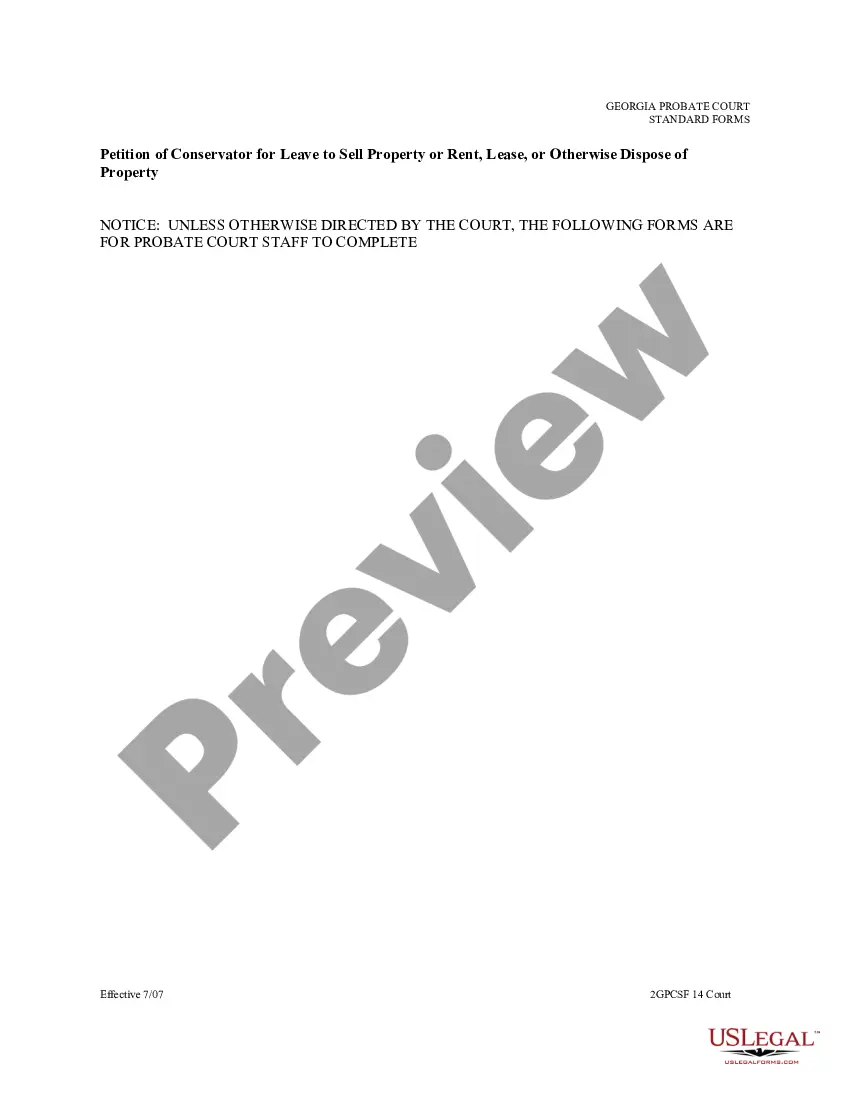
Alabama Order of Adjudication of Dependency / Disposition / Modification
Overview of this form
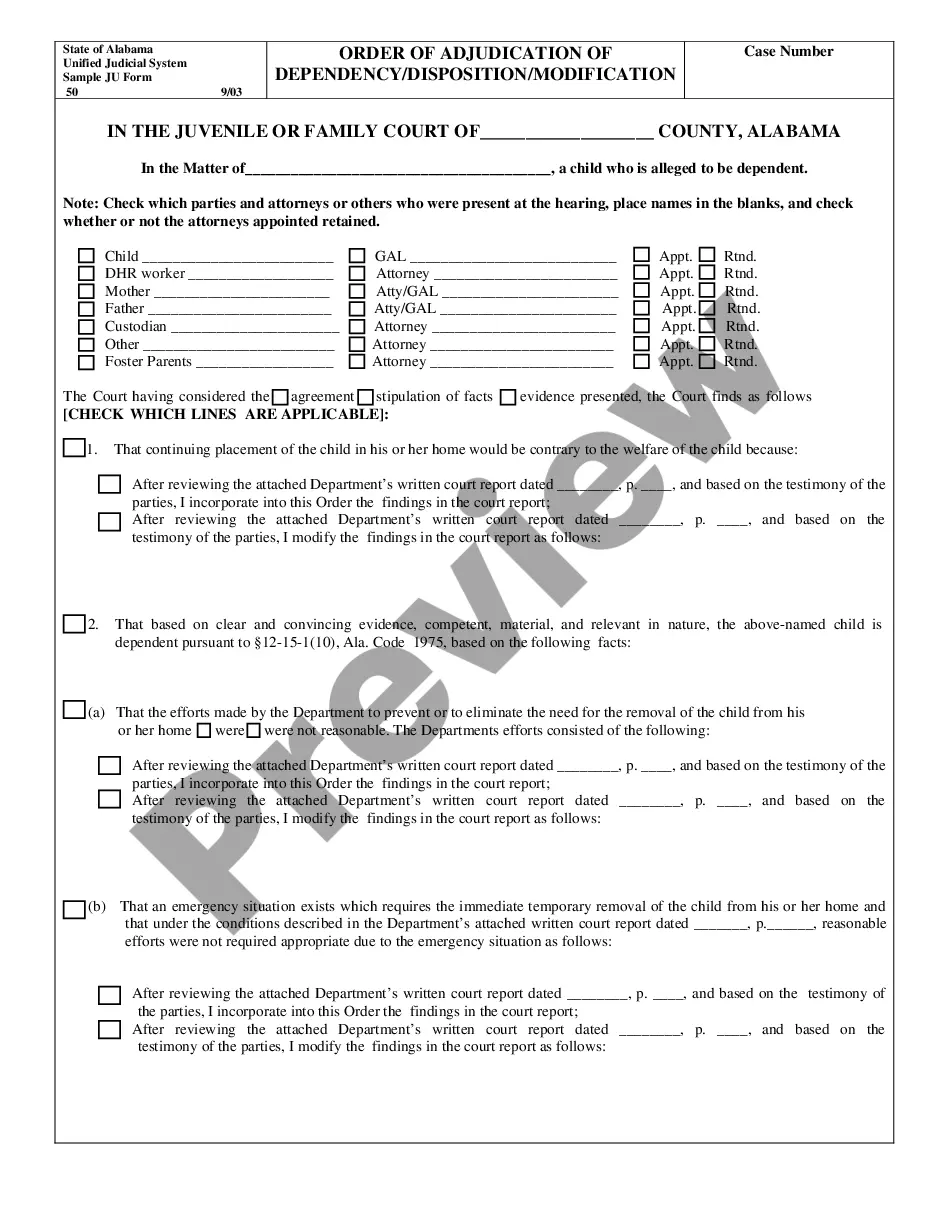
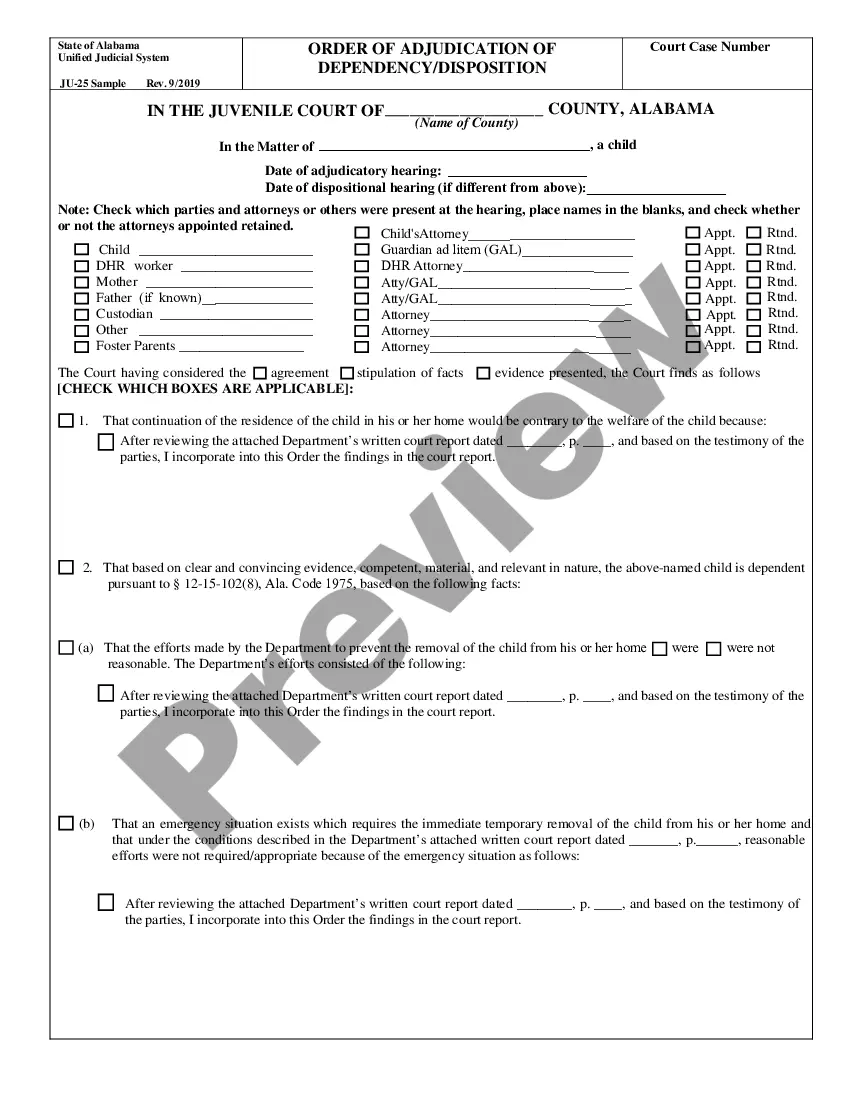
The Order of Adjudication of Dependency/Disposition/Modification is an official legal document used in Alabama family courts. This form is issued when a court determines that a child is dependent and may require modification of previous court orders regarding custody or disposition. It is essential for establishing the legal status of a child in dependency cases and differs from other forms in that it specifically addresses the adjudication and disposition of a child's welfare based on evidence presented during hearings.
Main sections of this form
- Case number identifying the specific court case.
- Details of the child involved, including their name and status as alleged dependent.
- Information about parties present at the hearing, such as parents, guardians, and attorneys.
- Findings of the court regarding the child's welfare and reasonable efforts to prevent removal from home.
- Determination of custody, including potential transfers to the Department of Human Resources.
- Notification of rights to appeal the court's decision.

When this form is needed
This form is necessary when a child is declared dependent by the court due to circumstances that could harm their well-being while remaining in their home. It is commonly used in situations involving allegations of abuse or neglect, significant changes in family circumstances, or any other instances where the childâs safety is at risk. Additionally, it is required when there are modifications needed for existing custody orders to ensure the ongoing protection of the child.
Who this form is for
- Parents or guardians involved in a juvenile dependency case.
- Attorneys representing clients in child welfare proceedings.
- Child protective service workers presenting evidence in court.
- Legal guardians seeking to modify custody arrangements.
- Foster parents wishing to understand the legal framework surrounding dependency cases.
Instructions for completing this form
- Identify the case number at the top of the form.
- Fill in the name of the child and describe the nature of their dependency.
- List all parties present during the hearing, along with their respective attorneys.
- Clearly state the findings of the court regarding the childâs welfare and any evidence presented.
- Check applicable boxes for court orders regarding custody and future hearing dates.
- Sign and date the form at the bottom, ensuring that it is filed with the appropriate court.
Notarization requirements for this form
This form does not typically require notarization unless specified by local law. However, it is important to verify any additional requirements that may be instituted by the local court where the form is submitted to ensure it holds up legally.
Get your form ready online
Our built-in tools help you complete, sign, share, and store your documents in one place.
Make edits, fill in missing information, and update formatting in US Legal Forms—just like you would in MS Word.
Download a copy, print it, send it by email, or mail it via USPS—whatever works best for your next step.
Sign and collect signatures with our SignNow integration. Send to multiple recipients, set reminders, and more. Go Premium to unlock E-Sign.
If this form requires notarization, complete it online through a secure video call—no need to meet a notary in person or wait for an appointment.
We protect your documents and personal data by following strict security and privacy standards.

Make edits, fill in missing information, and update formatting in US Legal Forms—just like you would in MS Word.

Download a copy, print it, send it by email, or mail it via USPS—whatever works best for your next step.

Sign and collect signatures with our SignNow integration. Send to multiple recipients, set reminders, and more. Go Premium to unlock E-Sign.

If this form requires notarization, complete it online through a secure video call—no need to meet a notary in person or wait for an appointment.

We protect your documents and personal data by following strict security and privacy standards.
Common mistakes to avoid
- Failing to include the case number, leading to confusion in court records.
- Not checking the appropriate boxes for findings and orders, which can impact the outcome.
- Missing signatures or dates, making the document invalid.
- Providing incomplete details about the parties involved, which can lead to delays.
- Neglecting to review the form for compliance with local court rules.
Benefits of completing this form online
- Immediate access to an accurate and legally compliant document.
- Easy to download and print, facilitating quick submission to the court.
- Allows for editing to meet specific case needs, ensuring personalized legal documentation.
- Reduced risk of errors compared to handwriting, which enhances clarity and professionalism.
- Create a permanent digital record of the completed form for future reference.
Looking for another form?
Form popularity
FAQ
A dependency investigator plays a key role in assessing the living conditions of a child when concerns arise about their welfare. They gather evidence, interview family members, and evaluate the situation based on legal standards. This investigation informs the court's decisions regarding child custody and dependency cases. Utilizing the Alabama Order of Adjudication of Dependency / Disposition / Modification ensures that all necessary legal procedures are followed during this critical evaluation.
To obtain full custody of your child in Alabama, you need to file a petition with the court. Present your case clearly, demonstrating that it is in the child's best interest. Important factors include your relationship with the child and the other parent's circumstances. Using the Alabama Order of Adjudication of Dependency / Disposition / Modification can help guide you through this legal process.
A material change in circumstances refers to significant developments that affect the child's welfare positively or negatively. This could include changes in employment, relocation, or issues related to the child's health or safety. Establishing this change is essential for modifying an existing custody order. Understanding the Alabama Order of Adjudication of Dependency / Disposition / Modification helps clarify what constitutes a material change in your specific case.
Winning a custody modification case requires a clear demonstration of how the change supports the child's well-being. Focus on gathering evidence that shows a significant change in circumstances since the last order. It’s also helpful to document any improvements in your parenting capabilities. By understanding the Alabama Order of Adjudication of Dependency / Disposition / Modification process, you can effectively present your arguments for modification.
During a custody battle, it’s crucial to stay focused on the child's best interests. Avoid making negative remarks about the other parent, as this can reflect poorly on you. Additionally, do not express feelings of anger or frustration in front of the court. Instead, maintain a respectful dialogue and present your case based on facts, especially when navigating the Alabama Order of Adjudication of Dependency / Disposition / Modification.
When a child is adjudicated dependent, it means that a court has determined the child is without proper care or supervision. This status often leads to the state taking protective measures to ensure the child's safety and well-being. Being informed about the implications of such adjudications under the Alabama Order of Adjudication of Dependency / Disposition / Modification is vital for parents navigating these sensitive situations.
During the adjudication process, the court assesses evidence, hears testimonies from both parents and witnesses, and considers the child's best interests. The judge will review the facts before making a decision on custody and visitation rights. Engaging with resources like US Legal Forms can provide clarity and support during this complex process involving the Alabama Order of Adjudication of Dependency / Disposition / Modification.
In Alabama, the grounds for modifying child custody include a significant change in circumstances, such as a change in living conditions, parental employment, or the child's needs. Courts evaluate modifications based on what serves the best interests of the child. If you're considering a modification, understanding the intricacies of the Alabama Order of Adjudication of Dependency / Disposition / Modification is essential.
If your case is adjudicated, it means that the court has reached a final decision regarding custody or other matters related to the child. This decision is legally binding, meaning that both parties must adhere to the court's ruling. Knowing how to navigate the implications of the Alabama Order of Adjudication of Dependency / Disposition / Modification can help you understand your rights and obligations following such a decision.
In child custody matters, adjudication means that a court has officially decided on the custody arrangement after considering the evidence and testimonies presented. It signifies that the court has made a ruling on who will have custody or visitation rights. Understanding the adjudication process is crucial for navigating the Alabama Order of Adjudication of Dependency / Disposition / Modification effectively.