Microcomputer Software License Agreement
Overview of this form
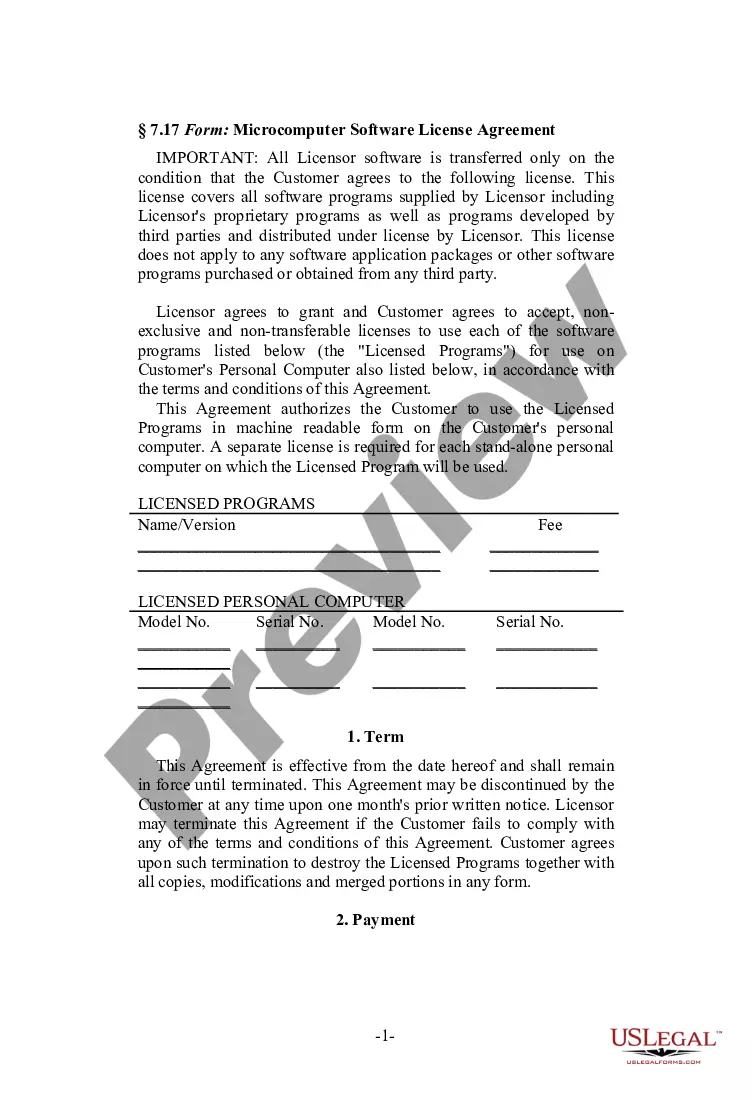
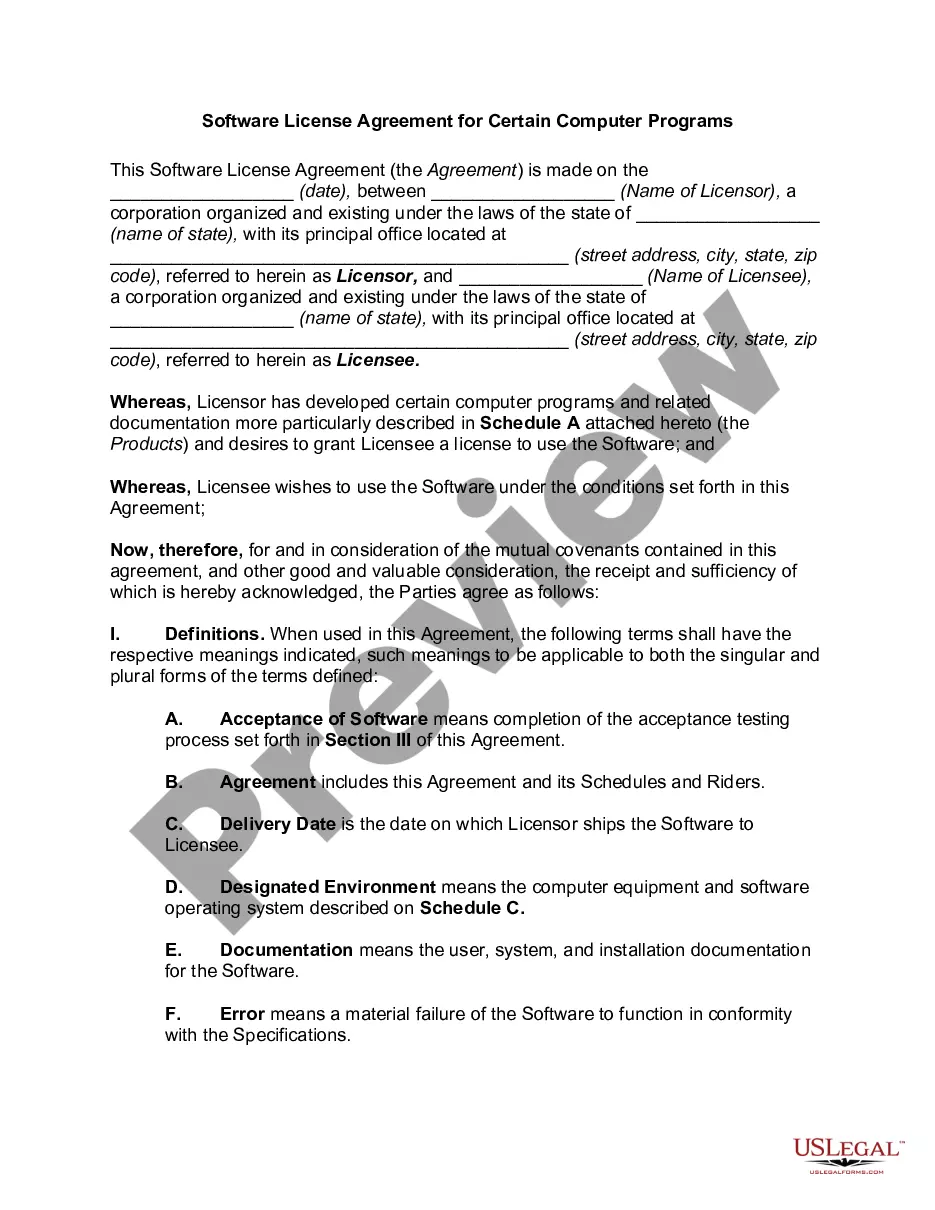
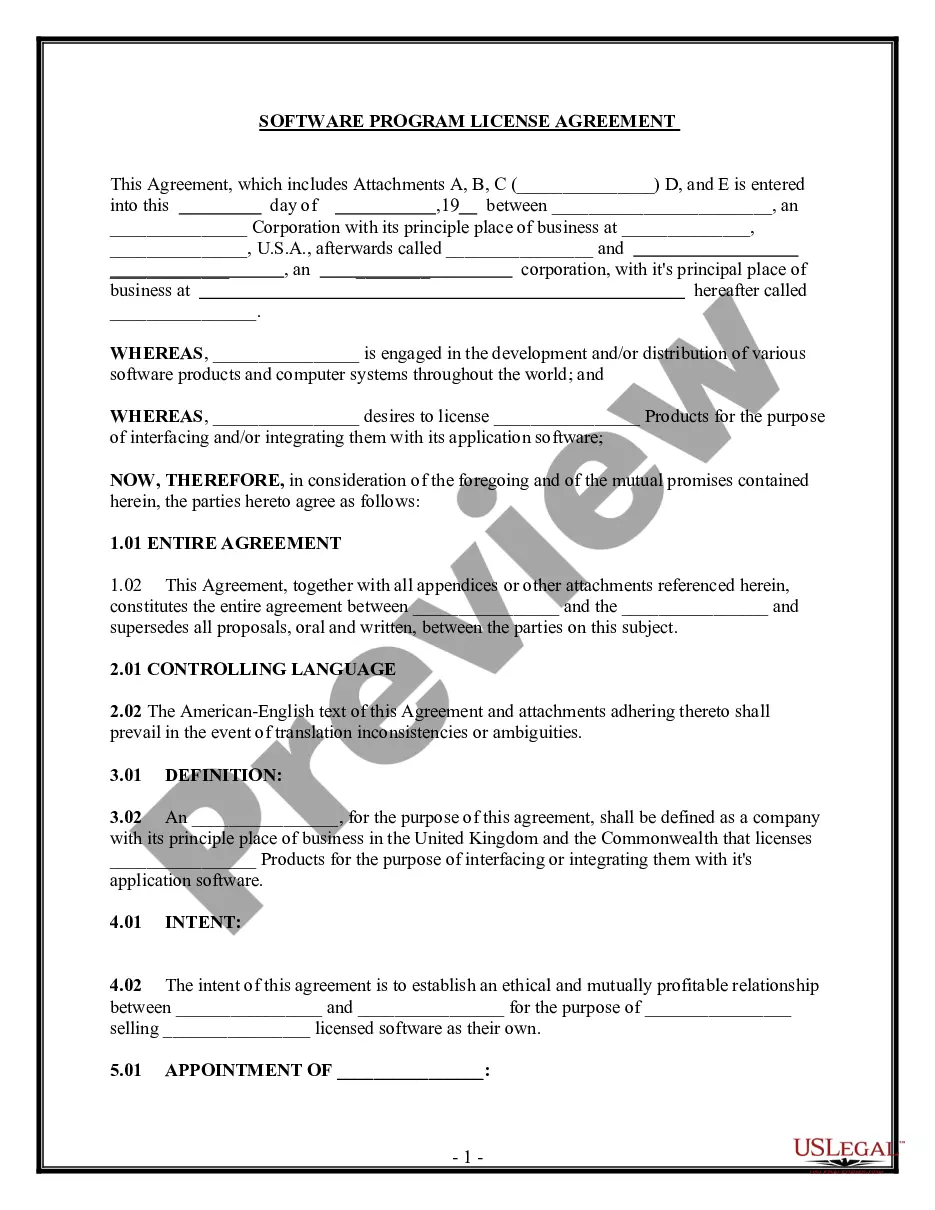
The Microcomputer Software License Agreement is a legal document that outlines the terms under which a software program can be used by a customer. It sets clear guidelines regarding the non-exclusive, non-transferable rights to use the software, ensuring both parties understand their rights and responsibilities. This form is essential for software developers and companies distributing software to protect their intellectual property while providing customers with clear usage rights. Unlike sales agreements, this form specifically focuses on licensing, rather than ownership transfers.
Key parts of this document
- Licensing terms: Specifies the non-exclusive and non-transferable rights granted to the customer.
- Termination provisions: Outlines conditions under which either party can terminate the agreement.
- Payment details: Includes terms related to the licensing fee and payment methods.
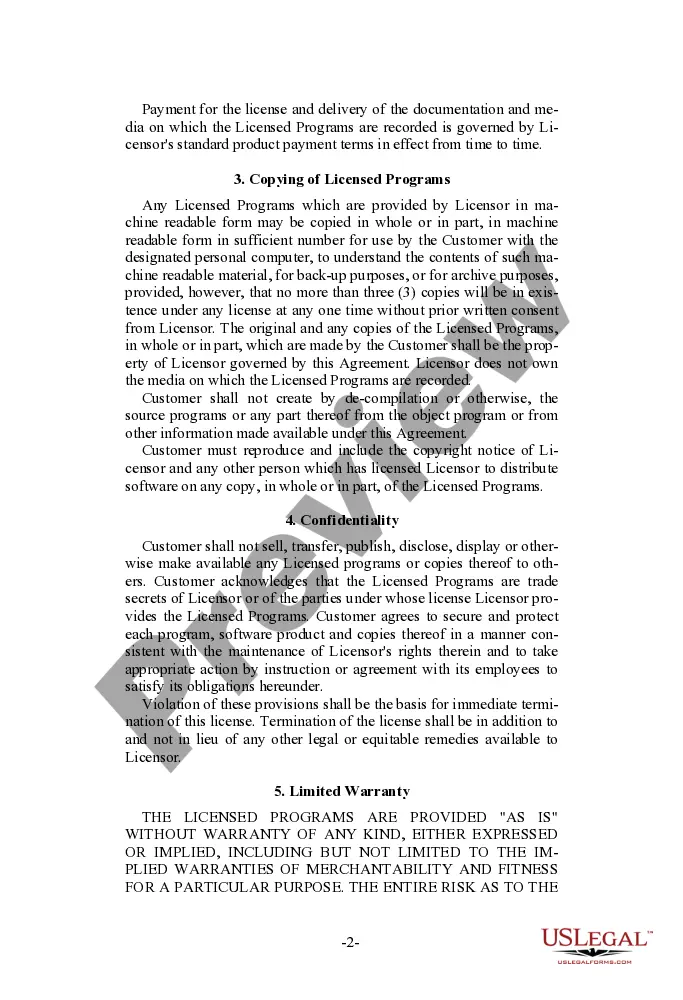
- Confidentiality clauses: Obligations regarding the protection of proprietary software information.
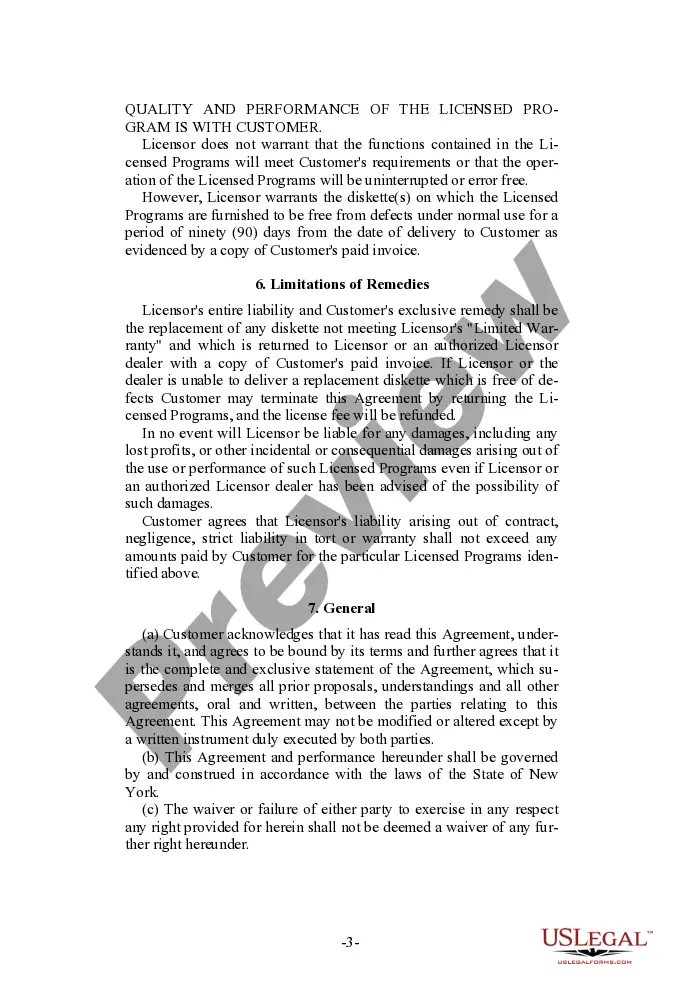
- Limited warranty: States that the software is provided "as is" without warranties of performance or fitness.
- Liabilities: Limits the licensors' liability regarding damages related to the software.
When to use this document
This form should be used when you want to license software for use on personal computers. It is applicable in situations where software is distributed to customers under specific conditions to protect the rights of both the software developer and the end-user. If you are a software developer or company providing software for client use, this agreement helps outline how your products can be used and secured according to legal standards.
Intended users of this form
This agreement is intended for:
- Software developers distributing their software products.
- Companies that provide licensed software to clients or customers.
- Individuals using third-party software under defined terms.
- Businesses looking to clarify software use rights and avoid potential legal disputes.
Instructions for completing this form
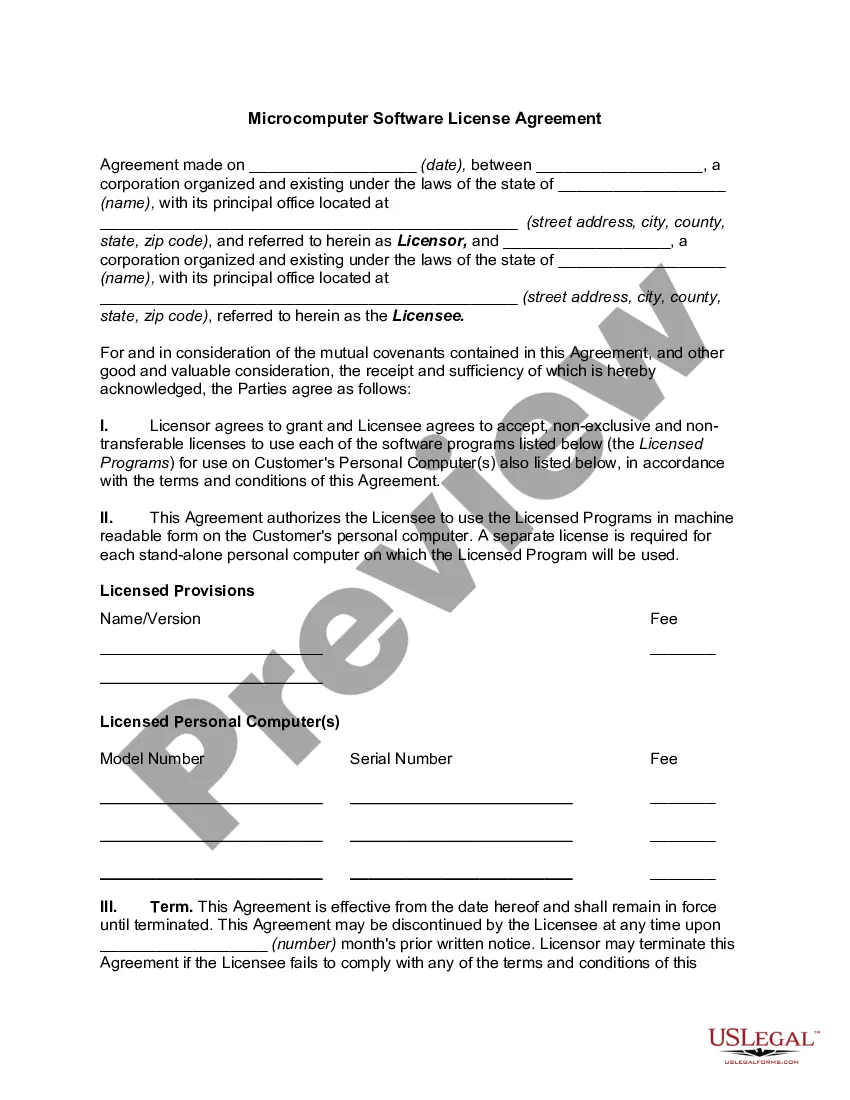
- Identify the parties involved: Include the names and addresses of both the Licensor and Customer.
- List the licensed software programs: Specify the names and versions of all software the customer is permitted to use.
- Detail the personal computer: Record the model and serial numbers of the customer's personal computer where the software will be installed.
- Outline payment terms: Include the licensing fee and payment details.
- Sign the agreement: Ensure all parties sign and date the agreement to make it legally binding.
Is notarization required?
This form does not typically require notarization unless specified by local law. However, having it notarized can add an extra layer of authenticity, especially for larger transactions.
Get your form ready online
Our built-in tools help you complete, sign, share, and store your documents in one place.
Make edits, fill in missing information, and update formatting in US Legal Forms—just like you would in MS Word.
Download a copy, print it, send it by email, or mail it via USPS—whatever works best for your next step.
Sign and collect signatures with our SignNow integration. Send to multiple recipients, set reminders, and more. Go Premium to unlock E-Sign.
If this form requires notarization, complete it online through a secure video call—no need to meet a notary in person or wait for an appointment.
We protect your documents and personal data by following strict security and privacy standards.

Make edits, fill in missing information, and update formatting in US Legal Forms—just like you would in MS Word.

Download a copy, print it, send it by email, or mail it via USPS—whatever works best for your next step.

Sign and collect signatures with our SignNow integration. Send to multiple recipients, set reminders, and more. Go Premium to unlock E-Sign.

If this form requires notarization, complete it online through a secure video call—no need to meet a notary in person or wait for an appointment.

We protect your documents and personal data by following strict security and privacy standards.
Avoid these common issues
- Failing to specify all licensed programs clearly.
- Not including complete identification details for all parties involved.
- Overlooking the need for signatures on the agreement.
- Neglecting to review and adhere to state-specific regulations regarding software licensing.
Why use this form online
- Convenience: Download and complete the form at your own pace.
- Editability: Modify the document easily to suit your specific licensing needs.
- Reliability: Use a professionally drafted agreement to ensure compliance with legal standards.
- Ensures both licensor and customer understand their rights and limitations regarding the software.
- Provides a legal basis for enforcing copyright and confidentiality protections.
- Helps prevent unauthorized distribution or use of the licensed software programs.
Main things to remember
- The Microcomputer Software License Agreement is crucial for regulating software usage rights.
- It delineates responsibilities and protections for the licensor's intellectual property.
- Completing the agreement requires accurate details about both parties and the software involved.
- Notarization is generally not required, making the form more accessible.
Looking for another form?


Form popularity
FAQ
The core provisions of a data license agreement define the data that is being licensed, including the manner and frequency with which the data will be provided/updated, how current the data will be (that is, whether the data will be provided on a real-time or close to real-time basis), the format in which the data
Exclusive or non-exclusive. In an exclusive license, the intellectual property holder is licensing the work only to one person, for that particular use/territory. Territory. Use. Attribution. Derivative works. Confidentiality. Time frame. Termination.
A lease is a contract between a tenant and a landlord that provides the tenant with exclusive interest in the property. A license, on the other hand, is when the owner gives permission to a licensee to conduct an action on the owner's property.
An example of a licensing agreement is a contract between the copyright holders of software and another company, allowing the latter to use the computer software for their daily business operations.
A license agreement is a business contract between two parties. The licensor (the seller of the license) owns the asset being licensed and the licensee (the buyer) pays for the right to use the license. The licensee pays royalties to the owner in exchange for the right to sell the product or use the technology.
What is a Licensing Agreement? A licensing agreement is a contract between two parties (the licensor and licensee) in which the licensor grants the licensee the right to use the brand name, trademark, patented technology, or ability to produce and sell goods owned by the licensor.
A lease is the grant of legal interest in land which gives exclusive possession for a fixed period of time. A licence is merely a personal permission granting licence to occupy or do something on someone else's property.
The 3 P's of collegiate licensing are protection, promotion, and profit.