Mississippi Defendants Interrogatories to Plaintiffs
Understanding this form
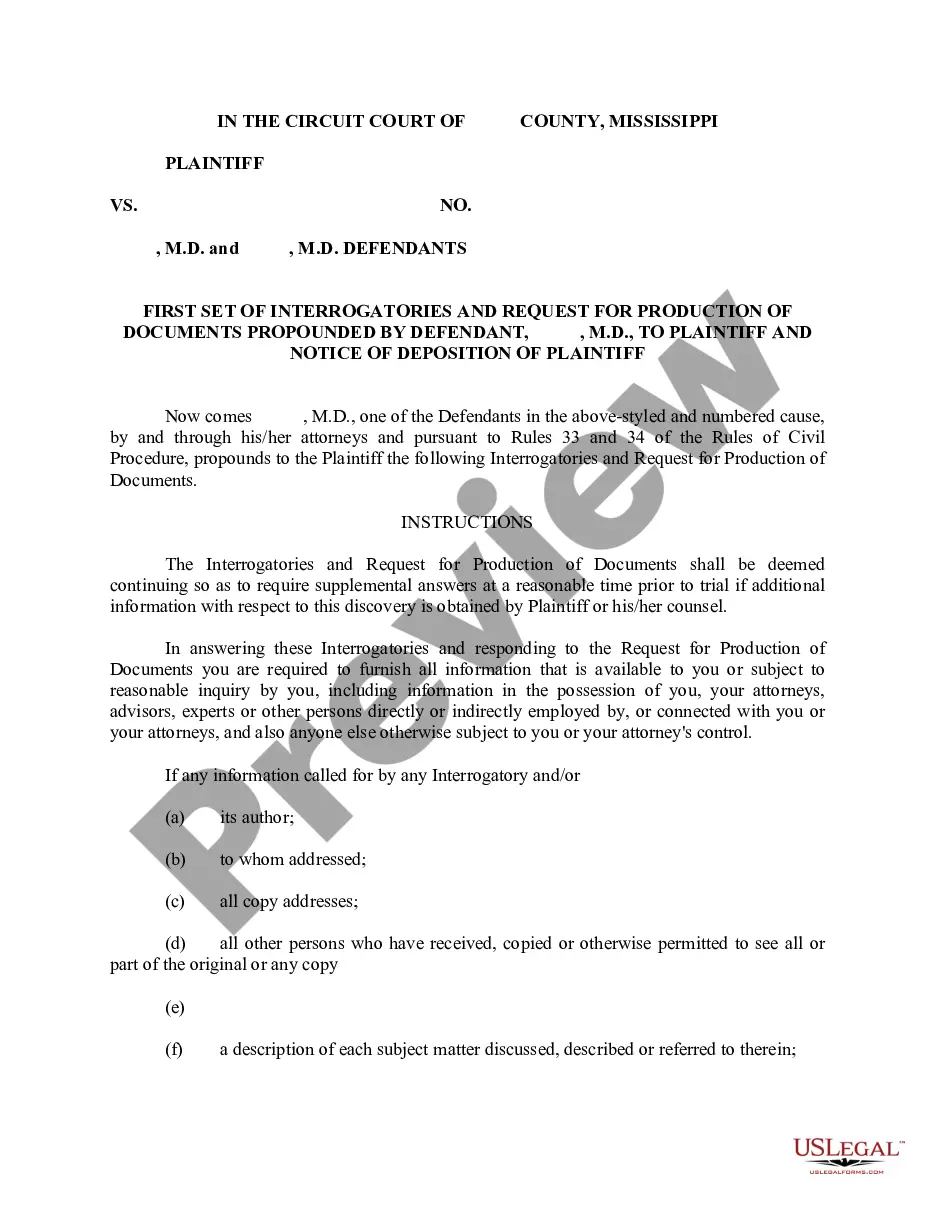
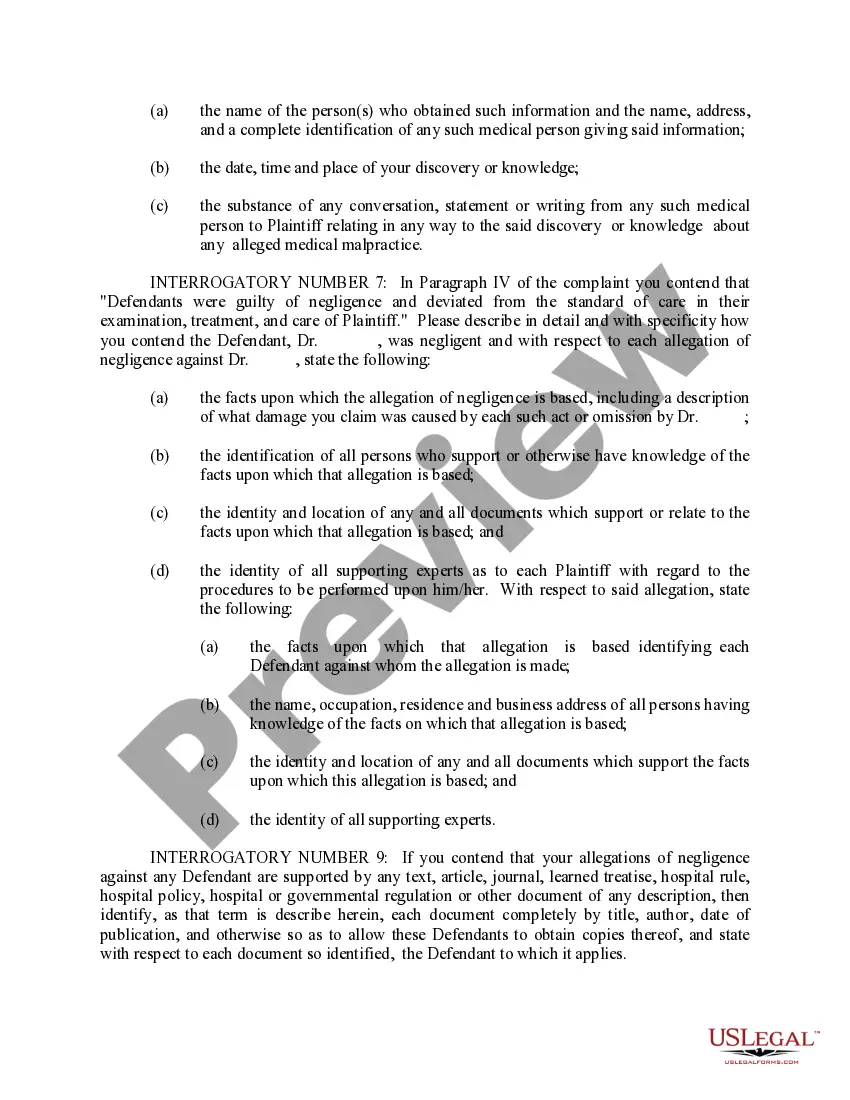
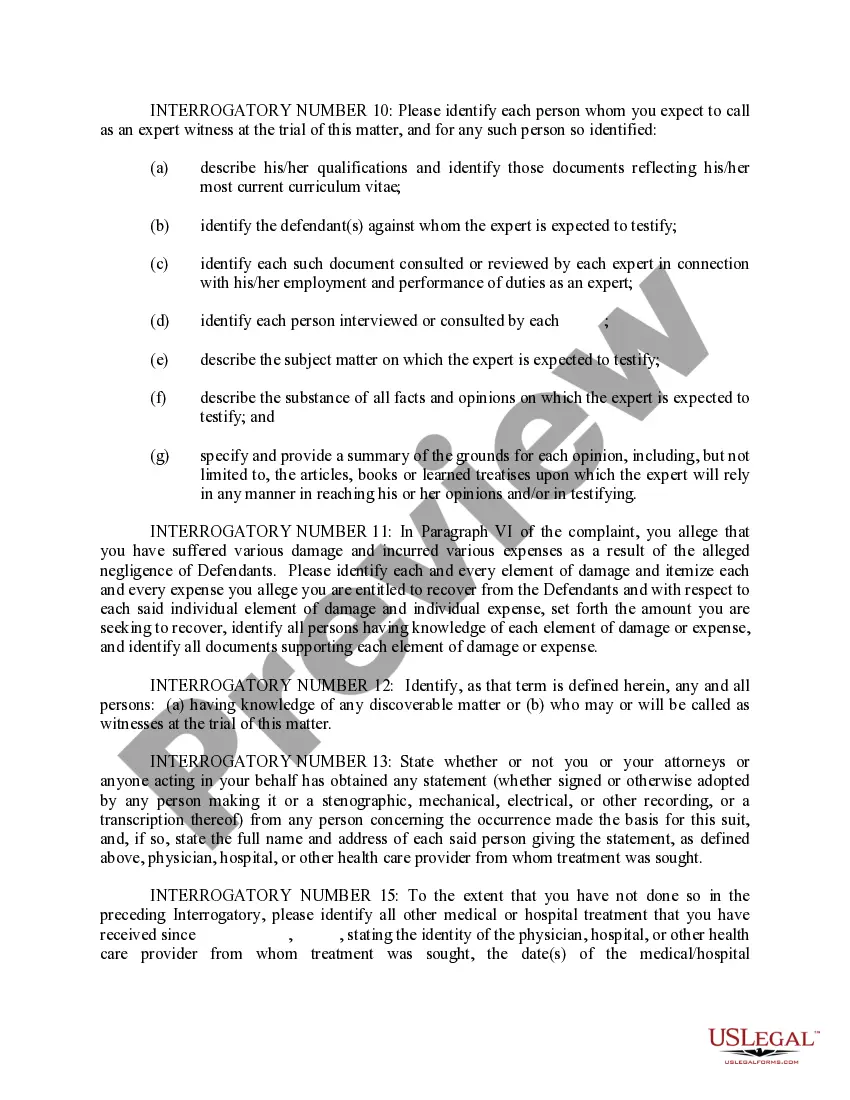
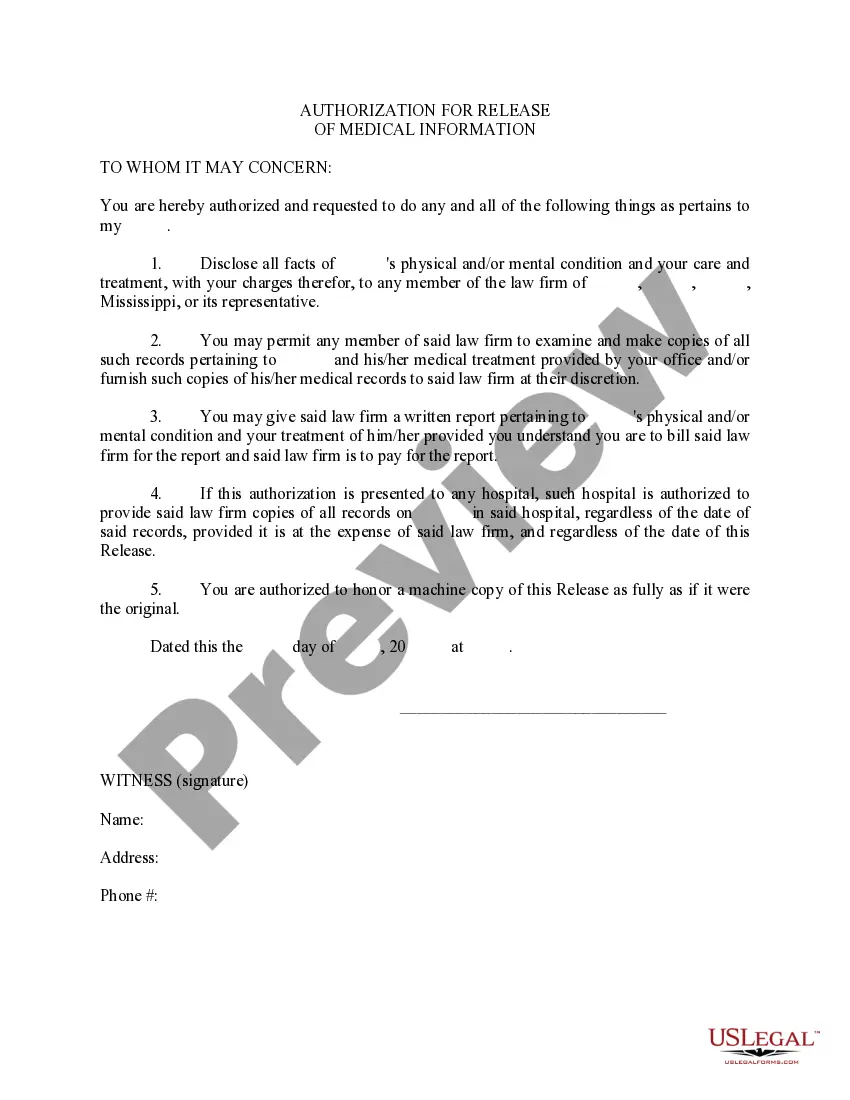
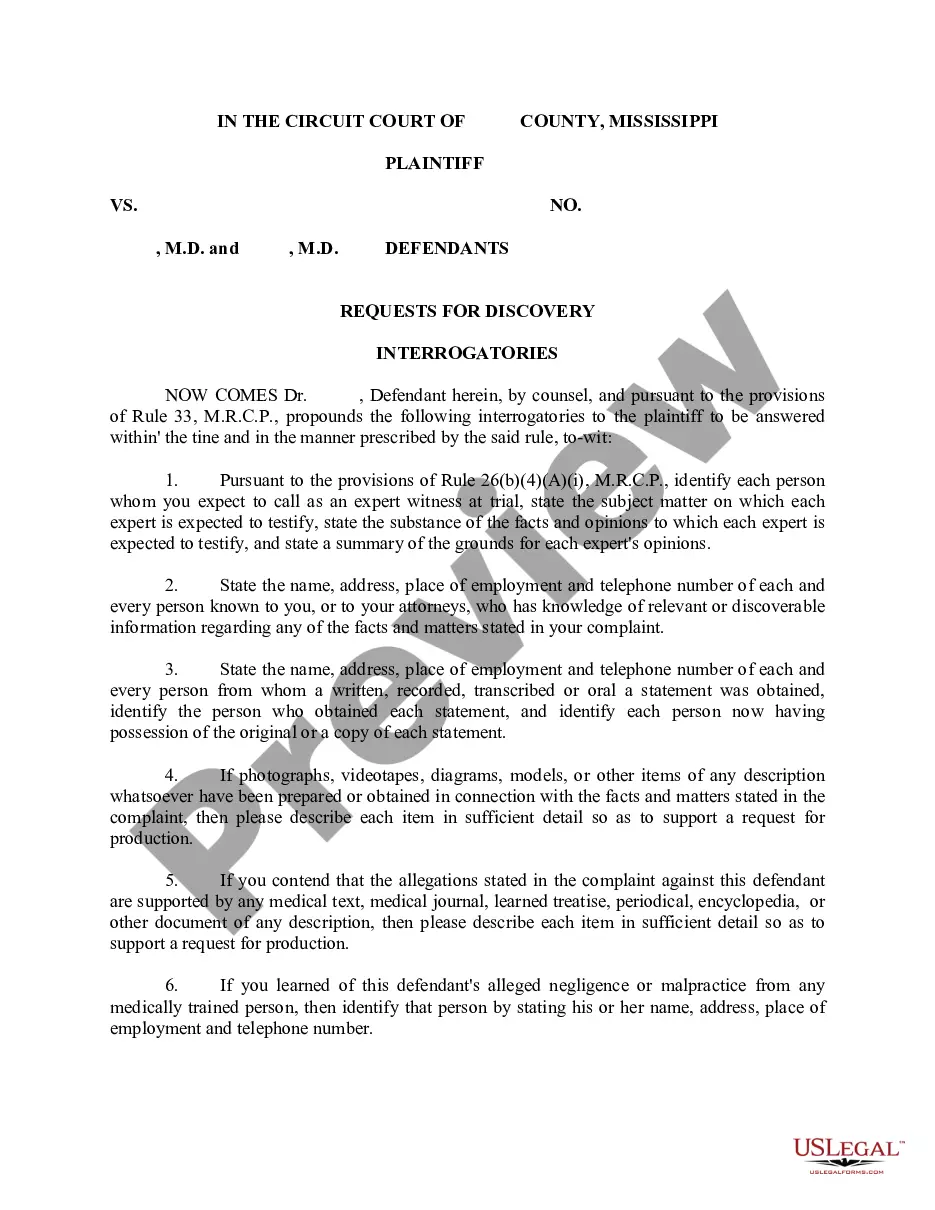
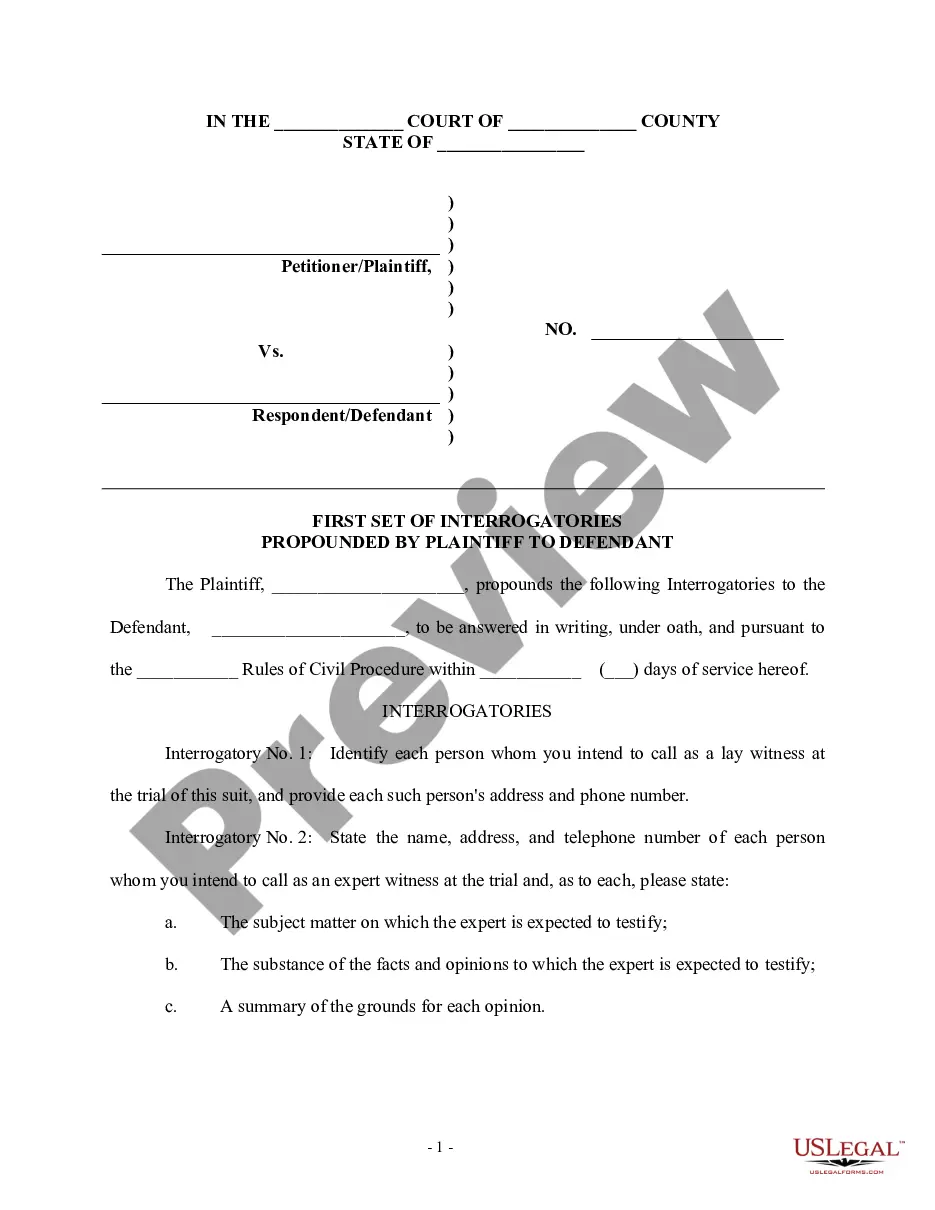
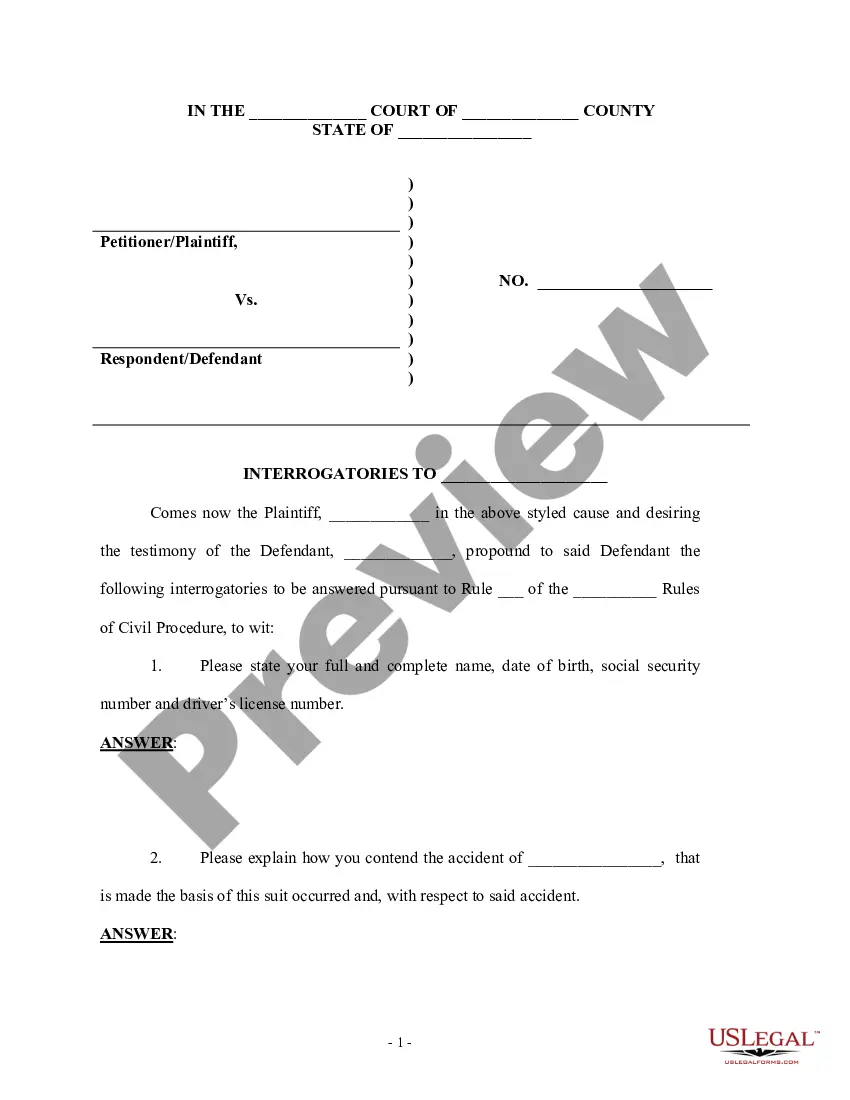
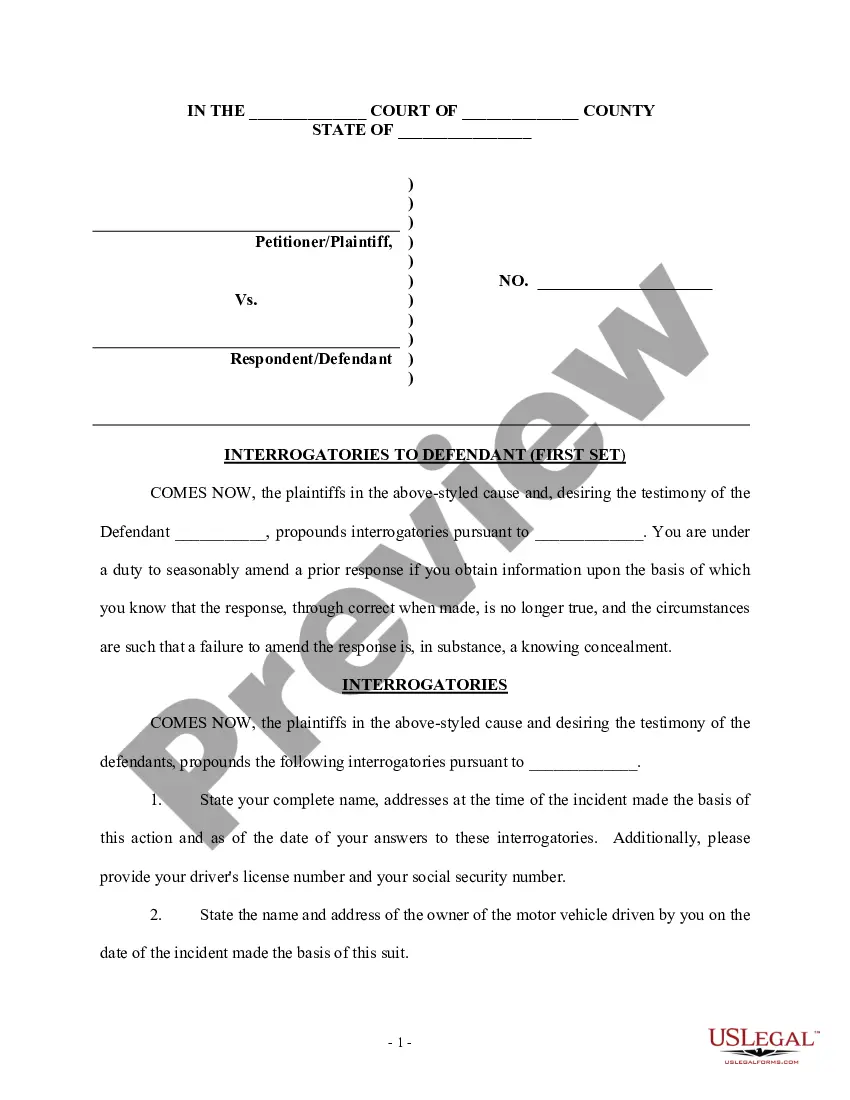
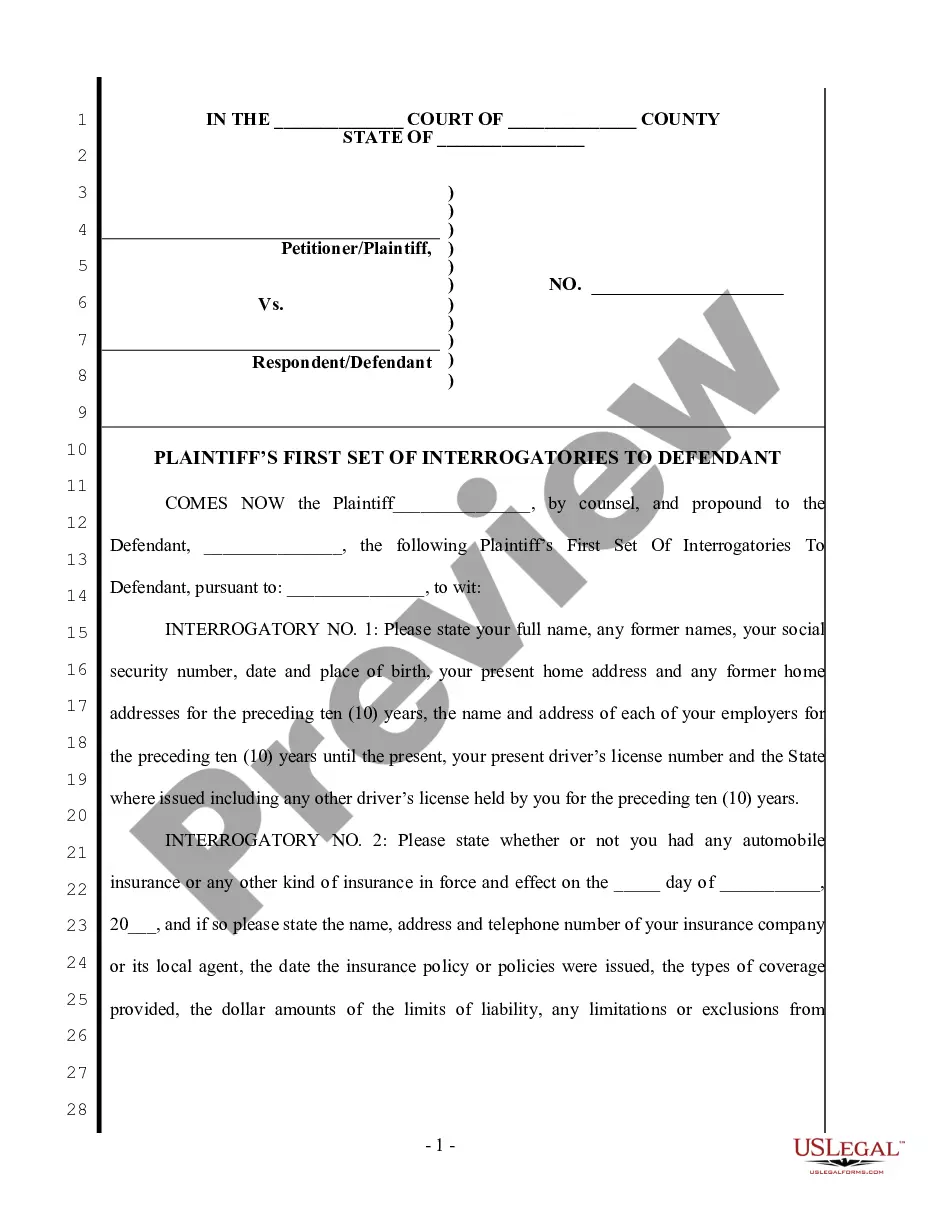
The Defendants Interrogatories to Plaintiffs is a legal document used during the discovery phase of a lawsuit. This form allows defendants to pose specific written questions to the plaintiffs about the claims made in the case. Unlike other forms, this document focuses on gathering detailed information that could be relevant to the case's resolution.
Key components of this form
- Instructions for answering and submitting the interrogatories.
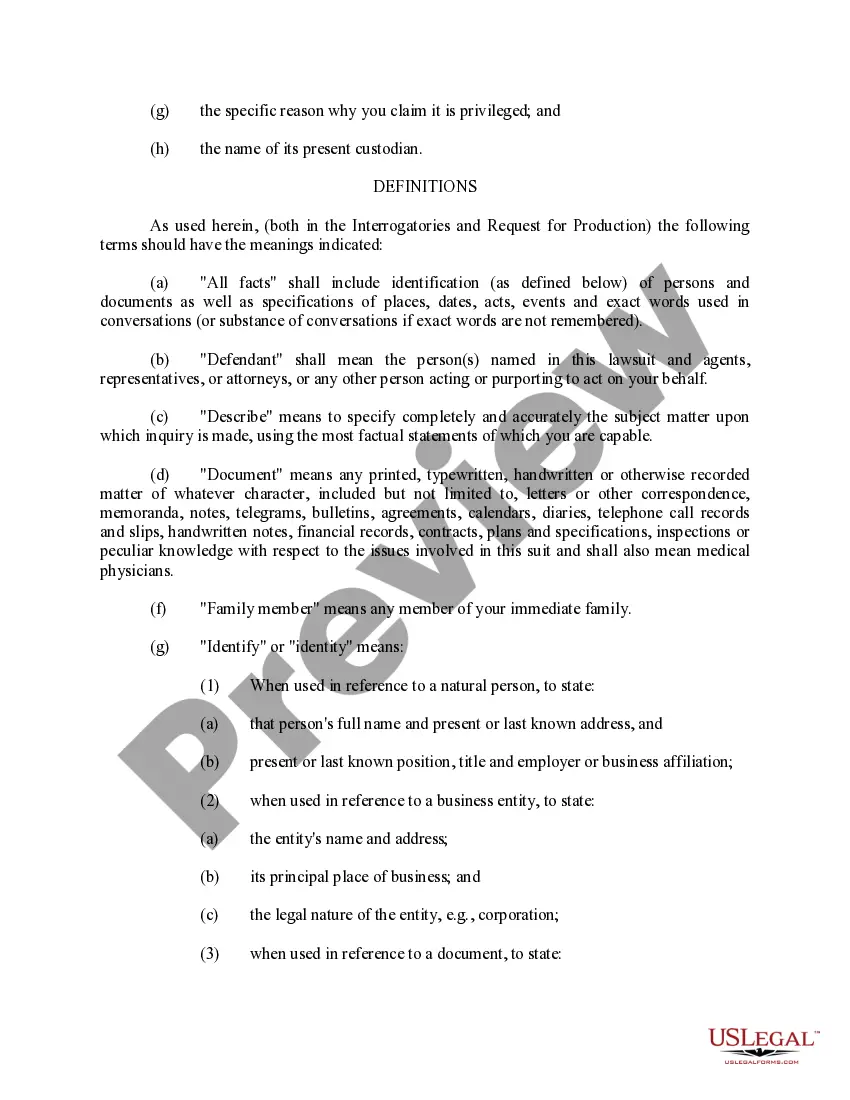
- Definitions of key terms such as "Defendant," "Document," and "Identify."
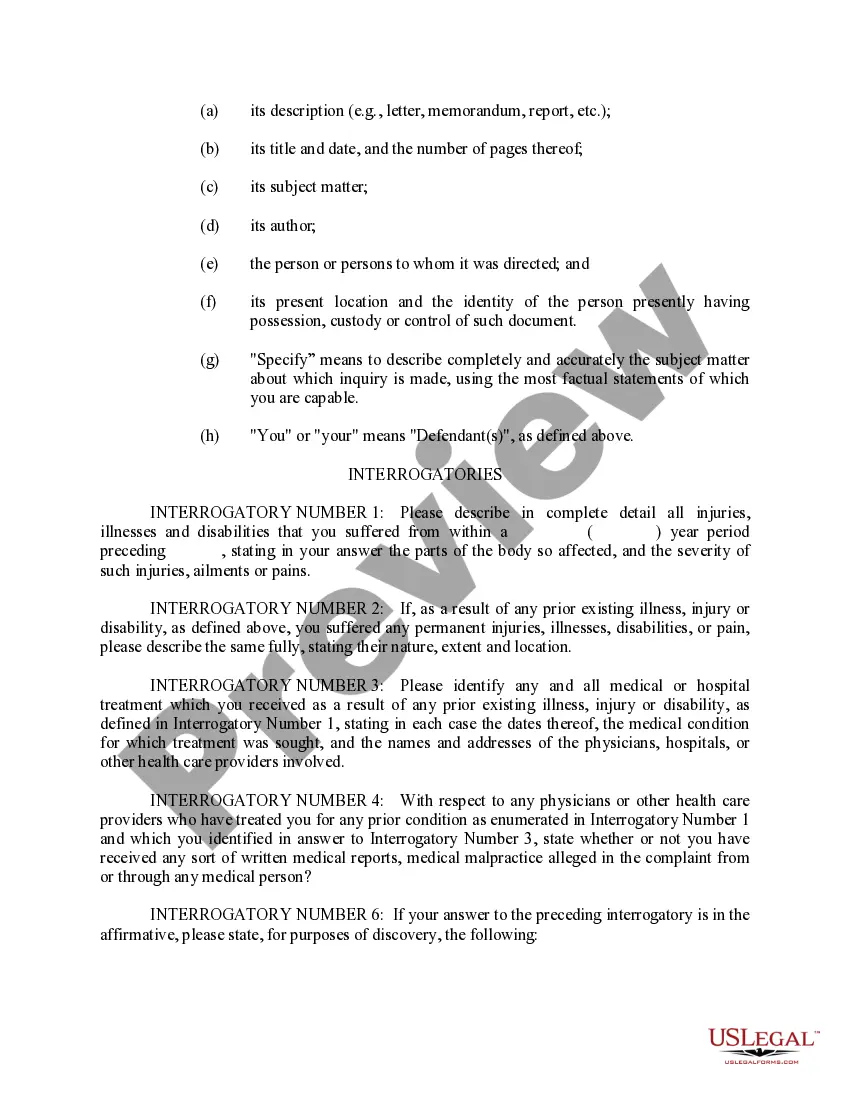
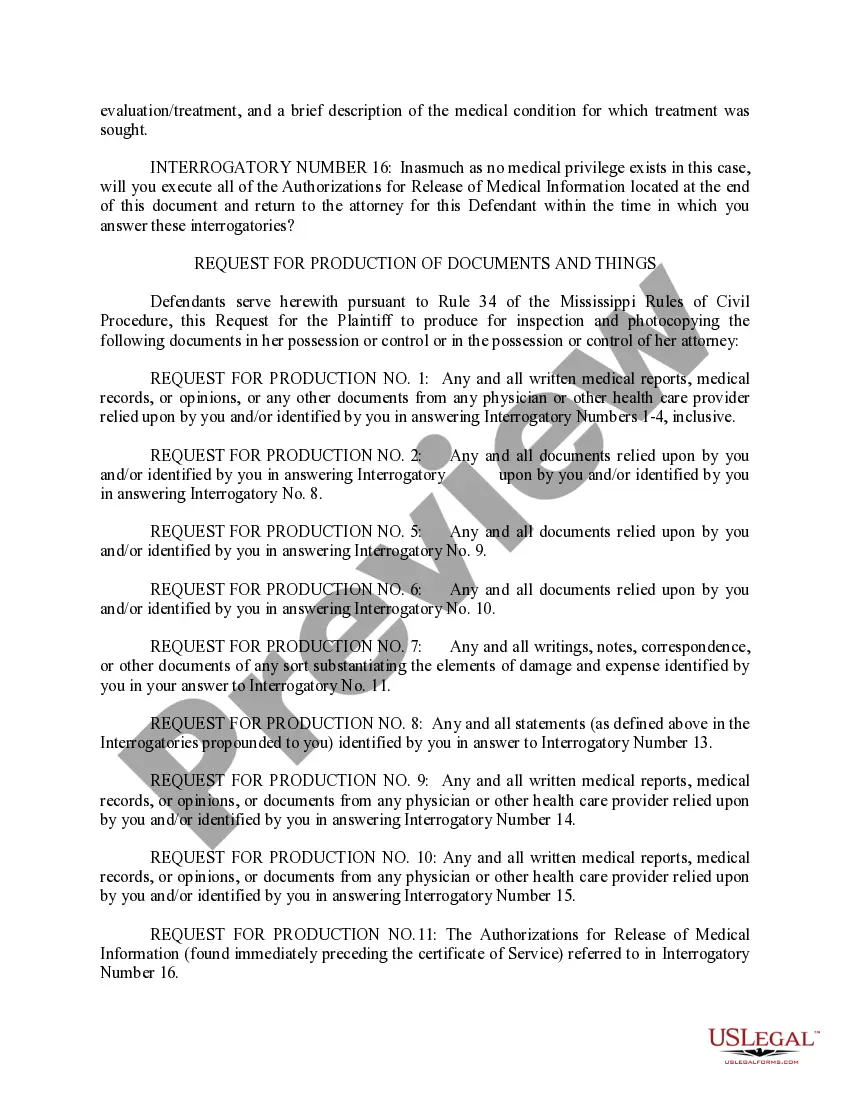
- A series of interrogatories requiring detailed responses from the plaintiff.
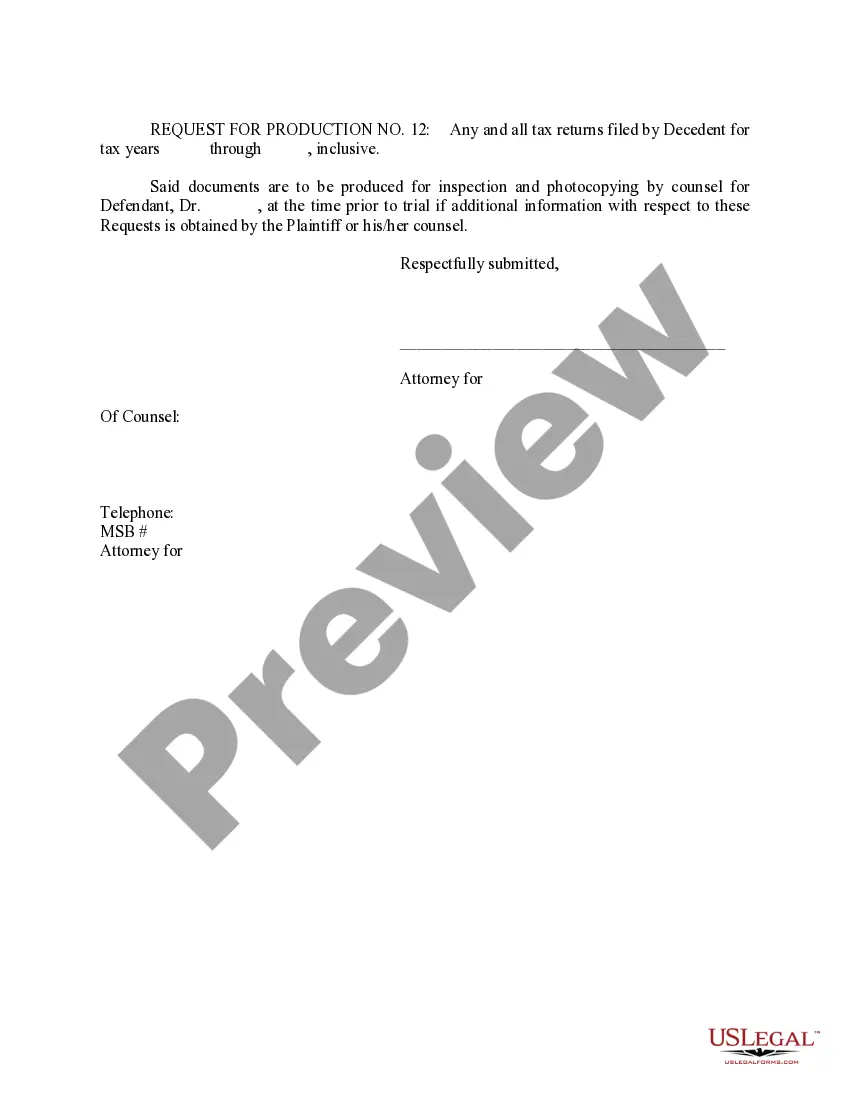
- Requests for production of documents relevant to the case.
- Sections for supplemental answers if new information arises prior to trial.


Situations where this form applies
This form should be used when a defendant in a lawsuit needs to request detailed information from the plaintiff. It commonly occurs in personal injury cases, contract disputes, or any situation where factual clarity is needed to prepare for trial. Using interrogatories can help shape a defendant's legal strategy and ensure all relevant details are accounted for before proceeding to court.
Who can use this document
This form is intended for:
- Defendants involved in a lawsuit.
- Legal representatives or attorneys for the defendants.
- Parties seeking to clarify the claims made against them.
Instructions for completing this form
To complete this form:
- Read all instructions to understand obligations for answering the interrogatories.
- Define all key terms as described within the form to ensure clarity.
- Answer each interrogatory with complete and accurate information regarding the claims.
- Gather and organize any requested documents for production to accompany your answers.
- Review your responses for completeness and accuracy before submission.
Notarization requirements for this form
This form does not typically require notarization unless specified by local law. Always check applicable statutes or court rules in your jurisdiction to confirm any special requirements.
Get your form ready online
Our built-in tools help you complete, sign, share, and store your documents in one place.
Make edits, fill in missing information, and update formatting in US Legal Forms—just like you would in MS Word.
Download a copy, print it, send it by email, or mail it via USPS—whatever works best for your next step.
Sign and collect signatures with our SignNow integration. Send to multiple recipients, set reminders, and more. Go Premium to unlock E-Sign.
If this form requires notarization, complete it online through a secure video call—no need to meet a notary in person or wait for an appointment.
We protect your documents and personal data by following strict security and privacy standards.

Make edits, fill in missing information, and update formatting in US Legal Forms—just like you would in MS Word.

Download a copy, print it, send it by email, or mail it via USPS—whatever works best for your next step.

Sign and collect signatures with our SignNow integration. Send to multiple recipients, set reminders, and more. Go Premium to unlock E-Sign.

If this form requires notarization, complete it online through a secure video call—no need to meet a notary in person or wait for an appointment.

We protect your documents and personal data by following strict security and privacy standards.
Common mistakes to avoid
- Failing to answer all interrogatories fully and completely.
- Providing vague or unclear answers that do not meet the requirements.
- Missing deadlines for submitting responses and accompanying documents.
Advantages of online completion
- Convenient access to a legally sound template drafted by licensed attorneys.
- Facilitates clear communication between parties in a lawsuit.
- Editable format allows for adjustments to suit specific case needs.
- Interrogatories serve as a formal method for obtaining necessary information before trial.
- Responses to interrogatories must be truthful; failing to respond or providing false information can result in legal penalties.
- Information gathered through interrogatories can be used in court to support or refute claims made by either party.
Main things to remember
- The Defendants Interrogatories to Plaintiffs is a critical part of the discovery process.
- Use this form to gather specific information regarding the plaintiff's claims.
- Ensure all responses are thorough and submitted on time to maintain compliance with court procedures.
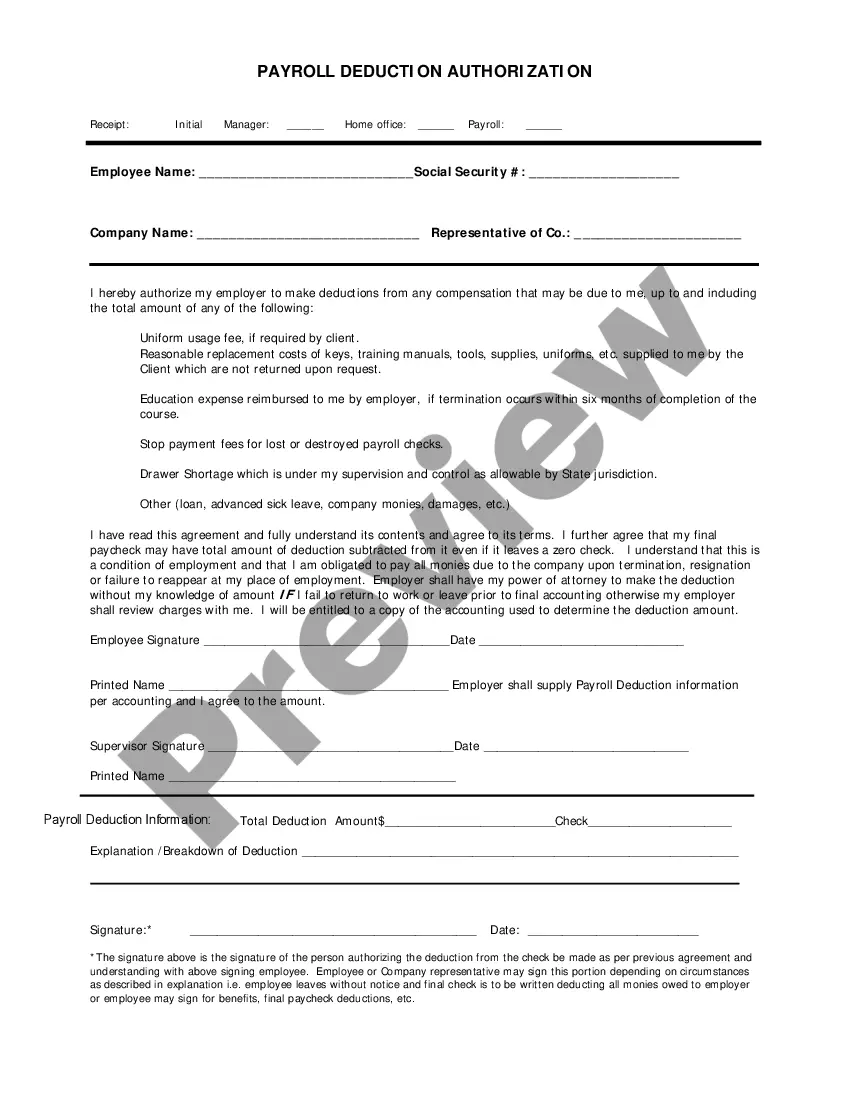
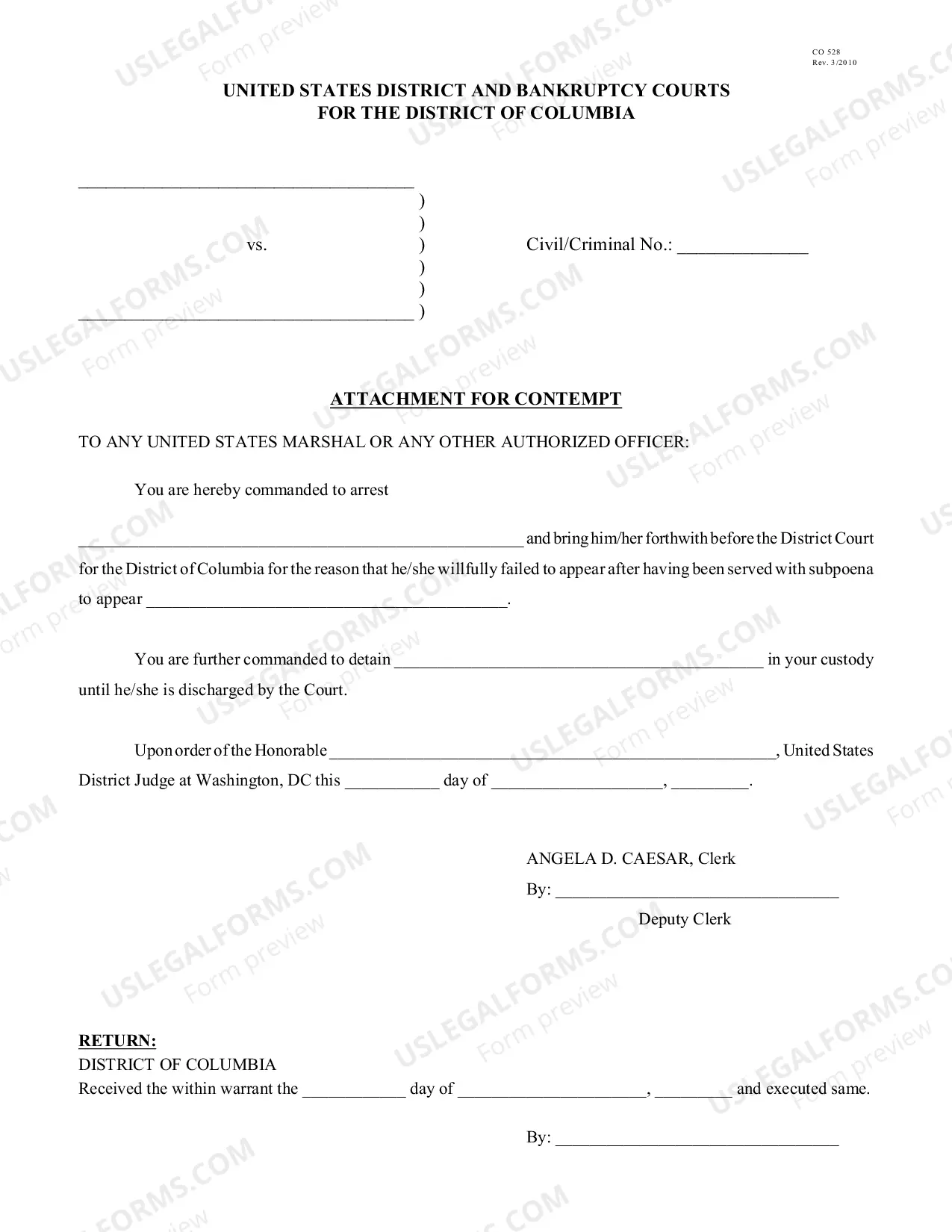
Looking for another form?


Form popularity
FAQ
You must answer each interrogatory separately and fully in writing under oath, unless you object to it. You must explain why you object. You must sign your answers and objections.
You must answer each interrogatory separately and fully in writing under oath, unless you object to it. You must explain why you object. You must sign your answers and objections.
Responding to Form InterrogatoriesAnswer each question, being careful to answer each subpart, if one exists. Read the question carefully, and answer only what it asks. You may attach exhibits, if necessary. The response must be verified, meaning you must swear that the responses given are true.
Interrogatories are written questions that one party to a lawsuit sends to another, and the responding party submits written answers under oath. If a lawsuit is filed in a personal injury case, chances are interrogatories will come into play.
So, can you refuse to answer interrogatories? The answer is, no, you may not.That answer must either permit inspection of the requested information or object to the production of the information for a specific reason.
Interrogatories are lists of questions sent to the other party that s/he must respond to in writing. You can use interrogatories to find out facts about a case but they cannot be used for questions that draw a legal conclusion.
The plaintiff must give you responses to the request for interrogatories within 45 days of when you mailed the request. If they do not give you a response you can send a final request to the plaintiff. In the final request tell the plaintiff they have another 30 days to give you answers to your interrogatory requests.
Your answers to the interrogatories should usually be short, clear, and direct and should answer only the question that is being asked. This is not the time to set out your entire case or defense to the other side. Take the time to make sure your answers are correct and truthful.
Personal/Corporate information of opposing party. Identifying information of witnesses. Contact information & background of expert witnesses. Insurance information.