Plaintiff's Interrogatories to Defendant - Personal Injury
About this form
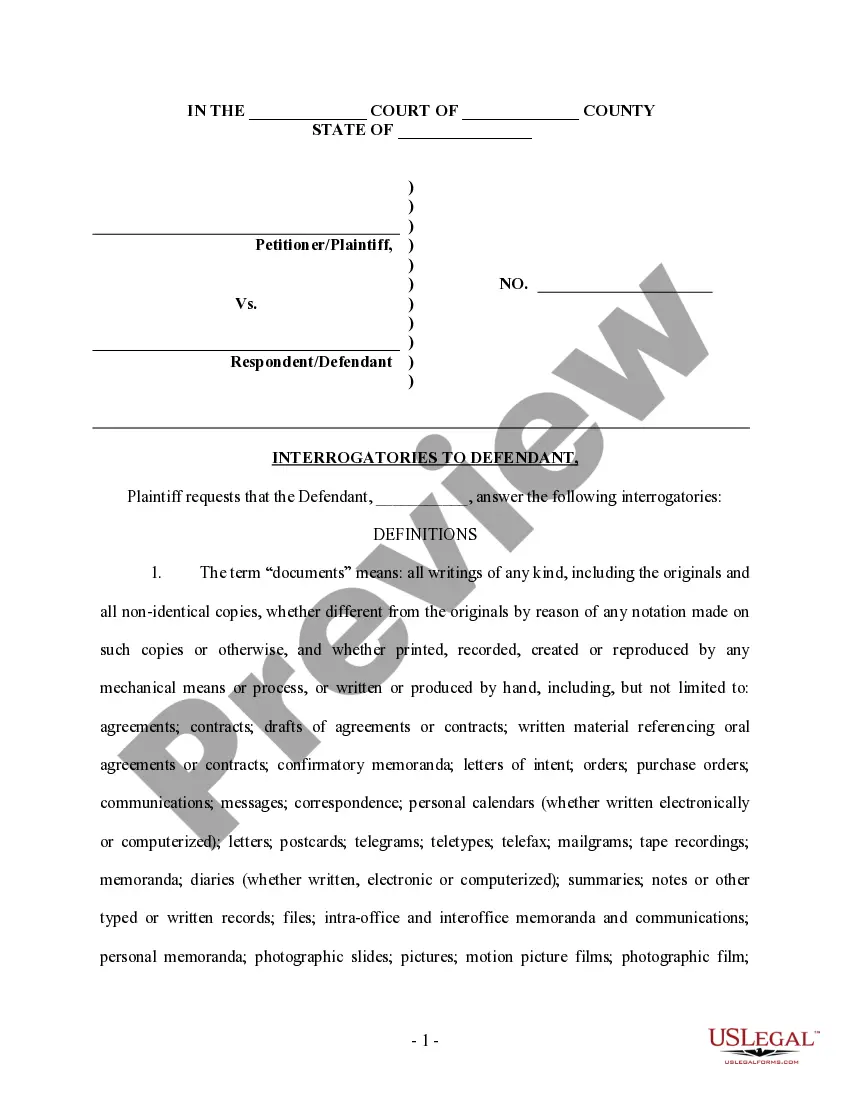
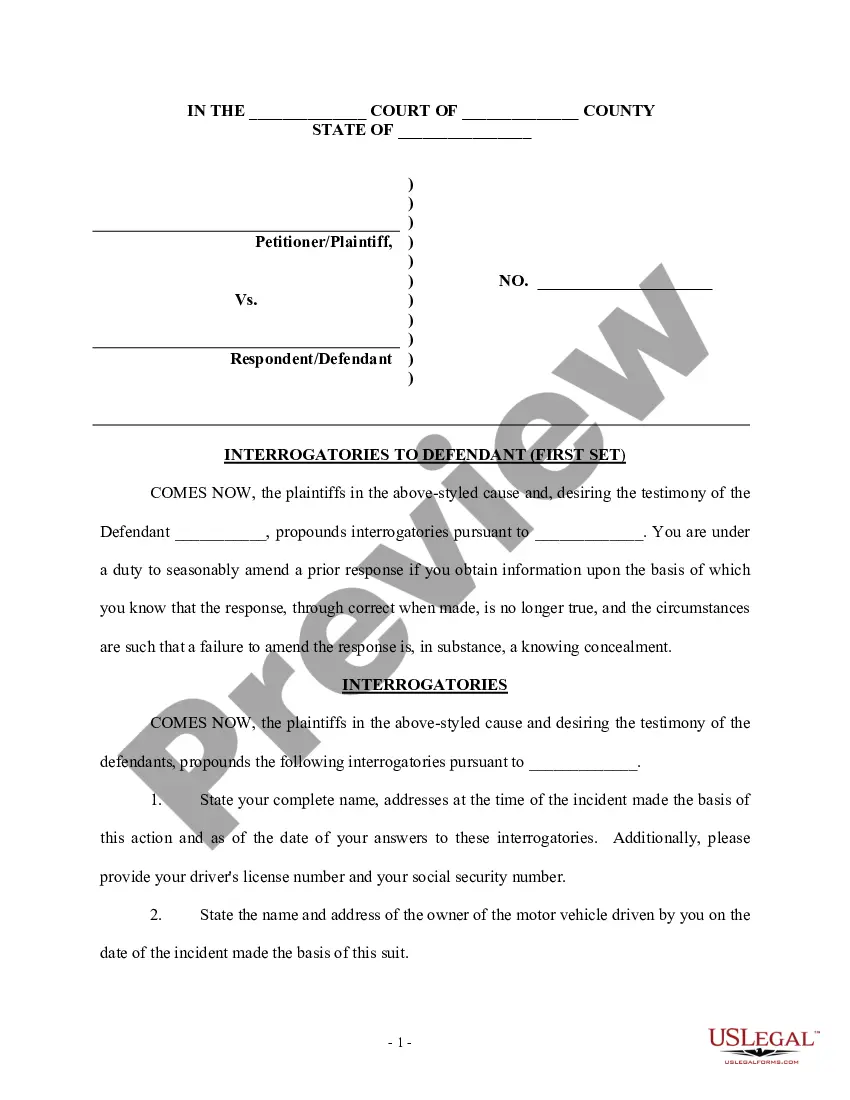
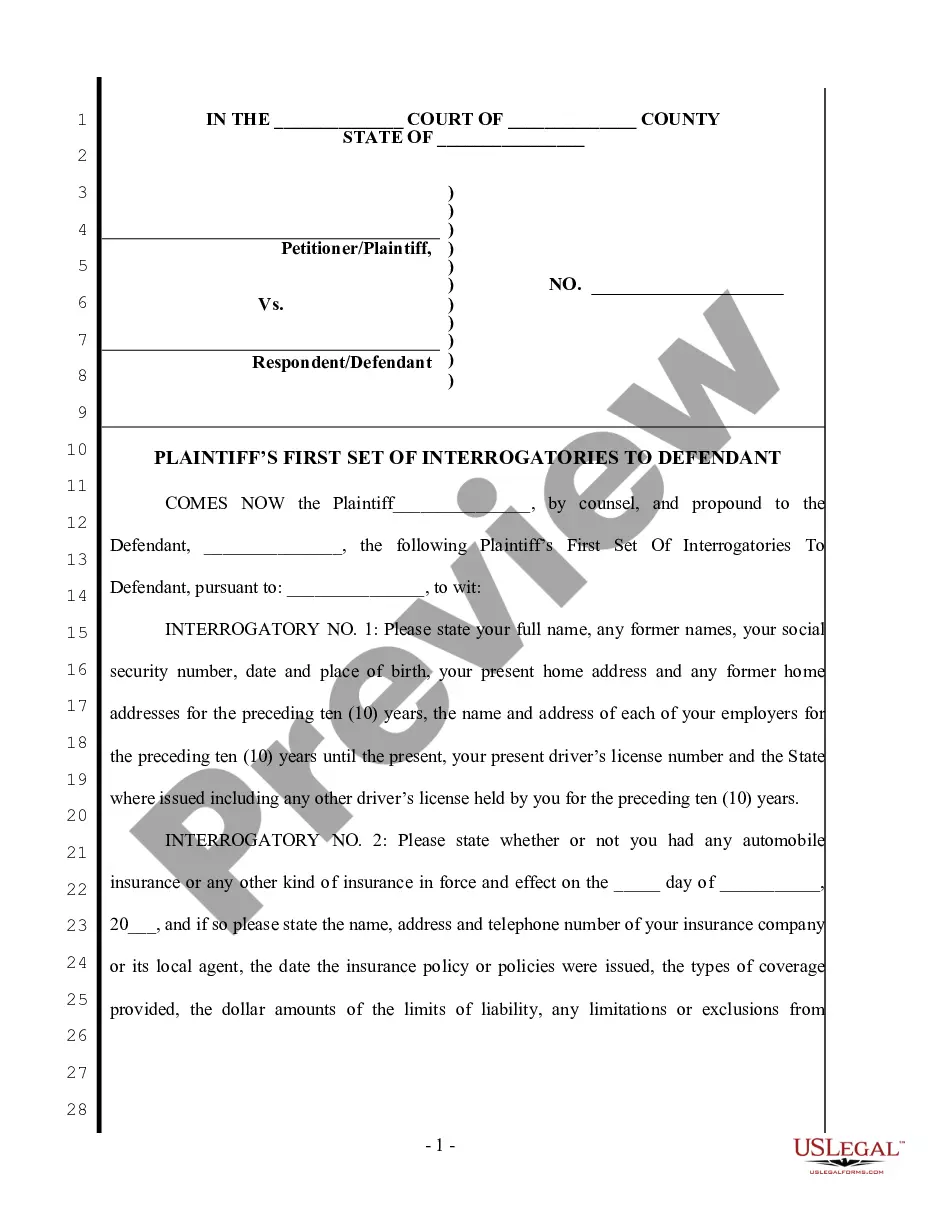
The Plaintiff's Interrogatories to Defendant - Personal Injury is a legal document used in personal injury cases, particularly those resulting from automobile accidents. This form allows the plaintiff to ask the defendant a series of questions aimed at clarifying facts and gathering pertinent information about the incident and related matters. It is a crucial part of the discovery process, differentiating it from other legal forms that may not involve such interrogatives.
Form components explained
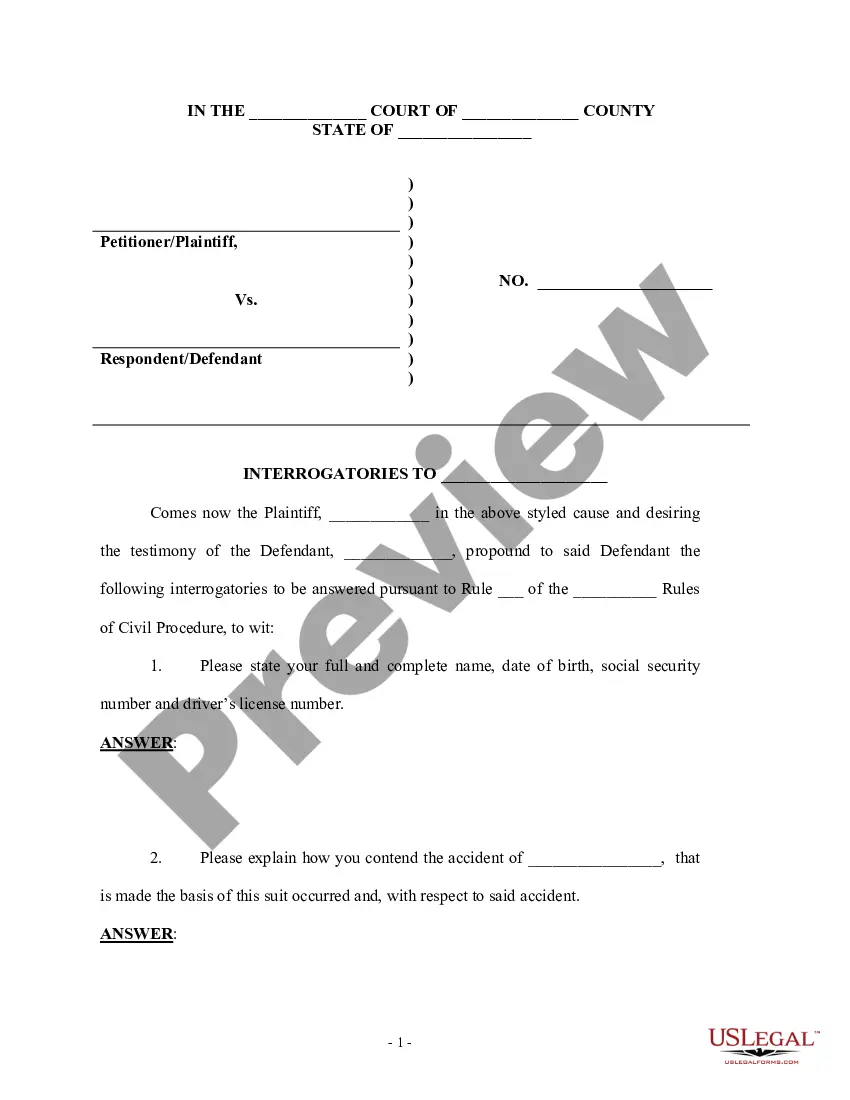
- Full name, date of birth, social security number, and driver's license number of the defendant.
- A detailed explanation of how the defendant contends the accident occurred.
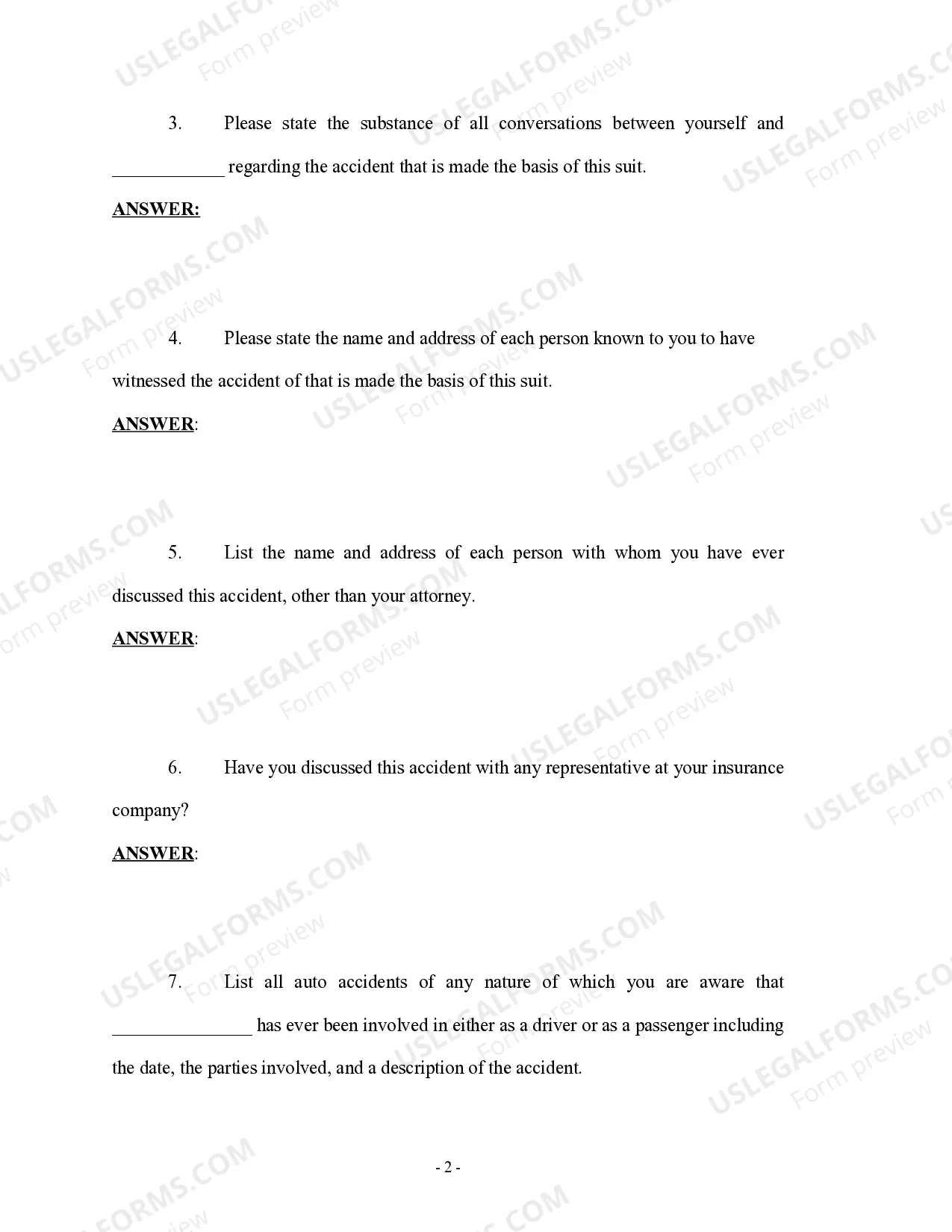
- Record of conversations between the defendant and others regarding the accident.
- Names and addresses of witnesses to the accident.
- List of individuals who have discussed the accident with the defendant, excluding the attorney.
- Information on discussions with insurance representatives regarding the accident.
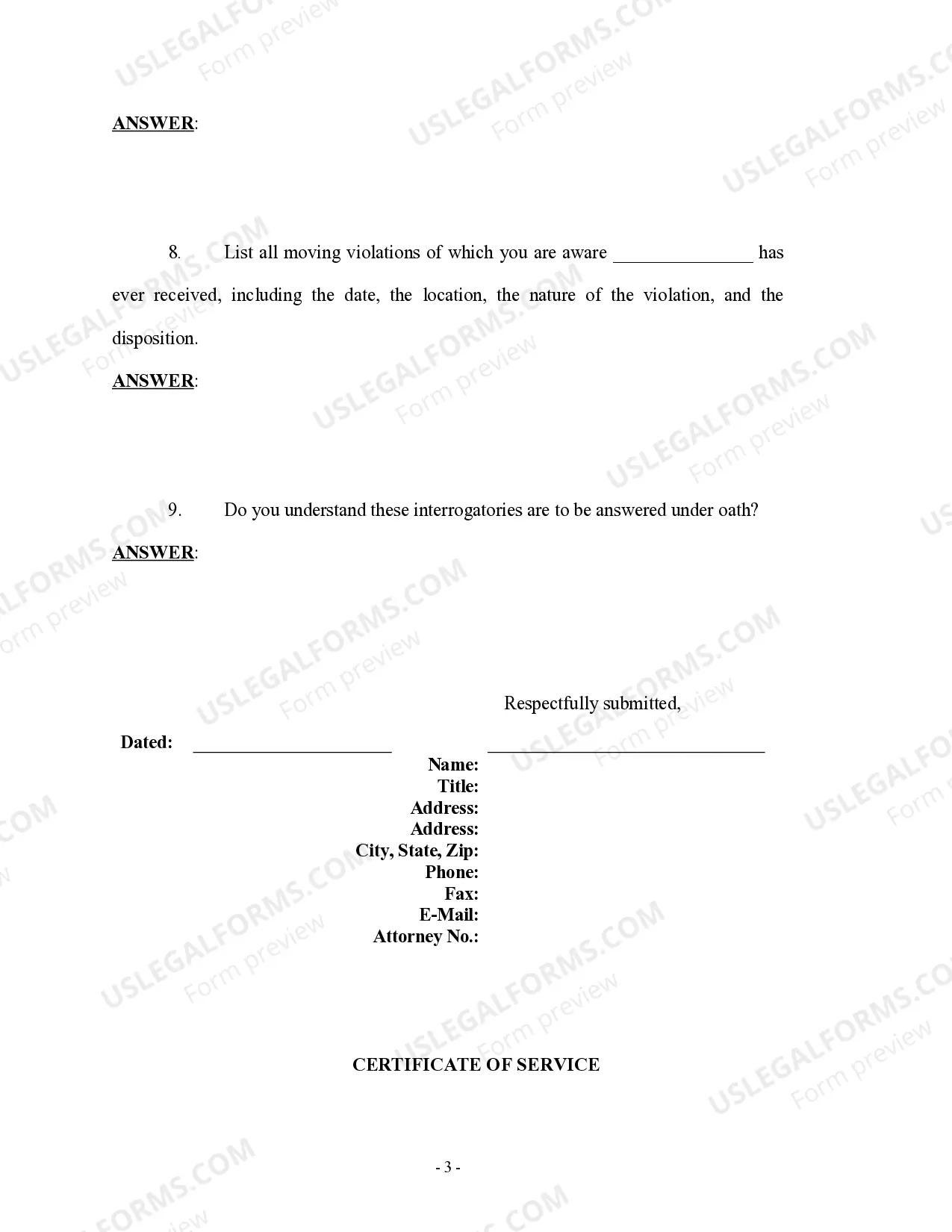
- A record of the defendant's past auto accidents and moving violations.
- Acknowledgment that the answers are to be given under oath.

When to use this form
This form should be used when a plaintiff initiates a personal injury lawsuit involving an auto accident. It is typically filed during the discovery phase of the legal process, where both parties exchange information to understand the case better. Use this form when you require detailed answers from the defendant to clarify the circumstances surrounding the accident and to establish liability.
Who needs this form
This form is intended for:
- Plaintiffs seeking to gather information from defendants in personal injury cases.
- Individuals who are involved in litigation stemming from auto accidents.
- Legal representatives acting on behalf of plaintiffs in personal injury lawsuits.
How to prepare this document
- Identify the full name and relevant identification numbers of the defendant.
- Enter a detailed account of how the defendant believes the accident happened.
- List all conversations the defendant has had about the accident with other individuals.
- Provide names and addresses of any witnesses to the accident.
- Compile information on prior accidents or moving violations involving the defendant.
- Ensure that the defendant acknowledges the obligation to answer each question under oath.
Notarization requirements for this form
Notarization is generally not required for this form. However, certain states or situations might demand it. You can complete notarization online through US Legal Forms, powered by Notarize, using a verified video call available anytime.
Get your form ready online
Our built-in tools help you complete, sign, share, and store your documents in one place.
Make edits, fill in missing information, and update formatting in US Legal Forms—just like you would in MS Word.
Download a copy, print it, send it by email, or mail it via USPS—whatever works best for your next step.
Sign and collect signatures with our SignNow integration. Send to multiple recipients, set reminders, and more. Go Premium to unlock E-Sign.
If this form requires notarization, complete it online through a secure video call—no need to meet a notary in person or wait for an appointment.
We protect your documents and personal data by following strict security and privacy standards.

Make edits, fill in missing information, and update formatting in US Legal Forms—just like you would in MS Word.

Download a copy, print it, send it by email, or mail it via USPS—whatever works best for your next step.

Sign and collect signatures with our SignNow integration. Send to multiple recipients, set reminders, and more. Go Premium to unlock E-Sign.

If this form requires notarization, complete it online through a secure video call—no need to meet a notary in person or wait for an appointment.

We protect your documents and personal data by following strict security and privacy standards.
Typical mistakes to avoid
- Providing incomplete or vague answers.
- Neglecting to list all relevant witnesses or individuals involved in discussions.
- Failing to review the form for accuracy before submission.
- Not understanding the legal obligation to answer under oath.
Benefits of completing this form online
- Convenient access to a legally drafted form 24/7.
- Easy download and customization to suit individual cases.
- Ensures compliance with legal standards set by attorneys.
Looking for another form?
Form popularity
FAQ
The Plaintiff's Interrogatories to Defendant - Personal Injury is a discovery tool used in auto-accident personal injury cases to obtain detailed, sworn information from the defendant. It covers the accident's facts, witness contacts, defendant's past incidents, and discussions with insurers, and is typically used during the discovery phase after a lawsuit is filed.
If the defendant does not answer, the plaintiff may need to pursue court action to compel responses and meet applicable deadlines. This form supports the discovery aim by requesting sworn answers; consider consulting an attorney about next steps and proper service to ensure enforcement under local rules.
Answers should be thorough, truthful, and provided under oath, referencing each listed topic such as how the accident occurred, witnesses, and any discussions with insurers. Use clear, specific statements for each numbered interrogatory, and provide as much relevant detail as possible consistent with the defendant's knowledge.
Many personal injury cases reach settlement after discovery helps clarify liability and damages, but outcomes vary widely. This form facilitates gathering detailed information during discovery to inform settlement discussions, including evidence about the accident, witnesses, and prior incidents, without guaranteeing a particular result.
Common objections to interrogatories include concerns about relevance, undue burden, or overbreadth. While the Plaintiff's Interrogatories to Defendant - Personal Injury aims to elicit essential information for auto-accident cases, objections may be raised to limit or tailor responses according to scope and resources.
Plaintiff's Interrogatories to Defendant - Personal Injury is tailored to auto-accident cases and personal injury litigation. It asks for specifics like past auto accidents and moving violations, conversations with witnesses and insurers, and requires sworn answers. These elements differentiate it from a generic civil discovery interrogatories form.